
Simple MOSFET switch
Source: InternetPublisher:EK0gAQ Keywords: MOSFET switch Updated: 2025/11/21
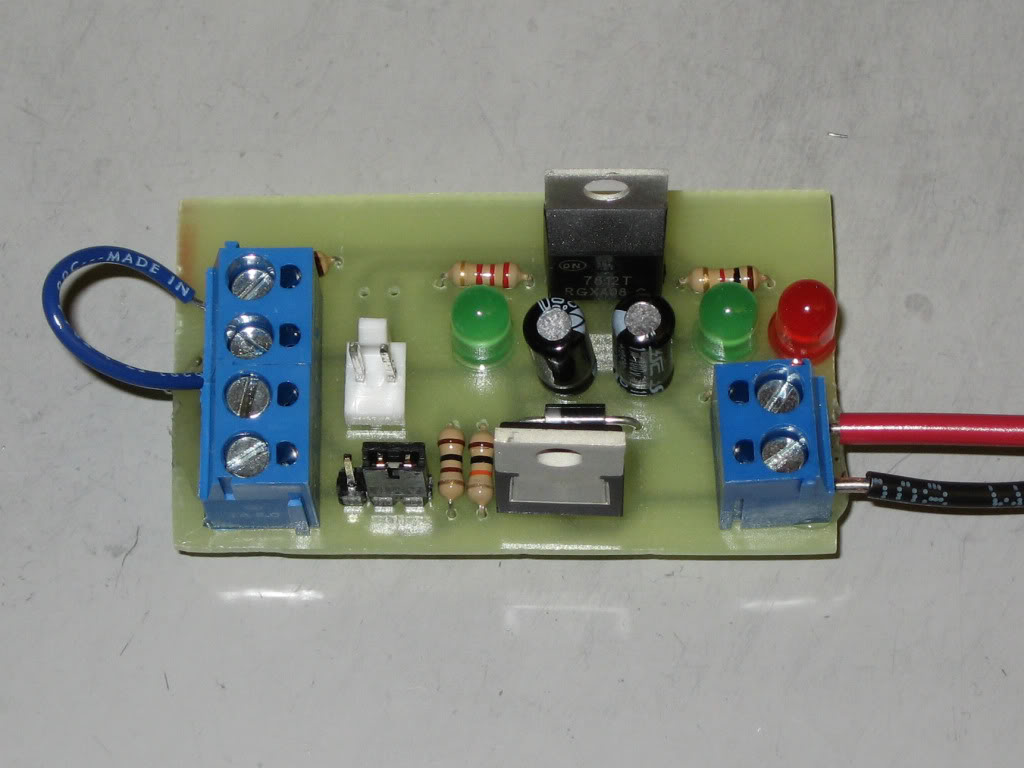
Building a MOSFET switch is one of the fundamental electronics projects, very useful for beginners to familiarize themselves with various FET transistors. The goal of this project is to control a high-power DC load by building a simple switch. MOSFET transistors are capable of handling high voltage and high current. It is precisely because of this characteristic that they are widely used to connect large loads to circuits or microcontrollers.
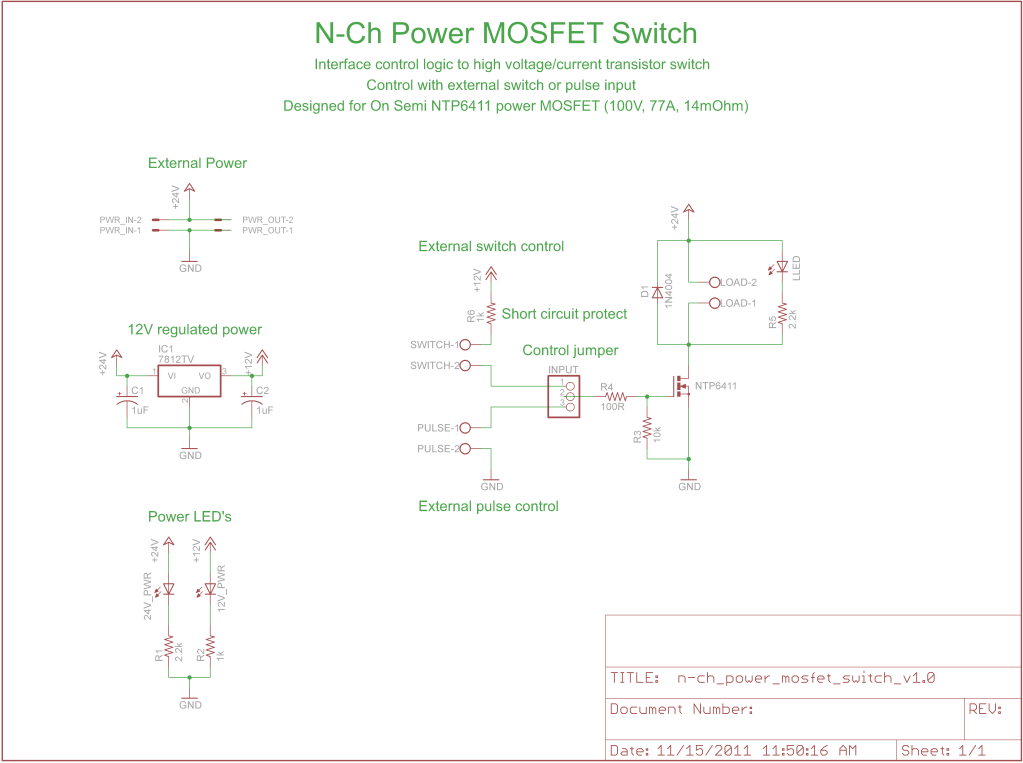 This circuit allows for a simple switch or low...
Voltage pulses (e.g., 5V) are used to control large DC loads. Here's a good explanation of MOSFET transistors and their use as switches. This is extremely useful for connecting large loads to microcontrollers or other logic circuits. Power MOSFET transistors are well-suited for this application, capable of handling high voltages and currents (NTP6411 is 100V, 77A). This design can drive virtually any load you can imagine (possibly even your car).
This MOSFET transistor can be activated using either a switch or a pulse input. The input method is selected by placing a jumper on the appropriate side of the INPUT connector. A pulse input may be most useful, but a switch-closed input is added for specific projects. This design is set to use 24V DC, but other voltages can also be adapted (it has been tested and works well at 15V DC). Just ensure the LED receives the correct current and that the input voltage is within the specifications of the 7812 and the input voltage capacitor. It can also work with other N-channel power MOSFETs as long as the pins are compatible with the NTP6411.
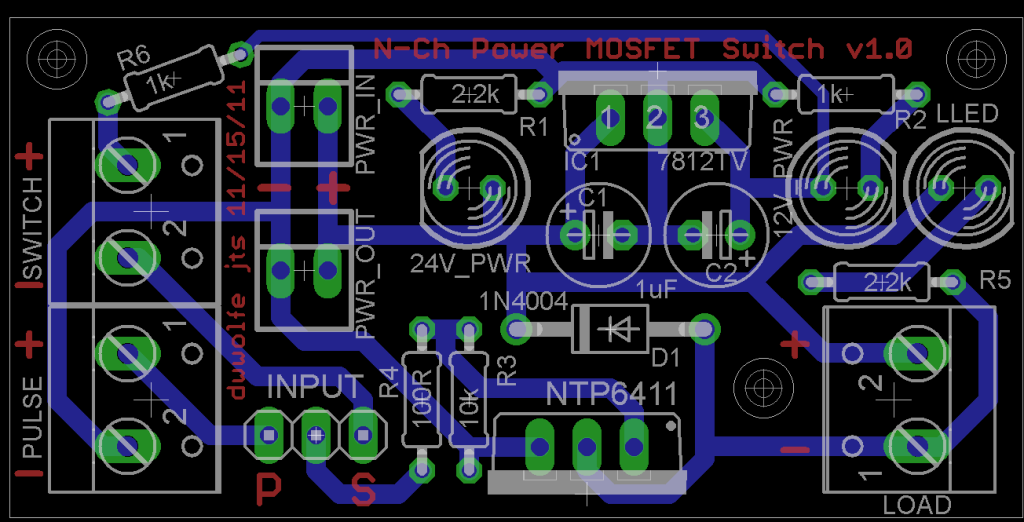
At the heart of the circuit is ON Semiconductor's NTP6411 power MOSFET. This transistor handles all the heavy lifting of turning on large loads while drawing almost no current from the input signal. A 12V regulator provides the input voltage if switching control is used. Otherwise, a low-voltage pulse (between 5V and 20V) will turn on the transistor. A freewheeling diode is included to prevent voltage spikes from inductive loads. A load LED provides a visual indication of transistor activity (aiding in debugging). Screw terminals allow for detachable connections with relatively large wires. Dual power connectors allow multiple circuits to be daisy-chained together. The layout is set up to panelize multiple boards from the bottom edge, as the input/output connections are on the left and right sides. Heat dissipation is only required under heavy loads and prolonged operation.
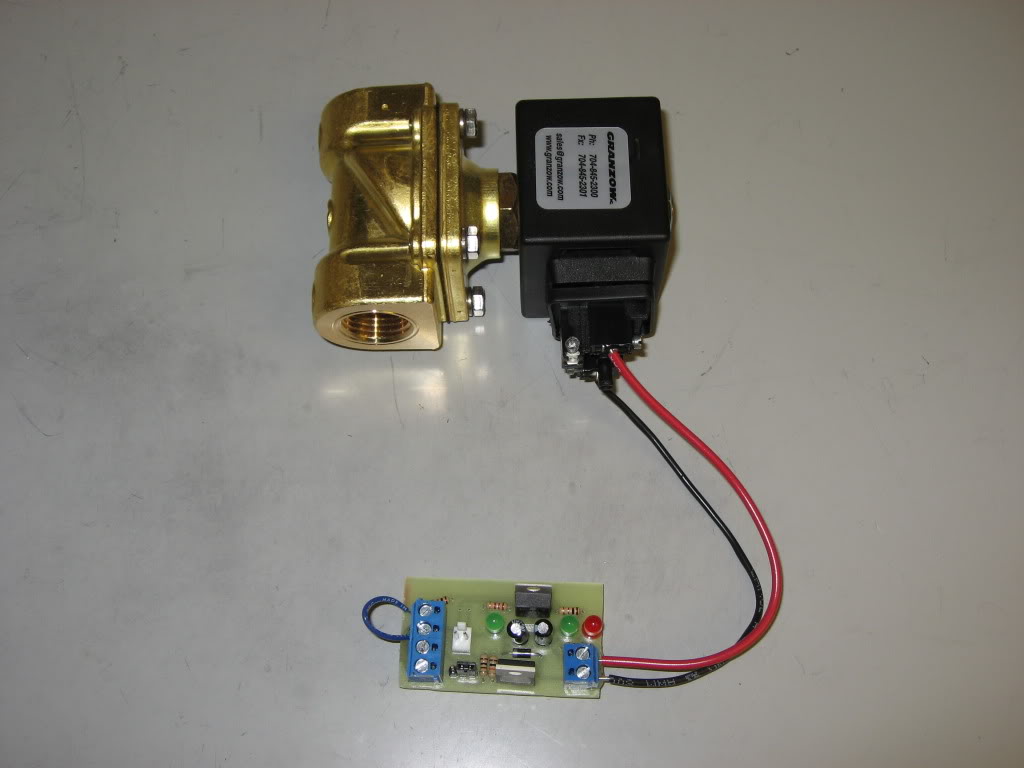
This design underwent an overnight load test (16 hours) using an industrial air solenoid valve (24V, 0.5A). The MOSFET felt cool to the touch without a heatsink. However, the valve body became quite hot after dissipating 12W continuously.
Obviously, the on-state resistance is very low when using a switching input. According to the datasheet, the MOSFET will have a higher on-state resistance when using a small voltage (i.e., a 5V pulse), so pay close attention to the circuit when using it in new applications.
- 12V dual power supply
- Lithium polymer battery charging solution using MCP73833
- Dual USB charger with switching regulator
- 10A 1-30V Adjustable Power Supply Based on LM317
- Nickel-Cd battery thermal peak detection charger
- Battery reverse polarity protection circuit
- Power Soft Start
- 3 Ways to Design a Low Quiescent Current (Iq) Automotive Reverse Battery Protection System
- How to Create a Solar Power Solution
- Introduction to inverter circuit and principle
- Portable device charging power circuit design
- Portable device charging power circuit design
- FGDF-3 three-phase low-temperature iron-plated power supply circuit
- Simple dual-channel variable DC power supply circuit
- Household emergency power circuit
- Head amplifier dedicated power supply circuit
- Inverter power circuit
- Telephone power circuit
- Always ready power circuit
- Small power UPS power circuit and production







 京公网安备 11010802033920号