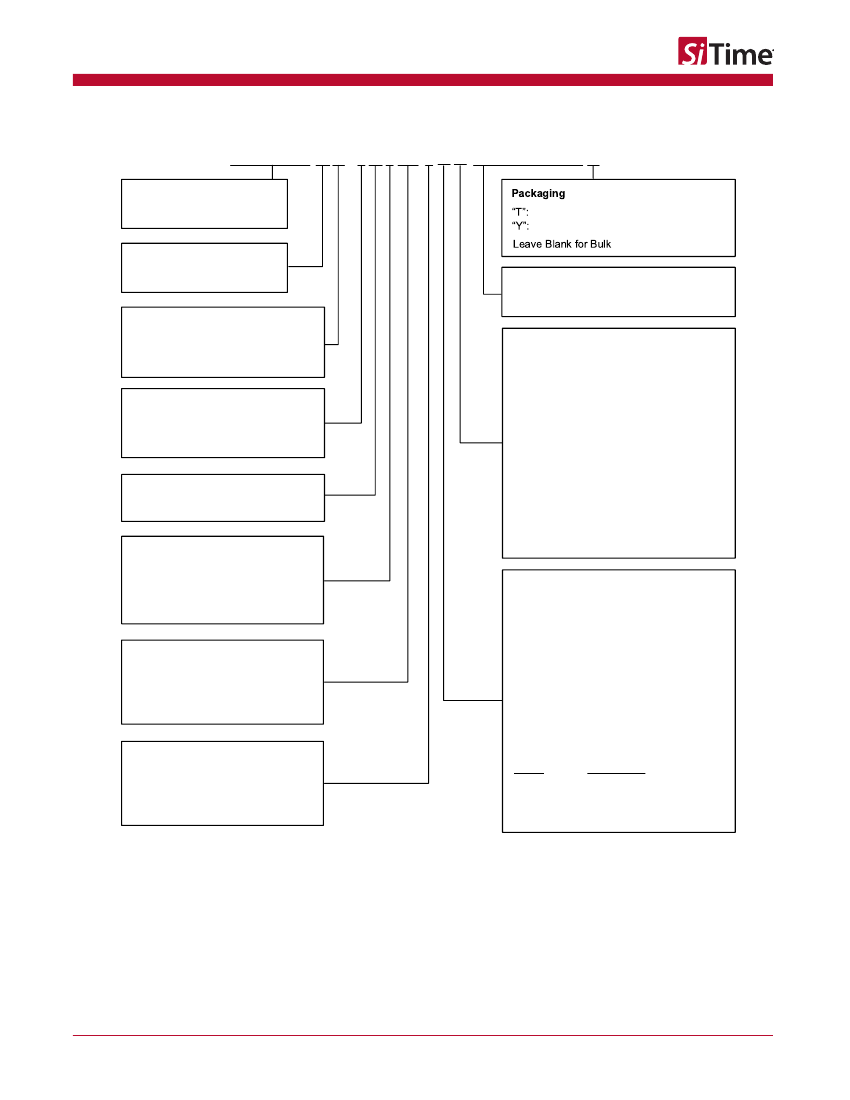
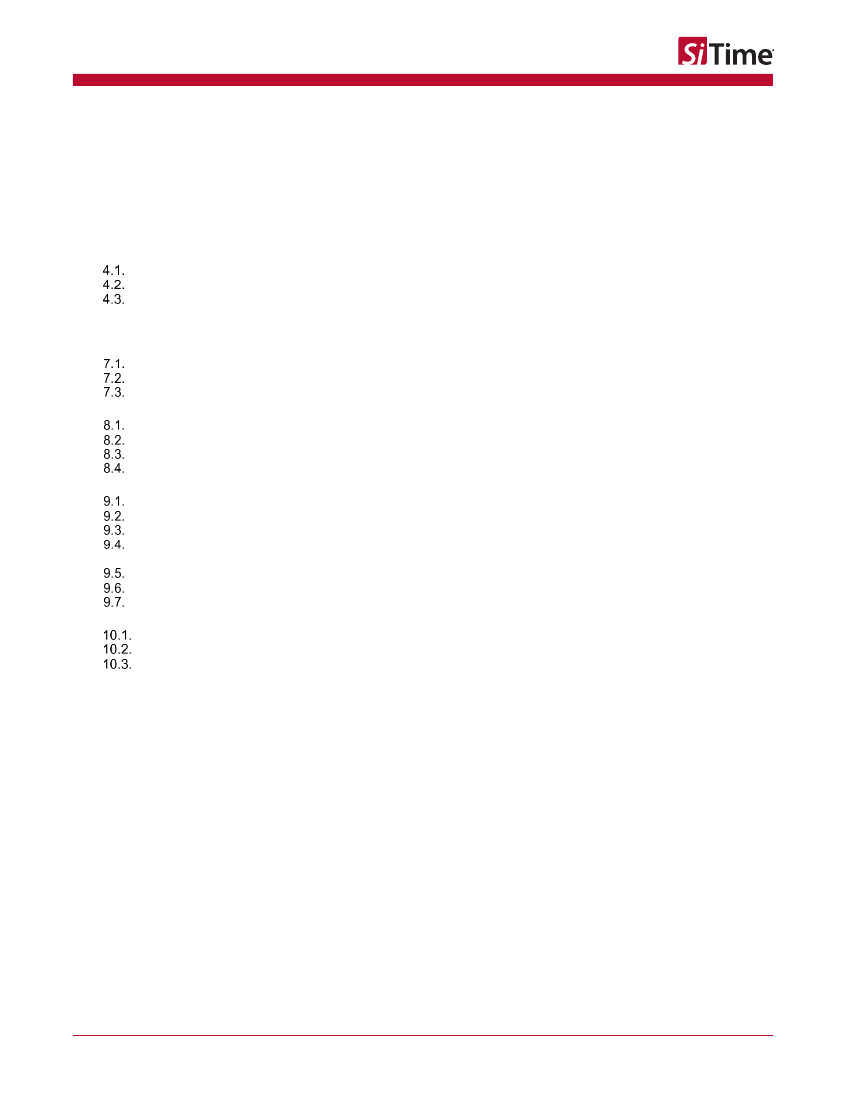
Ordering Information .................................................................................................................................................................... 2
User Programming Interface ..................................................................................................................................... 18
Start-up output frequency and signaling types ........................................................................................................... 18
Any-frequency function ............................................................................................................................................. 19
C/SPI Control Registers...................................................................................................................................................... 28
9 I
Register Address: 0x00. DCO Frequency Control Least Significant Word (LSW) .................................................... 28
Register Address: 0x01. OE Control, DCO Frequency Control Most Significant Word (MSW) ................................. 29
Register Address: 0x02. DCO PULL RANGE CONTROL ........................................................................................ 29
Register Address: 0x03. Frac-N PLL Feedback Divider Integer Value and Frac-N PLL Feedback Divider Fraction
Value MSW ............................................................................................................................................................... 30
Register Address: 0x05. Forward Divider, Driver Control ......................................................................................... 30
Register Address: 0x06. Driver Divider, Driver Control ............................................................................................. 31
2
C Operation ........................................................................................................................................................................ 32
10 I
I
2
C protocol ............................................................................................................................................................... 32
I
2
C Timing Specification ............................................................................................................................................ 35
I
2
C Device Address Modes ....................................................................................................................................... 36
Dimensions and Patterns ........................................................................................................................................................... 43
Additional Information ................................................................................................................................................................ 44
Revision History ......................................................................................................................................................................... 45
Rev 1.01
Page 3 of 45
www.sitime.com
SiT3521
1 to 340 MHz Elite Platform I2C/SPI Programmable Oscillator
1 Electrical Characteristics
All Min and Max limits in the Electrical Characteristics tables are specified over temperature and rated operating voltage with
standard output terminations shown in the termination diagrams. Typical values are at 25°C and nominal supply voltage.
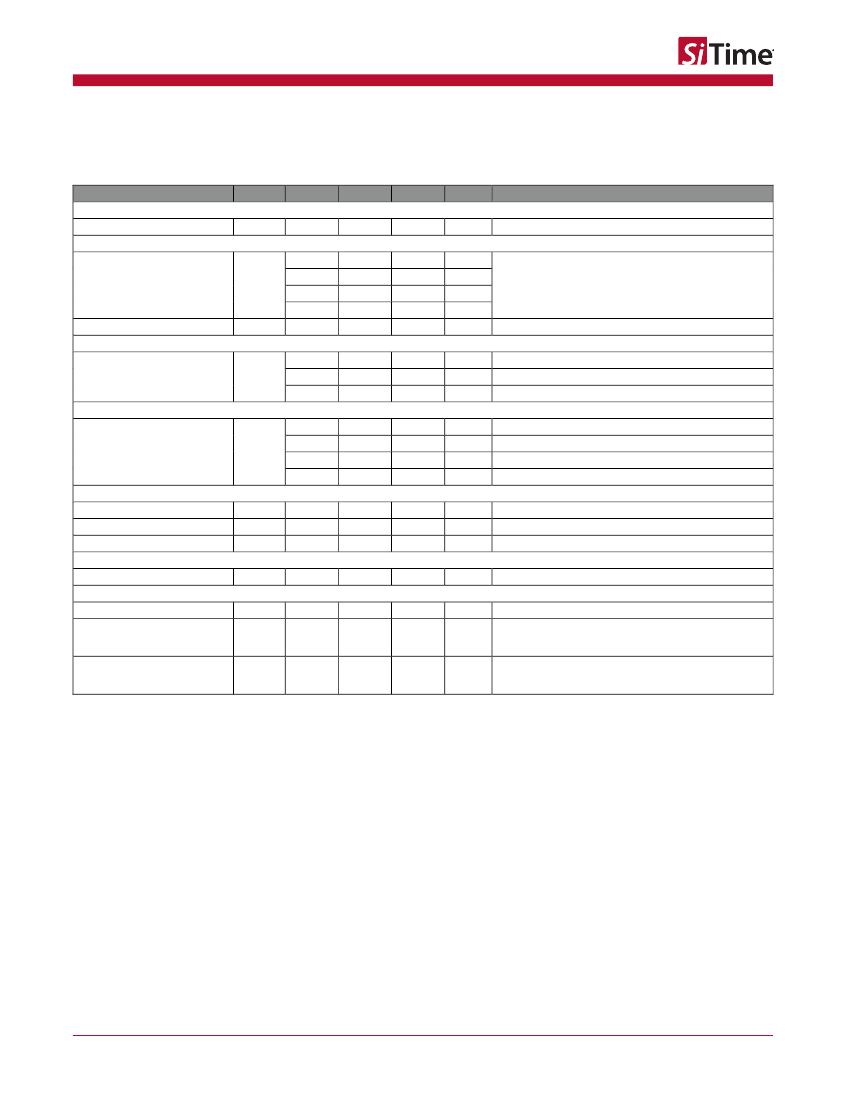
Table 1. Electrical Characteristics – Common to LVPECL, LVDS and HCSL
Parameter
Output Frequency Range
Symbol
f
Min.
1
Typ.
–
–
–
–
–
±1
–
–
–
Max.
340
Unit
MHz
Condition
Factory or user programmable, accurate to 6 decimal places
Frequency Range
Frequency Stability
Frequency Stability
F_stab
-10
-20
-25
-50
First Year Aging
F_1y
–
+10
+20
+25
+50
–
ppm
ppm
ppm
ppm
ppm
°C
°C
°C
1
st
-year aging at 25°C
Inclusive of initial tolerance, operating temperature, rated
power supply voltage and load variations.
Temperature Range
Operating Temperature Range
T_use
-20
-40
-40
+70
+85
+105
Supply Voltage
Supply Voltage
Vdd
2.97
2.7
2.52
2.25
3.3
3.0
2.8
2.5
–
–
100
–
–
–
3.63
3.3
3.08
2.75
–
30%
–
V
V
V
V
Extended Commercial
Industrial
Extended Industrial. Available only for I
2
C operation, not SPI.
Input Characteristics – OE Pin
Input Voltage High
Input Voltage Low
Input Pull-up Impedance
VIH
VIL
Z_in
70%
–
–
Vdd
Vdd
kΩ
OE pin
OE pin
OE pin, logic high or logic low
Output Characteristics
Duty Cycle
DC
45
–
–
55
%
Startup and Output Enable/Disable Timing
Start-up Time
Output Enable/Disable Time –
Hardware control via OE pin
Output Enable/Disable Time –
Software control via I
2
C/SPI
T_start
T_oe_hw
3.0
3.8
ms
µs
Measured from the time Vdd reaches its rated minimum value
Measured from the time OE pin reaches rated VIH and VIL to
the time clock pins reach 90% of swing and high-Z.
See
Figure 9
and
Figure 10
Measured from the time the last byte of command is
transmitted via I
2
C/SPI (reg1) to the time clock pins reach 90%
of swing and high-Z. See
Figure 30
and
Figure 31
T_oe_sw
–
–
6.5
µs
Rev 1.01
Page 4 of 45
www.sitime.com
SiT3521
1 to 340 MHz Elite Platform I2C/SPI Programmable Oscillator
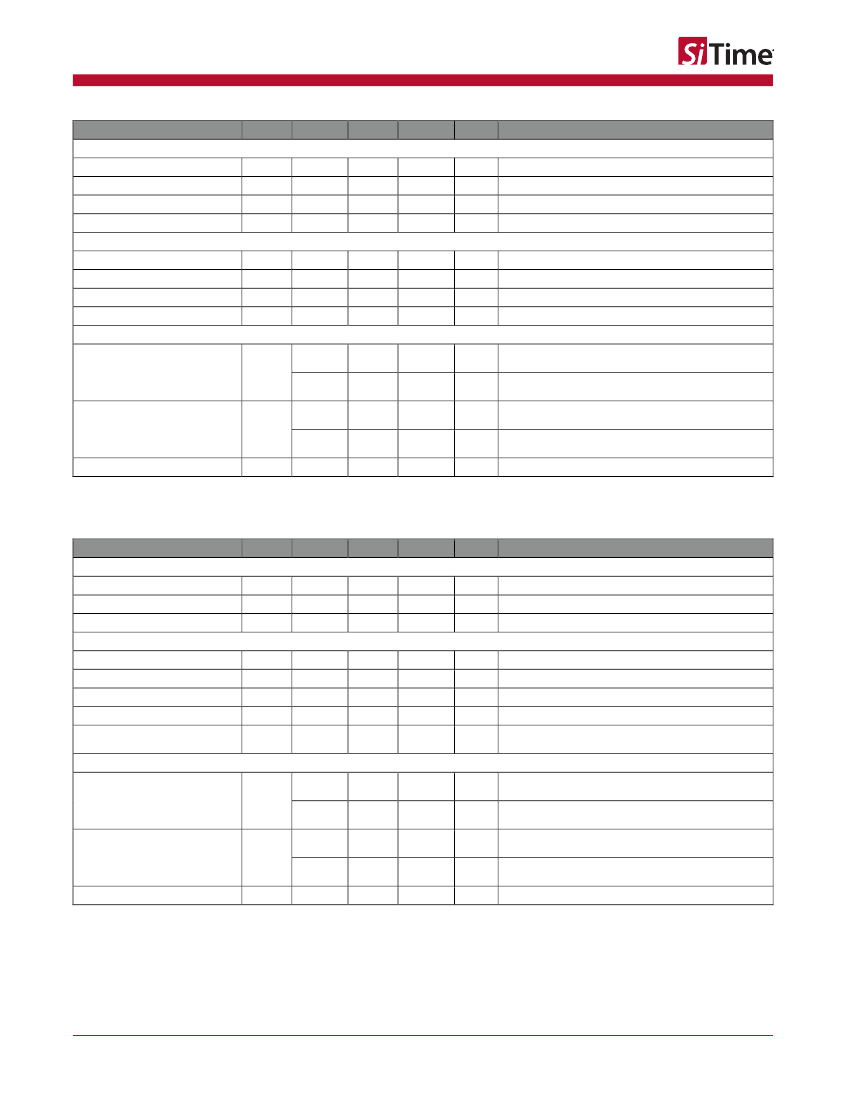
Table 2. Electrical Characteristics – LVPECL Specific
Parameter
Symbol
Min.
Typ.
Max.
Unit
Condition
Current Consumption
Current Consumption
OE Disable Supply Current
Output Disable Leakage Current
Maximum Output Current
Idd
I_OE
I_leak
I_driver
–
–
–
–
–
–
0.15
–
89
58
–
32
mA
mA
A
mA
Excluding Load Termination Current, Vdd = 3.3 V or 2.5 V
OE = Low
OE = Low
Maximum average current drawn from OUT+ or OUT-
Output Characteristics
Output High Voltage
Output Low Voltage
Output Differential Voltage Swing
Rise/Fall Time
VOH
VOL
V_Swing
Tr, Tf
Vdd - 1.1V
Vdd - 1.9V
1.2
–
–
–
1.6
225
Vdd - 0.7V
Vdd - 1.5V
2.0
290
Jitter
RMS Phase Jitter (random) –
DCO Mode Only
T_phj
–
–
RMS Phase Jitter (random) –
Any-frequency Mode Only
T_phj
–
–
RMS Period Jitter
[3]
Note:
3. Measured according to JESD65B.
T_jitt
–
0.225
0.1
0.225
0.11
1
0.340
0.14
0.340
0.15
1.6
ps
ps
ps
ps
ps
f = 156.25 MHz, Integration bandwidth = 12 kHz to 20 MHz,
all Vdd levels
f = 156.25, IEEE802.3-2005 10 GbE jitter mask integration
bandwidth = 1.875 MHz to 20 MHz, all Vdd levels
f = 156.25 MHz, Integration bandwidth = 12 kHz to 20 MHz,
all Vdd levels
f = 156.25, IEEE802.3-2005 10 GbE jitter mask integration
bandwidth = 1.875 MHz to 20 MHz, all Vdd levels
f = 100, 156.25 or 212.5 MHz, Vdd = 3.3 V or 2.5 V
V
V
V
ps
See
Figure 5
See
Figure 5
See
Figure 6
20% to 80%, see
Figure 6
Table 3. Electrical Characteristics – LVDS Specific
Parameter
Symbol
Min.
Typ.
Max.
Unit
Condition
Current Consumption
Current Consumption
OE Disable Supply Current
Output Disable Leakage Current
Idd
I_OE
I_leak
–
–
–
–
–
0.15
80
61
–
mA
mA
A
Excluding Load Termination Current, Vdd = 3.3 V or 2.5 V
OE = Low
OE = Low
Output Characteristics
Differential Output Voltage
Delta VOD
Offset Voltage
Delta VOS
Rise/Fall Time
VOD
ΔVOD
VOS
ΔVOS
Tr, Tf
250
–
1.125
–
–
–
–
–
–
400
455
50
1.375
50
470
Jitter
RMS Phase Jitter (random) –
DCO Mode Only
T_phj
–
–
RMS Phase Jitter (random) –
Any-frequency Mode Only
T_phj
–
–
RMS Period Jitter
[4]
Note:
4. Measured according to JESD65B.
T_jitt
–
0.21
0.1
0.21
0.1
1
0.275
0.12
0.367
0.12
1.6
ps
ps
ps
ps
ps
f = 156.25 MHz, Integration bandwidth = 12 kHz to 20 MHz,
all Vdd levels
f = 156.25, IEEE802.3-2005 10 GbE jitter mask integration
bandwidth = 1.875 MHz to 20 MHz, all Vdd levels
f = 156.25 MHz, Integration bandwidth = 12 kHz to 20 MHz,
all Vdd levels
f = 156.25, IEEE802.3-2005 10 GbE jitter mask integration
bandwidth = 1.875 MHz to 20 MHz, all Vdd levels
f = 100, 156.25 or 212.5 MHz, Vdd = 3.3 V or 2.5 V
mV
mV
V
mV
ps
f = 156.25MHz See
Figure 7
See
Figure 7
See
Figure 7
See
Figure 7
Measured with 2 pF capacitive loading to GND, 20% to 80%,
[b]Why are there obvious differences between MCU development boards at home and abroad? [/b] [color=#ff0000][/color] [b]Article content: [/b]Beginners have searched for development boards all over Chi...
My graduation project is to do a zigbee networking experiment. I have never been exposed to it before. I used the CC2430 learning version. When doing the coordinator networking experiment, after downl...
EEWORLD can set the topic, or you can write your own topic and submit it to EEWORLD for review and release. The emphasis is on targeted practice and livening up the atmosphere of the forum. For forum ...
When I start up my computer under WINCE6, my application automatically runs, but the CE6 taskbar appears occasionally. How can I disable the taskbar?...
RT, I use a timer to control the LED to light up every 1 second. The following is the program. Can you help me find the problem? I have been looking for it for a long time but can't find it. The exper...
From being a global leader to losing the market, Korean battery manufacturers have always wanted to regain the lost market and dignity, but facing Chinese battery manufacturers represented by CAT...[Details]
1. Equipment Overview
Shell-and-tube heat exchangers are a common heat exchange device used in chemical evaporation and heating equipment. Currently, the tubesheets of shell-and-tube heat exch...[Details]
Electric motors and internal combustion engines of the same power have similar torque levels. High power requires high torque, and torque determines a vehicle's acceleration speed, commonly known a...[Details]
Is pure electric vehicles a false proposition for long-distance driving? At least from my personal perspective, based on current technological and infrastructure standards, I believe so. Below, I'l...[Details]
The most significant feature of IPS panels is that both electrodes are located on the same surface, unlike other LCD panels, which have electrodes arranged on top and bottom surfaces in a three-dim...[Details]
Topics: Bring Your Own Device (BYOD) trends; the impact of using employees' own mobile devices to control access to work facilities and equipment on information security; and ways to securely imple...[Details]
Introduction to the principles of speech recognition technology
Automatic speech recognition (ASR) technology aims to enable computers to understand human speech and extract the textual inform...[Details]
On August 22, the National Energy Administration released the latest data, showing that by the end of July 2025, China's total number of electric vehicle charging infrastructure will reach 16.696 m...[Details]
Since its invention in the mid-1940s, the microwave oven has evolved from a humble beginning to commercial use, entering homes in the 1960s and rapidly gaining popularity. Its basic functionality a...[Details]
In June 2014, the Ministry of Industry and Information Technology issued 4G FD-LTE licenses to China Unicom and China Telecom. Together with the 4G TD-LTE licenses issued to China Mobile, China Uni...[Details]
Reflow soldering is one of the most commonly used methods in electronics manufacturing, allowing for the soldering of large numbers of components in a relatively short time. However, any experience...[Details]
Coal mines typically contain gas and coal dust. When gas and coal dust reach a certain concentration, they can cause explosions. Electrical equipment generates arcs during normal operation or durin...[Details]
Teletrac Navman has launched the Multi IQ dashcam, a cloud-based solution designed for large commercial vehicle operators. It connects up to five cameras to cover the vehicle's interior, sides, and...[Details]
Bosch has released a new SoC series to support L2+ advanced driver assistance functions. The chip integrates high resolution and long-range detection capabilities, and has built-in support for neur...[Details]
On August 20, Geely announced its focus on "One Cockpit". Through a unified AI OS architecture, a unified AI Agent, and a unified user ID, it will achieve an All-in-One AI cockpit, create the first...[Details]

 MCU
MCU
 京公网安备 11010802033920号
 EEWORLD