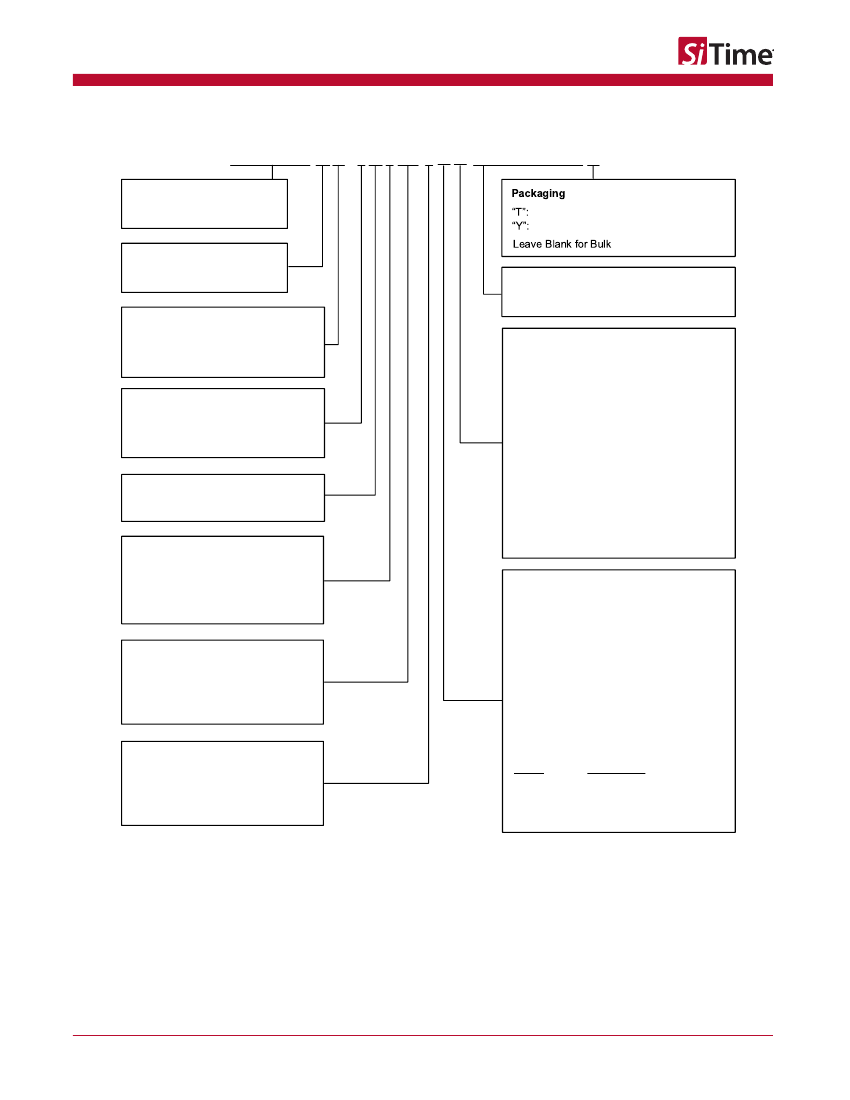
Ordering Information .................................................................................................................................................................... 2
User Programming Interface ..................................................................................................................................... 18
Start-up output frequency and signaling types ........................................................................................................... 18
Any-frequency function ............................................................................................................................................. 19
C/SPI Control Registers...................................................................................................................................................... 28
9 I
Register Address: 0x00. DCO Frequency Control Least Significant Word (LSW) .................................................... 28
Register Address: 0x01. OE Control, DCO Frequency Control Most Significant Word (MSW) ................................. 29
Register Address: 0x02. DCO PULL RANGE CONTROL ........................................................................................ 29
Register Address: 0x03. Frac-N PLL Feedback Divider Integer Value and Frac-N PLL Feedback Divider Fraction
Value MSW ............................................................................................................................................................... 30
Register Address: 0x05. Forward Divider, Driver Control ......................................................................................... 30
Register Address: 0x06. Driver Divider, Driver Control ............................................................................................. 31
2
C Operation ........................................................................................................................................................................ 32
10 I
I
2
C protocol ............................................................................................................................................................... 32
I
2
C Timing Specification ............................................................................................................................................ 35
I
2
C Device Address Modes ....................................................................................................................................... 36
Dimensions and Patterns ........................................................................................................................................................... 43
Additional Information ................................................................................................................................................................ 44
Revision History ......................................................................................................................................................................... 45
Rev 1.01
Page 3 of 45
www.sitime.com
SiT3521
1 to 340 MHz Elite Platform I2C/SPI Programmable Oscillator
1 Electrical Characteristics
All Min and Max limits in the Electrical Characteristics tables are specified over temperature and rated operating voltage with
standard output terminations shown in the termination diagrams. Typical values are at 25°C and nominal supply voltage.
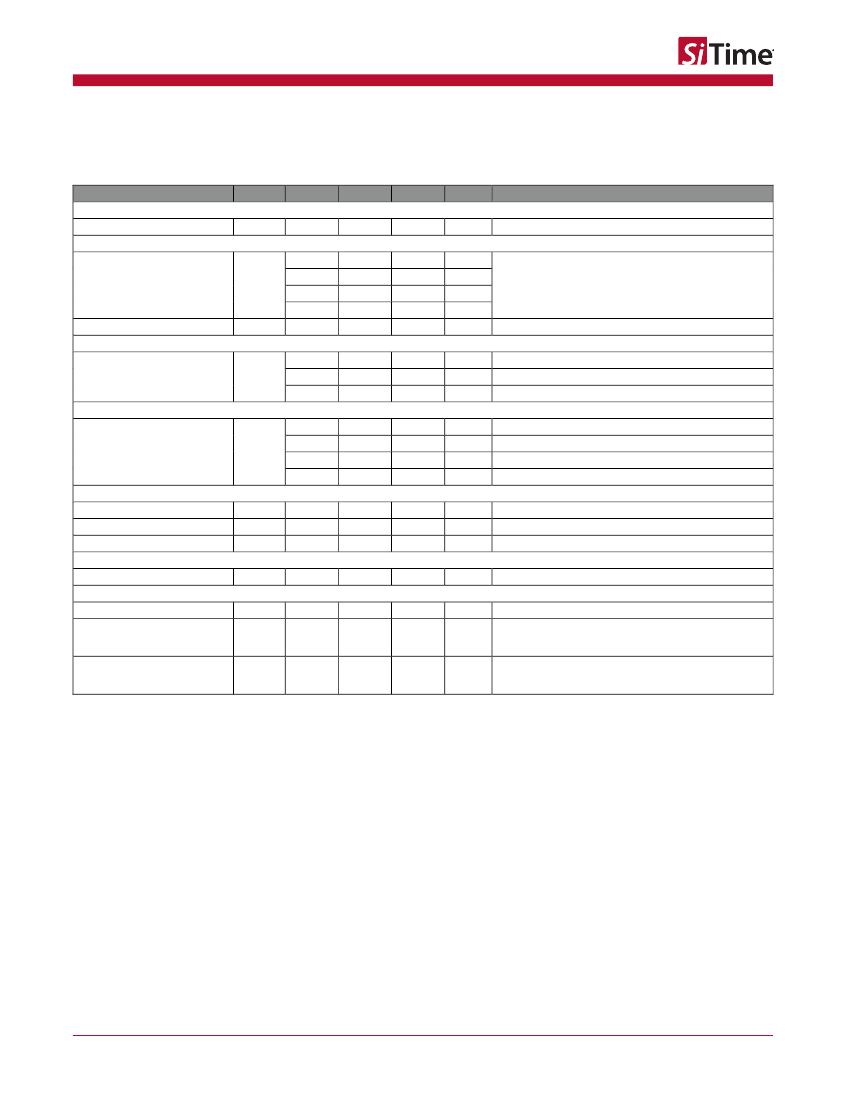
Table 1. Electrical Characteristics – Common to LVPECL, LVDS and HCSL
Parameter
Output Frequency Range
Symbol
f
Min.
1
Typ.
–
–
–
–
–
±1
–
–
–
Max.
340
Unit
MHz
Condition
Factory or user programmable, accurate to 6 decimal places
Frequency Range
Frequency Stability
Frequency Stability
F_stab
-10
-20
-25
-50
First Year Aging
F_1y
–
+10
+20
+25
+50
–
ppm
ppm
ppm
ppm
ppm
°C
°C
°C
1
st
-year aging at 25°C
Inclusive of initial tolerance, operating temperature, rated
power supply voltage and load variations.
Temperature Range
Operating Temperature Range
T_use
-20
-40
-40
+70
+85
+105
Supply Voltage
Supply Voltage
Vdd
2.97
2.7
2.52
2.25
3.3
3.0
2.8
2.5
–
–
100
–
–
–
3.63
3.3
3.08
2.75
–
30%
–
V
V
V
V
Extended Commercial
Industrial
Extended Industrial. Available only for I
2
C operation, not SPI.
Input Characteristics – OE Pin
Input Voltage High
Input Voltage Low
Input Pull-up Impedance
VIH
VIL
Z_in
70%
–
–
Vdd
Vdd
kΩ
OE pin
OE pin
OE pin, logic high or logic low
Output Characteristics
Duty Cycle
DC
45
–
–
55
%
Startup and Output Enable/Disable Timing
Start-up Time
Output Enable/Disable Time –
Hardware control via OE pin
Output Enable/Disable Time –
Software control via I
2
C/SPI
T_start
T_oe_hw
3.0
3.8
ms
µs
Measured from the time Vdd reaches its rated minimum value
Measured from the time OE pin reaches rated VIH and VIL to
the time clock pins reach 90% of swing and high-Z.
See
Figure 9
and
Figure 10
Measured from the time the last byte of command is
transmitted via I
2
C/SPI (reg1) to the time clock pins reach 90%
of swing and high-Z. See
Figure 30
and
Figure 31
T_oe_sw
–
–
6.5
µs
Rev 1.01
Page 4 of 45
www.sitime.com
SiT3521
1 to 340 MHz Elite Platform I2C/SPI Programmable Oscillator
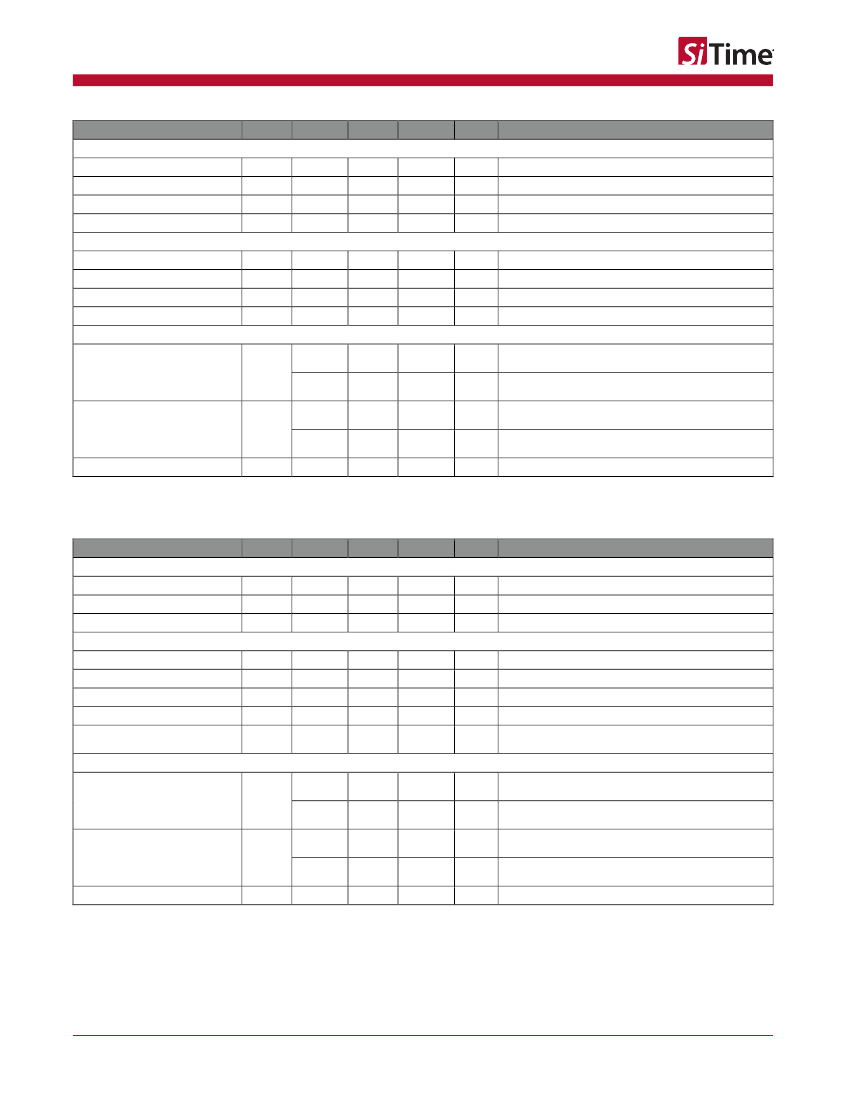
Table 2. Electrical Characteristics – LVPECL Specific
Parameter
Symbol
Min.
Typ.
Max.
Unit
Condition
Current Consumption
Current Consumption
OE Disable Supply Current
Output Disable Leakage Current
Maximum Output Current
Idd
I_OE
I_leak
I_driver
–
–
–
–
–
–
0.15
–
89
58
–
32
mA
mA
A
mA
Excluding Load Termination Current, Vdd = 3.3 V or 2.5 V
OE = Low
OE = Low
Maximum average current drawn from OUT+ or OUT-
Output Characteristics
Output High Voltage
Output Low Voltage
Output Differential Voltage Swing
Rise/Fall Time
VOH
VOL
V_Swing
Tr, Tf
Vdd - 1.1V
Vdd - 1.9V
1.2
–
–
–
1.6
225
Vdd - 0.7V
Vdd - 1.5V
2.0
290
Jitter
RMS Phase Jitter (random) –
DCO Mode Only
T_phj
–
–
RMS Phase Jitter (random) –
Any-frequency Mode Only
T_phj
–
–
RMS Period Jitter
[3]
Note:
3. Measured according to JESD65B.
T_jitt
–
0.225
0.1
0.225
0.11
1
0.340
0.14
0.340
0.15
1.6
ps
ps
ps
ps
ps
f = 156.25 MHz, Integration bandwidth = 12 kHz to 20 MHz,
all Vdd levels
f = 156.25, IEEE802.3-2005 10 GbE jitter mask integration
bandwidth = 1.875 MHz to 20 MHz, all Vdd levels
f = 156.25 MHz, Integration bandwidth = 12 kHz to 20 MHz,
all Vdd levels
f = 156.25, IEEE802.3-2005 10 GbE jitter mask integration
bandwidth = 1.875 MHz to 20 MHz, all Vdd levels
f = 100, 156.25 or 212.5 MHz, Vdd = 3.3 V or 2.5 V
V
V
V
ps
See
Figure 5
See
Figure 5
See
Figure 6
20% to 80%, see
Figure 6
Table 3. Electrical Characteristics – LVDS Specific
Parameter
Symbol
Min.
Typ.
Max.
Unit
Condition
Current Consumption
Current Consumption
OE Disable Supply Current
Output Disable Leakage Current
Idd
I_OE
I_leak
–
–
–
–
–
0.15
80
61
–
mA
mA
A
Excluding Load Termination Current, Vdd = 3.3 V or 2.5 V
OE = Low
OE = Low
Output Characteristics
Differential Output Voltage
Delta VOD
Offset Voltage
Delta VOS
Rise/Fall Time
VOD
ΔVOD
VOS
ΔVOS
Tr, Tf
250
–
1.125
–
–
–
–
–
–
400
455
50
1.375
50
470
Jitter
RMS Phase Jitter (random) –
DCO Mode Only
T_phj
–
–
RMS Phase Jitter (random) –
Any-frequency Mode Only
T_phj
–
–
RMS Period Jitter
[4]
Note:
4. Measured according to JESD65B.
T_jitt
–
0.21
0.1
0.21
0.1
1
0.275
0.12
0.367
0.12
1.6
ps
ps
ps
ps
ps
f = 156.25 MHz, Integration bandwidth = 12 kHz to 20 MHz,
all Vdd levels
f = 156.25, IEEE802.3-2005 10 GbE jitter mask integration
bandwidth = 1.875 MHz to 20 MHz, all Vdd levels
f = 156.25 MHz, Integration bandwidth = 12 kHz to 20 MHz,
all Vdd levels
f = 156.25, IEEE802.3-2005 10 GbE jitter mask integration
bandwidth = 1.875 MHz to 20 MHz, all Vdd levels
f = 100, 156.25 or 212.5 MHz, Vdd = 3.3 V or 2.5 V
mV
mV
V
mV
ps
f = 156.25MHz See
Figure 7
See
Figure 7
See
Figure 7
See
Figure 7
Measured with 2 pF capacitive loading to GND, 20% to 80%,
I want to use the SPI of STM8S to receive a set of 16-bit data, but everyone knows that the SPI of STM8S is 8-bit. I would like to ask you how to correctly receive this 16-bit data. Please help me. Th...
The last few lines of the map file generated by IAR for my program are as follows: [color=#008000] 9 906 bytes of CODE memory[/color] [color=#008000] 280 bytes of DATA memory ([/color][color=#ff0000]+...
Where can I adjust the order of loading drivers when the device starts? The reason is this: if my WINCE device is connected to the computer with a USB cable, the device will enter the Mass Storage mod...
I use nandflash as a USB disk in winxp on 2440+wince 5, and change default usbdevice to mass_storage. The USB disk can appear in winxp, but wince cannot access the flash disk at this time. This is nor...
7. ImpedanceAs mentioned in the previous discussion on common mode and differential mode, the generation of common mode Vcm voltage is related to the common mode current and the size of ground impedan...
Some time ago, I attended the 4th Energy Chemistry Forum of the Chinese Chemical Society and learned about high-energy-density and high-safety batteries. I would like to summarize and share this wi...[Details]
introduction
The concept of the smart home is gradually developing and gaining market acceptance. We believe its ultimate form lies in the interconnection of all home appliances through open i...[Details]
Laird Thermal Systems has introduced the HiTemp ET series Peltier cooler modules, which can operate at high temperatures and provide on-site cooling for sensitive electronic devices.
Dig...[Details]
Coal mines typically contain gas and coal dust. When gas and coal dust reach a certain concentration, they can cause explosions. Electrical equipment generates arcs during normal operation or durin...[Details]
Bosch has released a new SoC series to support L2+ advanced driver assistance functions. The chip integrates high resolution and long-range detection capabilities, and has built-in support for neur...[Details]
Methods of DC motor speed regulation:
1. The voltage regulator can be used to change the input voltage and speed directly, which is often used for large kilowatt-level motors.
2. Thyristo...[Details]
Electric vehicles will revolutionize transportation, changing fuel consumption, carbon emissions, costs, maintenance, and driving habits. Currently, a major selling point for electric vehicles is t...[Details]
Wearable technology is taking off, with applications evolving rapidly, from smartwatches to fitness trackers and even smart wigs! Bluetooth Smart is at the center of this revolution. This is the se...[Details]
introduction
With the development of society, people's requirements for the quality of refrigerated and frozen foods are constantly improving. The changes in food appearance and nutritional co...[Details]
Lithium-ion batteries are a key component of electric vehicles. Their high energy density enables them to store a large amount of energy in a relatively compact and lightweight package, which is cr...[Details]
Hair dryer structure and working principle: It is mainly used for drying and shaping hair, but it can also be used for local drying, heating and treatment in laboratories, physiotherapy rooms, ind...[Details]
introduction
A common voltage regulator is a three-terminal one. Its function is to step down the voltage and stabilize it at a fixed output value. Voltage regulators are commonly available in...[Details]
The automotive driveshaft is a crucial connecting component in the automotive mechanical system. It is a circular component that allows for connection or assembly, as well as movement and rotation....[Details]
Compared to gasoline-powered vehicles, electric vehicles have a simpler structure, allowing for greater flexibility in the layout of various components. While electric and gasoline-powered vehicles...[Details]
The number of new energy vehicles in use is increasing, and there are multiple choices available. New energy vehicles can be divided into hybrid and pure electric, and the types of hybrid include m...[Details]

 stm32/stm8
 京公网安备 11010802033920号
 EEWORLD