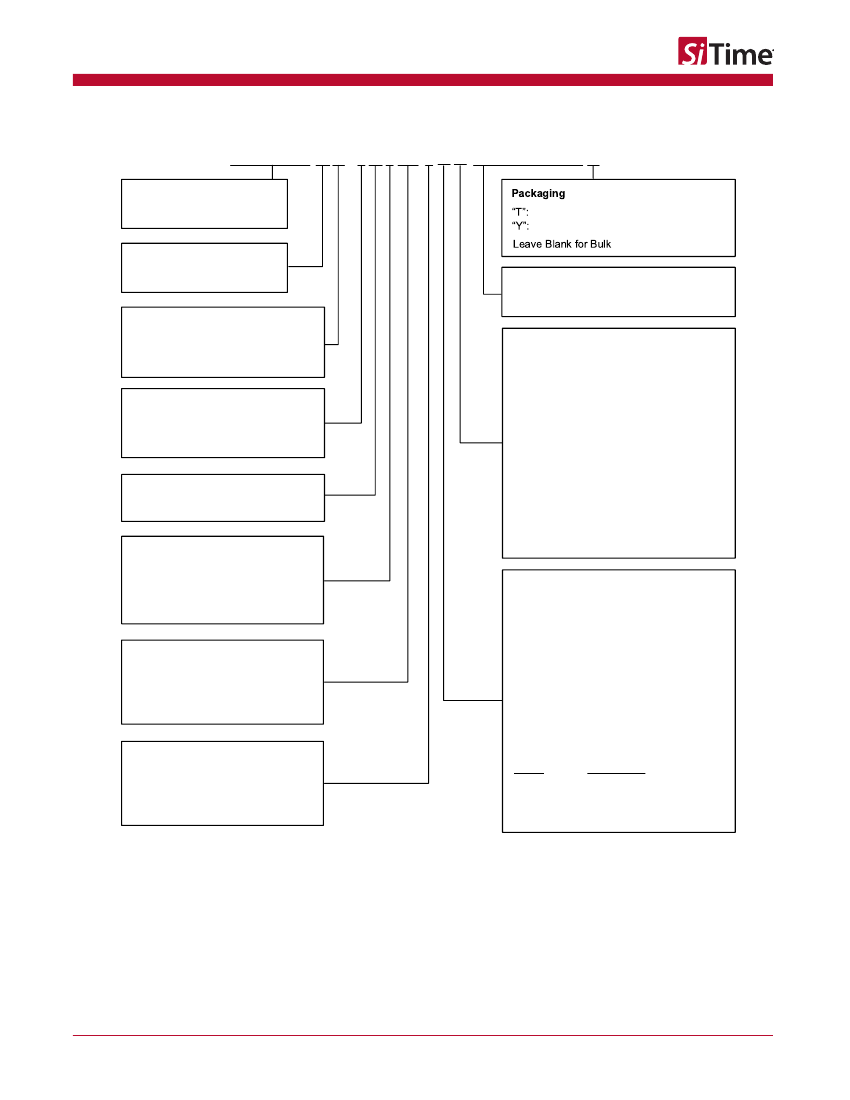
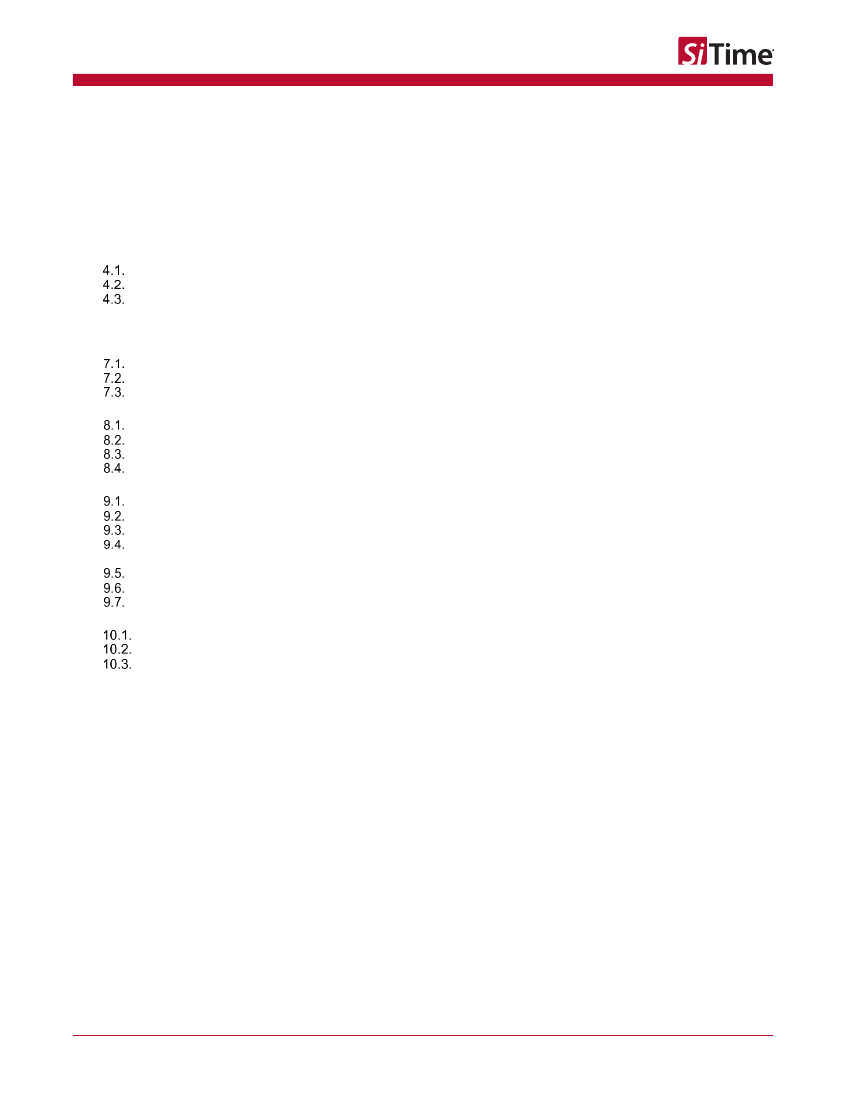
Ordering Information .................................................................................................................................................................... 2
User Programming Interface ..................................................................................................................................... 18
Start-up output frequency and signaling types ........................................................................................................... 18
Any-frequency function ............................................................................................................................................. 19
C/SPI Control Registers...................................................................................................................................................... 28
9 I
Register Address: 0x00. DCO Frequency Control Least Significant Word (LSW) .................................................... 28
Register Address: 0x01. OE Control, DCO Frequency Control Most Significant Word (MSW) ................................. 29
Register Address: 0x02. DCO PULL RANGE CONTROL ........................................................................................ 29
Register Address: 0x03. Frac-N PLL Feedback Divider Integer Value and Frac-N PLL Feedback Divider Fraction
Value MSW ............................................................................................................................................................... 30
Register Address: 0x05. Forward Divider, Driver Control ......................................................................................... 30
Register Address: 0x06. Driver Divider, Driver Control ............................................................................................. 31
2
C Operation ........................................................................................................................................................................ 32
10 I
I
2
C protocol ............................................................................................................................................................... 32
I
2
C Timing Specification ............................................................................................................................................ 35
I
2
C Device Address Modes ....................................................................................................................................... 36
Dimensions and Patterns ........................................................................................................................................................... 43
Additional Information ................................................................................................................................................................ 44
Revision History ......................................................................................................................................................................... 45
Rev 1.01
Page 3 of 45
www.sitime.com
SiT3521
1 to 340 MHz Elite Platform I2C/SPI Programmable Oscillator
1 Electrical Characteristics
All Min and Max limits in the Electrical Characteristics tables are specified over temperature and rated operating voltage with
standard output terminations shown in the termination diagrams. Typical values are at 25°C and nominal supply voltage.
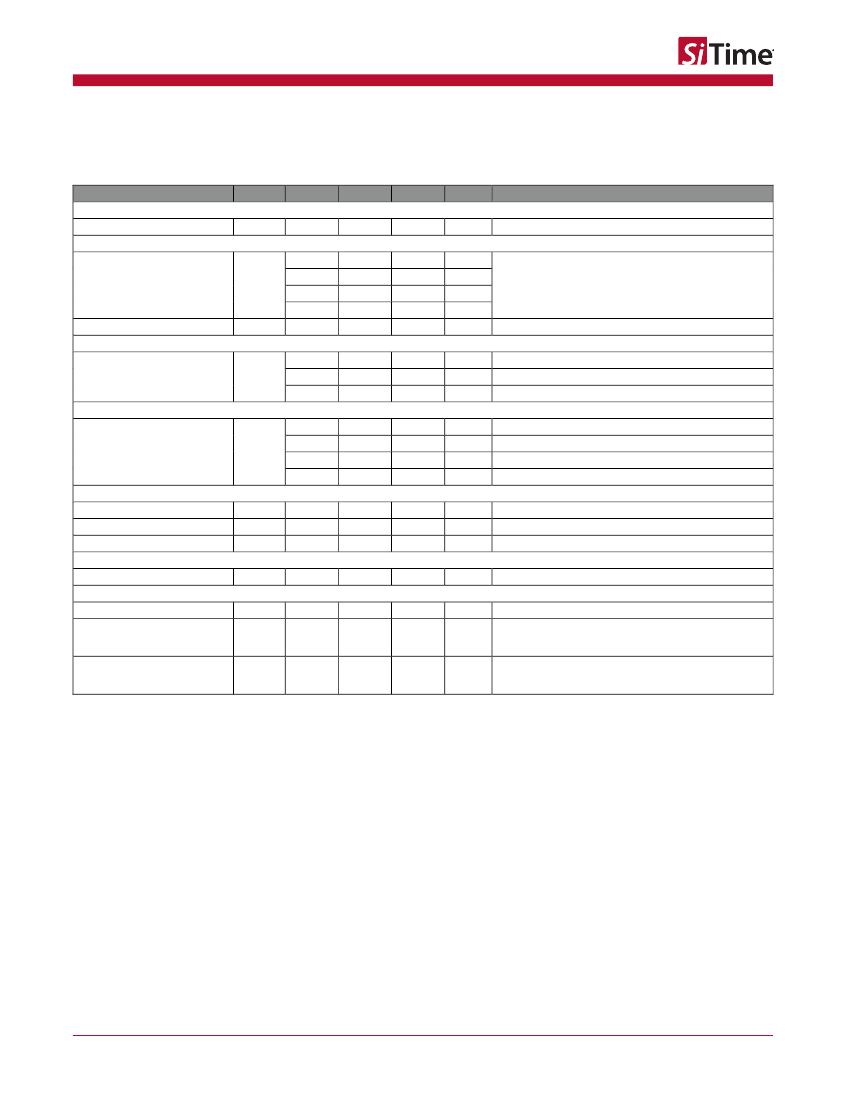
Table 1. Electrical Characteristics – Common to LVPECL, LVDS and HCSL
Parameter
Output Frequency Range
Symbol
f
Min.
1
Typ.
–
–
–
–
–
±1
–
–
–
Max.
340
Unit
MHz
Condition
Factory or user programmable, accurate to 6 decimal places
Frequency Range
Frequency Stability
Frequency Stability
F_stab
-10
-20
-25
-50
First Year Aging
F_1y
–
+10
+20
+25
+50
–
ppm
ppm
ppm
ppm
ppm
°C
°C
°C
1
st
-year aging at 25°C
Inclusive of initial tolerance, operating temperature, rated
power supply voltage and load variations.
Temperature Range
Operating Temperature Range
T_use
-20
-40
-40
+70
+85
+105
Supply Voltage
Supply Voltage
Vdd
2.97
2.7
2.52
2.25
3.3
3.0
2.8
2.5
–
–
100
–
–
–
3.63
3.3
3.08
2.75
–
30%
–
V
V
V
V
Extended Commercial
Industrial
Extended Industrial. Available only for I
2
C operation, not SPI.
Input Characteristics – OE Pin
Input Voltage High
Input Voltage Low
Input Pull-up Impedance
VIH
VIL
Z_in
70%
–
–
Vdd
Vdd
kΩ
OE pin
OE pin
OE pin, logic high or logic low
Output Characteristics
Duty Cycle
DC
45
–
–
55
%
Startup and Output Enable/Disable Timing
Start-up Time
Output Enable/Disable Time –
Hardware control via OE pin
Output Enable/Disable Time –
Software control via I
2
C/SPI
T_start
T_oe_hw
3.0
3.8
ms
µs
Measured from the time Vdd reaches its rated minimum value
Measured from the time OE pin reaches rated VIH and VIL to
the time clock pins reach 90% of swing and high-Z.
See
Figure 9
and
Figure 10
Measured from the time the last byte of command is
transmitted via I
2
C/SPI (reg1) to the time clock pins reach 90%
of swing and high-Z. See
Figure 30
and
Figure 31
T_oe_sw
–
–
6.5
µs
Rev 1.01
Page 4 of 45
www.sitime.com
SiT3521
1 to 340 MHz Elite Platform I2C/SPI Programmable Oscillator
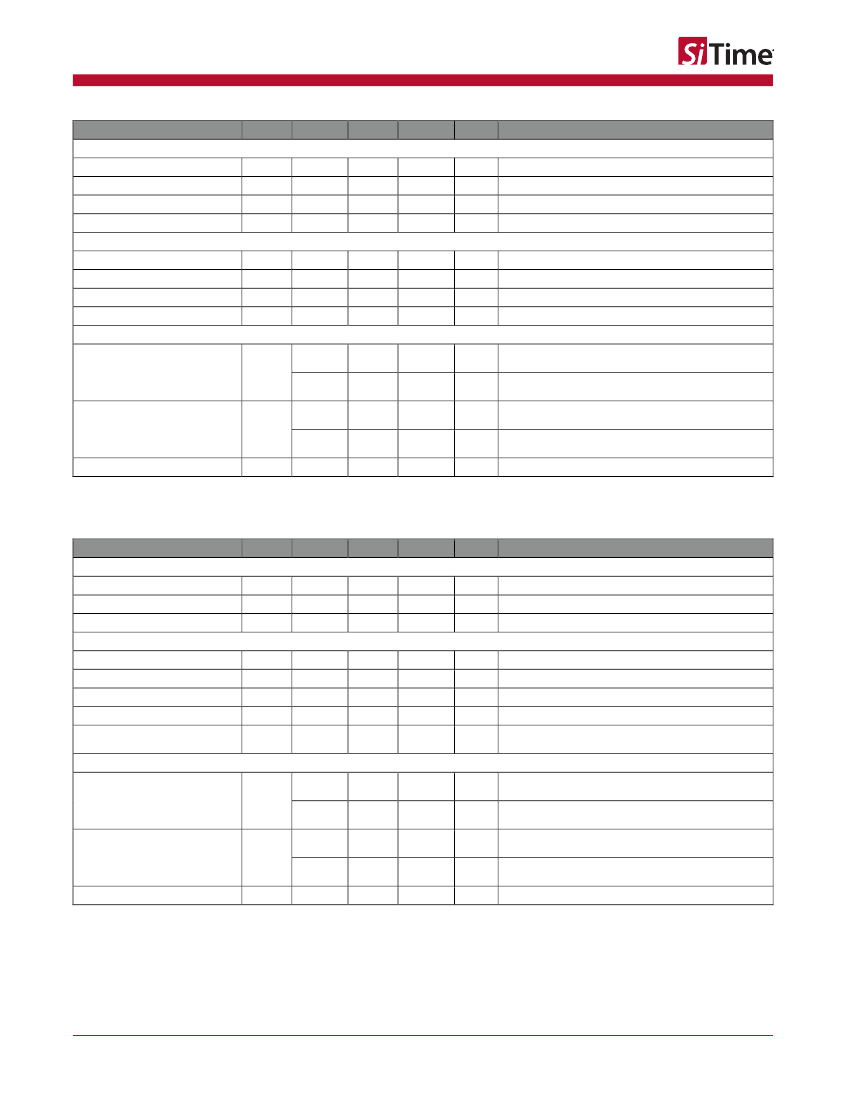
Table 2. Electrical Characteristics – LVPECL Specific
Parameter
Symbol
Min.
Typ.
Max.
Unit
Condition
Current Consumption
Current Consumption
OE Disable Supply Current
Output Disable Leakage Current
Maximum Output Current
Idd
I_OE
I_leak
I_driver
–
–
–
–
–
–
0.15
–
89
58
–
32
mA
mA
A
mA
Excluding Load Termination Current, Vdd = 3.3 V or 2.5 V
OE = Low
OE = Low
Maximum average current drawn from OUT+ or OUT-
Output Characteristics
Output High Voltage
Output Low Voltage
Output Differential Voltage Swing
Rise/Fall Time
VOH
VOL
V_Swing
Tr, Tf
Vdd - 1.1V
Vdd - 1.9V
1.2
–
–
–
1.6
225
Vdd - 0.7V
Vdd - 1.5V
2.0
290
Jitter
RMS Phase Jitter (random) –
DCO Mode Only
T_phj
–
–
RMS Phase Jitter (random) –
Any-frequency Mode Only
T_phj
–
–
RMS Period Jitter
[3]
Note:
3. Measured according to JESD65B.
T_jitt
–
0.225
0.1
0.225
0.11
1
0.340
0.14
0.340
0.15
1.6
ps
ps
ps
ps
ps
f = 156.25 MHz, Integration bandwidth = 12 kHz to 20 MHz,
all Vdd levels
f = 156.25, IEEE802.3-2005 10 GbE jitter mask integration
bandwidth = 1.875 MHz to 20 MHz, all Vdd levels
f = 156.25 MHz, Integration bandwidth = 12 kHz to 20 MHz,
all Vdd levels
f = 156.25, IEEE802.3-2005 10 GbE jitter mask integration
bandwidth = 1.875 MHz to 20 MHz, all Vdd levels
f = 100, 156.25 or 212.5 MHz, Vdd = 3.3 V or 2.5 V
V
V
V
ps
See
Figure 5
See
Figure 5
See
Figure 6
20% to 80%, see
Figure 6
Table 3. Electrical Characteristics – LVDS Specific
Parameter
Symbol
Min.
Typ.
Max.
Unit
Condition
Current Consumption
Current Consumption
OE Disable Supply Current
Output Disable Leakage Current
Idd
I_OE
I_leak
–
–
–
–
–
0.15
80
61
–
mA
mA
A
Excluding Load Termination Current, Vdd = 3.3 V or 2.5 V
OE = Low
OE = Low
Output Characteristics
Differential Output Voltage
Delta VOD
Offset Voltage
Delta VOS
Rise/Fall Time
VOD
ΔVOD
VOS
ΔVOS
Tr, Tf
250
–
1.125
–
–
–
–
–
–
400
455
50
1.375
50
470
Jitter
RMS Phase Jitter (random) –
DCO Mode Only
T_phj
–
–
RMS Phase Jitter (random) –
Any-frequency Mode Only
T_phj
–
–
RMS Period Jitter
[4]
Note:
4. Measured according to JESD65B.
T_jitt
–
0.21
0.1
0.21
0.1
1
0.275
0.12
0.367
0.12
1.6
ps
ps
ps
ps
ps
f = 156.25 MHz, Integration bandwidth = 12 kHz to 20 MHz,
all Vdd levels
f = 156.25, IEEE802.3-2005 10 GbE jitter mask integration
bandwidth = 1.875 MHz to 20 MHz, all Vdd levels
f = 156.25 MHz, Integration bandwidth = 12 kHz to 20 MHz,
all Vdd levels
f = 156.25, IEEE802.3-2005 10 GbE jitter mask integration
bandwidth = 1.875 MHz to 20 MHz, all Vdd levels
f = 100, 156.25 or 212.5 MHz, Vdd = 3.3 V or 2.5 V
mV
mV
V
mV
ps
f = 156.25MHz See
Figure 7
See
Figure 7
See
Figure 7
See
Figure 7
Measured with 2 pF capacitive loading to GND, 20% to 80%,
After the boot card is made, use the following steps to update or replace the system. Burn/update Android/ubuntu/Linux system 1. Select the SecureCRT software, select the number key "1", download the ...
I am using the Tm4c123GH6PM development board. When I use ccs7.0 to import the mpu9150 routine of TivaWare, an error occurs when I compile it. Why is this? There is no problem importing other routines...
[b]2212 external FLASH and RAM usage. ! ! [/b][size=9pt]Hello everyone: I want to ask SMARTARM2200, if I change LPC2210 to LPC2212, I want the program to run in 2212, set BOOT1:0 to 11, so that the pr...
Abstract: This paper introduces the communication mode of GPS vehicle monitoring system. Based on the introduction of cluster system, this paper focuses on the application of cluster communication tec...
[i=s]This post was last edited by dontium on 2015-1-23 13:12[/i]
An indoor lighting case on the TI website. The chip is TI PMP4289. Because the circuit diagram is complicated, I can't analyze the vari...
Introduction
Power subsystems are becoming more and more integrated into the overall system. Power systems have moved from being separate "essential dangerous devices" to being monitorable...[Details]
With the rapid development of urban economy, elevators are increasingly used as a vertical transportation tool. However, elevator fault detection and maintenance, especially the role of elevator remot...[Details]
The data collector of the automatic weather station is generally designed based on a single-chip microcomputer or a PC/104 bus controller. It has the characteristics of good compatibility with PC, low...[Details]
LED is the abbreviation of light emitting diode, which is an electric light source made of semiconductor technology. The core part of LED is a chip composed of P-type semiconductor and N-type semi...[Details]
Capacitors
are basic components in various electronic devices and are widely used for bypassing, coupling,
filtering
, tuning, etc. in electronic circuits. However, to use capacitors,...[Details]
1. Disadvantages of choosing too high a voltage level
Choosing too high a voltage level will result in too high an investment and a long payback period. As the voltage level increases, the...[Details]
It is well known to automotive suppliers that automakers are demanding more from their supply base. For connector suppliers, this means stricter requirements for product performance, stability and ...[Details]
Abstract: With the development and construction of BeiDou II system, China will shift from the situation dominated by GPS to the situation dominated by BeiDou II global navigation system independen...[Details]
The era of mobile access to the Internet has arrived, and it will rapidly change the business and infrastructure needs of mobile operators under a whole new trend of requirements. We need 4G LTE to...[Details]
Traditional
virtual instruments
consist of a data acquisition
board
based on PCI bus and
corresponding software. However, with
the rapid development of
computer
network techno...[Details]
1 Introduction
Ultrasound refers to elastic vibration with a frequency higher than the audible frequency limit (i.e., in the frequency band above 20 kHz). The propagation process of this vib...[Details]
The above is to use MB1404 as a stereo composite signal transmitter. You can use the internal high-frequency amplifier and oscillator or not! According to my experience, I still recommend beginners...[Details]
Cars equipped with xenon headlights are already common on the road. Whether they are standard equipment on high-end cars or embellishments on modified cars, xenon lamps are gradually becoming a sym...[Details]
Nowadays, more and more people have digital cameras. The convenience and speed of digital cameras have gradually replaced film cameras and become the main tool for people's daily photography. The n...[Details]
Stepper motors, also called steppers, use the principles of electromagnetism to convert electrical energy into mechanical energy and have been used since the 1920s. With the increasing popularity o...[Details]

 ARM Technology
 京公网安备 11010802033920号
 EEWORLD