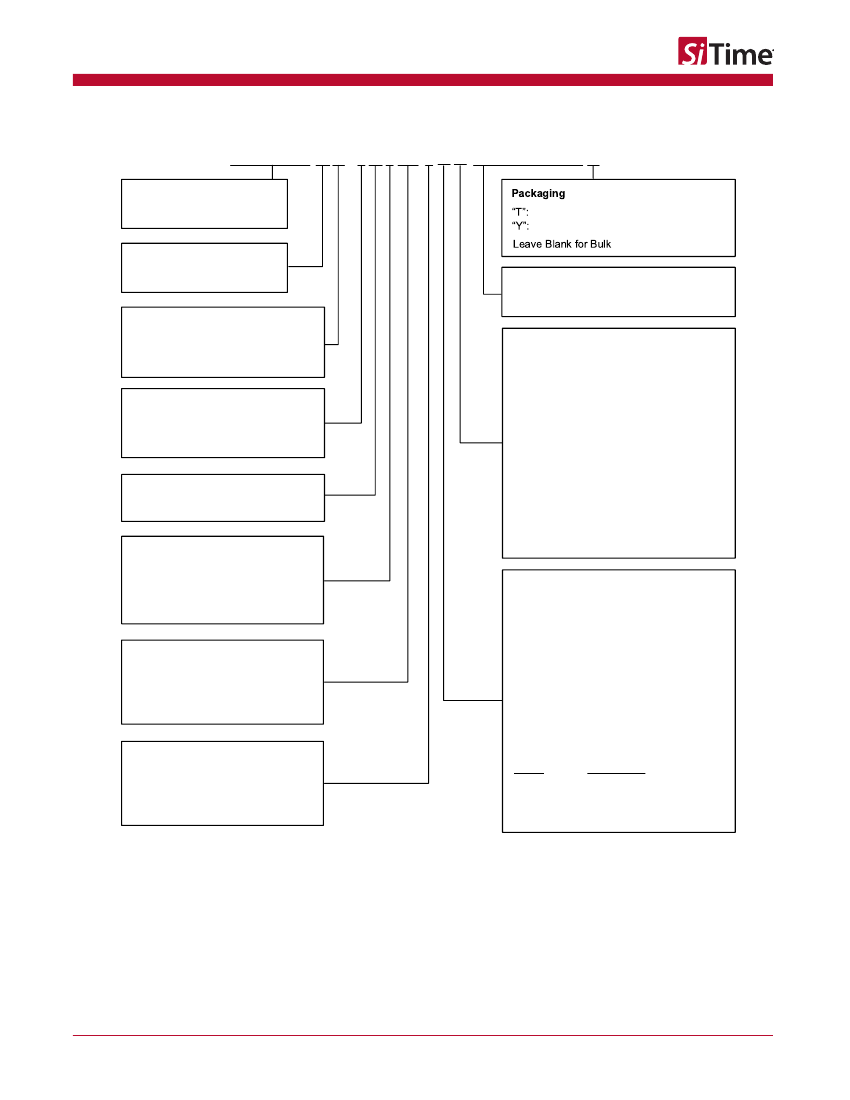
Ordering Information .................................................................................................................................................................... 2
User Programming Interface ..................................................................................................................................... 18
Start-up output frequency and signaling types ........................................................................................................... 18
Any-frequency function ............................................................................................................................................. 19
C/SPI Control Registers...................................................................................................................................................... 28
9 I
Register Address: 0x00. DCO Frequency Control Least Significant Word (LSW) .................................................... 28
Register Address: 0x01. OE Control, DCO Frequency Control Most Significant Word (MSW) ................................. 29
Register Address: 0x02. DCO PULL RANGE CONTROL ........................................................................................ 29
Register Address: 0x03. Frac-N PLL Feedback Divider Integer Value and Frac-N PLL Feedback Divider Fraction
Value MSW ............................................................................................................................................................... 30
Register Address: 0x05. Forward Divider, Driver Control ......................................................................................... 30
Register Address: 0x06. Driver Divider, Driver Control ............................................................................................. 31
2
C Operation ........................................................................................................................................................................ 32
10 I
I
2
C protocol ............................................................................................................................................................... 32
I
2
C Timing Specification ............................................................................................................................................ 35
I
2
C Device Address Modes ....................................................................................................................................... 36
Dimensions and Patterns ........................................................................................................................................................... 43
Additional Information ................................................................................................................................................................ 44
Revision History ......................................................................................................................................................................... 45
Rev 1.01
Page 3 of 45
www.sitime.com
SiT3521
1 to 340 MHz Elite Platform I2C/SPI Programmable Oscillator
1 Electrical Characteristics
All Min and Max limits in the Electrical Characteristics tables are specified over temperature and rated operating voltage with
standard output terminations shown in the termination diagrams. Typical values are at 25°C and nominal supply voltage.
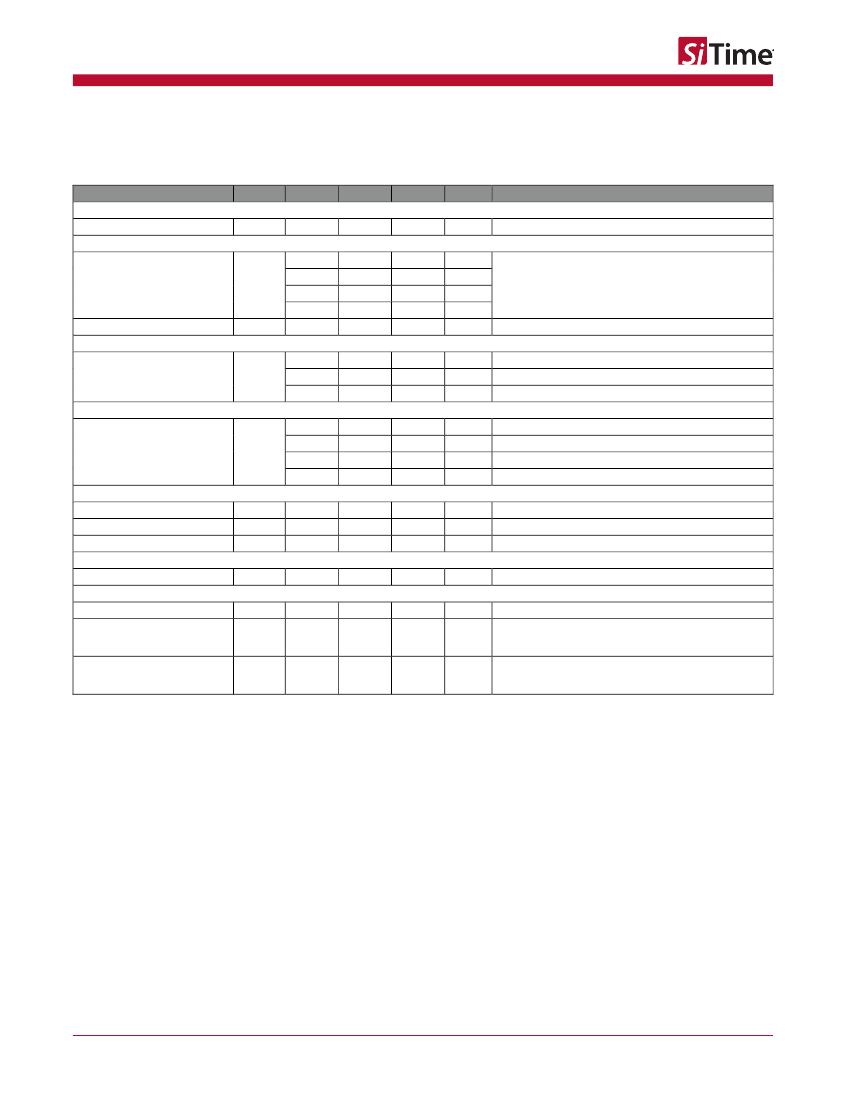
Table 1. Electrical Characteristics – Common to LVPECL, LVDS and HCSL
Parameter
Output Frequency Range
Symbol
f
Min.
1
Typ.
–
–
–
–
–
±1
–
–
–
Max.
340
Unit
MHz
Condition
Factory or user programmable, accurate to 6 decimal places
Frequency Range
Frequency Stability
Frequency Stability
F_stab
-10
-20
-25
-50
First Year Aging
F_1y
–
+10
+20
+25
+50
–
ppm
ppm
ppm
ppm
ppm
°C
°C
°C
1
st
-year aging at 25°C
Inclusive of initial tolerance, operating temperature, rated
power supply voltage and load variations.
Temperature Range
Operating Temperature Range
T_use
-20
-40
-40
+70
+85
+105
Supply Voltage
Supply Voltage
Vdd
2.97
2.7
2.52
2.25
3.3
3.0
2.8
2.5
–
–
100
–
–
–
3.63
3.3
3.08
2.75
–
30%
–
V
V
V
V
Extended Commercial
Industrial
Extended Industrial. Available only for I
2
C operation, not SPI.
Input Characteristics – OE Pin
Input Voltage High
Input Voltage Low
Input Pull-up Impedance
VIH
VIL
Z_in
70%
–
–
Vdd
Vdd
kΩ
OE pin
OE pin
OE pin, logic high or logic low
Output Characteristics
Duty Cycle
DC
45
–
–
55
%
Startup and Output Enable/Disable Timing
Start-up Time
Output Enable/Disable Time –
Hardware control via OE pin
Output Enable/Disable Time –
Software control via I
2
C/SPI
T_start
T_oe_hw
3.0
3.8
ms
µs
Measured from the time Vdd reaches its rated minimum value
Measured from the time OE pin reaches rated VIH and VIL to
the time clock pins reach 90% of swing and high-Z.
See
Figure 9
and
Figure 10
Measured from the time the last byte of command is
transmitted via I
2
C/SPI (reg1) to the time clock pins reach 90%
of swing and high-Z. See
Figure 30
and
Figure 31
T_oe_sw
–
–
6.5
µs
Rev 1.01
Page 4 of 45
www.sitime.com
SiT3521
1 to 340 MHz Elite Platform I2C/SPI Programmable Oscillator
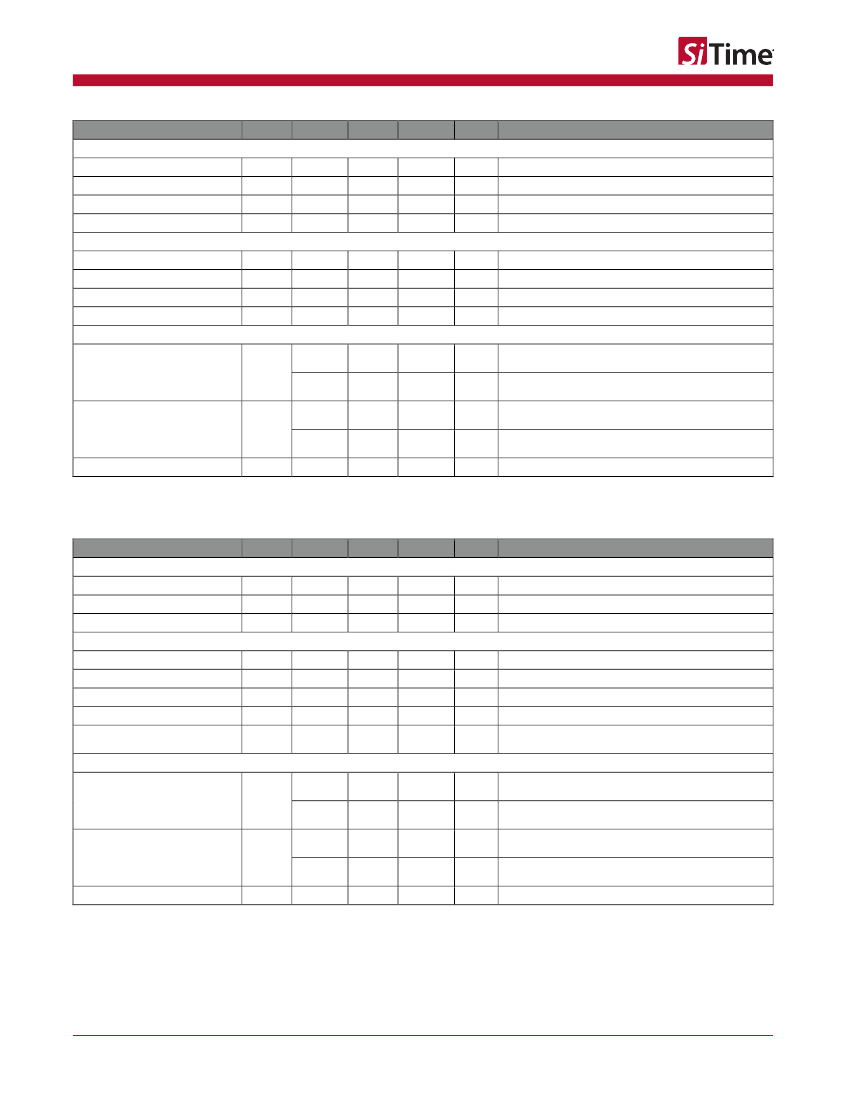
Table 2. Electrical Characteristics – LVPECL Specific
Parameter
Symbol
Min.
Typ.
Max.
Unit
Condition
Current Consumption
Current Consumption
OE Disable Supply Current
Output Disable Leakage Current
Maximum Output Current
Idd
I_OE
I_leak
I_driver
–
–
–
–
–
–
0.15
–
89
58
–
32
mA
mA
A
mA
Excluding Load Termination Current, Vdd = 3.3 V or 2.5 V
OE = Low
OE = Low
Maximum average current drawn from OUT+ or OUT-
Output Characteristics
Output High Voltage
Output Low Voltage
Output Differential Voltage Swing
Rise/Fall Time
VOH
VOL
V_Swing
Tr, Tf
Vdd - 1.1V
Vdd - 1.9V
1.2
–
–
–
1.6
225
Vdd - 0.7V
Vdd - 1.5V
2.0
290
Jitter
RMS Phase Jitter (random) –
DCO Mode Only
T_phj
–
–
RMS Phase Jitter (random) –
Any-frequency Mode Only
T_phj
–
–
RMS Period Jitter
[3]
Note:
3. Measured according to JESD65B.
T_jitt
–
0.225
0.1
0.225
0.11
1
0.340
0.14
0.340
0.15
1.6
ps
ps
ps
ps
ps
f = 156.25 MHz, Integration bandwidth = 12 kHz to 20 MHz,
all Vdd levels
f = 156.25, IEEE802.3-2005 10 GbE jitter mask integration
bandwidth = 1.875 MHz to 20 MHz, all Vdd levels
f = 156.25 MHz, Integration bandwidth = 12 kHz to 20 MHz,
all Vdd levels
f = 156.25, IEEE802.3-2005 10 GbE jitter mask integration
bandwidth = 1.875 MHz to 20 MHz, all Vdd levels
f = 100, 156.25 or 212.5 MHz, Vdd = 3.3 V or 2.5 V
V
V
V
ps
See
Figure 5
See
Figure 5
See
Figure 6
20% to 80%, see
Figure 6
Table 3. Electrical Characteristics – LVDS Specific
Parameter
Symbol
Min.
Typ.
Max.
Unit
Condition
Current Consumption
Current Consumption
OE Disable Supply Current
Output Disable Leakage Current
Idd
I_OE
I_leak
–
–
–
–
–
0.15
80
61
–
mA
mA
A
Excluding Load Termination Current, Vdd = 3.3 V or 2.5 V
OE = Low
OE = Low
Output Characteristics
Differential Output Voltage
Delta VOD
Offset Voltage
Delta VOS
Rise/Fall Time
VOD
ΔVOD
VOS
ΔVOS
Tr, Tf
250
–
1.125
–
–
–
–
–
–
400
455
50
1.375
50
470
Jitter
RMS Phase Jitter (random) –
DCO Mode Only
T_phj
–
–
RMS Phase Jitter (random) –
Any-frequency Mode Only
T_phj
–
–
RMS Period Jitter
[4]
Note:
4. Measured according to JESD65B.
T_jitt
–
0.21
0.1
0.21
0.1
1
0.275
0.12
0.367
0.12
1.6
ps
ps
ps
ps
ps
f = 156.25 MHz, Integration bandwidth = 12 kHz to 20 MHz,
all Vdd levels
f = 156.25, IEEE802.3-2005 10 GbE jitter mask integration
bandwidth = 1.875 MHz to 20 MHz, all Vdd levels
f = 156.25 MHz, Integration bandwidth = 12 kHz to 20 MHz,
all Vdd levels
f = 156.25, IEEE802.3-2005 10 GbE jitter mask integration
bandwidth = 1.875 MHz to 20 MHz, all Vdd levels
f = 100, 156.25 or 212.5 MHz, Vdd = 3.3 V or 2.5 V
mV
mV
V
mV
ps
f = 156.25MHz See
Figure 7
See
Figure 7
See
Figure 7
See
Figure 7
Measured with 2 pF capacitive loading to GND, 20% to 80%,
I'm using TMS3705 as a card reader recently! Has anyone used this chip? Please give me some advice. I don't know how it reads the card and how the data is sent to the MCU. Can you give me some informa...
[align=left][font=宋体]As the title says, for a detailed introduction of each model, please see →[/font][url=https://ezchina.analog.com/thread/14817][b]https://ezchina.analog.com/thread/14817[/b][/url][...
[table][tr][td=1,1,4%]Question:[/td][td=1,1,96%]Please let Mr. George Shen, DSP technical expert of TI, and Mr. Wang Jian, Account Manager of TI, introduce themselves. [color=#ff0000](10:36:50 AM)[/co...
[size=4]Noise amplification causeContact with other components [/size] [size=4] [/size] [size=4]In a power circuit board where many electronic components and devices are mounted at a high density, if ...
[size=5]I happened to see someone else's example program, where the buzzer emits the tone of "Do Re Mi Fa So La Xi Duo". ~~~ After modifying it, I uploaded the project for everyone to try~~~[/size]...
With the rapid development of science and technology, especially the widespread application of digital technology and various ultra-large-scale integrated circuits, electronic equipment, especially...[Details]
With the rapid development of urban economy, elevators are increasingly used as a vertical transportation tool. However, elevator fault detection and maintenance, especially the role of elevator remot...[Details]
Instrument stepper motor
The stepper motor is an open-loop control element that converts electrical pulse signals into angular displacement or linear displacement. In the case of non...[Details]
Vertical cavity surface emitting lasers (VCSELs) are gradually replacing traditional edge emitting lasers, especially in low bandwidth and short-distance communication systems where cost factors ar...[Details]
LED is the abbreviation of light emitting diode, which is an electric light source made of semiconductor technology. The core part of LED is a chip composed of P-type semiconductor and N-type semi...[Details]
introduction
MAX6636 is a multi-channel precision temperature monitor that can not only monitor local temperature, but also connect up to 6 diodes externally. Each channel has a programmable...[Details]
Capacitance Measurement
Used to verify that capacitors meet the manufacturer's specifications. For quality control, a group of capacitors may be placed in an environmental chamber and the cap...[Details]
Motors are important products that convert electrical energy into mechanical energy to achieve automation, and they are widely used in industrial control, medical electronics, white a...[Details]
It is well known to automotive suppliers that automakers are demanding more from their supply base. For connector suppliers, this means stricter requirements for product performance, stability and ...[Details]
Introduction
Automakers are working to reduce vehicle weight to reduce CO2 emissions and improve fuel efficiency. Designers are therefore seeking new technologies and design techniques that can...[Details]
The era of mobile access to the Internet has arrived, and it will rapidly change the business and infrastructure needs of mobile operators under a whole new trend of requirements. We need 4G LTE to...[Details]
The rectified DC voltage is then converted back to AC using power electronics such as insulated gate bipolar transistors.
The output voltage is switched on and off at a high frequency, control...[Details]
The invention of the steam engine ushered in the first conversion of internal energy and mechanical energy for mankind, and the birth of the internal combustion engine at the end of the 19th centur...[Details]
introduction
When it comes to the production of mobile phone lithium-ion batteries, the first thing that comes to mind is Japan's industrialized mechanical assembly line, NOKIO, MOTOLROLA's st...[Details]
Features
POE technology can ensure the safety of existing structured cabling while ensuring the normal operation of the existing network and minimizing costs. The IEEE 802.3af standard is ...[Details]

 Microcontroller MCU
 京公网安备 11010802033920号
 EEWORLD