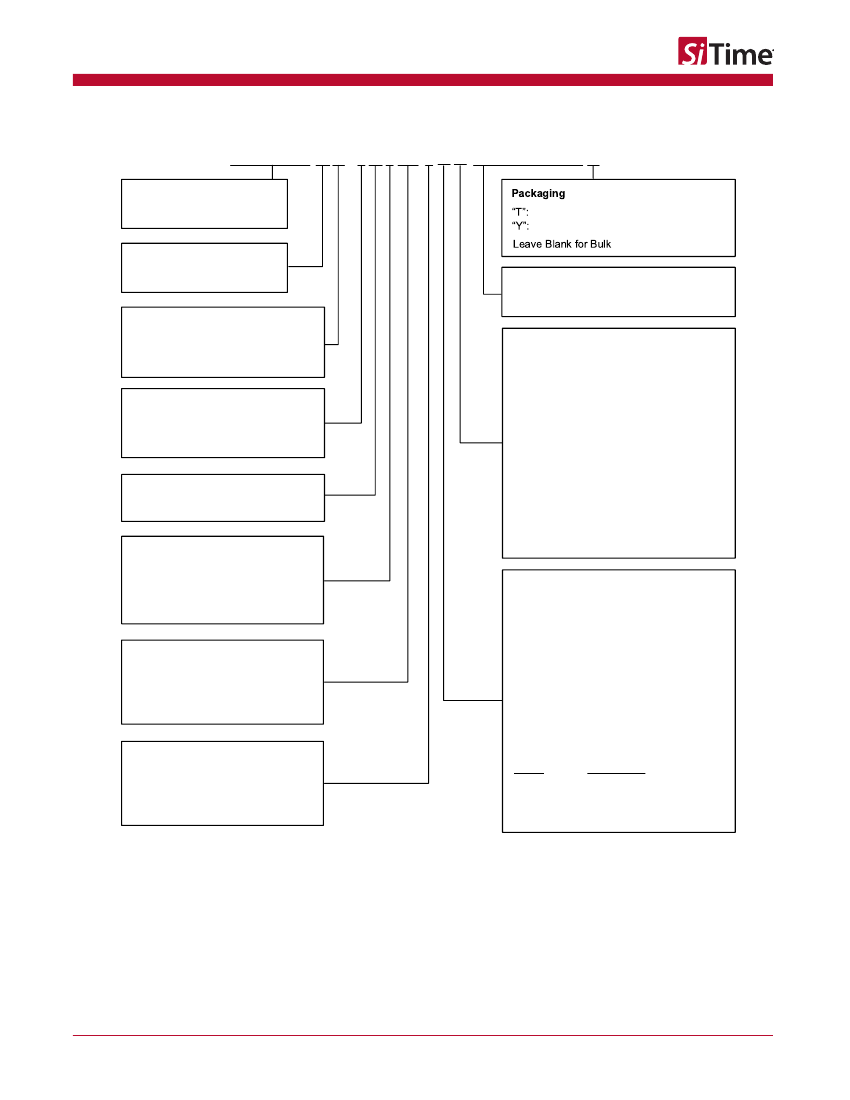
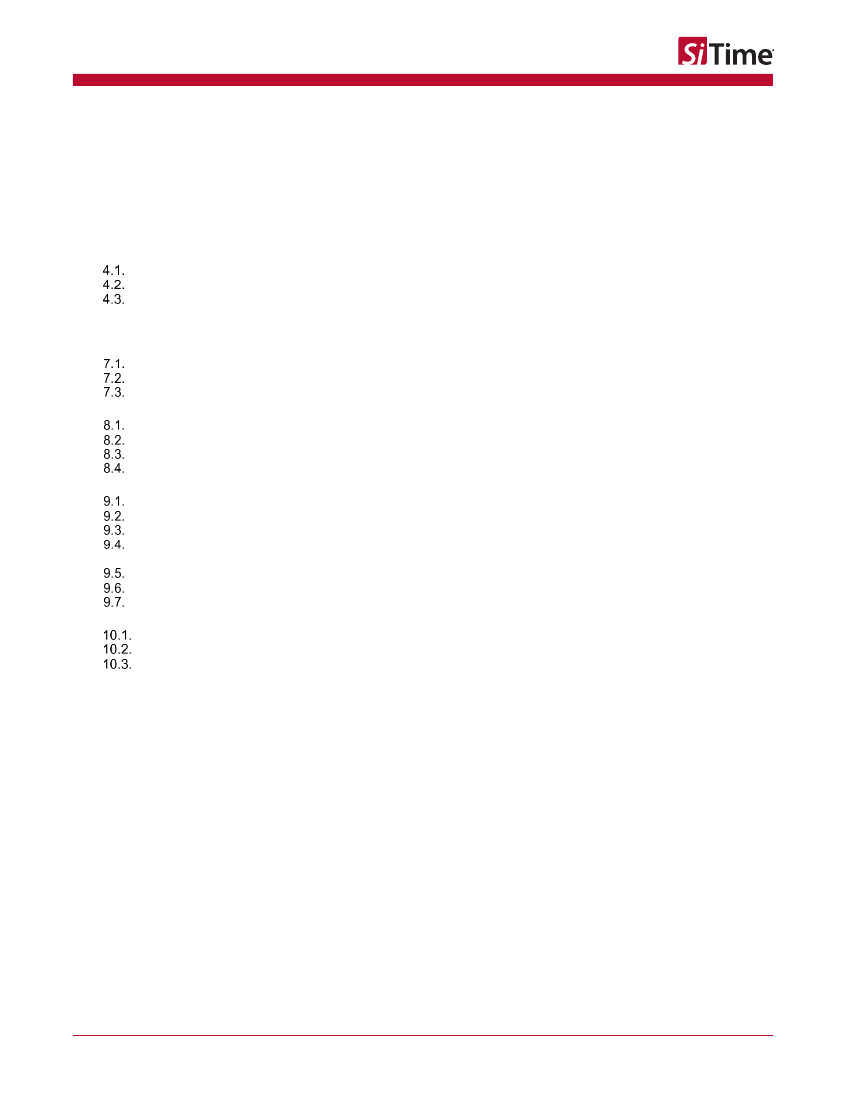
Ordering Information .................................................................................................................................................................... 2
User Programming Interface ..................................................................................................................................... 18
Start-up output frequency and signaling types ........................................................................................................... 18
Any-frequency function ............................................................................................................................................. 19
C/SPI Control Registers...................................................................................................................................................... 28
9 I
Register Address: 0x00. DCO Frequency Control Least Significant Word (LSW) .................................................... 28
Register Address: 0x01. OE Control, DCO Frequency Control Most Significant Word (MSW) ................................. 29
Register Address: 0x02. DCO PULL RANGE CONTROL ........................................................................................ 29
Register Address: 0x03. Frac-N PLL Feedback Divider Integer Value and Frac-N PLL Feedback Divider Fraction
Value MSW ............................................................................................................................................................... 30
Register Address: 0x05. Forward Divider, Driver Control ......................................................................................... 30
Register Address: 0x06. Driver Divider, Driver Control ............................................................................................. 31
2
C Operation ........................................................................................................................................................................ 32
10 I
I
2
C protocol ............................................................................................................................................................... 32
I
2
C Timing Specification ............................................................................................................................................ 35
I
2
C Device Address Modes ....................................................................................................................................... 36
Dimensions and Patterns ........................................................................................................................................................... 43
Additional Information ................................................................................................................................................................ 44
Revision History ......................................................................................................................................................................... 45
Rev 1.01
Page 3 of 45
www.sitime.com
SiT3521
1 to 340 MHz Elite Platform I2C/SPI Programmable Oscillator
1 Electrical Characteristics
All Min and Max limits in the Electrical Characteristics tables are specified over temperature and rated operating voltage with
standard output terminations shown in the termination diagrams. Typical values are at 25°C and nominal supply voltage.
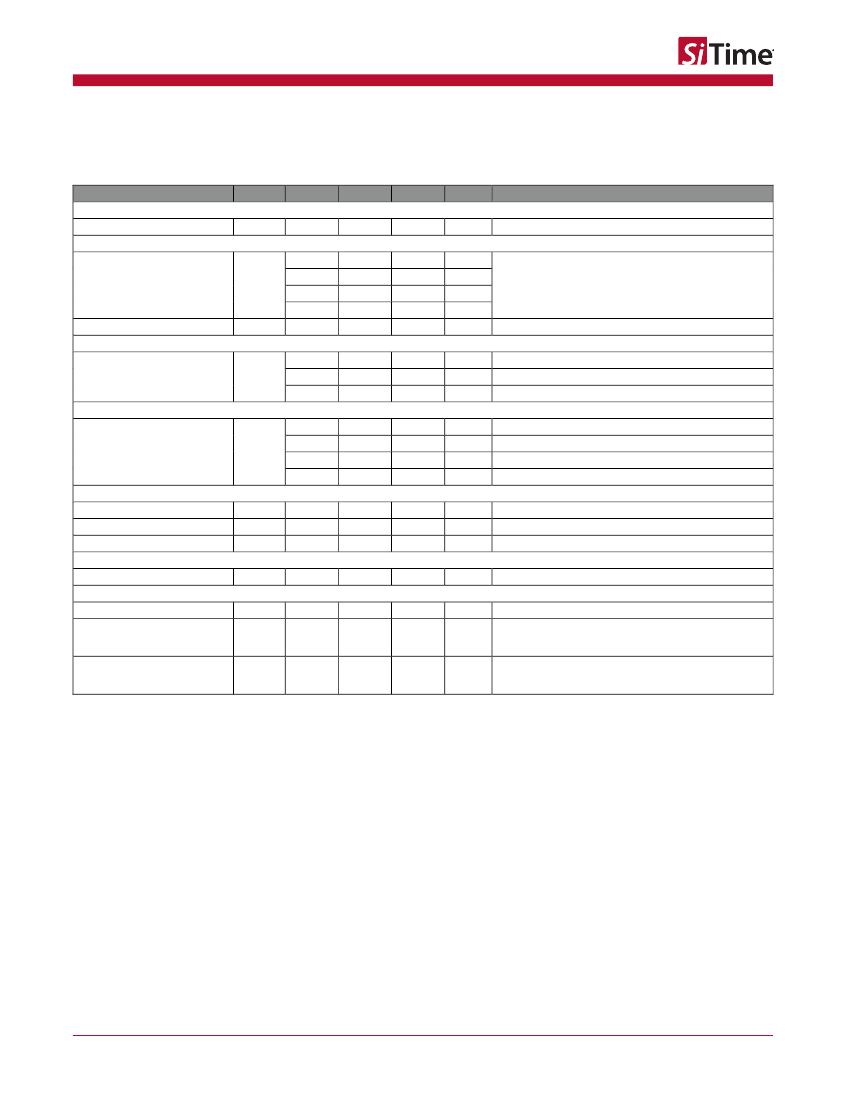
Table 1. Electrical Characteristics – Common to LVPECL, LVDS and HCSL
Parameter
Output Frequency Range
Symbol
f
Min.
1
Typ.
–
–
–
–
–
±1
–
–
–
Max.
340
Unit
MHz
Condition
Factory or user programmable, accurate to 6 decimal places
Frequency Range
Frequency Stability
Frequency Stability
F_stab
-10
-20
-25
-50
First Year Aging
F_1y
–
+10
+20
+25
+50
–
ppm
ppm
ppm
ppm
ppm
°C
°C
°C
1
st
-year aging at 25°C
Inclusive of initial tolerance, operating temperature, rated
power supply voltage and load variations.
Temperature Range
Operating Temperature Range
T_use
-20
-40
-40
+70
+85
+105
Supply Voltage
Supply Voltage
Vdd
2.97
2.7
2.52
2.25
3.3
3.0
2.8
2.5
–
–
100
–
–
–
3.63
3.3
3.08
2.75
–
30%
–
V
V
V
V
Extended Commercial
Industrial
Extended Industrial. Available only for I
2
C operation, not SPI.
Input Characteristics – OE Pin
Input Voltage High
Input Voltage Low
Input Pull-up Impedance
VIH
VIL
Z_in
70%
–
–
Vdd
Vdd
kΩ
OE pin
OE pin
OE pin, logic high or logic low
Output Characteristics
Duty Cycle
DC
45
–
–
55
%
Startup and Output Enable/Disable Timing
Start-up Time
Output Enable/Disable Time –
Hardware control via OE pin
Output Enable/Disable Time –
Software control via I
2
C/SPI
T_start
T_oe_hw
3.0
3.8
ms
µs
Measured from the time Vdd reaches its rated minimum value
Measured from the time OE pin reaches rated VIH and VIL to
the time clock pins reach 90% of swing and high-Z.
See
Figure 9
and
Figure 10
Measured from the time the last byte of command is
transmitted via I
2
C/SPI (reg1) to the time clock pins reach 90%
of swing and high-Z. See
Figure 30
and
Figure 31
T_oe_sw
–
–
6.5
µs
Rev 1.01
Page 4 of 45
www.sitime.com
SiT3521
1 to 340 MHz Elite Platform I2C/SPI Programmable Oscillator
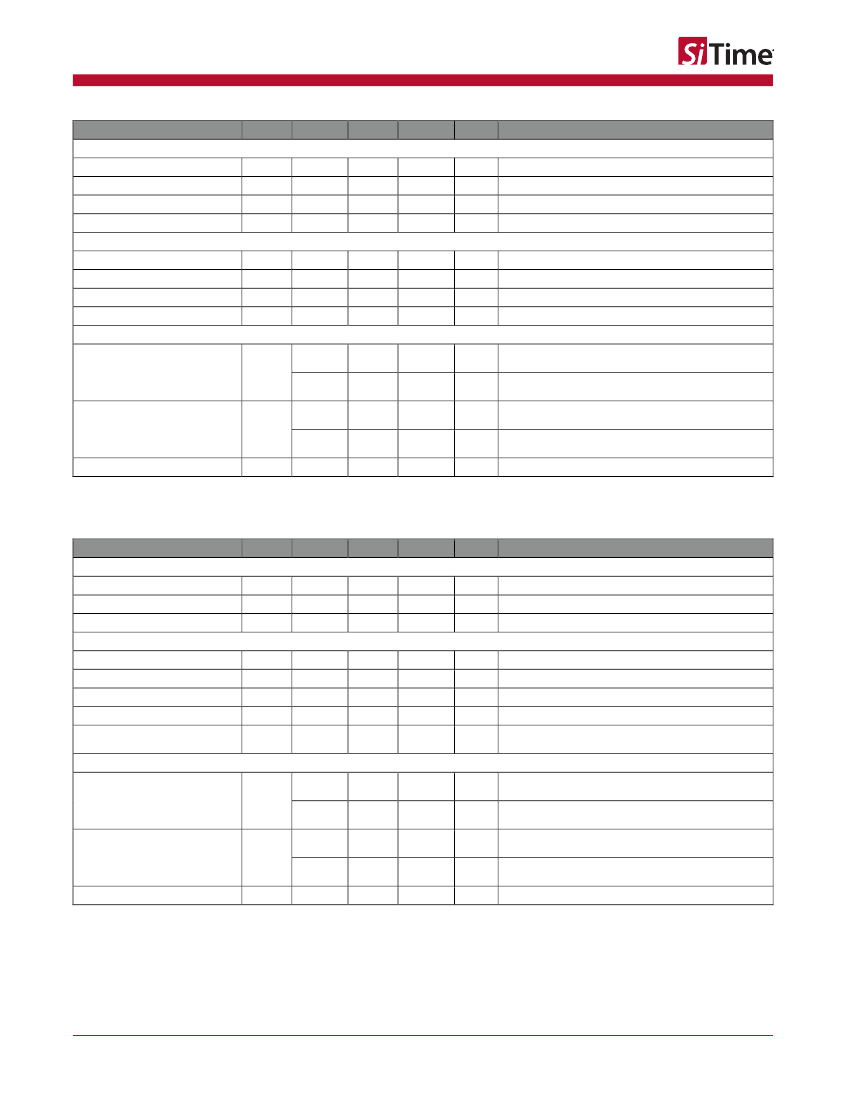
Table 2. Electrical Characteristics – LVPECL Specific
Parameter
Symbol
Min.
Typ.
Max.
Unit
Condition
Current Consumption
Current Consumption
OE Disable Supply Current
Output Disable Leakage Current
Maximum Output Current
Idd
I_OE
I_leak
I_driver
–
–
–
–
–
–
0.15
–
89
58
–
32
mA
mA
A
mA
Excluding Load Termination Current, Vdd = 3.3 V or 2.5 V
OE = Low
OE = Low
Maximum average current drawn from OUT+ or OUT-
Output Characteristics
Output High Voltage
Output Low Voltage
Output Differential Voltage Swing
Rise/Fall Time
VOH
VOL
V_Swing
Tr, Tf
Vdd - 1.1V
Vdd - 1.9V
1.2
–
–
–
1.6
225
Vdd - 0.7V
Vdd - 1.5V
2.0
290
Jitter
RMS Phase Jitter (random) –
DCO Mode Only
T_phj
–
–
RMS Phase Jitter (random) –
Any-frequency Mode Only
T_phj
–
–
RMS Period Jitter
[3]
Note:
3. Measured according to JESD65B.
T_jitt
–
0.225
0.1
0.225
0.11
1
0.340
0.14
0.340
0.15
1.6
ps
ps
ps
ps
ps
f = 156.25 MHz, Integration bandwidth = 12 kHz to 20 MHz,
all Vdd levels
f = 156.25, IEEE802.3-2005 10 GbE jitter mask integration
bandwidth = 1.875 MHz to 20 MHz, all Vdd levels
f = 156.25 MHz, Integration bandwidth = 12 kHz to 20 MHz,
all Vdd levels
f = 156.25, IEEE802.3-2005 10 GbE jitter mask integration
bandwidth = 1.875 MHz to 20 MHz, all Vdd levels
f = 100, 156.25 or 212.5 MHz, Vdd = 3.3 V or 2.5 V
V
V
V
ps
See
Figure 5
See
Figure 5
See
Figure 6
20% to 80%, see
Figure 6
Table 3. Electrical Characteristics – LVDS Specific
Parameter
Symbol
Min.
Typ.
Max.
Unit
Condition
Current Consumption
Current Consumption
OE Disable Supply Current
Output Disable Leakage Current
Idd
I_OE
I_leak
–
–
–
–
–
0.15
80
61
–
mA
mA
A
Excluding Load Termination Current, Vdd = 3.3 V or 2.5 V
OE = Low
OE = Low
Output Characteristics
Differential Output Voltage
Delta VOD
Offset Voltage
Delta VOS
Rise/Fall Time
VOD
ΔVOD
VOS
ΔVOS
Tr, Tf
250
–
1.125
–
–
–
–
–
–
400
455
50
1.375
50
470
Jitter
RMS Phase Jitter (random) –
DCO Mode Only
T_phj
–
–
RMS Phase Jitter (random) –
Any-frequency Mode Only
T_phj
–
–
RMS Period Jitter
[4]
Note:
4. Measured according to JESD65B.
T_jitt
–
0.21
0.1
0.21
0.1
1
0.275
0.12
0.367
0.12
1.6
ps
ps
ps
ps
ps
f = 156.25 MHz, Integration bandwidth = 12 kHz to 20 MHz,
all Vdd levels
f = 156.25, IEEE802.3-2005 10 GbE jitter mask integration
bandwidth = 1.875 MHz to 20 MHz, all Vdd levels
f = 156.25 MHz, Integration bandwidth = 12 kHz to 20 MHz,
all Vdd levels
f = 156.25, IEEE802.3-2005 10 GbE jitter mask integration
bandwidth = 1.875 MHz to 20 MHz, all Vdd levels
f = 100, 156.25 or 212.5 MHz, Vdd = 3.3 V or 2.5 V
mV
mV
V
mV
ps
f = 156.25MHz See
Figure 7
See
Figure 7
See
Figure 7
See
Figure 7
Measured with 2 pF capacitive loading to GND, 20% to 80%,
Can you guys help me see how to transfer a string from the host client to the DSP via RTDX? The host client is written in VC. There is no problem with transferring data, but when transferring strings,...
Is this the Keil5 needed for playing with STM32? [color=#333333][font=微软雅黑]1. The installation file I downloaded is ds-mdk5243001.msi[/font][/color] [color=#333333][font=微软雅黑]2. After installation, it...
I just DIYed a 1680 dot matrix screen and would like to share it with you. Please point out some shortcomings and areas that need improvement. Please feel free to give me your advice! :titter:
The pho...
I drew a new board and made ten of them for experiment. But there was a problem during the experiment. When the power was on, the program sometimes did not run. But after shutting down and restarting,...
Radio frequency cable connectors are something we often come into contact with in our daily lives, and many people need to choose and purchase them themselves. So, which radio frequency cable connecto...
[i=s] This post was last edited by serialworld on 2018-10-4 07:30 [/i] Is it possible to use the math functions provided by the compiler after GD32F350 turns on FPU? The program crashes after calling ...
All electronic design engineers and scientists have performed electrical signal analysis, or signal analysis for short. Through this basic measurement, they can gain insight into signal details and...[Details]
In public places such as schools, government agencies, factories and mines, as well as public corridors in residential areas, the phenomenon of long-burning lights is very common, which causes a h...[Details]
introduction
For the voltage regulator modules (VRMs) that power the latest computer central processing units (CPUs), power supply designers have historically used multiphase interleaved b...[Details]
Introduction
Power subsystems are becoming more and more integrated into the overall system. Power systems have moved from being separate "essential dangerous devices" to being monitorable...[Details]
1. Introduction
At present, most lighting equipment still uses traditional energy for lighting. Making full use of solar energy as the energy supply for lighting equipment is of great si...[Details]
Overview:
This paper introduces a method of connecting a CAN-bus network with Ethernet to form a medium-sized remote monitoring/data transmission network.
CAN (Controller Area Network) is ...[Details]
Many battery-powered systems require a visual indicator to show when the battery needs to be replaced. LEDs are commonly used for this purpose, but they consume at least 10mA of current. This con...[Details]
1. Disadvantages of choosing too high a voltage level
Choosing too high a voltage level will result in too high an investment and a long payback period. As the voltage level increases, the...[Details]
With concerns about the growing energy crisis, motor efficiency has become an important and timely topic. This is because motors use 63% to 70% of the electricity produced in the United States and ...[Details]
Since the late 1990s, with the demand for higher system efficiency and lower power consumption, the technological update of telecommunications and data communication equipment has promoted the deve...[Details]
Introduction
Nowadays, people pay more and more attention to the security alarm system, and people have higher and higher requirements for the functions and performance of the alarm. This paper prop...[Details]
Among the uses of electrical energy, lighting accounts for a considerable proportion. Compared with the earlier ordinary incandescent lamps, the fluorescent lamps and energy-saving lamps we commonl...[Details]
Movpower is a portable power bank. It can charge most mobile phones and digital products, such as digital cameras, PDAs, and mobile phones such as Apple, iPod, Blackberry, Motorola, Samsung, Nokia,...[Details]
Rated capacity refers to the maximum output power of the UPS (the product of voltage V and current A).
Usually, the UPS power supplies sold on the market are marked with "W" (watt) for smaller...[Details]
Power supply is often the most easily overlooked link in the circuit design process. In fact, as an excellent design, power supply design should be very important, which greatly affects the perfor...[Details]

 Embedded System
 京公网安备 11010802033920号
 EEWORLD