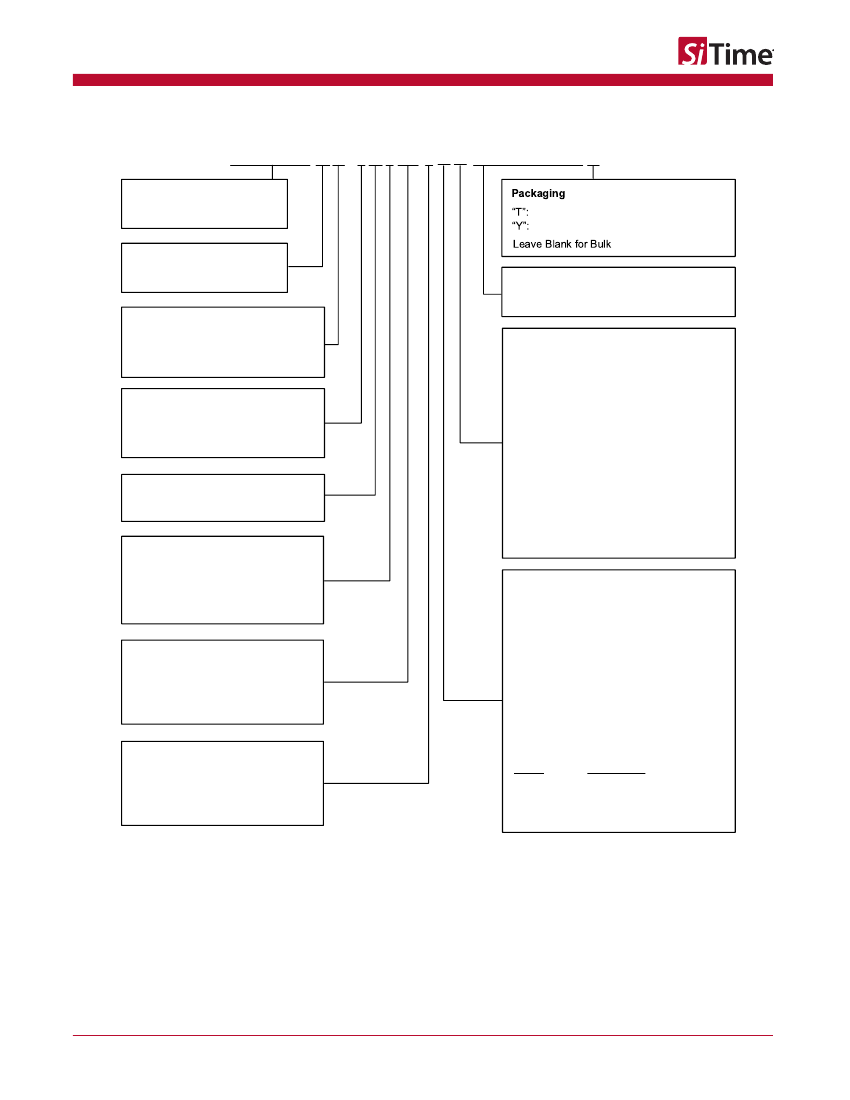
Ordering Information .................................................................................................................................................................... 2
User Programming Interface ..................................................................................................................................... 18
Start-up output frequency and signaling types ........................................................................................................... 18
Any-frequency function ............................................................................................................................................. 19
C/SPI Control Registers...................................................................................................................................................... 28
9 I
Register Address: 0x00. DCO Frequency Control Least Significant Word (LSW) .................................................... 28
Register Address: 0x01. OE Control, DCO Frequency Control Most Significant Word (MSW) ................................. 29
Register Address: 0x02. DCO PULL RANGE CONTROL ........................................................................................ 29
Register Address: 0x03. Frac-N PLL Feedback Divider Integer Value and Frac-N PLL Feedback Divider Fraction
Value MSW ............................................................................................................................................................... 30
Register Address: 0x05. Forward Divider, Driver Control ......................................................................................... 30
Register Address: 0x06. Driver Divider, Driver Control ............................................................................................. 31
2
C Operation ........................................................................................................................................................................ 32
10 I
I
2
C protocol ............................................................................................................................................................... 32
I
2
C Timing Specification ............................................................................................................................................ 35
I
2
C Device Address Modes ....................................................................................................................................... 36
Dimensions and Patterns ........................................................................................................................................................... 43
Additional Information ................................................................................................................................................................ 44
Revision History ......................................................................................................................................................................... 45
Rev 1.01
Page 3 of 45
www.sitime.com
SiT3521
1 to 340 MHz Elite Platform I2C/SPI Programmable Oscillator
1 Electrical Characteristics
All Min and Max limits in the Electrical Characteristics tables are specified over temperature and rated operating voltage with
standard output terminations shown in the termination diagrams. Typical values are at 25°C and nominal supply voltage.
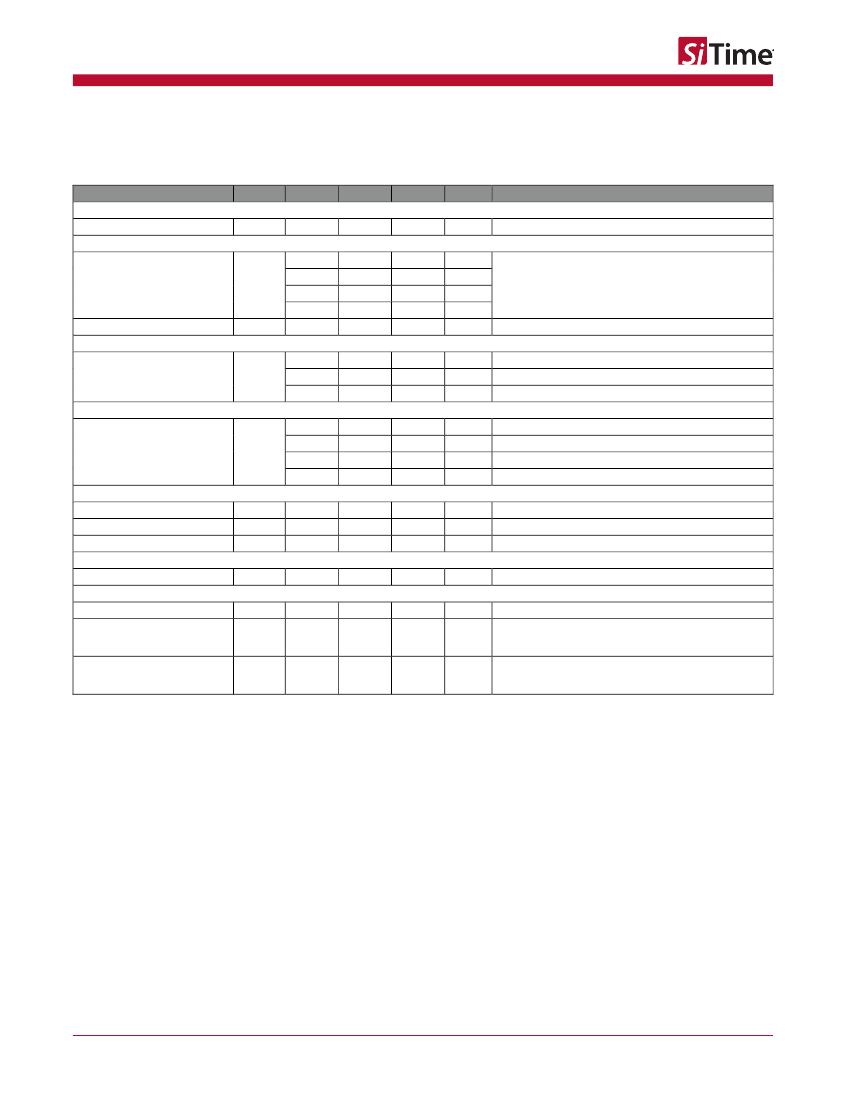
Table 1. Electrical Characteristics – Common to LVPECL, LVDS and HCSL
Parameter
Output Frequency Range
Symbol
f
Min.
1
Typ.
–
–
–
–
–
±1
–
–
–
Max.
340
Unit
MHz
Condition
Factory or user programmable, accurate to 6 decimal places
Frequency Range
Frequency Stability
Frequency Stability
F_stab
-10
-20
-25
-50
First Year Aging
F_1y
–
+10
+20
+25
+50
–
ppm
ppm
ppm
ppm
ppm
°C
°C
°C
1
st
-year aging at 25°C
Inclusive of initial tolerance, operating temperature, rated
power supply voltage and load variations.
Temperature Range
Operating Temperature Range
T_use
-20
-40
-40
+70
+85
+105
Supply Voltage
Supply Voltage
Vdd
2.97
2.7
2.52
2.25
3.3
3.0
2.8
2.5
–
–
100
–
–
–
3.63
3.3
3.08
2.75
–
30%
–
V
V
V
V
Extended Commercial
Industrial
Extended Industrial. Available only for I
2
C operation, not SPI.
Input Characteristics – OE Pin
Input Voltage High
Input Voltage Low
Input Pull-up Impedance
VIH
VIL
Z_in
70%
–
–
Vdd
Vdd
kΩ
OE pin
OE pin
OE pin, logic high or logic low
Output Characteristics
Duty Cycle
DC
45
–
–
55
%
Startup and Output Enable/Disable Timing
Start-up Time
Output Enable/Disable Time –
Hardware control via OE pin
Output Enable/Disable Time –
Software control via I
2
C/SPI
T_start
T_oe_hw
3.0
3.8
ms
µs
Measured from the time Vdd reaches its rated minimum value
Measured from the time OE pin reaches rated VIH and VIL to
the time clock pins reach 90% of swing and high-Z.
See
Figure 9
and
Figure 10
Measured from the time the last byte of command is
transmitted via I
2
C/SPI (reg1) to the time clock pins reach 90%
of swing and high-Z. See
Figure 30
and
Figure 31
T_oe_sw
–
–
6.5
µs
Rev 1.01
Page 4 of 45
www.sitime.com
SiT3521
1 to 340 MHz Elite Platform I2C/SPI Programmable Oscillator
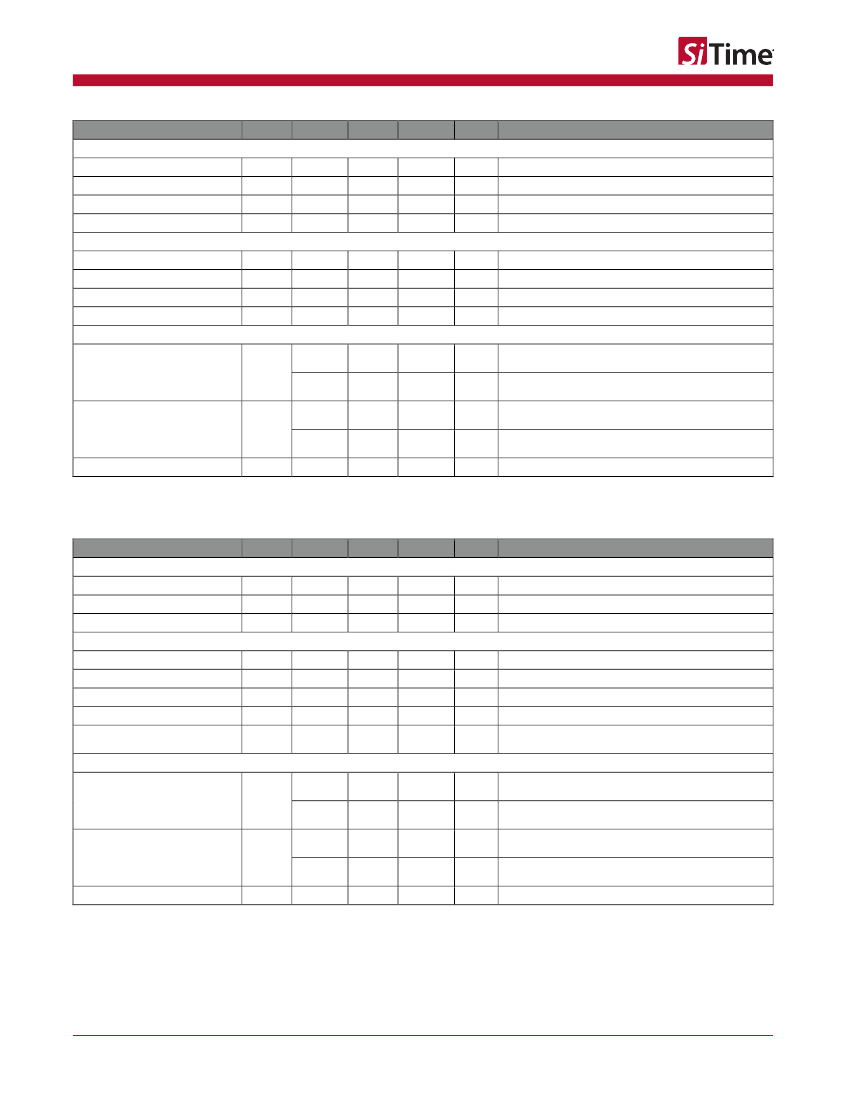
Table 2. Electrical Characteristics – LVPECL Specific
Parameter
Symbol
Min.
Typ.
Max.
Unit
Condition
Current Consumption
Current Consumption
OE Disable Supply Current
Output Disable Leakage Current
Maximum Output Current
Idd
I_OE
I_leak
I_driver
–
–
–
–
–
–
0.15
–
89
58
–
32
mA
mA
A
mA
Excluding Load Termination Current, Vdd = 3.3 V or 2.5 V
OE = Low
OE = Low
Maximum average current drawn from OUT+ or OUT-
Output Characteristics
Output High Voltage
Output Low Voltage
Output Differential Voltage Swing
Rise/Fall Time
VOH
VOL
V_Swing
Tr, Tf
Vdd - 1.1V
Vdd - 1.9V
1.2
–
–
–
1.6
225
Vdd - 0.7V
Vdd - 1.5V
2.0
290
Jitter
RMS Phase Jitter (random) –
DCO Mode Only
T_phj
–
–
RMS Phase Jitter (random) –
Any-frequency Mode Only
T_phj
–
–
RMS Period Jitter
[3]
Note:
3. Measured according to JESD65B.
T_jitt
–
0.225
0.1
0.225
0.11
1
0.340
0.14
0.340
0.15
1.6
ps
ps
ps
ps
ps
f = 156.25 MHz, Integration bandwidth = 12 kHz to 20 MHz,
all Vdd levels
f = 156.25, IEEE802.3-2005 10 GbE jitter mask integration
bandwidth = 1.875 MHz to 20 MHz, all Vdd levels
f = 156.25 MHz, Integration bandwidth = 12 kHz to 20 MHz,
all Vdd levels
f = 156.25, IEEE802.3-2005 10 GbE jitter mask integration
bandwidth = 1.875 MHz to 20 MHz, all Vdd levels
f = 100, 156.25 or 212.5 MHz, Vdd = 3.3 V or 2.5 V
V
V
V
ps
See
Figure 5
See
Figure 5
See
Figure 6
20% to 80%, see
Figure 6
Table 3. Electrical Characteristics – LVDS Specific
Parameter
Symbol
Min.
Typ.
Max.
Unit
Condition
Current Consumption
Current Consumption
OE Disable Supply Current
Output Disable Leakage Current
Idd
I_OE
I_leak
–
–
–
–
–
0.15
80
61
–
mA
mA
A
Excluding Load Termination Current, Vdd = 3.3 V or 2.5 V
OE = Low
OE = Low
Output Characteristics
Differential Output Voltage
Delta VOD
Offset Voltage
Delta VOS
Rise/Fall Time
VOD
ΔVOD
VOS
ΔVOS
Tr, Tf
250
–
1.125
–
–
–
–
–
–
400
455
50
1.375
50
470
Jitter
RMS Phase Jitter (random) –
DCO Mode Only
T_phj
–
–
RMS Phase Jitter (random) –
Any-frequency Mode Only
T_phj
–
–
RMS Period Jitter
[4]
Note:
4. Measured according to JESD65B.
T_jitt
–
0.21
0.1
0.21
0.1
1
0.275
0.12
0.367
0.12
1.6
ps
ps
ps
ps
ps
f = 156.25 MHz, Integration bandwidth = 12 kHz to 20 MHz,
all Vdd levels
f = 156.25, IEEE802.3-2005 10 GbE jitter mask integration
bandwidth = 1.875 MHz to 20 MHz, all Vdd levels
f = 156.25 MHz, Integration bandwidth = 12 kHz to 20 MHz,
all Vdd levels
f = 156.25, IEEE802.3-2005 10 GbE jitter mask integration
bandwidth = 1.875 MHz to 20 MHz, all Vdd levels
f = 100, 156.25 or 212.5 MHz, Vdd = 3.3 V or 2.5 V
mV
mV
V
mV
ps
f = 156.25MHz See
Figure 7
See
Figure 7
See
Figure 7
See
Figure 7
Measured with 2 pF capacitive loading to GND, 20% to 80%,
Abstract: The application of flyback synchronous rectification in low-voltage and low-current DC-DC converters is studied. The working principle of the main circuit, several driving modes and their ad...
When I was posting, I suddenly didn't know how to start. I turned on my computer after get off work and read the posts posted by EE forum friends. I thought I could write a summary. Three days have pa...
:) As the title says, the encoder I use is an encoder that outputs A, B, and Z phases, but I don't know how to connect it to LM89S62. I heard that Stellaris' ARM has an orthogonal encoding function. I...
Author: oyggjA few years ago, I wrote a series of articles entitled "Top Ten Advices for Young Engineers". Before I knew it, I had already entered middle age. I have been an engineer for more than ten...
[[color=#FF0000]size=11px]I want to further study my hobby (Robot). What kind of practical direction should I choose for this? Please give me some advice. [/size][/color] I am about to enter my third ...
On August 24th, Tesla CEO Elon
Musk
revealed information about the upcoming FSD V14, claiming it will outperform human drivers. Tesla FSD lead Ashok stated last year that FSD version 12.5, ...[Details]
Electric motors and internal combustion engines of the same power have similar torque levels. High power requires high torque, and torque determines a vehicle's acceleration speed, commonly known a...[Details]
Introduction to the principles of speech recognition technology
Automatic speech recognition (ASR) technology aims to enable computers to understand human speech and extract the textual inform...[Details]
For autonomous vehicles to safely navigate the road, they must identify far more complex objects than just traffic lights, pedestrians, and other familiar objects. Among these obstacles is a crucia...[Details]
As AI accelerates across industries, the demand for data center infrastructure is also growing rapidly.
Keysight Technologies, in collaboration with Heavy Reading, released the "Beyo...[Details]
Permanent magnets are essential components in a wide range of household and industrial devices. They are particularly crucial in the renewable energy sector, including electric vehicle motors. Curr...[Details]
1. Ease of Use: The HMI module should be designed to be simple and clear, allowing users to easily operate and configure the energy storage device.
2. Ease of Maintenance: The HMI module should...[Details]
On August 22, according to CNBC's report today, the National Highway Traffic Safety Administration (NHTSA) is launching an investigation into Tesla, and the latter is questioned whether it has fail...[Details]
There are many motors that can use thyristor speed control, and they can be used in almost all industries. Various types of motors, such as fans, pumps, AC motors, DC motors, torque motors, single-...[Details]
With the advancement of science and technology and the promotion of green, energy-saving, and circular development, the demand for precise control and accurate measurement is increasing. In the pow...[Details]
We often hear about the precautions for using pure electric vehicles in winter, and many owners even develop relevant strategies, such as adopting a "charge as you go" principle for their vehicles,...[Details]
Electric vehicles are composed of three main components: electric motors, electric motors, and electric vehicles. Maintenance is much simpler than for gasoline-powered vehicles. Maintenance for ele...[Details]
Common Mode Semiconductor has officially launched the GM6503 series—a 5 V, 3 A synchronous step-down DC/DC power module designed for optical communications, servers, industrial applications, and FP...[Details]
Renesas Electronics' new ultra-low-power RA4C1 MCU features advanced security and a dedicated peripheral set, making it ideal for metering and other applications.
The new product mee...[Details]
I recently read an article in the Wall Street Journal titled "We need the right to repair our gadgets" (reference original article: ). The author was very angry about the phenomenon of "planned obs...[Details]

 Power technology
 京公网安备 11010802033920号
 EEWORLD