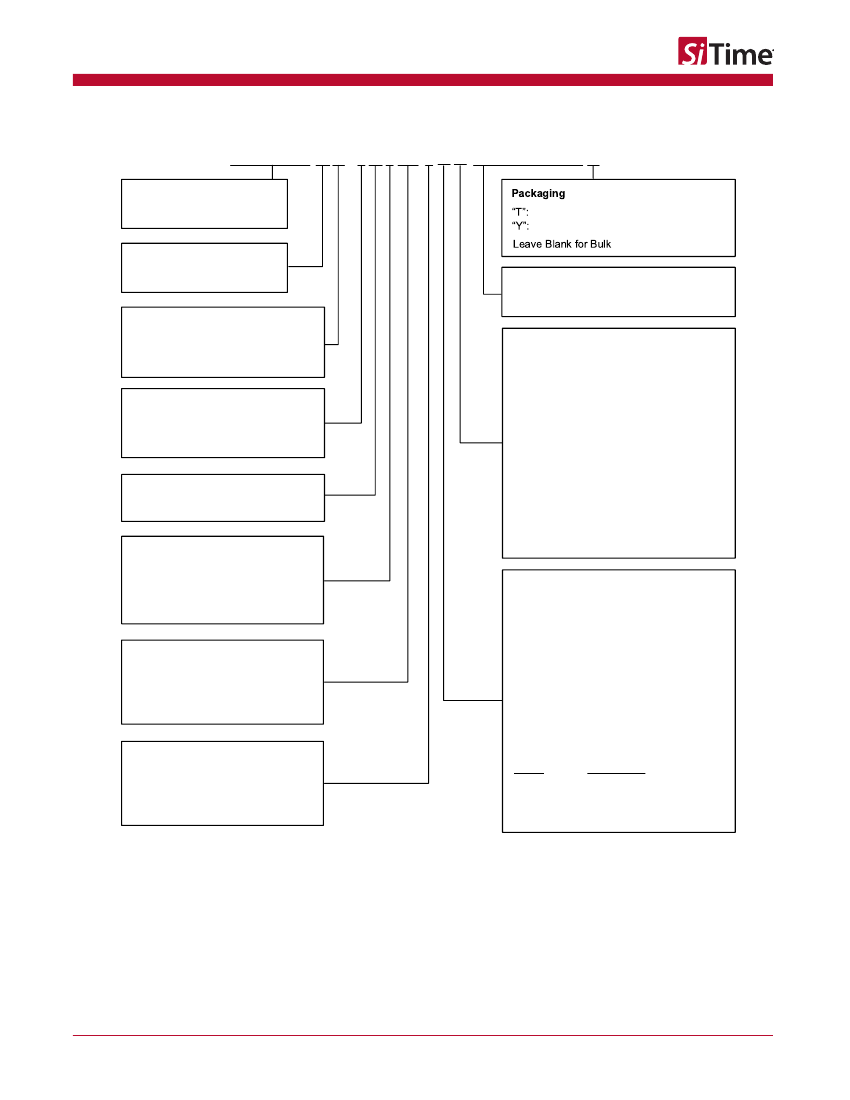
Ordering Information .................................................................................................................................................................... 2
User Programming Interface ..................................................................................................................................... 18
Start-up output frequency and signaling types ........................................................................................................... 18
Any-frequency function ............................................................................................................................................. 19
C/SPI Control Registers...................................................................................................................................................... 28
9 I
Register Address: 0x00. DCO Frequency Control Least Significant Word (LSW) .................................................... 28
Register Address: 0x01. OE Control, DCO Frequency Control Most Significant Word (MSW) ................................. 29
Register Address: 0x02. DCO PULL RANGE CONTROL ........................................................................................ 29
Register Address: 0x03. Frac-N PLL Feedback Divider Integer Value and Frac-N PLL Feedback Divider Fraction
Value MSW ............................................................................................................................................................... 30
Register Address: 0x05. Forward Divider, Driver Control ......................................................................................... 30
Register Address: 0x06. Driver Divider, Driver Control ............................................................................................. 31
2
C Operation ........................................................................................................................................................................ 32
10 I
I
2
C protocol ............................................................................................................................................................... 32
I
2
C Timing Specification ............................................................................................................................................ 35
I
2
C Device Address Modes ....................................................................................................................................... 36
Dimensions and Patterns ........................................................................................................................................................... 43
Additional Information ................................................................................................................................................................ 44
Revision History ......................................................................................................................................................................... 45
Rev 1.01
Page 3 of 45
www.sitime.com
SiT3521
1 to 340 MHz Elite Platform I2C/SPI Programmable Oscillator
1 Electrical Characteristics
All Min and Max limits in the Electrical Characteristics tables are specified over temperature and rated operating voltage with
standard output terminations shown in the termination diagrams. Typical values are at 25°C and nominal supply voltage.
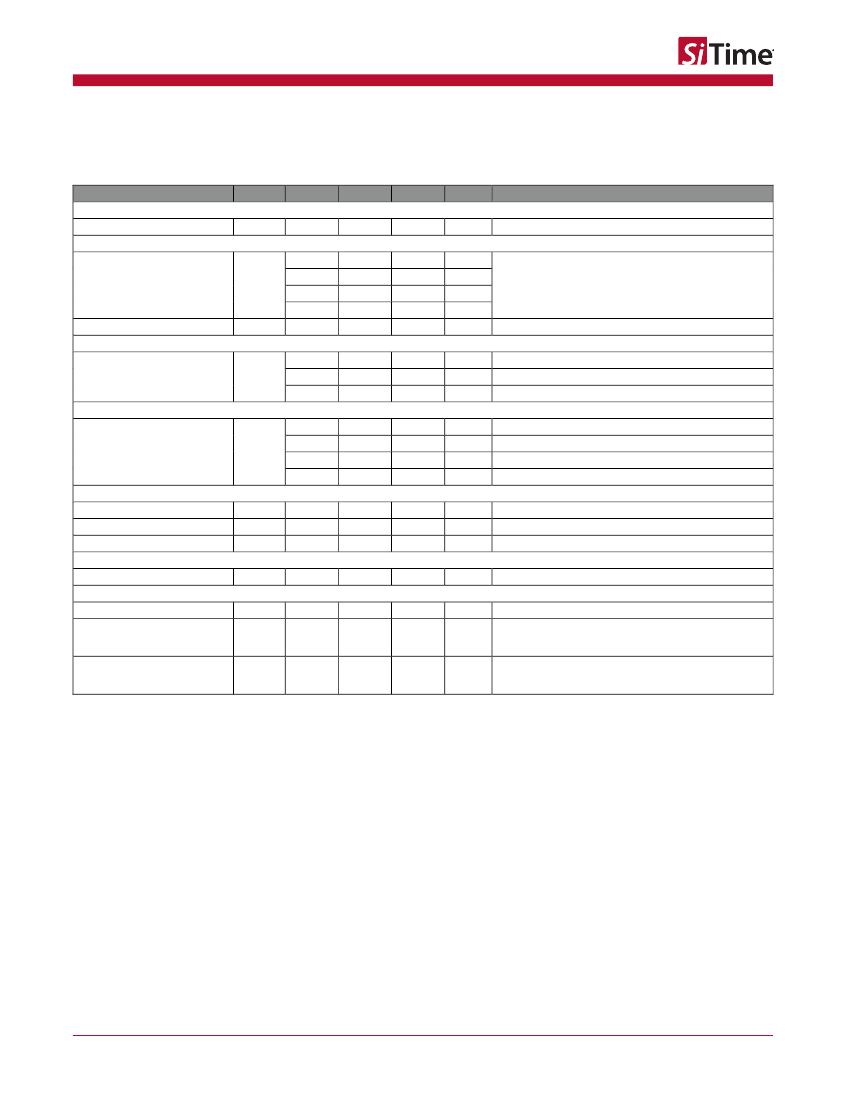
Table 1. Electrical Characteristics – Common to LVPECL, LVDS and HCSL
Parameter
Output Frequency Range
Symbol
f
Min.
1
Typ.
–
–
–
–
–
±1
–
–
–
Max.
340
Unit
MHz
Condition
Factory or user programmable, accurate to 6 decimal places
Frequency Range
Frequency Stability
Frequency Stability
F_stab
-10
-20
-25
-50
First Year Aging
F_1y
–
+10
+20
+25
+50
–
ppm
ppm
ppm
ppm
ppm
°C
°C
°C
1
st
-year aging at 25°C
Inclusive of initial tolerance, operating temperature, rated
power supply voltage and load variations.
Temperature Range
Operating Temperature Range
T_use
-20
-40
-40
+70
+85
+105
Supply Voltage
Supply Voltage
Vdd
2.97
2.7
2.52
2.25
3.3
3.0
2.8
2.5
–
–
100
–
–
–
3.63
3.3
3.08
2.75
–
30%
–
V
V
V
V
Extended Commercial
Industrial
Extended Industrial. Available only for I
2
C operation, not SPI.
Input Characteristics – OE Pin
Input Voltage High
Input Voltage Low
Input Pull-up Impedance
VIH
VIL
Z_in
70%
–
–
Vdd
Vdd
kΩ
OE pin
OE pin
OE pin, logic high or logic low
Output Characteristics
Duty Cycle
DC
45
–
–
55
%
Startup and Output Enable/Disable Timing
Start-up Time
Output Enable/Disable Time –
Hardware control via OE pin
Output Enable/Disable Time –
Software control via I
2
C/SPI
T_start
T_oe_hw
3.0
3.8
ms
µs
Measured from the time Vdd reaches its rated minimum value
Measured from the time OE pin reaches rated VIH and VIL to
the time clock pins reach 90% of swing and high-Z.
See
Figure 9
and
Figure 10
Measured from the time the last byte of command is
transmitted via I
2
C/SPI (reg1) to the time clock pins reach 90%
of swing and high-Z. See
Figure 30
and
Figure 31
T_oe_sw
–
–
6.5
µs
Rev 1.01
Page 4 of 45
www.sitime.com
SiT3521
1 to 340 MHz Elite Platform I2C/SPI Programmable Oscillator
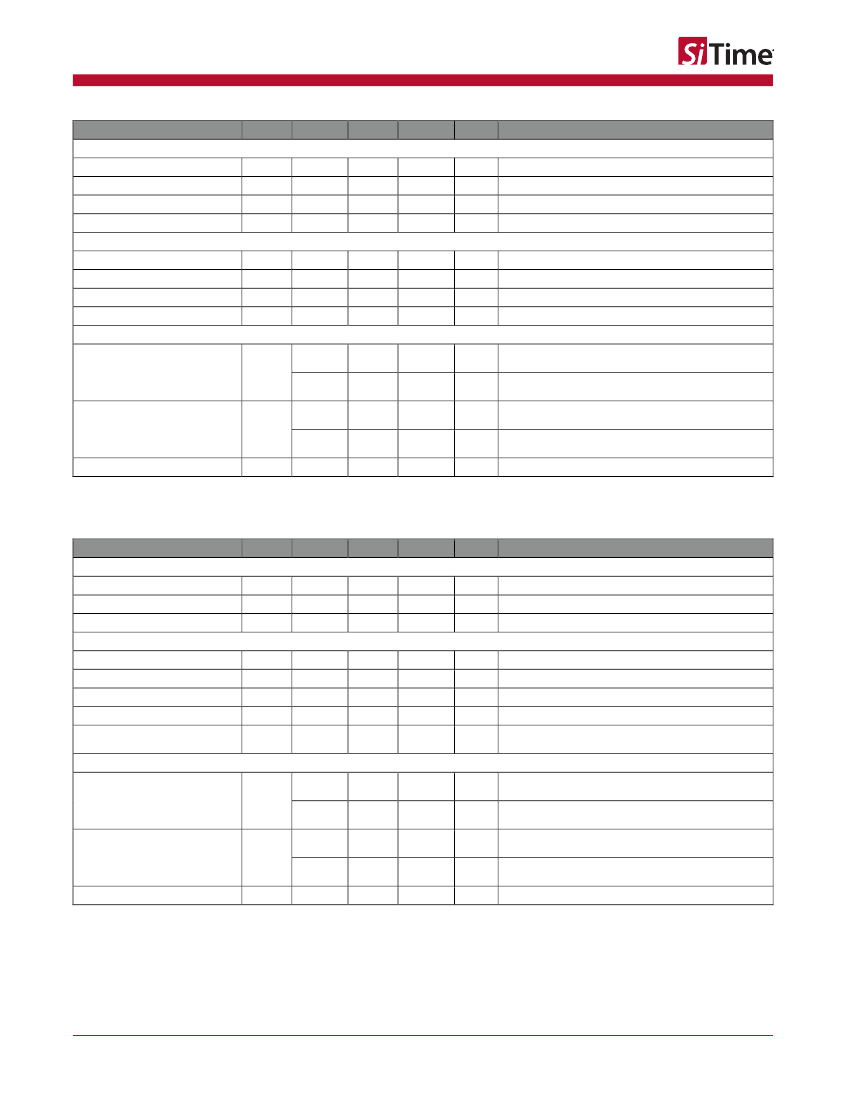
Table 2. Electrical Characteristics – LVPECL Specific
Parameter
Symbol
Min.
Typ.
Max.
Unit
Condition
Current Consumption
Current Consumption
OE Disable Supply Current
Output Disable Leakage Current
Maximum Output Current
Idd
I_OE
I_leak
I_driver
–
–
–
–
–
–
0.15
–
89
58
–
32
mA
mA
A
mA
Excluding Load Termination Current, Vdd = 3.3 V or 2.5 V
OE = Low
OE = Low
Maximum average current drawn from OUT+ or OUT-
Output Characteristics
Output High Voltage
Output Low Voltage
Output Differential Voltage Swing
Rise/Fall Time
VOH
VOL
V_Swing
Tr, Tf
Vdd - 1.1V
Vdd - 1.9V
1.2
–
–
–
1.6
225
Vdd - 0.7V
Vdd - 1.5V
2.0
290
Jitter
RMS Phase Jitter (random) –
DCO Mode Only
T_phj
–
–
RMS Phase Jitter (random) –
Any-frequency Mode Only
T_phj
–
–
RMS Period Jitter
[3]
Note:
3. Measured according to JESD65B.
T_jitt
–
0.225
0.1
0.225
0.11
1
0.340
0.14
0.340
0.15
1.6
ps
ps
ps
ps
ps
f = 156.25 MHz, Integration bandwidth = 12 kHz to 20 MHz,
all Vdd levels
f = 156.25, IEEE802.3-2005 10 GbE jitter mask integration
bandwidth = 1.875 MHz to 20 MHz, all Vdd levels
f = 156.25 MHz, Integration bandwidth = 12 kHz to 20 MHz,
all Vdd levels
f = 156.25, IEEE802.3-2005 10 GbE jitter mask integration
bandwidth = 1.875 MHz to 20 MHz, all Vdd levels
f = 100, 156.25 or 212.5 MHz, Vdd = 3.3 V or 2.5 V
V
V
V
ps
See
Figure 5
See
Figure 5
See
Figure 6
20% to 80%, see
Figure 6
Table 3. Electrical Characteristics – LVDS Specific
Parameter
Symbol
Min.
Typ.
Max.
Unit
Condition
Current Consumption
Current Consumption
OE Disable Supply Current
Output Disable Leakage Current
Idd
I_OE
I_leak
–
–
–
–
–
0.15
80
61
–
mA
mA
A
Excluding Load Termination Current, Vdd = 3.3 V or 2.5 V
OE = Low
OE = Low
Output Characteristics
Differential Output Voltage
Delta VOD
Offset Voltage
Delta VOS
Rise/Fall Time
VOD
ΔVOD
VOS
ΔVOS
Tr, Tf
250
–
1.125
–
–
–
–
–
–
400
455
50
1.375
50
470
Jitter
RMS Phase Jitter (random) –
DCO Mode Only
T_phj
–
–
RMS Phase Jitter (random) –
Any-frequency Mode Only
T_phj
–
–
RMS Period Jitter
[4]
Note:
4. Measured according to JESD65B.
T_jitt
–
0.21
0.1
0.21
0.1
1
0.275
0.12
0.367
0.12
1.6
ps
ps
ps
ps
ps
f = 156.25 MHz, Integration bandwidth = 12 kHz to 20 MHz,
all Vdd levels
f = 156.25, IEEE802.3-2005 10 GbE jitter mask integration
bandwidth = 1.875 MHz to 20 MHz, all Vdd levels
f = 156.25 MHz, Integration bandwidth = 12 kHz to 20 MHz,
all Vdd levels
f = 156.25, IEEE802.3-2005 10 GbE jitter mask integration
bandwidth = 1.875 MHz to 20 MHz, all Vdd levels
f = 100, 156.25 or 212.5 MHz, Vdd = 3.3 V or 2.5 V
mV
mV
V
mV
ps
f = 156.25MHz See
Figure 7
See
Figure 7
See
Figure 7
See
Figure 7
Measured with 2 pF capacitive loading to GND, 20% to 80%,
ERROR:HDLCompiler:69 - "C:\Documents and Settings\counter\top.vhd" Line 51: rising_edge is not declared.ERROR:HDLCompiler:69 - "C:\Documents and Settings\counter\top.vhd" Line 49: rst is not declared....
I have already got the Ethernet 107 board (not STM3210C-EVAL)STM32F107VC-PTK, the Ethernet development boardat the ST tour. Is it the so-called domestic version (manley)?I just tested the basic functi...
[i=s]This post was last edited by Qingfeng Liquor on 2018-1-17 09:46[/i] [color=rgb(0, 0, 0)][backcolor=rgb(232, 232, 232)][size=15px][size=4]Use the stm32f107 chip library function and configure the ...
[i=s]This post was last edited by dontium on 2015-1-23 11:11[/i] I am a novice and I need to make a driver for BQ24196. Now I only have the chip manual and no other information. Is there any expert wh...
I want to port Vxworks5.5 and Tornado2.2 to the XScale-PXA270 project. At the beginning, when the bootrom didn't work, I could only use the parallel port to burn (there was no high-speed burner), whic...
This incident originated from my graduation project. It was such a lousy graduation project. . . . . . .The initial idea was to integrate a CAN controller into the FPGA, and then collect external sens...
1 Introduction
The multifunctional monitor is a commonly used clinical medical device. It can display the patient's electrocardiogram (ECG), respiration (RESP), blood oxygen saturation (SP...[Details]
Third generation (3G) mobile phones offer a variety of features with more functionality. As consumers enjoy the latest and better features of these communication devices, they continue to demand lo...[Details]
Abstract: Based on the research of the communication process between the reader and the RFID tag, combined with the EPC C1G2 protocol and ISO/IEC18000.6 protocol, a digital circuit of RFID tag appl...[Details]
DC regulated power supply is a commonly used electronic device, which can ensure stable output voltage when the grid voltage fluctuates or the load changes. A low ripple, high-precision regulated p...[Details]
introduction
The most common flight state of a fixed-wing aircraft is horizontal flight. If it is allowed to fly at a large angle, the action cannot be maintained all the time. If it is al...[Details]
This article first briefly introduces the working principles of current mode and voltage mode and their respective advantages and disadvantages; then discusses the ideal voltage mode using output c...[Details]
Today's mobile phone production testing faces an increasingly complex environment, with challenges of multiple frequency bands and multiple standards, pressure on production test speed, and pres...[Details]
1 Introduction
The high temperature tester is mainly used for temperature tracking measurement and data acquisition during the heating process. By systematically analyzing the test data,...[Details]
1. Intrusion Detection System (IDS)
IDS is the abbreviation of "Intrusion Detection Systems" in English, which means "Intrusion Detection System" in Chinese. Professionally speaking, it monito...[Details]
China National Stadium Project Introduction
The National Stadium (Bird's Nest), the main venue for the opening and closing ceremonies of the 2008 Beijing Olympic Games, is located on the g...[Details]
With more and more countries, regions and cities legislating to require drivers to use hands-free calling systems, as well as the shrinking wallets of most consumers around the world and the uncert...[Details]
0 Introduction
The PTZ controller designed with a single-chip microcomputer as the core can control the camera to move over a large range and at a wide angle in monitoring situations, so t...[Details]
1 Introduction
The DVB-S digital satellite live broadcast system standard is designed to meet the bandwidth of satellite transponders and the transmission characteristics of satellite sign...[Details]
Introduction
As mobile devices become more multifunctional, the operating voltage of their power circuits has also become diversified. Specifically, taking a typical mobile phone as a...[Details]
1. Introduction
In recent years, with the rapid development of microwave and millimeter wave technology, higher requirements have been put forward for broadband microwave and millimeter ...[Details]

 FPGA/CPLD
 京公网安备 11010802033920号
 EEWORLD