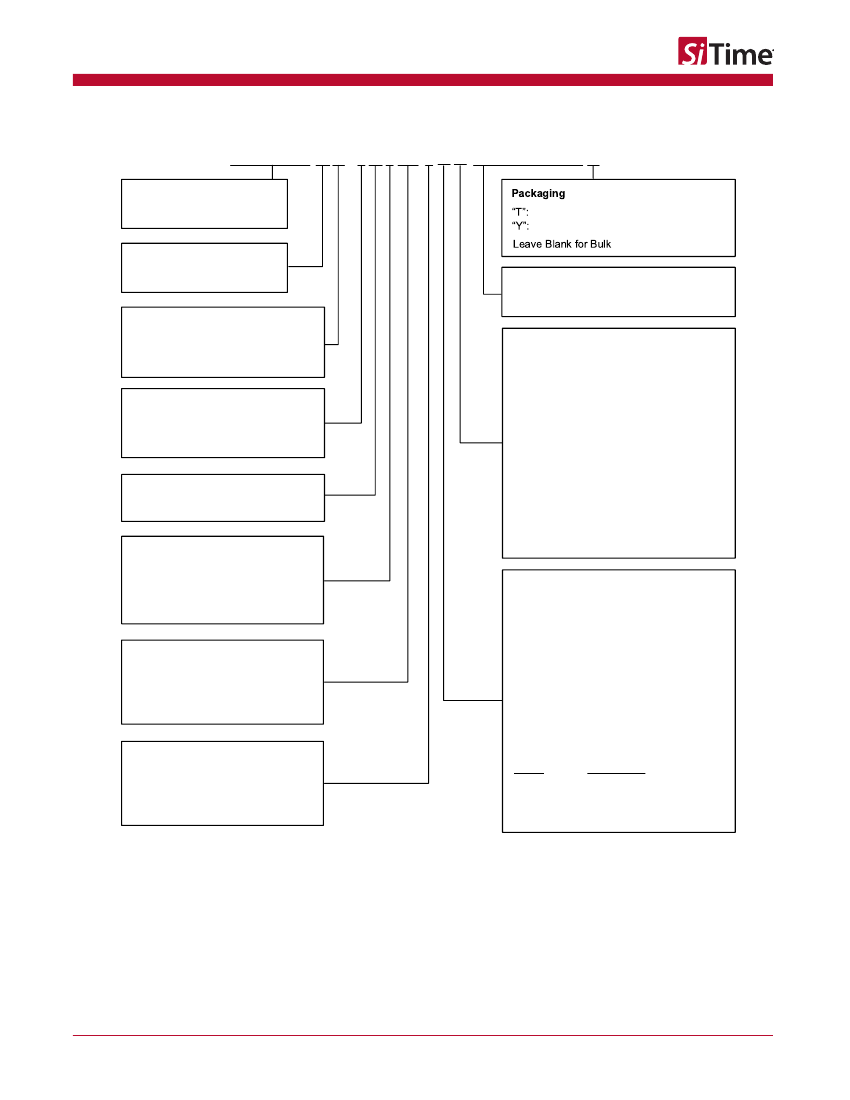
Ordering Information .................................................................................................................................................................... 2
User Programming Interface ..................................................................................................................................... 18
Start-up output frequency and signaling types ........................................................................................................... 18
Any-frequency function ............................................................................................................................................. 19
C/SPI Control Registers...................................................................................................................................................... 28
9 I
Register Address: 0x00. DCO Frequency Control Least Significant Word (LSW) .................................................... 28
Register Address: 0x01. OE Control, DCO Frequency Control Most Significant Word (MSW) ................................. 29
Register Address: 0x02. DCO PULL RANGE CONTROL ........................................................................................ 29
Register Address: 0x03. Frac-N PLL Feedback Divider Integer Value and Frac-N PLL Feedback Divider Fraction
Value MSW ............................................................................................................................................................... 30
Register Address: 0x05. Forward Divider, Driver Control ......................................................................................... 30
Register Address: 0x06. Driver Divider, Driver Control ............................................................................................. 31
2
C Operation ........................................................................................................................................................................ 32
10 I
I
2
C protocol ............................................................................................................................................................... 32
I
2
C Timing Specification ............................................................................................................................................ 35
I
2
C Device Address Modes ....................................................................................................................................... 36
Dimensions and Patterns ........................................................................................................................................................... 43
Additional Information ................................................................................................................................................................ 44
Revision History ......................................................................................................................................................................... 45
Rev 1.01
Page 3 of 45
www.sitime.com
SiT3521
1 to 340 MHz Elite Platform I2C/SPI Programmable Oscillator
1 Electrical Characteristics
All Min and Max limits in the Electrical Characteristics tables are specified over temperature and rated operating voltage with
standard output terminations shown in the termination diagrams. Typical values are at 25°C and nominal supply voltage.
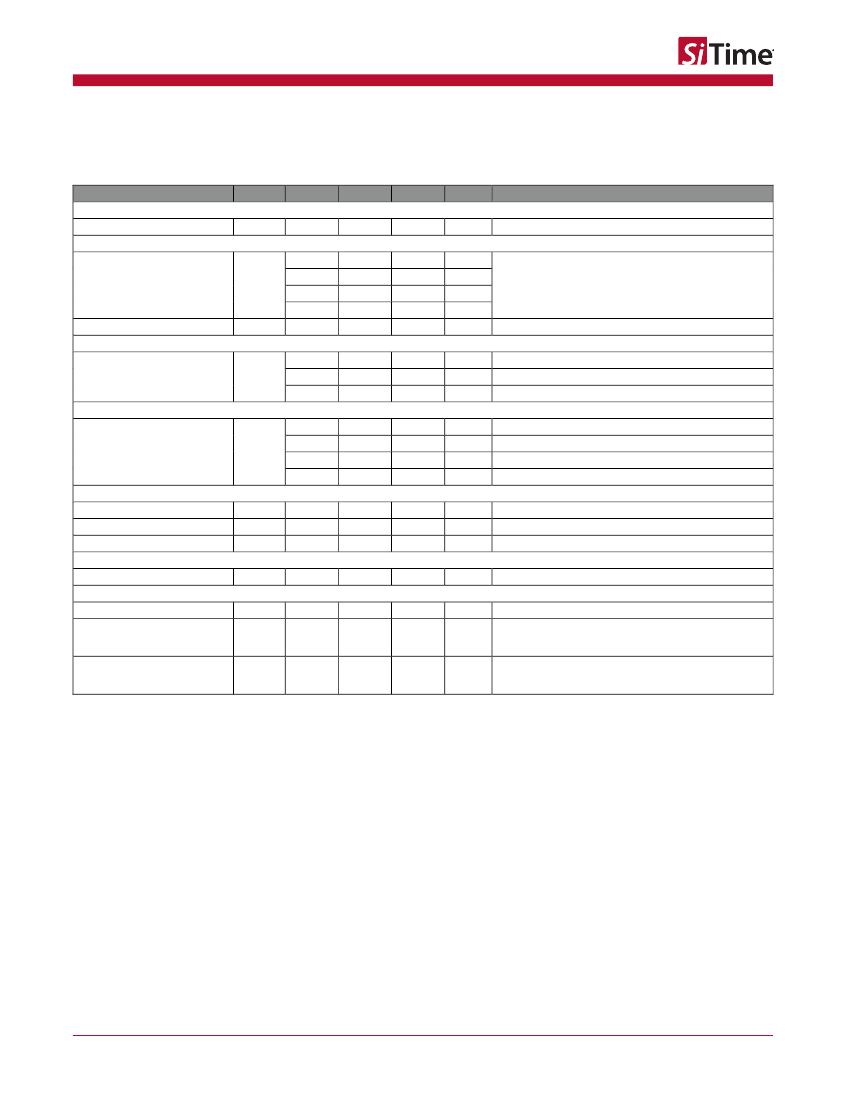
Table 1. Electrical Characteristics – Common to LVPECL, LVDS and HCSL
Parameter
Output Frequency Range
Symbol
f
Min.
1
Typ.
–
–
–
–
–
±1
–
–
–
Max.
340
Unit
MHz
Condition
Factory or user programmable, accurate to 6 decimal places
Frequency Range
Frequency Stability
Frequency Stability
F_stab
-10
-20
-25
-50
First Year Aging
F_1y
–
+10
+20
+25
+50
–
ppm
ppm
ppm
ppm
ppm
°C
°C
°C
1
st
-year aging at 25°C
Inclusive of initial tolerance, operating temperature, rated
power supply voltage and load variations.
Temperature Range
Operating Temperature Range
T_use
-20
-40
-40
+70
+85
+105
Supply Voltage
Supply Voltage
Vdd
2.97
2.7
2.52
2.25
3.3
3.0
2.8
2.5
–
–
100
–
–
–
3.63
3.3
3.08
2.75
–
30%
–
V
V
V
V
Extended Commercial
Industrial
Extended Industrial. Available only for I
2
C operation, not SPI.
Input Characteristics – OE Pin
Input Voltage High
Input Voltage Low
Input Pull-up Impedance
VIH
VIL
Z_in
70%
–
–
Vdd
Vdd
kΩ
OE pin
OE pin
OE pin, logic high or logic low
Output Characteristics
Duty Cycle
DC
45
–
–
55
%
Startup and Output Enable/Disable Timing
Start-up Time
Output Enable/Disable Time –
Hardware control via OE pin
Output Enable/Disable Time –
Software control via I
2
C/SPI
T_start
T_oe_hw
3.0
3.8
ms
µs
Measured from the time Vdd reaches its rated minimum value
Measured from the time OE pin reaches rated VIH and VIL to
the time clock pins reach 90% of swing and high-Z.
See
Figure 9
and
Figure 10
Measured from the time the last byte of command is
transmitted via I
2
C/SPI (reg1) to the time clock pins reach 90%
of swing and high-Z. See
Figure 30
and
Figure 31
T_oe_sw
–
–
6.5
µs
Rev 1.01
Page 4 of 45
www.sitime.com
SiT3521
1 to 340 MHz Elite Platform I2C/SPI Programmable Oscillator
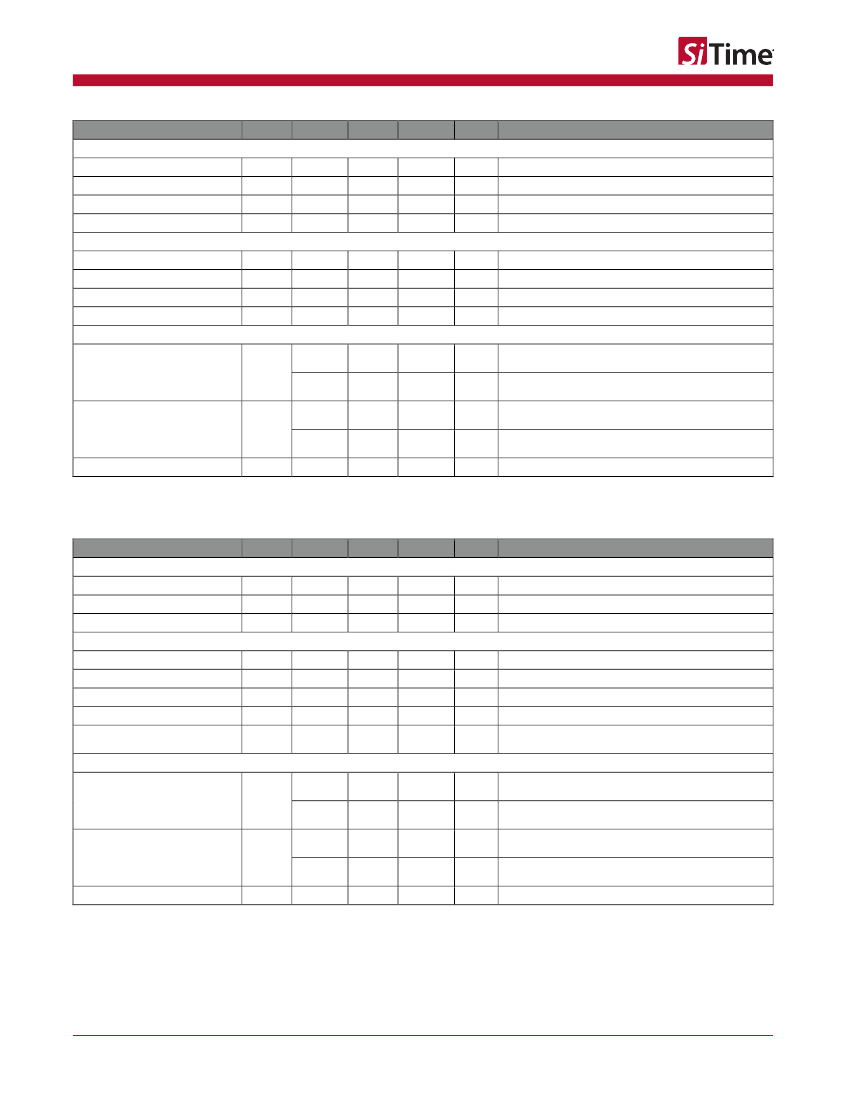
Table 2. Electrical Characteristics – LVPECL Specific
Parameter
Symbol
Min.
Typ.
Max.
Unit
Condition
Current Consumption
Current Consumption
OE Disable Supply Current
Output Disable Leakage Current
Maximum Output Current
Idd
I_OE
I_leak
I_driver
–
–
–
–
–
–
0.15
–
89
58
–
32
mA
mA
A
mA
Excluding Load Termination Current, Vdd = 3.3 V or 2.5 V
OE = Low
OE = Low
Maximum average current drawn from OUT+ or OUT-
Output Characteristics
Output High Voltage
Output Low Voltage
Output Differential Voltage Swing
Rise/Fall Time
VOH
VOL
V_Swing
Tr, Tf
Vdd - 1.1V
Vdd - 1.9V
1.2
–
–
–
1.6
225
Vdd - 0.7V
Vdd - 1.5V
2.0
290
Jitter
RMS Phase Jitter (random) –
DCO Mode Only
T_phj
–
–
RMS Phase Jitter (random) –
Any-frequency Mode Only
T_phj
–
–
RMS Period Jitter
[3]
Note:
3. Measured according to JESD65B.
T_jitt
–
0.225
0.1
0.225
0.11
1
0.340
0.14
0.340
0.15
1.6
ps
ps
ps
ps
ps
f = 156.25 MHz, Integration bandwidth = 12 kHz to 20 MHz,
all Vdd levels
f = 156.25, IEEE802.3-2005 10 GbE jitter mask integration
bandwidth = 1.875 MHz to 20 MHz, all Vdd levels
f = 156.25 MHz, Integration bandwidth = 12 kHz to 20 MHz,
all Vdd levels
f = 156.25, IEEE802.3-2005 10 GbE jitter mask integration
bandwidth = 1.875 MHz to 20 MHz, all Vdd levels
f = 100, 156.25 or 212.5 MHz, Vdd = 3.3 V or 2.5 V
V
V
V
ps
See
Figure 5
See
Figure 5
See
Figure 6
20% to 80%, see
Figure 6
Table 3. Electrical Characteristics – LVDS Specific
Parameter
Symbol
Min.
Typ.
Max.
Unit
Condition
Current Consumption
Current Consumption
OE Disable Supply Current
Output Disable Leakage Current
Idd
I_OE
I_leak
–
–
–
–
–
0.15
80
61
–
mA
mA
A
Excluding Load Termination Current, Vdd = 3.3 V or 2.5 V
OE = Low
OE = Low
Output Characteristics
Differential Output Voltage
Delta VOD
Offset Voltage
Delta VOS
Rise/Fall Time
VOD
ΔVOD
VOS
ΔVOS
Tr, Tf
250
–
1.125
–
–
–
–
–
–
400
455
50
1.375
50
470
Jitter
RMS Phase Jitter (random) –
DCO Mode Only
T_phj
–
–
RMS Phase Jitter (random) –
Any-frequency Mode Only
T_phj
–
–
RMS Period Jitter
[4]
Note:
4. Measured according to JESD65B.
T_jitt
–
0.21
0.1
0.21
0.1
1
0.275
0.12
0.367
0.12
1.6
ps
ps
ps
ps
ps
f = 156.25 MHz, Integration bandwidth = 12 kHz to 20 MHz,
all Vdd levels
f = 156.25, IEEE802.3-2005 10 GbE jitter mask integration
bandwidth = 1.875 MHz to 20 MHz, all Vdd levels
f = 156.25 MHz, Integration bandwidth = 12 kHz to 20 MHz,
all Vdd levels
f = 156.25, IEEE802.3-2005 10 GbE jitter mask integration
bandwidth = 1.875 MHz to 20 MHz, all Vdd levels
f = 100, 156.25 or 212.5 MHz, Vdd = 3.3 V or 2.5 V
mV
mV
V
mV
ps
f = 156.25MHz See
Figure 7
See
Figure 7
See
Figure 7
See
Figure 7
Measured with 2 pF capacitive loading to GND, 20% to 80%,
[i=s]This post was last edited by hehung on 2019-1-6 12:52[/i] The functions of RAPID IOT are really powerful. Today I read the operation manualand tried it again with the NXP radip IOT APP. At the be...
In the design process of small household appliances, in order to pass EMC certification, the control method of thyristors cannot use chopping control, and frequency control must be used to adjust the ...
I helped the company screen resumes today, and I had a lot of feelings! I work for a large company. From the number of resumes received, we can see that there are more than 1,200 resumes, and more tha...
Live broadcast time: November 1, 2022 10:00-11:00
Live Topic: Eye of Technology - New Vision of SmartSens Image Sensors
Live Broadcast Introduction:
Through the introduction of this online seminar, we...
[i=s]This post was last edited by shower.xu on 2014-1-24 11:03[/i] Hong Kong version of iPad mini2 16G, 2300, unopened, free shipping by SF Express. Alipay transaction....
I recently studied UC/OS-II using Ren Zhe's book "Principles and Applications of Embedded Real-Time Operating Systems UC/OS-II". I found the source code in his book online. The book uses BORLAND C++ 3...
Flip-chip and ball grid array (BGA) are two widely used packaging technologies in the electronics industry. Each has its own advantages and limitations, and in some cases, they can complement each ...[Details]
As more and more consumers purchase new energy vehicles, the safety of electric vehicles has become a major concern. This has been particularly prominent following a series of electric vehicle fire...[Details]
In mobile technology, sensors are the primary input for measured signals and form a component of a sensor system. They include sensitive and transducer elements connected to carriers and circuits. ...[Details]
According to foreign media reports, BMW has just been granted a patent for a screen that could cover the entire roof. BMW hopes to transform at least a portion of the vehicle's headliner into a dis...[Details]
Industrial computers with GPUs leverage powerful parallel processing to build deep learning models to analyze and respond to optical inputs. The systems develop an understanding of visual data to i...[Details]
Linear motor modules have become the "sweet spot" in various fields due to their advantages such as long stroke, fast speed, high precision, smooth operation and long life. Different models of line...[Details]
The mobile computing market is rapidly evolving, and manufacturers are fiercely competing for market share. A key area of competition is battery life, which encompasses two key aspects: how long th...[Details]
In the wave of electrification and intelligence in the automotive industry, the E/E architecture is transitioning from distributed to domain control and then to regional architecture.
Th...[Details]
The transition to SDVs (software-defined vehicles) involves more than just replacing parts; rather, it involves the organic connection of various elements, from internal vehicle systems to ext...[Details]
Anyone who has driven a pure electric vehicle will find that it starts much faster than a fuel vehicle. So why do pure electric vehicles start so quickly?
We all know that an engine's to...[Details]
System Principle
According to the average imbalance rate of the branch three-phase phase line load and the average value of the branch phase line current, the adjustment of the phase line load...[Details]
introduction
As the concept of "low-carbon travel and green environmental protection" becomes more and more popular, bicycles have become a crucial means of transportation. Currently, urban pu...[Details]
The working principle of a frequency converter is to process input fixed-frequency AC power through circuits such as rectification, filtering, and inversion, and then output AC power with variable ...[Details]
In recent years, portable electronic devices such as mobile phones, digital cameras, music players, tablets, ultrabooks, and laptops have become almost a necessity, raising safety concerns. Besides...[Details]
The suspension of a car is related to the comfort of driving, and it will also have a direct impact on the vehicle's performance indicators. Both fuel vehicles and electric vehicles use the suspens...[Details]

 RF/Wirelessly
 京公网安备 11010802033920号
 EEWORLD