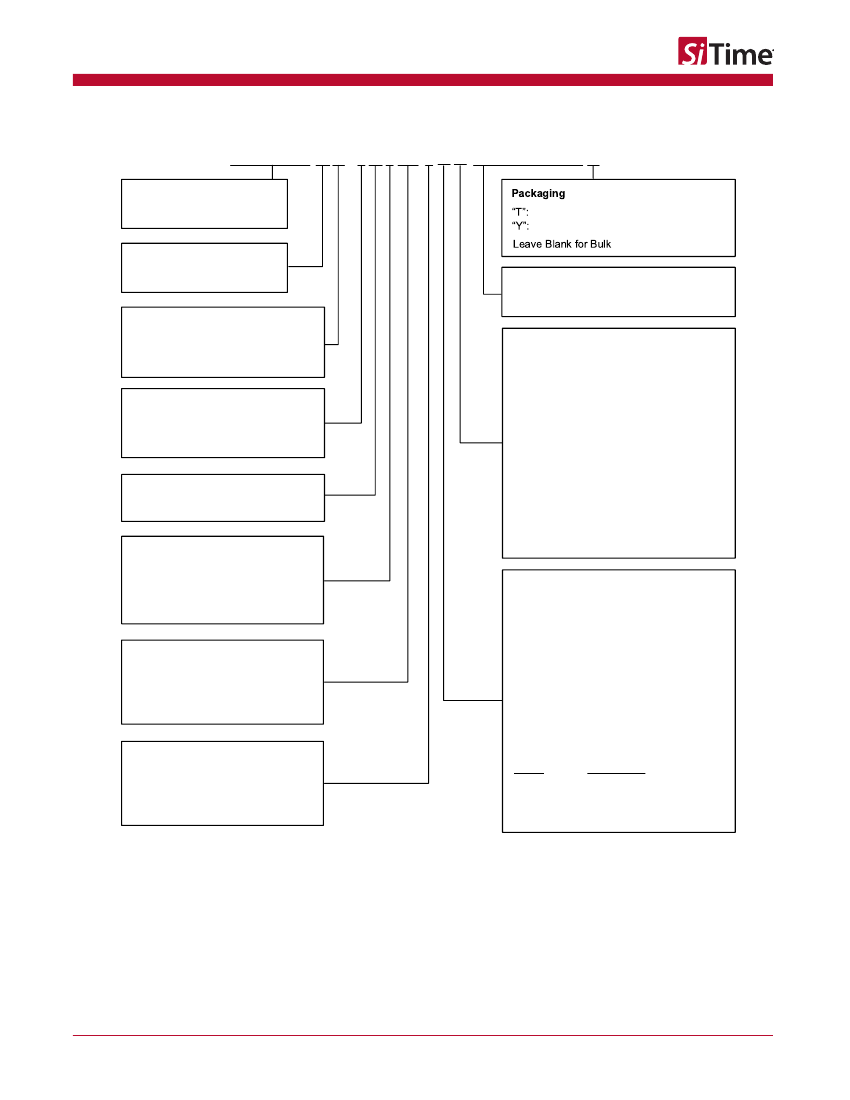
Ordering Information .................................................................................................................................................................... 2
User Programming Interface ..................................................................................................................................... 18
Start-up output frequency and signaling types ........................................................................................................... 18
Any-frequency function ............................................................................................................................................. 19
C/SPI Control Registers...................................................................................................................................................... 28
9 I
Register Address: 0x00. DCO Frequency Control Least Significant Word (LSW) .................................................... 28
Register Address: 0x01. OE Control, DCO Frequency Control Most Significant Word (MSW) ................................. 29
Register Address: 0x02. DCO PULL RANGE CONTROL ........................................................................................ 29
Register Address: 0x03. Frac-N PLL Feedback Divider Integer Value and Frac-N PLL Feedback Divider Fraction
Value MSW ............................................................................................................................................................... 30
Register Address: 0x05. Forward Divider, Driver Control ......................................................................................... 30
Register Address: 0x06. Driver Divider, Driver Control ............................................................................................. 31
2
C Operation ........................................................................................................................................................................ 32
10 I
I
2
C protocol ............................................................................................................................................................... 32
I
2
C Timing Specification ............................................................................................................................................ 35
I
2
C Device Address Modes ....................................................................................................................................... 36
Dimensions and Patterns ........................................................................................................................................................... 43
Additional Information ................................................................................................................................................................ 44
Revision History ......................................................................................................................................................................... 45
Rev 1.01
Page 3 of 45
www.sitime.com
SiT3521
1 to 340 MHz Elite Platform I2C/SPI Programmable Oscillator
1 Electrical Characteristics
All Min and Max limits in the Electrical Characteristics tables are specified over temperature and rated operating voltage with
standard output terminations shown in the termination diagrams. Typical values are at 25°C and nominal supply voltage.
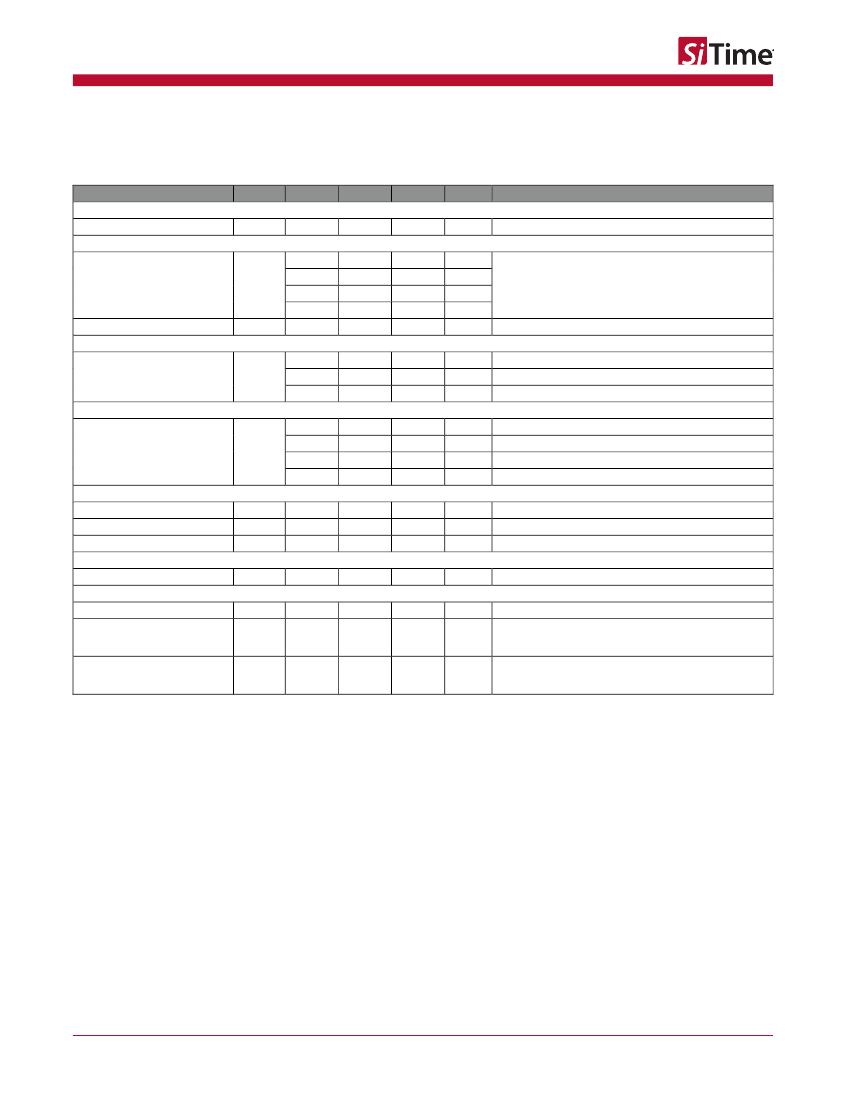
Table 1. Electrical Characteristics – Common to LVPECL, LVDS and HCSL
Parameter
Output Frequency Range
Symbol
f
Min.
1
Typ.
–
–
–
–
–
±1
–
–
–
Max.
340
Unit
MHz
Condition
Factory or user programmable, accurate to 6 decimal places
Frequency Range
Frequency Stability
Frequency Stability
F_stab
-10
-20
-25
-50
First Year Aging
F_1y
–
+10
+20
+25
+50
–
ppm
ppm
ppm
ppm
ppm
°C
°C
°C
1
st
-year aging at 25°C
Inclusive of initial tolerance, operating temperature, rated
power supply voltage and load variations.
Temperature Range
Operating Temperature Range
T_use
-20
-40
-40
+70
+85
+105
Supply Voltage
Supply Voltage
Vdd
2.97
2.7
2.52
2.25
3.3
3.0
2.8
2.5
–
–
100
–
–
–
3.63
3.3
3.08
2.75
–
30%
–
V
V
V
V
Extended Commercial
Industrial
Extended Industrial. Available only for I
2
C operation, not SPI.
Input Characteristics – OE Pin
Input Voltage High
Input Voltage Low
Input Pull-up Impedance
VIH
VIL
Z_in
70%
–
–
Vdd
Vdd
kΩ
OE pin
OE pin
OE pin, logic high or logic low
Output Characteristics
Duty Cycle
DC
45
–
–
55
%
Startup and Output Enable/Disable Timing
Start-up Time
Output Enable/Disable Time –
Hardware control via OE pin
Output Enable/Disable Time –
Software control via I
2
C/SPI
T_start
T_oe_hw
3.0
3.8
ms
µs
Measured from the time Vdd reaches its rated minimum value
Measured from the time OE pin reaches rated VIH and VIL to
the time clock pins reach 90% of swing and high-Z.
See
Figure 9
and
Figure 10
Measured from the time the last byte of command is
transmitted via I
2
C/SPI (reg1) to the time clock pins reach 90%
of swing and high-Z. See
Figure 30
and
Figure 31
T_oe_sw
–
–
6.5
µs
Rev 1.01
Page 4 of 45
www.sitime.com
SiT3521
1 to 340 MHz Elite Platform I2C/SPI Programmable Oscillator
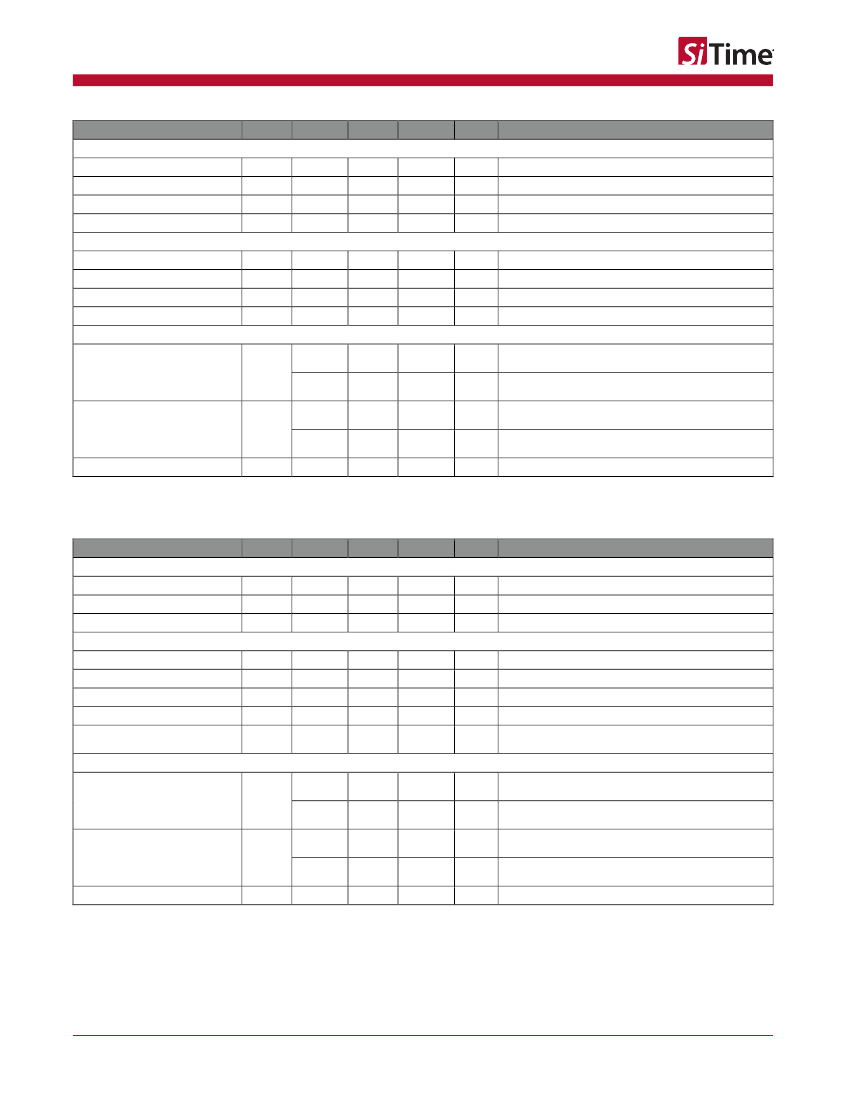
Table 2. Electrical Characteristics – LVPECL Specific
Parameter
Symbol
Min.
Typ.
Max.
Unit
Condition
Current Consumption
Current Consumption
OE Disable Supply Current
Output Disable Leakage Current
Maximum Output Current
Idd
I_OE
I_leak
I_driver
–
–
–
–
–
–
0.15
–
89
58
–
32
mA
mA
A
mA
Excluding Load Termination Current, Vdd = 3.3 V or 2.5 V
OE = Low
OE = Low
Maximum average current drawn from OUT+ or OUT-
Output Characteristics
Output High Voltage
Output Low Voltage
Output Differential Voltage Swing
Rise/Fall Time
VOH
VOL
V_Swing
Tr, Tf
Vdd - 1.1V
Vdd - 1.9V
1.2
–
–
–
1.6
225
Vdd - 0.7V
Vdd - 1.5V
2.0
290
Jitter
RMS Phase Jitter (random) –
DCO Mode Only
T_phj
–
–
RMS Phase Jitter (random) –
Any-frequency Mode Only
T_phj
–
–
RMS Period Jitter
[3]
Note:
3. Measured according to JESD65B.
T_jitt
–
0.225
0.1
0.225
0.11
1
0.340
0.14
0.340
0.15
1.6
ps
ps
ps
ps
ps
f = 156.25 MHz, Integration bandwidth = 12 kHz to 20 MHz,
all Vdd levels
f = 156.25, IEEE802.3-2005 10 GbE jitter mask integration
bandwidth = 1.875 MHz to 20 MHz, all Vdd levels
f = 156.25 MHz, Integration bandwidth = 12 kHz to 20 MHz,
all Vdd levels
f = 156.25, IEEE802.3-2005 10 GbE jitter mask integration
bandwidth = 1.875 MHz to 20 MHz, all Vdd levels
f = 100, 156.25 or 212.5 MHz, Vdd = 3.3 V or 2.5 V
V
V
V
ps
See
Figure 5
See
Figure 5
See
Figure 6
20% to 80%, see
Figure 6
Table 3. Electrical Characteristics – LVDS Specific
Parameter
Symbol
Min.
Typ.
Max.
Unit
Condition
Current Consumption
Current Consumption
OE Disable Supply Current
Output Disable Leakage Current
Idd
I_OE
I_leak
–
–
–
–
–
0.15
80
61
–
mA
mA
A
Excluding Load Termination Current, Vdd = 3.3 V or 2.5 V
OE = Low
OE = Low
Output Characteristics
Differential Output Voltage
Delta VOD
Offset Voltage
Delta VOS
Rise/Fall Time
VOD
ΔVOD
VOS
ΔVOS
Tr, Tf
250
–
1.125
–
–
–
–
–
–
400
455
50
1.375
50
470
Jitter
RMS Phase Jitter (random) –
DCO Mode Only
T_phj
–
–
RMS Phase Jitter (random) –
Any-frequency Mode Only
T_phj
–
–
RMS Period Jitter
[4]
Note:
4. Measured according to JESD65B.
T_jitt
–
0.21
0.1
0.21
0.1
1
0.275
0.12
0.367
0.12
1.6
ps
ps
ps
ps
ps
f = 156.25 MHz, Integration bandwidth = 12 kHz to 20 MHz,
all Vdd levels
f = 156.25, IEEE802.3-2005 10 GbE jitter mask integration
bandwidth = 1.875 MHz to 20 MHz, all Vdd levels
f = 156.25 MHz, Integration bandwidth = 12 kHz to 20 MHz,
all Vdd levels
f = 156.25, IEEE802.3-2005 10 GbE jitter mask integration
bandwidth = 1.875 MHz to 20 MHz, all Vdd levels
f = 100, 156.25 or 212.5 MHz, Vdd = 3.3 V or 2.5 V
mV
mV
V
mV
ps
f = 156.25MHz See
Figure 7
See
Figure 7
See
Figure 7
See
Figure 7
Measured with 2 pF capacitive loading to GND, 20% to 80%,
void zhengti(void) { for (b=0;b 0 && PCA0L >= TIMEOUT) //The high level lasts for more than 120us { EA = 0; UART_initial();//This sentence has been moved to the top (I don't know if it is correct) ser...
Hello everyone: I am debugging the 485 communication program between STM32 and PC, but now I have a very annoying problem. Please help me! STM32 is connected to an SP3485, which leads to two pins 485A...
[i=s]This post was last edited by paulhyde on 2014-9-15 09:20[/i] My graduation project is about 8-way circuit temperature detection. Now I have several questions: 1. Parameter setting (I don't know i...
SONY Effio-E camera, Effio-E camera, HD SONY Effio-E650 line camera, 650 line HD SONY Effio-E camera, infrared camera, infrared camera, infrared waterproof camera, infrared dome camera, explosion-proo...
I tried LAUNCHXL-CC2650 and saw there was a program inside. I opened the SensorTag APP with a try-it attitude and found that I could find LaunchPad 1.0I connected it and it actually connected to the m...
In the past few days, the news that ZTE was "banned" by the US Department of Commerce has triggered widespread reflection and concern in various domestic industries about the lack of independent co...[Details]
The most significant event in the technology circle during this period is undoubtedly the news that ZTE was banned by the United States. Once the news came out, it shocked the entire Chinese techno...[Details]
In 2017,
Sanan Optoelectronics
achieved sales revenue of 8.394 billion yuan, operating profit of 3.856 billion yuan, and net profit attributable to shareholders of the parent company of 3.1...[Details]
Leading Chinese PV inverter manufacturer Huawei said it is supplying string inverters to a 75MW fully digital utility-scale solar project in Brazil, which it claims is the first of its kind in the cou...[Details]
In recent years, in order to meet the needs of social development, more and more companies have entered the fields of smart phones, artificial intelligence,
VR
, AR, etc. After seeing the d...[Details]
1. Heart rate measurement principle 1. What is a heart rate module? The heart rate module is professionally used to monitor the heart rate of the wrist, fingers, forehead, earlobe, chest and other ...[Details]
According to TechRadar, given rumors that
Google
is developing a Pixel Watch
,
the
recently renamed Wear OS
smartwatch
operating system may soon be able to show its full cap...[Details]
The analog watchdog of the ADC is used to check if the voltage is out of bounds. It has two upper and lower bounds, which can be set in the registers ADC_HTR and ADC_LTR respectively. The library fun...[Details]
Independent watchdog (IWDG) and low power mode are often used in STM32 development. The watchdog is to detect and solve faults caused by software errors, and the low power mode is to enter sleep mode...[Details]
STM32 has 2 watchdogs: independent watchdog and window watchdog. Independent watchdog IWDG: A system fault detector that is independent of the system and is not affected by the system because it has ...[Details]
The calculation formula of the watchdog feeding time (watchdog overflow time) is: Tout=((4*2^prer)*rlr)/40 Tout is the watchdog overflow time (in ms), prer is the watchdog clock prescaler value (...[Details]
Ouster LiDAR OS-1 (left) and OS-2 (center) Velodyne invented the modern 3D LiDAR scanner in the mid-2000s, but in recent years conventional wisdom has held that Velodyne’s design — 64 lasers mounted...[Details]
A crystal oscillator can be electrically equivalent to a two-terminal network consisting of a capacitor and a resistor in parallel and a capacitor in series. In electrical engineering, this network h...[Details]
STM32 has three startup modes. In RM0008 downloaded from the ST official website, you can find the startup-related configuration instructions: Translated into Chinese: The storage media corresp...[Details]
Table of contents: 1 Overview 2: Common interrupt functions 3: PWM output 1 Overview In development, timers are widely used, which can be simply summarized into three aspects: 1.1: Application of ...[Details]

 Embedded System
 京公网安备 11010802033920号
 EEWORLD