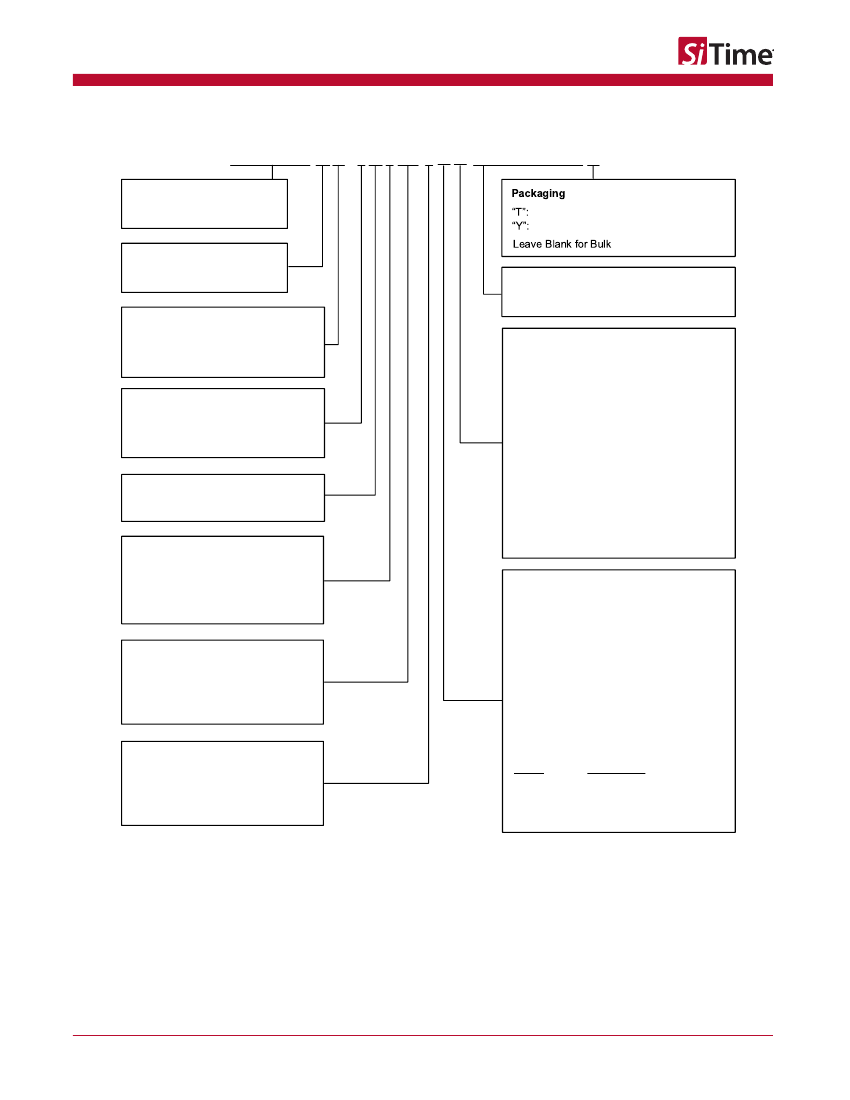
Ordering Information .................................................................................................................................................................... 2
User Programming Interface ..................................................................................................................................... 18
Start-up output frequency and signaling types ........................................................................................................... 18
Any-frequency function ............................................................................................................................................. 19
C/SPI Control Registers...................................................................................................................................................... 28
9 I
Register Address: 0x00. DCO Frequency Control Least Significant Word (LSW) .................................................... 28
Register Address: 0x01. OE Control, DCO Frequency Control Most Significant Word (MSW) ................................. 29
Register Address: 0x02. DCO PULL RANGE CONTROL ........................................................................................ 29
Register Address: 0x03. Frac-N PLL Feedback Divider Integer Value and Frac-N PLL Feedback Divider Fraction
Value MSW ............................................................................................................................................................... 30
Register Address: 0x05. Forward Divider, Driver Control ......................................................................................... 30
Register Address: 0x06. Driver Divider, Driver Control ............................................................................................. 31
2
C Operation ........................................................................................................................................................................ 32
10 I
I
2
C protocol ............................................................................................................................................................... 32
I
2
C Timing Specification ............................................................................................................................................ 35
I
2
C Device Address Modes ....................................................................................................................................... 36
Dimensions and Patterns ........................................................................................................................................................... 43
Additional Information ................................................................................................................................................................ 44
Revision History ......................................................................................................................................................................... 45
Rev 1.01
Page 3 of 45
www.sitime.com
SiT3521
1 to 340 MHz Elite Platform I2C/SPI Programmable Oscillator
1 Electrical Characteristics
All Min and Max limits in the Electrical Characteristics tables are specified over temperature and rated operating voltage with
standard output terminations shown in the termination diagrams. Typical values are at 25°C and nominal supply voltage.
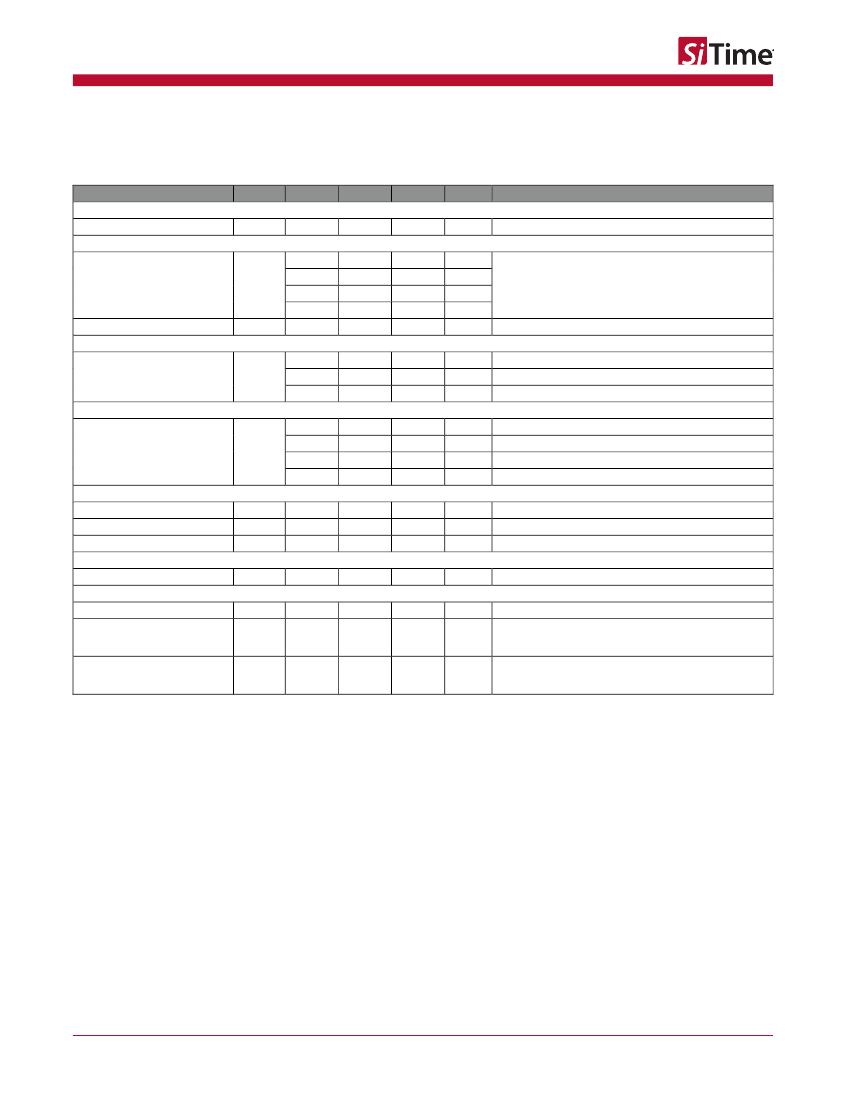
Table 1. Electrical Characteristics – Common to LVPECL, LVDS and HCSL
Parameter
Output Frequency Range
Symbol
f
Min.
1
Typ.
–
–
–
–
–
±1
–
–
–
Max.
340
Unit
MHz
Condition
Factory or user programmable, accurate to 6 decimal places
Frequency Range
Frequency Stability
Frequency Stability
F_stab
-10
-20
-25
-50
First Year Aging
F_1y
–
+10
+20
+25
+50
–
ppm
ppm
ppm
ppm
ppm
°C
°C
°C
1
st
-year aging at 25°C
Inclusive of initial tolerance, operating temperature, rated
power supply voltage and load variations.
Temperature Range
Operating Temperature Range
T_use
-20
-40
-40
+70
+85
+105
Supply Voltage
Supply Voltage
Vdd
2.97
2.7
2.52
2.25
3.3
3.0
2.8
2.5
–
–
100
–
–
–
3.63
3.3
3.08
2.75
–
30%
–
V
V
V
V
Extended Commercial
Industrial
Extended Industrial. Available only for I
2
C operation, not SPI.
Input Characteristics – OE Pin
Input Voltage High
Input Voltage Low
Input Pull-up Impedance
VIH
VIL
Z_in
70%
–
–
Vdd
Vdd
kΩ
OE pin
OE pin
OE pin, logic high or logic low
Output Characteristics
Duty Cycle
DC
45
–
–
55
%
Startup and Output Enable/Disable Timing
Start-up Time
Output Enable/Disable Time –
Hardware control via OE pin
Output Enable/Disable Time –
Software control via I
2
C/SPI
T_start
T_oe_hw
3.0
3.8
ms
µs
Measured from the time Vdd reaches its rated minimum value
Measured from the time OE pin reaches rated VIH and VIL to
the time clock pins reach 90% of swing and high-Z.
See
Figure 9
and
Figure 10
Measured from the time the last byte of command is
transmitted via I
2
C/SPI (reg1) to the time clock pins reach 90%
of swing and high-Z. See
Figure 30
and
Figure 31
T_oe_sw
–
–
6.5
µs
Rev 1.01
Page 4 of 45
www.sitime.com
SiT3521
1 to 340 MHz Elite Platform I2C/SPI Programmable Oscillator
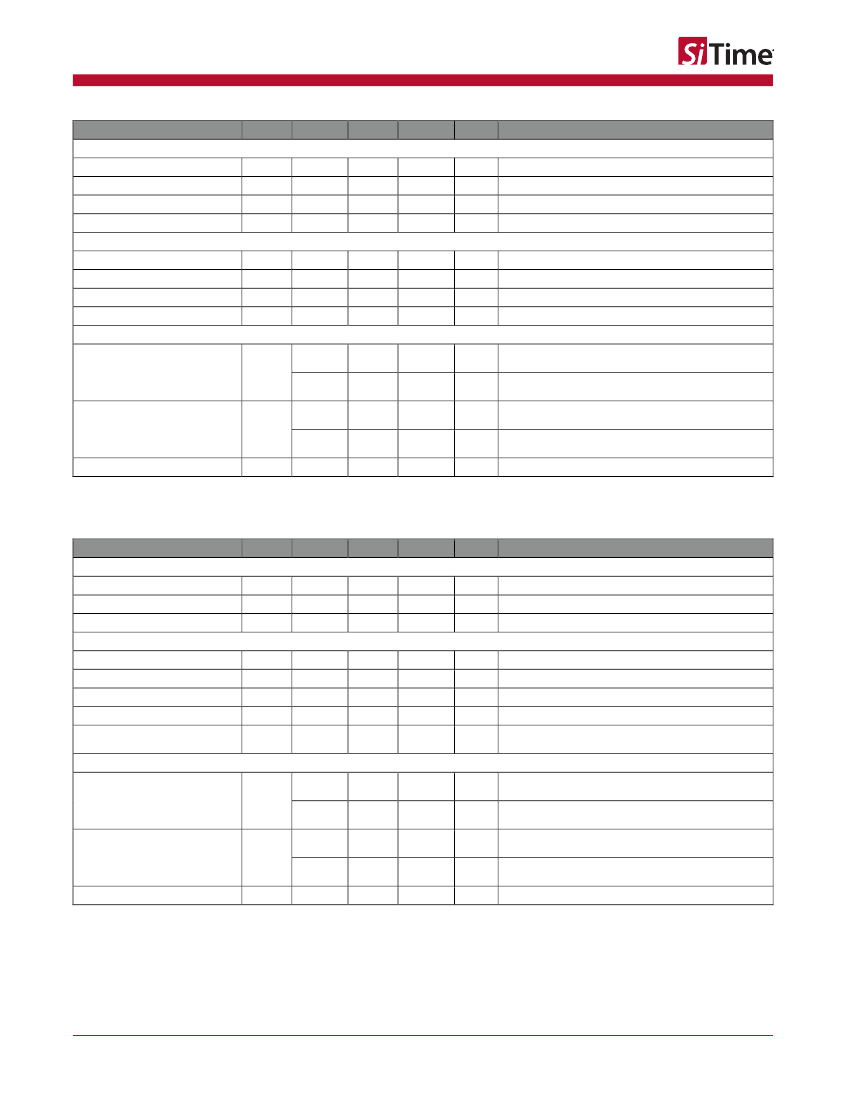
Table 2. Electrical Characteristics – LVPECL Specific
Parameter
Symbol
Min.
Typ.
Max.
Unit
Condition
Current Consumption
Current Consumption
OE Disable Supply Current
Output Disable Leakage Current
Maximum Output Current
Idd
I_OE
I_leak
I_driver
–
–
–
–
–
–
0.15
–
89
58
–
32
mA
mA
A
mA
Excluding Load Termination Current, Vdd = 3.3 V or 2.5 V
OE = Low
OE = Low
Maximum average current drawn from OUT+ or OUT-
Output Characteristics
Output High Voltage
Output Low Voltage
Output Differential Voltage Swing
Rise/Fall Time
VOH
VOL
V_Swing
Tr, Tf
Vdd - 1.1V
Vdd - 1.9V
1.2
–
–
–
1.6
225
Vdd - 0.7V
Vdd - 1.5V
2.0
290
Jitter
RMS Phase Jitter (random) –
DCO Mode Only
T_phj
–
–
RMS Phase Jitter (random) –
Any-frequency Mode Only
T_phj
–
–
RMS Period Jitter
[3]
Note:
3. Measured according to JESD65B.
T_jitt
–
0.225
0.1
0.225
0.11
1
0.340
0.14
0.340
0.15
1.6
ps
ps
ps
ps
ps
f = 156.25 MHz, Integration bandwidth = 12 kHz to 20 MHz,
all Vdd levels
f = 156.25, IEEE802.3-2005 10 GbE jitter mask integration
bandwidth = 1.875 MHz to 20 MHz, all Vdd levels
f = 156.25 MHz, Integration bandwidth = 12 kHz to 20 MHz,
all Vdd levels
f = 156.25, IEEE802.3-2005 10 GbE jitter mask integration
bandwidth = 1.875 MHz to 20 MHz, all Vdd levels
f = 100, 156.25 or 212.5 MHz, Vdd = 3.3 V or 2.5 V
V
V
V
ps
See
Figure 5
See
Figure 5
See
Figure 6
20% to 80%, see
Figure 6
Table 3. Electrical Characteristics – LVDS Specific
Parameter
Symbol
Min.
Typ.
Max.
Unit
Condition
Current Consumption
Current Consumption
OE Disable Supply Current
Output Disable Leakage Current
Idd
I_OE
I_leak
–
–
–
–
–
0.15
80
61
–
mA
mA
A
Excluding Load Termination Current, Vdd = 3.3 V or 2.5 V
OE = Low
OE = Low
Output Characteristics
Differential Output Voltage
Delta VOD
Offset Voltage
Delta VOS
Rise/Fall Time
VOD
ΔVOD
VOS
ΔVOS
Tr, Tf
250
–
1.125
–
–
–
–
–
–
400
455
50
1.375
50
470
Jitter
RMS Phase Jitter (random) –
DCO Mode Only
T_phj
–
–
RMS Phase Jitter (random) –
Any-frequency Mode Only
T_phj
–
–
RMS Period Jitter
[4]
Note:
4. Measured according to JESD65B.
T_jitt
–
0.21
0.1
0.21
0.1
1
0.275
0.12
0.367
0.12
1.6
ps
ps
ps
ps
ps
f = 156.25 MHz, Integration bandwidth = 12 kHz to 20 MHz,
all Vdd levels
f = 156.25, IEEE802.3-2005 10 GbE jitter mask integration
bandwidth = 1.875 MHz to 20 MHz, all Vdd levels
f = 156.25 MHz, Integration bandwidth = 12 kHz to 20 MHz,
all Vdd levels
f = 156.25, IEEE802.3-2005 10 GbE jitter mask integration
bandwidth = 1.875 MHz to 20 MHz, all Vdd levels
f = 100, 156.25 or 212.5 MHz, Vdd = 3.3 V or 2.5 V
mV
mV
V
mV
ps
f = 156.25MHz See
Figure 7
See
Figure 7
See
Figure 7
See
Figure 7
Measured with 2 pF capacitive loading to GND, 20% to 80%,
Dear experts: In embedded development, the program for defining a custom segment is as follows: .sect ".mysec" arm9_stub: mov pc,i_stack ...... The custom segment is placed at 0xffff0000 on the target...
[align=left]The "Yibo Cup" 2nd IPC China PCB Design Competition will be held in Shenzhen from December 3rd to 6th. This event aims to build a platform for Chinese PCB design engineers to showcase thei...
In the past week, I have become familiar with the various functions of STEVAL-MKI109V3, and have a general idea of the idea and a simple outline of the implementation method. In the past two days, I h...
This circuit is an active filter circuit. Is it a low-pass or high-pass?I have seen a high-pass circuit diagram before. Except for the different input at the in-phase input terminal, the circuit struc...
I used to use ISE, but suddenly I'm using Quartus. I'm not used to it. After cracking it several times, I feel that some functions are not usable. May I ask, is the 30-day trial open to all functions,...
[i=s]This post was last edited by paulhyde on 2014-9-15 09:29[/i] Some students found that the signal output noise was large after they finished the design. You can add a metal shield to the circuit a...
1. Function prototype In the function library officially provided by STM32, you can find functions like HAL_Delay(). This function uses a timer to achieve a more accurate time delay and provides it...[Details]
The day before yesterday, I learned about STM's Systick and found it quite useful for precise timing. When I used CVAVR before, I found that the delay.h in it was very useful. So, I used STM32's...[Details]
When Amazon launched its first
cloud computing
service, the outside world was not optimistic about this direction, as it had high investment, low profits and many uncertainties. Let's follo...[Details]
China Energy Storage Network:
Blockchain + finance, blockchain + environmental protection, blockchain + insurance, even a roadside fried chicken shop is using the banner of blockchain + fried...[Details]
I have always wanted to write some posts and blogs, but I just couldn't bear to do it as I just graduated. After some preparation, I decided to write down some of the things I learned in the past few...[Details]
This is my first time writing an STM32 program. I have many questions to ask. I want to convert the data of the SO of MAX6675 into the actual temperature and read it out using the serial port tool. I...[Details]
Time flies. Since the beginning of 2018, news related to home appliance companies have repeatedly made headlines, and competition in the home appliance market continues to intensify. In order to be...[Details]
Since the first draft of the 5G
NR standard was officially launched at
the end of 2017
, the
5G
commercialization process has taken a substantial step forward. From that moment on, mo...[Details]
Recently, Zhejiang Lipu Crushing Equipment Co., Ltd. invested 50 million yuan to build a new "annual production of 1,200 high-efficiency and energy-saving ultra-fine pulverizer construction project...[Details]
With the development of the automobile industry, more and more automotive electronic components are being used in modern cars, providing better safety, comfort and economy for cars. In the past, cars...[Details]
As the brain of a mobile phone, the mobile phone processing chip is of great importance. Xiaomi, which started out as the MIUI company, has long been keenly aware of the gap between China and devel...[Details]
When Amazon quietly launched a product called Elastic Computing Cloud 12 years ago, the Internet industry in China, across the ocean, also ushered in an unprecedented development opportunity. Let's...[Details]
As a leading company in automotive semiconductors, Freescale and Khronos Group have jointly launched an automotive multimedia embedded microprocessor i.MX35 with an integrated OpenVG hardware acceler...[Details]
Photovoltaic inverters are the core equipment of photovoltaic systems. Their main function is to convert the direct current generated by photovoltaic modules into alternating current that meets the...[Details]
According to MEMS Consulting, single-chip radar system-on-chip (SoC) is becoming one of the most popular new sensors . Its widespread adoption in automobiles has greatly increased sales, thereby pr...[Details]

 Embedded System
 京公网安备 11010802033920号
 EEWORLD