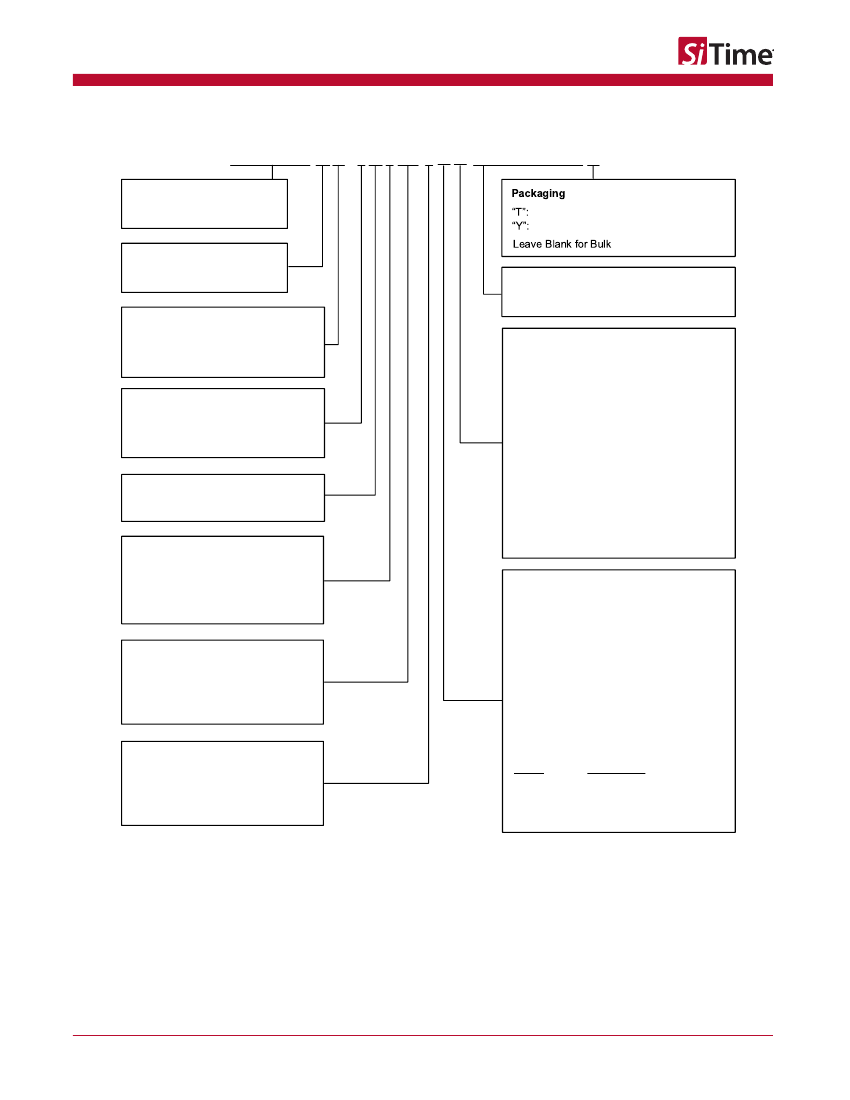
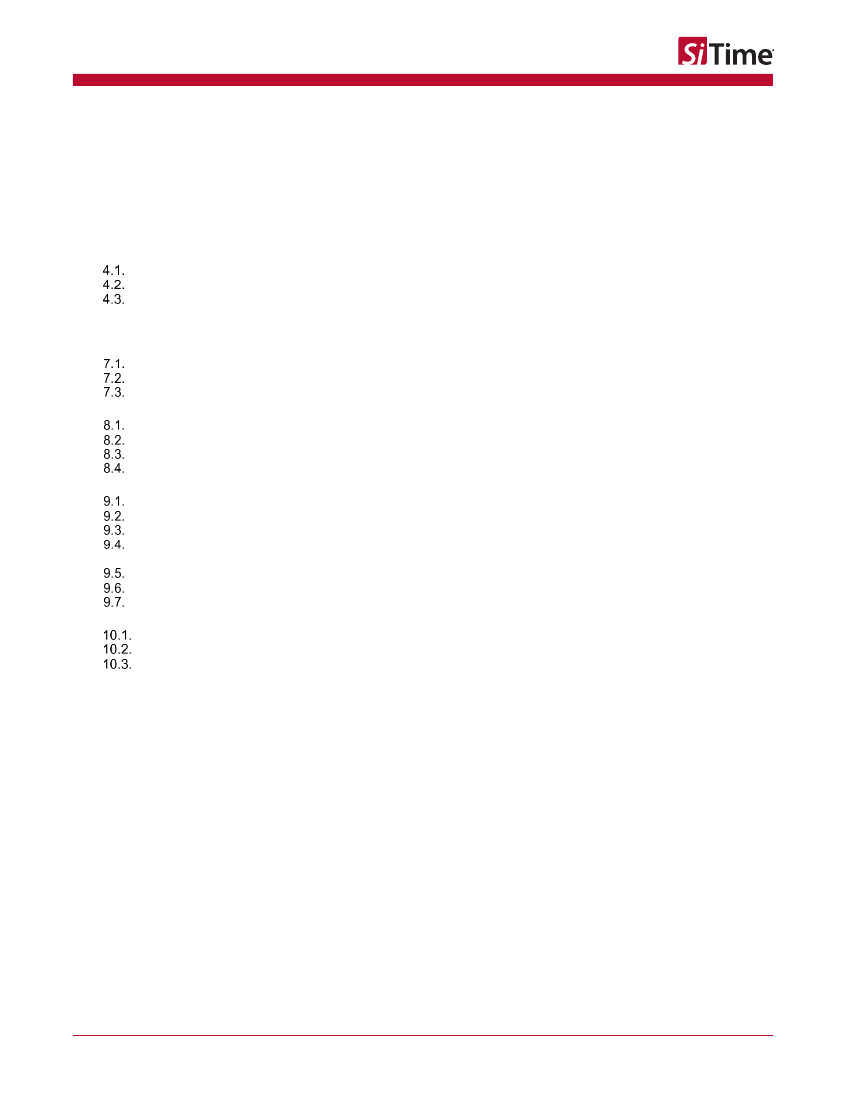
Ordering Information .................................................................................................................................................................... 2
User Programming Interface ..................................................................................................................................... 18
Start-up output frequency and signaling types ........................................................................................................... 18
Any-frequency function ............................................................................................................................................. 19
C/SPI Control Registers...................................................................................................................................................... 28
9 I
Register Address: 0x00. DCO Frequency Control Least Significant Word (LSW) .................................................... 28
Register Address: 0x01. OE Control, DCO Frequency Control Most Significant Word (MSW) ................................. 29
Register Address: 0x02. DCO PULL RANGE CONTROL ........................................................................................ 29
Register Address: 0x03. Frac-N PLL Feedback Divider Integer Value and Frac-N PLL Feedback Divider Fraction
Value MSW ............................................................................................................................................................... 30
Register Address: 0x05. Forward Divider, Driver Control ......................................................................................... 30
Register Address: 0x06. Driver Divider, Driver Control ............................................................................................. 31
2
C Operation ........................................................................................................................................................................ 32
10 I
I
2
C protocol ............................................................................................................................................................... 32
I
2
C Timing Specification ............................................................................................................................................ 35
I
2
C Device Address Modes ....................................................................................................................................... 36
Dimensions and Patterns ........................................................................................................................................................... 43
Additional Information ................................................................................................................................................................ 44
Revision History ......................................................................................................................................................................... 45
Rev 1.01
Page 3 of 45
www.sitime.com
SiT3521
1 to 340 MHz Elite Platform I2C/SPI Programmable Oscillator
1 Electrical Characteristics
All Min and Max limits in the Electrical Characteristics tables are specified over temperature and rated operating voltage with
standard output terminations shown in the termination diagrams. Typical values are at 25°C and nominal supply voltage.
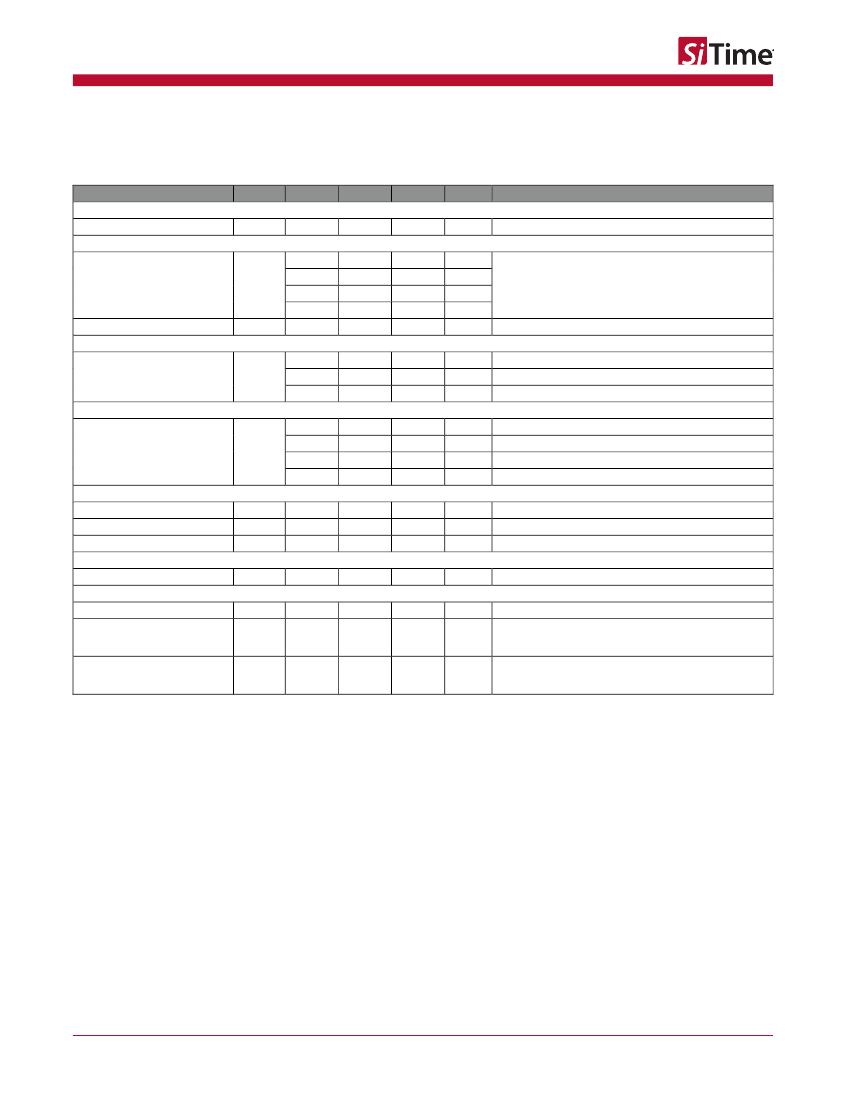
Table 1. Electrical Characteristics – Common to LVPECL, LVDS and HCSL
Parameter
Output Frequency Range
Symbol
f
Min.
1
Typ.
–
–
–
–
–
±1
–
–
–
Max.
340
Unit
MHz
Condition
Factory or user programmable, accurate to 6 decimal places
Frequency Range
Frequency Stability
Frequency Stability
F_stab
-10
-20
-25
-50
First Year Aging
F_1y
–
+10
+20
+25
+50
–
ppm
ppm
ppm
ppm
ppm
°C
°C
°C
1
st
-year aging at 25°C
Inclusive of initial tolerance, operating temperature, rated
power supply voltage and load variations.
Temperature Range
Operating Temperature Range
T_use
-20
-40
-40
+70
+85
+105
Supply Voltage
Supply Voltage
Vdd
2.97
2.7
2.52
2.25
3.3
3.0
2.8
2.5
–
–
100
–
–
–
3.63
3.3
3.08
2.75
–
30%
–
V
V
V
V
Extended Commercial
Industrial
Extended Industrial. Available only for I
2
C operation, not SPI.
Input Characteristics – OE Pin
Input Voltage High
Input Voltage Low
Input Pull-up Impedance
VIH
VIL
Z_in
70%
–
–
Vdd
Vdd
kΩ
OE pin
OE pin
OE pin, logic high or logic low
Output Characteristics
Duty Cycle
DC
45
–
–
55
%
Startup and Output Enable/Disable Timing
Start-up Time
Output Enable/Disable Time –
Hardware control via OE pin
Output Enable/Disable Time –
Software control via I
2
C/SPI
T_start
T_oe_hw
3.0
3.8
ms
µs
Measured from the time Vdd reaches its rated minimum value
Measured from the time OE pin reaches rated VIH and VIL to
the time clock pins reach 90% of swing and high-Z.
See
Figure 9
and
Figure 10
Measured from the time the last byte of command is
transmitted via I
2
C/SPI (reg1) to the time clock pins reach 90%
of swing and high-Z. See
Figure 30
and
Figure 31
T_oe_sw
–
–
6.5
µs
Rev 1.01
Page 4 of 45
www.sitime.com
SiT3521
1 to 340 MHz Elite Platform I2C/SPI Programmable Oscillator
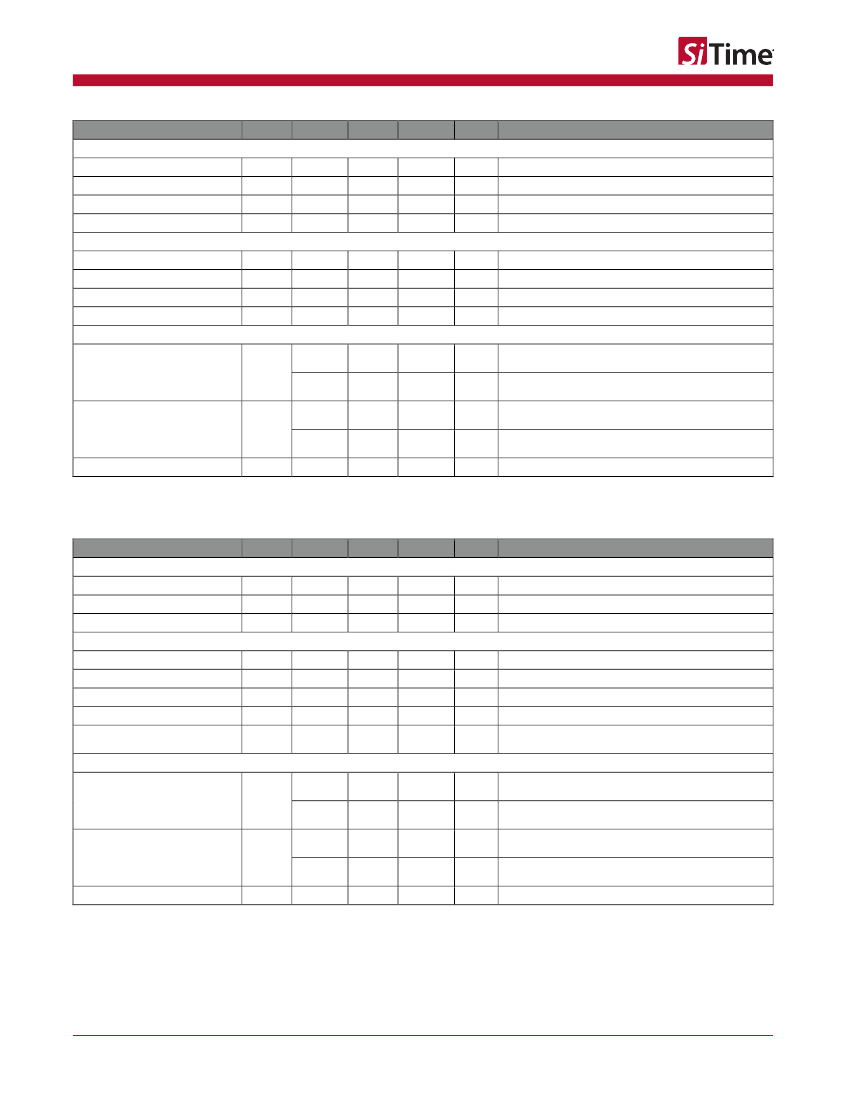
Table 2. Electrical Characteristics – LVPECL Specific
Parameter
Symbol
Min.
Typ.
Max.
Unit
Condition
Current Consumption
Current Consumption
OE Disable Supply Current
Output Disable Leakage Current
Maximum Output Current
Idd
I_OE
I_leak
I_driver
–
–
–
–
–
–
0.15
–
89
58
–
32
mA
mA
A
mA
Excluding Load Termination Current, Vdd = 3.3 V or 2.5 V
OE = Low
OE = Low
Maximum average current drawn from OUT+ or OUT-
Output Characteristics
Output High Voltage
Output Low Voltage
Output Differential Voltage Swing
Rise/Fall Time
VOH
VOL
V_Swing
Tr, Tf
Vdd - 1.1V
Vdd - 1.9V
1.2
–
–
–
1.6
225
Vdd - 0.7V
Vdd - 1.5V
2.0
290
Jitter
RMS Phase Jitter (random) –
DCO Mode Only
T_phj
–
–
RMS Phase Jitter (random) –
Any-frequency Mode Only
T_phj
–
–
RMS Period Jitter
[3]
Note:
3. Measured according to JESD65B.
T_jitt
–
0.225
0.1
0.225
0.11
1
0.340
0.14
0.340
0.15
1.6
ps
ps
ps
ps
ps
f = 156.25 MHz, Integration bandwidth = 12 kHz to 20 MHz,
all Vdd levels
f = 156.25, IEEE802.3-2005 10 GbE jitter mask integration
bandwidth = 1.875 MHz to 20 MHz, all Vdd levels
f = 156.25 MHz, Integration bandwidth = 12 kHz to 20 MHz,
all Vdd levels
f = 156.25, IEEE802.3-2005 10 GbE jitter mask integration
bandwidth = 1.875 MHz to 20 MHz, all Vdd levels
f = 100, 156.25 or 212.5 MHz, Vdd = 3.3 V or 2.5 V
V
V
V
ps
See
Figure 5
See
Figure 5
See
Figure 6
20% to 80%, see
Figure 6
Table 3. Electrical Characteristics – LVDS Specific
Parameter
Symbol
Min.
Typ.
Max.
Unit
Condition
Current Consumption
Current Consumption
OE Disable Supply Current
Output Disable Leakage Current
Idd
I_OE
I_leak
–
–
–
–
–
0.15
80
61
–
mA
mA
A
Excluding Load Termination Current, Vdd = 3.3 V or 2.5 V
OE = Low
OE = Low
Output Characteristics
Differential Output Voltage
Delta VOD
Offset Voltage
Delta VOS
Rise/Fall Time
VOD
ΔVOD
VOS
ΔVOS
Tr, Tf
250
–
1.125
–
–
–
–
–
–
400
455
50
1.375
50
470
Jitter
RMS Phase Jitter (random) –
DCO Mode Only
T_phj
–
–
RMS Phase Jitter (random) –
Any-frequency Mode Only
T_phj
–
–
RMS Period Jitter
[4]
Note:
4. Measured according to JESD65B.
T_jitt
–
0.21
0.1
0.21
0.1
1
0.275
0.12
0.367
0.12
1.6
ps
ps
ps
ps
ps
f = 156.25 MHz, Integration bandwidth = 12 kHz to 20 MHz,
all Vdd levels
f = 156.25, IEEE802.3-2005 10 GbE jitter mask integration
bandwidth = 1.875 MHz to 20 MHz, all Vdd levels
f = 156.25 MHz, Integration bandwidth = 12 kHz to 20 MHz,
all Vdd levels
f = 156.25, IEEE802.3-2005 10 GbE jitter mask integration
bandwidth = 1.875 MHz to 20 MHz, all Vdd levels
f = 100, 156.25 or 212.5 MHz, Vdd = 3.3 V or 2.5 V
mV
mV
V
mV
ps
f = 156.25MHz See
Figure 7
See
Figure 7
See
Figure 7
See
Figure 7
Measured with 2 pF capacitive loading to GND, 20% to 80%,
In KEIL5, what is the difference between using J-LINK to download the program and debugging after downloading the program? How do I know whether it is downloaded to FLASH or to RAM for debugging?...
Please ask the master:
How to delay 0.5us? Use time.sleep(0.0000005)?
Decimals cannot be used in time.sleep_us()
In C language, I see that others use __nop(), but there is no such function in Micropyt...
Headhunting position [Nanjing] Job responsibilities: 1. Responsible for the communication protocol application development of the supporting communication modules of the Internet of Things platform (B...
I'm learning about 28335 ADC recently. The tutorial says that ADC has single-shot mode, continuous mode, synchronous sampling, sequential sampling, cascade mode, etc. I'm a bit confused. Could anyone ...
It's really impossible to do something without an oscilloscope. I made one before, but it was almost unusable, so I made another one.
The analog sampling part still uses the familiar AD603+ads830, whi...
The mass production process of the new generation of cockpit platform has started, and the smart cockpit market has entered a new bonus cycle of technology iteration and platform upgrade.
...[Details]
We are entering a new era where people are increasingly affordably equipped with more electronic gadgets. Electronics have become essential to our lives. For example, the average consumer now owns ...[Details]
1. Introduction
Electronic scales are gradually replacing traditional measuring tools like springs and balances in everyday life, such as electronic price computing scales and electronic weigh...[Details]
Robotics
has become
LiDAR
's "second growth curve."
While LiDAR was still battling with its "pure vision" rivals in the automotive field, another field ignited the demand f...[Details]
The all-new MG4 was recently officially announced on the Ministry of Industry and Information Technology's (MIIT) new vehicle announcement. The all-new MG4's semi-solid-state battery version addres...[Details]
introduction
Sonar imaging is of great significance in marine resource development and defense. Its long range, intuitive display of the observed area, and target identification make it widely...[Details]
According to Nikkei, Japan has performed poorly in responding to China's power semiconductor challenges.
There are five major companies in Japan's power chip market: Mitsubishi Electric,...[Details]
According to Nikkei, a survey found that global electric vehicle battery supply is expected to reach more than three times the required quantity due to
cooling
demand for electric vehicles,...[Details]
According to foreign media reports, Ford Motor has applied to the U.S. Patent and Social Security Office (USPTO) for a patent for a door anti-collision system that may be used in future Ford vehicl...[Details]
On August 21st, BYD announced the launch of its next-generation "Little White Pile" product, the "Lingchong"
charging
pile
, which is now available for general sale. This charging pile feat...[Details]
Tiantai Robot's official Weibo account announced on the evening of August 20 that Tiantai Robot Co., Ltd., together with strategic partners including Shandong Future Robot Technology Co., Ltd., Sha...[Details]
High-definition media consumption is experiencing a dual growth: an increase in the number of consumers and a transition to higher-definition content. This growth is driven by increasingly widespre...[Details]
The drive shaft is the shaft in a universal joint that transmits power. As a high-speed, low-support rotating body, its dynamic balance is crucial. Generally, drive shafts undergo dynamic balancing...[Details]
Recently, I received a request to use OK1028A-C to output PWM square wave. However, I found that there was no relevant instructions on the OK1028 platform, so I started writing this article.
A...[Details]
On August 19, Huawei's Executive Director and Chairman of the Device BG, Richard Yu, shared a Weibo post about a conversation he had with a Zunjie S800 owner. The owner had driven over 5,000 kilome...[Details]

 MCU
MCU
 京公网安备 11010802033920号
 EEWORLD