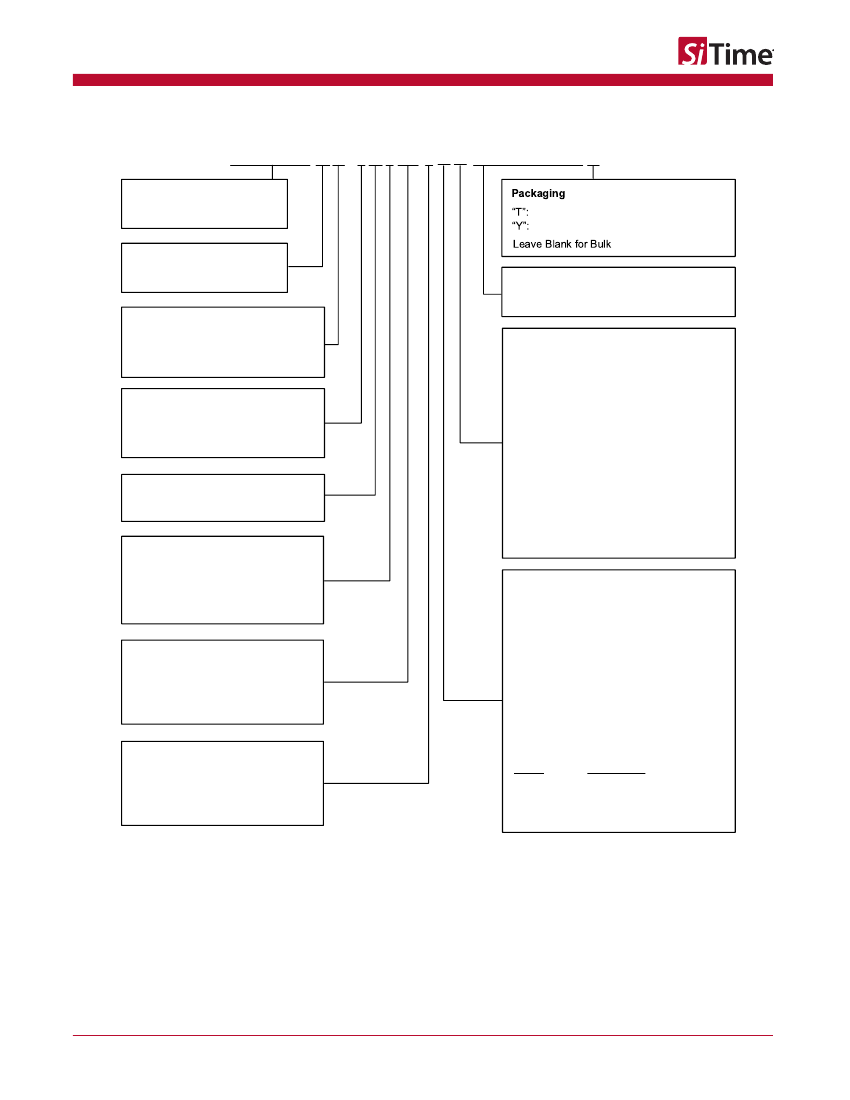
Ordering Information .................................................................................................................................................................... 2
User Programming Interface ..................................................................................................................................... 18
Start-up output frequency and signaling types ........................................................................................................... 18
Any-frequency function ............................................................................................................................................. 19
C/SPI Control Registers...................................................................................................................................................... 28
9 I
Register Address: 0x00. DCO Frequency Control Least Significant Word (LSW) .................................................... 28
Register Address: 0x01. OE Control, DCO Frequency Control Most Significant Word (MSW) ................................. 29
Register Address: 0x02. DCO PULL RANGE CONTROL ........................................................................................ 29
Register Address: 0x03. Frac-N PLL Feedback Divider Integer Value and Frac-N PLL Feedback Divider Fraction
Value MSW ............................................................................................................................................................... 30
Register Address: 0x05. Forward Divider, Driver Control ......................................................................................... 30
Register Address: 0x06. Driver Divider, Driver Control ............................................................................................. 31
2
C Operation ........................................................................................................................................................................ 32
10 I
I
2
C protocol ............................................................................................................................................................... 32
I
2
C Timing Specification ............................................................................................................................................ 35
I
2
C Device Address Modes ....................................................................................................................................... 36
Dimensions and Patterns ........................................................................................................................................................... 43
Additional Information ................................................................................................................................................................ 44
Revision History ......................................................................................................................................................................... 45
Rev 1.01
Page 3 of 45
www.sitime.com
SiT3521
1 to 340 MHz Elite Platform I2C/SPI Programmable Oscillator
1 Electrical Characteristics
All Min and Max limits in the Electrical Characteristics tables are specified over temperature and rated operating voltage with
standard output terminations shown in the termination diagrams. Typical values are at 25°C and nominal supply voltage.
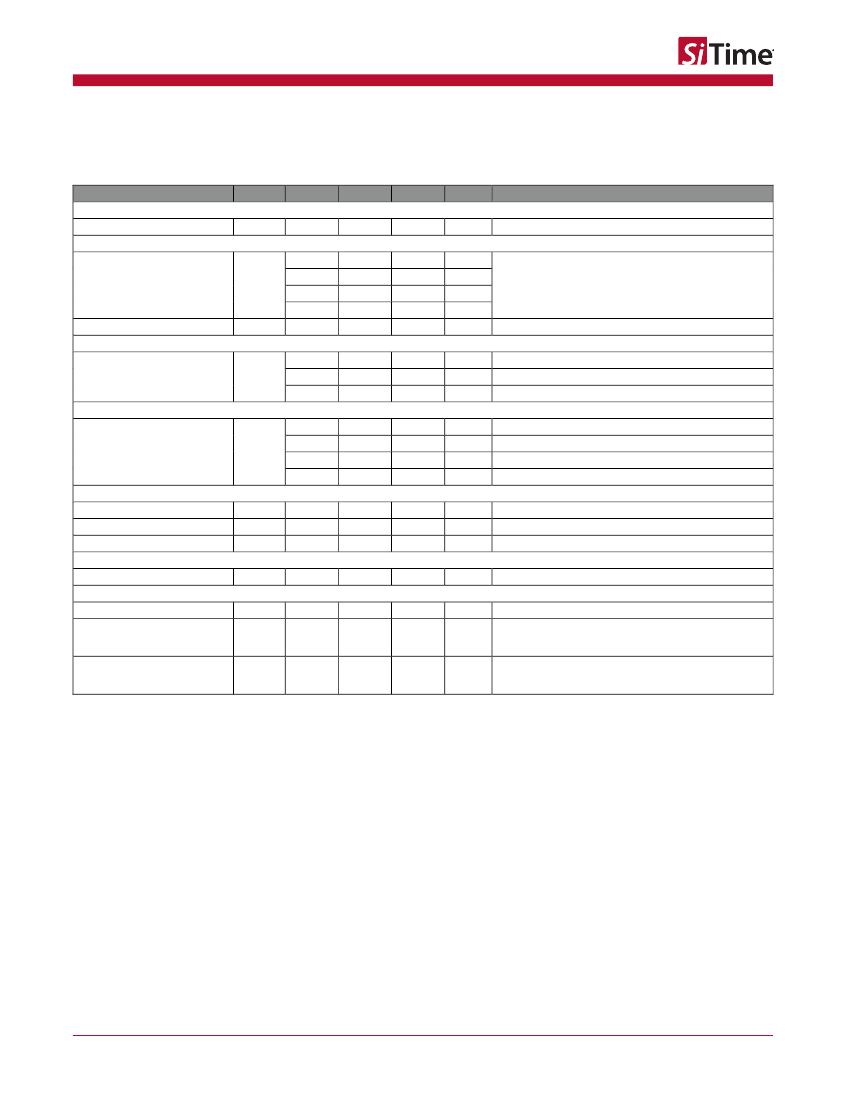
Table 1. Electrical Characteristics – Common to LVPECL, LVDS and HCSL
Parameter
Output Frequency Range
Symbol
f
Min.
1
Typ.
–
–
–
–
–
±1
–
–
–
Max.
340
Unit
MHz
Condition
Factory or user programmable, accurate to 6 decimal places
Frequency Range
Frequency Stability
Frequency Stability
F_stab
-10
-20
-25
-50
First Year Aging
F_1y
–
+10
+20
+25
+50
–
ppm
ppm
ppm
ppm
ppm
°C
°C
°C
1
st
-year aging at 25°C
Inclusive of initial tolerance, operating temperature, rated
power supply voltage and load variations.
Temperature Range
Operating Temperature Range
T_use
-20
-40
-40
+70
+85
+105
Supply Voltage
Supply Voltage
Vdd
2.97
2.7
2.52
2.25
3.3
3.0
2.8
2.5
–
–
100
–
–
–
3.63
3.3
3.08
2.75
–
30%
–
V
V
V
V
Extended Commercial
Industrial
Extended Industrial. Available only for I
2
C operation, not SPI.
Input Characteristics – OE Pin
Input Voltage High
Input Voltage Low
Input Pull-up Impedance
VIH
VIL
Z_in
70%
–
–
Vdd
Vdd
kΩ
OE pin
OE pin
OE pin, logic high or logic low
Output Characteristics
Duty Cycle
DC
45
–
–
55
%
Startup and Output Enable/Disable Timing
Start-up Time
Output Enable/Disable Time –
Hardware control via OE pin
Output Enable/Disable Time –
Software control via I
2
C/SPI
T_start
T_oe_hw
3.0
3.8
ms
µs
Measured from the time Vdd reaches its rated minimum value
Measured from the time OE pin reaches rated VIH and VIL to
the time clock pins reach 90% of swing and high-Z.
See
Figure 9
and
Figure 10
Measured from the time the last byte of command is
transmitted via I
2
C/SPI (reg1) to the time clock pins reach 90%
of swing and high-Z. See
Figure 30
and
Figure 31
T_oe_sw
–
–
6.5
µs
Rev 1.01
Page 4 of 45
www.sitime.com
SiT3521
1 to 340 MHz Elite Platform I2C/SPI Programmable Oscillator
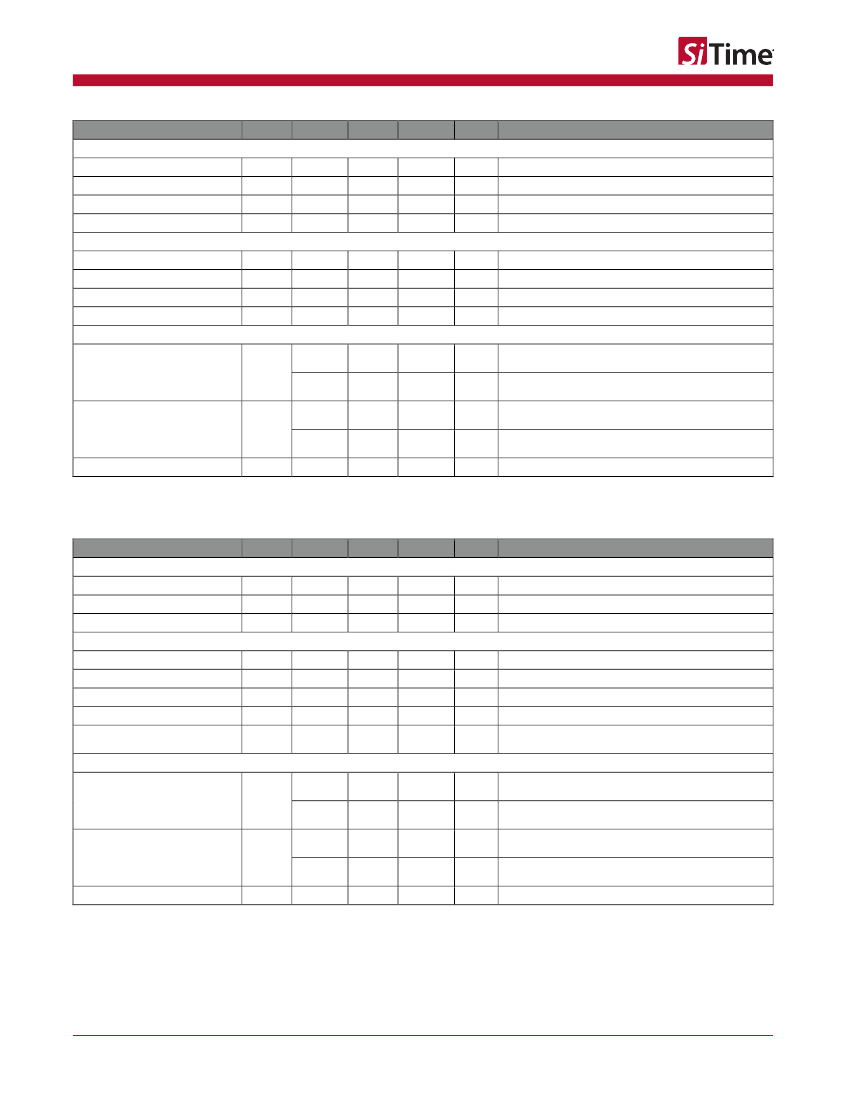
Table 2. Electrical Characteristics – LVPECL Specific
Parameter
Symbol
Min.
Typ.
Max.
Unit
Condition
Current Consumption
Current Consumption
OE Disable Supply Current
Output Disable Leakage Current
Maximum Output Current
Idd
I_OE
I_leak
I_driver
–
–
–
–
–
–
0.15
–
89
58
–
32
mA
mA
A
mA
Excluding Load Termination Current, Vdd = 3.3 V or 2.5 V
OE = Low
OE = Low
Maximum average current drawn from OUT+ or OUT-
Output Characteristics
Output High Voltage
Output Low Voltage
Output Differential Voltage Swing
Rise/Fall Time
VOH
VOL
V_Swing
Tr, Tf
Vdd - 1.1V
Vdd - 1.9V
1.2
–
–
–
1.6
225
Vdd - 0.7V
Vdd - 1.5V
2.0
290
Jitter
RMS Phase Jitter (random) –
DCO Mode Only
T_phj
–
–
RMS Phase Jitter (random) –
Any-frequency Mode Only
T_phj
–
–
RMS Period Jitter
[3]
Note:
3. Measured according to JESD65B.
T_jitt
–
0.225
0.1
0.225
0.11
1
0.340
0.14
0.340
0.15
1.6
ps
ps
ps
ps
ps
f = 156.25 MHz, Integration bandwidth = 12 kHz to 20 MHz,
all Vdd levels
f = 156.25, IEEE802.3-2005 10 GbE jitter mask integration
bandwidth = 1.875 MHz to 20 MHz, all Vdd levels
f = 156.25 MHz, Integration bandwidth = 12 kHz to 20 MHz,
all Vdd levels
f = 156.25, IEEE802.3-2005 10 GbE jitter mask integration
bandwidth = 1.875 MHz to 20 MHz, all Vdd levels
f = 100, 156.25 or 212.5 MHz, Vdd = 3.3 V or 2.5 V
V
V
V
ps
See
Figure 5
See
Figure 5
See
Figure 6
20% to 80%, see
Figure 6
Table 3. Electrical Characteristics – LVDS Specific
Parameter
Symbol
Min.
Typ.
Max.
Unit
Condition
Current Consumption
Current Consumption
OE Disable Supply Current
Output Disable Leakage Current
Idd
I_OE
I_leak
–
–
–
–
–
0.15
80
61
–
mA
mA
A
Excluding Load Termination Current, Vdd = 3.3 V or 2.5 V
OE = Low
OE = Low
Output Characteristics
Differential Output Voltage
Delta VOD
Offset Voltage
Delta VOS
Rise/Fall Time
VOD
ΔVOD
VOS
ΔVOS
Tr, Tf
250
–
1.125
–
–
–
–
–
–
400
455
50
1.375
50
470
Jitter
RMS Phase Jitter (random) –
DCO Mode Only
T_phj
–
–
RMS Phase Jitter (random) –
Any-frequency Mode Only
T_phj
–
–
RMS Period Jitter
[4]
Note:
4. Measured according to JESD65B.
T_jitt
–
0.21
0.1
0.21
0.1
1
0.275
0.12
0.367
0.12
1.6
ps
ps
ps
ps
ps
f = 156.25 MHz, Integration bandwidth = 12 kHz to 20 MHz,
all Vdd levels
f = 156.25, IEEE802.3-2005 10 GbE jitter mask integration
bandwidth = 1.875 MHz to 20 MHz, all Vdd levels
f = 156.25 MHz, Integration bandwidth = 12 kHz to 20 MHz,
all Vdd levels
f = 156.25, IEEE802.3-2005 10 GbE jitter mask integration
bandwidth = 1.875 MHz to 20 MHz, all Vdd levels
f = 100, 156.25 or 212.5 MHz, Vdd = 3.3 V or 2.5 V
mV
mV
V
mV
ps
f = 156.25MHz See
Figure 7
See
Figure 7
See
Figure 7
See
Figure 7
Measured with 2 pF capacitive loading to GND, 20% to 80%,
From EEWORLD cooperation group: arm linux fpga embedded 0 (49900581) Group leader: wangkj How do you test it in general? Is there any testing tool? Thank you for letting me know, thank you for partici...
[table] [tr][td][color=rgb(51, 51, 51)][size=14px][align=left]The conventional method of converting AC mains power into low-voltage DC is to use a transformer to reduce the voltage and then rectify an...
[i=s] This post was last edited by RCSN on 2019-1-6 17:29 [/i] [font=宋体][size=4] Well, following the USB composite device posted above, the author debugged the CAN peripherals of XMC4800 to integrate ...
[i=s]This post was last edited by shower.xu on 2015-5-20 16:27[/i] Let's summarize all the posts first: [url=https://bbs.eeworld.com.cn/thread-458150-1-1.html]【LPC54100】Week 1 - Share some schematics ...
On August 22, the Wall Street Journal reported on the 21st local time that the new US government does not plan to acquire equity in semiconductor wafer foundry giant TSMC and Micron, one of the thr...[Details]
Preface
Low-voltage motors are widely used in nonferrous metallurgical plants. Their abnormal operation not only impacts normal production but can also threaten human life. Therefore, providin...[Details]
0 Introduction
DVI (Digital Visual Interface) is a hot topic in current digital display research and application. Video processing technologies for DVI output not only address issues such as h...[Details]
Keysight Technologies reported strong third-quarter results, with revenue and earnings per share exceeding expectations and steady order growth. The company, driven by strong growth across multiple...[Details]
Recently, UBTECH announced its patent for "robot self-battery replacement structure, device and method".
The Qichacha patent abstract shows that the robot's self-battery replacement stru...[Details]
The consumer electronics, appliance, industrial, and automotive markets are experiencing increasing demand for sophisticated motor control solutions. Depending on the application, a variety of moto...[Details]
Vision is the most sensitive and direct way for humans to perceive things. It allows us to acquire a wealth of information about our surroundings without physical contact. However, due to the compl...[Details]
Servo motors, also known as actuator motors, serve as actuators in automatic control systems, converting received electrical signals into angular displacement or angular velocity output on the moto...[Details]
PLC is the foundation of modern industry. Although it is a product of the Second Industrial Revolution, it has experienced nearly a century of ups and downs. Not only has it not disappeared, but it...[Details]
The electric motor is one of the most widely used power equipment and plays a vital role in the national economy. However, its high failure rate causes huge economic losses to industrial and agricu...[Details]
According to reports from Xinhua News Agency, Tianjin University official website and other media, Chinese researchers have recently broken through the bottleneck of energy density and application ...[Details]
Xenon lamp principle
Xenon lamps are high-pressure gas discharge lamps that are filled with a mixture of inert gases including xenon and do not have the filament of halogen lamps. They are ref...[Details]
NVIDIA Jetson + Isa K
solutions
for the humanoid field
A detailed explanation of the solution
, covering chip models, software platforms, development toolchains, application scenarios,...[Details]
In the laboratory material transfer scenario, Jingshi Fuhe has solved core problems such as precise grasping, environmental adaptability and process collaboration through technological innovation...[Details]
1. The significance of reactive power compensation
In industrial enterprises, a large number of electrical equipment are inductive loads, such as motors, welding machines, and electric furnace...[Details]

 Test/Measurement
 京公网安备 11010802033920号
 EEWORLD