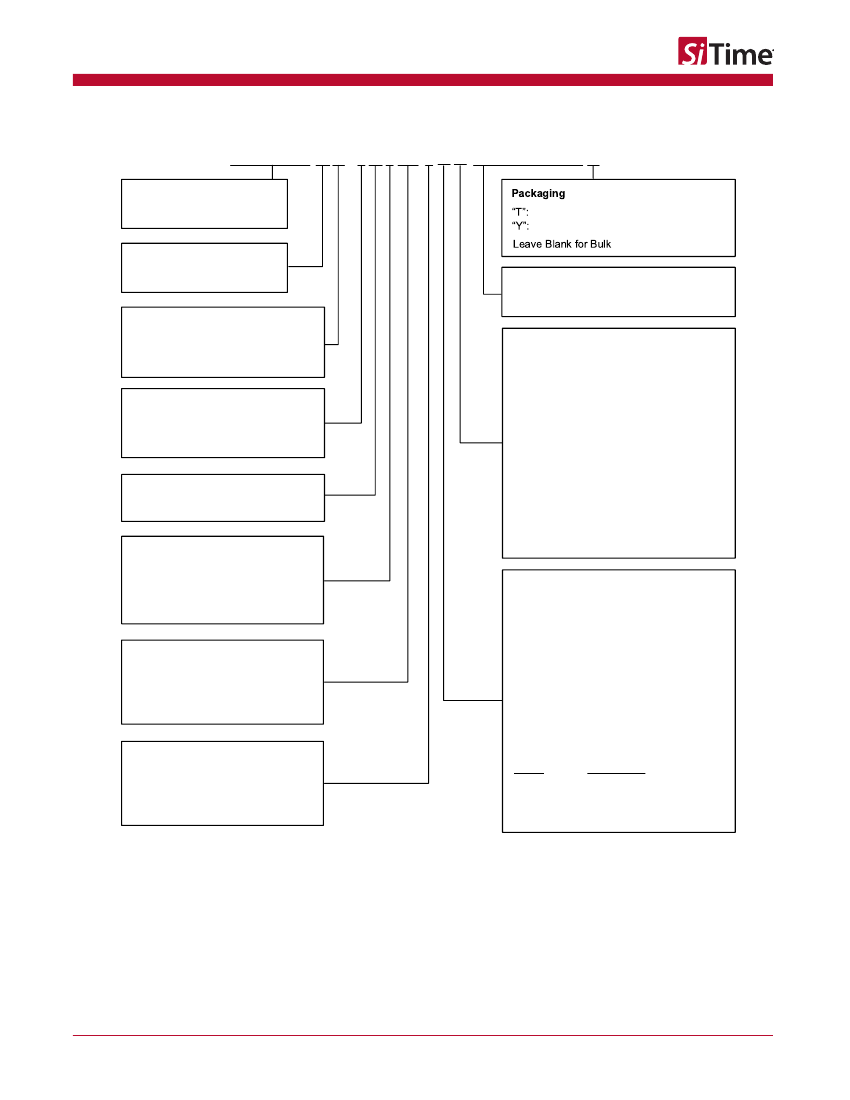
Ordering Information .................................................................................................................................................................... 2
User Programming Interface ..................................................................................................................................... 18
Start-up output frequency and signaling types ........................................................................................................... 18
Any-frequency function ............................................................................................................................................. 19
C/SPI Control Registers...................................................................................................................................................... 28
9 I
Register Address: 0x00. DCO Frequency Control Least Significant Word (LSW) .................................................... 28
Register Address: 0x01. OE Control, DCO Frequency Control Most Significant Word (MSW) ................................. 29
Register Address: 0x02. DCO PULL RANGE CONTROL ........................................................................................ 29
Register Address: 0x03. Frac-N PLL Feedback Divider Integer Value and Frac-N PLL Feedback Divider Fraction
Value MSW ............................................................................................................................................................... 30
Register Address: 0x05. Forward Divider, Driver Control ......................................................................................... 30
Register Address: 0x06. Driver Divider, Driver Control ............................................................................................. 31
2
C Operation ........................................................................................................................................................................ 32
10 I
I
2
C protocol ............................................................................................................................................................... 32
I
2
C Timing Specification ............................................................................................................................................ 35
I
2
C Device Address Modes ....................................................................................................................................... 36
Dimensions and Patterns ........................................................................................................................................................... 43
Additional Information ................................................................................................................................................................ 44
Revision History ......................................................................................................................................................................... 45
Rev 1.01
Page 3 of 45
www.sitime.com
SiT3521
1 to 340 MHz Elite Platform I2C/SPI Programmable Oscillator
1 Electrical Characteristics
All Min and Max limits in the Electrical Characteristics tables are specified over temperature and rated operating voltage with
standard output terminations shown in the termination diagrams. Typical values are at 25°C and nominal supply voltage.
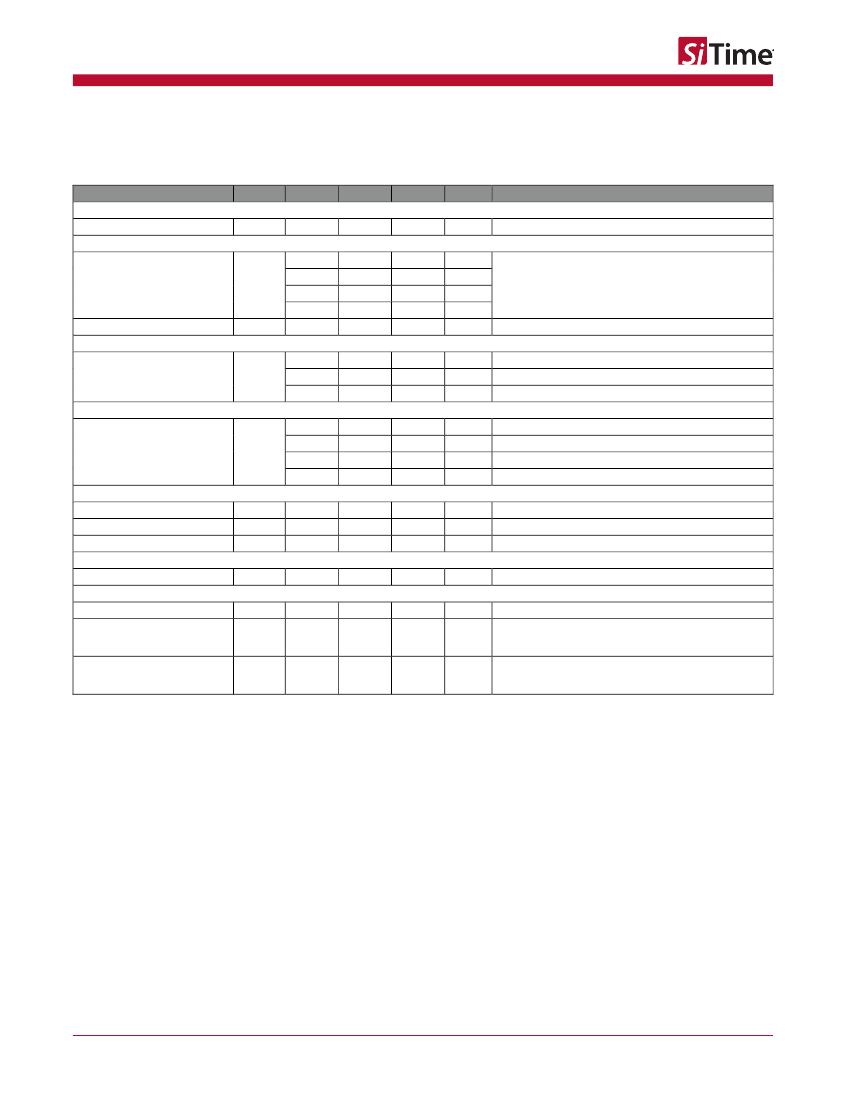
Table 1. Electrical Characteristics – Common to LVPECL, LVDS and HCSL
Parameter
Output Frequency Range
Symbol
f
Min.
1
Typ.
–
–
–
–
–
±1
–
–
–
Max.
340
Unit
MHz
Condition
Factory or user programmable, accurate to 6 decimal places
Frequency Range
Frequency Stability
Frequency Stability
F_stab
-10
-20
-25
-50
First Year Aging
F_1y
–
+10
+20
+25
+50
–
ppm
ppm
ppm
ppm
ppm
°C
°C
°C
1
st
-year aging at 25°C
Inclusive of initial tolerance, operating temperature, rated
power supply voltage and load variations.
Temperature Range
Operating Temperature Range
T_use
-20
-40
-40
+70
+85
+105
Supply Voltage
Supply Voltage
Vdd
2.97
2.7
2.52
2.25
3.3
3.0
2.8
2.5
–
–
100
–
–
–
3.63
3.3
3.08
2.75
–
30%
–
V
V
V
V
Extended Commercial
Industrial
Extended Industrial. Available only for I
2
C operation, not SPI.
Input Characteristics – OE Pin
Input Voltage High
Input Voltage Low
Input Pull-up Impedance
VIH
VIL
Z_in
70%
–
–
Vdd
Vdd
kΩ
OE pin
OE pin
OE pin, logic high or logic low
Output Characteristics
Duty Cycle
DC
45
–
–
55
%
Startup and Output Enable/Disable Timing
Start-up Time
Output Enable/Disable Time –
Hardware control via OE pin
Output Enable/Disable Time –
Software control via I
2
C/SPI
T_start
T_oe_hw
3.0
3.8
ms
µs
Measured from the time Vdd reaches its rated minimum value
Measured from the time OE pin reaches rated VIH and VIL to
the time clock pins reach 90% of swing and high-Z.
See
Figure 9
and
Figure 10
Measured from the time the last byte of command is
transmitted via I
2
C/SPI (reg1) to the time clock pins reach 90%
of swing and high-Z. See
Figure 30
and
Figure 31
T_oe_sw
–
–
6.5
µs
Rev 1.01
Page 4 of 45
www.sitime.com
SiT3521
1 to 340 MHz Elite Platform I2C/SPI Programmable Oscillator
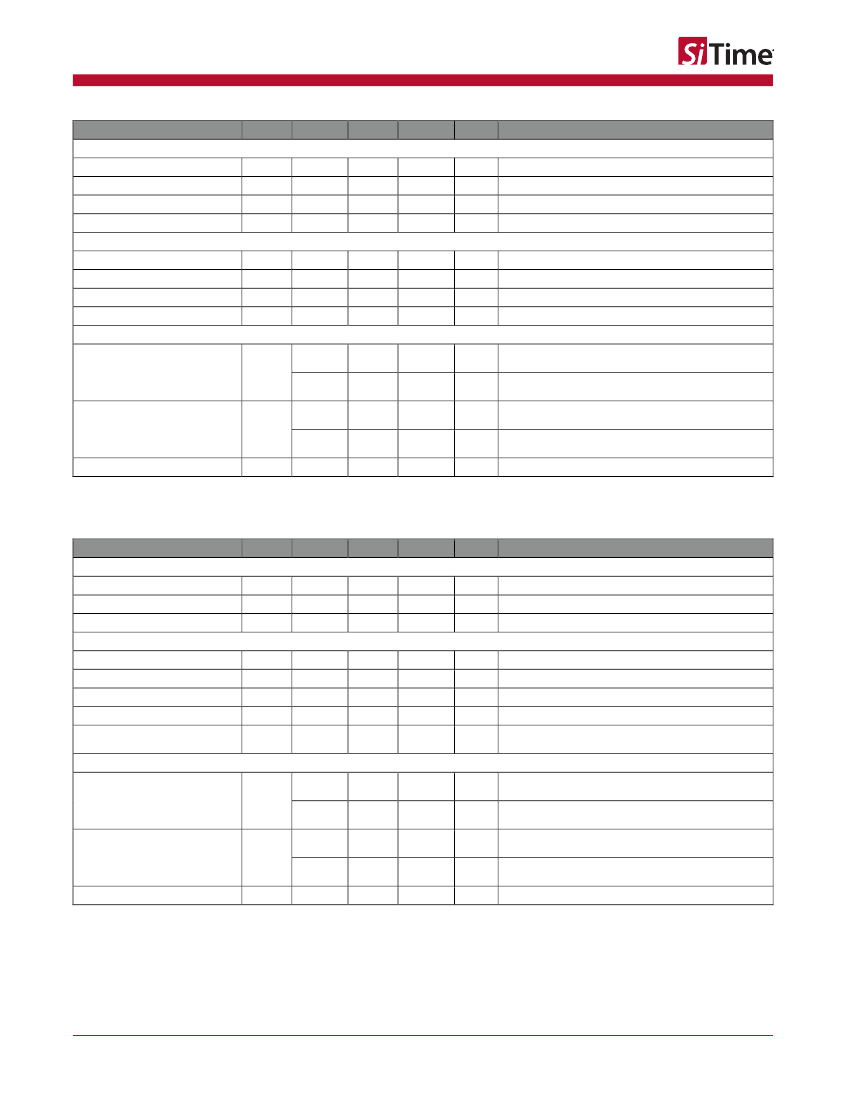
Table 2. Electrical Characteristics – LVPECL Specific
Parameter
Symbol
Min.
Typ.
Max.
Unit
Condition
Current Consumption
Current Consumption
OE Disable Supply Current
Output Disable Leakage Current
Maximum Output Current
Idd
I_OE
I_leak
I_driver
–
–
–
–
–
–
0.15
–
89
58
–
32
mA
mA
A
mA
Excluding Load Termination Current, Vdd = 3.3 V or 2.5 V
OE = Low
OE = Low
Maximum average current drawn from OUT+ or OUT-
Output Characteristics
Output High Voltage
Output Low Voltage
Output Differential Voltage Swing
Rise/Fall Time
VOH
VOL
V_Swing
Tr, Tf
Vdd - 1.1V
Vdd - 1.9V
1.2
–
–
–
1.6
225
Vdd - 0.7V
Vdd - 1.5V
2.0
290
Jitter
RMS Phase Jitter (random) –
DCO Mode Only
T_phj
–
–
RMS Phase Jitter (random) –
Any-frequency Mode Only
T_phj
–
–
RMS Period Jitter
[3]
Note:
3. Measured according to JESD65B.
T_jitt
–
0.225
0.1
0.225
0.11
1
0.340
0.14
0.340
0.15
1.6
ps
ps
ps
ps
ps
f = 156.25 MHz, Integration bandwidth = 12 kHz to 20 MHz,
all Vdd levels
f = 156.25, IEEE802.3-2005 10 GbE jitter mask integration
bandwidth = 1.875 MHz to 20 MHz, all Vdd levels
f = 156.25 MHz, Integration bandwidth = 12 kHz to 20 MHz,
all Vdd levels
f = 156.25, IEEE802.3-2005 10 GbE jitter mask integration
bandwidth = 1.875 MHz to 20 MHz, all Vdd levels
f = 100, 156.25 or 212.5 MHz, Vdd = 3.3 V or 2.5 V
V
V
V
ps
See
Figure 5
See
Figure 5
See
Figure 6
20% to 80%, see
Figure 6
Table 3. Electrical Characteristics – LVDS Specific
Parameter
Symbol
Min.
Typ.
Max.
Unit
Condition
Current Consumption
Current Consumption
OE Disable Supply Current
Output Disable Leakage Current
Idd
I_OE
I_leak
–
–
–
–
–
0.15
80
61
–
mA
mA
A
Excluding Load Termination Current, Vdd = 3.3 V or 2.5 V
OE = Low
OE = Low
Output Characteristics
Differential Output Voltage
Delta VOD
Offset Voltage
Delta VOS
Rise/Fall Time
VOD
ΔVOD
VOS
ΔVOS
Tr, Tf
250
–
1.125
–
–
–
–
–
–
400
455
50
1.375
50
470
Jitter
RMS Phase Jitter (random) –
DCO Mode Only
T_phj
–
–
RMS Phase Jitter (random) –
Any-frequency Mode Only
T_phj
–
–
RMS Period Jitter
[4]
Note:
4. Measured according to JESD65B.
T_jitt
–
0.21
0.1
0.21
0.1
1
0.275
0.12
0.367
0.12
1.6
ps
ps
ps
ps
ps
f = 156.25 MHz, Integration bandwidth = 12 kHz to 20 MHz,
all Vdd levels
f = 156.25, IEEE802.3-2005 10 GbE jitter mask integration
bandwidth = 1.875 MHz to 20 MHz, all Vdd levels
f = 156.25 MHz, Integration bandwidth = 12 kHz to 20 MHz,
all Vdd levels
f = 156.25, IEEE802.3-2005 10 GbE jitter mask integration
bandwidth = 1.875 MHz to 20 MHz, all Vdd levels
f = 100, 156.25 or 212.5 MHz, Vdd = 3.3 V or 2.5 V
mV
mV
V
mV
ps
f = 156.25MHz See
Figure 7
See
Figure 7
See
Figure 7
See
Figure 7
Measured with 2 pF capacitive loading to GND, 20% to 80%,
The 2012 TI Cup has already ended. I still have some photos taken during the training on my phone, mainly the LaunchPad assignments that students were assigned to complete....
I would like to ask how to turn off the automatic layer selection function for routing... When I draw a 4-layer board, I select Signal Layer 1 or Signal Layer 2 for routing, but as soon as I click on ...
Today I saw a simple constant current charging circuit. I can only understand the voltage reduction, rectification and filtering parts. The other functions seem
I don't understand, please give me some...
[table=98%] [tr][td]Looking for mature MCU barcode scale solutions. Individuals, teams, companies and other development capabilities can participate! Functional requirements: 1. Support communication ...
#include
main() { EA=1; EX0=1; IT0=0; while(1) P1=0xff; } void exter0() interrupt 0 { P1=0; } For this simple external interrupt, I directly connected INT0 to ground with a switch. Why does the LED di...
Photovoltaic inverters are the core equipment of photovoltaic systems. Their main function is to convert the direct current generated by photovoltaic modules into alternating current that meets the...[Details]
In recent years, as energy consumption and environmental protection issues have attracted people's attention, my country's solar photovoltaic power generation industry has shown a rapid development...[Details]
In the
AI
boom, the most talked about is
neural network
. However,
AI
is much more than that. Let's learn about the relevant content with the network communication editor.
...[Details]
1. Test conditions Hardware: STM32L432KC Main frequency: 80MHz Compiler: IAR 8.20.1 Compiler options: High Speed no size constraints CRC generator polynomial: 0x782f 2. Test Method The softwar...[Details]
The status of interrupts in developing embedded systems is absolutely unquestionable. In the era of C51 microcontrollers, there were only 5 interrupts, including 2 external interrupts, 2 timer/counte...[Details]
1. Purpose In actual product release, if the program stored in the MCU Flash is not protected, some illegal companies may read the program in the Flash through an emulator (J-Link, ST-Link, e...[Details]
1. The first project We are going to create the first project, which is mainly for project analysis, so that we can understand how CubeMX works and how to trace the code logic. Okay, no more nonsense...[Details]
Chip: STM32F103C8T6 Application Pin: Output: PA0, PA1 TIM2 CH2 channel To achieve 50HZ (20ms) adjustable PWM output on the PA1 pin, set the system TIMx_CNT=8MHZ=8000 000HZ, set TIMx_PSC=800-1, then T...[Details]
1. About FPU transplantation As long as the chip has FPU function, the use of FPU is generally enabled by default. You can also select it in the Options tab; 2. About the transplantation of DSP li...[Details]
On the eve of Qingming Festival, the trade friction between China and the United States is on the rise. Let's follow the automotive electronics editor to learn more about the relevant content. Ba...[Details]
On April 16, the U.S. Department of Commerce announced that it would ban U.S. companies from selling parts, goods, software, and technology to
ZTE
for seven years, until March 13, 2025.
Th...[Details]
The parking assistance system is an important application of the active anti-collision system of automobiles in low-speed and complex urban environments, and is also a specific embodiment of the inte...[Details]
Our photovoltaic power station starts working at 5:30 in the morning. When you are still sleeping, the inverter starts working to make money!
Some people are skeptical. The sun hasn't even...[Details]
There has been a lot of news about Huawei
phones
recently
. At the
Huawei
Global Analyst Conference
on the 17th
,
Huawei
announced that it will launch
5G
phones
in the seco...[Details]
At present, in the world,
the construction of
smart cities
is in the process of gradually landing from concept, and technology giants and investment giants are important participants in this...[Details]

 NXP MCU
 京公网安备 11010802033920号
 EEWORLD