Starting May 27, 2024, this project will be gradually updated and more open-source content will be released. Please stay tuned.
Foreword:
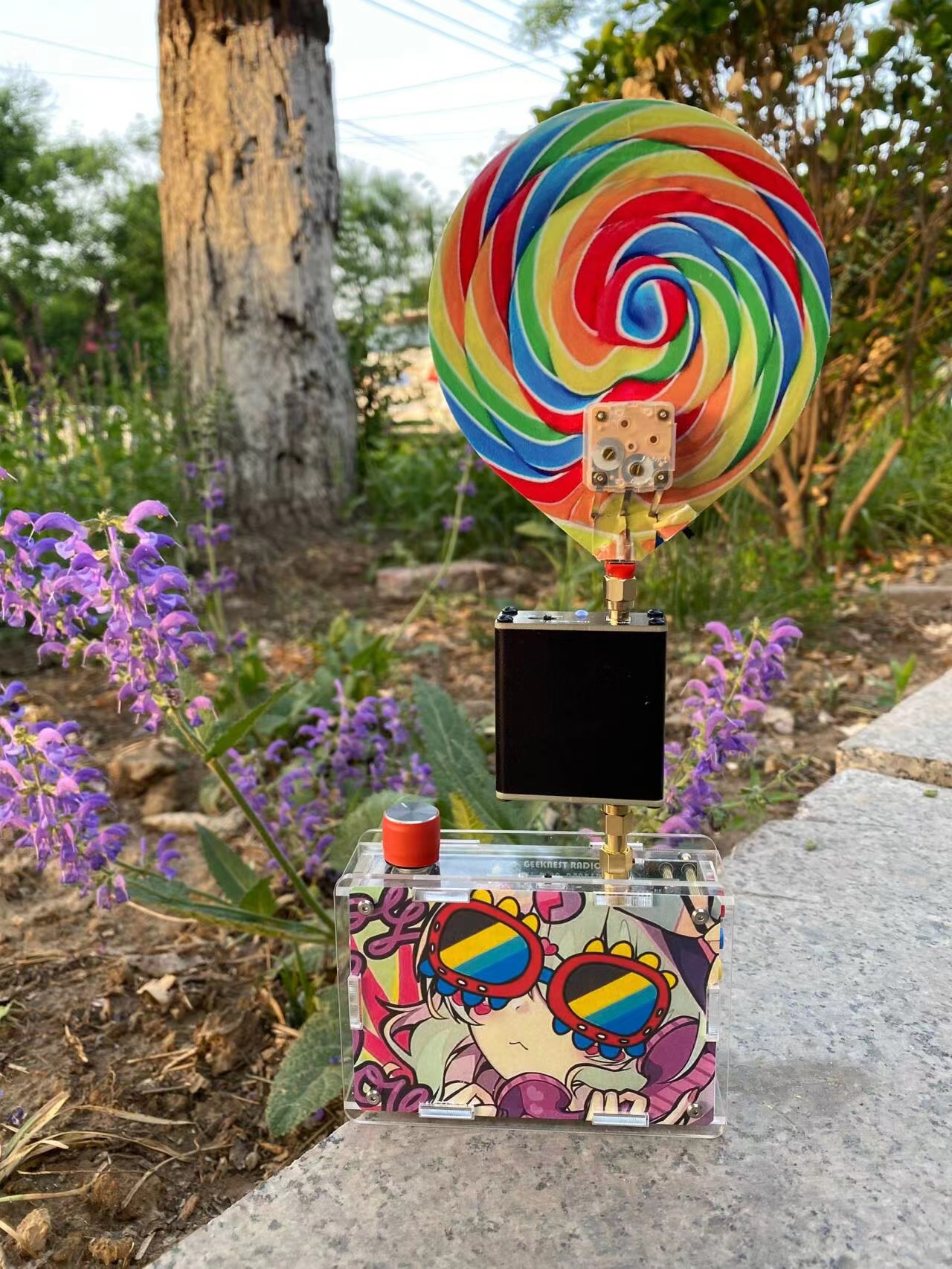
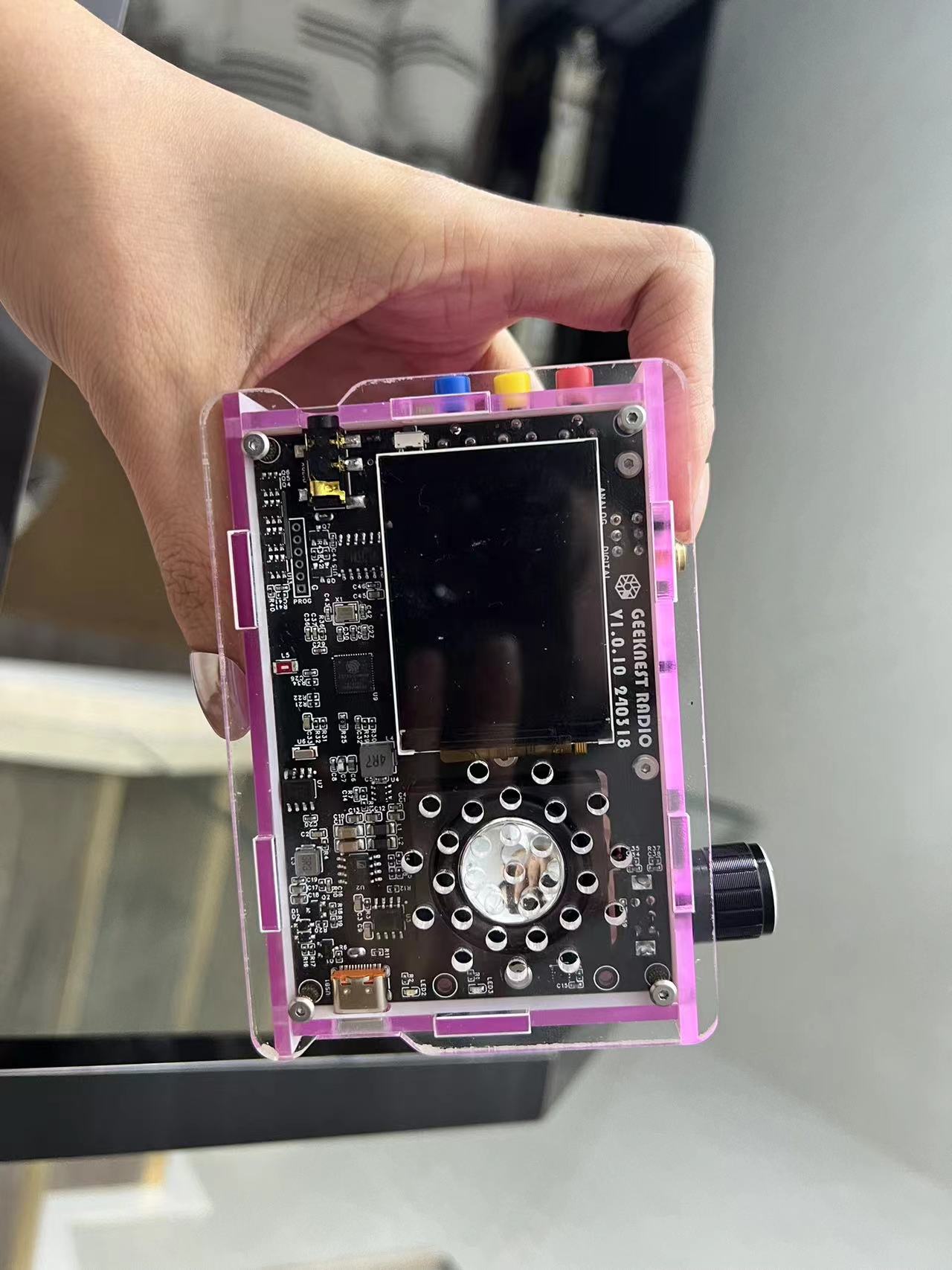
The Gugu Machine is an upgraded version of our open-source Poké Ball and V4 full-band radio from last year. This product is positioned as an electronic toy, allowing DIY enthusiasts to assemble a full-band radio themselves, while more experienced users can perform various modifications, including replacing the screen and upgrading the stereo amplifier. It allows more people unfamiliar with electronic DIY to experience the "tinkering process" from beginner to advanced. In the past three months, the Gugu Machine has experienced hundreds of units selling out instantly, as well as criticisms from professional radio enthusiasts regarding its shortwave sensitivity, and various assembly failures by clumsy users. While these challenges have been frustrating, they have also provided us with many new commercial experiences. This open-sourcing is also an attempt at commercialization. We are curious about what changes open-sourcing a closed-source product recognized by the market will bring. We also hope that this project will provide more open-source developers with some commercial insights. This project is licensed
under the CERN license.
It will open-source version 0.2.11 hardware and related modifications (open-source firmware is incompatible with commercial firmware).
This project is for personal learning and replication only (replicating hardware using official firmware requires an encryption chip license; running open-source internet radio firmware does not have this restriction). Commercial use is prohibited without the author's permission.
This product features
both digital and analog output modes. Digital output is driven by a Class D amplifier, while analog output is driven by an analog operational amplifier. Different functions are supported in different modes:
Digital Output Mode:
Full-band radio:
FM: 64MHz-108MHz;
AM/W: 520kHz-1710kHz
; AM/Shortwave: 3.5MHz-30MHz;
Aviation band: 118MHz-137MHz;
Bluetooth speaker
internet radio function (requires internet radio firmware support)
. Analog Output Mode:
Full-band radio:
FM: 64MHz-108MHz;
AM/W: 520kHz-1710kHz
; AM/Shortwave: 3.5MHz-30MHz; AM/
Single Sideband (SSB): 3.5MHz-30MHz (BFO adjustment 0-2000Hz);
Aviation band: 118MHz-137MHz;
* UHF Extension: Supports UHF band reception/transmission via an expansion board (please comply with local laws and regulations).
Open Source Notes:
This open source project will be completed gradually over time (the entire open source process may also be terminated at any time due to commercial or other reasons; please understand if this occurs).
MCU Main Control Board (Version 11)
Power Supply and Boost Section: The Gugu radio uses a single lithium battery power supply. Since the SA602 inverter requires a power supply voltage of 5V or higher, and to slightly increase the speaker's output to 3 ohms and 4 watts (although the speaker we found was a bit poor, the modified effect was still quite good), we adopted a boost converter solution, similar to the V4mini. The boost converter chip is FP6276B; other solutions can be modified if needed. Of course, we also know that for a radio, a DC-DC boost converter circuit can introduce strange interference. Some of our colleagues have modified it to a dual-battery power supply solution, thus avoiding the DC-DC converter in the circuit and using only an LDO for power. I won't go into the details of this modification here (there are quite a few things to change, and I'm too lazy to write them all down...).
Main controller: still ESP32 + FLASH + PSRAM, nothing much to say. I don't recommend modifying the ESP32S3 (it doesn't support traditional Bluetooth, and of course, you'll have to rewrite the firmware yourself).
Clock chip: The image here shows the PCF8523T, but in actual use, this chip will malfunction (meaning frequent time synchronization may be required). If you're replicating it, I recommend using the DS3231, as this chip is not pin-to-... PIN compatible; if you're replacing it, it's best to modify the wiring yourself.
Speaker interface: The Gugu machine uses a mono dual-output mode (because the SI473x's single sideband mode doesn't support digital output), with analog and digital outputs. The digital output uses a MAX98357 solution, and the analog output comes from the radio board's amplifier. These two outputs are switched using a double-pole double-throw switch. If you want to convert to stereo, you can add another MAX98357 and configure the two MAX98357s as left and right channels respectively. Alternatively, you can consider moving the radio board's amplifier to the MCU board to make it dual-channel.
Screen: Currently, a 2-inch screen is used, driven by ST7789. We also have a modified 3.5-inch solution. If you want to change the screen, pay attention to the wiring order; currently, the firmware only supports ST7789. However, be aware that larger screens can cause unnecessary interference, and avoiding this interference is quite troublesome.
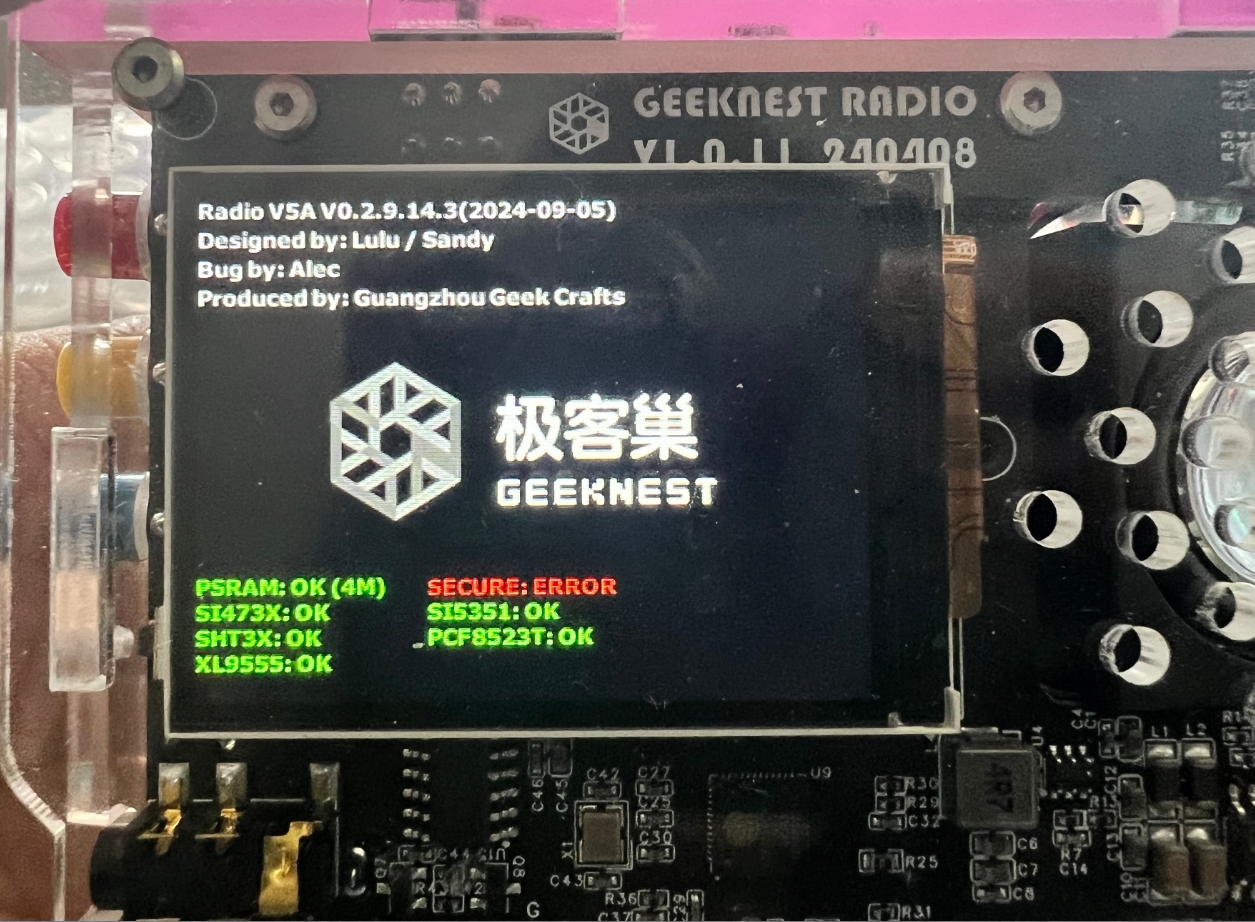
Software licensing chip: We use encryption chip technology in our solution to protect our software (although b (Many bugs, but it's the result of countless sleepless nights!) The open-source version of the encryption chip differs slightly from the commercial version, resulting in firmware incompatibility, but the functionality is the same. Please ensure the screen is correctly lit and the system monitoring shows all other chips are green, only the encryption chip is red, before soldering on the encryption chip. See the image below:
Radio board
front end: The front end design of the Gugu radio isn't perfect, which is a point of criticism from users. If anyone is interested, they can redesign the front end. In the firmware, the AMP switch controls ANT_IN_SW (path selection) and RADIO_LNA_SW (LNA power). High for on, low for off.
Aviation band: Similar to the V4mini solution, but to support wider superheterodyne reception, the bandpass has been changed to a low-pass. The mixer still uses the SA602. Shielding
cover: Dimensions are 19.8*13.5*2.5, see reference link (this is not sold by us, for reference only, don't contact us if there are any problems). https://m.tb.cn/h.gmoBhM7YFYrQpS4?tk=tVf73f6eCiM
Expanded I/O: Due to the relatively large number of signals that need to be controlled, and the limited resources of the ESP32, we used a 9555 to expand the I/O ports. If you need to modify it and use our firmware, please do not modify this part arbitrarily.
【Important】Gugu Radio Reference Videos
1. How to Assemble:
https://v.douyin.com/ijFQYj7B/
2. Getting Started:
https://v.douyin.com/ijFQB9QQ/
3. Simple Effect Demonstration:
【The full-band radio that's been delayed for almost half a year will soon be available on Bilibili】 https://b23.tv/P8Mn1HP
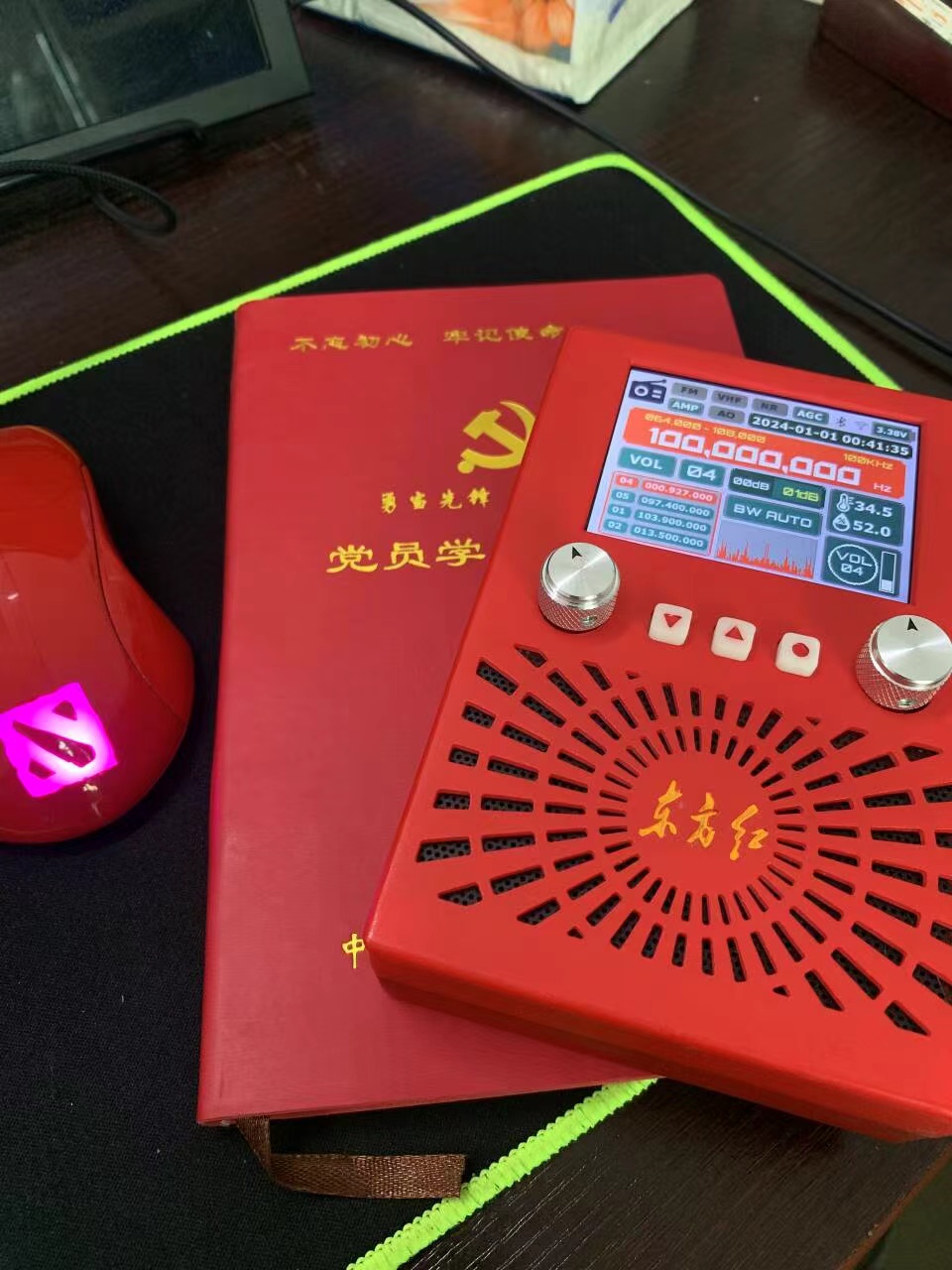
Stereo and Large Screen Modification Solution (Dongfanghong by When designing the Gugu player itself, Sandy
opted for a mono design to allow for future modifications and to make it more portable, but also reserved space for stereo modifications. Based on the original Gugu player design, Sandy created a stereo expansion board, adding dual MAX98357 + dual 8002 outputs, and also changed the screen to a larger one.
She also redesigned the outer shell, and thus the legendary "Dongfanghong" (The East Is Red) design was born.
Sandy wrote a very detailed explanation of the modifications, which I won't repeat here. The relevant modifications to "Dongfanghong" will be attached.
Here, I thank Sandy for her brilliant design and sharing. This
UHF expansion board
uses the AT1846S solution. After connecting the expansion board to the radio board's expansion interface, the main interface allows you to select UHF reception mode (the transmission function has been disabled due to regulations). Due to the structure of the Gugu radio, the I2C and analog audio output traces are relatively long, making it susceptible to interference from nearby high-power transmitting devices. If this happens, consider using conductive cloth or a grounded metal plate for shielding (a PCB casing might be a good idea, but you should make sure to open a window at the WIFI/Bluetooth antenna).
Real-world testing of the walkie-talkie expansion board:
[If you want the Gugu radio to receive walkie-talkie frequency signals... - Bilibili] https://b23.tv/cbBf9nC
Internet Radio Mode
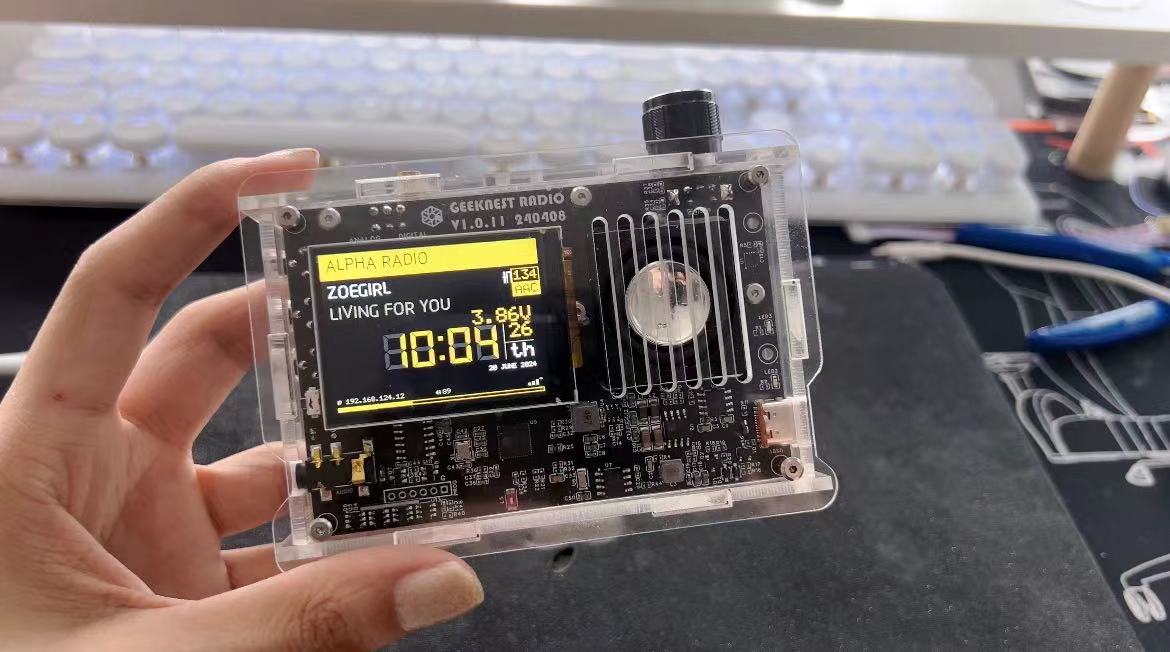
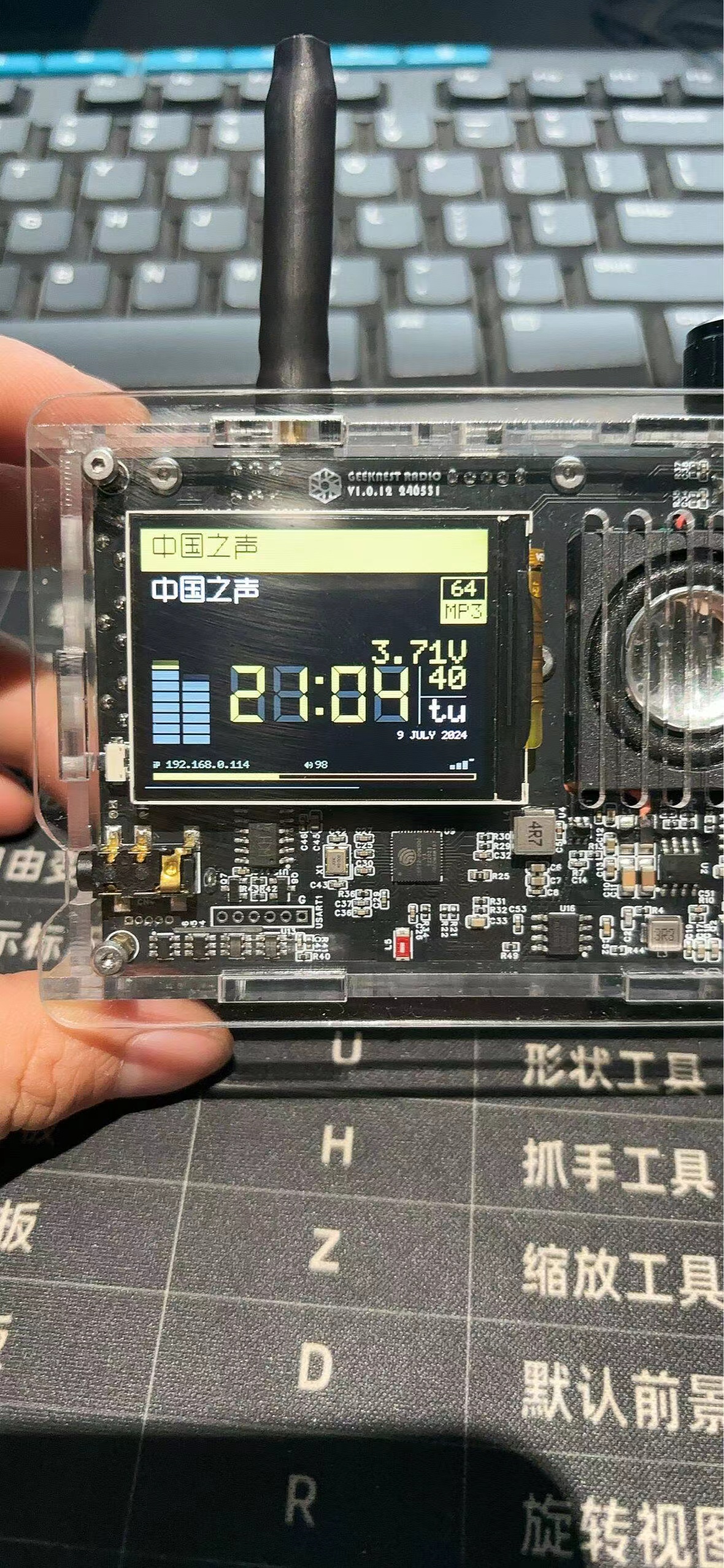
: With suggestions and support from users, we have also adapted the famous open-source internet radio yoRadio (https://github.com/e2002/yoradio), allowing it to run on the Gugu radio via firmware flashing. The internet radio firmware cannot currently run simultaneously on the Gugu device with the full-band radio firmware. We've received numerous suggestions from users to merge these two firmwares, but due to ESP32 resource limitations (or perhaps the author's laziness...), we have no plans to merge them.
However, we have followed the open-source license and released the adapted yoRadio code at the following link, hoping someone can complete this task:
https://github.com/aleccy/yoradio
Modified Shell (see attachment)
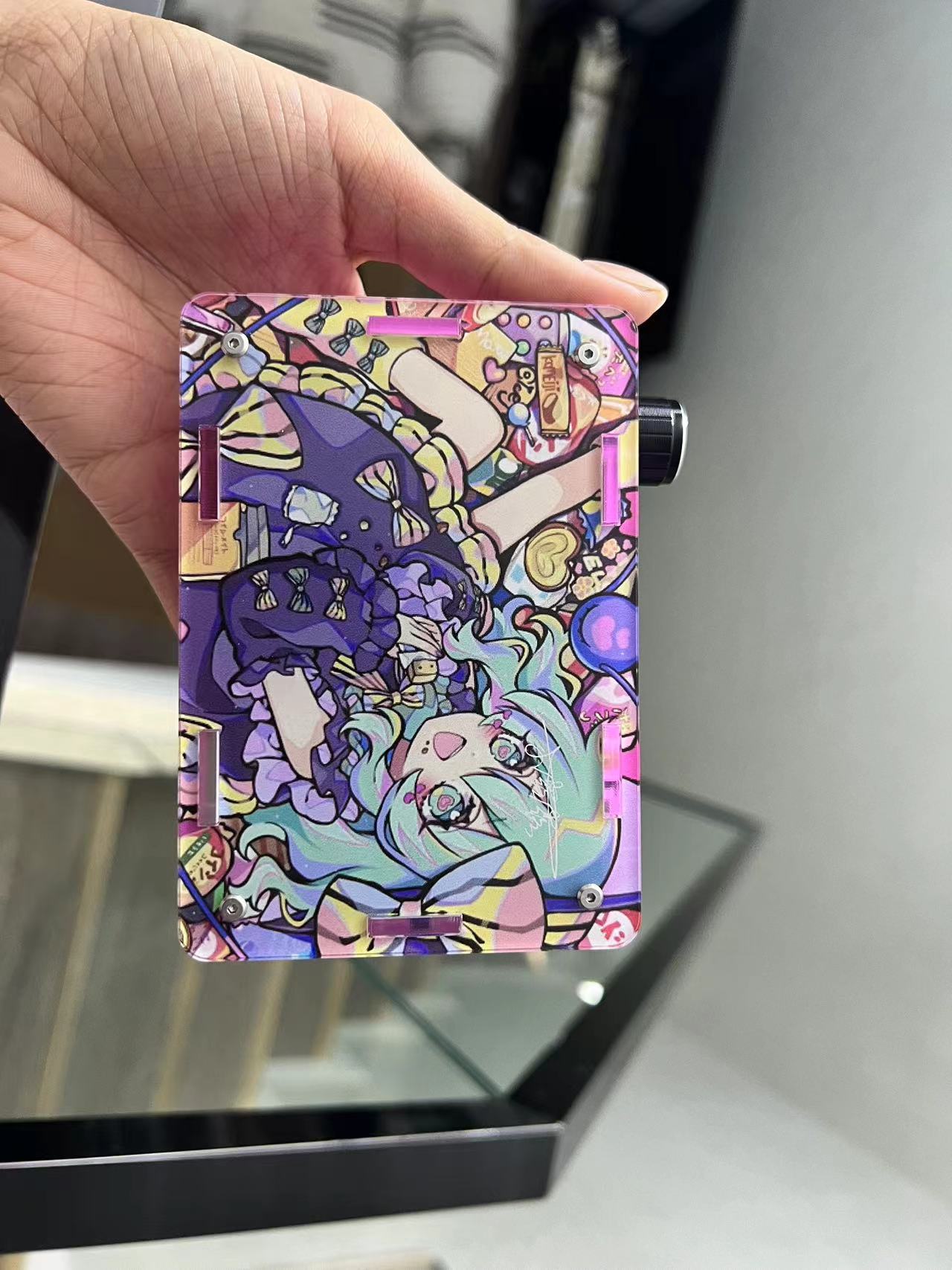
For cost and playability considerations, the product comes with a fully transparent acrylic shell. Some users may not like acrylic shells or worry about their fragility and scratches. Therefore, Sandy from the creation team has designed several 3D-printed shells and released them as open source. Users can choose JLCPCB's 3D printing service and combine it with painting and other processes to replicate them themselves.
The attachments include:
- Acrylic shell CAD file
- Front shell: daisy-shaped horn hole
- Front shell: angled horn hole
- Rear shell
flashing instructions (see attachment)
The flashing process for the open-source version of the Gugu machine is the same as the commercial version, both can be done via USB-C flash. The attached instructions include various operations and answers to questions.
A showcase of the modified Gugu machine effects by DIY enthusiasts
[When you own a Gugu machine, you can... - Bilibili] https://b23.tv/mmpVPJD
If you have any other questions, feel free to join the group (group 305747 is almost full, a new one hasn't been created yet...) for discussion.








 京公网安备 11010802033920号


 1008HS-621TKBC



