The open-source logic probe
was redesigned using the EEV solution and provided schematic. The PCB
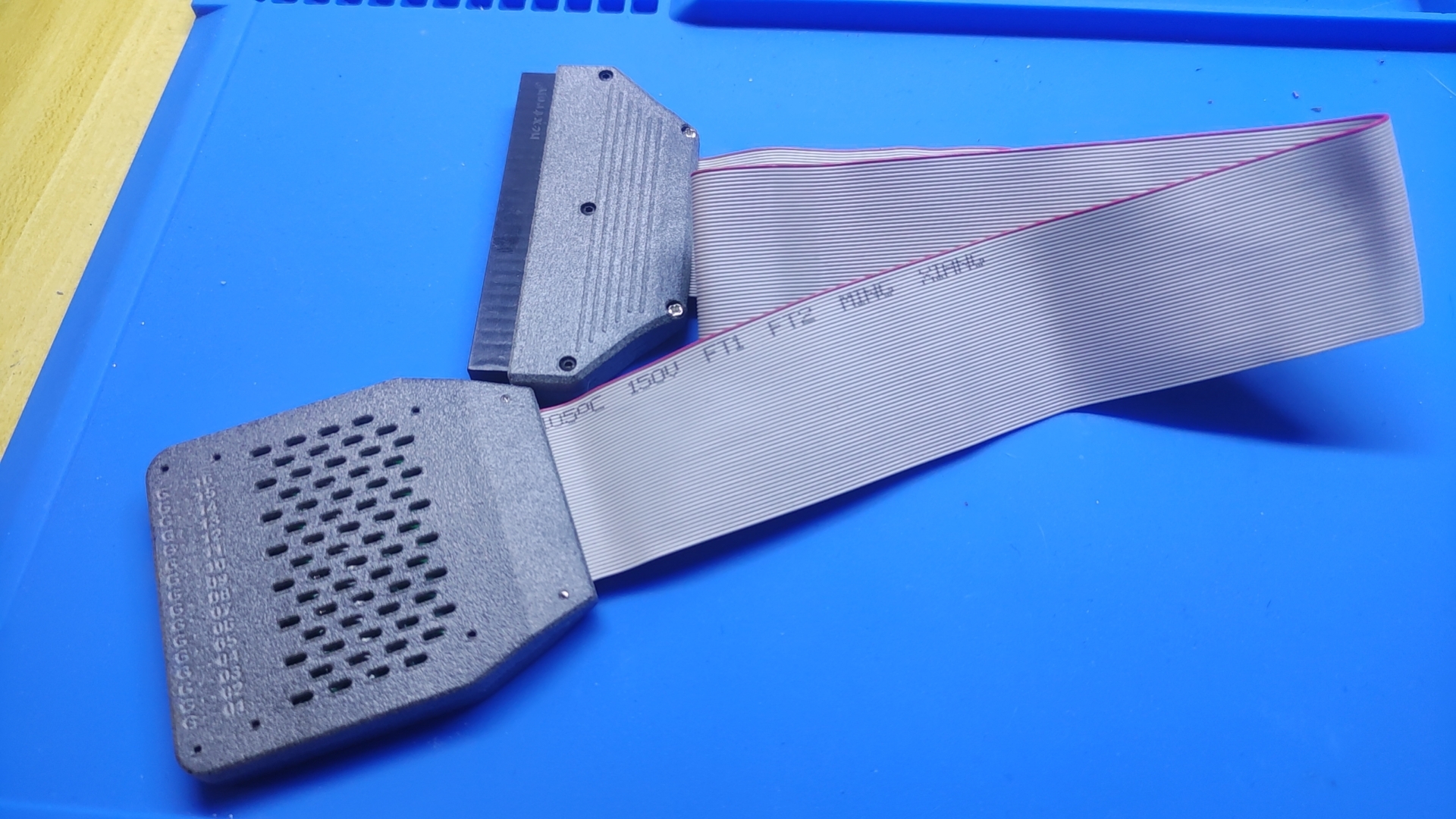
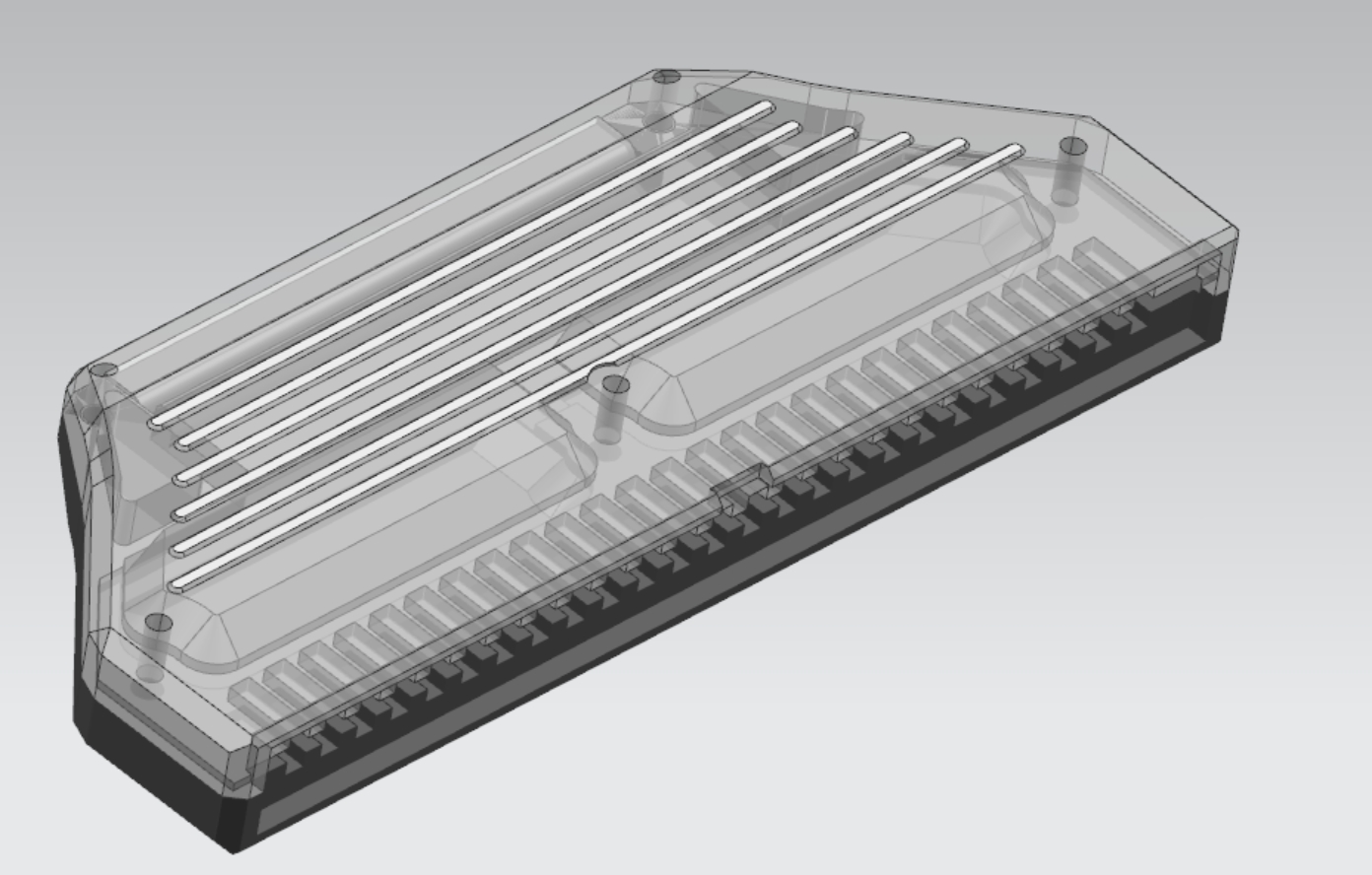
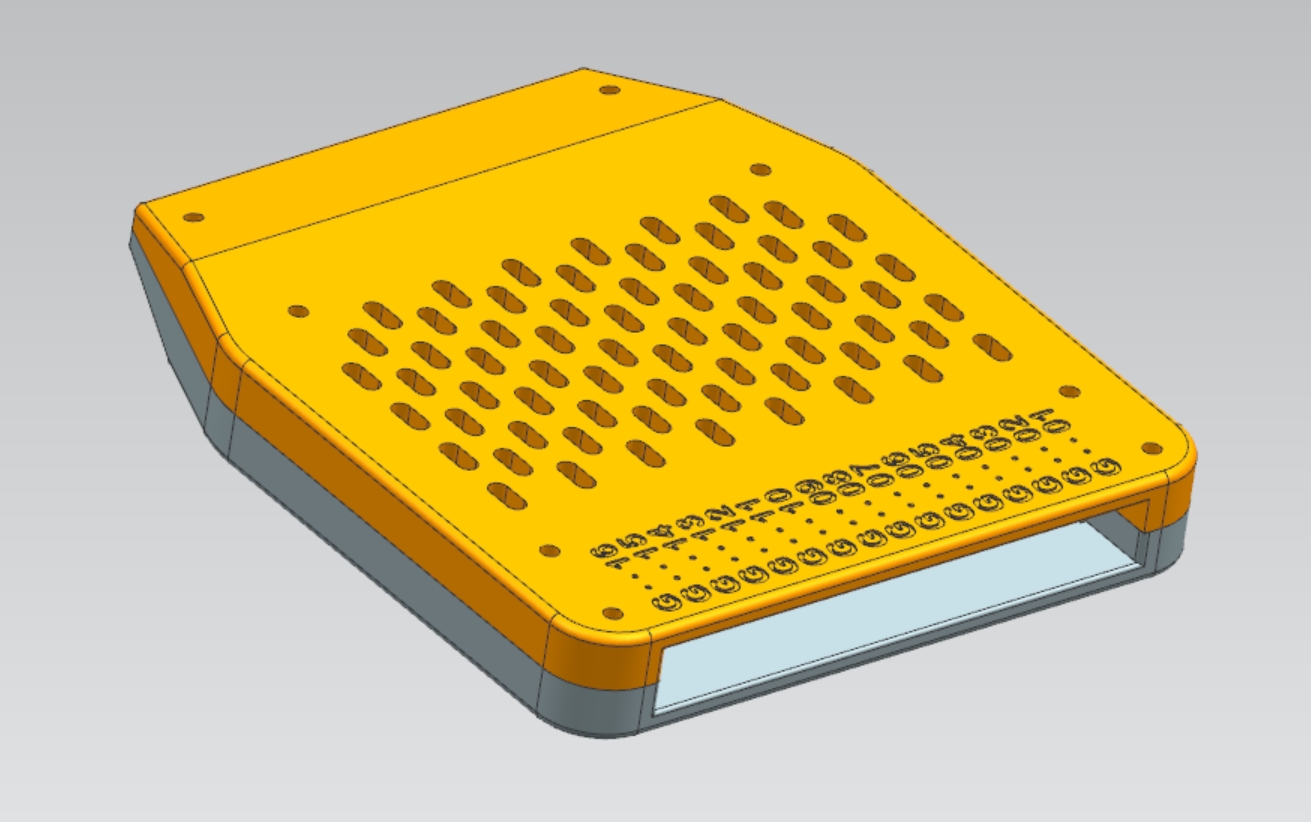
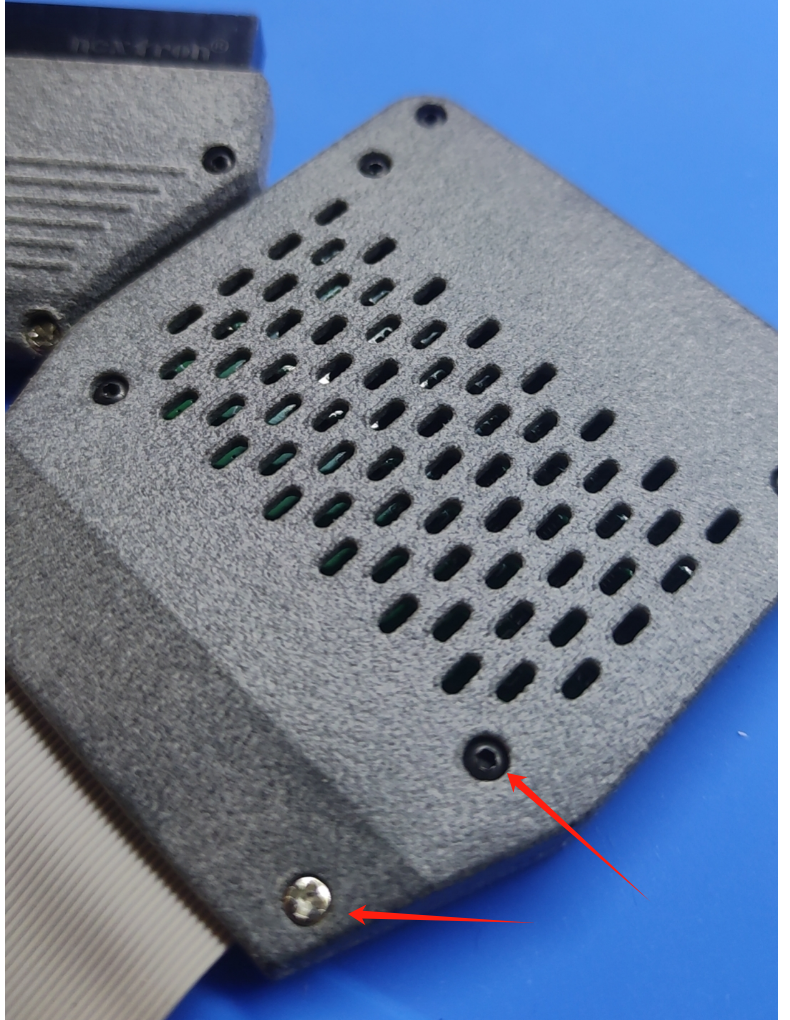
was redrawn using UG, and the SLS nylon shell printed by LCSC 3D Printing
passed self-test and has been verified as usable. However , it experienced
significant overheating during actual use, and the frequency of the test signal should not be too high.
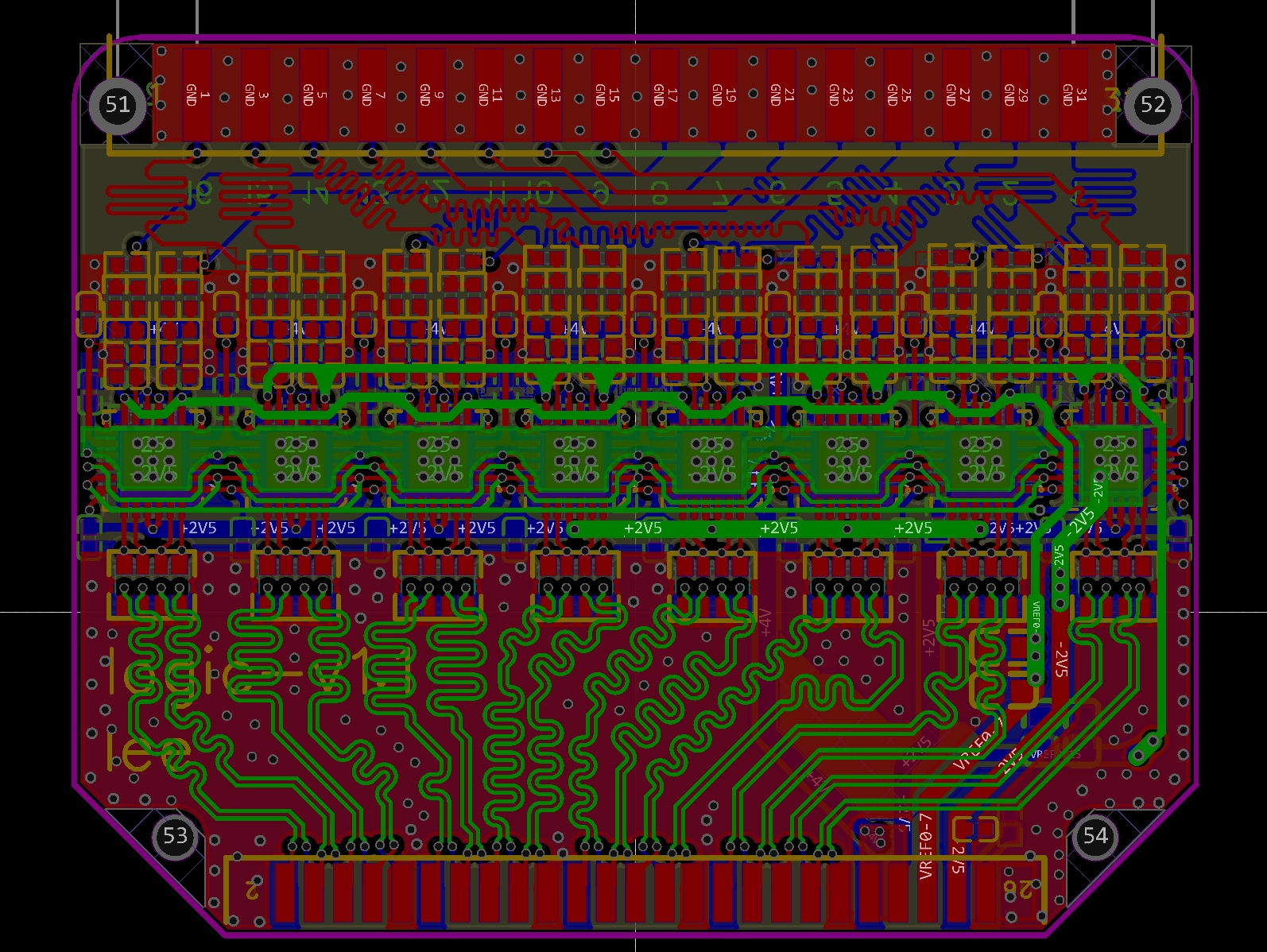
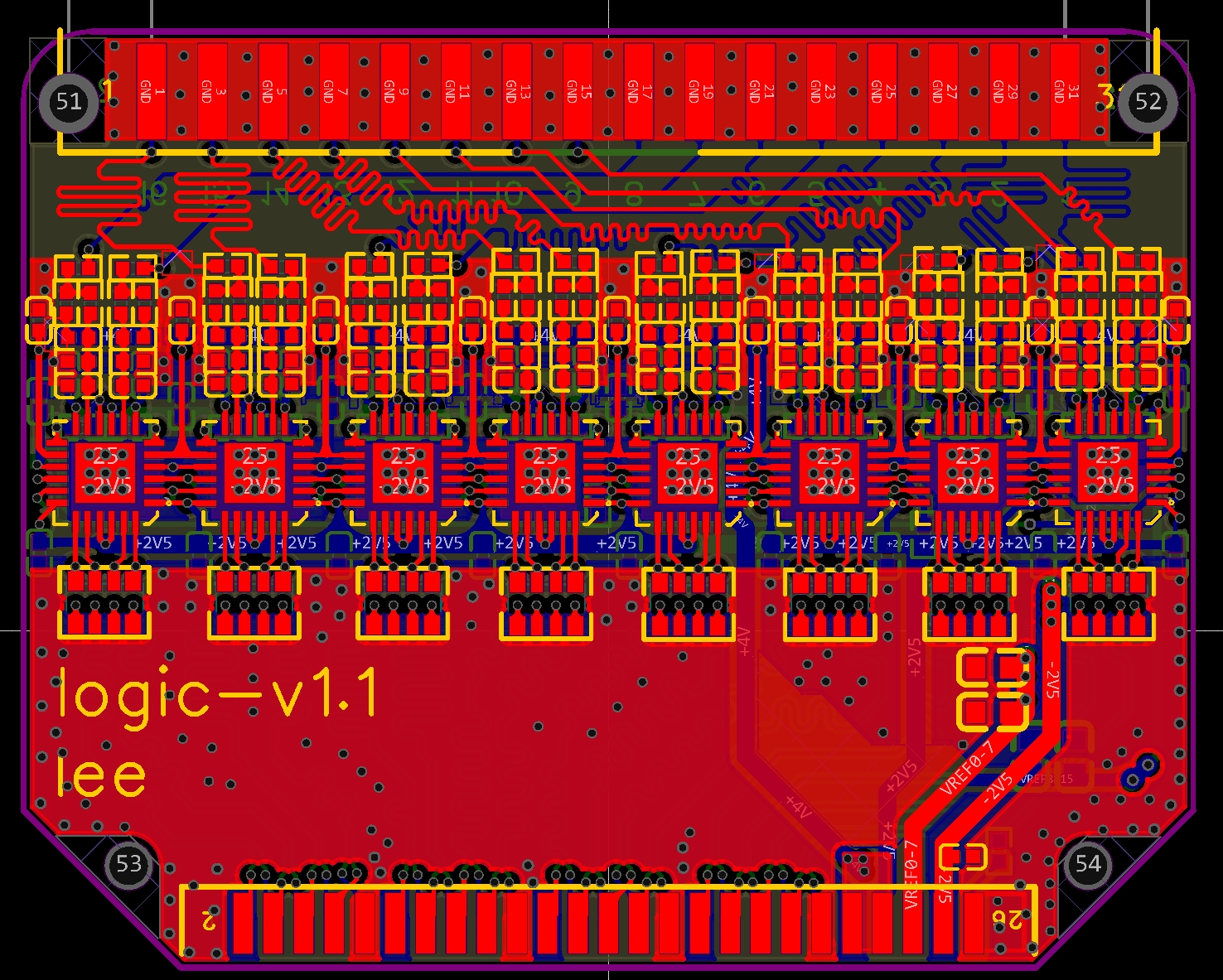
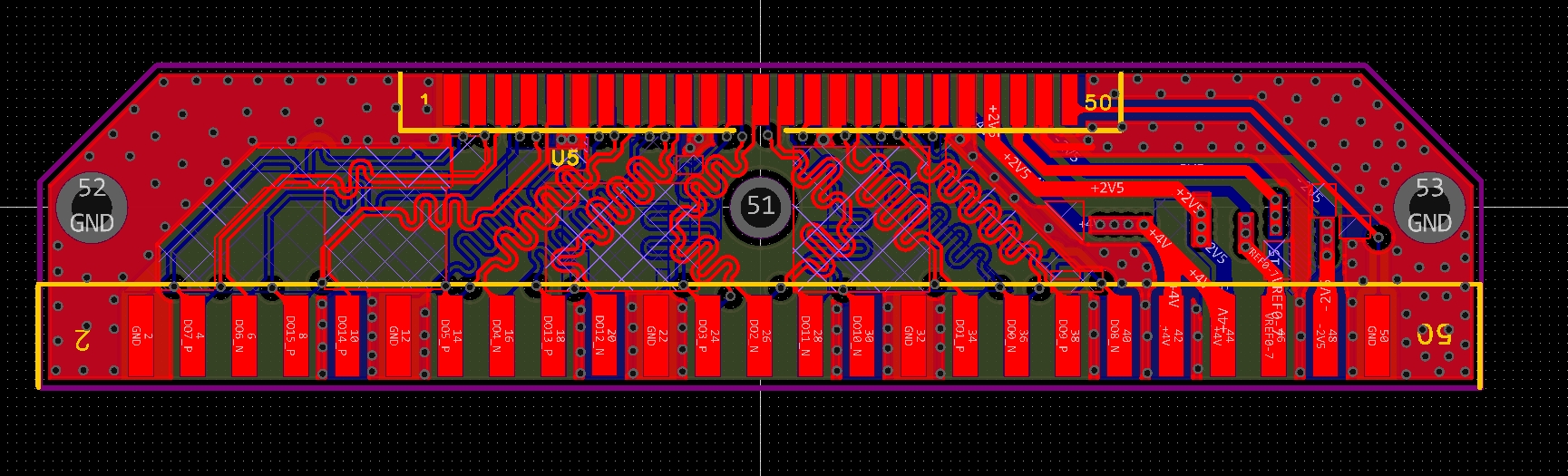
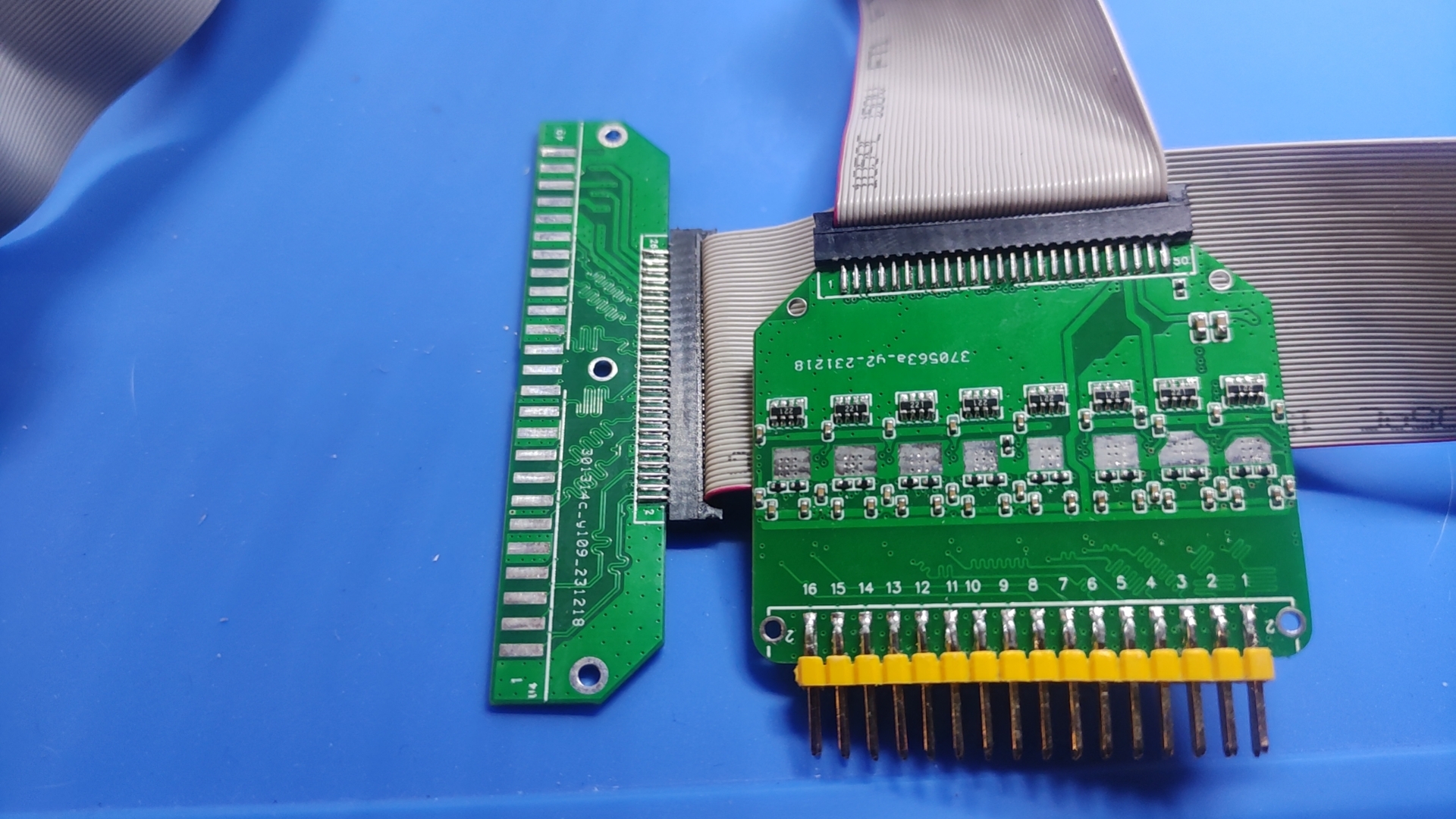
The overall signal lines on the PCB were made to be of equal length. The appearance
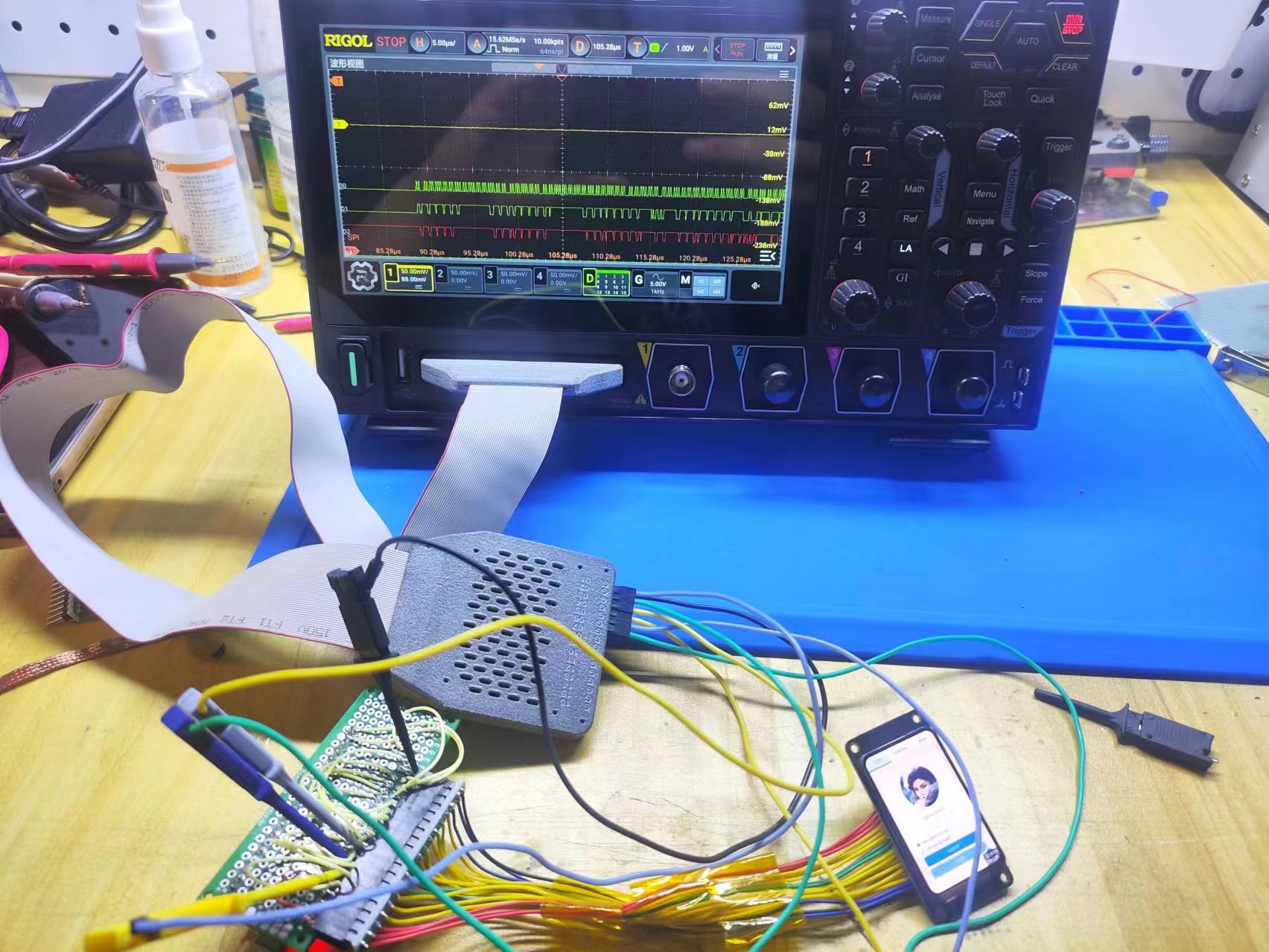
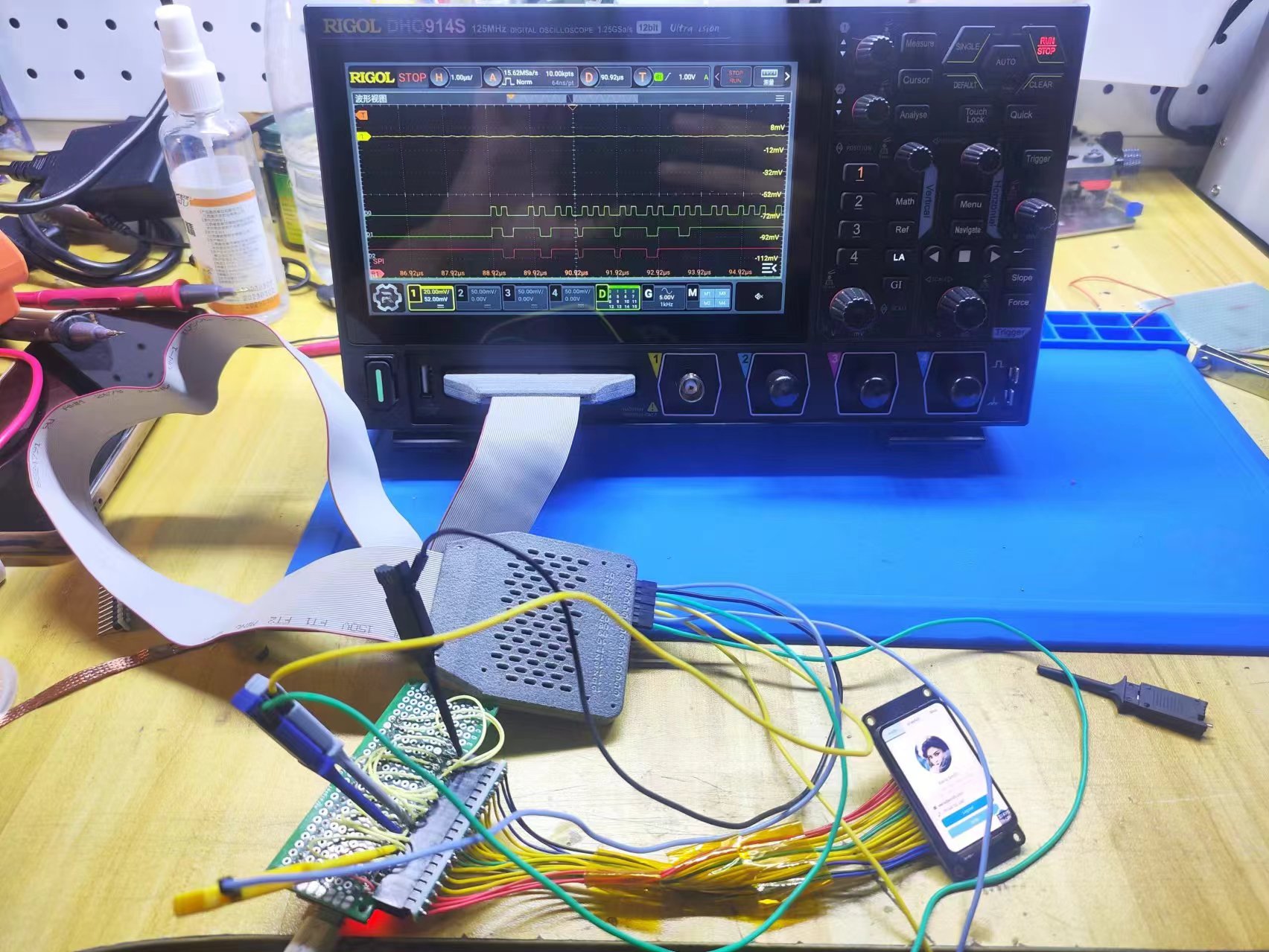
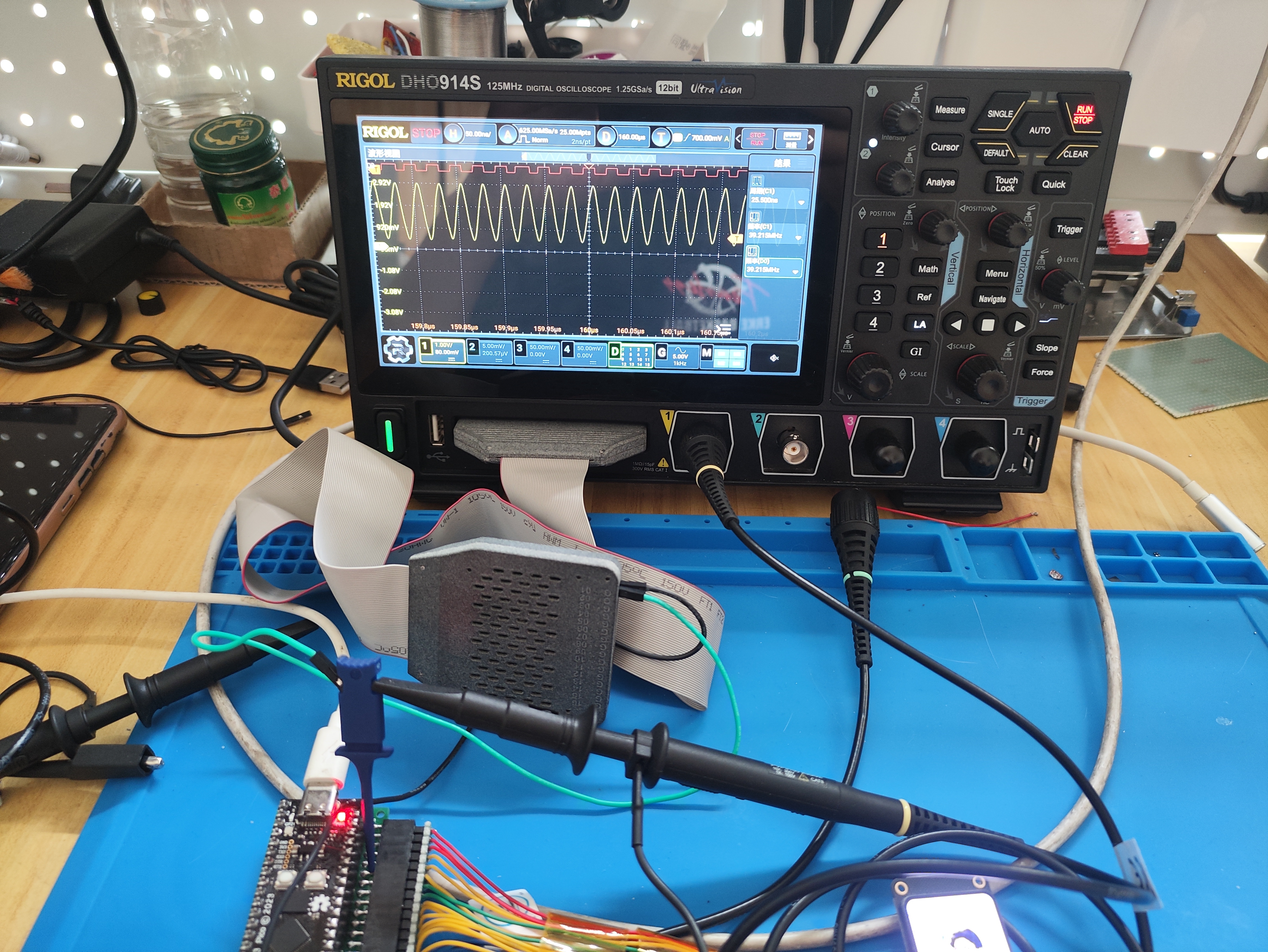
is referenced from the original PLA2216. The SPI 40MHz clock signal of the ESP32-S3
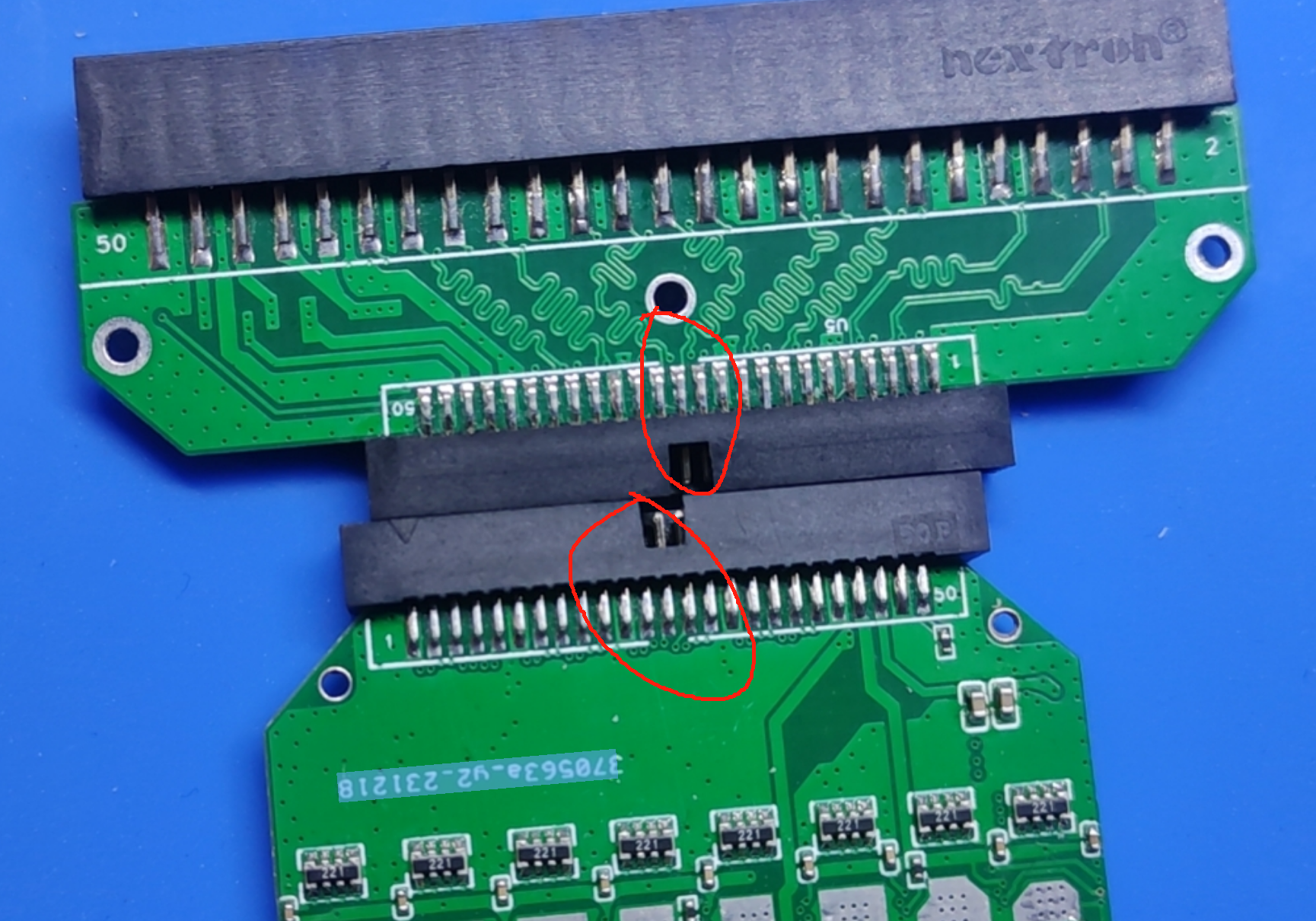
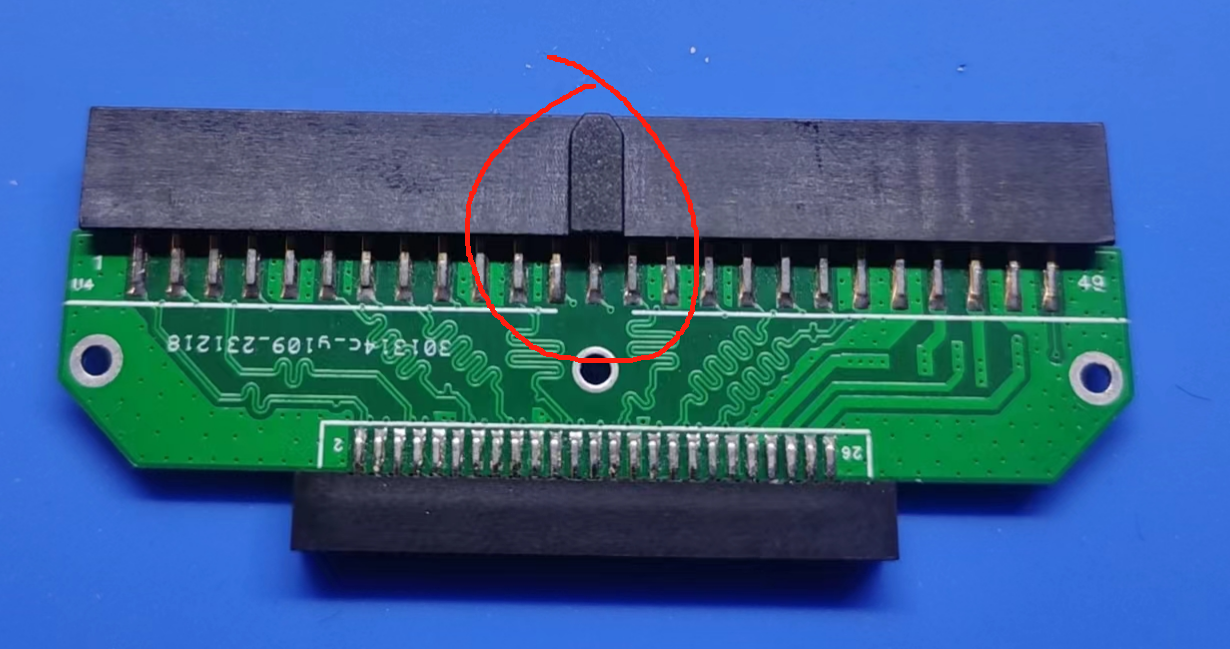
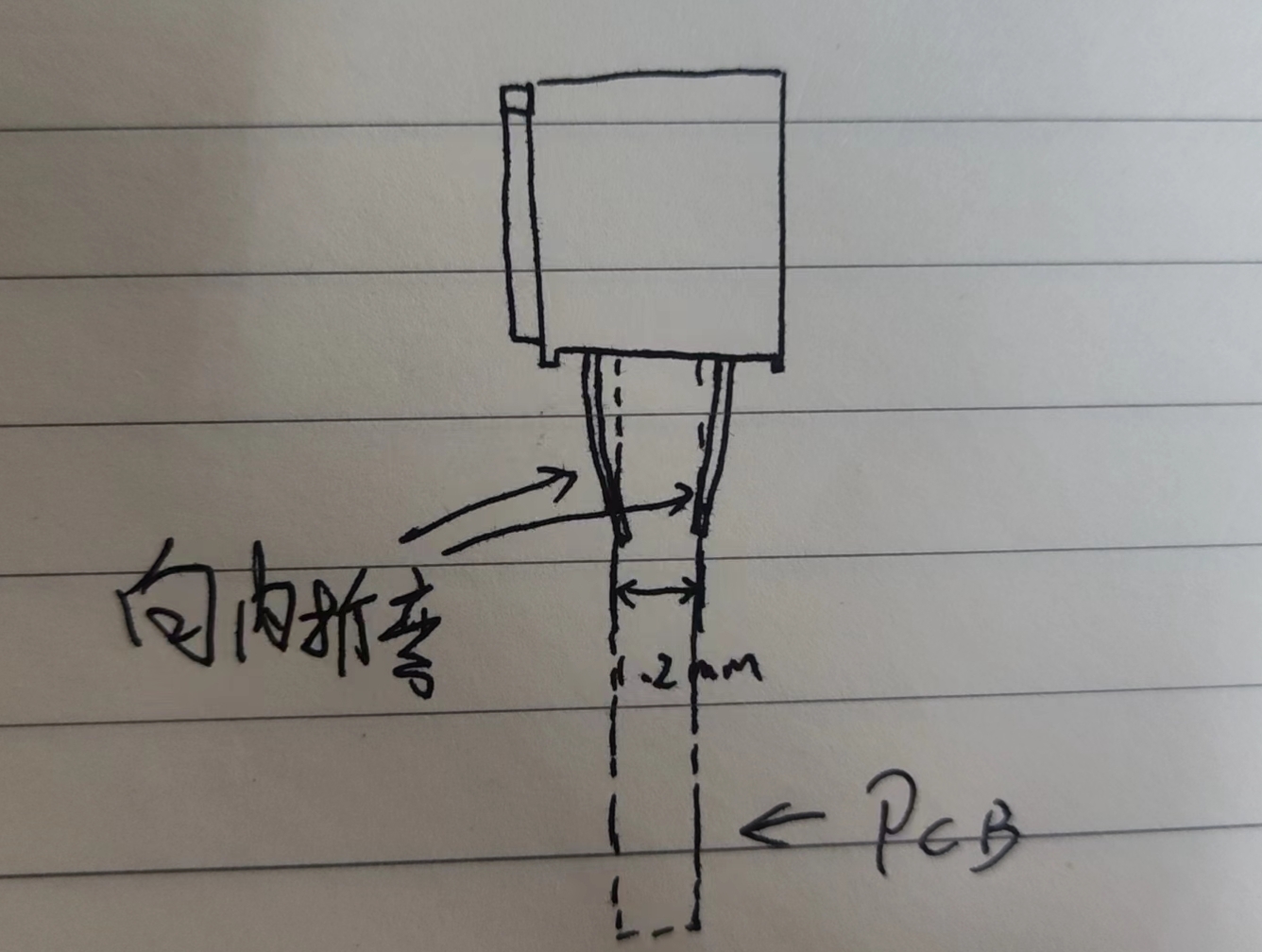
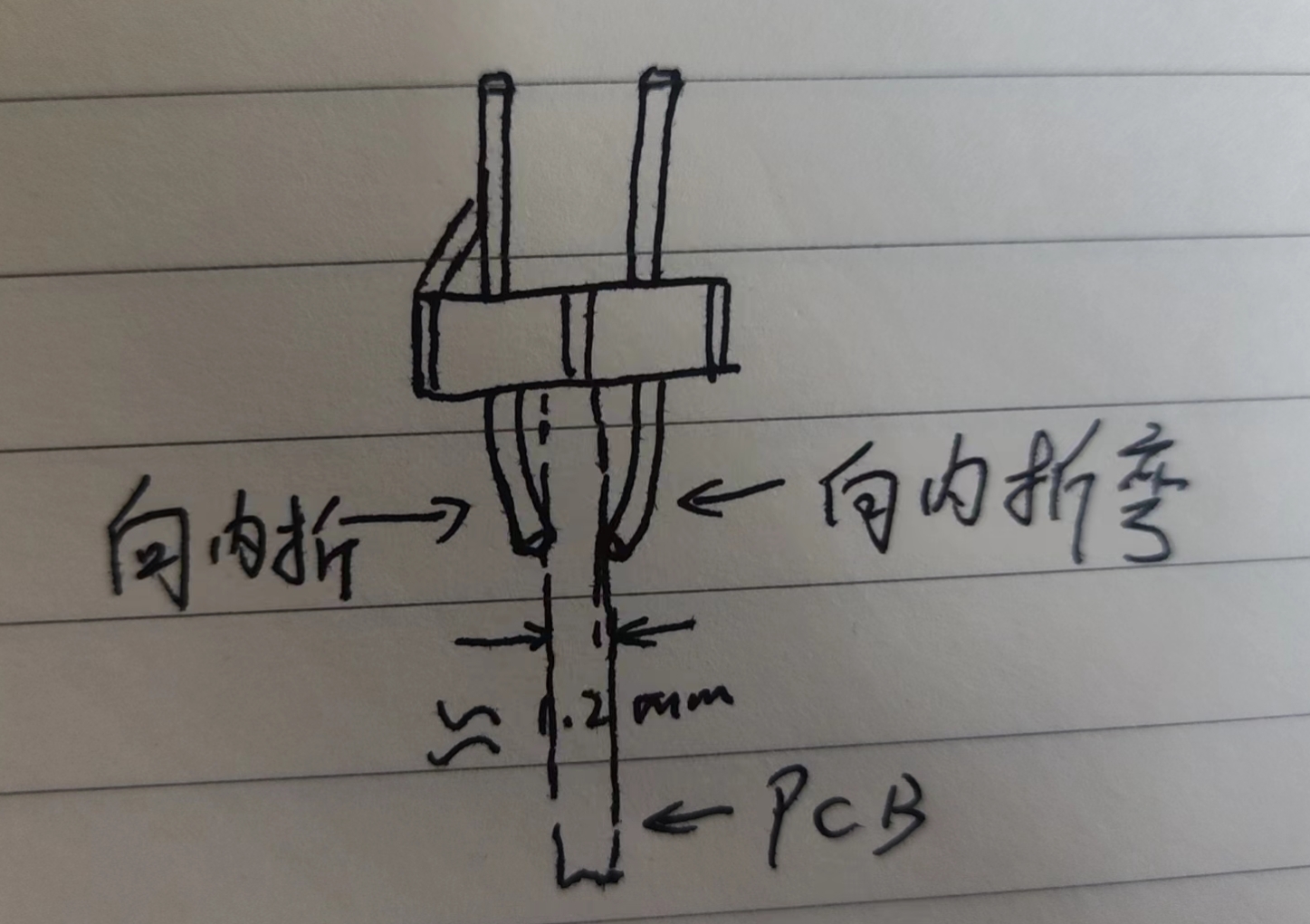
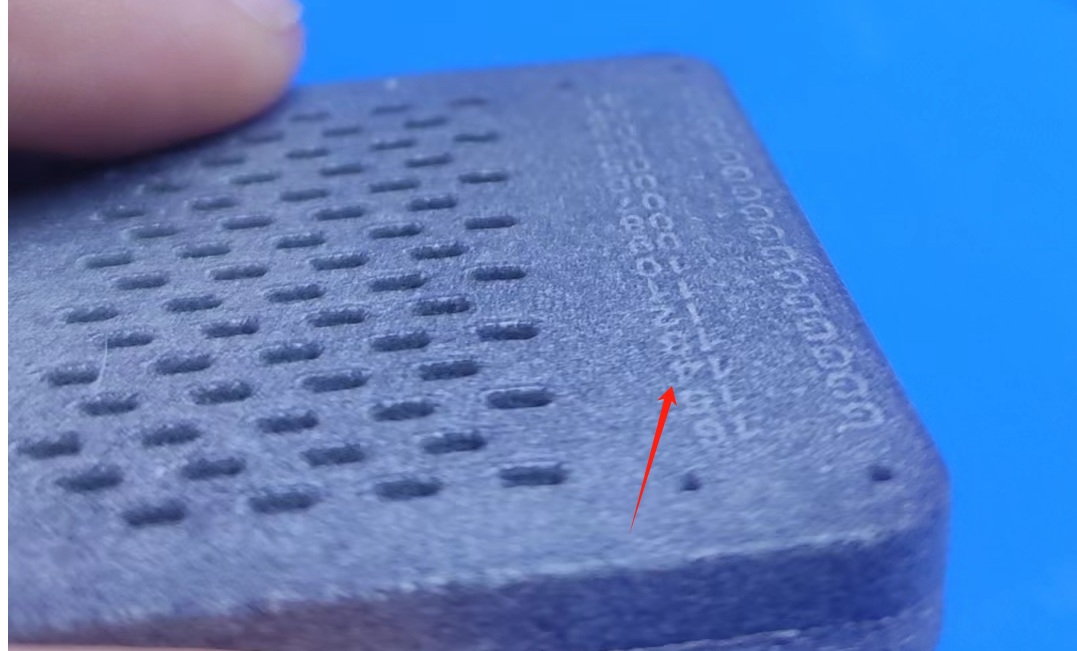
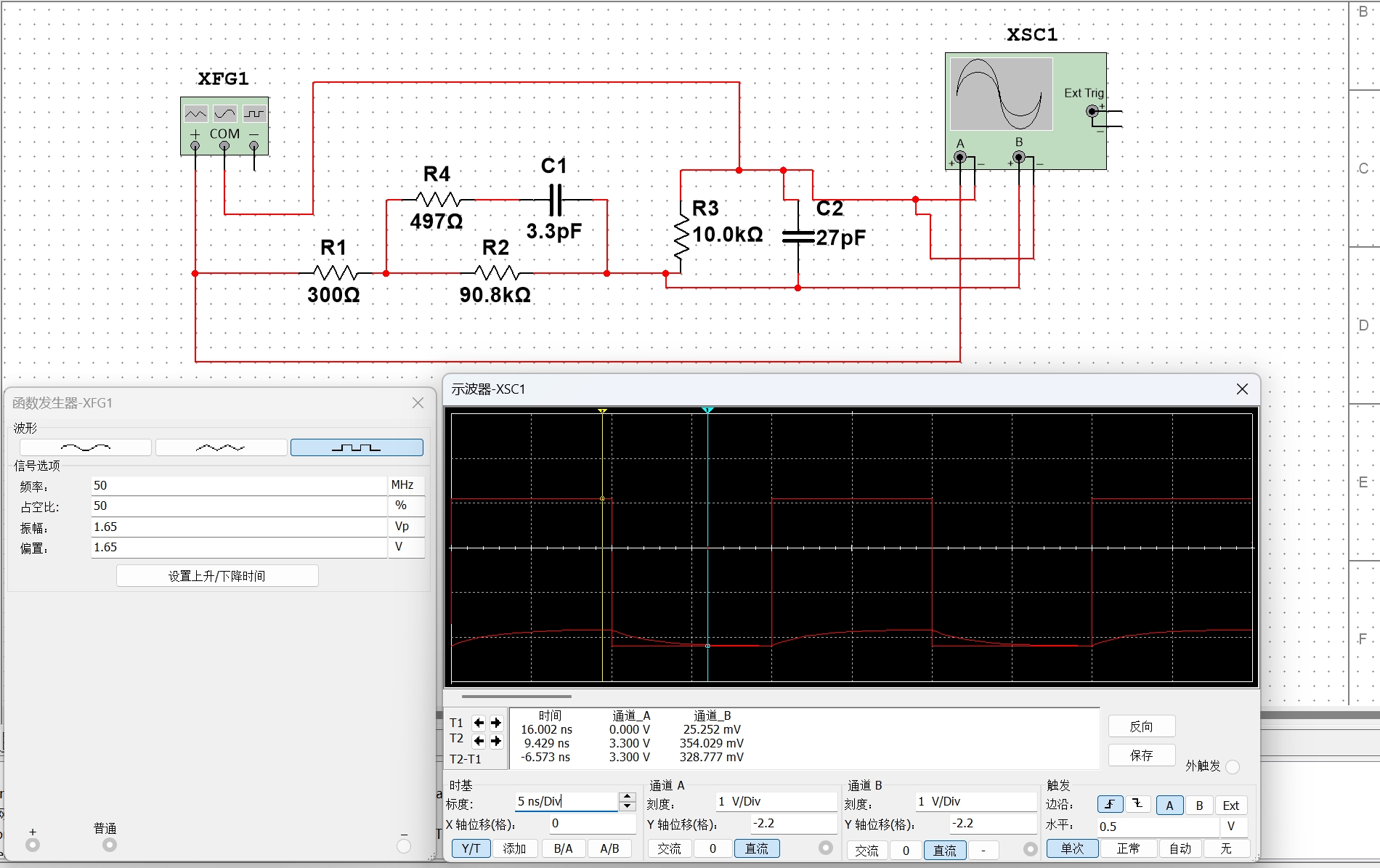
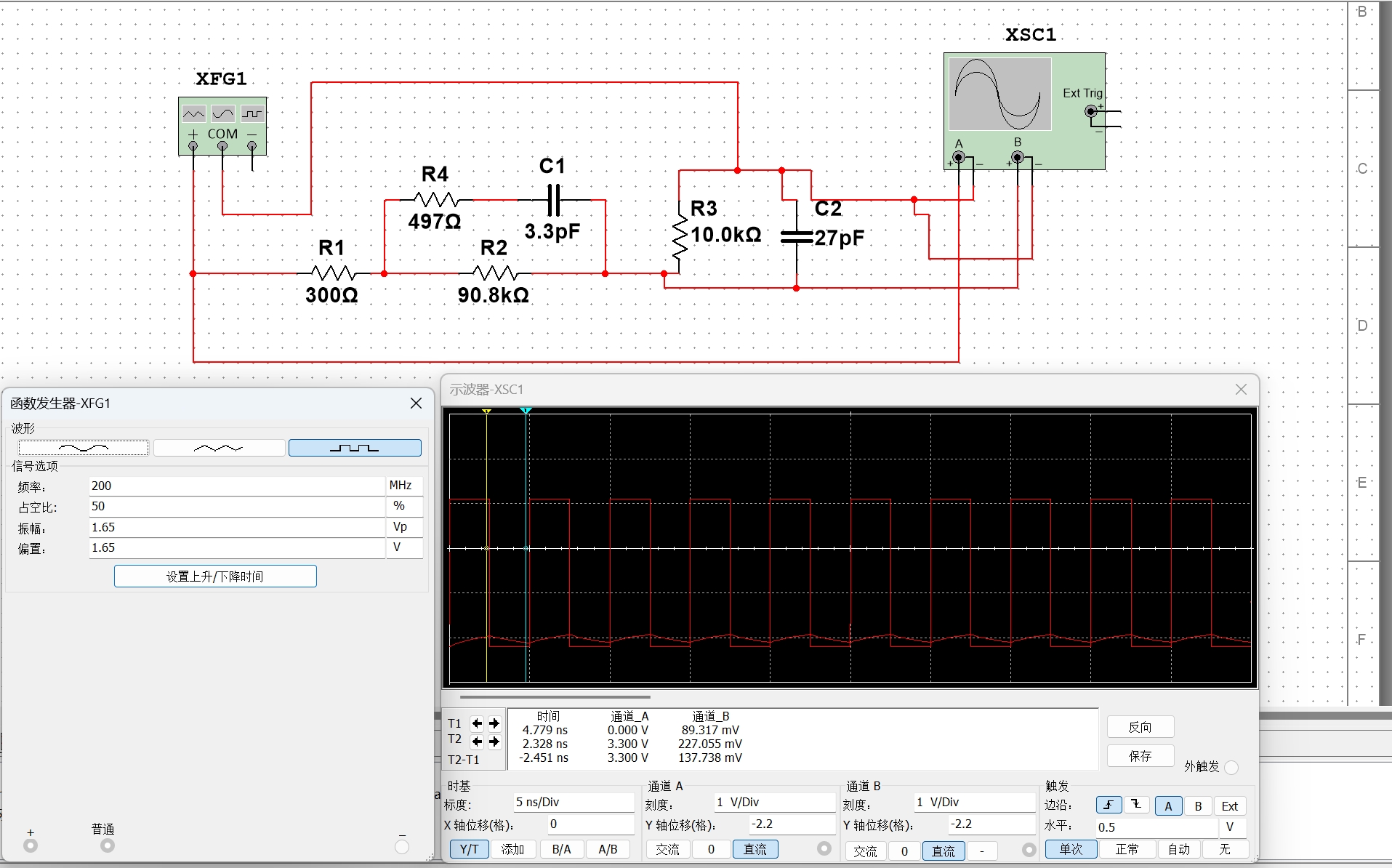
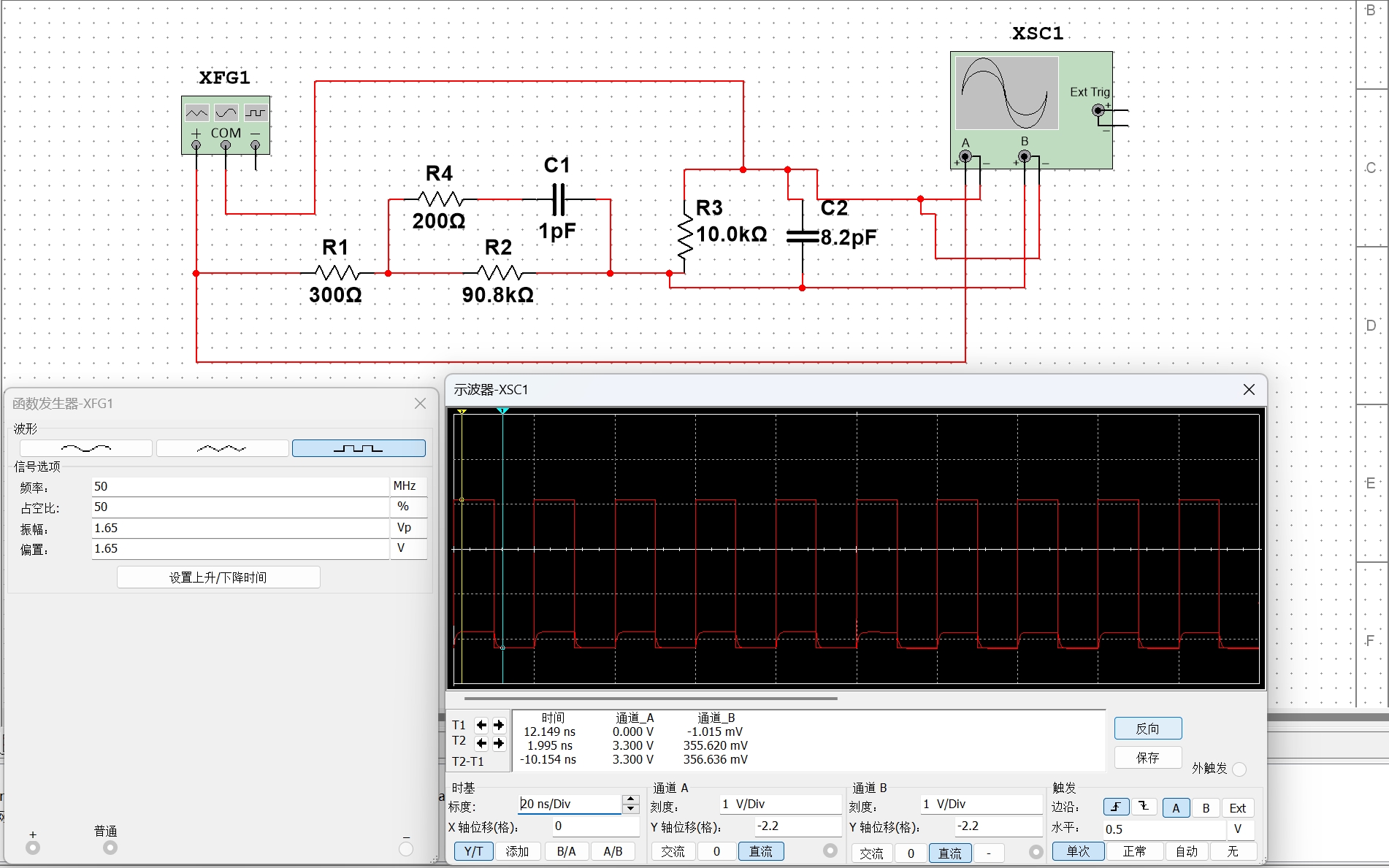
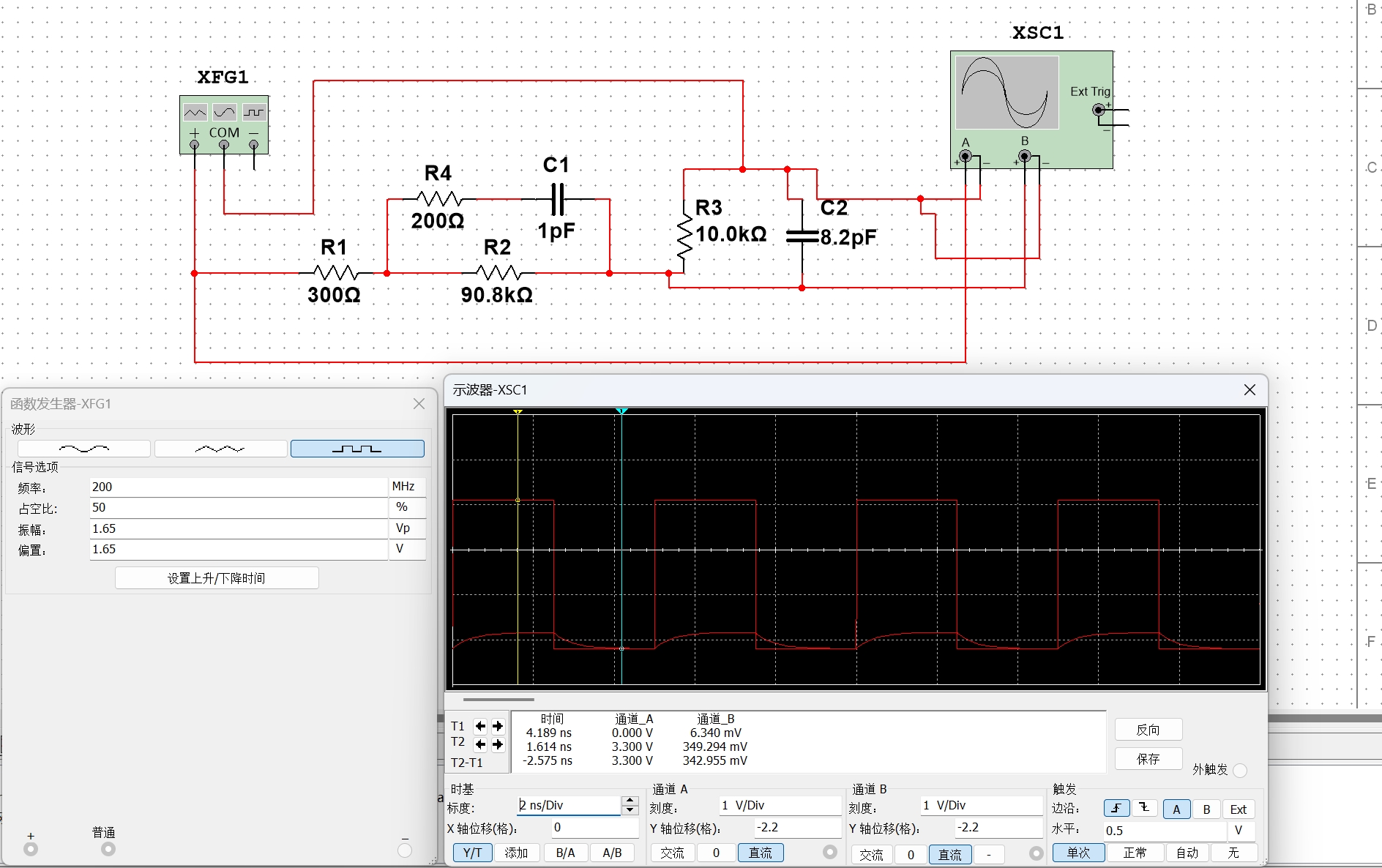
was tested. PCB board design notes: The board thickness must be 1mm. Otherwise, the 1.27mm pitch horn socket cannot be soldered. The adapter board and probe should use the "New Version of Adapter Board" and "New Version of 7322 Probe" respectively. For some accessory names, models, and precautions, please refer to the link: 1.27mm Simple Horn Socket (1.27-50p , no reference): https://detail.tmall.com/item.htm?id=667102167466&spm=a1z09.2.0.0.72b02e8dg2PfdX&_u=dkfq3du1f74 2.54mm pitch cable with nose- mounted female - 50p (no connector) https://item.taobao.com/item.htm?spm=a1z09.2.0.0.72b02e8dg2PfdX&id=564504938654&_u=dkfq3dua925&skuId=3731775526829 FC ribbon cable 1.27mm double-ended, same direction (Note: you need to buy the same direction cable) https://detail.tmall.com/item.htm?id=662516724614&spm=a1z09.2.0.0.72b02e8dg2PfdX&_u=dkfq3du5f05 2*16p, 2.54mm pitch header pins . Some minor details : equal-length wiring, soldering , 1.27mm horn-shaped socket direction, 2.54mm nose-type female header direction , 2x16p pitch, 2.54mm header pin handling , casing modeling . I graduated with a degree in "Mechanical Design, Manufacturing and Automation." A regretful attempt ... Actually, I could have used soldered 1.27mm ribbon cables . I should have bought some longer 1.6mm self-tapping screws. I could have used "recessed and raised lettering" to make the lettering clearer. Bandwidth simulation: 50MHz is okay, 200MHz WTF?!!!! That 's it, as long as it works, I'll just leave it ... If it does n't work , I'll try again . Last - minute cramming is still cramming, at least you, dear readers , judge for yourselves. I'm just a software developer , I have n't studied hardware , I don't know anything about it! This is truly a sign of weakness. Goodbye!

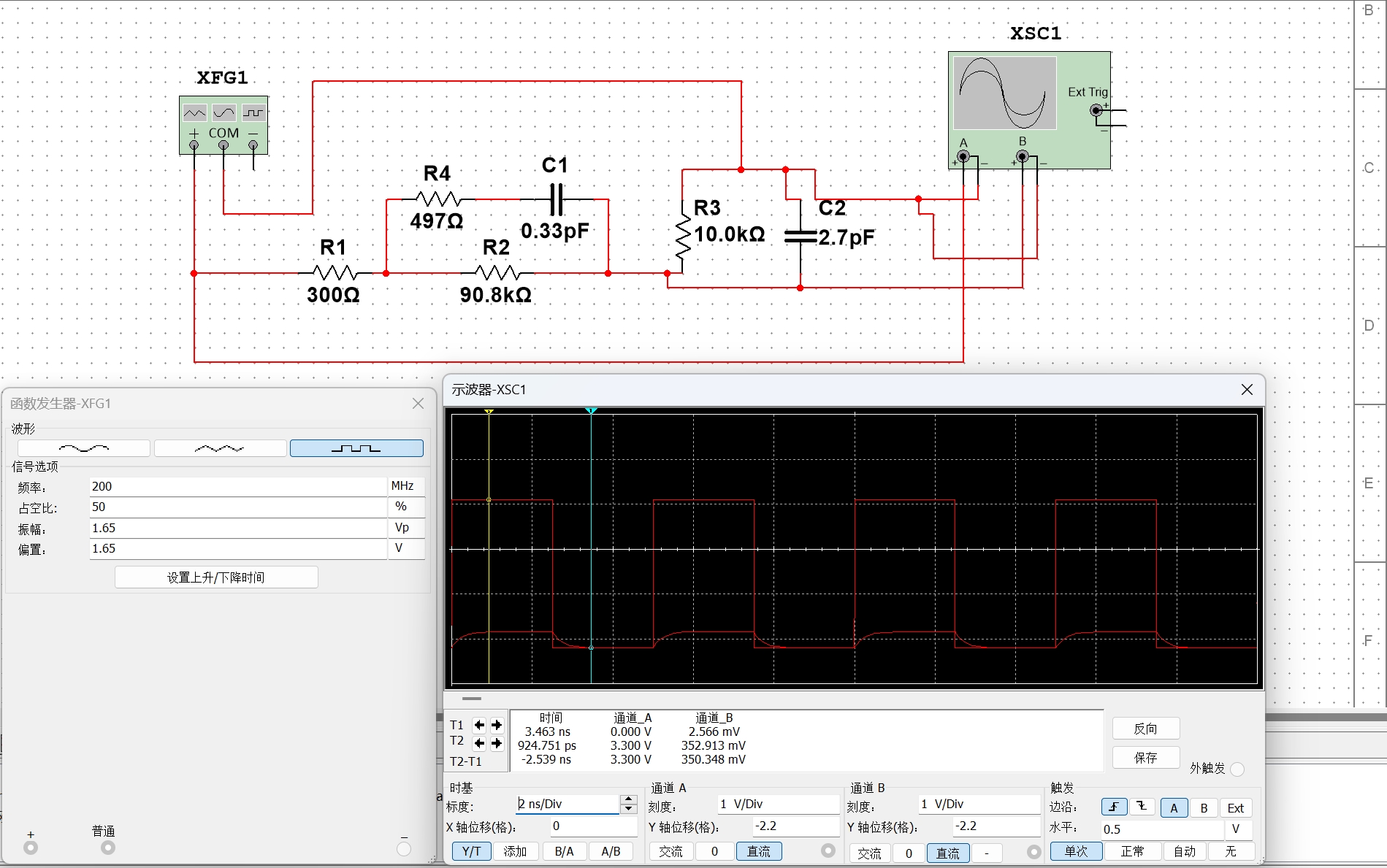
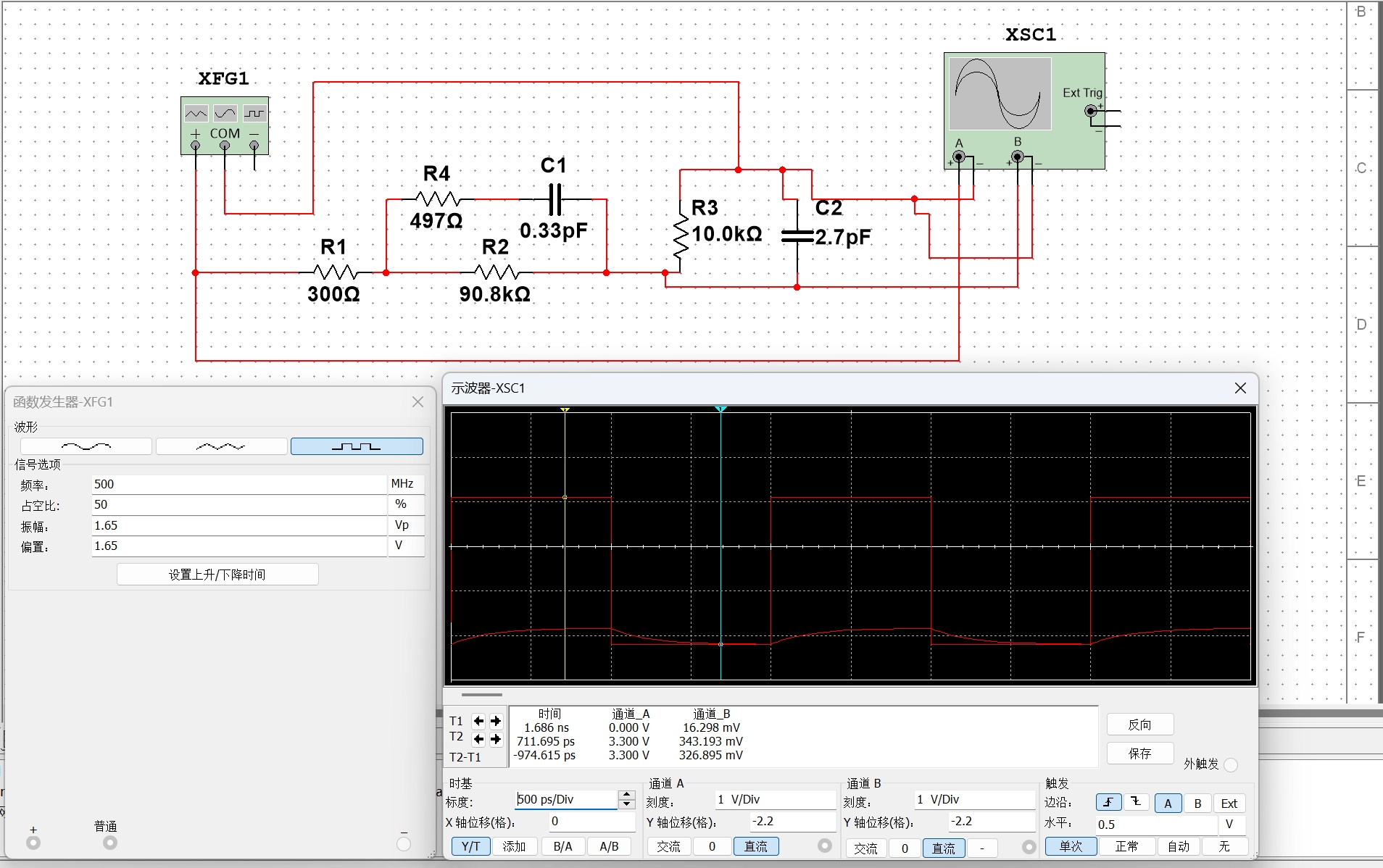
fefeba3ea13c76a11e71b9ec21e763fb.mp4
8e7a2b20ba3e818dd6f5226f2b847df0.mp4
connect-1.stp
connect-2.stp
prb-1.stp
prb-2.stp
967298c3ba56251054b0b47aa9e2faf4.mp4
PDF_MSO5000-DHO900 Logic Probe.zip
Altium_MSO5000_DHO900 Logic Probe.zip
PADS_MSO5000_DHO900 Logic Probe.zip
BOM_MSO5000_DHO900 Logic Probe.xlsx
94252
#Call for Submissions# Colorful Wind Chimes
Create a colorful wind chime-style string light using the Air001 chip and WS2812B.
This project uses the Air001 chip and WS2812B to create a colorful wind chime-style string light. The current version has 3x3 lights, but theoretically it should have 6xN lights. You can extend and add more lights as desired. See the attached video at the bottom for a demonstration.
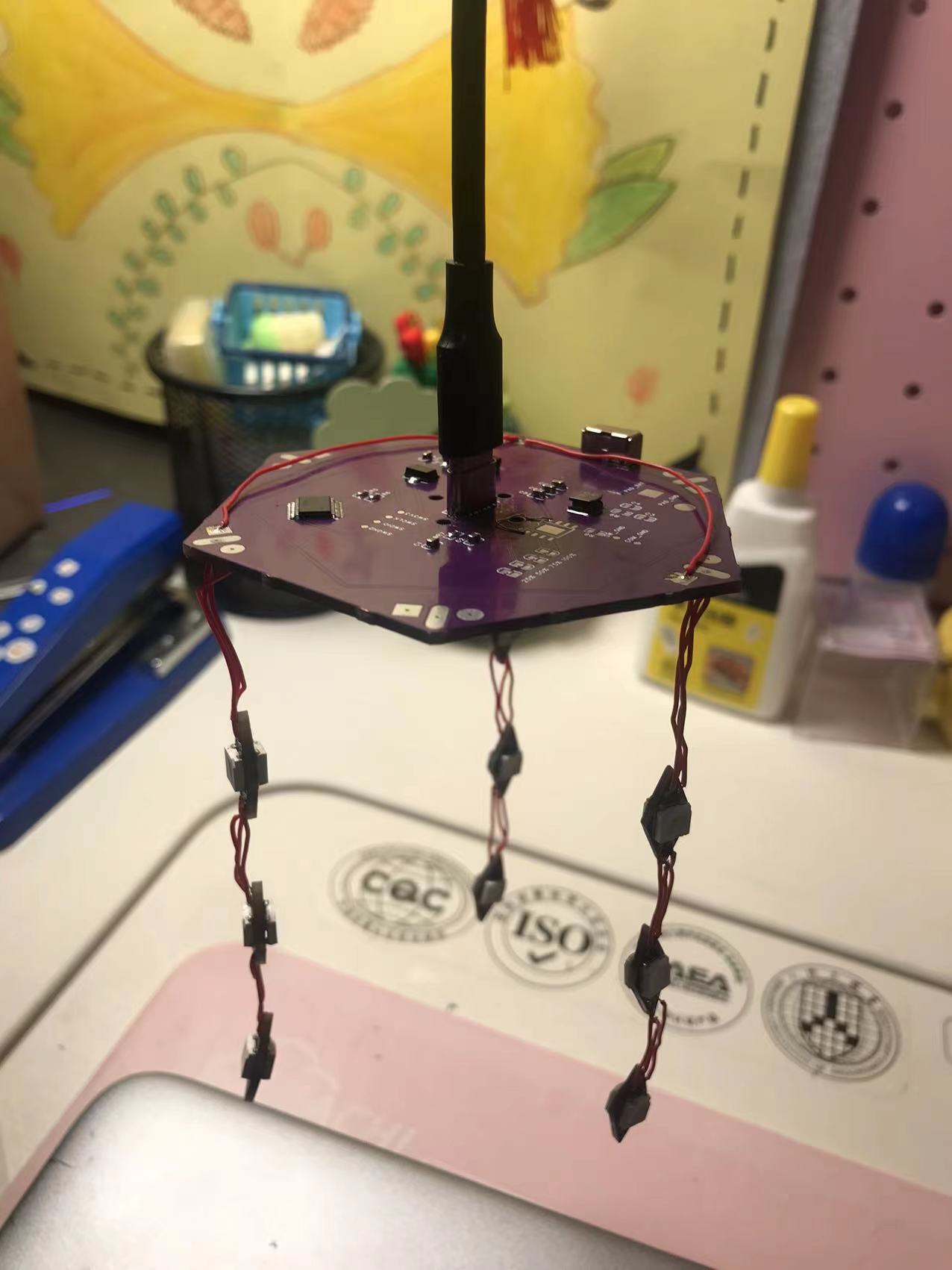
Project Introduction:
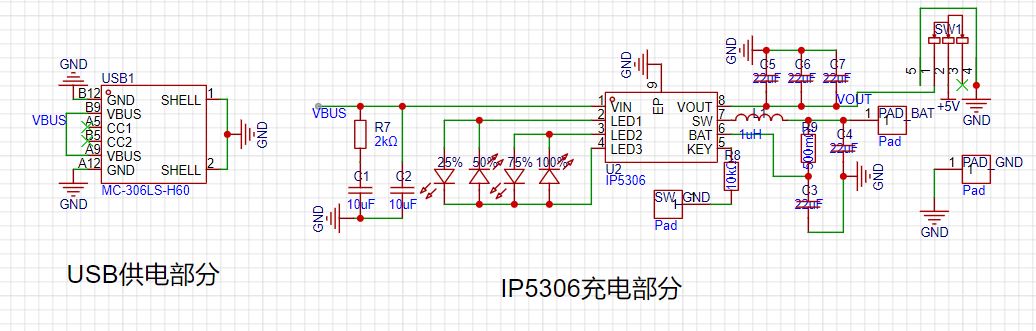
1. A charging circuit is provided (the chip used is IP5306, the reference chip for the MH-CD24 small board).
2. The main controller uses the Air001 chip, but actually uses the PY32F002AF15P6TU, which costs only 5 cents a piece with free shipping.
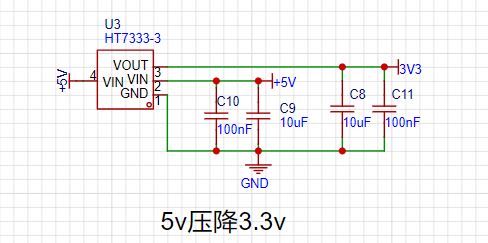
3. There are no strict requirements for the LDO; I used an H7333-3, but you can modify the circuit diagram and replace it with your own LDO
. 4. The four holes in the middle are for threading a rope to hang it, because there will be no Type-C port when using batteries.
5. The board comes with 6*3 diamond-shaped lights per batch. Cut them yourself; 5 pieces will give you 6*3*5=90 lights, which is 6*15mm long enough.
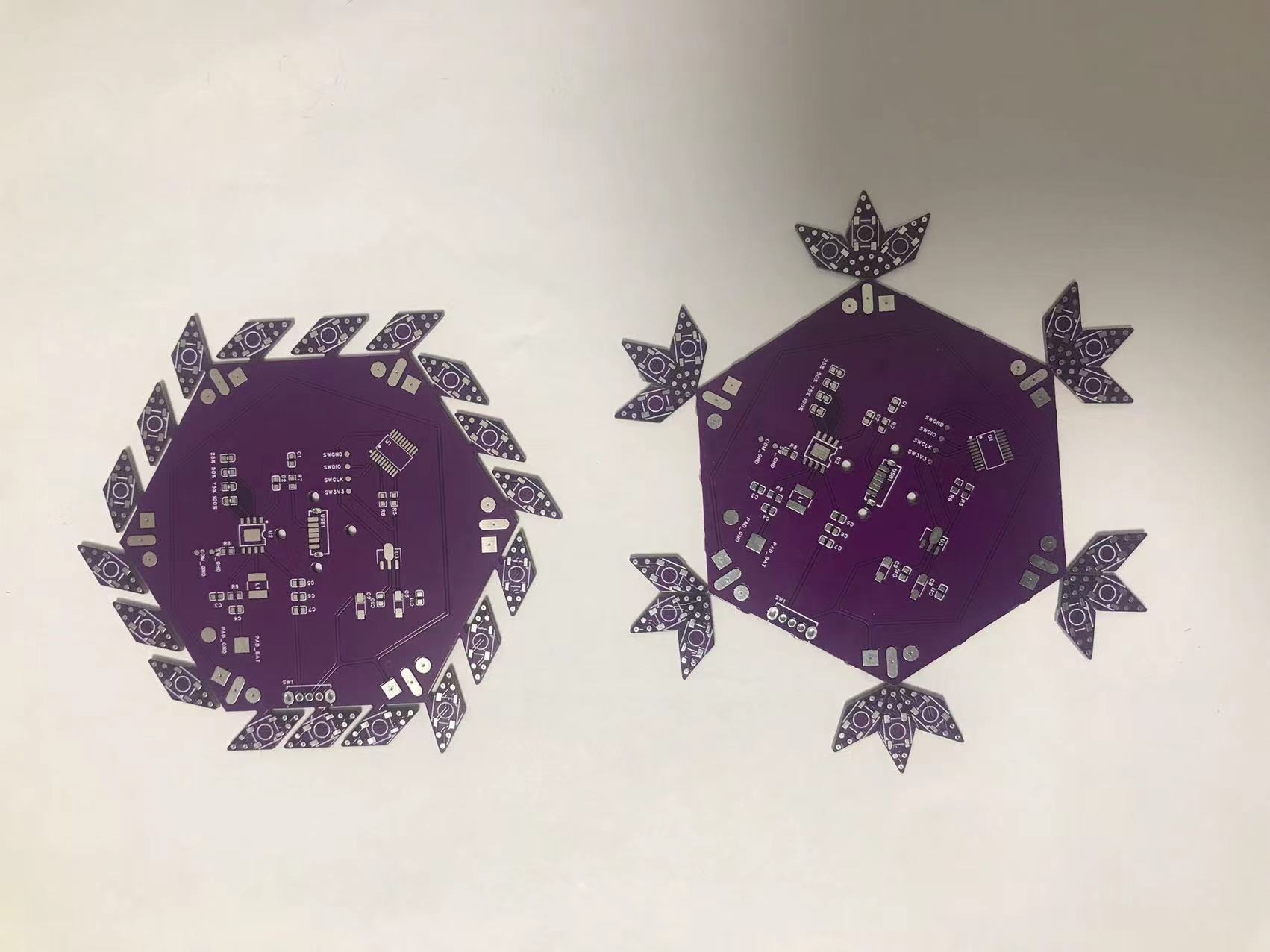
The image on the right is a humorous arrangement; this board is not actually in use.
Schematic Introduction:
As mentioned earlier, the PY32 is identical here; the Air001 is only used for schematic drawing.
The Air001 (PY32) is very useful; it only requires two circuits to run (some say one is enough, but this hasn't been tested), a true gem. For
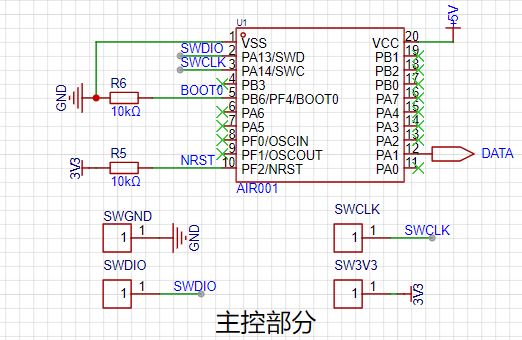
the charging part, you can purchase the MH-CD42 or the IP5306 to build your own. (The seller sent the wrong item, which will be added later.)
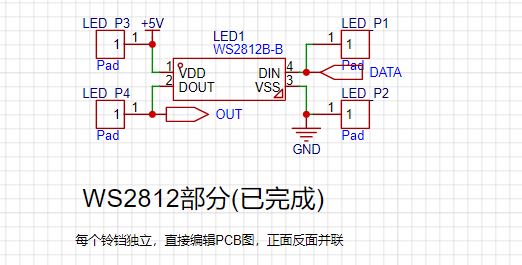
The LED string part is a bit special because the LEDs need to be cut off, so it was made using a direct PCB design method; there's only one schematic.
For the LDO part, I just used a component I had on hand; a 5V to 3.3V converter should have many options.
Board Introduction:
It's worth mentioning that the three LEDs on each side were cut off with wire cutters; if possible, you can sand the edges.
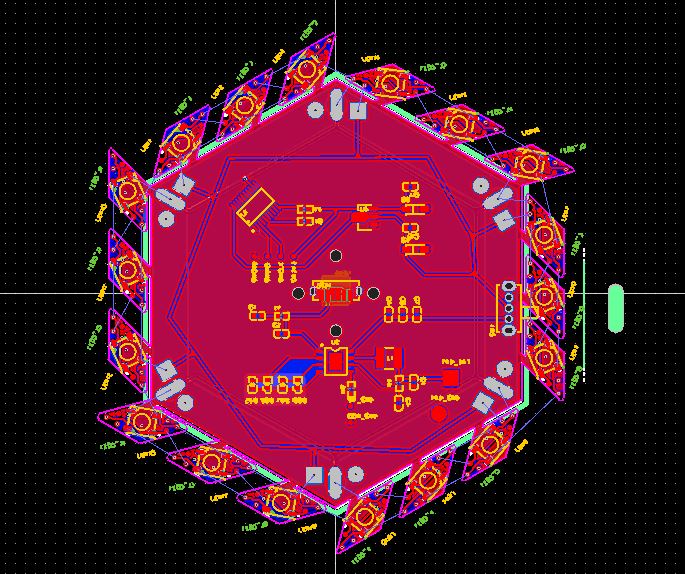
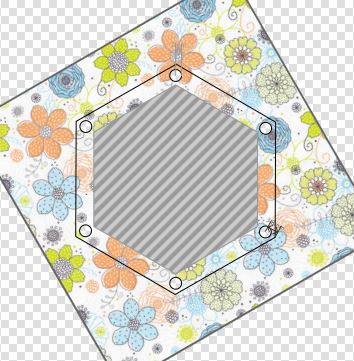
I've also added a color-printed
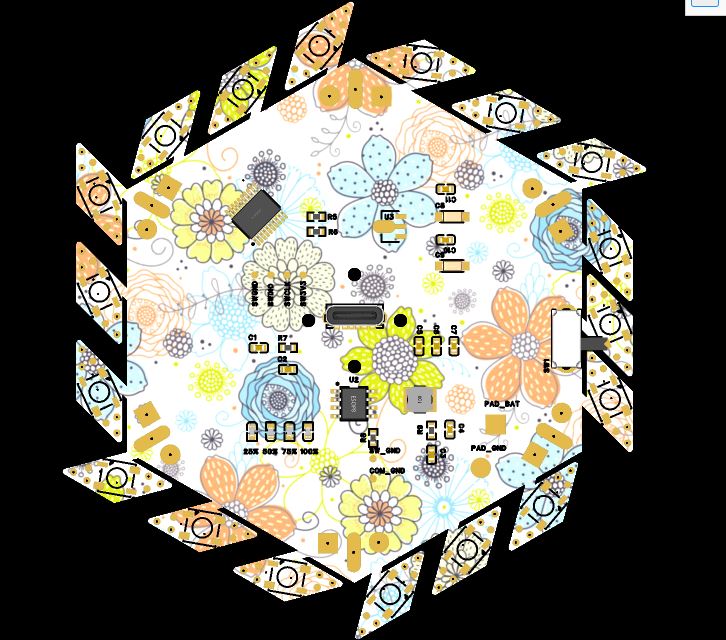
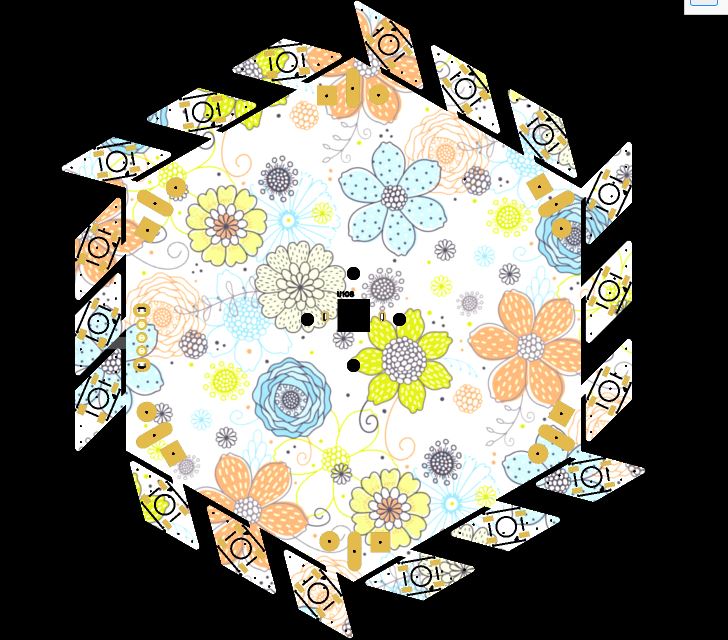
3D introduction:
I sketched the 3D shell directly on the Fusion360 (mainly the six rounded corners) and then imported it into LCEDA for DFX drawing.
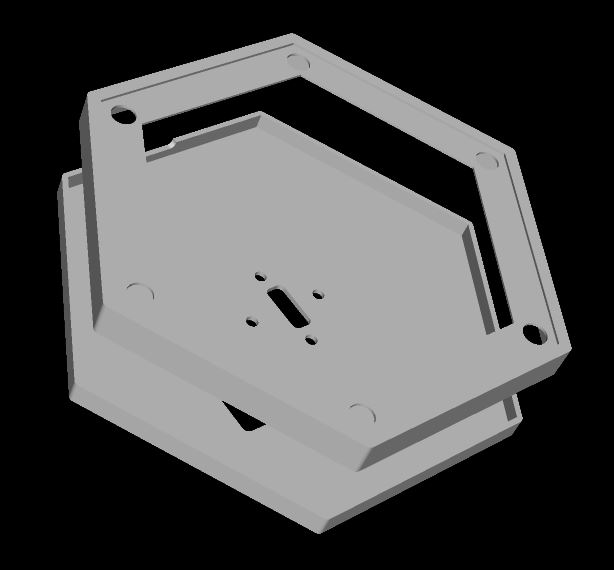
Panel Introduction:
As you can see in the image above, the board frame edges were left.
Software Components
: 1. The current default style is a rainbow breathing light
. 2. You can modify it to other styles.
3. Upload the completed code as an attachment.
893551454.mp4
2079423277.mp4
PDF_#Call for Submissions# Colorful Wind Chimes.zip
Altium_#Call for Submissions#Colorful Wind Chimes.zip
PADS_#Call for Submissions# Colorful Wind Chimes.zip
94255
electronic








 京公网安备 11010802033920号


 101-424-11S-P31-B12



