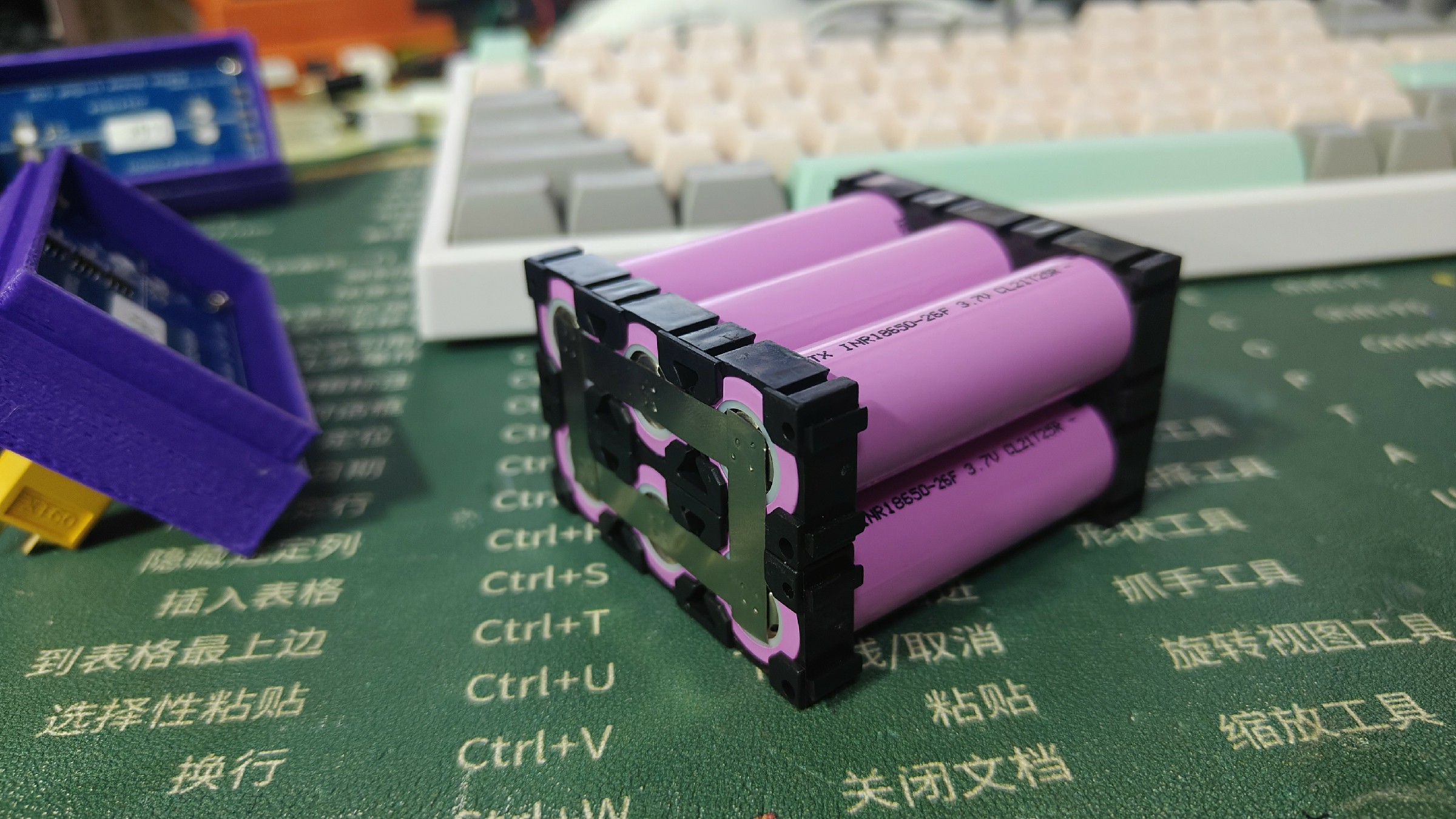
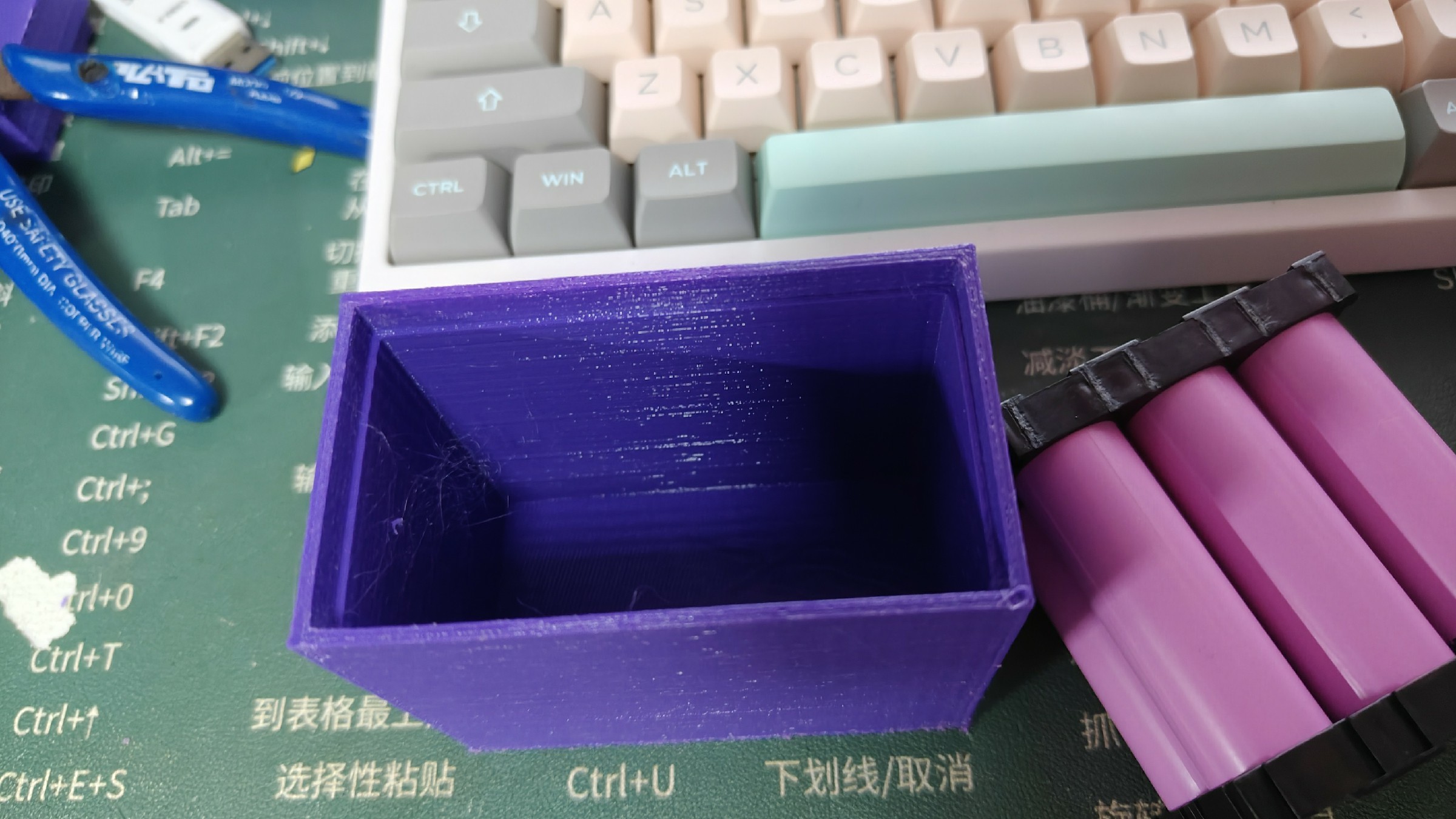
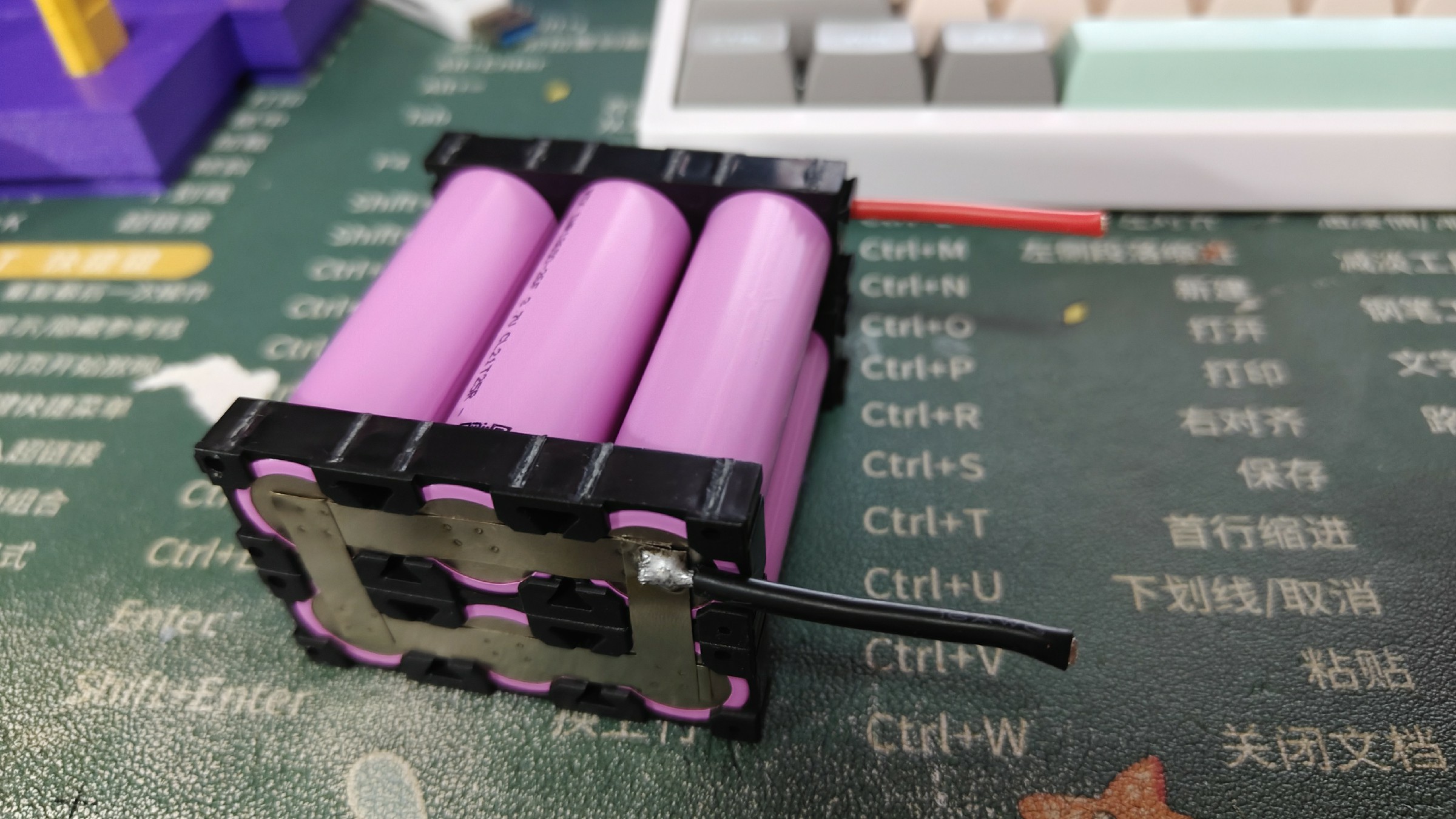
I often work on small projects, many of which can be powered by lithium batteries. In these projects, the batteries are all housed in a casing, which, while offering high integration, still doesn't provide enough batteries.
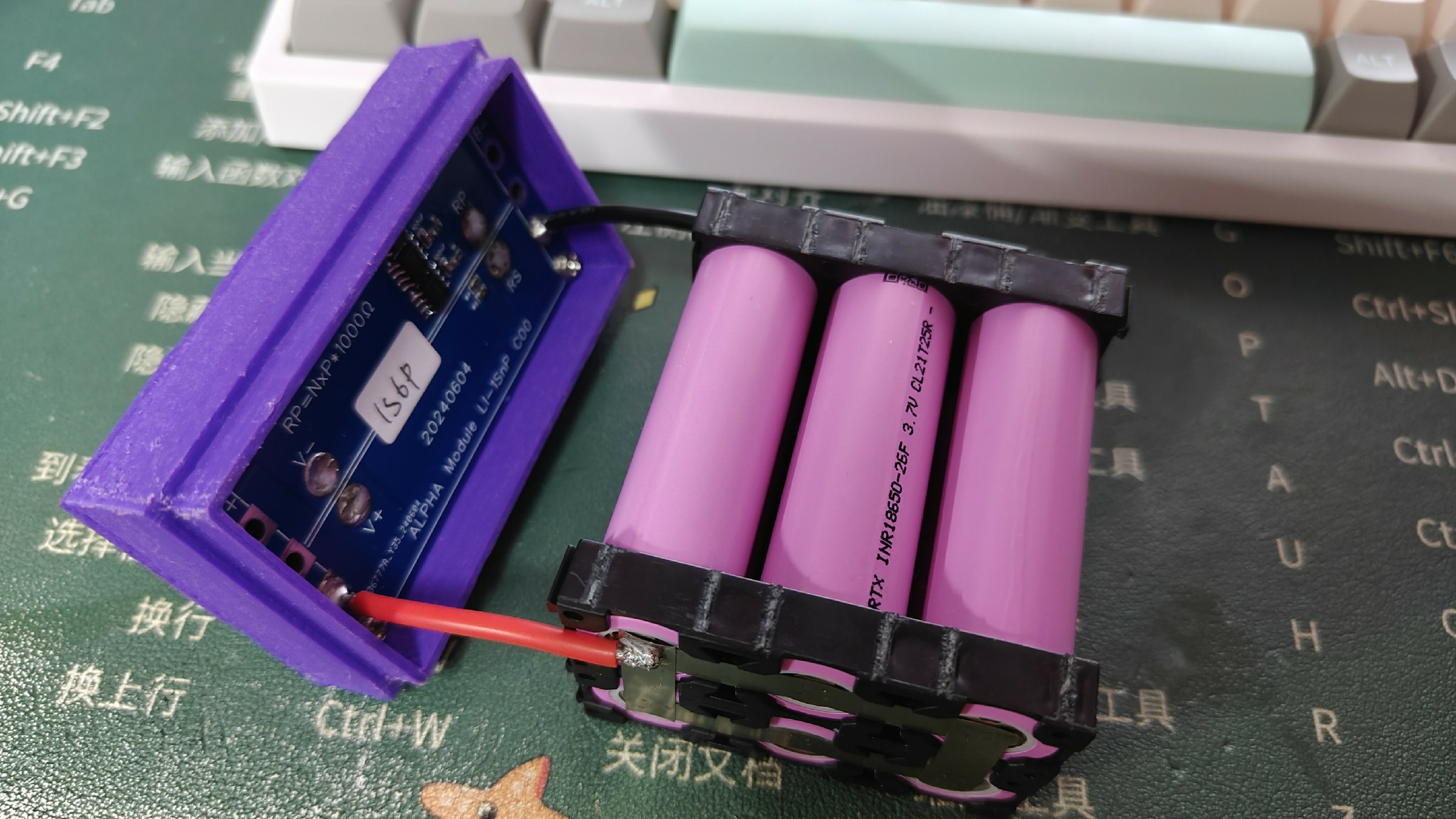
This modular battery allows for plug-and-play operation and the ability to have multiple spare batteries.
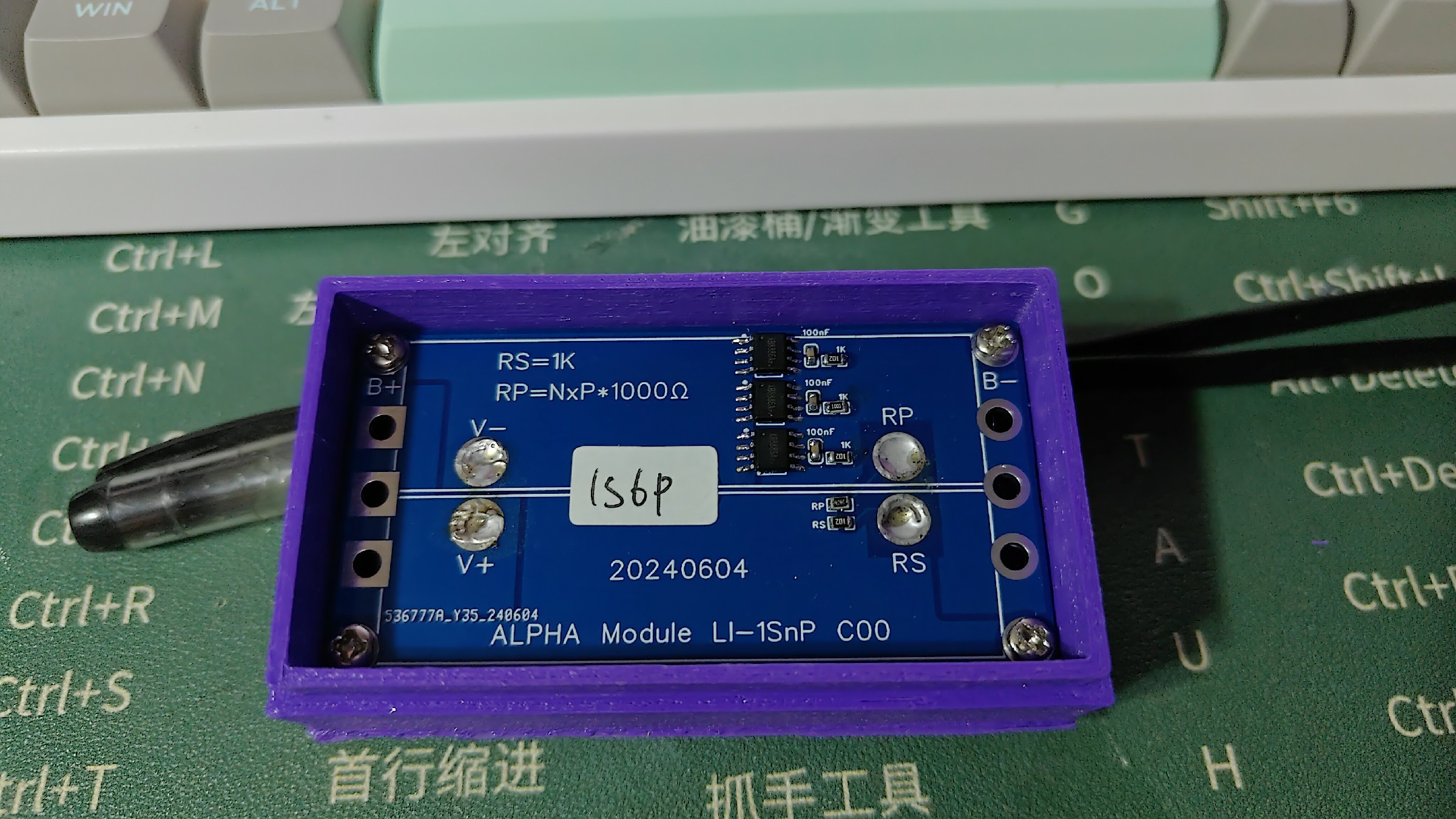
The number of series and parallel connections can be set according to needs. A charger will be open-sourced later, allowing users to set the charging voltage and current based on the identification resistors on the board.
Example 1: A 1-series, 6-parallel battery pack, with a single cell voltage of 4.2V and a single cell capacity of 2600mAh, using 0.5C charging, which is a maximum charging current of 7.8A;
Example 2: A 1-series, 2-parallel battery pack, with a single cell voltage of 4.2V and a single cell capacity of 2600mAh, using 0.5C charging, which is a maximum charging current of 2.6A.
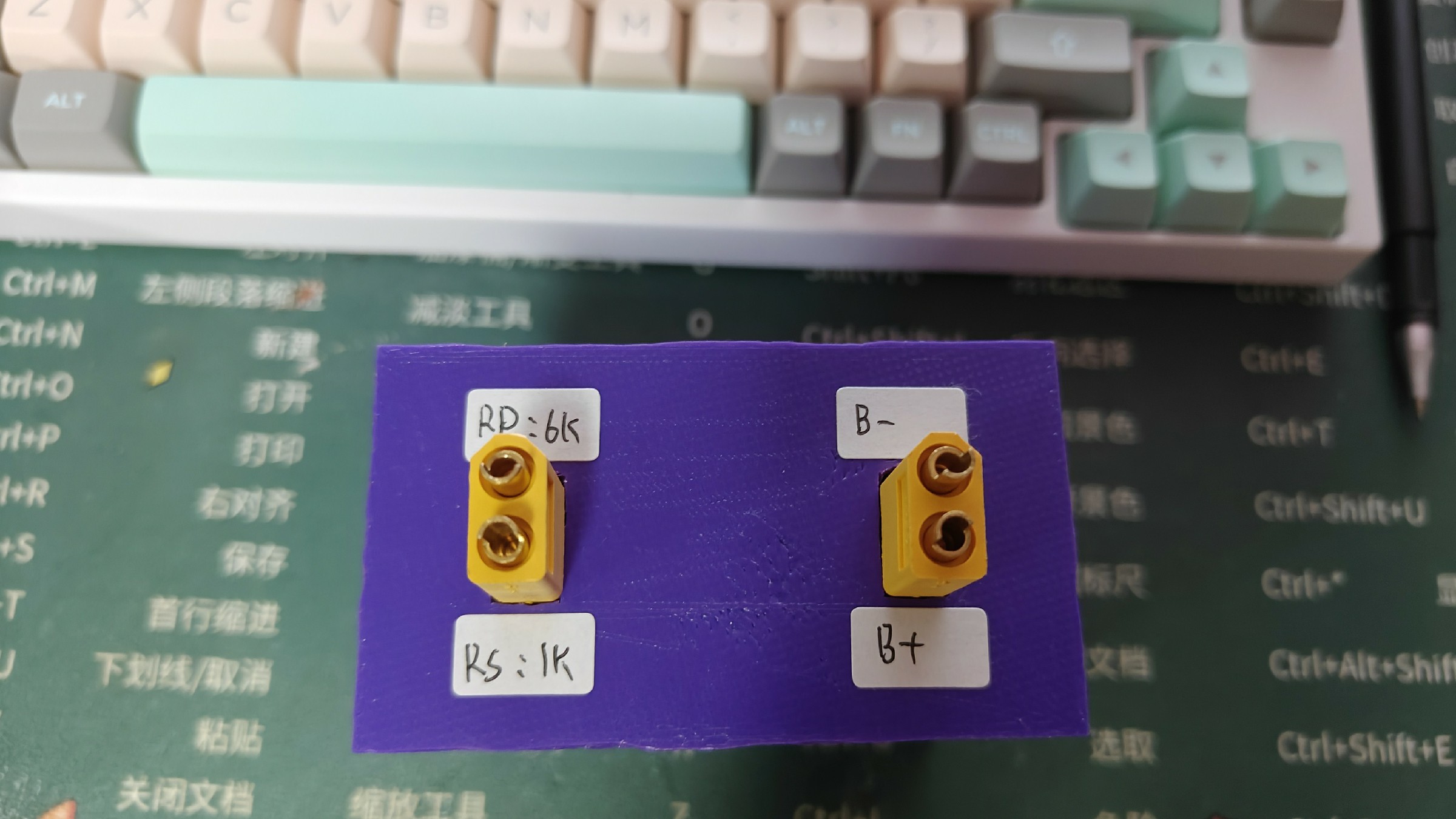
The resistors on the PCB are labeled RS (series setting resistor) and RP (parallel setting resistor).
The setting rule is: the number of series resistors equals the number of kilobytes (kΩ), and the number of parallel resistors equals the number of kΩ. For example, in a 1-series, 6-parallel configuration, RS=1KΩ and RP=6KΩ.
What if some resistors aren't perfectly aligned? The software will allow for a tolerance of ±400Ω, which I personally feel is reasonable.
Here are some reference resistance values: 1K, 2K, 3K, 3.9K, 4.3K, 5.1K, 6.2K, 6.8K, 8.2K, 9.1K, 10K, 11.2K, 12K…
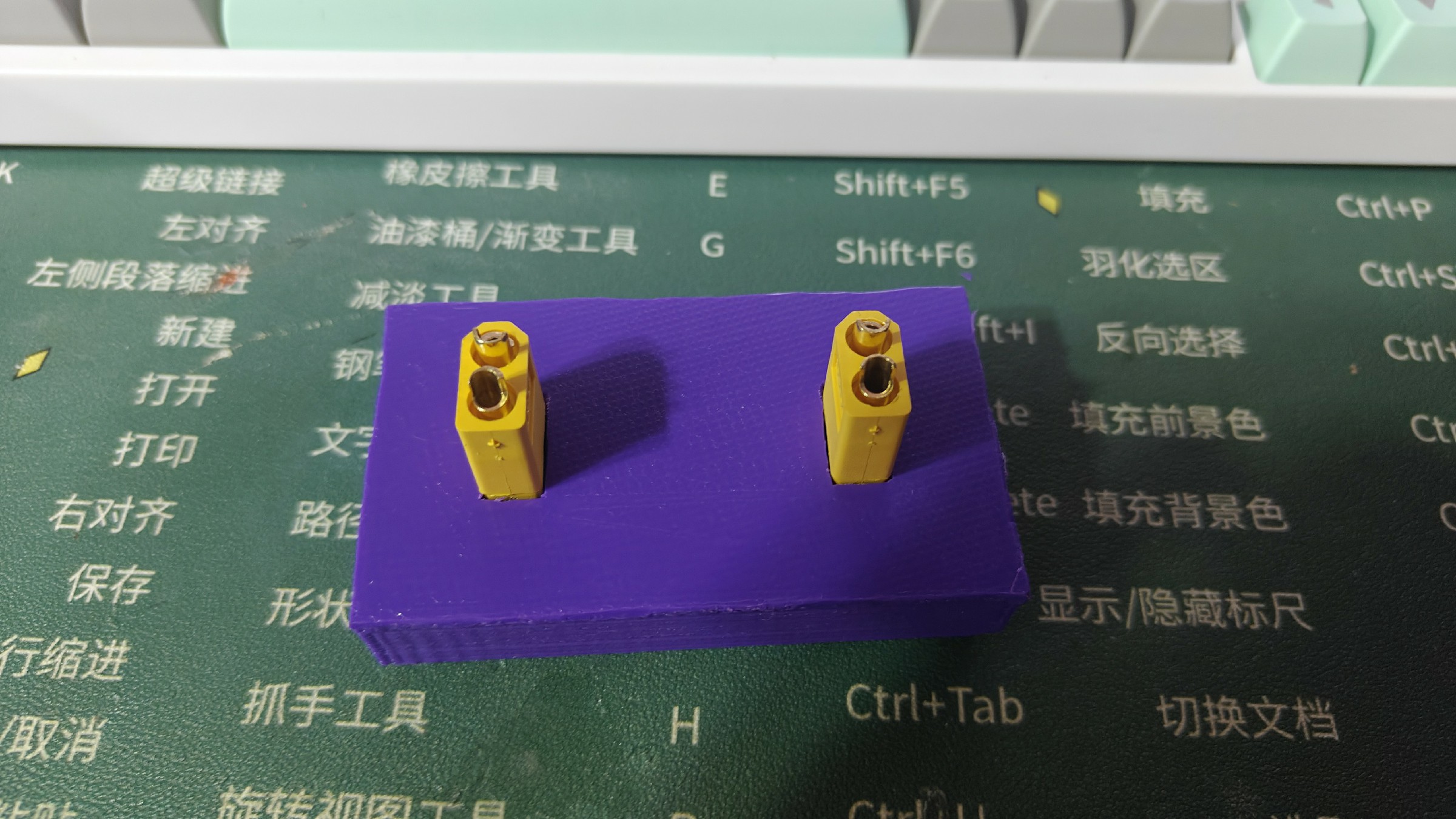
Another important reason for doing this project is that I found cheap XT60 batteries on Taobao. I bought 80 sets (male and female connectors), with each set costing about 0.9 yuan. I also found brand new 18650 batteries on Taobao, buying 100 sets for less than 2.6 yuan each.
The battery specifications are approximately 2600mAh with a slightly larger capacity and around 18mR internal resistance, which seems quite worthwhile, cheaper than buying from secondhand sellers.
Also, the resistor identification uses XT60 batteries, which is a bit wasteful. I considered magnetic resistors before, but the current draw isn't very high, and they're more expensive, so they weren't suitable.
Using one XT60 and another other socket isn't a perfect height match. While it's workable, it's inconvenient. But the price of this socket on Taobao is unbeatable…
The XT60 has a rated current of 30A and a peak current of 60A, which is sufficient.
For lithium battery connections, I suggest looking at other open-source solutions for welding machines. A few years ago, I made my own welding machine using two 3000F 2.7V farad capacitors in series. The power has always been plugged in, never unplugged, and it's still working perfectly—its lifespan is incredible. Farad capacitors were cheap back then; I think I bought those two for around 35 RMB including shipping, now they cost around 90 RMB.
PDF_Modular Battery-1S6P.zip
Altium Modular Battery - 1S6P.zip
PADS_Modular Battery-1S6P.zip
BOM_Modular Battery-1S6P.xlsx
94335
electronic








 京公网安备 11010802033920号


 1N977A



