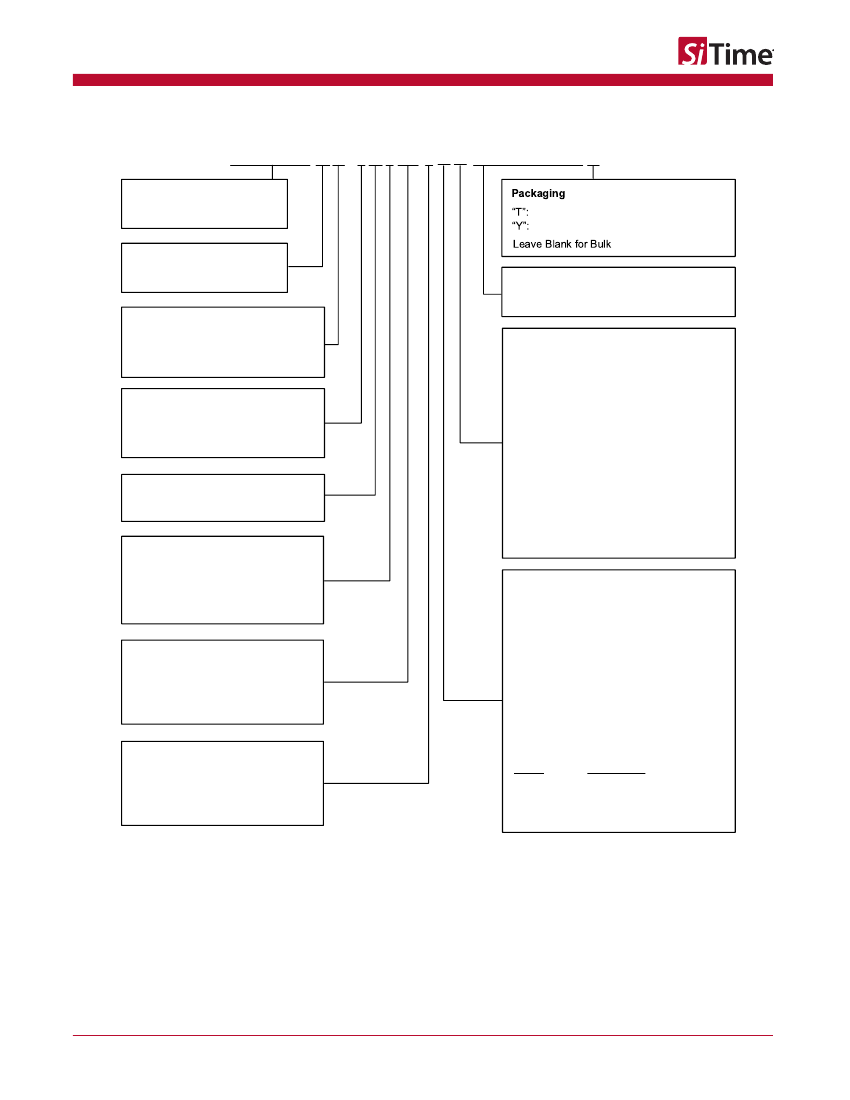
Ordering Information .................................................................................................................................................................... 2
User Programming Interface ..................................................................................................................................... 18
Start-up output frequency and signaling types ........................................................................................................... 18
Any-frequency function ............................................................................................................................................. 19
C/SPI Control Registers...................................................................................................................................................... 28
9 I
Register Address: 0x00. DCO Frequency Control Least Significant Word (LSW) .................................................... 28
Register Address: 0x01. OE Control, DCO Frequency Control Most Significant Word (MSW) ................................. 29
Register Address: 0x02. DCO PULL RANGE CONTROL ........................................................................................ 29
Register Address: 0x03. Frac-N PLL Feedback Divider Integer Value and Frac-N PLL Feedback Divider Fraction
Value MSW ............................................................................................................................................................... 30
Register Address: 0x05. Forward Divider, Driver Control ......................................................................................... 30
Register Address: 0x06. Driver Divider, Driver Control ............................................................................................. 31
2
C Operation ........................................................................................................................................................................ 32
10 I
I
2
C protocol ............................................................................................................................................................... 32
I
2
C Timing Specification ............................................................................................................................................ 35
I
2
C Device Address Modes ....................................................................................................................................... 36
Dimensions and Patterns ........................................................................................................................................................... 43
Additional Information ................................................................................................................................................................ 44
Revision History ......................................................................................................................................................................... 45
Rev 1.01
Page 3 of 45
www.sitime.com
SiT3521
1 to 340 MHz Elite Platform I2C/SPI Programmable Oscillator
1 Electrical Characteristics
All Min and Max limits in the Electrical Characteristics tables are specified over temperature and rated operating voltage with
standard output terminations shown in the termination diagrams. Typical values are at 25°C and nominal supply voltage.
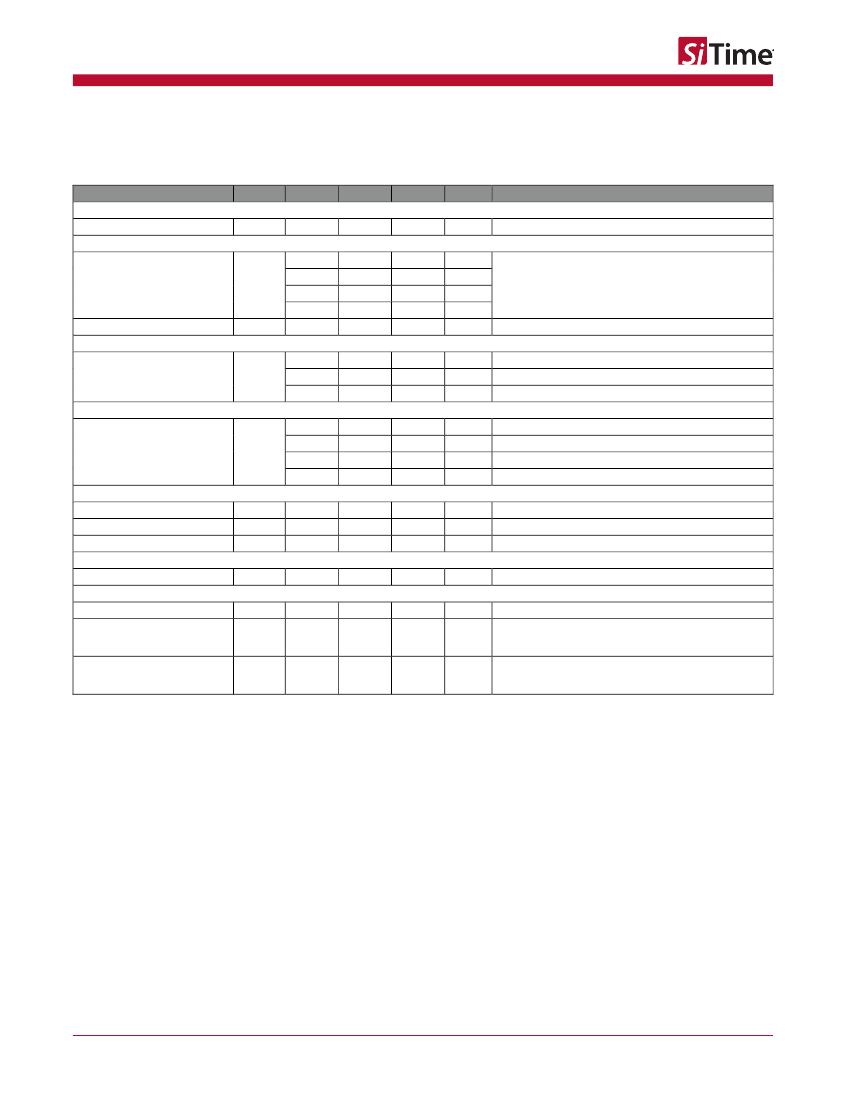
Table 1. Electrical Characteristics – Common to LVPECL, LVDS and HCSL
Parameter
Output Frequency Range
Symbol
f
Min.
1
Typ.
–
–
–
–
–
±1
–
–
–
Max.
340
Unit
MHz
Condition
Factory or user programmable, accurate to 6 decimal places
Frequency Range
Frequency Stability
Frequency Stability
F_stab
-10
-20
-25
-50
First Year Aging
F_1y
–
+10
+20
+25
+50
–
ppm
ppm
ppm
ppm
ppm
°C
°C
°C
1
st
-year aging at 25°C
Inclusive of initial tolerance, operating temperature, rated
power supply voltage and load variations.
Temperature Range
Operating Temperature Range
T_use
-20
-40
-40
+70
+85
+105
Supply Voltage
Supply Voltage
Vdd
2.97
2.7
2.52
2.25
3.3
3.0
2.8
2.5
–
–
100
–
–
–
3.63
3.3
3.08
2.75
–
30%
–
V
V
V
V
Extended Commercial
Industrial
Extended Industrial. Available only for I
2
C operation, not SPI.
Input Characteristics – OE Pin
Input Voltage High
Input Voltage Low
Input Pull-up Impedance
VIH
VIL
Z_in
70%
–
–
Vdd
Vdd
kΩ
OE pin
OE pin
OE pin, logic high or logic low
Output Characteristics
Duty Cycle
DC
45
–
–
55
%
Startup and Output Enable/Disable Timing
Start-up Time
Output Enable/Disable Time –
Hardware control via OE pin
Output Enable/Disable Time –
Software control via I
2
C/SPI
T_start
T_oe_hw
3.0
3.8
ms
µs
Measured from the time Vdd reaches its rated minimum value
Measured from the time OE pin reaches rated VIH and VIL to
the time clock pins reach 90% of swing and high-Z.
See
Figure 9
and
Figure 10
Measured from the time the last byte of command is
transmitted via I
2
C/SPI (reg1) to the time clock pins reach 90%
of swing and high-Z. See
Figure 30
and
Figure 31
T_oe_sw
–
–
6.5
µs
Rev 1.01
Page 4 of 45
www.sitime.com
SiT3521
1 to 340 MHz Elite Platform I2C/SPI Programmable Oscillator
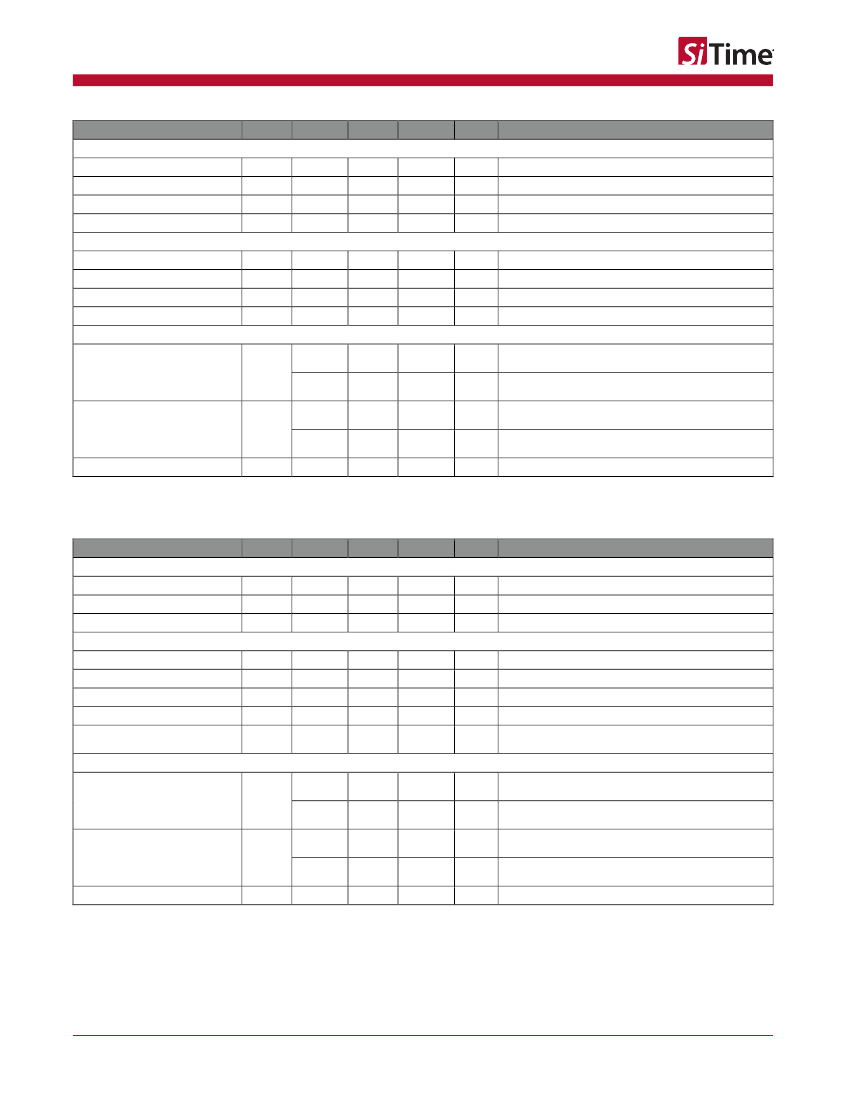
Table 2. Electrical Characteristics – LVPECL Specific
Parameter
Symbol
Min.
Typ.
Max.
Unit
Condition
Current Consumption
Current Consumption
OE Disable Supply Current
Output Disable Leakage Current
Maximum Output Current
Idd
I_OE
I_leak
I_driver
–
–
–
–
–
–
0.15
–
89
58
–
32
mA
mA
A
mA
Excluding Load Termination Current, Vdd = 3.3 V or 2.5 V
OE = Low
OE = Low
Maximum average current drawn from OUT+ or OUT-
Output Characteristics
Output High Voltage
Output Low Voltage
Output Differential Voltage Swing
Rise/Fall Time
VOH
VOL
V_Swing
Tr, Tf
Vdd - 1.1V
Vdd - 1.9V
1.2
–
–
–
1.6
225
Vdd - 0.7V
Vdd - 1.5V
2.0
290
Jitter
RMS Phase Jitter (random) –
DCO Mode Only
T_phj
–
–
RMS Phase Jitter (random) –
Any-frequency Mode Only
T_phj
–
–
RMS Period Jitter
[3]
Note:
3. Measured according to JESD65B.
T_jitt
–
0.225
0.1
0.225
0.11
1
0.340
0.14
0.340
0.15
1.6
ps
ps
ps
ps
ps
f = 156.25 MHz, Integration bandwidth = 12 kHz to 20 MHz,
all Vdd levels
f = 156.25, IEEE802.3-2005 10 GbE jitter mask integration
bandwidth = 1.875 MHz to 20 MHz, all Vdd levels
f = 156.25 MHz, Integration bandwidth = 12 kHz to 20 MHz,
all Vdd levels
f = 156.25, IEEE802.3-2005 10 GbE jitter mask integration
bandwidth = 1.875 MHz to 20 MHz, all Vdd levels
f = 100, 156.25 or 212.5 MHz, Vdd = 3.3 V or 2.5 V
V
V
V
ps
See
Figure 5
See
Figure 5
See
Figure 6
20% to 80%, see
Figure 6
Table 3. Electrical Characteristics – LVDS Specific
Parameter
Symbol
Min.
Typ.
Max.
Unit
Condition
Current Consumption
Current Consumption
OE Disable Supply Current
Output Disable Leakage Current
Idd
I_OE
I_leak
–
–
–
–
–
0.15
80
61
–
mA
mA
A
Excluding Load Termination Current, Vdd = 3.3 V or 2.5 V
OE = Low
OE = Low
Output Characteristics
Differential Output Voltage
Delta VOD
Offset Voltage
Delta VOS
Rise/Fall Time
VOD
ΔVOD
VOS
ΔVOS
Tr, Tf
250
–
1.125
–
–
–
–
–
–
400
455
50
1.375
50
470
Jitter
RMS Phase Jitter (random) –
DCO Mode Only
T_phj
–
–
RMS Phase Jitter (random) –
Any-frequency Mode Only
T_phj
–
–
RMS Period Jitter
[4]
Note:
4. Measured according to JESD65B.
T_jitt
–
0.21
0.1
0.21
0.1
1
0.275
0.12
0.367
0.12
1.6
ps
ps
ps
ps
ps
f = 156.25 MHz, Integration bandwidth = 12 kHz to 20 MHz,
all Vdd levels
f = 156.25, IEEE802.3-2005 10 GbE jitter mask integration
bandwidth = 1.875 MHz to 20 MHz, all Vdd levels
f = 156.25 MHz, Integration bandwidth = 12 kHz to 20 MHz,
all Vdd levels
f = 156.25, IEEE802.3-2005 10 GbE jitter mask integration
bandwidth = 1.875 MHz to 20 MHz, all Vdd levels
f = 100, 156.25 or 212.5 MHz, Vdd = 3.3 V or 2.5 V
mV
mV
V
mV
ps
f = 156.25MHz See
Figure 7
See
Figure 7
See
Figure 7
See
Figure 7
Measured with 2 pF capacitive loading to GND, 20% to 80%,
I am a 51 MCU beginner . After writing a program with Keil , I need to solve the following problems when debugging: 1. Some lines in the program can only be broken if there is a gray line in front of ...
I've been looking at code all day these days and I'm really exhausted.
I received a Rubik's Cube from EEworld this morning and played with it.
It was awesome! I also relaxed for a while .Did you recei...
[size=4] I have studied Nucleus before. Recently, because I want to understand the mechanism of other RTOS, I specially looked for some other RTOS codes on the Internet, including ThreadX codes. Then ...
Hey guys, I'm writing a program. The chip is STM32 and I use IAR as my IDE. The RAM occupied by the program is too large and exceeds the RAM of the chip itself, but the MCU has an external SDRAM. I wa...
Arduino Uno + Overclocked STM32 Graphics Accelerator : https://training.eeworld.com.cn/course/2166
Arduino Uno series with overclocked STM32 graphics accelerator.It consists of three parts: a brief in...
I have posted a few teaching materials about 430, hoping that it will be helpful to students who are interested in the application and study of MSP430 microcontrollers....
Tesla and BYD, vying for dominance in the global electric vehicle market, are reportedly considering adopting Samsung's AMOLED (active-matrix organic light-emitting diode) technology for their next...[Details]
introduction
With the development of digital and network technologies, broadcasting technology has become increasingly diversified, with the most significant trend being the transition from an...[Details]
When we travel in cities, we all find that electric vehicles have many advantages. As a means of transportation, they can also fulfill their mission well. Now, more and more residential communities...[Details]
Electric motors and internal combustion engines of the same power have similar torque levels. High power requires high torque, and torque determines a vehicle's acceleration speed, commonly known a...[Details]
On August 21st, Zhiyuan Robotics revealed at its first partner conference that it expects shipments to reach thousands of units this year and tens of thousands next year. The company hopes to reach...[Details]
In June 2014, the Ministry of Industry and Information Technology issued 4G FD-LTE licenses to China Unicom and China Telecom. Together with the 4G TD-LTE licenses issued to China Mobile, China Uni...[Details]
With the advancement of science and technology and the promotion of green, energy-saving, and circular development, the demand for precise control and accurate measurement is increasing. In the pow...[Details]
With the support and encouragement of national policies, some Internet car manufacturers have also joined the new energy vehicle manufacturing industry. From the perspective of new car manufacturer...[Details]
Puttshack's Trackaball uses the Nordic nRF54L15 system-on-chip (SoC) to monitor sensors and enable Bluetooth low energy connectivity, while the nPM2100 power management integrated circuit (PMIC) ...[Details]
Analog Devices held a third-quarter fiscal 2025 earnings conference call. Vincent T. Roche, CEO and Chairman of the Board, and Richard C. Puccio, Executive Vice President and Chief Financial Office...[Details]
I believe everyone has heard of memory. If your computer is slow, your experts may recommend upgrading it to a larger capacity. But what exactly is computer memory used for? Why does memory capacit...[Details]
On August 20, it was reported that the specifications of Intel's upcoming Panther Lake mobile processor appeared on the Intel GFX CI website, which mainly focuses on Intel's open source Linux drive...[Details]
introduction
In recent years, with the increasing number of high-rise buildings, the demand for elevators has also increased. Currently, the elevators we use most often use LED dot array displ...[Details]
The practice of warming up a car originated with gasoline-powered vehicles. Warming up the engine allows it to enter a better working state and ensures good lubrication. This has become a habit for...[Details]
Charge your electric car for just six minutes and you'll get 1,000 kilometers! This isn't just a scene from a science fiction film, but a reality made possible by Guoxuan High-Tech's Jinshi solid-s...[Details]

 51mcu
51mcu
 京公网安备 11010802033920号
 EEWORLD