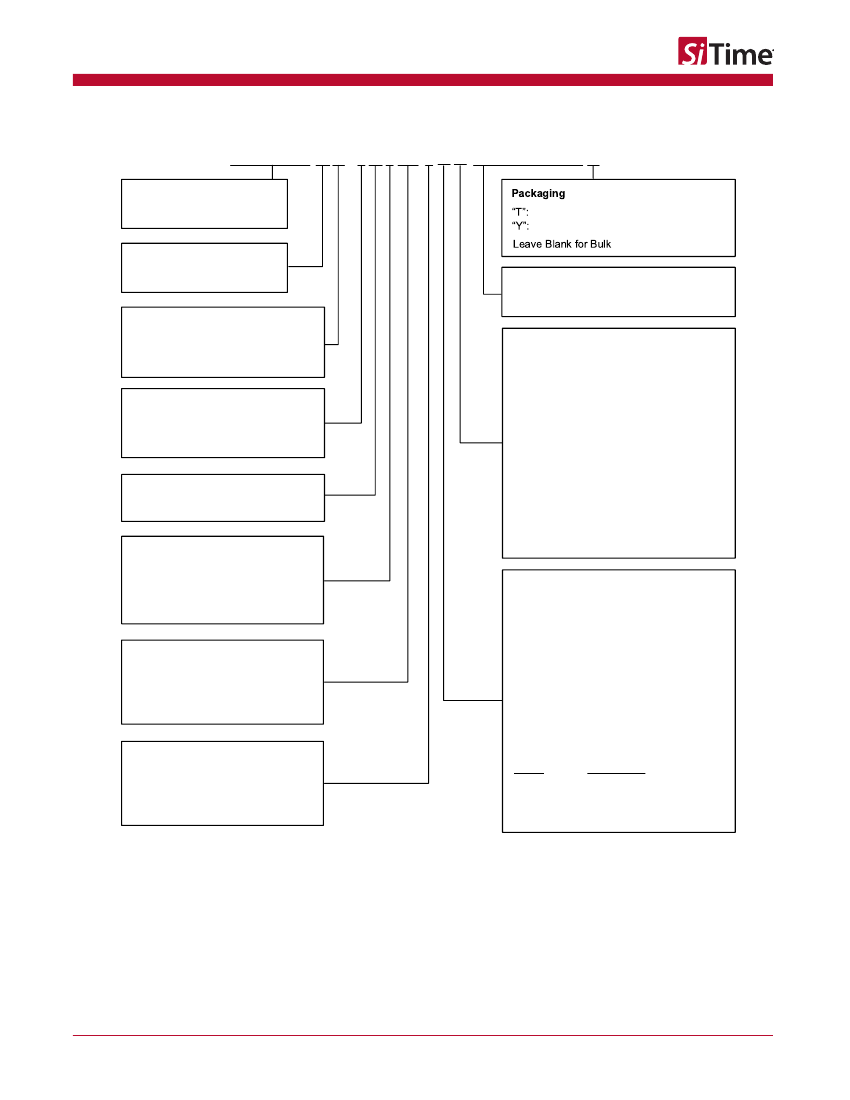
Ordering Information .................................................................................................................................................................... 2
User Programming Interface ..................................................................................................................................... 18
Start-up output frequency and signaling types ........................................................................................................... 18
Any-frequency function ............................................................................................................................................. 19
C/SPI Control Registers...................................................................................................................................................... 28
9 I
Register Address: 0x00. DCO Frequency Control Least Significant Word (LSW) .................................................... 28
Register Address: 0x01. OE Control, DCO Frequency Control Most Significant Word (MSW) ................................. 29
Register Address: 0x02. DCO PULL RANGE CONTROL ........................................................................................ 29
Register Address: 0x03. Frac-N PLL Feedback Divider Integer Value and Frac-N PLL Feedback Divider Fraction
Value MSW ............................................................................................................................................................... 30
Register Address: 0x05. Forward Divider, Driver Control ......................................................................................... 30
Register Address: 0x06. Driver Divider, Driver Control ............................................................................................. 31
2
C Operation ........................................................................................................................................................................ 32
10 I
I
2
C protocol ............................................................................................................................................................... 32
I
2
C Timing Specification ............................................................................................................................................ 35
I
2
C Device Address Modes ....................................................................................................................................... 36
Dimensions and Patterns ........................................................................................................................................................... 43
Additional Information ................................................................................................................................................................ 44
Revision History ......................................................................................................................................................................... 45
Rev 1.01
Page 3 of 45
www.sitime.com
SiT3521
1 to 340 MHz Elite Platform I2C/SPI Programmable Oscillator
1 Electrical Characteristics
All Min and Max limits in the Electrical Characteristics tables are specified over temperature and rated operating voltage with
standard output terminations shown in the termination diagrams. Typical values are at 25°C and nominal supply voltage.
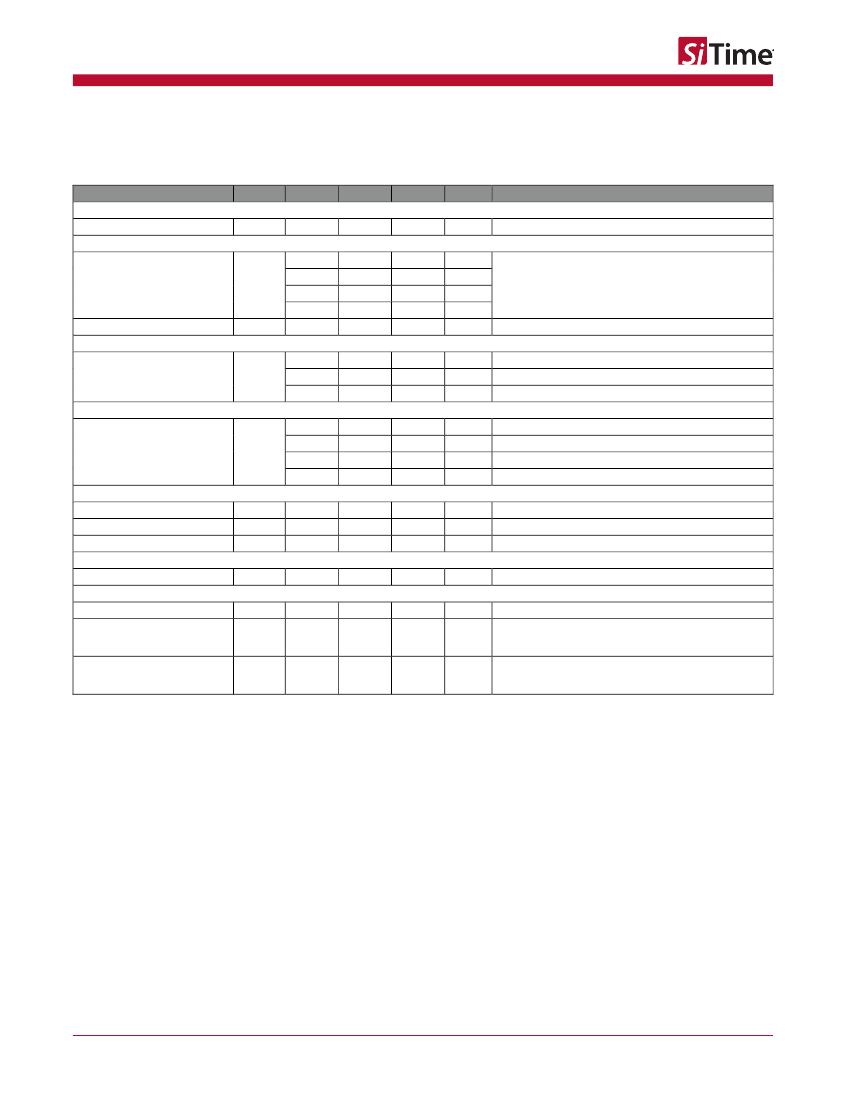
Table 1. Electrical Characteristics – Common to LVPECL, LVDS and HCSL
Parameter
Output Frequency Range
Symbol
f
Min.
1
Typ.
–
–
–
–
–
±1
–
–
–
Max.
340
Unit
MHz
Condition
Factory or user programmable, accurate to 6 decimal places
Frequency Range
Frequency Stability
Frequency Stability
F_stab
-10
-20
-25
-50
First Year Aging
F_1y
–
+10
+20
+25
+50
–
ppm
ppm
ppm
ppm
ppm
°C
°C
°C
1
st
-year aging at 25°C
Inclusive of initial tolerance, operating temperature, rated
power supply voltage and load variations.
Temperature Range
Operating Temperature Range
T_use
-20
-40
-40
+70
+85
+105
Supply Voltage
Supply Voltage
Vdd
2.97
2.7
2.52
2.25
3.3
3.0
2.8
2.5
–
–
100
–
–
–
3.63
3.3
3.08
2.75
–
30%
–
V
V
V
V
Extended Commercial
Industrial
Extended Industrial. Available only for I
2
C operation, not SPI.
Input Characteristics – OE Pin
Input Voltage High
Input Voltage Low
Input Pull-up Impedance
VIH
VIL
Z_in
70%
–
–
Vdd
Vdd
kΩ
OE pin
OE pin
OE pin, logic high or logic low
Output Characteristics
Duty Cycle
DC
45
–
–
55
%
Startup and Output Enable/Disable Timing
Start-up Time
Output Enable/Disable Time –
Hardware control via OE pin
Output Enable/Disable Time –
Software control via I
2
C/SPI
T_start
T_oe_hw
3.0
3.8
ms
µs
Measured from the time Vdd reaches its rated minimum value
Measured from the time OE pin reaches rated VIH and VIL to
the time clock pins reach 90% of swing and high-Z.
See
Figure 9
and
Figure 10
Measured from the time the last byte of command is
transmitted via I
2
C/SPI (reg1) to the time clock pins reach 90%
of swing and high-Z. See
Figure 30
and
Figure 31
T_oe_sw
–
–
6.5
µs
Rev 1.01
Page 4 of 45
www.sitime.com
SiT3521
1 to 340 MHz Elite Platform I2C/SPI Programmable Oscillator
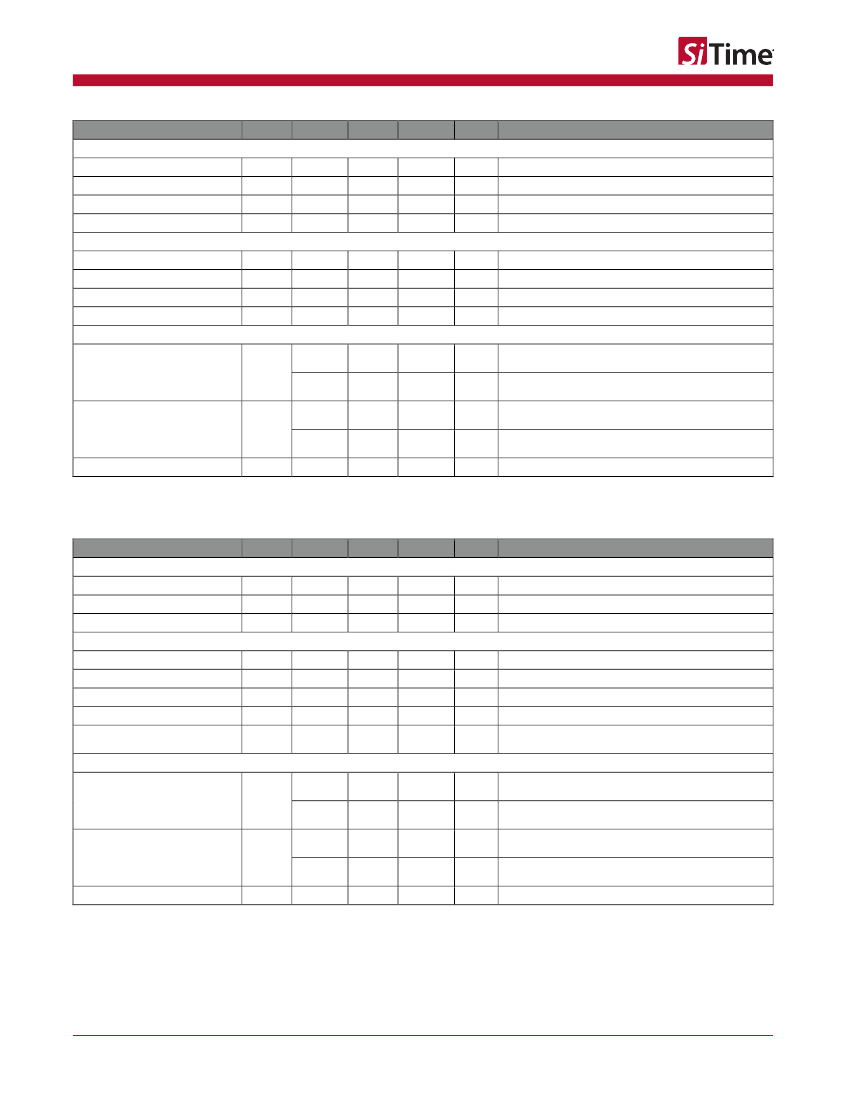
Table 2. Electrical Characteristics – LVPECL Specific
Parameter
Symbol
Min.
Typ.
Max.
Unit
Condition
Current Consumption
Current Consumption
OE Disable Supply Current
Output Disable Leakage Current
Maximum Output Current
Idd
I_OE
I_leak
I_driver
–
–
–
–
–
–
0.15
–
89
58
–
32
mA
mA
A
mA
Excluding Load Termination Current, Vdd = 3.3 V or 2.5 V
OE = Low
OE = Low
Maximum average current drawn from OUT+ or OUT-
Output Characteristics
Output High Voltage
Output Low Voltage
Output Differential Voltage Swing
Rise/Fall Time
VOH
VOL
V_Swing
Tr, Tf
Vdd - 1.1V
Vdd - 1.9V
1.2
–
–
–
1.6
225
Vdd - 0.7V
Vdd - 1.5V
2.0
290
Jitter
RMS Phase Jitter (random) –
DCO Mode Only
T_phj
–
–
RMS Phase Jitter (random) –
Any-frequency Mode Only
T_phj
–
–
RMS Period Jitter
[3]
Note:
3. Measured according to JESD65B.
T_jitt
–
0.225
0.1
0.225
0.11
1
0.340
0.14
0.340
0.15
1.6
ps
ps
ps
ps
ps
f = 156.25 MHz, Integration bandwidth = 12 kHz to 20 MHz,
all Vdd levels
f = 156.25, IEEE802.3-2005 10 GbE jitter mask integration
bandwidth = 1.875 MHz to 20 MHz, all Vdd levels
f = 156.25 MHz, Integration bandwidth = 12 kHz to 20 MHz,
all Vdd levels
f = 156.25, IEEE802.3-2005 10 GbE jitter mask integration
bandwidth = 1.875 MHz to 20 MHz, all Vdd levels
f = 100, 156.25 or 212.5 MHz, Vdd = 3.3 V or 2.5 V
V
V
V
ps
See
Figure 5
See
Figure 5
See
Figure 6
20% to 80%, see
Figure 6
Table 3. Electrical Characteristics – LVDS Specific
Parameter
Symbol
Min.
Typ.
Max.
Unit
Condition
Current Consumption
Current Consumption
OE Disable Supply Current
Output Disable Leakage Current
Idd
I_OE
I_leak
–
–
–
–
–
0.15
80
61
–
mA
mA
A
Excluding Load Termination Current, Vdd = 3.3 V or 2.5 V
OE = Low
OE = Low
Output Characteristics
Differential Output Voltage
Delta VOD
Offset Voltage
Delta VOS
Rise/Fall Time
VOD
ΔVOD
VOS
ΔVOS
Tr, Tf
250
–
1.125
–
–
–
–
–
–
400
455
50
1.375
50
470
Jitter
RMS Phase Jitter (random) –
DCO Mode Only
T_phj
–
–
RMS Phase Jitter (random) –
Any-frequency Mode Only
T_phj
–
–
RMS Period Jitter
[4]
Note:
4. Measured according to JESD65B.
T_jitt
–
0.21
0.1
0.21
0.1
1
0.275
0.12
0.367
0.12
1.6
ps
ps
ps
ps
ps
f = 156.25 MHz, Integration bandwidth = 12 kHz to 20 MHz,
all Vdd levels
f = 156.25, IEEE802.3-2005 10 GbE jitter mask integration
bandwidth = 1.875 MHz to 20 MHz, all Vdd levels
f = 156.25 MHz, Integration bandwidth = 12 kHz to 20 MHz,
all Vdd levels
f = 156.25, IEEE802.3-2005 10 GbE jitter mask integration
bandwidth = 1.875 MHz to 20 MHz, all Vdd levels
f = 100, 156.25 or 212.5 MHz, Vdd = 3.3 V or 2.5 V
mV
mV
V
mV
ps
f = 156.25MHz See
Figure 7
See
Figure 7
See
Figure 7
See
Figure 7
Measured with 2 pF capacitive loading to GND, 20% to 80%,
Because I haven't been exposed to MCU applications for a long time, I want to see if there are any examples in this area that I can refer to. Thank you! !...
This is: On PC, I run IAR and ADS project files, and there are no problems. I use my own debugging board + H-JTAG, and they are all normal. When I switch to laptop, when using H-JTAG, the hardware det...
1. Introduction
Originally, I wanted to design a portable device for people entering tunnels or mines to wear. Since there are no NB or 4G signals in tunnels or mines, signals can only be transmitted ...
PowerWorldonsemi and Avnet IoT Innovation Design Competition
Using Ti SensorTag and Android phones, the patient's/elder's physical condition can be continuously collected in real time, such as body temperature, pulse, heart rate, skin resistance and other infor...
I would like to ask, can the SPI interrupt and DMA interrupt exist at the same time in a driver program? Or can only one interrupt be used? When the driver uses the DMA interrupt, does the SPI interru...
Magnetic resonance imaging (MRI) systems can take high-resolution cross-sectional perspective images of the human body, providing very useful information for medical diagnosis. The radio frequency pro...[Details]
Human body information monitoring is an emerging field. People envision developing wireless electroencephalogram (EEG) monitoring equipment to diagnose epilepsy patients. Wearable wireless EEG can ...[Details]
Emulation Features
Emulation provides a set of standard operations for integration and debugging. Some of its main features are as follows:
BreakpointsA
common feature of emulatio...[Details]
Portable devices with audio functions (such as portable media players and multimedia mobile phones) require long audio playback time, that is, long battery life. To extend the battery life of port...[Details]
Many MEMS devices, such as accelerometers and mechanical resonance devices, require a vacuum environment to realize their designed functions. However, verifying whether the package cavity has reach...[Details]
Abstract:
This paper
introduces a data acquisition system based on USB and DSP, which takes advantage of the high-speed transmission characteristics of USB2.0. The overall structure of the ...[Details]
Most
embedded
systems are powered from a 48V backplane. This voltage is typically stepped down to a lower intermediate bus voltage of 24V, 12V, or 5V to power the circuit board racks withi...[Details]
1. Introduction
Rolling bearings are the most widely used general mechanical components in various rotating machines. Whether their operating status is normal often directly affects the perfo...[Details]
Introduction
As a kind of biometric identification, fingerprint recognition has incomparable advantages in identity recognition over other means: human fingerprints are unique and stable; wit...[Details]
Abstract: This paper introduces the controller, interface, display principle and driving method of the handheld computer LCD display based on the SA1110 microprocessor. Combined with the HPC projec...[Details]
1 Introduction
Bandgap reference sources are widely used in various integrated circuits. With the increasing development of modern integrated circuits, bandgap reference sources play ...[Details]
In today's era of pursuit of enjoyment, car drivers have higher and higher requirements for car audio. BMW and Mercedes-Benz, the world's automotive trend leaders, have recently put forward new requir...[Details]
Today, many wireless devices combine GSM, WCDMA, Bluetooth, WLAN, GPS and FM technologies and support the high data rates required for mobile Internet. Moreover, as customers demand mobile wireless...[Details]
Today, the value of electronic components in cars accounts for 15-20% of the total vehicle. In the future, as more safety electronic devices, fuel consumption and fuel emission control electronic s...[Details]
Analysis of automotive sensor testing requirements
At present, the control system used in automobiles can be functionally divided into three parts: sensor unit, control unit and execution ...[Details]

 Microcontroller MCU
 京公网安备 11010802033920号
 EEWORLD