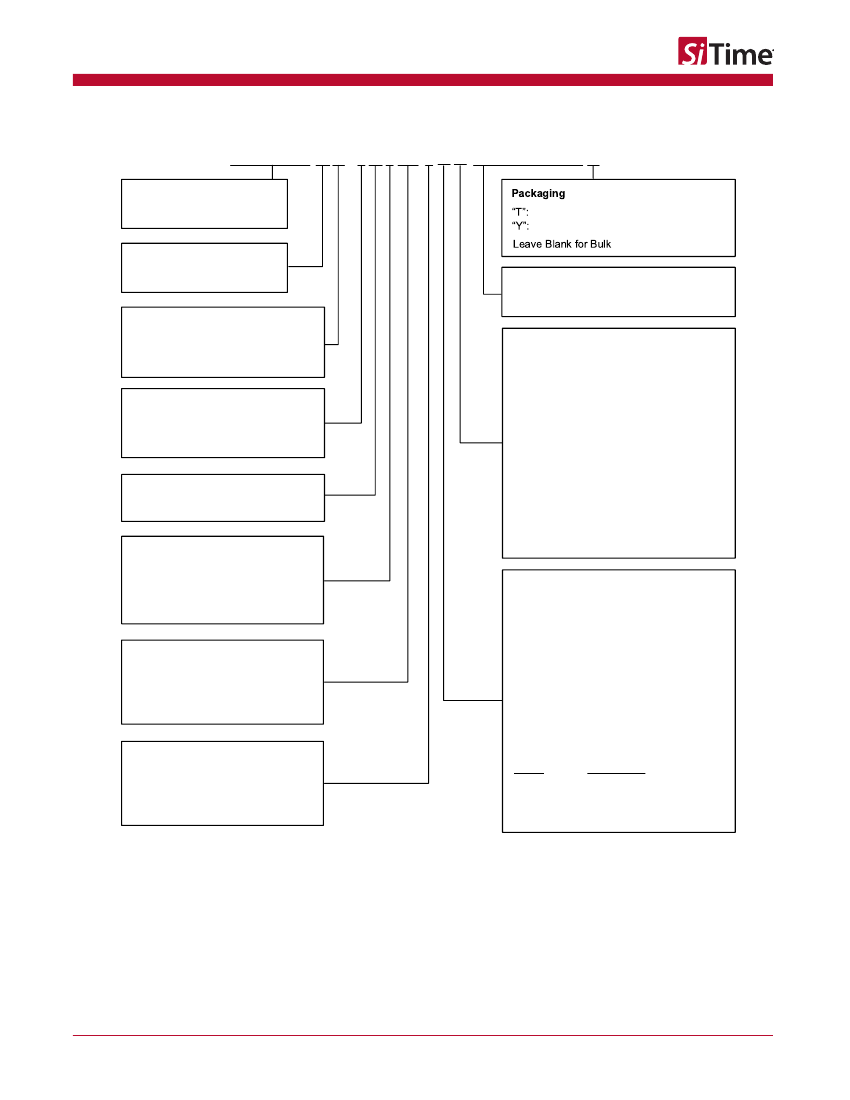
Ordering Information .................................................................................................................................................................... 2
User Programming Interface ..................................................................................................................................... 18
Start-up output frequency and signaling types ........................................................................................................... 18
Any-frequency function ............................................................................................................................................. 19
C/SPI Control Registers...................................................................................................................................................... 28
9 I
Register Address: 0x00. DCO Frequency Control Least Significant Word (LSW) .................................................... 28
Register Address: 0x01. OE Control, DCO Frequency Control Most Significant Word (MSW) ................................. 29
Register Address: 0x02. DCO PULL RANGE CONTROL ........................................................................................ 29
Register Address: 0x03. Frac-N PLL Feedback Divider Integer Value and Frac-N PLL Feedback Divider Fraction
Value MSW ............................................................................................................................................................... 30
Register Address: 0x05. Forward Divider, Driver Control ......................................................................................... 30
Register Address: 0x06. Driver Divider, Driver Control ............................................................................................. 31
2
C Operation ........................................................................................................................................................................ 32
10 I
I
2
C protocol ............................................................................................................................................................... 32
I
2
C Timing Specification ............................................................................................................................................ 35
I
2
C Device Address Modes ....................................................................................................................................... 36
Dimensions and Patterns ........................................................................................................................................................... 43
Additional Information ................................................................................................................................................................ 44
Revision History ......................................................................................................................................................................... 45
Rev 1.01
Page 3 of 45
www.sitime.com
SiT3521
1 to 340 MHz Elite Platform I2C/SPI Programmable Oscillator
1 Electrical Characteristics
All Min and Max limits in the Electrical Characteristics tables are specified over temperature and rated operating voltage with
standard output terminations shown in the termination diagrams. Typical values are at 25°C and nominal supply voltage.
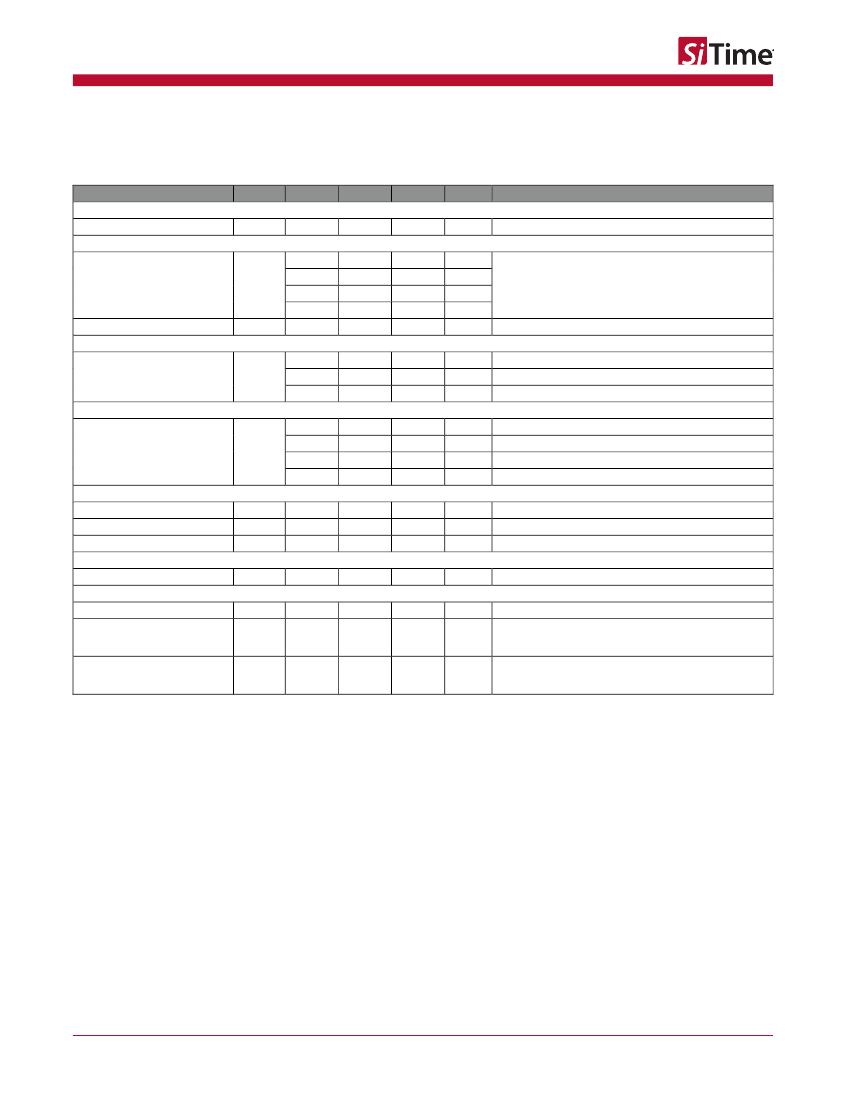
Table 1. Electrical Characteristics – Common to LVPECL, LVDS and HCSL
Parameter
Output Frequency Range
Symbol
f
Min.
1
Typ.
–
–
–
–
–
±1
–
–
–
Max.
340
Unit
MHz
Condition
Factory or user programmable, accurate to 6 decimal places
Frequency Range
Frequency Stability
Frequency Stability
F_stab
-10
-20
-25
-50
First Year Aging
F_1y
–
+10
+20
+25
+50
–
ppm
ppm
ppm
ppm
ppm
°C
°C
°C
1
st
-year aging at 25°C
Inclusive of initial tolerance, operating temperature, rated
power supply voltage and load variations.
Temperature Range
Operating Temperature Range
T_use
-20
-40
-40
+70
+85
+105
Supply Voltage
Supply Voltage
Vdd
2.97
2.7
2.52
2.25
3.3
3.0
2.8
2.5
–
–
100
–
–
–
3.63
3.3
3.08
2.75
–
30%
–
V
V
V
V
Extended Commercial
Industrial
Extended Industrial. Available only for I
2
C operation, not SPI.
Input Characteristics – OE Pin
Input Voltage High
Input Voltage Low
Input Pull-up Impedance
VIH
VIL
Z_in
70%
–
–
Vdd
Vdd
kΩ
OE pin
OE pin
OE pin, logic high or logic low
Output Characteristics
Duty Cycle
DC
45
–
–
55
%
Startup and Output Enable/Disable Timing
Start-up Time
Output Enable/Disable Time –
Hardware control via OE pin
Output Enable/Disable Time –
Software control via I
2
C/SPI
T_start
T_oe_hw
3.0
3.8
ms
µs
Measured from the time Vdd reaches its rated minimum value
Measured from the time OE pin reaches rated VIH and VIL to
the time clock pins reach 90% of swing and high-Z.
See
Figure 9
and
Figure 10
Measured from the time the last byte of command is
transmitted via I
2
C/SPI (reg1) to the time clock pins reach 90%
of swing and high-Z. See
Figure 30
and
Figure 31
T_oe_sw
–
–
6.5
µs
Rev 1.01
Page 4 of 45
www.sitime.com
SiT3521
1 to 340 MHz Elite Platform I2C/SPI Programmable Oscillator
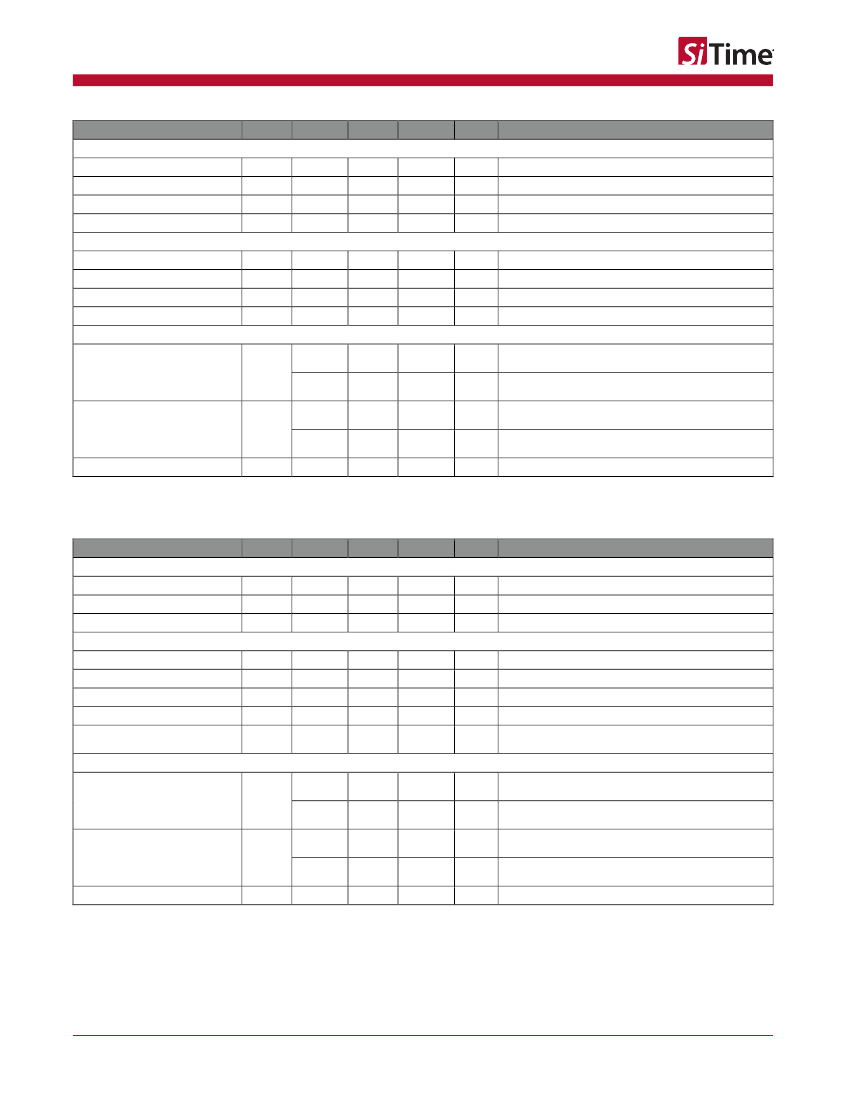
Table 2. Electrical Characteristics – LVPECL Specific
Parameter
Symbol
Min.
Typ.
Max.
Unit
Condition
Current Consumption
Current Consumption
OE Disable Supply Current
Output Disable Leakage Current
Maximum Output Current
Idd
I_OE
I_leak
I_driver
–
–
–
–
–
–
0.15
–
89
58
–
32
mA
mA
A
mA
Excluding Load Termination Current, Vdd = 3.3 V or 2.5 V
OE = Low
OE = Low
Maximum average current drawn from OUT+ or OUT-
Output Characteristics
Output High Voltage
Output Low Voltage
Output Differential Voltage Swing
Rise/Fall Time
VOH
VOL
V_Swing
Tr, Tf
Vdd - 1.1V
Vdd - 1.9V
1.2
–
–
–
1.6
225
Vdd - 0.7V
Vdd - 1.5V
2.0
290
Jitter
RMS Phase Jitter (random) –
DCO Mode Only
T_phj
–
–
RMS Phase Jitter (random) –
Any-frequency Mode Only
T_phj
–
–
RMS Period Jitter
[3]
Note:
3. Measured according to JESD65B.
T_jitt
–
0.225
0.1
0.225
0.11
1
0.340
0.14
0.340
0.15
1.6
ps
ps
ps
ps
ps
f = 156.25 MHz, Integration bandwidth = 12 kHz to 20 MHz,
all Vdd levels
f = 156.25, IEEE802.3-2005 10 GbE jitter mask integration
bandwidth = 1.875 MHz to 20 MHz, all Vdd levels
f = 156.25 MHz, Integration bandwidth = 12 kHz to 20 MHz,
all Vdd levels
f = 156.25, IEEE802.3-2005 10 GbE jitter mask integration
bandwidth = 1.875 MHz to 20 MHz, all Vdd levels
f = 100, 156.25 or 212.5 MHz, Vdd = 3.3 V or 2.5 V
V
V
V
ps
See
Figure 5
See
Figure 5
See
Figure 6
20% to 80%, see
Figure 6
Table 3. Electrical Characteristics – LVDS Specific
Parameter
Symbol
Min.
Typ.
Max.
Unit
Condition
Current Consumption
Current Consumption
OE Disable Supply Current
Output Disable Leakage Current
Idd
I_OE
I_leak
–
–
–
–
–
0.15
80
61
–
mA
mA
A
Excluding Load Termination Current, Vdd = 3.3 V or 2.5 V
OE = Low
OE = Low
Output Characteristics
Differential Output Voltage
Delta VOD
Offset Voltage
Delta VOS
Rise/Fall Time
VOD
ΔVOD
VOS
ΔVOS
Tr, Tf
250
–
1.125
–
–
–
–
–
–
400
455
50
1.375
50
470
Jitter
RMS Phase Jitter (random) –
DCO Mode Only
T_phj
–
–
RMS Phase Jitter (random) –
Any-frequency Mode Only
T_phj
–
–
RMS Period Jitter
[4]
Note:
4. Measured according to JESD65B.
T_jitt
–
0.21
0.1
0.21
0.1
1
0.275
0.12
0.367
0.12
1.6
ps
ps
ps
ps
ps
f = 156.25 MHz, Integration bandwidth = 12 kHz to 20 MHz,
all Vdd levels
f = 156.25, IEEE802.3-2005 10 GbE jitter mask integration
bandwidth = 1.875 MHz to 20 MHz, all Vdd levels
f = 156.25 MHz, Integration bandwidth = 12 kHz to 20 MHz,
all Vdd levels
f = 156.25, IEEE802.3-2005 10 GbE jitter mask integration
bandwidth = 1.875 MHz to 20 MHz, all Vdd levels
f = 100, 156.25 or 212.5 MHz, Vdd = 3.3 V or 2.5 V
mV
mV
V
mV
ps
f = 156.25MHz See
Figure 7
See
Figure 7
See
Figure 7
See
Figure 7
Measured with 2 pF capacitive loading to GND, 20% to 80%,
Hello everyone:I am now working on the speed regulation of stepper motors for my graduation project. I use ULN2003 as the drive motor, and the motor is BYGH023. The functions to be realized are that t...
In the process of embedded development, sometimes in order to debug the code, we need to set a separate optimization level for a single function or multiple functions. The following takes RISC-V MCU I...
China has become the world's manufacturing center. After the city entered the "post-industrial" stage, the manufacturing industry's dependence on logistics services has become more prominent. The logi...
I adjusted the tmp123 temperature sensor some time ago. I've been busy recently, please forgive me. I just went to Taobao and bought a heartbeat sensor for Arduino and a cc2540 Bluetooth module. I'm w...
[b]Acknowledgements: [/b] I would like to dedicate this book to my girlfriend: [i]Tangxuan[/i], who gave me great passion and motivation to complete this book. Without her silent care and support, per...
[align=left] In the field of mechanical welding in my country, due to the continuous changes in the materials and forms of the welded parts and the welded parts, the traditional water welding technolo...
1 Introduction
The high temperature tester is mainly used for temperature tracking measurement and data acquisition during the heating process. By systematically analyzing the test data, the...[Details]
Power management solutions for today's portable application processors are becoming increasingly integrated. Total power consumption, standby and sleep current consumption affect battery size, bill...[Details]
5. Identifiers and keywords of C language
A complete PIC microcontroller C language program usually consists of six parts: include files (i.e. header files 1, variable definitions, variable de...[Details]
AD8205 is
a single-supply high-performance differential
amplifier
launched by
Analog
Devices of the United States
. The typical single-supply voltage is 5V, and its common-mode volta...[Details]
Product series: PB-B-RS232/485 interface (hereinafter sometimes referred to as "interface") is a product in the PROFIBUS bus bridge series.
The main purpose of the bridge series ...[Details]
The automotive lighting and signal control system is responsible for controlling the vehicle's lighting, signal lights, electric horns, reversing and brake buzzers. Traditional automotive lighting...[Details]
The typical fault troubleshooting listed below is for reference of maintenance personnel.
When the computer is turned on, the indicator light is off and there is no screen display
Mainte...[Details]
Abstract: In recent years, with the establishment and grid-connected power generation of a large number of solar photovoltaic power stations at home and abroad, photovoltaic grid-connected inverter...[Details]
Today, with energy becoming increasingly scarce, the utilization of natural energy has become the focus of people's attention. Among various natural energies, the endless solar energy is highly fav...[Details]
To understand how and why OLED power supply affects display image quality, you must first understand OLED display technology and power supply requirements. This article will explain the latest OLED...[Details]
introduction
Incandescent bulbs can emit a variety of light, but in specific applications, only green, red, and yellow light are usually needed - such as traffic lights. If an incand...[Details]
Don’t just look at the power when choosing a power supply
We know that a power supply with a low rated power can hardly meet the power supply needs of the system, which may cause frequent free...[Details]
At present,
the control system used in
automobiles
can be divided into three parts from the functional point of view:
sensor
unit, control unit and execution unit. Among them,
th...[Details]
1 Introduction
Automatic Test
System The ATS (Automatic Test System) integrates all the stimulus and measurement equipment required for testing.
The computer
efficiently comp...[Details]
The number of timers/counters and interrupt sources directly determines the performance of the microcontroller. The MCS-51 microcontroller has two programmable 16-bit timers/counters and five inter...[Details]

 MCU
MCU
 京公网安备 11010802033920号
 EEWORLD