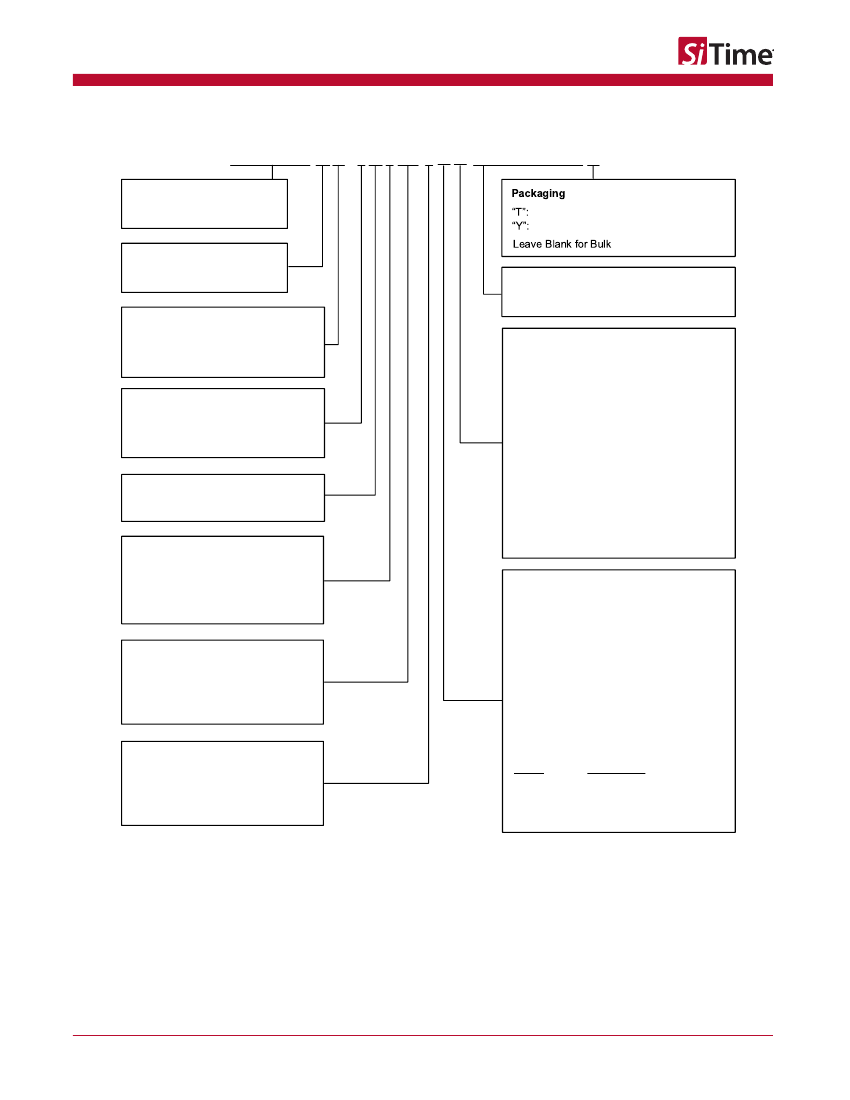
Ordering Information .................................................................................................................................................................... 2
User Programming Interface ..................................................................................................................................... 18
Start-up output frequency and signaling types ........................................................................................................... 18
Any-frequency function ............................................................................................................................................. 19
C/SPI Control Registers...................................................................................................................................................... 28
9 I
Register Address: 0x00. DCO Frequency Control Least Significant Word (LSW) .................................................... 28
Register Address: 0x01. OE Control, DCO Frequency Control Most Significant Word (MSW) ................................. 29
Register Address: 0x02. DCO PULL RANGE CONTROL ........................................................................................ 29
Register Address: 0x03. Frac-N PLL Feedback Divider Integer Value and Frac-N PLL Feedback Divider Fraction
Value MSW ............................................................................................................................................................... 30
Register Address: 0x05. Forward Divider, Driver Control ......................................................................................... 30
Register Address: 0x06. Driver Divider, Driver Control ............................................................................................. 31
2
C Operation ........................................................................................................................................................................ 32
10 I
I
2
C protocol ............................................................................................................................................................... 32
I
2
C Timing Specification ............................................................................................................................................ 35
I
2
C Device Address Modes ....................................................................................................................................... 36
Dimensions and Patterns ........................................................................................................................................................... 43
Additional Information ................................................................................................................................................................ 44
Revision History ......................................................................................................................................................................... 45
Rev 1.01
Page 3 of 45
www.sitime.com
SiT3521
1 to 340 MHz Elite Platform I2C/SPI Programmable Oscillator
1 Electrical Characteristics
All Min and Max limits in the Electrical Characteristics tables are specified over temperature and rated operating voltage with
standard output terminations shown in the termination diagrams. Typical values are at 25°C and nominal supply voltage.
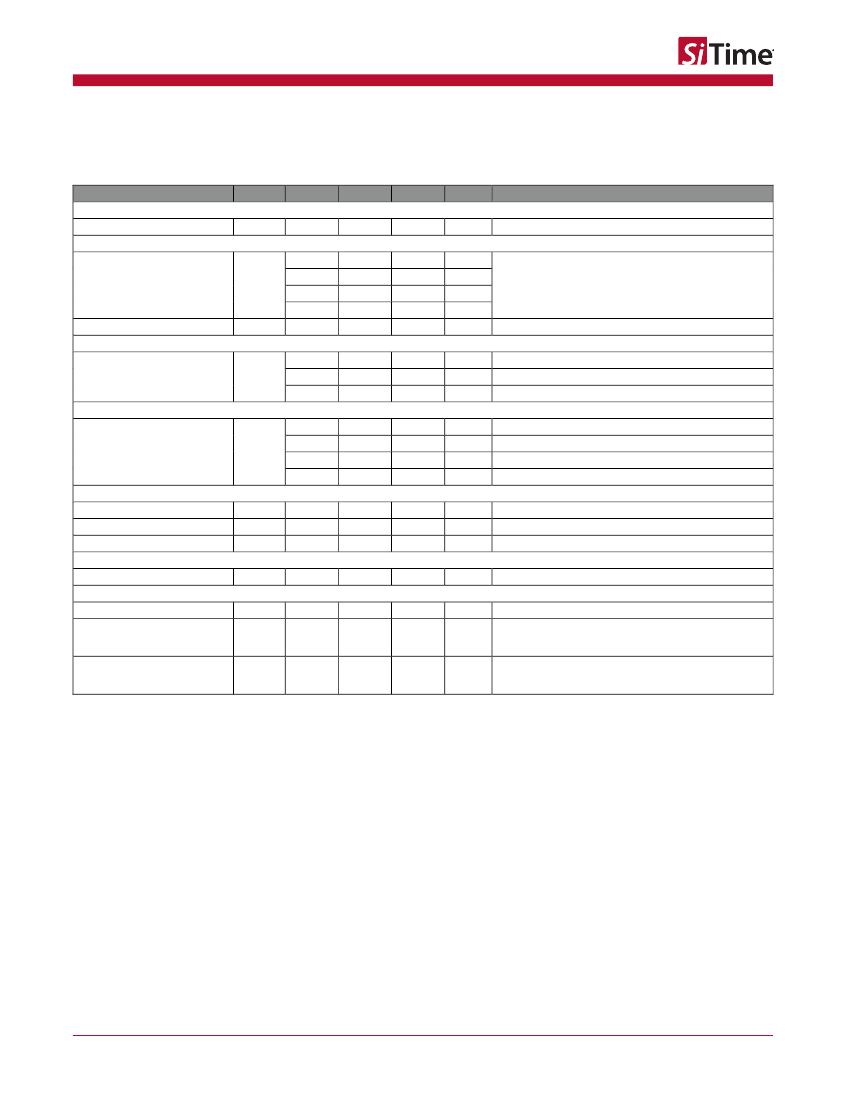
Table 1. Electrical Characteristics – Common to LVPECL, LVDS and HCSL
Parameter
Output Frequency Range
Symbol
f
Min.
1
Typ.
–
–
–
–
–
±1
–
–
–
Max.
340
Unit
MHz
Condition
Factory or user programmable, accurate to 6 decimal places
Frequency Range
Frequency Stability
Frequency Stability
F_stab
-10
-20
-25
-50
First Year Aging
F_1y
–
+10
+20
+25
+50
–
ppm
ppm
ppm
ppm
ppm
°C
°C
°C
1
st
-year aging at 25°C
Inclusive of initial tolerance, operating temperature, rated
power supply voltage and load variations.
Temperature Range
Operating Temperature Range
T_use
-20
-40
-40
+70
+85
+105
Supply Voltage
Supply Voltage
Vdd
2.97
2.7
2.52
2.25
3.3
3.0
2.8
2.5
–
–
100
–
–
–
3.63
3.3
3.08
2.75
–
30%
–
V
V
V
V
Extended Commercial
Industrial
Extended Industrial. Available only for I
2
C operation, not SPI.
Input Characteristics – OE Pin
Input Voltage High
Input Voltage Low
Input Pull-up Impedance
VIH
VIL
Z_in
70%
–
–
Vdd
Vdd
kΩ
OE pin
OE pin
OE pin, logic high or logic low
Output Characteristics
Duty Cycle
DC
45
–
–
55
%
Startup and Output Enable/Disable Timing
Start-up Time
Output Enable/Disable Time –
Hardware control via OE pin
Output Enable/Disable Time –
Software control via I
2
C/SPI
T_start
T_oe_hw
3.0
3.8
ms
µs
Measured from the time Vdd reaches its rated minimum value
Measured from the time OE pin reaches rated VIH and VIL to
the time clock pins reach 90% of swing and high-Z.
See
Figure 9
and
Figure 10
Measured from the time the last byte of command is
transmitted via I
2
C/SPI (reg1) to the time clock pins reach 90%
of swing and high-Z. See
Figure 30
and
Figure 31
T_oe_sw
–
–
6.5
µs
Rev 1.01
Page 4 of 45
www.sitime.com
SiT3521
1 to 340 MHz Elite Platform I2C/SPI Programmable Oscillator
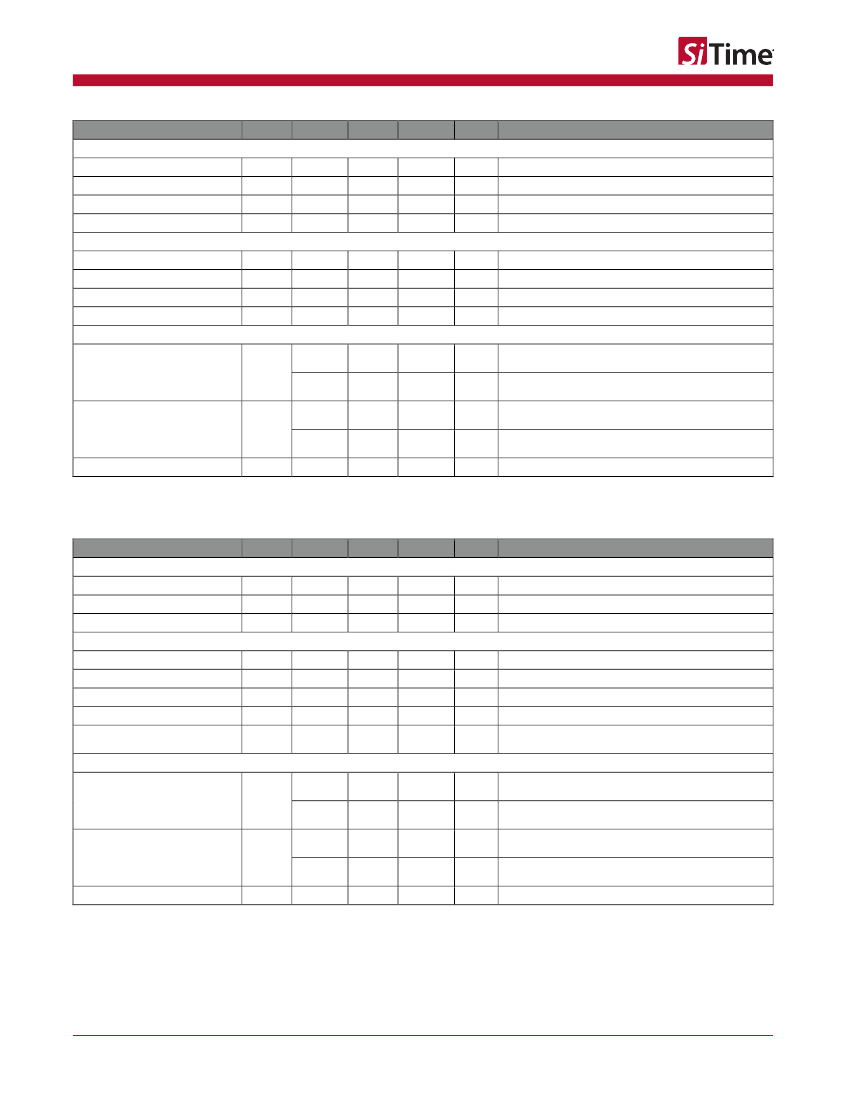
Table 2. Electrical Characteristics – LVPECL Specific
Parameter
Symbol
Min.
Typ.
Max.
Unit
Condition
Current Consumption
Current Consumption
OE Disable Supply Current
Output Disable Leakage Current
Maximum Output Current
Idd
I_OE
I_leak
I_driver
–
–
–
–
–
–
0.15
–
89
58
–
32
mA
mA
A
mA
Excluding Load Termination Current, Vdd = 3.3 V or 2.5 V
OE = Low
OE = Low
Maximum average current drawn from OUT+ or OUT-
Output Characteristics
Output High Voltage
Output Low Voltage
Output Differential Voltage Swing
Rise/Fall Time
VOH
VOL
V_Swing
Tr, Tf
Vdd - 1.1V
Vdd - 1.9V
1.2
–
–
–
1.6
225
Vdd - 0.7V
Vdd - 1.5V
2.0
290
Jitter
RMS Phase Jitter (random) –
DCO Mode Only
T_phj
–
–
RMS Phase Jitter (random) –
Any-frequency Mode Only
T_phj
–
–
RMS Period Jitter
[3]
Note:
3. Measured according to JESD65B.
T_jitt
–
0.225
0.1
0.225
0.11
1
0.340
0.14
0.340
0.15
1.6
ps
ps
ps
ps
ps
f = 156.25 MHz, Integration bandwidth = 12 kHz to 20 MHz,
all Vdd levels
f = 156.25, IEEE802.3-2005 10 GbE jitter mask integration
bandwidth = 1.875 MHz to 20 MHz, all Vdd levels
f = 156.25 MHz, Integration bandwidth = 12 kHz to 20 MHz,
all Vdd levels
f = 156.25, IEEE802.3-2005 10 GbE jitter mask integration
bandwidth = 1.875 MHz to 20 MHz, all Vdd levels
f = 100, 156.25 or 212.5 MHz, Vdd = 3.3 V or 2.5 V
V
V
V
ps
See
Figure 5
See
Figure 5
See
Figure 6
20% to 80%, see
Figure 6
Table 3. Electrical Characteristics – LVDS Specific
Parameter
Symbol
Min.
Typ.
Max.
Unit
Condition
Current Consumption
Current Consumption
OE Disable Supply Current
Output Disable Leakage Current
Idd
I_OE
I_leak
–
–
–
–
–
0.15
80
61
–
mA
mA
A
Excluding Load Termination Current, Vdd = 3.3 V or 2.5 V
OE = Low
OE = Low
Output Characteristics
Differential Output Voltage
Delta VOD
Offset Voltage
Delta VOS
Rise/Fall Time
VOD
ΔVOD
VOS
ΔVOS
Tr, Tf
250
–
1.125
–
–
–
–
–
–
400
455
50
1.375
50
470
Jitter
RMS Phase Jitter (random) –
DCO Mode Only
T_phj
–
–
RMS Phase Jitter (random) –
Any-frequency Mode Only
T_phj
–
–
RMS Period Jitter
[4]
Note:
4. Measured according to JESD65B.
T_jitt
–
0.21
0.1
0.21
0.1
1
0.275
0.12
0.367
0.12
1.6
ps
ps
ps
ps
ps
f = 156.25 MHz, Integration bandwidth = 12 kHz to 20 MHz,
all Vdd levels
f = 156.25, IEEE802.3-2005 10 GbE jitter mask integration
bandwidth = 1.875 MHz to 20 MHz, all Vdd levels
f = 156.25 MHz, Integration bandwidth = 12 kHz to 20 MHz,
all Vdd levels
f = 156.25, IEEE802.3-2005 10 GbE jitter mask integration
bandwidth = 1.875 MHz to 20 MHz, all Vdd levels
f = 100, 156.25 or 212.5 MHz, Vdd = 3.3 V or 2.5 V
mV
mV
V
mV
ps
f = 156.25MHz See
Figure 7
See
Figure 7
See
Figure 7
See
Figure 7
Measured with 2 pF capacitive loading to GND, 20% to 80%,
I wrote a driver that starts the timeout timer after receiving the first byte of the protocol, and resets the receiving buffer if the timeout expires. I don't know how to use the timer in the driver, ...
I want to use the 4 captures of F5529 for sound positioning, corresponding to P1.2--P1.5, but why is there no pin for P1.2-P1.5[img]C:\Users\king\Desktop[/img]...
[i=s] This post was last edited by Tech Hunter on 2016-6-16 18:17 [/i] [MsgOS] Post an operating system I wrote for cortex-m microcontrollers [url]https://bbs.eeworld.com.cn/forum.php?mod=viewthread&t...
As the title says, the project requires an encryption chip, but Microchip is currently in serious shortage.Are there any recommendations from domestic manufacturers for an asymmetric encryption soluti...
[font=微软雅黑][size=4]According to the votes of the Toshiba Electronics Show WeChat Live Group, today we will first expose the Toshiba Electronics Show IoT Zone display board. If you have any questions a...
The TIA Portal software's shift instructions shift the contents of an accumulator bit by bit to the left or right. The number of bits shifted is determined by N. A left shift of N bits multiplies t...[Details]
With the booming electronics industry, vision systems have become a leader in the electronics automation sector. However, the delicate nature of electronic products often affects product yields due...[Details]
Some time ago, I attended the 4th Energy Chemistry Forum of the Chinese Chemical Society and learned about high-energy-density and high-safety batteries. I would like to summarize and share this wi...[Details]
On August 24th, media outlets reported, citing sources, that NavInfo, a listed company on the A-share market, is nearing completion in its acquisition of the intelligent driving c...[Details]
On August 25th, Apple's expansion in India encountered new troubles. According to Bloomberg, Foxconn Technology Group has recalled approximately 300 Chinese engineers from India, further hindering ...[Details]
Amidst the wave of intelligent automotive transformation, advanced driver assistance is gradually emerging from cutting-edge technology into the mainstream, becoming a new frontier of industry comp...[Details]
Zos Automotive Research Institute released the "2025
Smart Cockpit
Tier 1 Research Report (Domestic Edition)."
This report analyzes the operating conditions of more than a dozen ...[Details]
Have you ever heard stories about "crazy appliances"? Think of microwaves that turn on automatically or ovens that preheat without any human input? With radios and electromagnetic interfaces ubiqui...[Details]
Electric vehicles are becoming increasingly popular, with increasingly longer ranges. There are two ways to charge electric vehicles: slow charging and fast charging. Which is the most suitable? Sl...[Details]
Permanent magnets are essential components in a wide range of household and industrial devices. They are particularly crucial in the renewable energy sector, including electric vehicle motors. Curr...[Details]
Charging is a familiar process for new energy vehicles, and as a source of battery energy, charging piles are crucial. New energy vehicle charging can be divided into fast charging and slow chargin...[Details]
Industrial computers with GPUs leverage powerful parallel processing to build deep learning models to analyze and respond to optical inputs. The systems develop an understanding of visual data to i...[Details]
During daily operation of an R-type power transformer, the voltage used varies as the equipment being used adjusts. This raises the question: can the transformer change voltage at this point? The a...[Details]
Batteries, at the core of new energy vehicles, are crucial to vehicle performance and range. Existing automotive batteries are categorized into lead-acid and lithium batteries. Currently, new energ...[Details]
Consumer demand for premium listening experiences has driven rapid evolution in the wireless headphone market in recent years. Hybrid designs, which utilize two drivers per earbud to enhance sound ...[Details]

 Embedded System
 京公网安备 11010802033920号
 EEWORLD