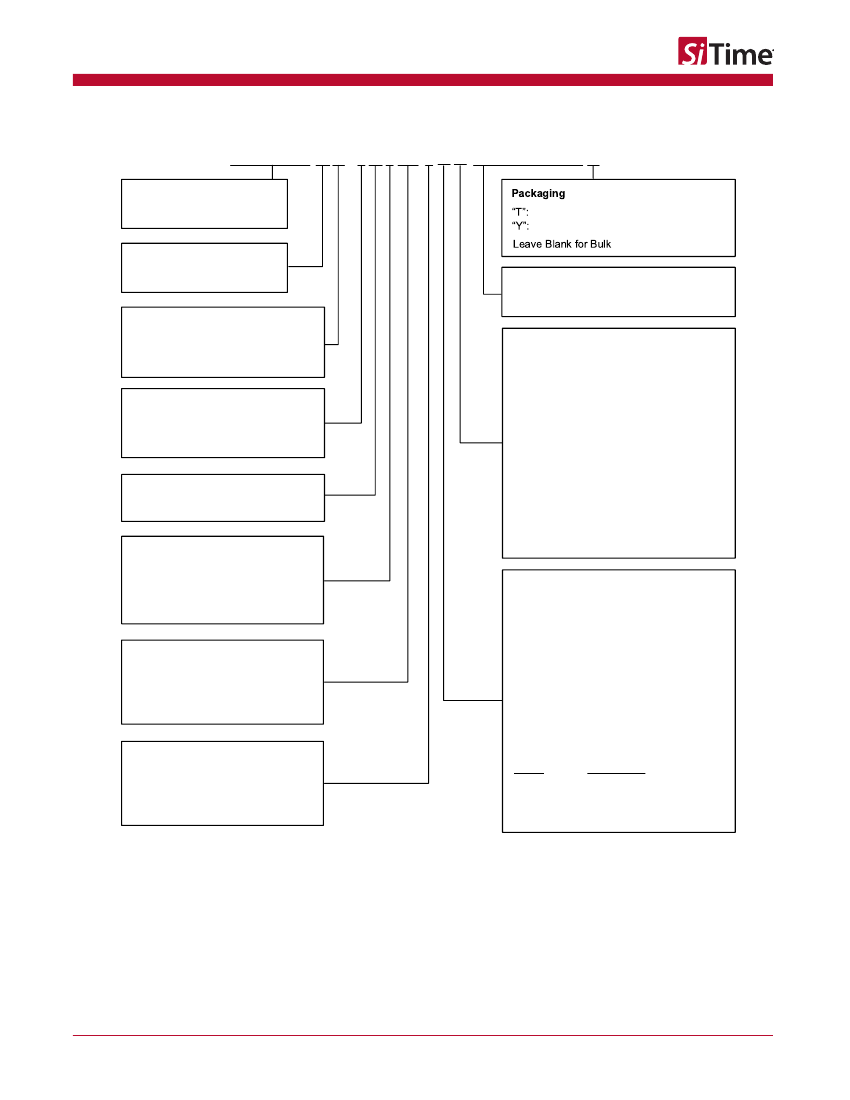
Ordering Information .................................................................................................................................................................... 2
User Programming Interface ..................................................................................................................................... 18
Start-up output frequency and signaling types ........................................................................................................... 18
Any-frequency function ............................................................................................................................................. 19
C/SPI Control Registers...................................................................................................................................................... 28
9 I
Register Address: 0x00. DCO Frequency Control Least Significant Word (LSW) .................................................... 28
Register Address: 0x01. OE Control, DCO Frequency Control Most Significant Word (MSW) ................................. 29
Register Address: 0x02. DCO PULL RANGE CONTROL ........................................................................................ 29
Register Address: 0x03. Frac-N PLL Feedback Divider Integer Value and Frac-N PLL Feedback Divider Fraction
Value MSW ............................................................................................................................................................... 30
Register Address: 0x05. Forward Divider, Driver Control ......................................................................................... 30
Register Address: 0x06. Driver Divider, Driver Control ............................................................................................. 31
2
C Operation ........................................................................................................................................................................ 32
10 I
I
2
C protocol ............................................................................................................................................................... 32
I
2
C Timing Specification ............................................................................................................................................ 35
I
2
C Device Address Modes ....................................................................................................................................... 36
Dimensions and Patterns ........................................................................................................................................................... 43
Additional Information ................................................................................................................................................................ 44
Revision History ......................................................................................................................................................................... 45
Rev 1.01
Page 3 of 45
www.sitime.com
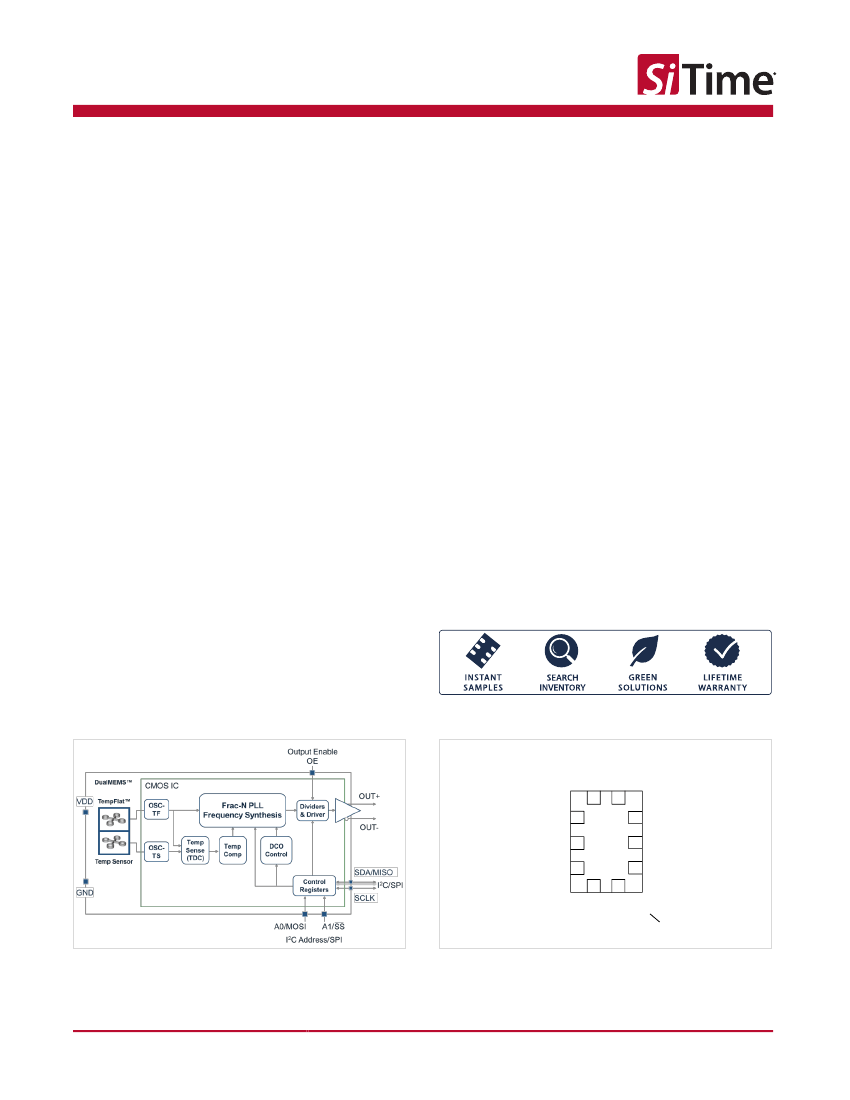
SiT3521
1 to 340 MHz Elite Platform I2C/SPI Programmable Oscillator
1 Electrical Characteristics
All Min and Max limits in the Electrical Characteristics tables are specified over temperature and rated operating voltage with
standard output terminations shown in the termination diagrams. Typical values are at 25°C and nominal supply voltage.
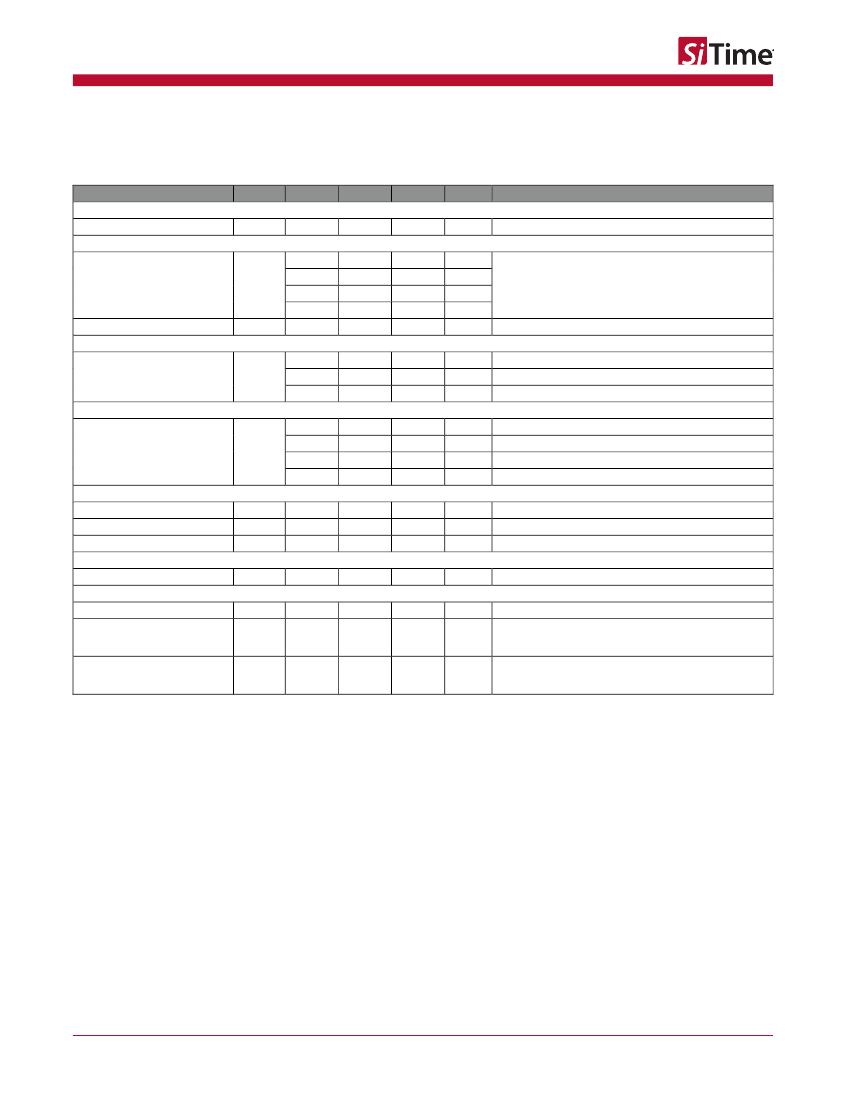
Table 1. Electrical Characteristics – Common to LVPECL, LVDS and HCSL
Parameter
Output Frequency Range
Symbol
f
Min.
1
Typ.
–
–
–
–
–
±1
–
–
–
Max.
340
Unit
MHz
Condition
Factory or user programmable, accurate to 6 decimal places
Frequency Range
Frequency Stability
Frequency Stability
F_stab
-10
-20
-25
-50
First Year Aging
F_1y
–
+10
+20
+25
+50
–
ppm
ppm
ppm
ppm
ppm
°C
°C
°C
1
st
-year aging at 25°C
Inclusive of initial tolerance, operating temperature, rated
power supply voltage and load variations.
Temperature Range
Operating Temperature Range
T_use
-20
-40
-40
+70
+85
+105
Supply Voltage
Supply Voltage
Vdd
2.97
2.7
2.52
2.25
3.3
3.0
2.8
2.5
–
–
100
–
–
–
3.63
3.3
3.08
2.75
–
30%
–
V
V
V
V
Extended Commercial
Industrial
Extended Industrial. Available only for I
2
C operation, not SPI.
Input Characteristics – OE Pin
Input Voltage High
Input Voltage Low
Input Pull-up Impedance
VIH
VIL
Z_in
70%
–
–
Vdd
Vdd
kΩ
OE pin
OE pin
OE pin, logic high or logic low
Output Characteristics
Duty Cycle
DC
45
–
–
55
%
Startup and Output Enable/Disable Timing
Start-up Time
Output Enable/Disable Time –
Hardware control via OE pin
Output Enable/Disable Time –
Software control via I
2
C/SPI
T_start
T_oe_hw
3.0
3.8
ms
µs
Measured from the time Vdd reaches its rated minimum value
Measured from the time OE pin reaches rated VIH and VIL to
the time clock pins reach 90% of swing and high-Z.
See
Figure 9
and
Figure 10
Measured from the time the last byte of command is
transmitted via I
2
C/SPI (reg1) to the time clock pins reach 90%
of swing and high-Z. See
Figure 30
and
Figure 31
T_oe_sw
–
–
6.5
µs
Rev 1.01
Page 4 of 45
www.sitime.com
SiT3521
1 to 340 MHz Elite Platform I2C/SPI Programmable Oscillator
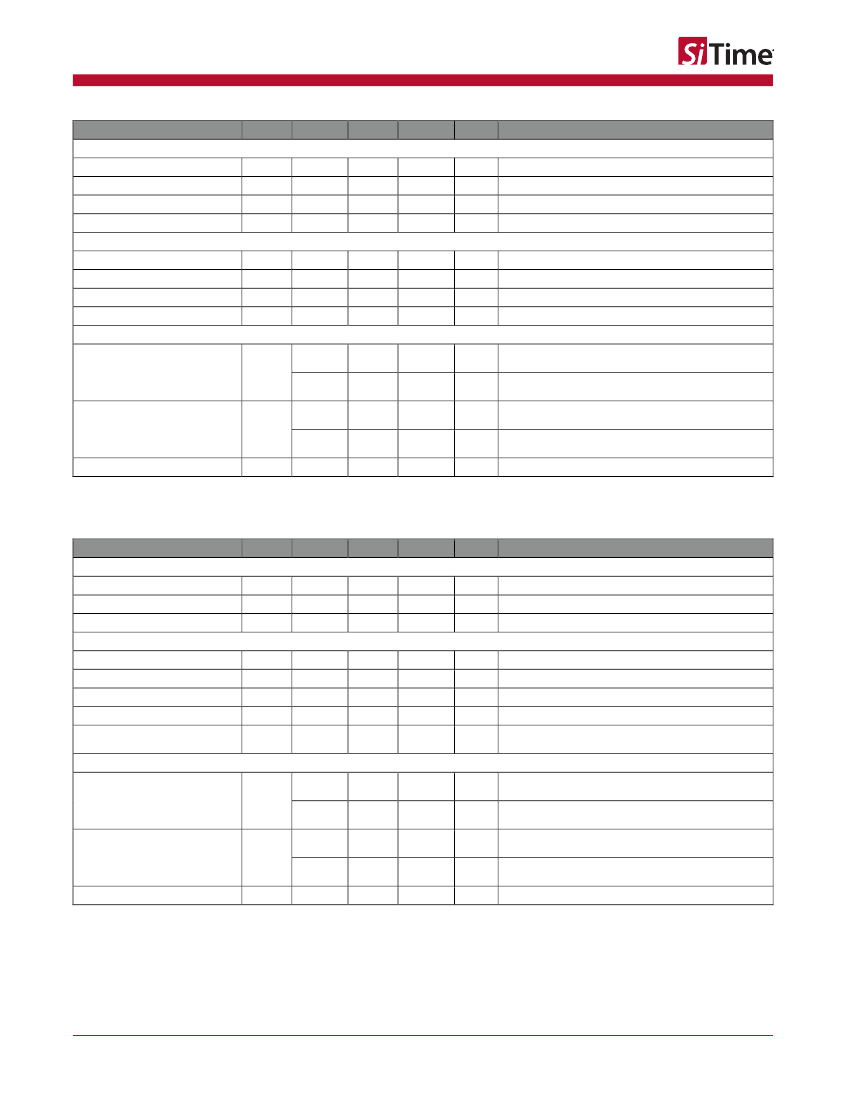
Table 2. Electrical Characteristics – LVPECL Specific
Parameter
Symbol
Min.
Typ.
Max.
Unit
Condition
Current Consumption
Current Consumption
OE Disable Supply Current
Output Disable Leakage Current
Maximum Output Current
Idd
I_OE
I_leak
I_driver
–
–
–
–
–
–
0.15
–
89
58
–
32
mA
mA
A
mA
Excluding Load Termination Current, Vdd = 3.3 V or 2.5 V
OE = Low
OE = Low
Maximum average current drawn from OUT+ or OUT-
Output Characteristics
Output High Voltage
Output Low Voltage
Output Differential Voltage Swing
Rise/Fall Time
VOH
VOL
V_Swing
Tr, Tf
Vdd - 1.1V
Vdd - 1.9V
1.2
–
–
–
1.6
225
Vdd - 0.7V
Vdd - 1.5V
2.0
290
Jitter
RMS Phase Jitter (random) –
DCO Mode Only
T_phj
–
–
RMS Phase Jitter (random) –
Any-frequency Mode Only
T_phj
–
–
RMS Period Jitter
[3]
Note:
3. Measured according to JESD65B.
T_jitt
–
0.225
0.1
0.225
0.11
1
0.340
0.14
0.340
0.15
1.6
ps
ps
ps
ps
ps
f = 156.25 MHz, Integration bandwidth = 12 kHz to 20 MHz,
all Vdd levels
f = 156.25, IEEE802.3-2005 10 GbE jitter mask integration
bandwidth = 1.875 MHz to 20 MHz, all Vdd levels
f = 156.25 MHz, Integration bandwidth = 12 kHz to 20 MHz,
all Vdd levels
f = 156.25, IEEE802.3-2005 10 GbE jitter mask integration
bandwidth = 1.875 MHz to 20 MHz, all Vdd levels
f = 100, 156.25 or 212.5 MHz, Vdd = 3.3 V or 2.5 V
V
V
V
ps
See
Figure 5
See
Figure 5
See
Figure 6
20% to 80%, see
Figure 6
Table 3. Electrical Characteristics – LVDS Specific
Parameter
Symbol
Min.
Typ.
Max.
Unit
Condition
Current Consumption
Current Consumption
OE Disable Supply Current
Output Disable Leakage Current
Idd
I_OE
I_leak
–
–
–
–
–
0.15
80
61
–
mA
mA
A
Excluding Load Termination Current, Vdd = 3.3 V or 2.5 V
OE = Low
OE = Low
Output Characteristics
Differential Output Voltage
Delta VOD
Offset Voltage
Delta VOS
Rise/Fall Time
VOD
ΔVOD
VOS
ΔVOS
Tr, Tf
250
–
1.125
–
–
–
–
–
–
400
455
50
1.375
50
470
Jitter
RMS Phase Jitter (random) –
DCO Mode Only
T_phj
–
–
RMS Phase Jitter (random) –
Any-frequency Mode Only
T_phj
–
–
RMS Period Jitter
[4]
Note:
4. Measured according to JESD65B.
T_jitt
–
0.21
0.1
0.21
0.1
1
0.275
0.12
0.367
0.12
1.6
ps
ps
ps
ps
ps
f = 156.25 MHz, Integration bandwidth = 12 kHz to 20 MHz,
all Vdd levels
f = 156.25, IEEE802.3-2005 10 GbE jitter mask integration
bandwidth = 1.875 MHz to 20 MHz, all Vdd levels
f = 156.25 MHz, Integration bandwidth = 12 kHz to 20 MHz,
all Vdd levels
f = 156.25, IEEE802.3-2005 10 GbE jitter mask integration
bandwidth = 1.875 MHz to 20 MHz, all Vdd levels
f = 100, 156.25 or 212.5 MHz, Vdd = 3.3 V or 2.5 V
mV
mV
V
mV
ps
f = 156.25MHz See
Figure 7
See
Figure 7
See
Figure 7
See
Figure 7
Measured with 2 pF capacitive loading to GND, 20% to 80%,
I use sockets in my programming, the code is as follows: WSADATA wsaData; if( WSAStartup(MAKEWORD(2,0), &wsaData) || LOBYTE(wsaData.wVersion)!= 2 ) return; ///Create SOCKET object SOCKET sock = socket...
Asymmetric triangular carrier means that the rising and falling edges of the triangular carrier are not symmetrical about the center line, that is, the slope of the rising edge is different from the s...
The usage of uf2 files is introduced on the official website. There are two versions in total.
C/C++ Version:
https://www.raspberrypi.org/documentation/rp2040/getting-started/#getting-started-with-c
M...
I use 72324, external 4MHz crystal, and inDART hardware emulation. Now I have two problems: 1. Debugging communication is unsuccessful, but DataBlaze under inDART is completely normal, both reading an...
[NXP Rapid IoT Review] + NXP Rapid IoT Interface Design Process Purpose: How to design the interface of NXP Rapid IoT, and share some functional skills at the same time 1. How to design the interface ...
1. Photovoltaic inverter installation process
1. Preparation before installation
Are the product accessories, installation tools and parts complete? Is the installation environmen...[Details]
Notes on inverter installation and maintenance:
1. Before installation, you should first check whether the inverter is damaged during transportation.
2. When selecting an installa...[Details]
Recently, the National Development and Reform Commission announced that all foreign equity restrictions in the automobile industry will be lifted in the next five years. At the same time, as subsid...[Details]
Recently, the 2017 Review and 2018 Outlook Seminar of the Photovoltaic Industry was held in Beijing. Sungrow, a powerful inverter technology company, was invited to attend the seminar. With 20 year...[Details]
The "2018 China Household Photovoltaic Brand Conference" was held in Beijing on January 23. The conference was hosted by the China Photovoltaic Industry Association and organized by the Jianheng Certi...[Details]
The new UL 1741-SA standard is the latest power grid standard implemented in North America
Recently, Sungrow's box-type inverter SG2500U successfully passed the US UL 1741-SA certification...[Details]
China Energy Storage Network News:
Accenture recently released the report "Benchmarking the Future - Energy Internet Practice". This is the third year that Accenture has done an energy Intern...[Details]
Recently, the 2017 Seventh Forum on Strengthening the Application of the Yangtze River Economic Belt "Belt and Road" Distributed Energy Innovation and Development and the 2017 China Renewable Energ...[Details]
Although photovoltaic power stations have a long lifespan and a warranty period of up to 25 years, they will always "get sick" more or less during the power generation process. So do you know how t...[Details]
Photovoltaic power generation is strongly supported by national policies and is becoming more and more well-known to the public. A complete photovoltaic system is composed of photovoltaic modules, ...[Details]
Recently, the first "smart parking + charging integration" roadside charging pile pilot project in China was completed in Shenzhen. The project was undertaken by Shenzhen Southern Heshun Electric V...[Details]
This article briefly describes the shortcomings of traditional photovoltaic power generation system inverters and the advantages of transformerless photovoltaic inverters. It also discusses the factor...[Details]
China Energy Storage Network:
Driven by the national strategy of implementing low-carbon development and energy revolution in China, renewable energy has experienced rapid development in rece...[Details]
The latest report released by GTM Research shows that the global photovoltaic inverter market is becoming increasingly concentrated, with the top ten manufacturers accounting for 80% of shipments i...[Details]
China Energy Storage Network News
: The Ministry of Industry and Information Technology has released the "Big Data Industry Development Plan (2016-2020)". With reference to the guiding ideolo...[Details]

 Embedded System
 京公网安备 11010802033920号
 EEWORLD