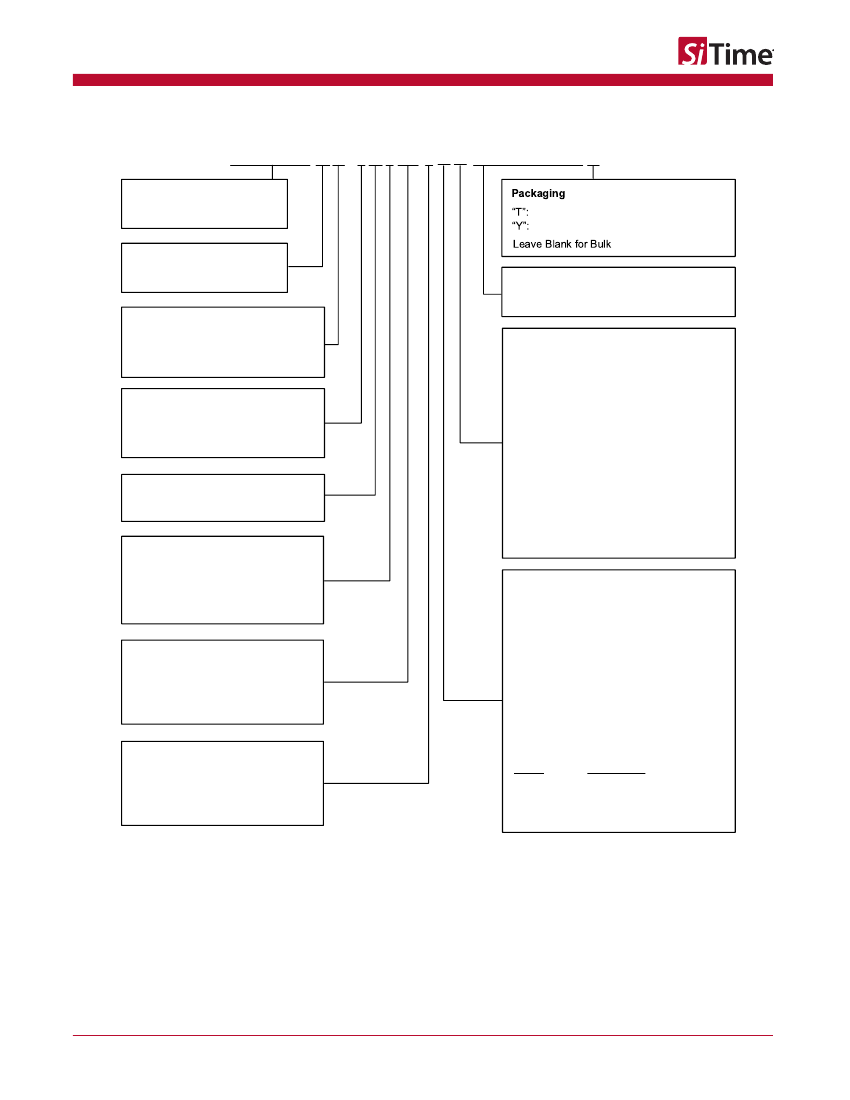
Ordering Information .................................................................................................................................................................... 2
User Programming Interface ..................................................................................................................................... 18
Start-up output frequency and signaling types ........................................................................................................... 18
Any-frequency function ............................................................................................................................................. 19
C/SPI Control Registers...................................................................................................................................................... 28
9 I
Register Address: 0x00. DCO Frequency Control Least Significant Word (LSW) .................................................... 28
Register Address: 0x01. OE Control, DCO Frequency Control Most Significant Word (MSW) ................................. 29
Register Address: 0x02. DCO PULL RANGE CONTROL ........................................................................................ 29
Register Address: 0x03. Frac-N PLL Feedback Divider Integer Value and Frac-N PLL Feedback Divider Fraction
Value MSW ............................................................................................................................................................... 30
Register Address: 0x05. Forward Divider, Driver Control ......................................................................................... 30
Register Address: 0x06. Driver Divider, Driver Control ............................................................................................. 31
2
C Operation ........................................................................................................................................................................ 32
10 I
I
2
C protocol ............................................................................................................................................................... 32
I
2
C Timing Specification ............................................................................................................................................ 35
I
2
C Device Address Modes ....................................................................................................................................... 36
Dimensions and Patterns ........................................................................................................................................................... 43
Additional Information ................................................................................................................................................................ 44
Revision History ......................................................................................................................................................................... 45
Rev 1.01
Page 3 of 45
www.sitime.com
SiT3521
1 to 340 MHz Elite Platform I2C/SPI Programmable Oscillator
1 Electrical Characteristics
All Min and Max limits in the Electrical Characteristics tables are specified over temperature and rated operating voltage with
standard output terminations shown in the termination diagrams. Typical values are at 25°C and nominal supply voltage.
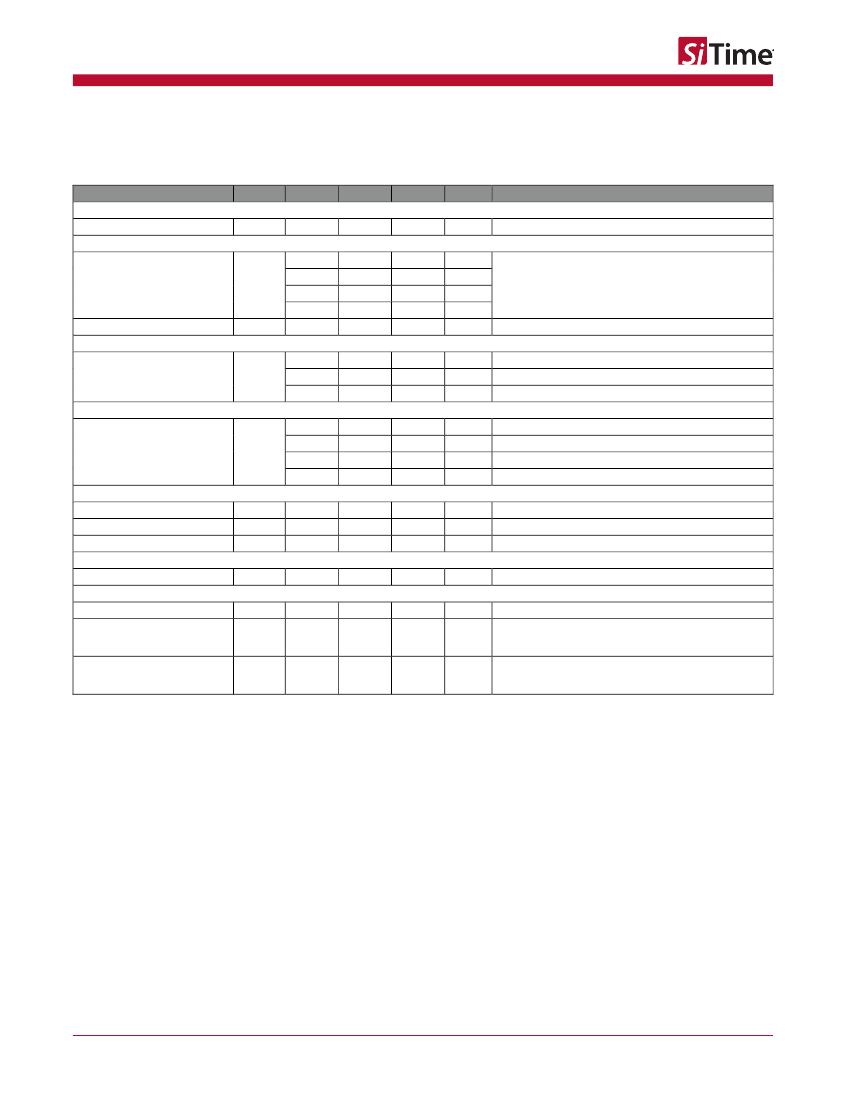
Table 1. Electrical Characteristics – Common to LVPECL, LVDS and HCSL
Parameter
Output Frequency Range
Symbol
f
Min.
1
Typ.
–
–
–
–
–
±1
–
–
–
Max.
340
Unit
MHz
Condition
Factory or user programmable, accurate to 6 decimal places
Frequency Range
Frequency Stability
Frequency Stability
F_stab
-10
-20
-25
-50
First Year Aging
F_1y
–
+10
+20
+25
+50
–
ppm
ppm
ppm
ppm
ppm
°C
°C
°C
1
st
-year aging at 25°C
Inclusive of initial tolerance, operating temperature, rated
power supply voltage and load variations.
Temperature Range
Operating Temperature Range
T_use
-20
-40
-40
+70
+85
+105
Supply Voltage
Supply Voltage
Vdd
2.97
2.7
2.52
2.25
3.3
3.0
2.8
2.5
–
–
100
–
–
–
3.63
3.3
3.08
2.75
–
30%
–
V
V
V
V
Extended Commercial
Industrial
Extended Industrial. Available only for I
2
C operation, not SPI.
Input Characteristics – OE Pin
Input Voltage High
Input Voltage Low
Input Pull-up Impedance
VIH
VIL
Z_in
70%
–
–
Vdd
Vdd
kΩ
OE pin
OE pin
OE pin, logic high or logic low
Output Characteristics
Duty Cycle
DC
45
–
–
55
%
Startup and Output Enable/Disable Timing
Start-up Time
Output Enable/Disable Time –
Hardware control via OE pin
Output Enable/Disable Time –
Software control via I
2
C/SPI
T_start
T_oe_hw
3.0
3.8
ms
µs
Measured from the time Vdd reaches its rated minimum value
Measured from the time OE pin reaches rated VIH and VIL to
the time clock pins reach 90% of swing and high-Z.
See
Figure 9
and
Figure 10
Measured from the time the last byte of command is
transmitted via I
2
C/SPI (reg1) to the time clock pins reach 90%
of swing and high-Z. See
Figure 30
and
Figure 31
T_oe_sw
–
–
6.5
µs
Rev 1.01
Page 4 of 45
www.sitime.com
SiT3521
1 to 340 MHz Elite Platform I2C/SPI Programmable Oscillator
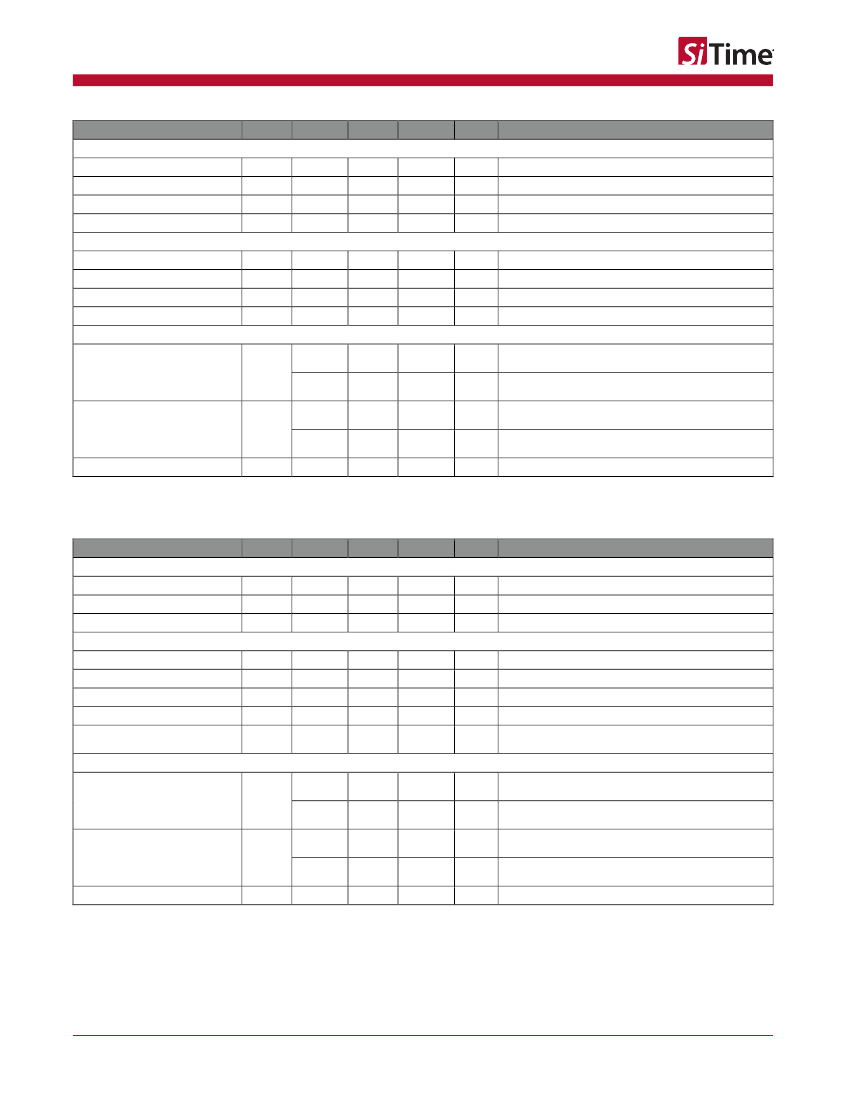
Table 2. Electrical Characteristics – LVPECL Specific
Parameter
Symbol
Min.
Typ.
Max.
Unit
Condition
Current Consumption
Current Consumption
OE Disable Supply Current
Output Disable Leakage Current
Maximum Output Current
Idd
I_OE
I_leak
I_driver
–
–
–
–
–
–
0.15
–
89
58
–
32
mA
mA
A
mA
Excluding Load Termination Current, Vdd = 3.3 V or 2.5 V
OE = Low
OE = Low
Maximum average current drawn from OUT+ or OUT-
Output Characteristics
Output High Voltage
Output Low Voltage
Output Differential Voltage Swing
Rise/Fall Time
VOH
VOL
V_Swing
Tr, Tf
Vdd - 1.1V
Vdd - 1.9V
1.2
–
–
–
1.6
225
Vdd - 0.7V
Vdd - 1.5V
2.0
290
Jitter
RMS Phase Jitter (random) –
DCO Mode Only
T_phj
–
–
RMS Phase Jitter (random) –
Any-frequency Mode Only
T_phj
–
–
RMS Period Jitter
[3]
Note:
3. Measured according to JESD65B.
T_jitt
–
0.225
0.1
0.225
0.11
1
0.340
0.14
0.340
0.15
1.6
ps
ps
ps
ps
ps
f = 156.25 MHz, Integration bandwidth = 12 kHz to 20 MHz,
all Vdd levels
f = 156.25, IEEE802.3-2005 10 GbE jitter mask integration
bandwidth = 1.875 MHz to 20 MHz, all Vdd levels
f = 156.25 MHz, Integration bandwidth = 12 kHz to 20 MHz,
all Vdd levels
f = 156.25, IEEE802.3-2005 10 GbE jitter mask integration
bandwidth = 1.875 MHz to 20 MHz, all Vdd levels
f = 100, 156.25 or 212.5 MHz, Vdd = 3.3 V or 2.5 V
V
V
V
ps
See
Figure 5
See
Figure 5
See
Figure 6
20% to 80%, see
Figure 6
Table 3. Electrical Characteristics – LVDS Specific
Parameter
Symbol
Min.
Typ.
Max.
Unit
Condition
Current Consumption
Current Consumption
OE Disable Supply Current
Output Disable Leakage Current
Idd
I_OE
I_leak
–
–
–
–
–
0.15
80
61
–
mA
mA
A
Excluding Load Termination Current, Vdd = 3.3 V or 2.5 V
OE = Low
OE = Low
Output Characteristics
Differential Output Voltage
Delta VOD
Offset Voltage
Delta VOS
Rise/Fall Time
VOD
ΔVOD
VOS
ΔVOS
Tr, Tf
250
–
1.125
–
–
–
–
–
–
400
455
50
1.375
50
470
Jitter
RMS Phase Jitter (random) –
DCO Mode Only
T_phj
–
–
RMS Phase Jitter (random) –
Any-frequency Mode Only
T_phj
–
–
RMS Period Jitter
[4]
Note:
4. Measured according to JESD65B.
T_jitt
–
0.21
0.1
0.21
0.1
1
0.275
0.12
0.367
0.12
1.6
ps
ps
ps
ps
ps
f = 156.25 MHz, Integration bandwidth = 12 kHz to 20 MHz,
all Vdd levels
f = 156.25, IEEE802.3-2005 10 GbE jitter mask integration
bandwidth = 1.875 MHz to 20 MHz, all Vdd levels
f = 156.25 MHz, Integration bandwidth = 12 kHz to 20 MHz,
all Vdd levels
f = 156.25, IEEE802.3-2005 10 GbE jitter mask integration
bandwidth = 1.875 MHz to 20 MHz, all Vdd levels
f = 100, 156.25 or 212.5 MHz, Vdd = 3.3 V or 2.5 V
mV
mV
V
mV
ps
f = 156.25MHz See
Figure 7
See
Figure 7
See
Figure 7
See
Figure 7
Measured with 2 pF capacitive loading to GND, 20% to 80%,
Help, help!!
I use Modelsim to simulate the floating point multiplier ALTFP_MULT in Quartus. Why can't I get the expected result?
I'm new here, thank you all in advance~...
When I first learned analog electronics, I was confused. I took a week off and went through it again. I only looked at the small signal amplification part. I feel that analog electronics is easier to ...
[i=s]This post was last edited by paulhyde on 2014-9-15 03:02[/i] I am now using MSP430F149 to make a digitally controlled constant current source. The AD uses the 430 internal ADC12, and the DAC uses...
Configure external interrupt 0 to be triggered by the falling edge to count the external pulses. However, when I tried it with a button, several pulses were added, and some even counted more than 20. ...
My board is s3c2410a, which has two serial ports. One is uart0 for connecting serial devices and outputting debugging information, and the other is uart1 for connecting serial devices. However, after ...
Who can help me with my graduation project of digital integrated 9-way buzzer? :'( :'( :'( :'( My email address is [email=rockback123@126.com]rockback123@126.com[/email] qq441327590 Thank you...
Traditional broadcasting systems generally need to be operated manually at a fixed time, and can only realize one-way broadcasting with few functions. Traditional bell ringing equipment has a singl...[Details]
1. Circuit composition
The whole circuit consists of two parts:
1. Power saving control circuit
As shown in the figure below. Including delay circuit and drive circuit.
(1) Delay ci...[Details]
At present, the traffic congestion in cities is quite serious. According to relevant news reports: In China, the traffic congestion has expanded from megacities such as Beijing, Shanghai, and Guang...[Details]
1. Introduction
With the growth of parking demand, the scale of parking lots is becoming larger and larger. A lot of research has been done on intelligent parking lots in China, but most of th...[Details]
Converged processors meet scalability requirements
In current embedded system design, solutions based on MCU, DSP, FPGA and ASIC account for more than 90% of the market share. These solutions ...[Details]
As cellular phones become more advanced, the power consumption of the system during operation and the power consumption during standby are also increasing. Therefore, the power management design of...[Details]
introduction
For the voltage regulator modules (VRMs) that power the latest computer central processing units (CPUs), power supply designers have historically used multiphase interleaved b...[Details]
Aromatic gases are widely present in food, medicine, cosmetics and various daily chemical products, such as snacks, liquor, spices, Chinese herbal medicines, plasters, perfumes, soaps, shampoos, et...[Details]
1 Introduction
PROFIBUS is an international, open, and manufacturer-independent fieldbus standard. It is widely used in manufacturing automation, process industry automation, and automatio...[Details]
Motors are important products that convert electrical energy into mechanical energy to achieve automation, and they are widely used in industrial control, medical electronics, white a...[Details]
According to the Industrial Technology Research Institute of Taiwan, due to factors such as the oil crisis and global warming, the issues of energy conservation and environmental protection have at...[Details]
Abstract: Aiming at the needs of coal-rock acoustic emission signal monitoring system, a data acquisition circuit with 24-bit resolution and 16-channel synchronous data acquisition function is desi...[Details]
0 Introduction
Under normal circumstances, the three-phase power in the power system is symmetrical, and they meet certain amplitude and phase conditions; but when the load changes, the syst...[Details]
Traditional
virtual instruments
consist of a data acquisition
board
based on PCI bus and
corresponding software. However, with
the rapid development of
computer
network techno...[Details]
Temperature compensated quartz crystal oscillator (TCXO) is widely used as a high-precision frequency source in communication systems, radar navigation systems, precision measurement and control sy...[Details]

 FPGA/CPLD
 京公网安备 11010802033920号
 EEWORLD