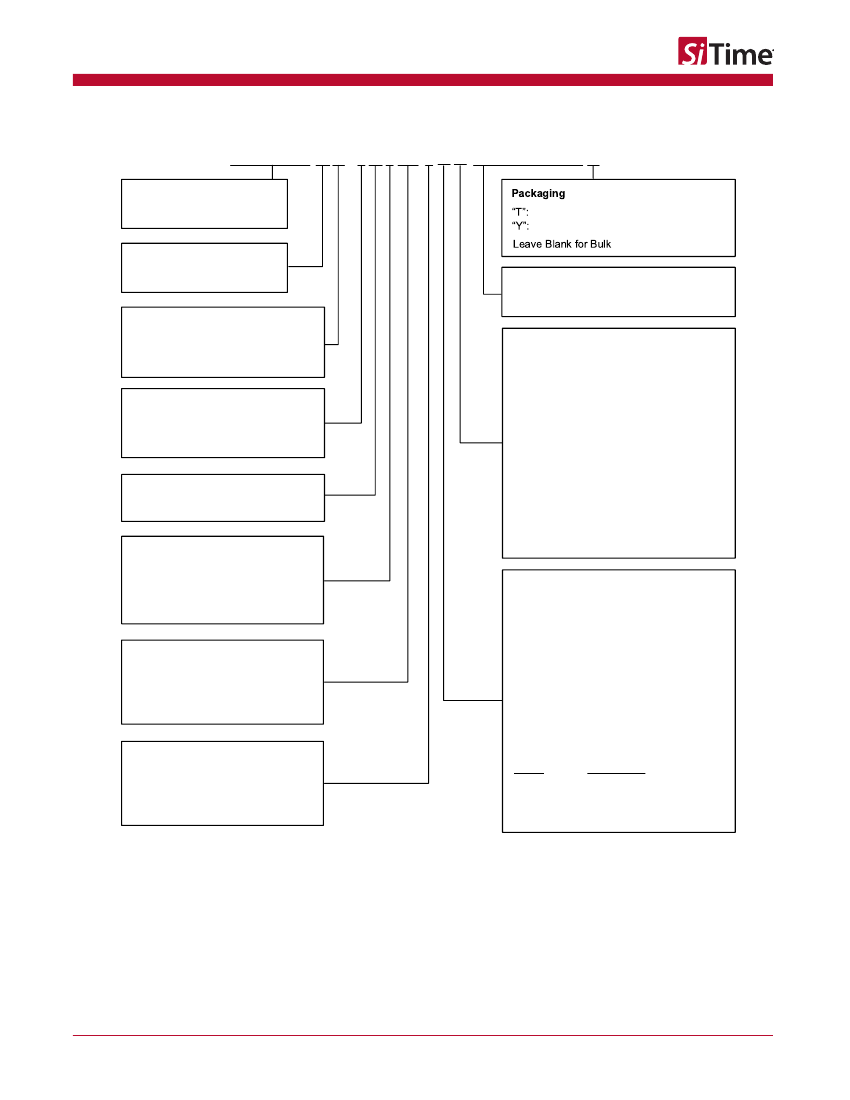
Ordering Information .................................................................................................................................................................... 2
User Programming Interface ..................................................................................................................................... 18
Start-up output frequency and signaling types ........................................................................................................... 18
Any-frequency function ............................................................................................................................................. 19
C/SPI Control Registers...................................................................................................................................................... 28
9 I
Register Address: 0x00. DCO Frequency Control Least Significant Word (LSW) .................................................... 28
Register Address: 0x01. OE Control, DCO Frequency Control Most Significant Word (MSW) ................................. 29
Register Address: 0x02. DCO PULL RANGE CONTROL ........................................................................................ 29
Register Address: 0x03. Frac-N PLL Feedback Divider Integer Value and Frac-N PLL Feedback Divider Fraction
Value MSW ............................................................................................................................................................... 30
Register Address: 0x05. Forward Divider, Driver Control ......................................................................................... 30
Register Address: 0x06. Driver Divider, Driver Control ............................................................................................. 31
2
C Operation ........................................................................................................................................................................ 32
10 I
I
2
C protocol ............................................................................................................................................................... 32
I
2
C Timing Specification ............................................................................................................................................ 35
I
2
C Device Address Modes ....................................................................................................................................... 36
Dimensions and Patterns ........................................................................................................................................................... 43
Additional Information ................................................................................................................................................................ 44
Revision History ......................................................................................................................................................................... 45
Rev 1.01
Page 3 of 45
www.sitime.com
SiT3521
1 to 340 MHz Elite Platform I2C/SPI Programmable Oscillator
1 Electrical Characteristics
All Min and Max limits in the Electrical Characteristics tables are specified over temperature and rated operating voltage with
standard output terminations shown in the termination diagrams. Typical values are at 25°C and nominal supply voltage.
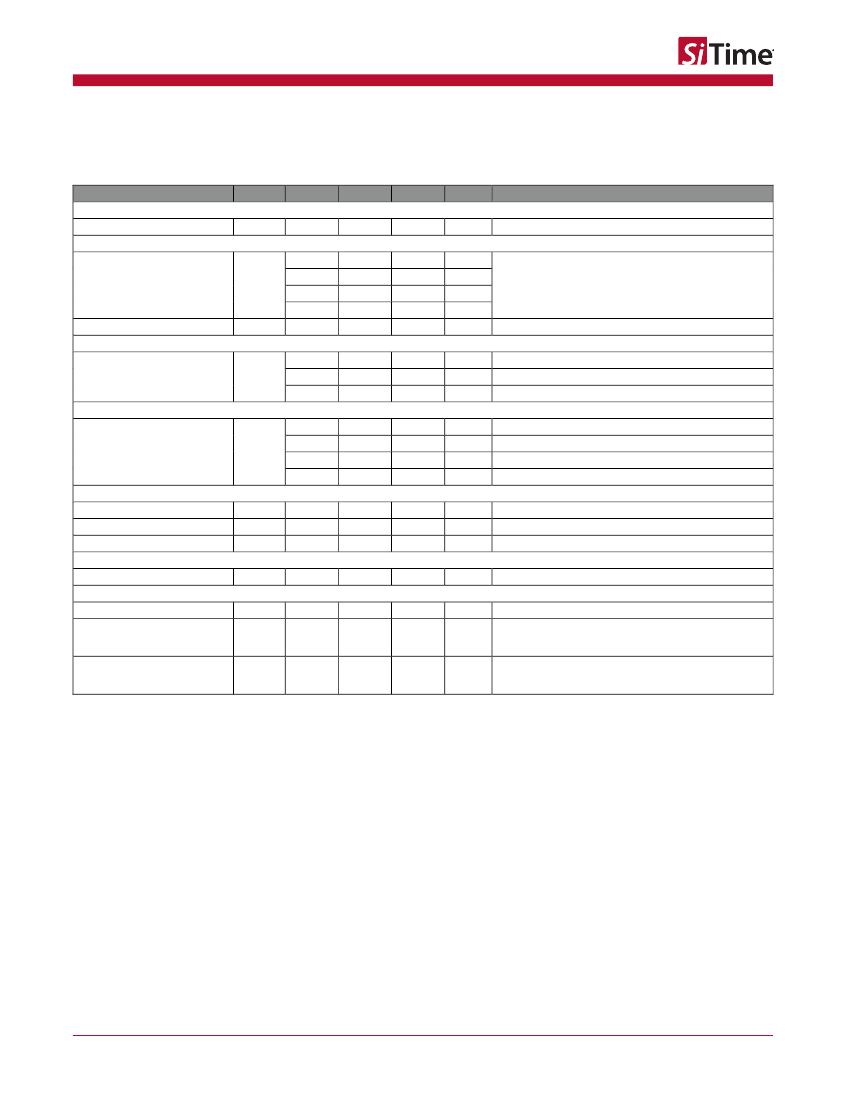
Table 1. Electrical Characteristics – Common to LVPECL, LVDS and HCSL
Parameter
Output Frequency Range
Symbol
f
Min.
1
Typ.
–
–
–
–
–
±1
–
–
–
Max.
340
Unit
MHz
Condition
Factory or user programmable, accurate to 6 decimal places
Frequency Range
Frequency Stability
Frequency Stability
F_stab
-10
-20
-25
-50
First Year Aging
F_1y
–
+10
+20
+25
+50
–
ppm
ppm
ppm
ppm
ppm
°C
°C
°C
1
st
-year aging at 25°C
Inclusive of initial tolerance, operating temperature, rated
power supply voltage and load variations.
Temperature Range
Operating Temperature Range
T_use
-20
-40
-40
+70
+85
+105
Supply Voltage
Supply Voltage
Vdd
2.97
2.7
2.52
2.25
3.3
3.0
2.8
2.5
–
–
100
–
–
–
3.63
3.3
3.08
2.75
–
30%
–
V
V
V
V
Extended Commercial
Industrial
Extended Industrial. Available only for I
2
C operation, not SPI.
Input Characteristics – OE Pin
Input Voltage High
Input Voltage Low
Input Pull-up Impedance
VIH
VIL
Z_in
70%
–
–
Vdd
Vdd
kΩ
OE pin
OE pin
OE pin, logic high or logic low
Output Characteristics
Duty Cycle
DC
45
–
–
55
%
Startup and Output Enable/Disable Timing
Start-up Time
Output Enable/Disable Time –
Hardware control via OE pin
Output Enable/Disable Time –
Software control via I
2
C/SPI
T_start
T_oe_hw
3.0
3.8
ms
µs
Measured from the time Vdd reaches its rated minimum value
Measured from the time OE pin reaches rated VIH and VIL to
the time clock pins reach 90% of swing and high-Z.
See
Figure 9
and
Figure 10
Measured from the time the last byte of command is
transmitted via I
2
C/SPI (reg1) to the time clock pins reach 90%
of swing and high-Z. See
Figure 30
and
Figure 31
T_oe_sw
–
–
6.5
µs
Rev 1.01
Page 4 of 45
www.sitime.com
SiT3521
1 to 340 MHz Elite Platform I2C/SPI Programmable Oscillator
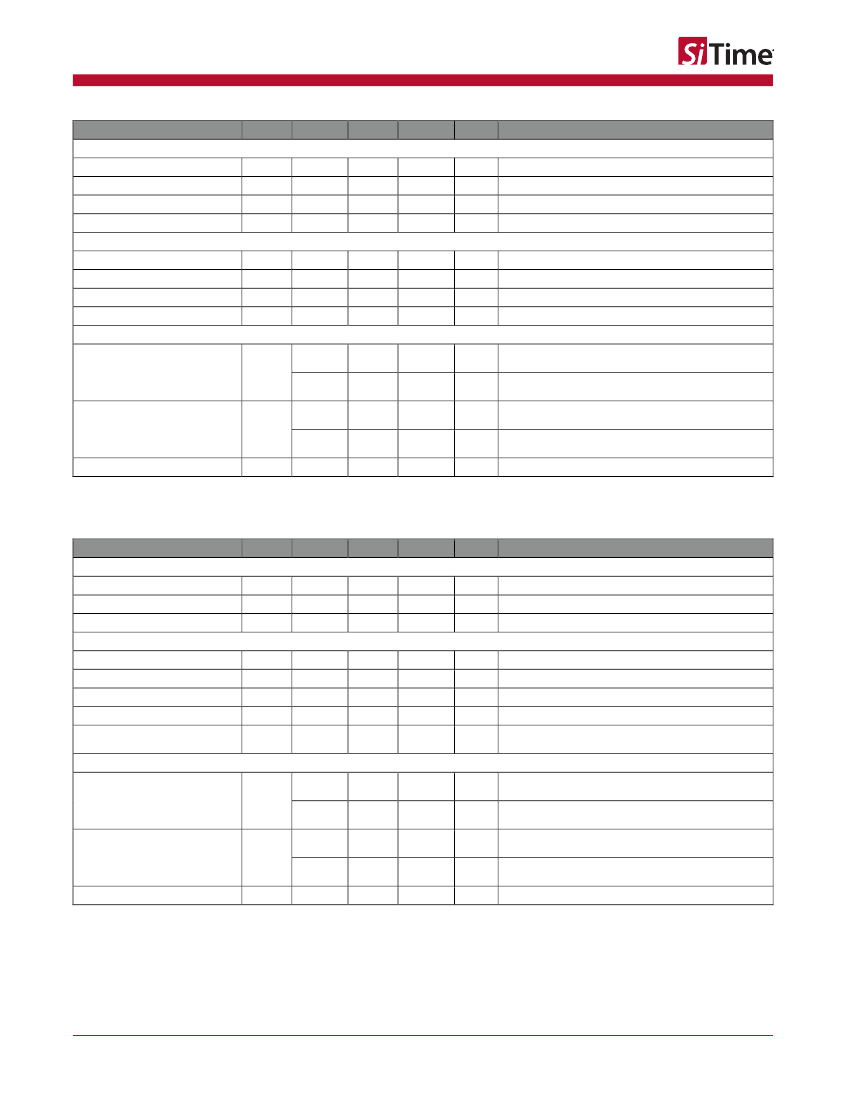
Table 2. Electrical Characteristics – LVPECL Specific
Parameter
Symbol
Min.
Typ.
Max.
Unit
Condition
Current Consumption
Current Consumption
OE Disable Supply Current
Output Disable Leakage Current
Maximum Output Current
Idd
I_OE
I_leak
I_driver
–
–
–
–
–
–
0.15
–
89
58
–
32
mA
mA
A
mA
Excluding Load Termination Current, Vdd = 3.3 V or 2.5 V
OE = Low
OE = Low
Maximum average current drawn from OUT+ or OUT-
Output Characteristics
Output High Voltage
Output Low Voltage
Output Differential Voltage Swing
Rise/Fall Time
VOH
VOL
V_Swing
Tr, Tf
Vdd - 1.1V
Vdd - 1.9V
1.2
–
–
–
1.6
225
Vdd - 0.7V
Vdd - 1.5V
2.0
290
Jitter
RMS Phase Jitter (random) –
DCO Mode Only
T_phj
–
–
RMS Phase Jitter (random) –
Any-frequency Mode Only
T_phj
–
–
RMS Period Jitter
[3]
Note:
3. Measured according to JESD65B.
T_jitt
–
0.225
0.1
0.225
0.11
1
0.340
0.14
0.340
0.15
1.6
ps
ps
ps
ps
ps
f = 156.25 MHz, Integration bandwidth = 12 kHz to 20 MHz,
all Vdd levels
f = 156.25, IEEE802.3-2005 10 GbE jitter mask integration
bandwidth = 1.875 MHz to 20 MHz, all Vdd levels
f = 156.25 MHz, Integration bandwidth = 12 kHz to 20 MHz,
all Vdd levels
f = 156.25, IEEE802.3-2005 10 GbE jitter mask integration
bandwidth = 1.875 MHz to 20 MHz, all Vdd levels
f = 100, 156.25 or 212.5 MHz, Vdd = 3.3 V or 2.5 V
V
V
V
ps
See
Figure 5
See
Figure 5
See
Figure 6
20% to 80%, see
Figure 6
Table 3. Electrical Characteristics – LVDS Specific
Parameter
Symbol
Min.
Typ.
Max.
Unit
Condition
Current Consumption
Current Consumption
OE Disable Supply Current
Output Disable Leakage Current
Idd
I_OE
I_leak
–
–
–
–
–
0.15
80
61
–
mA
mA
A
Excluding Load Termination Current, Vdd = 3.3 V or 2.5 V
OE = Low
OE = Low
Output Characteristics
Differential Output Voltage
Delta VOD
Offset Voltage
Delta VOS
Rise/Fall Time
VOD
ΔVOD
VOS
ΔVOS
Tr, Tf
250
–
1.125
–
–
–
–
–
–
400
455
50
1.375
50
470
Jitter
RMS Phase Jitter (random) –
DCO Mode Only
T_phj
–
–
RMS Phase Jitter (random) –
Any-frequency Mode Only
T_phj
–
–
RMS Period Jitter
[4]
Note:
4. Measured according to JESD65B.
T_jitt
–
0.21
0.1
0.21
0.1
1
0.275
0.12
0.367
0.12
1.6
ps
ps
ps
ps
ps
f = 156.25 MHz, Integration bandwidth = 12 kHz to 20 MHz,
all Vdd levels
f = 156.25, IEEE802.3-2005 10 GbE jitter mask integration
bandwidth = 1.875 MHz to 20 MHz, all Vdd levels
f = 156.25 MHz, Integration bandwidth = 12 kHz to 20 MHz,
all Vdd levels
f = 156.25, IEEE802.3-2005 10 GbE jitter mask integration
bandwidth = 1.875 MHz to 20 MHz, all Vdd levels
f = 100, 156.25 or 212.5 MHz, Vdd = 3.3 V or 2.5 V
mV
mV
V
mV
ps
f = 156.25MHz See
Figure 7
See
Figure 7
See
Figure 7
See
Figure 7
Measured with 2 pF capacitive loading to GND, 20% to 80%,
1. The program of modulo 16 synchronous counter is as follows. Try to write its Test Bench program //behavioral modulo_16 counter module crt_mor_16(clk,rst_n,count); input clk,rst_n; output[3:0]count;...
It's a miserable situation ~ I'm waiting to be fucked by my boss tomorrow
By the way, I want to ask if any of you think I have connected the circuit wrong.I want to use DSP to connect a DAC chip to co...
[size=4][b][color=black] Creative little ideas for life, add a different sense of freshness to every day! DIY calendar-shaped page-turning lamp (Page by Page Lamp), in addition to the practical lighti...
RF Carrier Frequency Between Tag and Antenna When choosing an RFID system, an important consideration is the carrier frequency band used to transmit data between the tag and the antenna. The FCC def...
[i=s]This post was last edited by paulhyde on 2014-9-15 09:13[/i]The M M A 7 4 55 accelerometer I bought from Longqiu on Taobao has 12 pins!
After debugging with the given program and serial port debu...
In today's society, heart disease has seriously affected people's life safety. Many patients with sudden heart attacks are threatened because they cannot get timely treatment. Traditional ECG monito...[Details]
Human body information monitoring is an emerging field. People envision developing wireless electroencephalogram (EEG) monitoring equipment to diagnose epilepsy patients. Wearable wireless EEG can ...[Details]
Sensors have made inroads into automotive, medical, industrial and aerospace applications. But you may not see anything changing yet. Growing demands for safety, convenience, entertainment and efficie...[Details]
Currently, it is impossible to dynamically obtain patient information in medical monitoring. Once the patient's condition worsens, emergency treatment cannot be implemented in the first place, and the...[Details]
Maximize instrument utilization and reduce
test times
Increasing the throughput of automated test systems can improve efficiency. Using off-the-shelf tools (COTS) such as multicore proc...[Details]
With the rapid development of computer technology, embedded image systems are widely used in office equipment, manufacturing and process design, medical, monitoring, sanitary equipment, transportat...[Details]
Over the past 15 to 20 years, automotive power MOSFETs have evolved from an initial technical topic to a thriving commercial sector. Power MOSFETs were chosen because they can withstand transient ...[Details]
At present, the IEEE802.11 wireless LAN standard is widely used in voice communication, wireless office and other fields, but it is still mainly limited to wireless communication on general platfor...[Details]
introduction
Image compression technology is becoming more and more important in modern life. With the improvement of data processing speed of DSP, a single-chip DSP can achieve good results...[Details]
Abstract: This paper uses the S3C2410 chip GX development board with ARM920T core as the hardware platform and Windows CE operating system to design an embedded system touch screen interactive func...[Details]
Abstract:
Aiming at the problems of repeated design and high cost of existing LED large-screen displays, a modular LED large-screen display is proposed, which can realize flexible configurati...[Details]
1 Introduction
In recent years, with the rapid growth of mobile phones and MP4 video players, it is estimated that the production of mobile phones this year will reach 1 billion units, and...[Details]
High-speed serial communication networks are transmitting data and video information at unprecedented speeds. As transmission speeds increase, the evaluation of networks and their components become...[Details]
In today’s body control module (BCM) designs, knowledgeable engineers are moving away from electromechanical relays wherever possible. Their next step is to eliminate fuses. But is eliminating ...[Details]
Femtocell base stations are required to meet stringent requirements in terms of interference, compatibility testing between mobile devices and networks (such as ad hoc networks, handovers), and mee...[Details]

 Embedded System
 京公网安备 11010802033920号
 EEWORLD