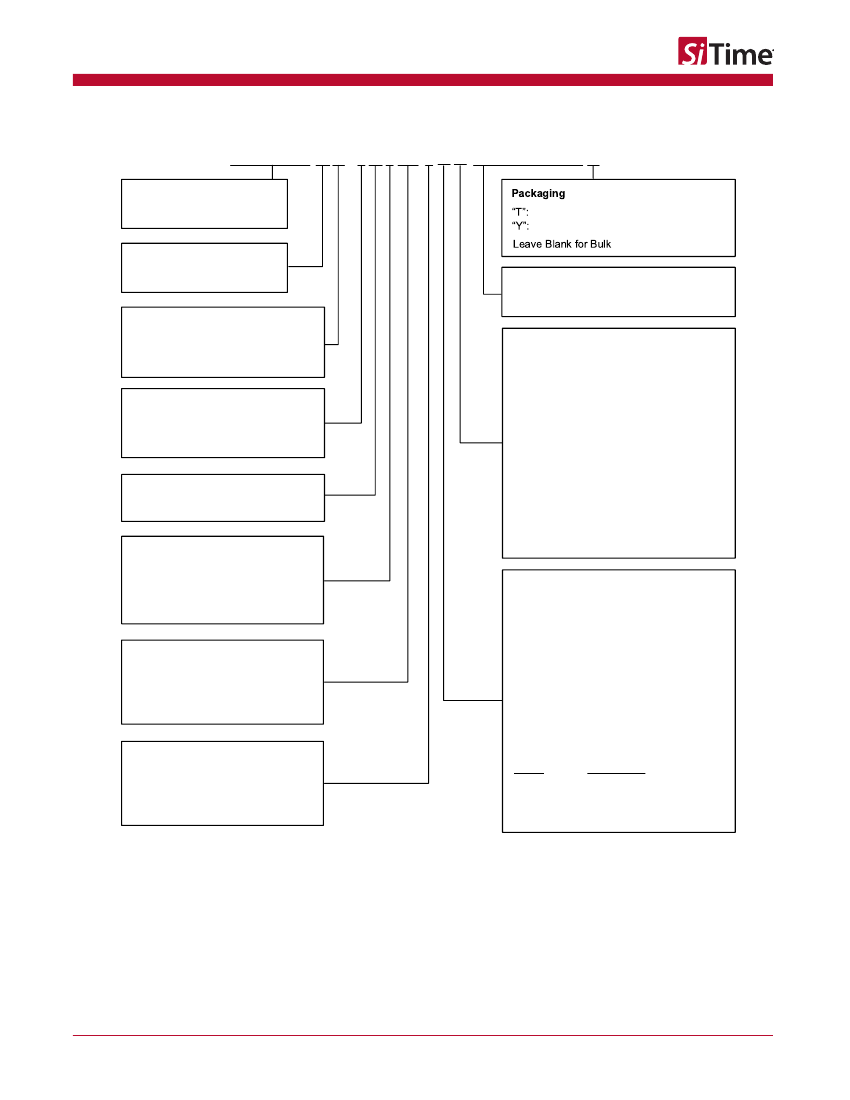
Ordering Information .................................................................................................................................................................... 2
User Programming Interface ..................................................................................................................................... 18
Start-up output frequency and signaling types ........................................................................................................... 18
Any-frequency function ............................................................................................................................................. 19
C/SPI Control Registers...................................................................................................................................................... 28
9 I
Register Address: 0x00. DCO Frequency Control Least Significant Word (LSW) .................................................... 28
Register Address: 0x01. OE Control, DCO Frequency Control Most Significant Word (MSW) ................................. 29
Register Address: 0x02. DCO PULL RANGE CONTROL ........................................................................................ 29
Register Address: 0x03. Frac-N PLL Feedback Divider Integer Value and Frac-N PLL Feedback Divider Fraction
Value MSW ............................................................................................................................................................... 30
Register Address: 0x05. Forward Divider, Driver Control ......................................................................................... 30
Register Address: 0x06. Driver Divider, Driver Control ............................................................................................. 31
2
C Operation ........................................................................................................................................................................ 32
10 I
I
2
C protocol ............................................................................................................................................................... 32
I
2
C Timing Specification ............................................................................................................................................ 35
I
2
C Device Address Modes ....................................................................................................................................... 36
Dimensions and Patterns ........................................................................................................................................................... 43
Additional Information ................................................................................................................................................................ 44
Revision History ......................................................................................................................................................................... 45
Rev 1.01
Page 3 of 45
www.sitime.com
SiT3521
1 to 340 MHz Elite Platform I2C/SPI Programmable Oscillator
1 Electrical Characteristics
All Min and Max limits in the Electrical Characteristics tables are specified over temperature and rated operating voltage with
standard output terminations shown in the termination diagrams. Typical values are at 25°C and nominal supply voltage.
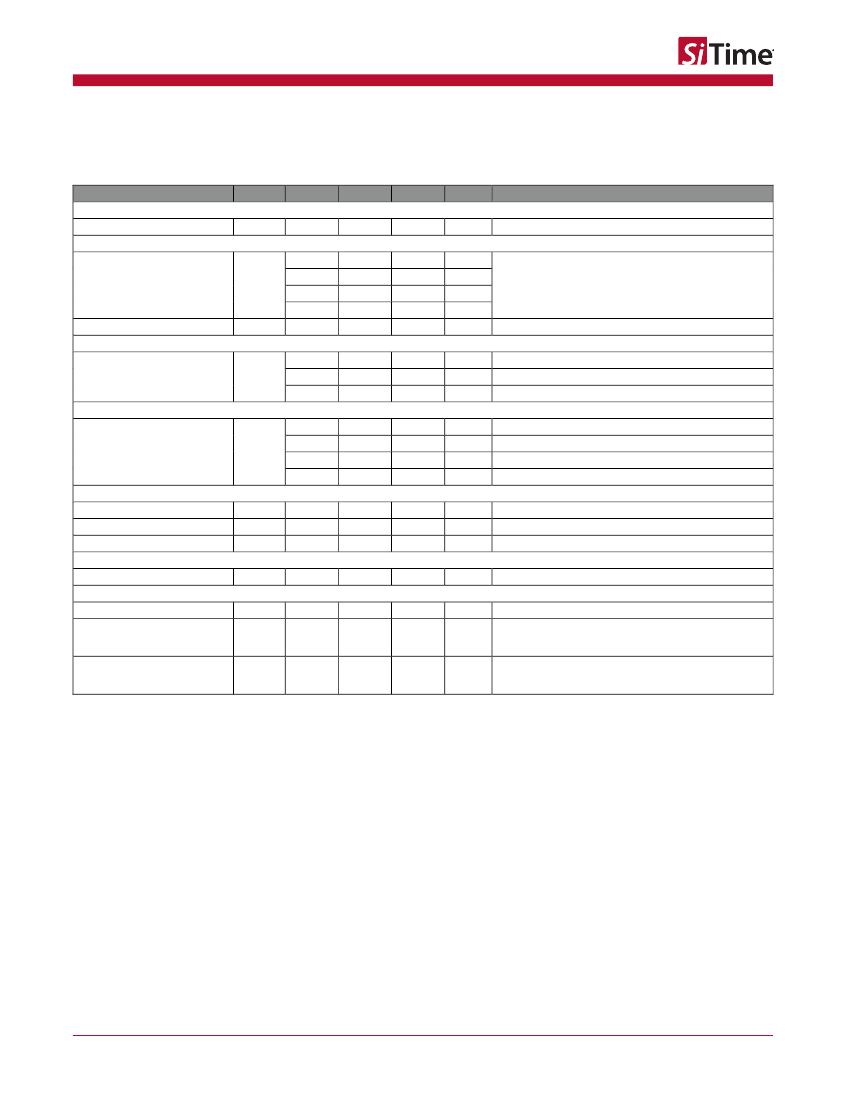
Table 1. Electrical Characteristics – Common to LVPECL, LVDS and HCSL
Parameter
Output Frequency Range
Symbol
f
Min.
1
Typ.
–
–
–
–
–
±1
–
–
–
Max.
340
Unit
MHz
Condition
Factory or user programmable, accurate to 6 decimal places
Frequency Range
Frequency Stability
Frequency Stability
F_stab
-10
-20
-25
-50
First Year Aging
F_1y
–
+10
+20
+25
+50
–
ppm
ppm
ppm
ppm
ppm
°C
°C
°C
1
st
-year aging at 25°C
Inclusive of initial tolerance, operating temperature, rated
power supply voltage and load variations.
Temperature Range
Operating Temperature Range
T_use
-20
-40
-40
+70
+85
+105
Supply Voltage
Supply Voltage
Vdd
2.97
2.7
2.52
2.25
3.3
3.0
2.8
2.5
–
–
100
–
–
–
3.63
3.3
3.08
2.75
–
30%
–
V
V
V
V
Extended Commercial
Industrial
Extended Industrial. Available only for I
2
C operation, not SPI.
Input Characteristics – OE Pin
Input Voltage High
Input Voltage Low
Input Pull-up Impedance
VIH
VIL
Z_in
70%
–
–
Vdd
Vdd
kΩ
OE pin
OE pin
OE pin, logic high or logic low
Output Characteristics
Duty Cycle
DC
45
–
–
55
%
Startup and Output Enable/Disable Timing
Start-up Time
Output Enable/Disable Time –
Hardware control via OE pin
Output Enable/Disable Time –
Software control via I
2
C/SPI
T_start
T_oe_hw
3.0
3.8
ms
µs
Measured from the time Vdd reaches its rated minimum value
Measured from the time OE pin reaches rated VIH and VIL to
the time clock pins reach 90% of swing and high-Z.
See
Figure 9
and
Figure 10
Measured from the time the last byte of command is
transmitted via I
2
C/SPI (reg1) to the time clock pins reach 90%
of swing and high-Z. See
Figure 30
and
Figure 31
T_oe_sw
–
–
6.5
µs
Rev 1.01
Page 4 of 45
www.sitime.com
SiT3521
1 to 340 MHz Elite Platform I2C/SPI Programmable Oscillator
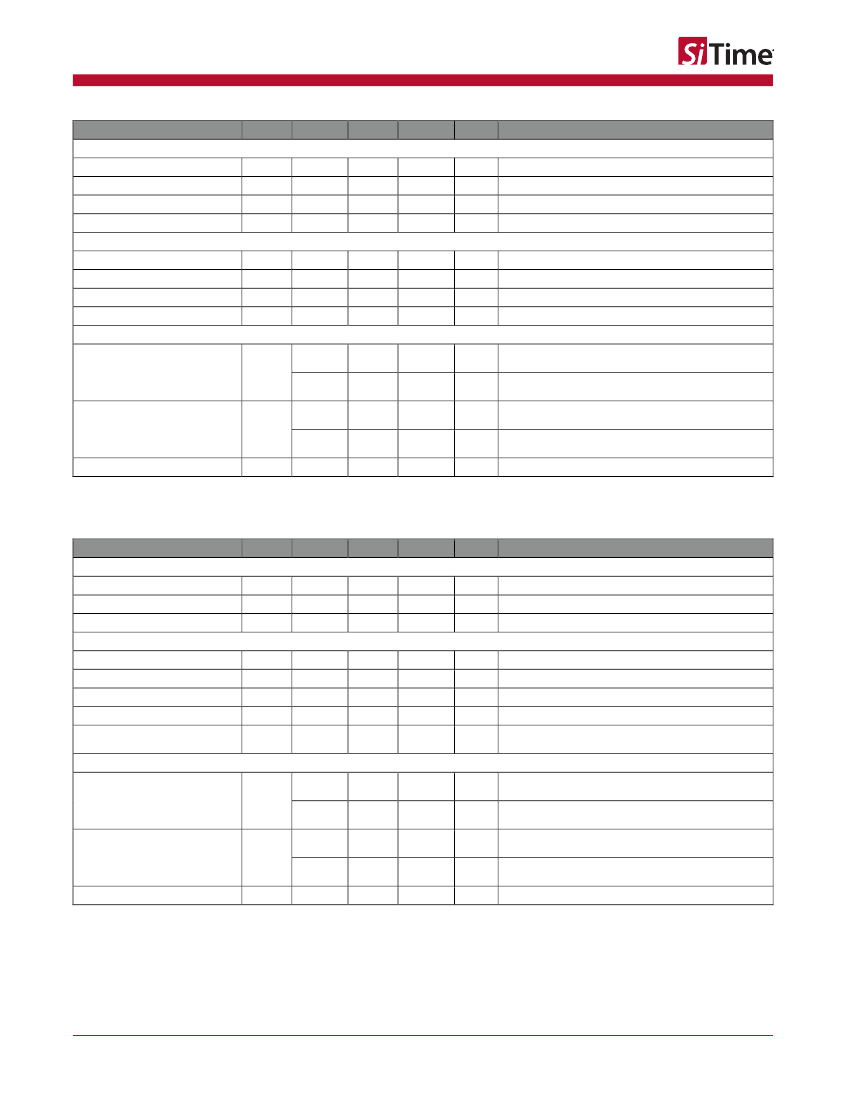
Table 2. Electrical Characteristics – LVPECL Specific
Parameter
Symbol
Min.
Typ.
Max.
Unit
Condition
Current Consumption
Current Consumption
OE Disable Supply Current
Output Disable Leakage Current
Maximum Output Current
Idd
I_OE
I_leak
I_driver
–
–
–
–
–
–
0.15
–
89
58
–
32
mA
mA
A
mA
Excluding Load Termination Current, Vdd = 3.3 V or 2.5 V
OE = Low
OE = Low
Maximum average current drawn from OUT+ or OUT-
Output Characteristics
Output High Voltage
Output Low Voltage
Output Differential Voltage Swing
Rise/Fall Time
VOH
VOL
V_Swing
Tr, Tf
Vdd - 1.1V
Vdd - 1.9V
1.2
–
–
–
1.6
225
Vdd - 0.7V
Vdd - 1.5V
2.0
290
Jitter
RMS Phase Jitter (random) –
DCO Mode Only
T_phj
–
–
RMS Phase Jitter (random) –
Any-frequency Mode Only
T_phj
–
–
RMS Period Jitter
[3]
Note:
3. Measured according to JESD65B.
T_jitt
–
0.225
0.1
0.225
0.11
1
0.340
0.14
0.340
0.15
1.6
ps
ps
ps
ps
ps
f = 156.25 MHz, Integration bandwidth = 12 kHz to 20 MHz,
all Vdd levels
f = 156.25, IEEE802.3-2005 10 GbE jitter mask integration
bandwidth = 1.875 MHz to 20 MHz, all Vdd levels
f = 156.25 MHz, Integration bandwidth = 12 kHz to 20 MHz,
all Vdd levels
f = 156.25, IEEE802.3-2005 10 GbE jitter mask integration
bandwidth = 1.875 MHz to 20 MHz, all Vdd levels
f = 100, 156.25 or 212.5 MHz, Vdd = 3.3 V or 2.5 V
V
V
V
ps
See
Figure 5
See
Figure 5
See
Figure 6
20% to 80%, see
Figure 6
Table 3. Electrical Characteristics – LVDS Specific
Parameter
Symbol
Min.
Typ.
Max.
Unit
Condition
Current Consumption
Current Consumption
OE Disable Supply Current
Output Disable Leakage Current
Idd
I_OE
I_leak
–
–
–
–
–
0.15
80
61
–
mA
mA
A
Excluding Load Termination Current, Vdd = 3.3 V or 2.5 V
OE = Low
OE = Low
Output Characteristics
Differential Output Voltage
Delta VOD
Offset Voltage
Delta VOS
Rise/Fall Time
VOD
ΔVOD
VOS
ΔVOS
Tr, Tf
250
–
1.125
–
–
–
–
–
–
400
455
50
1.375
50
470
Jitter
RMS Phase Jitter (random) –
DCO Mode Only
T_phj
–
–
RMS Phase Jitter (random) –
Any-frequency Mode Only
T_phj
–
–
RMS Period Jitter
[4]
Note:
4. Measured according to JESD65B.
T_jitt
–
0.21
0.1
0.21
0.1
1
0.275
0.12
0.367
0.12
1.6
ps
ps
ps
ps
ps
f = 156.25 MHz, Integration bandwidth = 12 kHz to 20 MHz,
all Vdd levels
f = 156.25, IEEE802.3-2005 10 GbE jitter mask integration
bandwidth = 1.875 MHz to 20 MHz, all Vdd levels
f = 156.25 MHz, Integration bandwidth = 12 kHz to 20 MHz,
all Vdd levels
f = 156.25, IEEE802.3-2005 10 GbE jitter mask integration
bandwidth = 1.875 MHz to 20 MHz, all Vdd levels
f = 100, 156.25 or 212.5 MHz, Vdd = 3.3 V or 2.5 V
mV
mV
V
mV
ps
f = 156.25MHz See
Figure 7
See
Figure 7
See
Figure 7
See
Figure 7
Measured with 2 pF capacitive loading to GND, 20% to 80%,
Please help me analyze the op amp integrator circuit. As shown in the figure, the red line is the input waveform, which passes through the op amp integrator, and the yellow line represents the output ...
[i=s] This post was last edited by yl20084784 on 2016-7-13 19:10 [/i] Here is a fresh and unconventional post. Purpose: Amplify a signal and then sample it with stm32. Problem: The op amp is powered b...
A long time ago, there was a group of people who decided to use 8 transistors that can be switched on and off to form different states to represent everything in the world. They saw that 8 switch stat...
More job details
Scan the QR code to learn more▲Online application QR codeRecognize QR code
Send me your resume!Resume delivery method 1:
Click on the job title in the previous picture (click the butt...
I encountered a strange problem when using uC/OS-II. That is, the message queue cannot store more than 2 messages. Here is my source code: /* Includes -------------------------------------------------...
1. Purpose Since the number of times the STM32 FLASH can be erased and written is limited, in order to protect our FLASH and extend the use time of the MCU, we can debug on the SRAM. SRAM is a ...[Details]
I recently upgraded MDK to V5.25 and found that there are many libraries in the Managing Run-Time Environment. Compared with the past, it is much better, from the bottom-level driver to the upper-le...[Details]
Using Systick timer to achieve delay 1. SysTick timer characteristics The SysTick timer is a 24-bit down counter, that is, when vlue is decremented to 0, an interrupt is triggered and the load va...[Details]
Because the STM32 HAL library only has millisecond-level delay for HAl_Delay(), in order to achieve accurate microsecond-level delay, Systick has to be modified. However, since it is used internally ...[Details]
ZTE was punished, and Hou Weigui, who had already retired, had to come out of retirement again and run around to mediate. Let's follow the embedded editor to learn about the relevant content.
...[Details]
From last year to now, competition in the photovoltaic inverter industry has become increasingly fierce. In addition to the introduction of new products, various marketing and promotion methods hav...[Details]
Recently, the "Smart Photovoltaic Industry Development Action Plan (2018-2020)" jointly issued by six departments has put this concept on the forefront. Photovoltaic smart solutions will become the ne...[Details]
China Energy Storage Network News:
"As the world's first third-generation blockchain, Anda Chain, which has China's independent intellectual property rights, will be launched globally in the ...[Details]
The analog watchdog of the ADC is used to check if the voltage is out of bounds. It has two upper and lower bounds, which can be set in the registers ADC_HTR and ADC_LTR respectively. The library fun...[Details]
Google may have foreseen the spread of artificial intelligence (
AI
) technology across apps, devices, and services, such as recognizing friends' faces in photos and giving smart speakers h...[Details]
The photovoltaic industry has become a new business card for China to the world. It not only represents China's leading technology, but also constantly breaks various records with its development spee...[Details]
If you do not use an external crystal on the STM32, the connection method of OSC_IN and OSC_OUT If you use the internal RC oscillator instead of an external crystal, please follow the following metho...[Details]
Example analysis: (using DMA mode) mian function: extern __IO u16 ADC_ConvertedValue; //The voltage value converted by ADC is defined in the context of ADC1_Init() float ADC_ConvertedValueLocal; ...[Details]
The frequency calculation formula of the PWM wave generated by the output comparison mode of the timer is: 72M/((2*(arr+1))*(psc+1) ) For example, if you set: PWM_Init(1000-1,72-1); (PWM_Init(arr,psc...[Details]

 Analog electronics
 京公网安备 11010802033920号
 EEWORLD