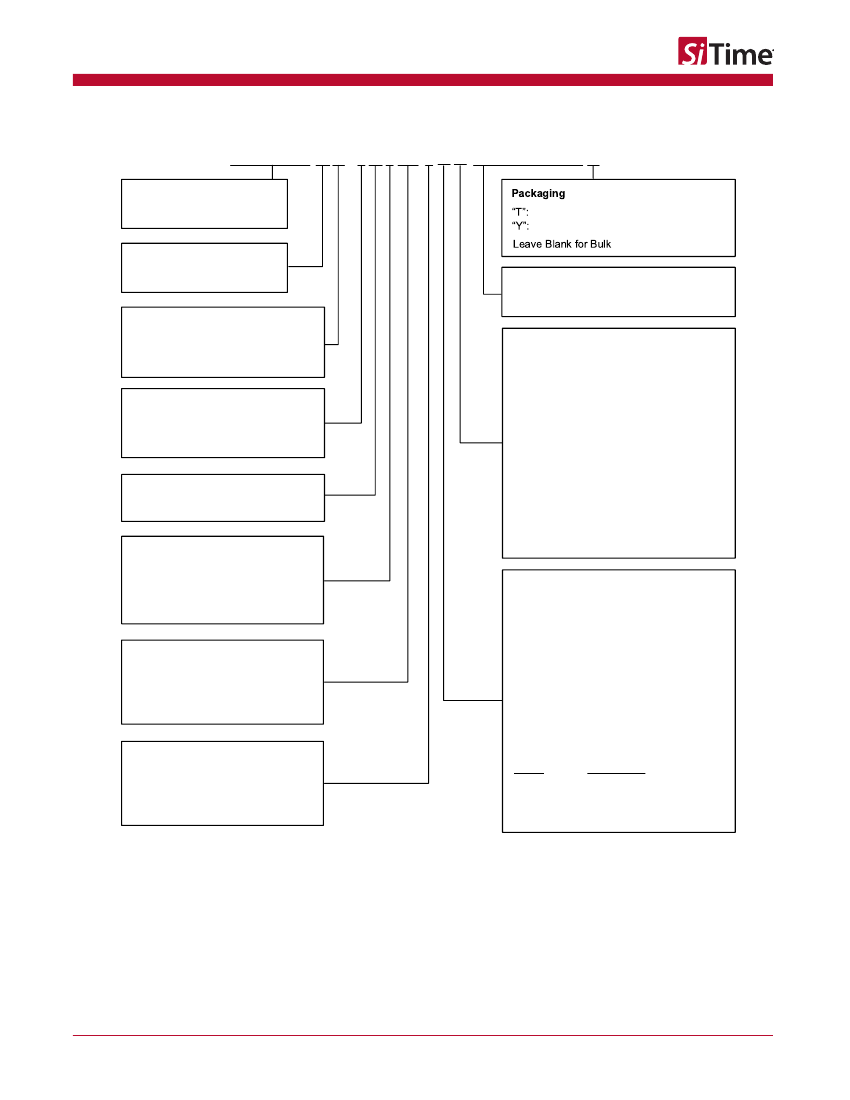
Ordering Information .................................................................................................................................................................... 2
User Programming Interface ..................................................................................................................................... 18
Start-up output frequency and signaling types ........................................................................................................... 18
Any-frequency function ............................................................................................................................................. 19
C/SPI Control Registers...................................................................................................................................................... 28
9 I
Register Address: 0x00. DCO Frequency Control Least Significant Word (LSW) .................................................... 28
Register Address: 0x01. OE Control, DCO Frequency Control Most Significant Word (MSW) ................................. 29
Register Address: 0x02. DCO PULL RANGE CONTROL ........................................................................................ 29
Register Address: 0x03. Frac-N PLL Feedback Divider Integer Value and Frac-N PLL Feedback Divider Fraction
Value MSW ............................................................................................................................................................... 30
Register Address: 0x05. Forward Divider, Driver Control ......................................................................................... 30
Register Address: 0x06. Driver Divider, Driver Control ............................................................................................. 31
2
C Operation ........................................................................................................................................................................ 32
10 I
I
2
C protocol ............................................................................................................................................................... 32
I
2
C Timing Specification ............................................................................................................................................ 35
I
2
C Device Address Modes ....................................................................................................................................... 36
Dimensions and Patterns ........................................................................................................................................................... 43
Additional Information ................................................................................................................................................................ 44
Revision History ......................................................................................................................................................................... 45
Rev 1.01
Page 3 of 45
www.sitime.com
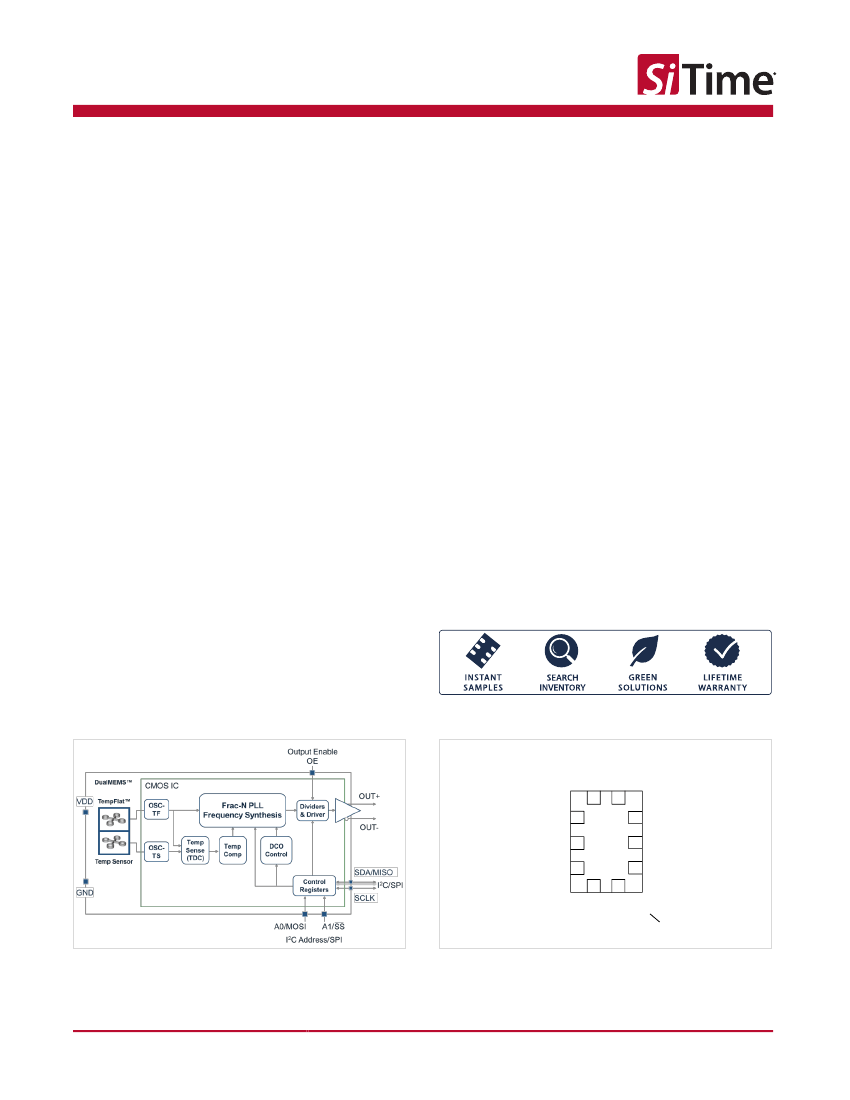
SiT3521
1 to 340 MHz Elite Platform I2C/SPI Programmable Oscillator
1 Electrical Characteristics
All Min and Max limits in the Electrical Characteristics tables are specified over temperature and rated operating voltage with
standard output terminations shown in the termination diagrams. Typical values are at 25°C and nominal supply voltage.
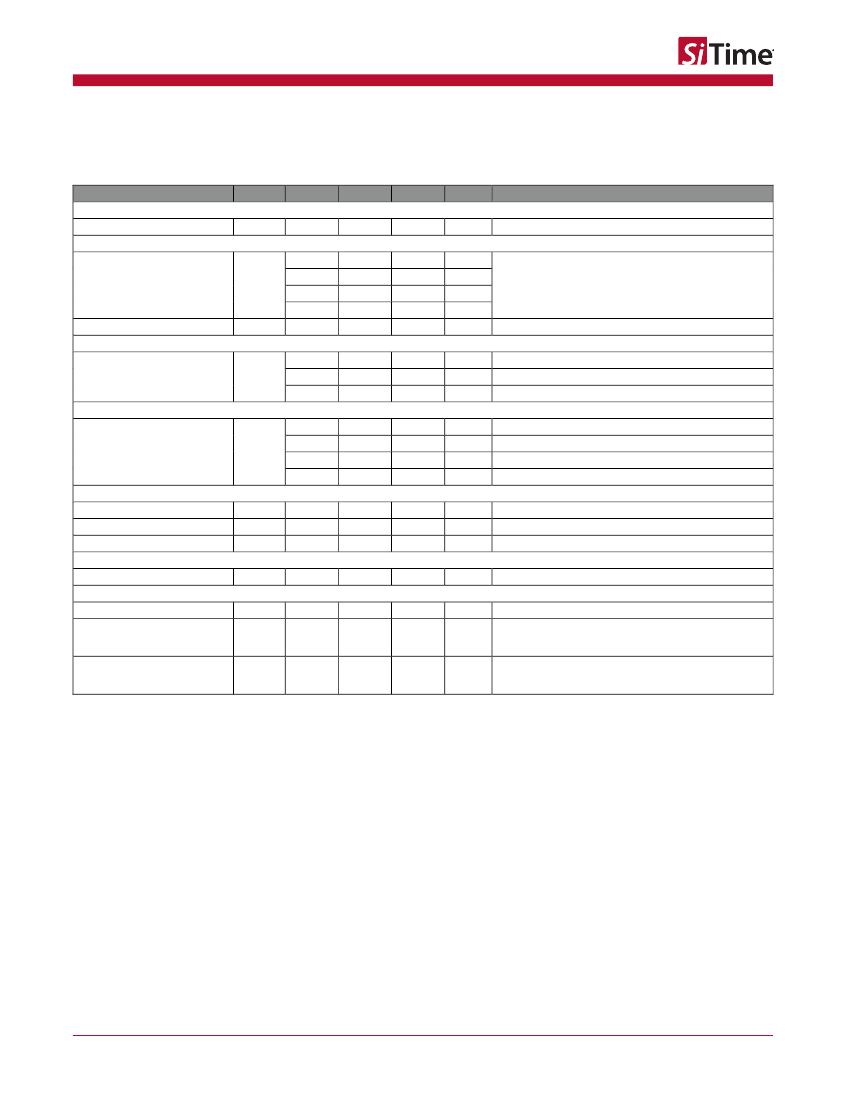
Table 1. Electrical Characteristics – Common to LVPECL, LVDS and HCSL
Parameter
Output Frequency Range
Symbol
f
Min.
1
Typ.
–
–
–
–
–
±1
–
–
–
Max.
340
Unit
MHz
Condition
Factory or user programmable, accurate to 6 decimal places
Frequency Range
Frequency Stability
Frequency Stability
F_stab
-10
-20
-25
-50
First Year Aging
F_1y
–
+10
+20
+25
+50
–
ppm
ppm
ppm
ppm
ppm
°C
°C
°C
1
st
-year aging at 25°C
Inclusive of initial tolerance, operating temperature, rated
power supply voltage and load variations.
Temperature Range
Operating Temperature Range
T_use
-20
-40
-40
+70
+85
+105
Supply Voltage
Supply Voltage
Vdd
2.97
2.7
2.52
2.25
3.3
3.0
2.8
2.5
–
–
100
–
–
–
3.63
3.3
3.08
2.75
–
30%
–
V
V
V
V
Extended Commercial
Industrial
Extended Industrial. Available only for I
2
C operation, not SPI.
Input Characteristics – OE Pin
Input Voltage High
Input Voltage Low
Input Pull-up Impedance
VIH
VIL
Z_in
70%
–
–
Vdd
Vdd
kΩ
OE pin
OE pin
OE pin, logic high or logic low
Output Characteristics
Duty Cycle
DC
45
–
–
55
%
Startup and Output Enable/Disable Timing
Start-up Time
Output Enable/Disable Time –
Hardware control via OE pin
Output Enable/Disable Time –
Software control via I
2
C/SPI
T_start
T_oe_hw
3.0
3.8
ms
µs
Measured from the time Vdd reaches its rated minimum value
Measured from the time OE pin reaches rated VIH and VIL to
the time clock pins reach 90% of swing and high-Z.
See
Figure 9
and
Figure 10
Measured from the time the last byte of command is
transmitted via I
2
C/SPI (reg1) to the time clock pins reach 90%
of swing and high-Z. See
Figure 30
and
Figure 31
T_oe_sw
–
–
6.5
µs
Rev 1.01
Page 4 of 45
www.sitime.com
SiT3521
1 to 340 MHz Elite Platform I2C/SPI Programmable Oscillator
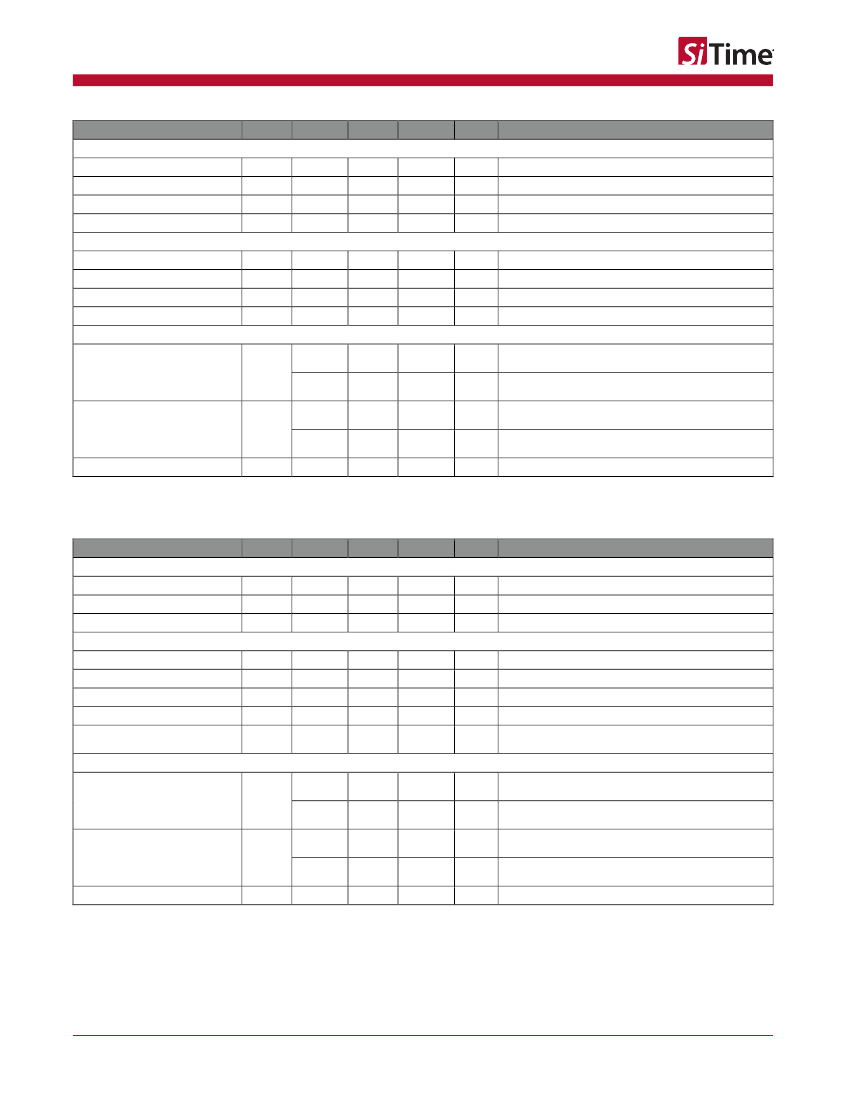
Table 2. Electrical Characteristics – LVPECL Specific
Parameter
Symbol
Min.
Typ.
Max.
Unit
Condition
Current Consumption
Current Consumption
OE Disable Supply Current
Output Disable Leakage Current
Maximum Output Current
Idd
I_OE
I_leak
I_driver
–
–
–
–
–
–
0.15
–
89
58
–
32
mA
mA
A
mA
Excluding Load Termination Current, Vdd = 3.3 V or 2.5 V
OE = Low
OE = Low
Maximum average current drawn from OUT+ or OUT-
Output Characteristics
Output High Voltage
Output Low Voltage
Output Differential Voltage Swing
Rise/Fall Time
VOH
VOL
V_Swing
Tr, Tf
Vdd - 1.1V
Vdd - 1.9V
1.2
–
–
–
1.6
225
Vdd - 0.7V
Vdd - 1.5V
2.0
290
Jitter
RMS Phase Jitter (random) –
DCO Mode Only
T_phj
–
–
RMS Phase Jitter (random) –
Any-frequency Mode Only
T_phj
–
–
RMS Period Jitter
[3]
Note:
3. Measured according to JESD65B.
T_jitt
–
0.225
0.1
0.225
0.11
1
0.340
0.14
0.340
0.15
1.6
ps
ps
ps
ps
ps
f = 156.25 MHz, Integration bandwidth = 12 kHz to 20 MHz,
all Vdd levels
f = 156.25, IEEE802.3-2005 10 GbE jitter mask integration
bandwidth = 1.875 MHz to 20 MHz, all Vdd levels
f = 156.25 MHz, Integration bandwidth = 12 kHz to 20 MHz,
all Vdd levels
f = 156.25, IEEE802.3-2005 10 GbE jitter mask integration
bandwidth = 1.875 MHz to 20 MHz, all Vdd levels
f = 100, 156.25 or 212.5 MHz, Vdd = 3.3 V or 2.5 V
V
V
V
ps
See
Figure 5
See
Figure 5
See
Figure 6
20% to 80%, see
Figure 6
Table 3. Electrical Characteristics – LVDS Specific
Parameter
Symbol
Min.
Typ.
Max.
Unit
Condition
Current Consumption
Current Consumption
OE Disable Supply Current
Output Disable Leakage Current
Idd
I_OE
I_leak
–
–
–
–
–
0.15
80
61
–
mA
mA
A
Excluding Load Termination Current, Vdd = 3.3 V or 2.5 V
OE = Low
OE = Low
Output Characteristics
Differential Output Voltage
Delta VOD
Offset Voltage
Delta VOS
Rise/Fall Time
VOD
ΔVOD
VOS
ΔVOS
Tr, Tf
250
–
1.125
–
–
–
–
–
–
400
455
50
1.375
50
470
Jitter
RMS Phase Jitter (random) –
DCO Mode Only
T_phj
–
–
RMS Phase Jitter (random) –
Any-frequency Mode Only
T_phj
–
–
RMS Period Jitter
[4]
Note:
4. Measured according to JESD65B.
T_jitt
–
0.21
0.1
0.21
0.1
1
0.275
0.12
0.367
0.12
1.6
ps
ps
ps
ps
ps
f = 156.25 MHz, Integration bandwidth = 12 kHz to 20 MHz,
all Vdd levels
f = 156.25, IEEE802.3-2005 10 GbE jitter mask integration
bandwidth = 1.875 MHz to 20 MHz, all Vdd levels
f = 156.25 MHz, Integration bandwidth = 12 kHz to 20 MHz,
all Vdd levels
f = 156.25, IEEE802.3-2005 10 GbE jitter mask integration
bandwidth = 1.875 MHz to 20 MHz, all Vdd levels
f = 100, 156.25 or 212.5 MHz, Vdd = 3.3 V or 2.5 V
mV
mV
V
mV
ps
f = 156.25MHz See
Figure 7
See
Figure 7
See
Figure 7
See
Figure 7
Measured with 2 pF capacitive loading to GND, 20% to 80%,
I came early this morning and fixed the problem last week. I connected the steering wheel of the servo and it can turn. Then I connected the motor and it can rotate normally. OK, we can make the final...
The 6-channel (i.e. 5+1) ball screen projection system is mainly realized by the precise positioning of 6 projectors using projection fusion technology, surface deformation processing technology, and ...
My FPGA uses a 40MHz crystal oscillator, and uses frequency division to generate a 100Hz square wave signal, but the high-frequency component of the waveform output by the oscilloscope is quite large!...
[i=s]This post was last edited by Rambo on 2018-6-22 09:38[/i] [p=26, null, left][color=rgb(79, 79, 79)][font=-apple-system, "]The following content is the basis for learning subsequent content, and m...
Happy New Year! My platform is pxa270+wince5.0. Now I have a little problem with the keyboard driver, please help me. Usually on the keyboard, shift+3 should display the # sign, but the shift+3 I want...
The rapid development of the Internet has realized high-speed information transmission and resource sharing, greatly facilitating people's lives. Embedded systems are widely used in various electr...[Details]
1. Introduction
RFID (radio frequency identification) is a non-contact automatic identification technology that emerged in the 1990s. It uses the characteristics of radio frequency signal prop...[Details]
introduction
Solar cells and LED lighting are typical applications of new energy and energy-saving and efficient technologies. Solar LED lighting uses solar cells to convert solar energy...[Details]
When choosing a laptop battery, you should consider several factors, such as power, appearance, and quality.
Regarding power, we often see that a manufacturer uses values such as the number ...[Details]
Electronic systems are located at different points on the automotive power bus and therefore often need to operate under very stringent power requirements. These include load dump, cold crank, very lo...[Details]
introduction
The emergence of high-performance, low-power embedded CPUs and high-reliability network operating systems has made it possible to implement applications with large amounts of comp...[Details]
Product series: PB-B-RS232/485 interface (hereinafter sometimes referred to as "interface") is a product in the PROFIBUS bus bridge series.
The main purpose of the bridge series ...[Details]
1 Introduction
Water resources are the basic conditions for human survival and the lifeline of economic development. The reality shows that due to the global shortage of water resources and th...[Details]
1. Introduction
Testing the temperature of steel billets before rolling is an important measure to ensure the quality of steel. Traditional manual testing is difficult to ensure product qu...[Details]
On the afternoon of July 10, Beijing time, Taiwan's largest chip designer MediaTek expects its smartphone chip shipments to grow by double digits in the third quarter of this year, and the company is ...[Details]
0 Introduction
In order to improve the automation control of shortwave transmitters, so that they can automatically process from far to near, the technicians here use the ICS system to complete the ...[Details]
The future energy storage hotspot is not coal or iron ore, but lithium. This lightest metal in nature may be the heaviest resource in the future energy landscape. China launched an ambitious electr...[Details]
Multimedia processors are often the most power-hungry devices in portable electronic devices. Common ways to reduce CPU power requirements are to reduce clock frequency or operating voltage, but th...[Details]
Features
POE technology can ensure the safety of existing structured cabling while ensuring the normal operation of the existing network and minimizing costs. The IEEE 802.3af standard is ...[Details]
1 Introduction to the overall system solution
The hardware part is mainly used to amplify the sound. When the sound is loud enough, the signal can be introduced into the microcontroller for de...[Details]

 NXP MCU
 京公网安备 11010802033920号
 EEWORLD