Project Overview:
The CD4017 is used as the main controller and buttons instead of potentiometers to achieve wind speed adjustment. This reduces size and avoids the problem of adjustment failure caused by poor potentiometer contact.
Motor speed is no longer controlled by PWM, but by voltage control, as it's a boost circuit and voltage control is more convenient.
The 3843 power chip is used as the PWM chip, reducing project manufacturing costs (a low-voltage PWM chip is significantly more expensive than a 3843).
The 3845 chip is used as the atomizing chip, achieving high atomization volume and low power consumption.
It includes power bank and flashlight functions for convenient outdoor use.
Project Cost:
There are two production cost options. One is to replicate the project source files (this option is more expensive and not recommended, and the project cost may exceed 150 yuan (including various coupons)). The other is to use the low-cost option I used (the PCB does not need color silkscreen printing, which also saves costs). Here's
a brief overview of the approximate project manufacturing cost. Besides the 50 yuan coupons for color screen printing, panel printing, 3D shell printing, and components, some components were salvaged from scrap metal boards, essentially free (including the fan blades). The motor is a type from DVD players, about 25mm in diameter and 12mm high, with wiring. I used a salvaged one, so it didn't cost me anything (actually, a new one only costs a few yuan with free shipping; you can buy it online). The atomizing disc was bought online; it's about 20mm in diameter, I think it was 3 for 10 yuan, I don't remember the exact price, but it wasn't expensive.
Note that if you are prototyping the 3D shell and ordering the panel, as well as purchasing components from LCSC Mall (all electronic components except motors and atomizers can be found on LCSC Mall), you will need to pay for shipping (my shipping cost is 7 yuan, but it may vary depending on the region, because I used LCSC Mall coupons and shipping vouchers; shipping the panel prototyping and components purchased from LCSC Mall together can save on shipping costs). However, please note that 3D prototyping coupons and shipping vouchers cannot be used together, meaning you still need to bear the shipping costs yourself (my shipping cost is 5 yuan, but it may vary depending on the region). Moreover, the more complex the model design, the higher the prototyping cost. In order to make free prototyping for this shell, I have removed most of the reinforcement and slotting designs. Of course, some parts still need to be prototyped back for secondary processing.
Function Overview:
Features a 5V/2A Type-C charging input and a 5V/2A USB output
; power display (short press to turn on, double press to turn off (can also control USB output))
; flashlight function (long press to turn on and off)
; atomization function
; 4-speed fan control
; one-button fan off and one-button fan and atomization off.
All functions can be controlled independently.
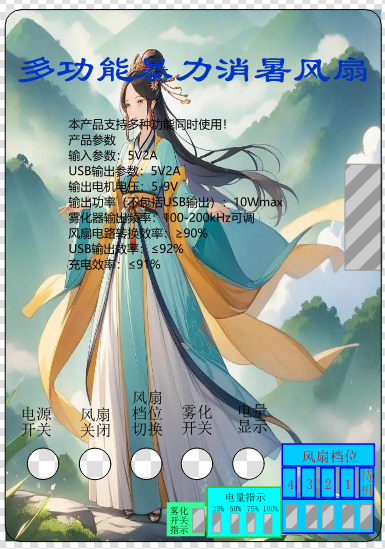
Product parameters
are detailed on the panel.
Materials required:
A sample panel, a set of 3D shells (self-printing can save costs), an atomizing plate and a motor (these two components are mentioned in the project cost), two high-capacity 18650 batteries (I used salvaged ones; appropriately sized soft-pack lithium batteries can be used, but the protection board current must be greater than 4A), a salvaged fan blade (approximately 75mm in diameter), and a soldered and tested circuit board.
For motherboard testing
, first connect the motherboard to the battery, measure the motor output voltage and check if the buttons operate normally.
Connect the motor, measure the conversion efficiency and maximum input current (normally should be ≤2.5A).
Connect the atomizing plate and turn on the atomization function. At this time, the green indicator light on the motherboard will light up. Adjust the potentiometer to maximize the atomization volume.
Turn on all functions and the fan speed to maximum. At this time, the motherboard should be able to control the flashlight, atomization function, and master switch function.
Once all the above tests pass, you can proceed with assembly .
For
the sample shell from the source file, you can skip the shell processing steps.
Prepare the sample shell (the shell has been modified here to enable free sampling and will differ from the source file).
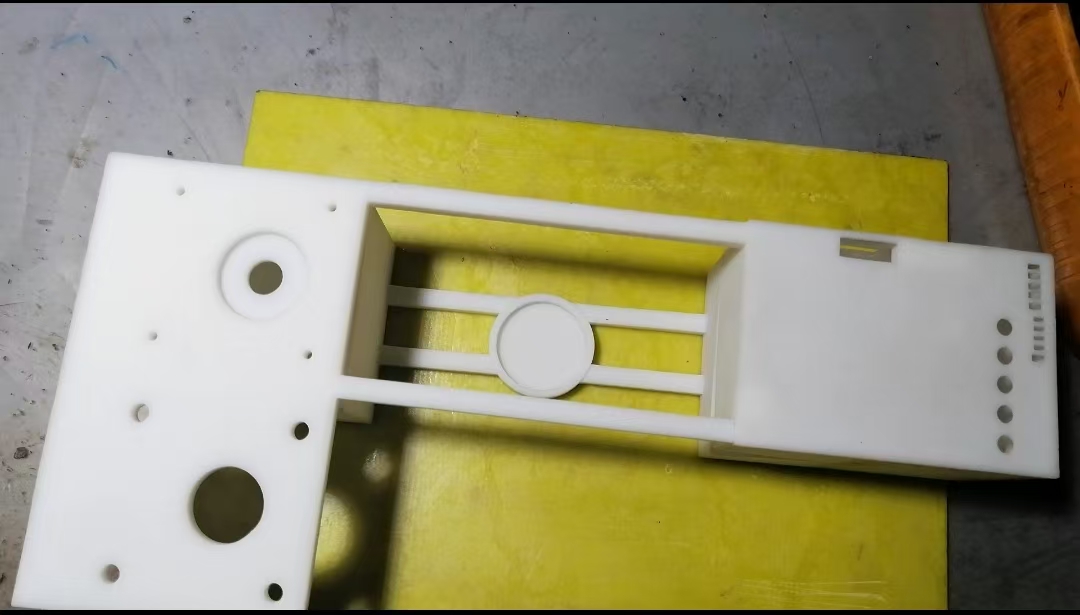
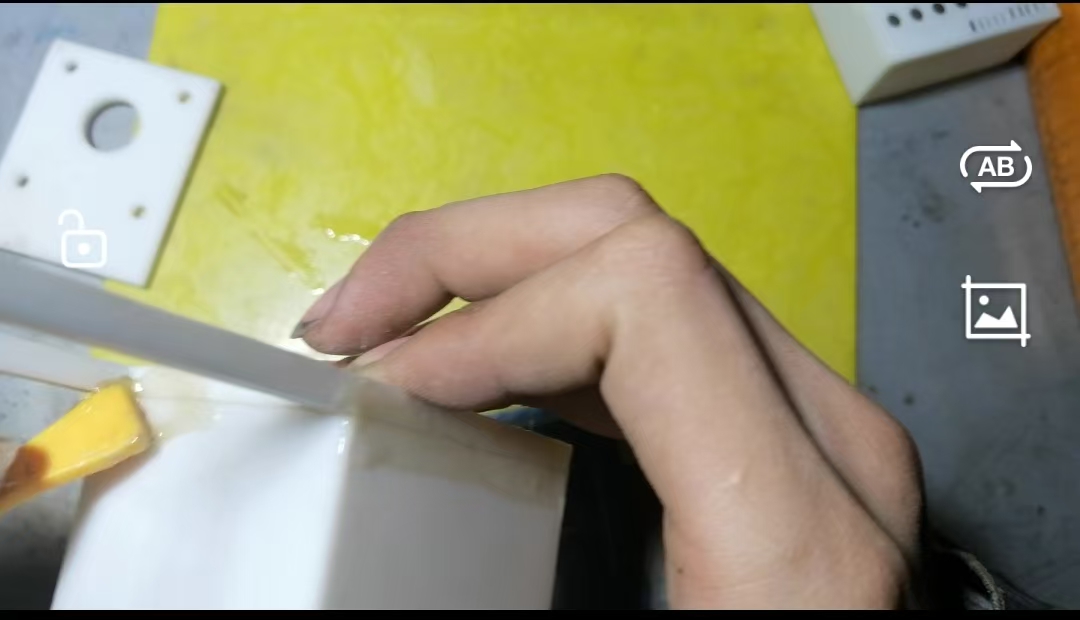
Cut as shown in the figure.
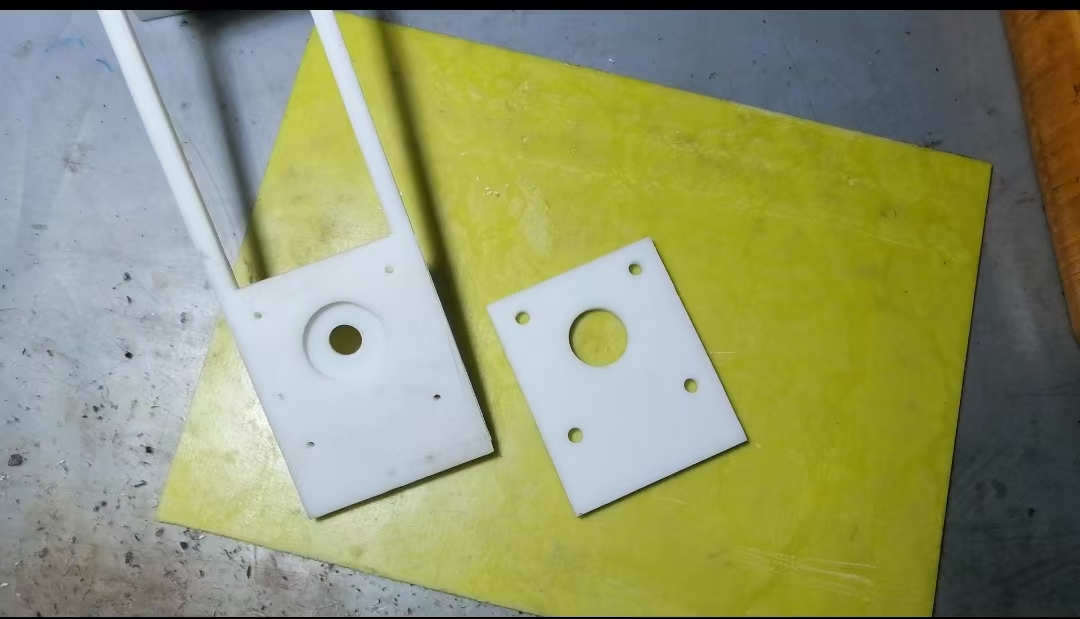
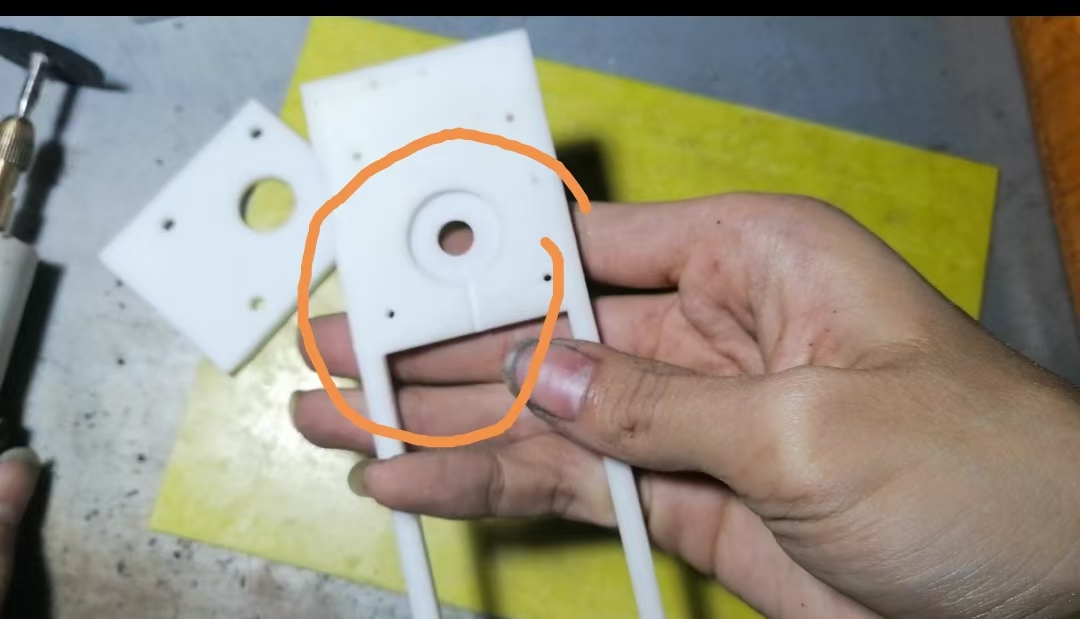
The circled area needs to be cut with a groove about 1.5mm wide and 1mm deep.
Here, a 5*5mm hole needs to be cut
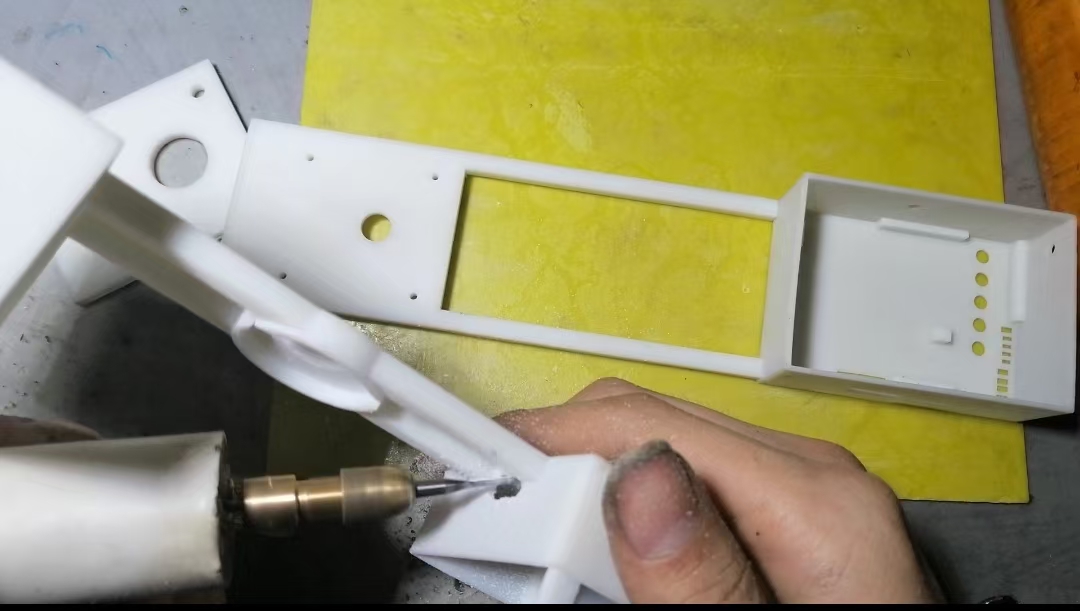
. Break it off at this position (it is recommended to cut it with a knife before breaking it off).
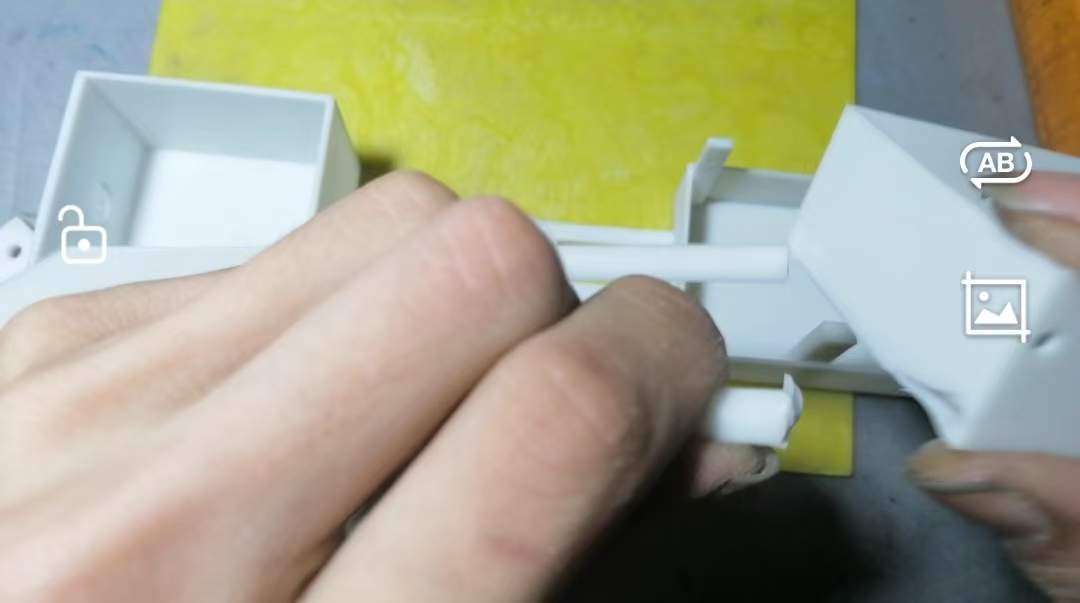
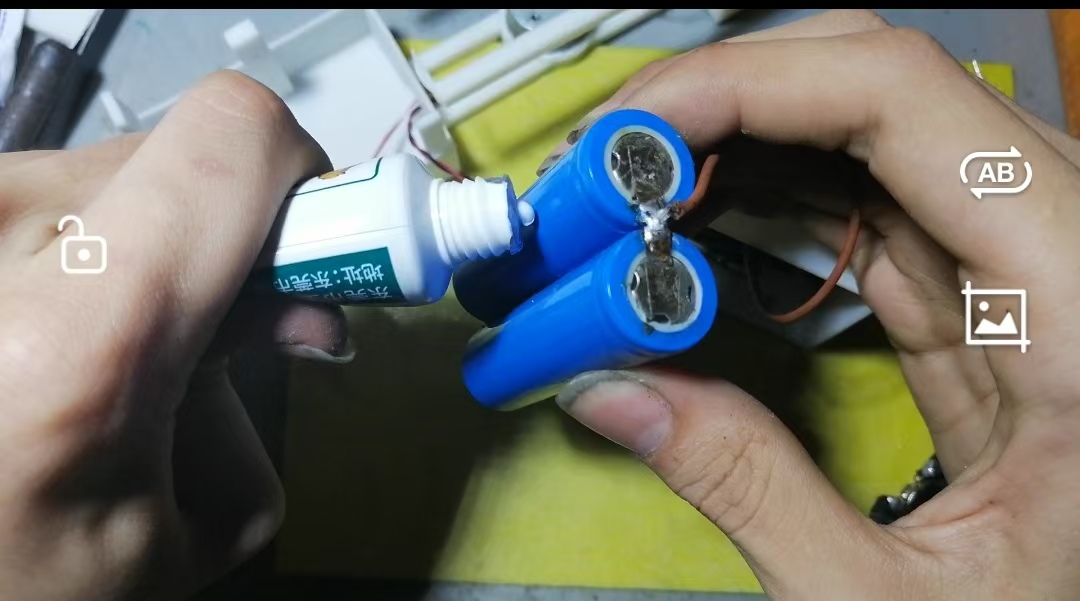
Then glue these two parts together with AB glue.
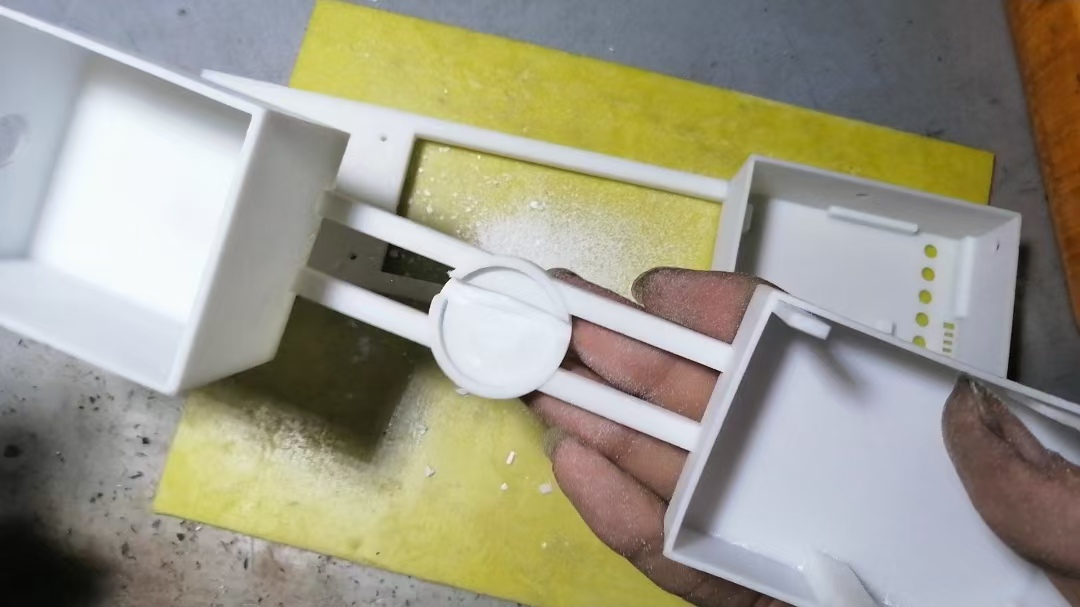
Here, cut a suitable wire groove (about 1mm deep and 2mm wide).
Apply 704 silicone rubber to the motor. Press the
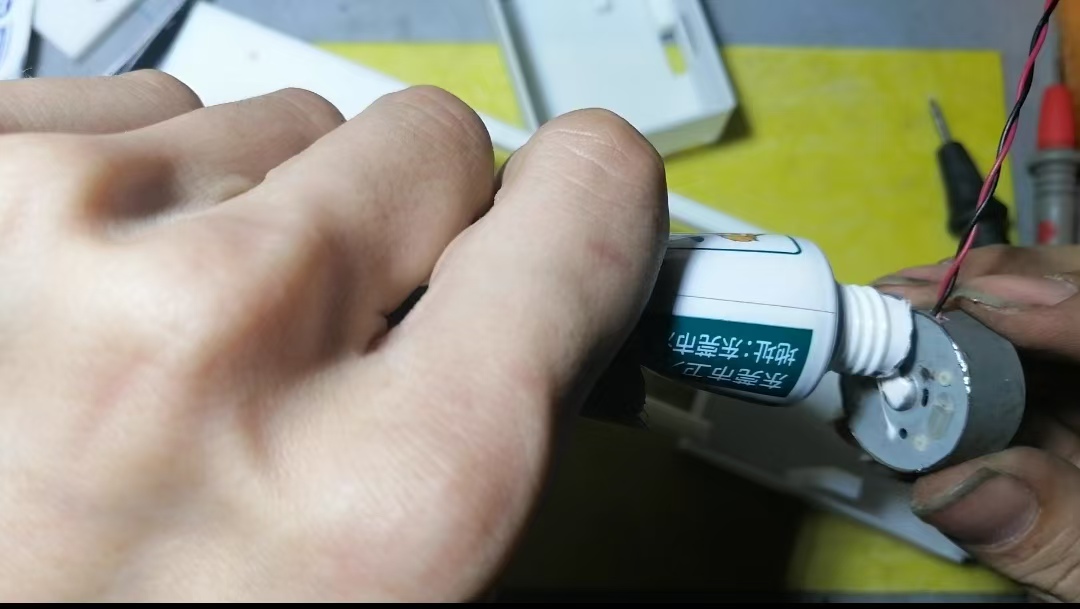
motor into the socket, leave an appropriate length for the atomizer wire, and thread the remaining wire through the hole.
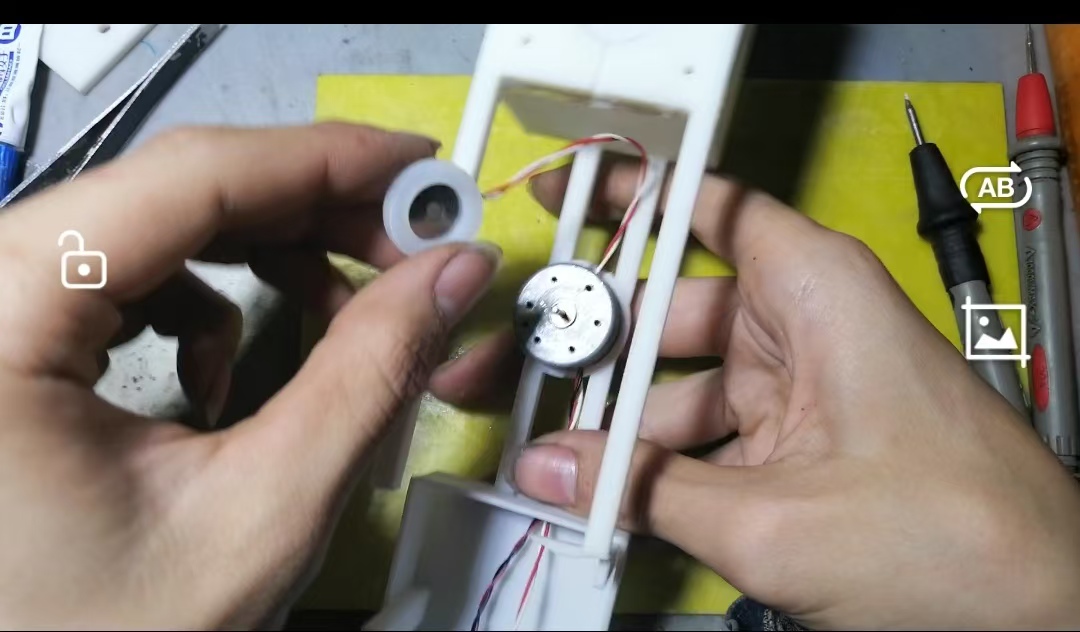
Place the circuit board into the casing.
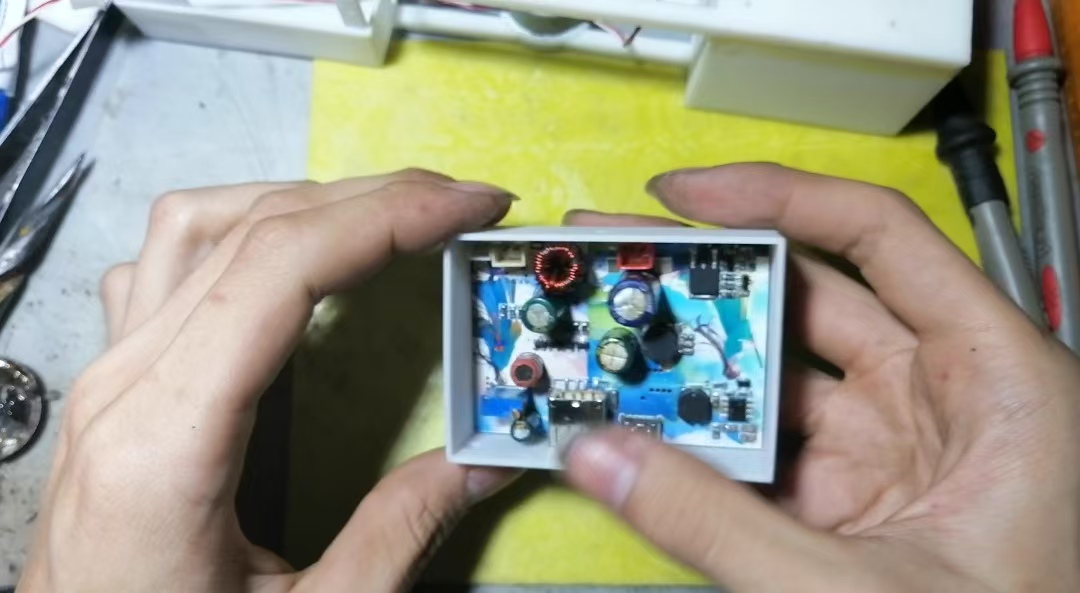
Apply the glue used for phone back covers to the back of the panel (remember to remove the protective film on the back).
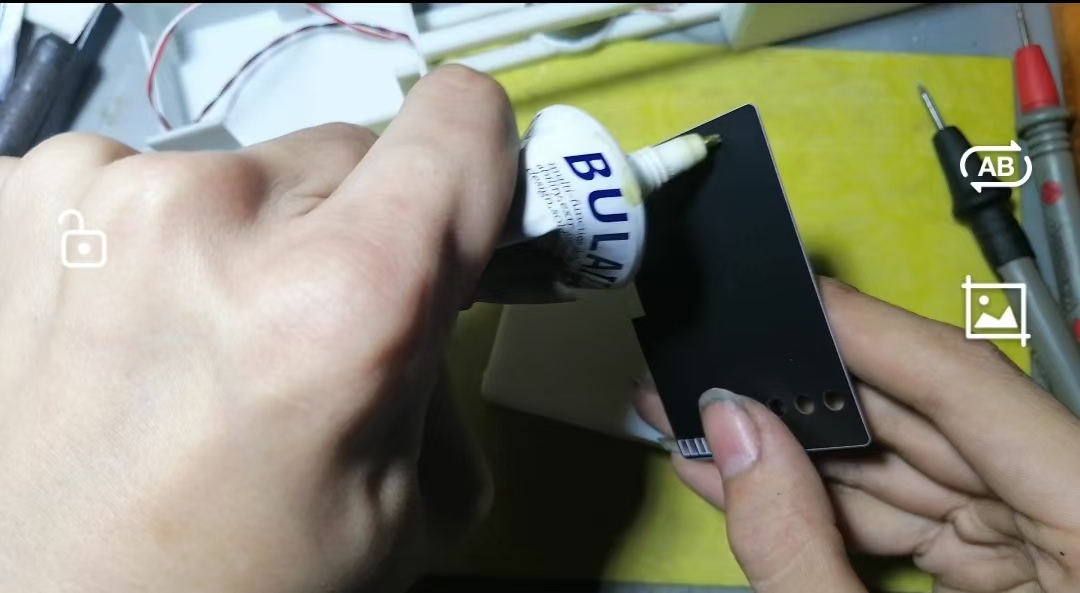
Align the panel holes and attach them.
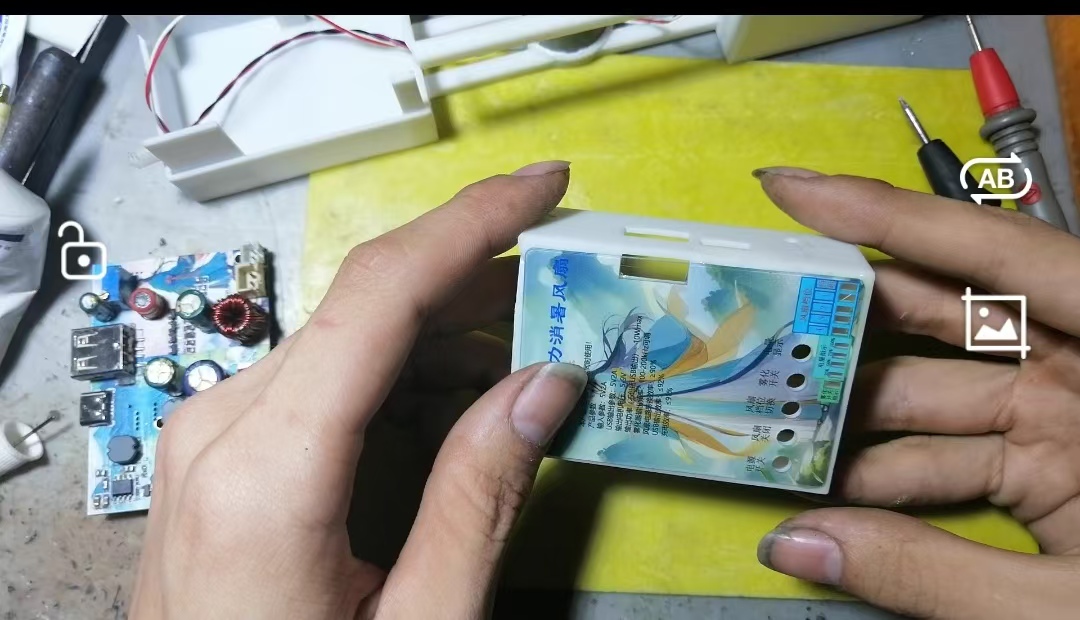
Attach all the ribbon
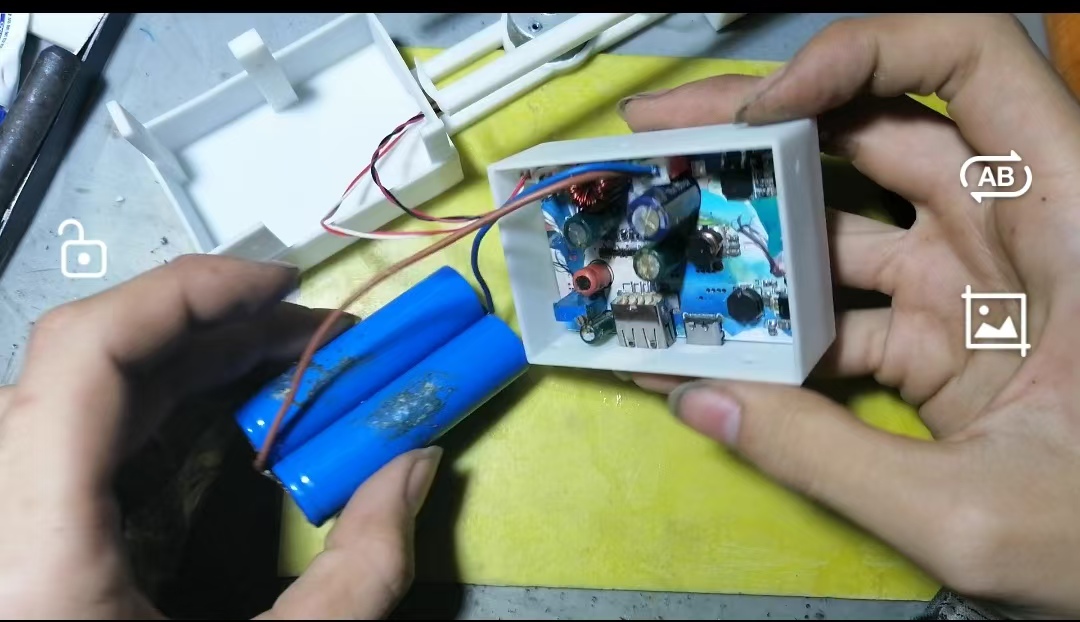
cables. Apply 704 silicone rubber to the battery (double-sided tape can be used instead).
Attach the battery, cover
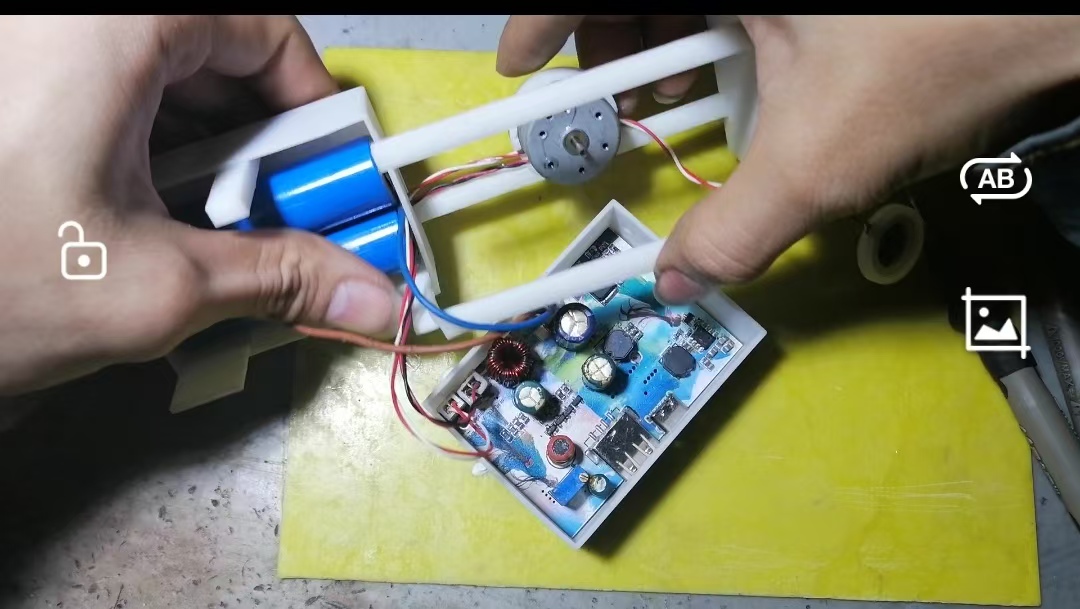
the casing
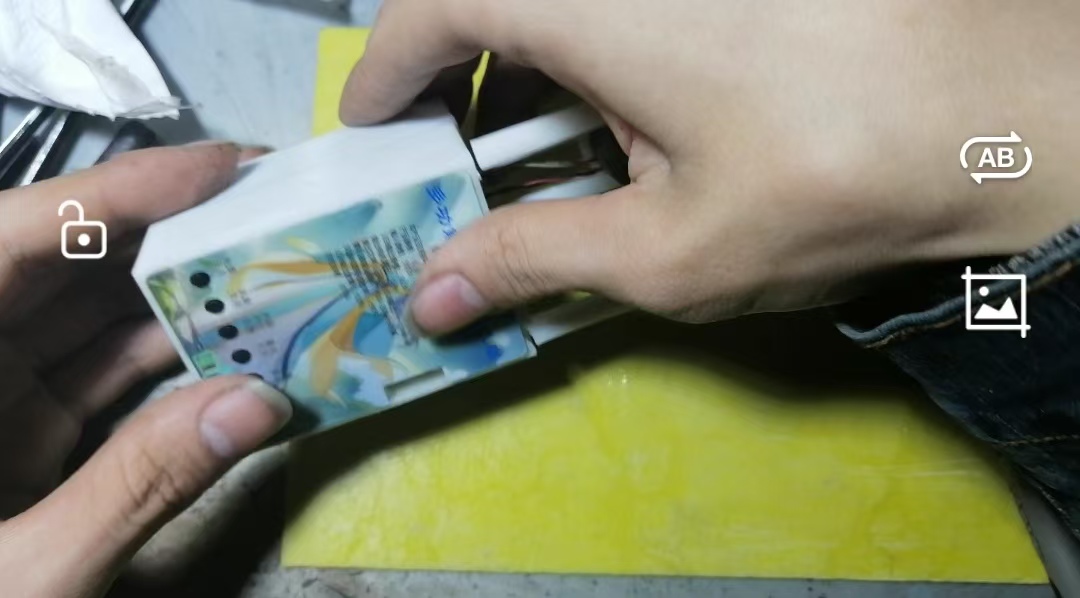
, and screw on the screws (actually, the circuit board is fixed by the internal support feet of the casing, so you don't need to glue the circuit board).
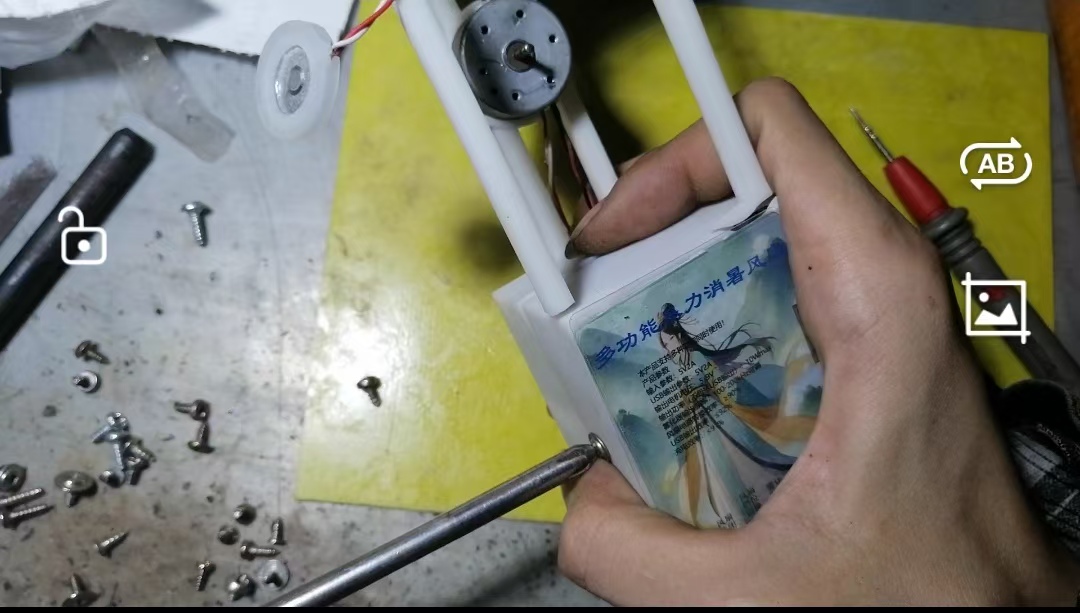
Use AB glue to firmly bond the broken parts. Secure
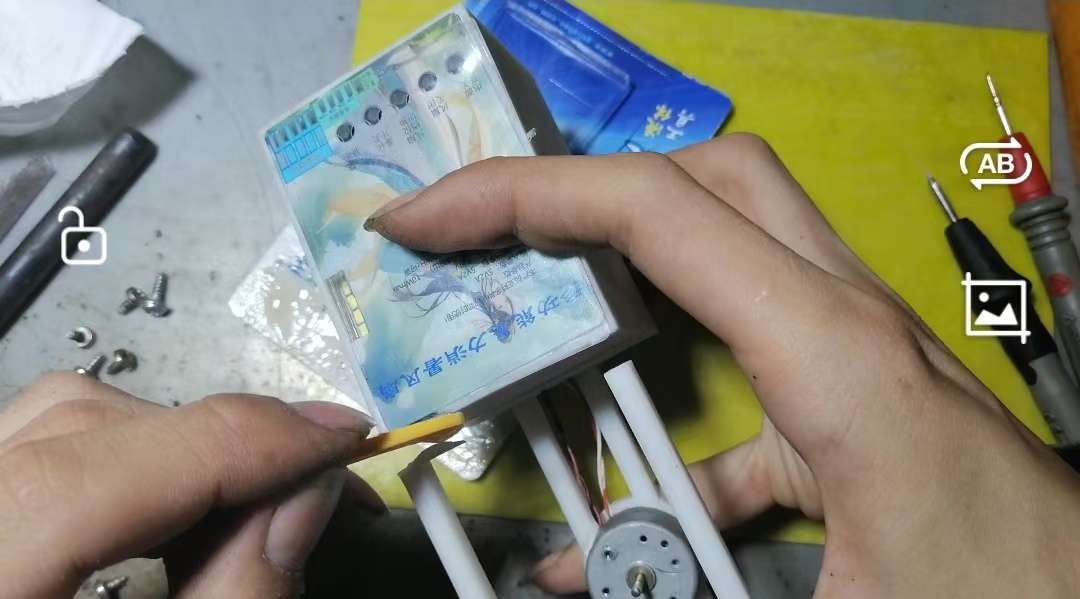
the atomizer wire with transparent tape.
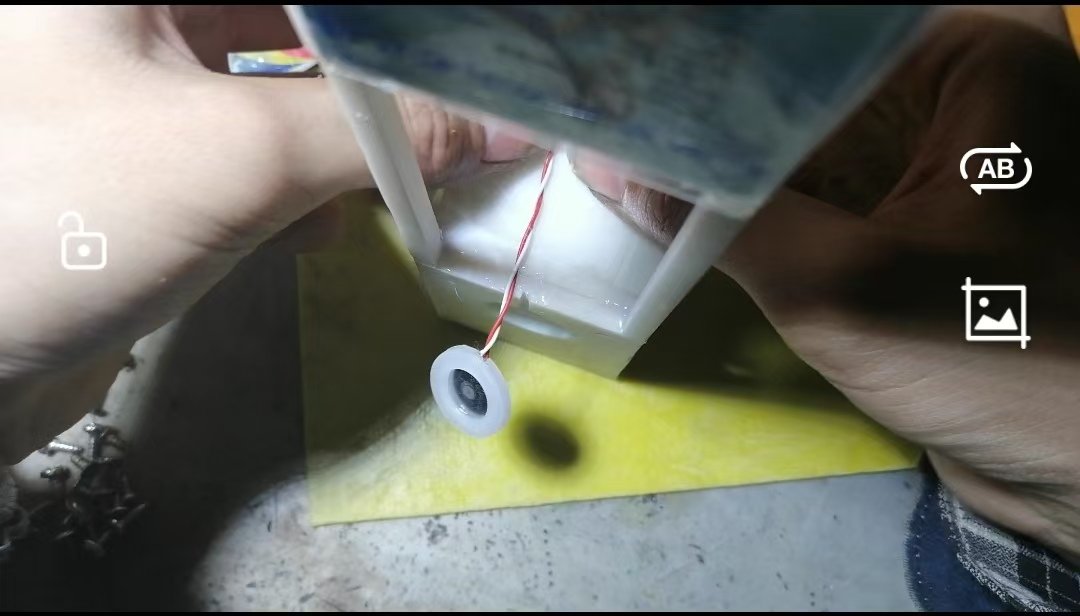
Place the atomizer and apply 704 silicone rubber to the screw holes to prevent water leakage.
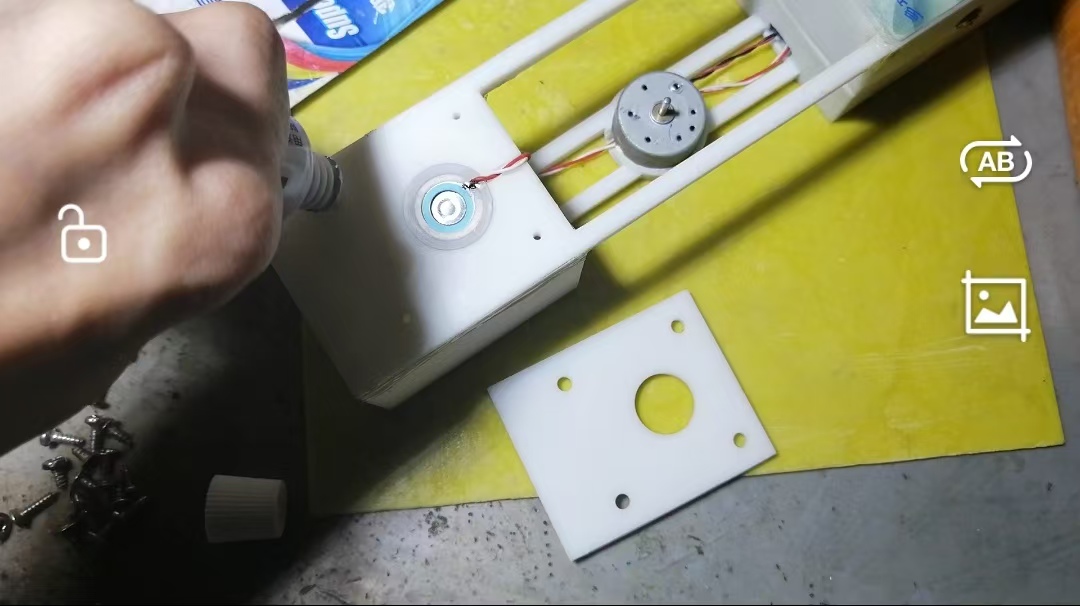
Cover the cover and screw on the screws .
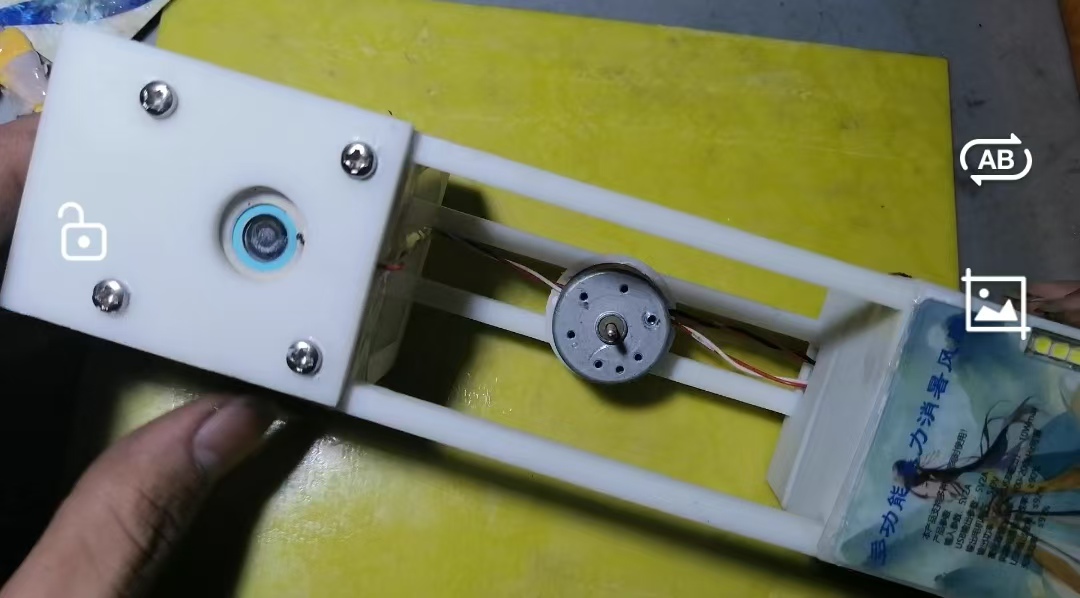
Install the fan blade (this fan blade is from a disassembled device; see the materials preparation for dimensions. You can also 3D print it or buy a ready-made one).
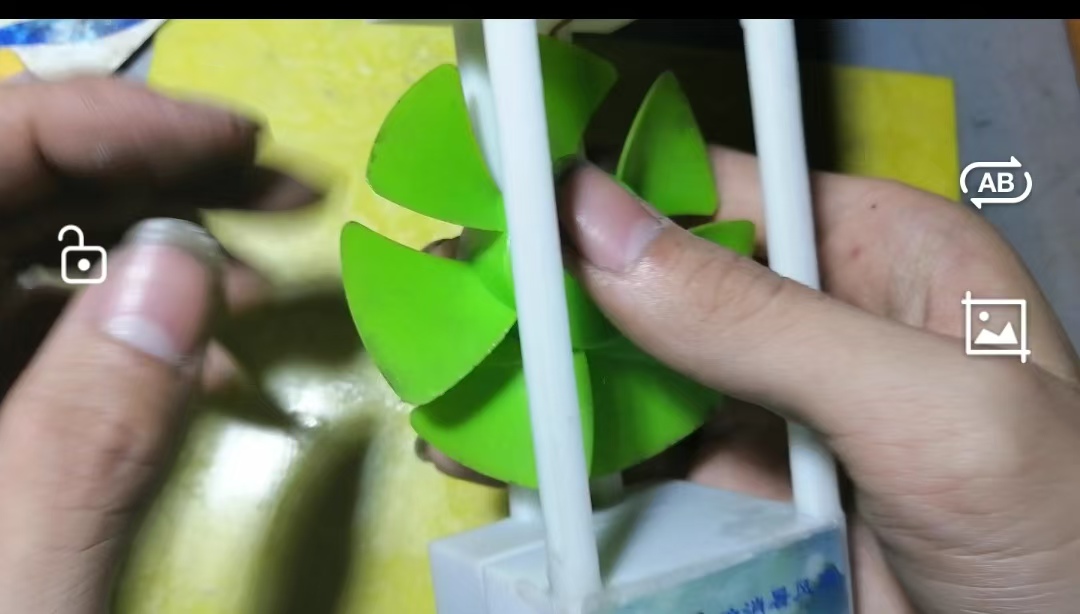
Remove the protective film from the front of the panel.
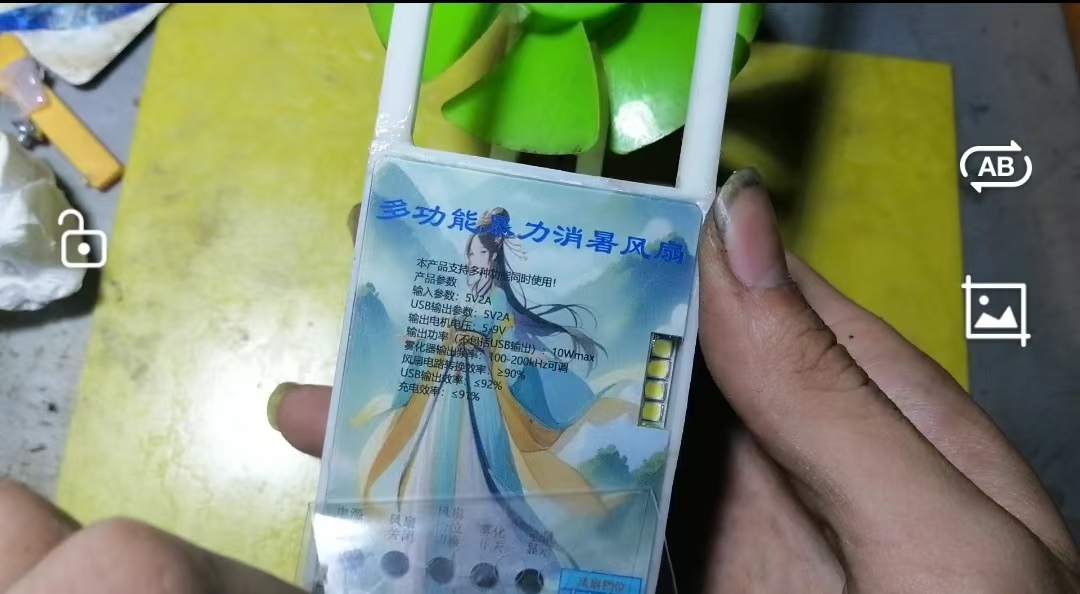
The assembly process is now complete.
Test video link:
Since the entire project (including test videos) was uploaded to Bilibili, only the link to the first video in the collection is provided here. To watch other videos, please go to the collection and select them.
Video link
: https://www.bilibili.com/video/BV1Bz42127J3?t=3.5
Notes on
transformer winding: Two 10*6*4.5mm magnetic rings are stacked together. Two 0.51mm enameled wires are wound together for 12 turns (make sure the winding is smooth). Then leave a tap and continue winding for 4 turns in the same direction. Then cut the center tap and install it on the circuit board according to the schematic.
To save costs, you can use a reduced version of the 3D shell file for prototyping, or you can design your own.
The attached file includes a test video.
The water inlet plug needs to be made by yourself using a rubber plug, or you can design your own.
If the power button cannot control the circuit, you need to adjust the parameters according to the text instructions on the schematic.
If the power switch circuit is normal, and there is voltage on the GS pin of the MOSFET controlling the power switch, but the subsequent circuit does not work, you need to replace the MOSFET with a new one (you can use a similar model MOSFET you have). In this case, the MOSFET's DS is usually open, but a multimeter cannot detect it, while the body diode is normal. Don't ask me how I know, because after checking this fault and replacing all the components, the only one left that wasn't replaced was this MOSFET. (Similarly, if the boost circuit is faulty (e.g., the switching transistor overheats abnormally, the drive signal is normal but it can't boost, the conversion efficiency is abnormal, etc.), you can also try replacing the MOSFET.)
Panel order parameters: 5mm thick acrylic sheet, ink-printed on the bottom, no adhesive backing (you can also choose the adhesive backing option when replicating). Two panel designs are provided in the attachment below: one with a cutout design, and the other with a raised button design.
A high-performance battery is recommended; ordinary batteries do not have sufficient discharge rate to support the device at full load.
The atomizer and motor cables will need to be extended if they are not long enough!
A Gerber file is included for easy ordering.








 京公网安备 11010802033920号


 891-041-21SS-322T-12