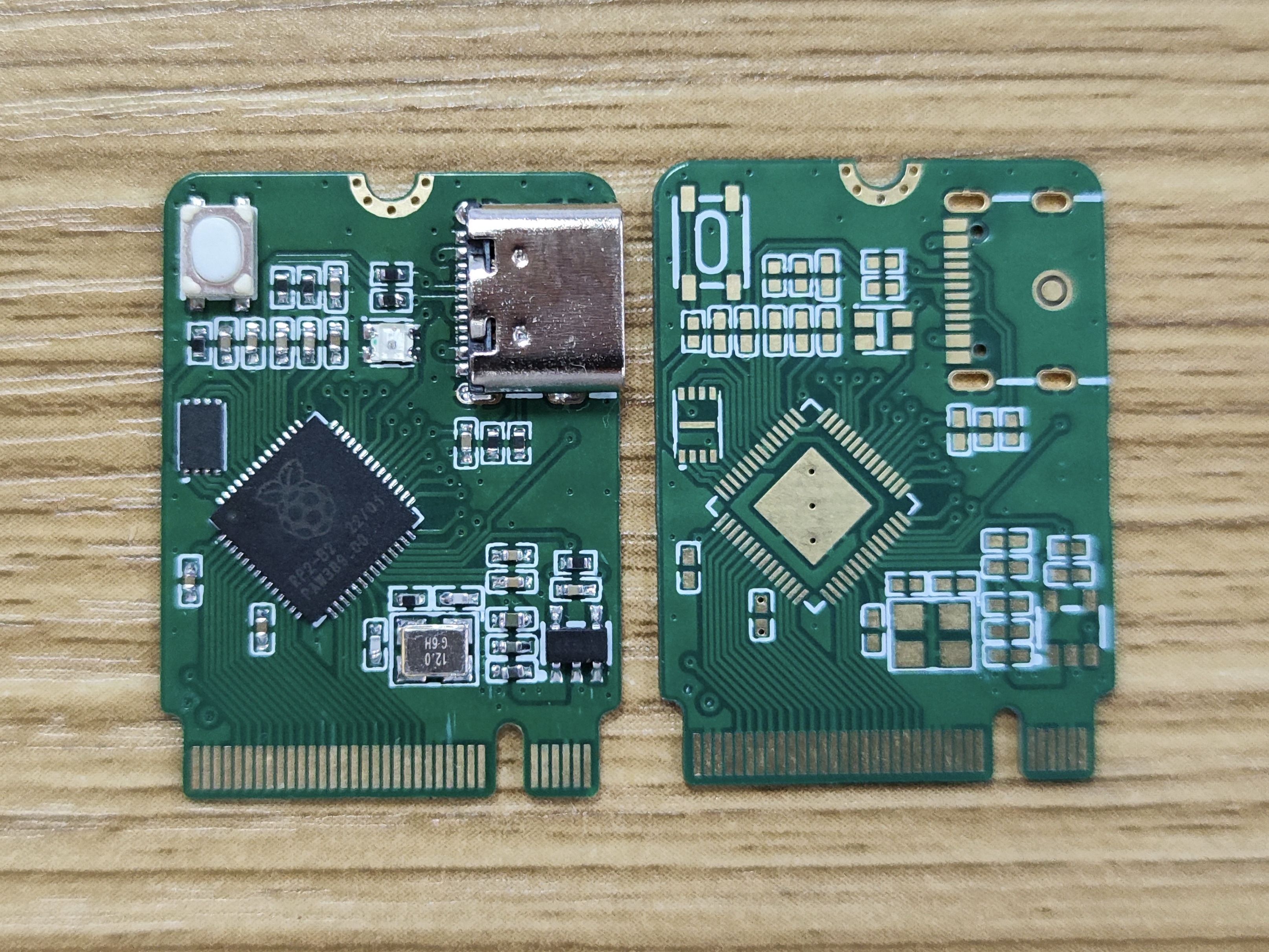
uses an M.2 B-KEY interface and a 2230 package, with an area only slightly larger than the PR2040 Zero by a few millimeters.
The original LEDs have been replaced with WS2812 RGB LEDs.
A reset button has been added (the preview image is from the first version, so it's not present).
All I/O ports are brought out.
Prototyping uses a four-layer board, 0.8mm thickness, and immersion gold plating.
This is a classic boost circuit that provides a stable 20V output.
This is a classic boost converter circuit, providing a stable 20V output with a maximum output of 1.5A. A heatsink is required during use; avoid touching the heatsink while it is in operation. A 12V battery is recommended as the input power source; insufficient input voltage will cause the module to overheat. This circuit has been verified to function correctly.
A low-cost DAPLink programmer with a ch32v203 controller that supports firmware flashing via USB.
The PCB design by this author has been modified and the circuit optimized.
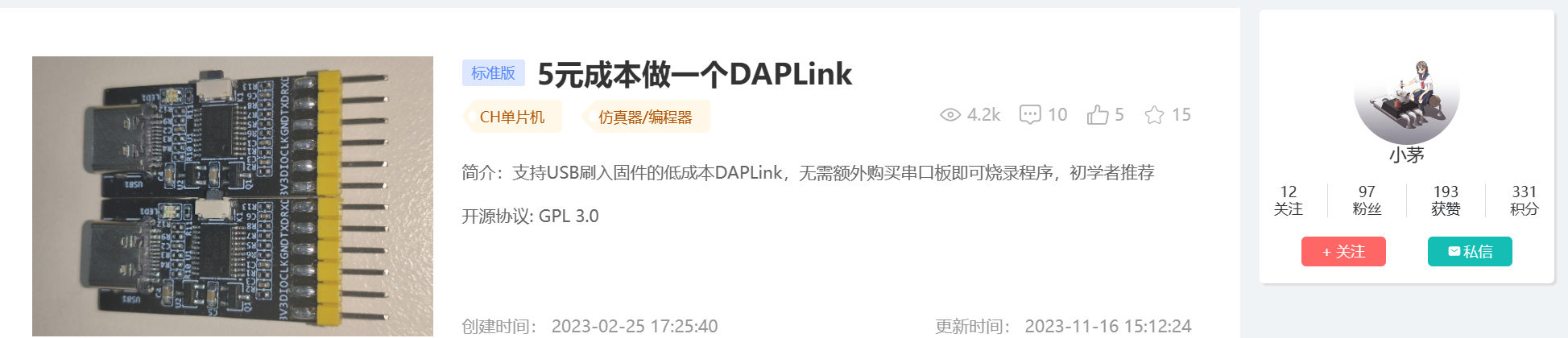
Firmware address: https://github.com/XIVN1987/DAPLink.
The programmer with the ch32v203 main controller supports 3.3V-5V output switching. In addition to DAPLink downloading, it supports serial port (UART) downloading and debugging. The RXD pin is already pulled up in the software; if a hardware pull-up is required, solder resistor R14. If no pull-up is needed, soldering is not necessary (in most cases, it works without soldering). Through processing of the TXD and RXD pins, it can adapt to all serial port downloaders on the market, enabling button-controlled downloading (after clicking download in the software, pressing the button will start the download), facilitating debugging.
DAPLink (2).hex
PDF_DPLink students - Low-cost downloader.zip
Altium_DPLink students - Low-cost downloader.zip
PADS_DPLink students - Low-cost downloader.zip
BOM_DPLink students-low-cost downloader.xlsx
95166
CH224K PD decoy board
The CH224K decoy board supports PD3.0/2.0, BC1.2 and other boost fast charging protocols.
Unauthorized commercial use is prohibited! If I catch you, I'll make sure you're haunted by nightmares, you'll be in big trouble!
CH224K Decoy Board
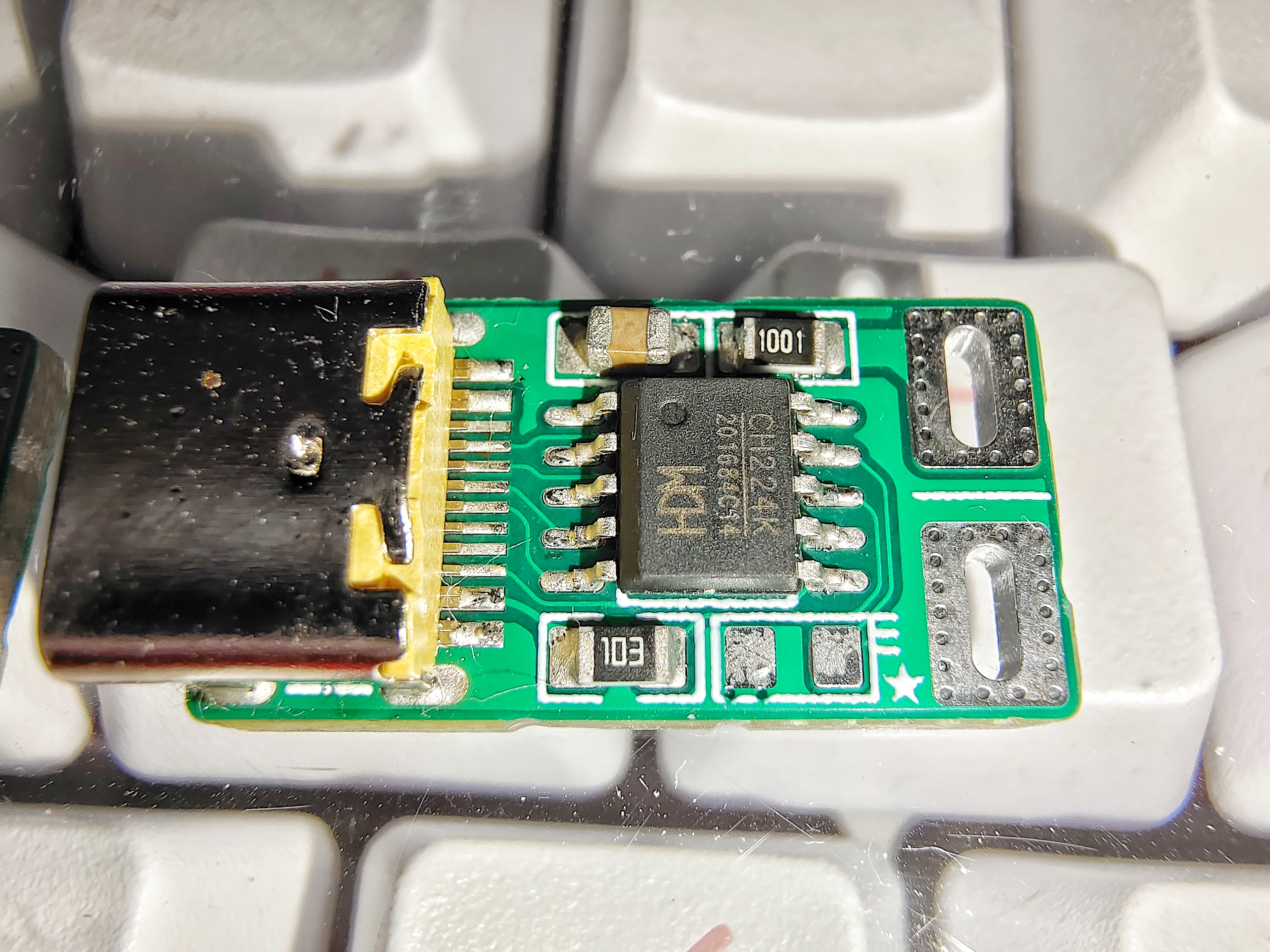
[Feel free to comment or message me with any questions about open source]
Function Introduction:
Interface: TYPE-C 16P female connector →→→ Large area soldering pads
Range: Maximum requested voltage level PD20V
Onboard Chip: CH224K
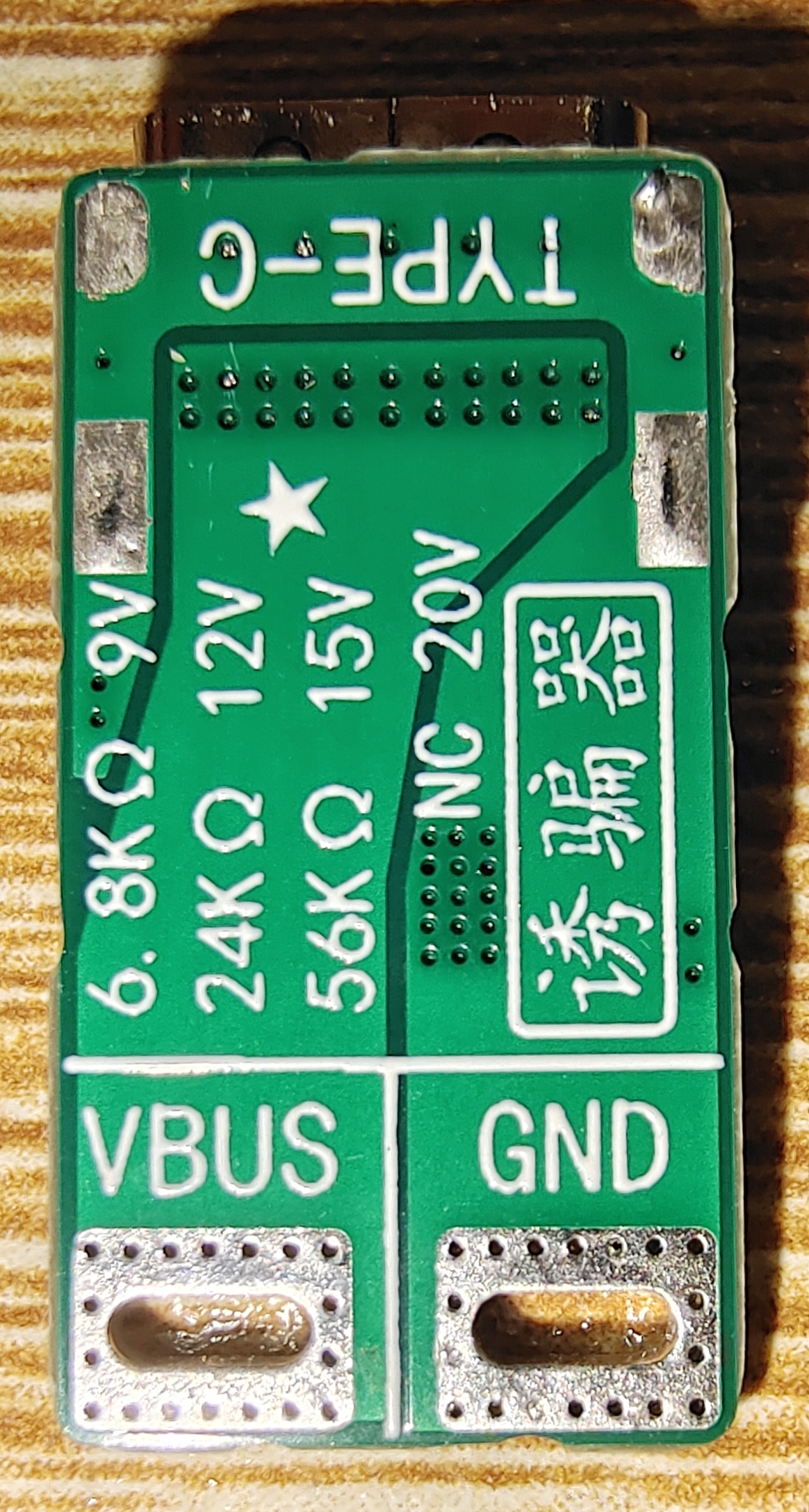
Requested Voltage Levels: Supports PD3.0/2.0, BC1.2 and other boost fast charging protocols 9V 12V 15V 20V
How to Use: You need at least one charger that supports the PD protocol. Ensure the voltage selection resistor value is correct. Plug the charger's TYPE-C data cable into the decoy board's TYPE-C female connector. Then, CH224K will communicate with the charger via protocol. After a successful handshake, the VBUS pad will have the corresponding voltage level.
Update Log:
Project successfully verified.
Open source project released on 2023/5/9.
Notes on 2024/4/19:
6.8K=9V, 24K=12V, 56K=15V, NC=20V. The voltage level selection method uses single resistor configuration.
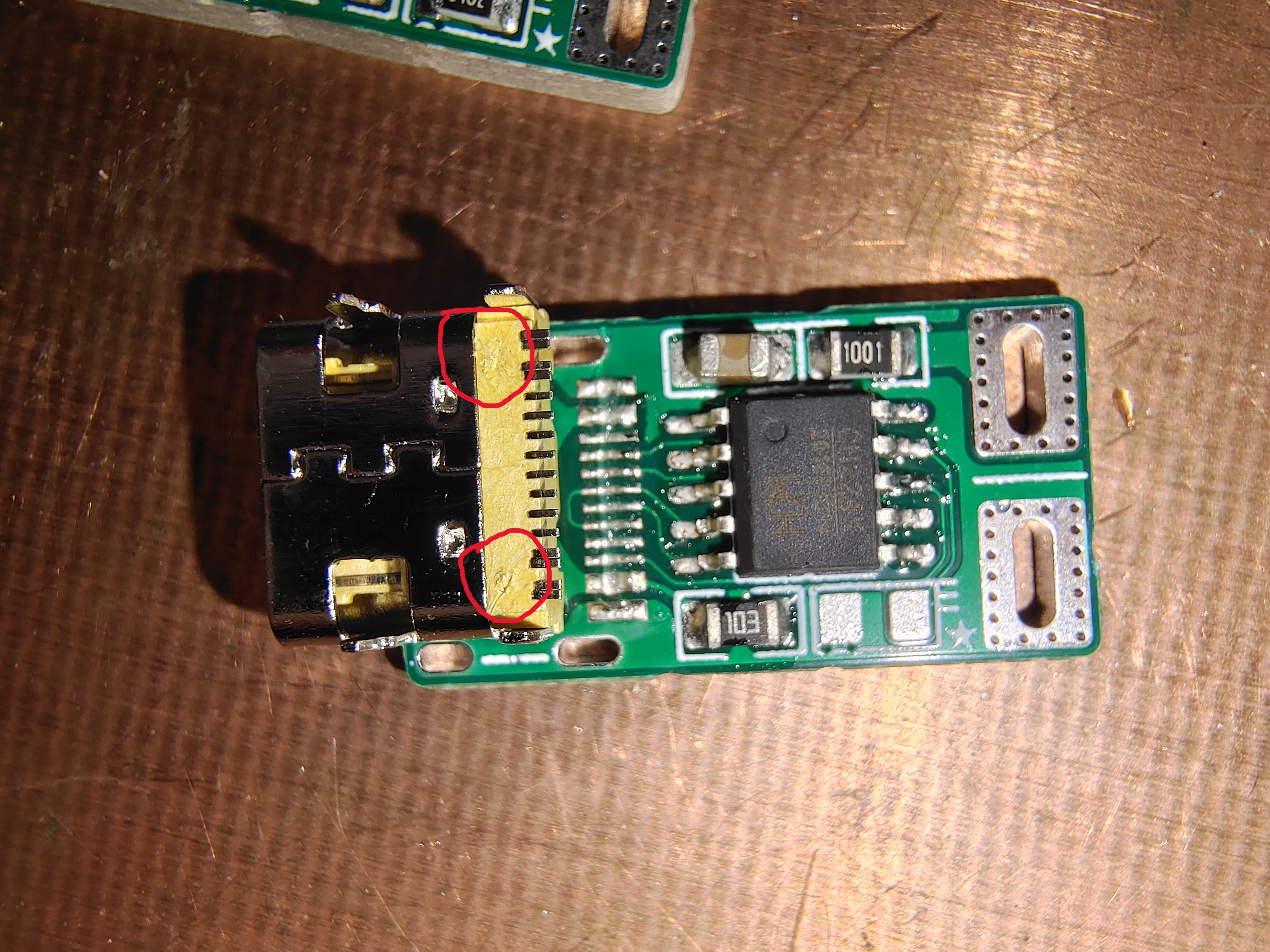
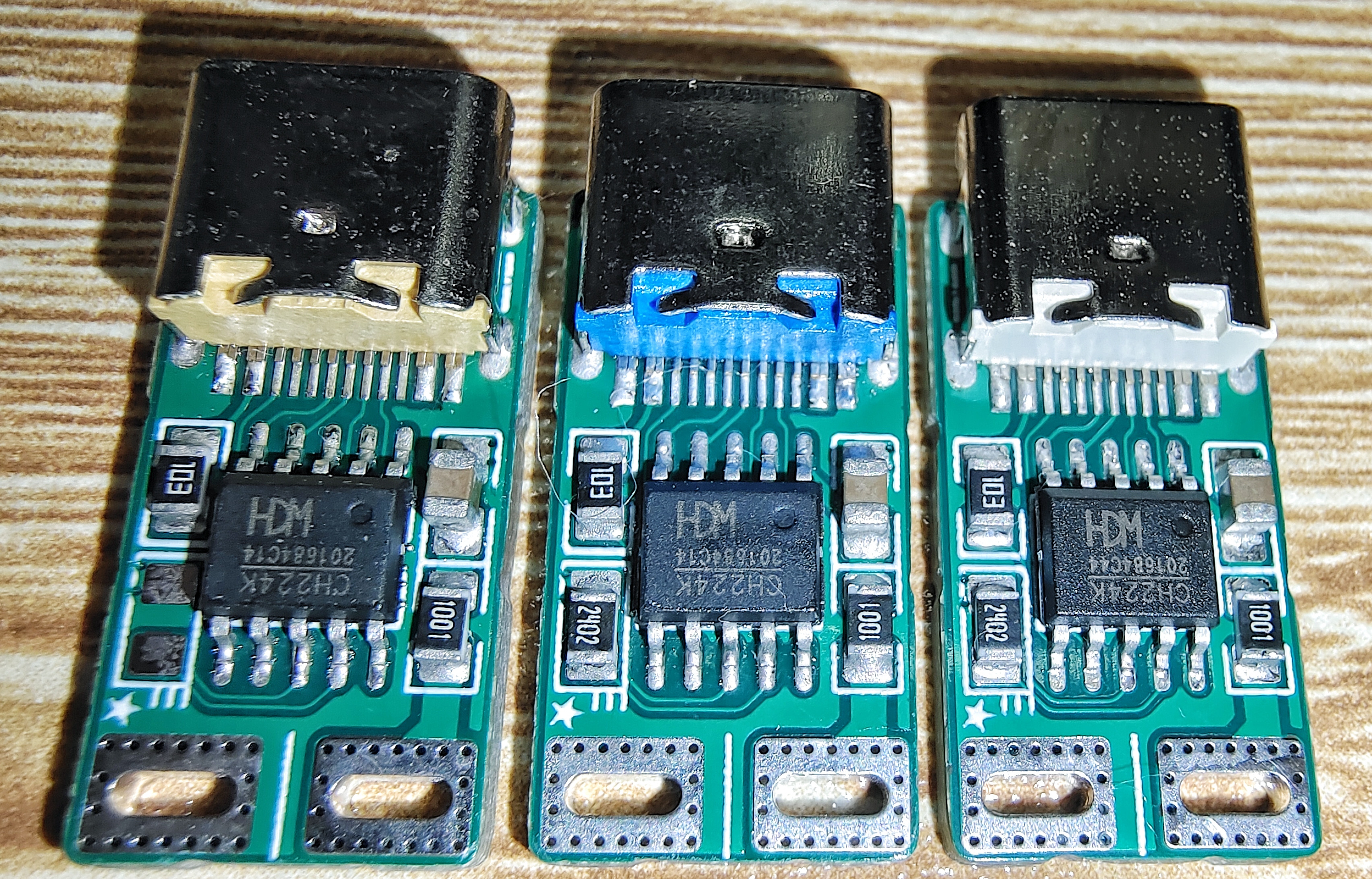
To ensure the PCB's current carrying capacity, I flattened the positioning posts of the [Component TYPE-C Female Socket], which prevents the VBUS traces from being blocked by the slots, resulting in a larger copper foil area.
The PCB is a 4-layer board. With a 2-layer board, the GND return path is too thin; it can't pass through the top layer, and the bottom layer only has a tiny bit. Fortunately, it's a 4-layer board, with the inner 1 and inner 2 layers all used as GND to ensure sufficient GND return area.
Since I didn't adjust or modify the BOM, some components in the BOM directly generated by JLCPCB EDA may not match. It's best to carefully check the component names and values on the schematic and PCB before purchasing.
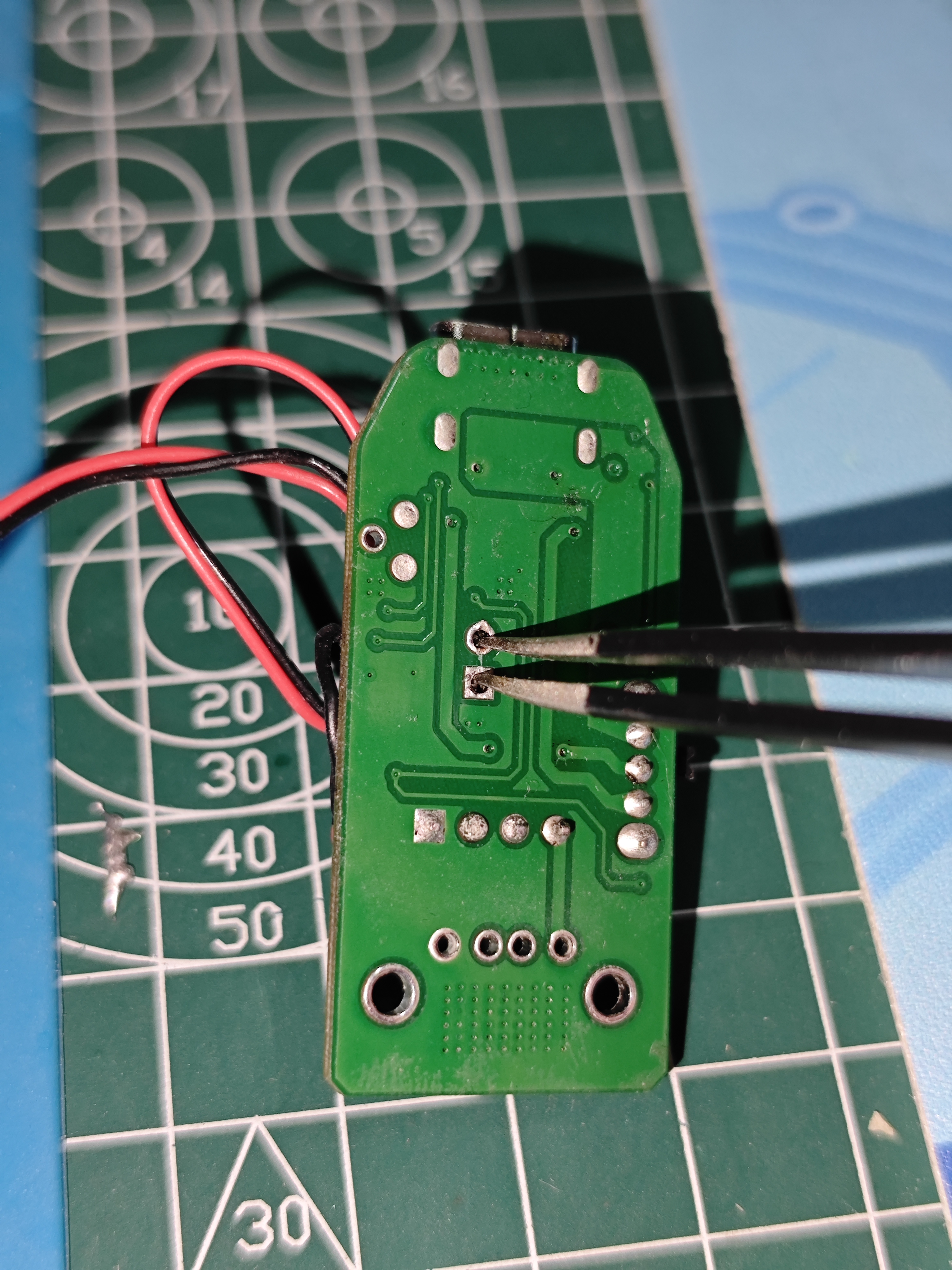
The datasheet for the CH224K chip is included in the attachments on the open-source page. The image shows
the TYPE-C female connector with its flattened positioning
posts (circled in red).
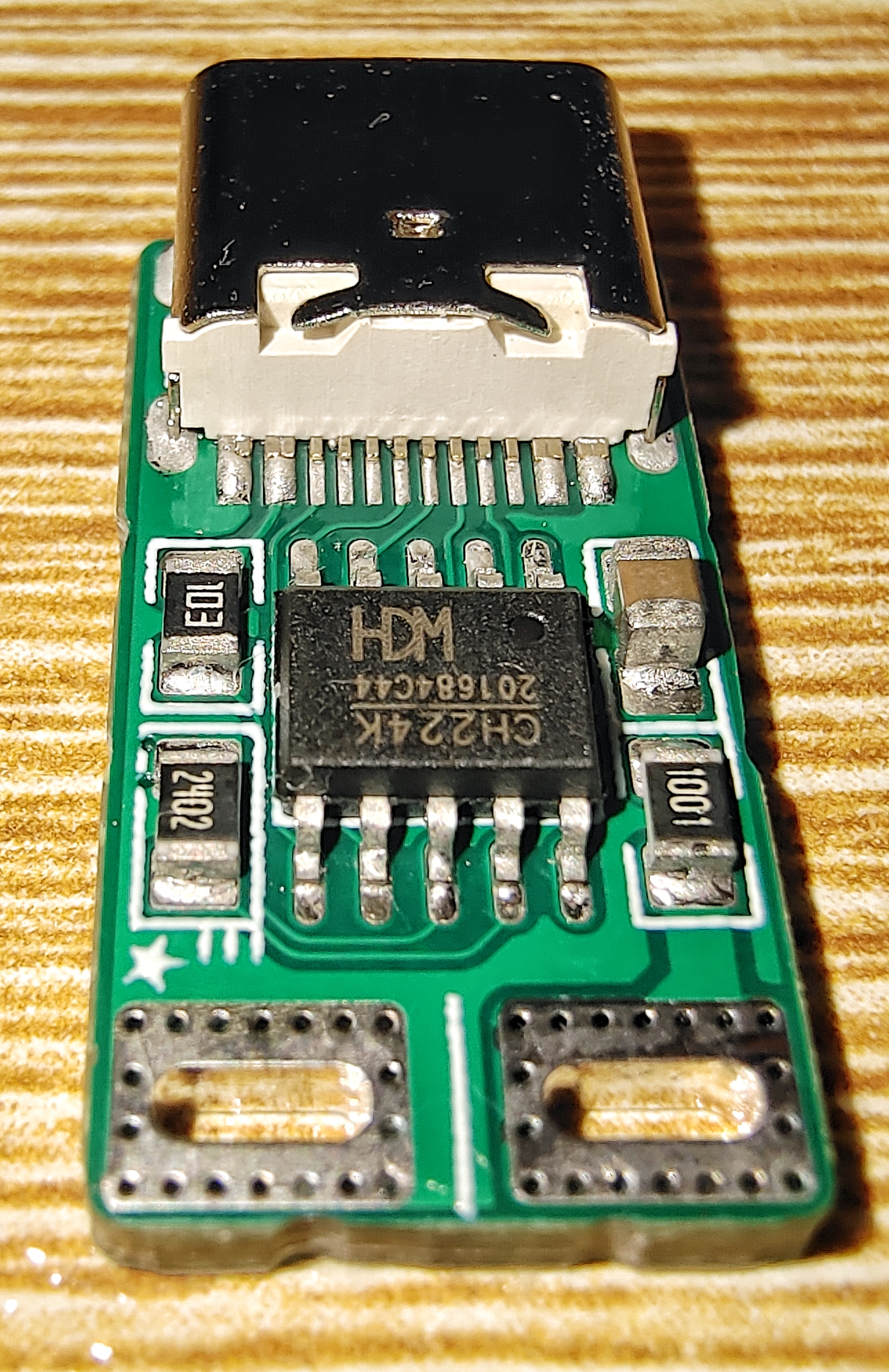
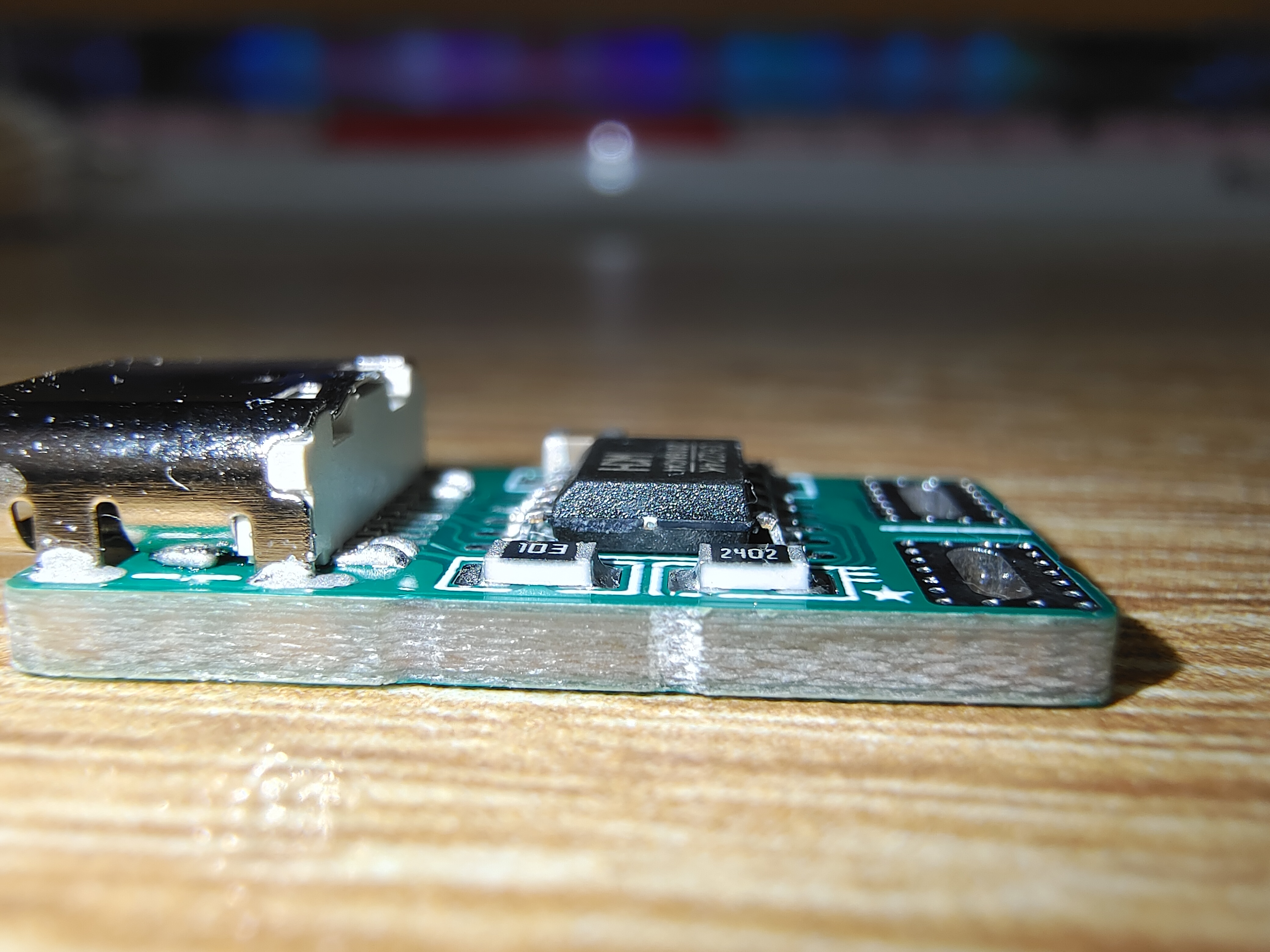
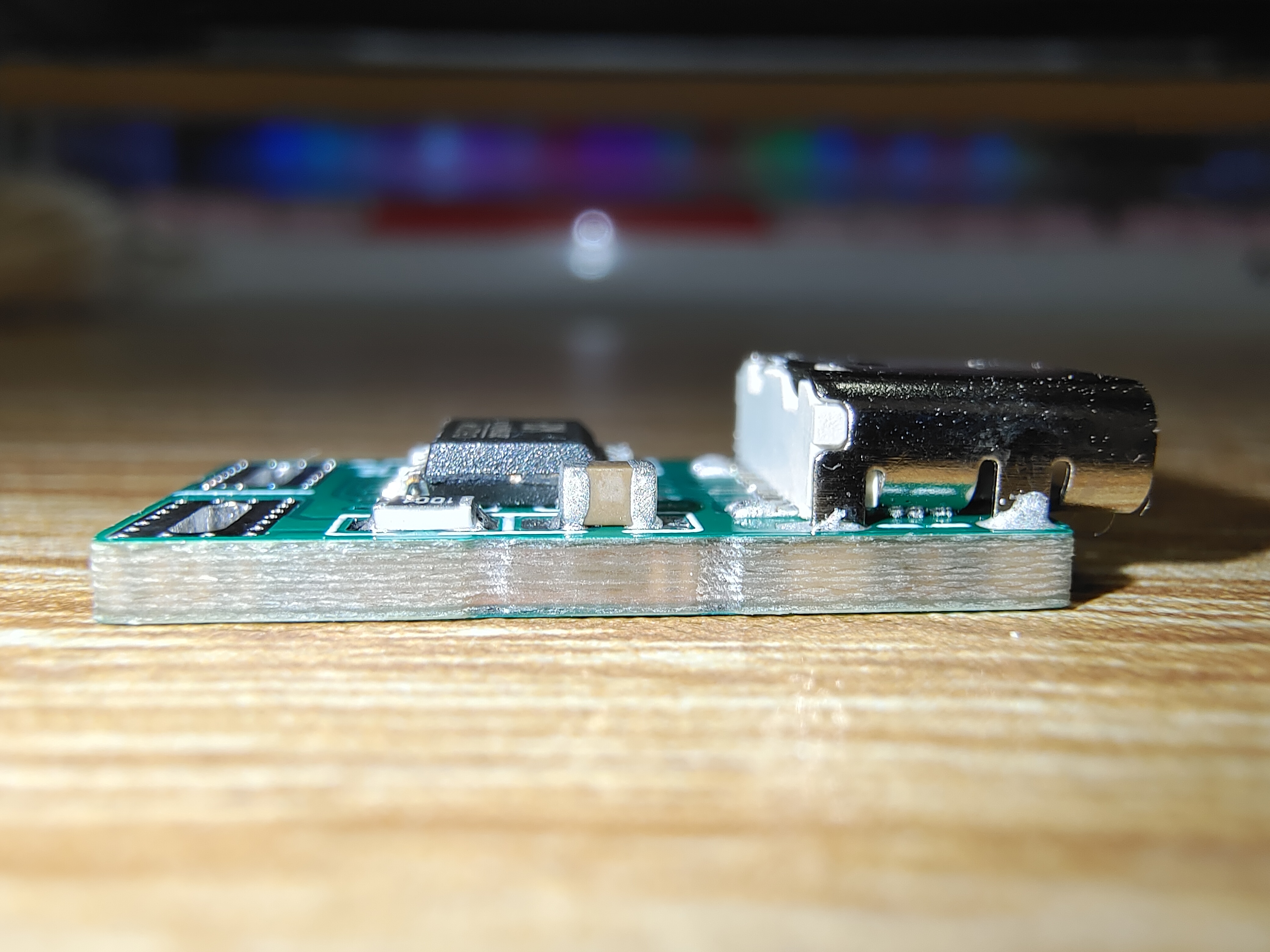
The component soldering details are also included.
CH224K USB PD and other fast charging protocol power receiving chip.pdf
PDF_CH224K PD Deception Board.zip
Altium_CH224K PD Deception Board.zip
PADS_CH224K PD Deception Board.zip
BOM_CH224K PD Deception Board.xlsx
95169
electronic








 京公网安备 11010802033920号


 1N969T-12A



