I. Research Background
Pianos are increasingly becoming a part of our daily lives, serving as a form of entertainment. However, pianos are relatively expensive, leading to a growing demand for convenient, real-time, and low-cost alternatives. We considered how to manufacture pianos in a more convenient and cost-effective way, and embedded systems, due to their miniaturization, high performance, and low power consumption, became our first choice.
II. Product Introduction
An electronic keyboard is an electronic keyboard instrument, belonging to the category of electronic music synthesizers.
The electronic keyboard was invented to mimic the sound and function of a piano using electronic components. It typically consists of a keyboard, sound generator, amplifier, and controller. An electronic keyboard can produce various sounds, such as piano, guitar, violin, and drums, through a built-in sound library or external sound sources. It can also create different musical effects by adjusting parameters such as timbre, volume, and rhythm.
Electronic keyboards are generally lighter and more portable than traditional pianos and can be powered by batteries or a power adapter. They can also be connected to other electronic instruments or computers to expand their functionality and creative potential.
Electronic keyboards have wide applications in music education, home entertainment, and popular music production. For beginners, the electronic keyboard is a relatively affordable and easy-to-learn instrument choice. For professional musicians, the electronic keyboard can also be used as a tool for creation and performance.
III. Needs Analysis
1. Functional Requirements
① Uses the 51 microcontroller core with an internal real-time operating system.
② Sound amplification: Uses transistors for amplification circuit.
③ Key detection: Uses keys and provides feedback to the user through lights.
④ Sound playback: Uses a buzzer to play sound.
2. Quantitative Technical Indicators
The initial work was mainly to verify the feasibility of the scheme, with low requirements for the algorithm target, only to achieve the function.
① The key will not fail to execute when pressed.
② The diode will not fail to light up when the key is pressed.
③ The buzzer sound is stable.
3. Design Constraints (Hardware, Software, Time Cost, Economic Cost, etc.)
(1) Hardware and software design constraints
(2) The buzzer sound is somewhat different from the real piano tone.
IV. Application Scope
As an electronic keyboard instrument, the electronic keyboard has a variety of functions and features, suitable for the needs of different groups of people. The following are some common electronic keyboard needs analysis:
1. Home entertainment: The electronic keyboard can be used as a way of home entertainment, allowing family members to enjoy the fun of music together. The electronic keyboard's lightweight and portable nature makes it suitable for outdoor or travel use.
2. Composition and Performance: For professional musicians, the electronic keyboard can serve as a tool for composition and performance. By adjusting parameters such as timbre, volume, and rhythm, different musical effects can be created to meet diverse musical composition needs.
3. Children's Toy: For children, the electronic keyboard can be a fun toy that helps develop their musical interests and talents. Electronic keyboards typically offer a rich selection of timbres and rhythms, stimulating children's creativity and imagination.
4. Amateur Music Enthusiasts: For music lovers, the electronic keyboard is a convenient instrument choice, allowing them to practice and play their favorite music at home. Its relatively affordable price also makes music accessible to more people.
In short, the electronic keyboard has multiple functions and features, meeting the needs of different groups. Whether for music education, family entertainment, composition and performance, or as a children's toy or an instrument for amateur music enthusiasts, the electronic keyboard has broad application prospects.
V. Hardware Design
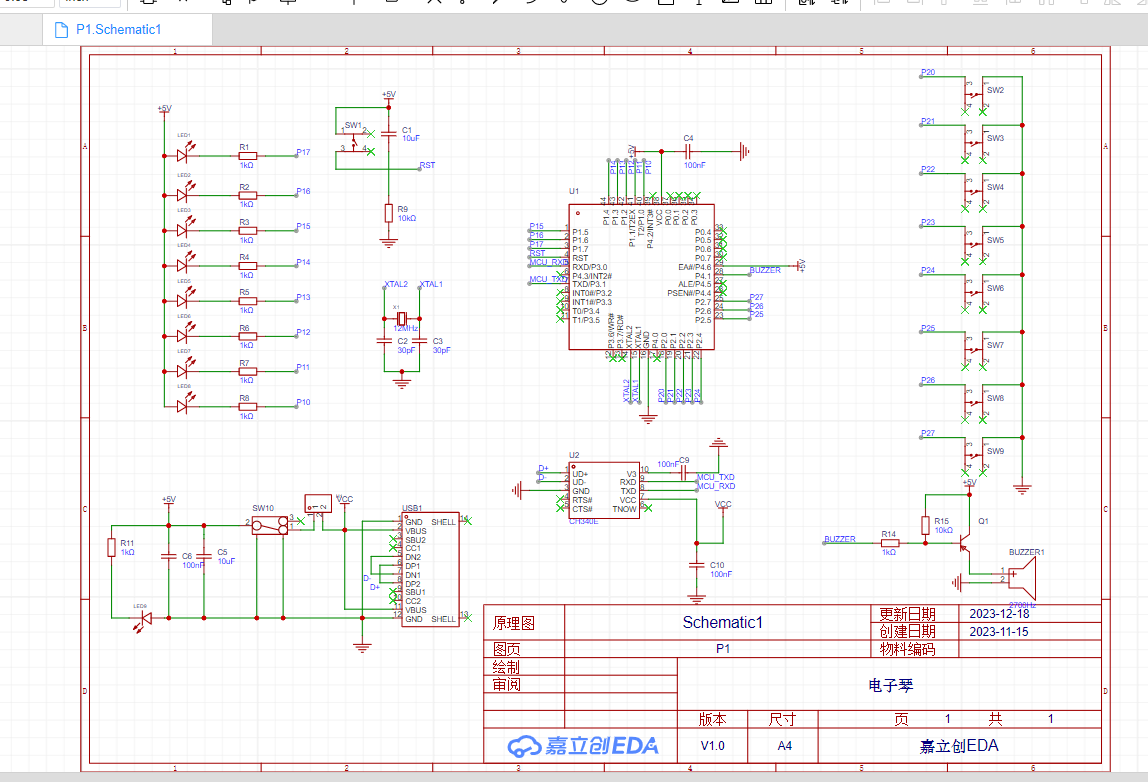
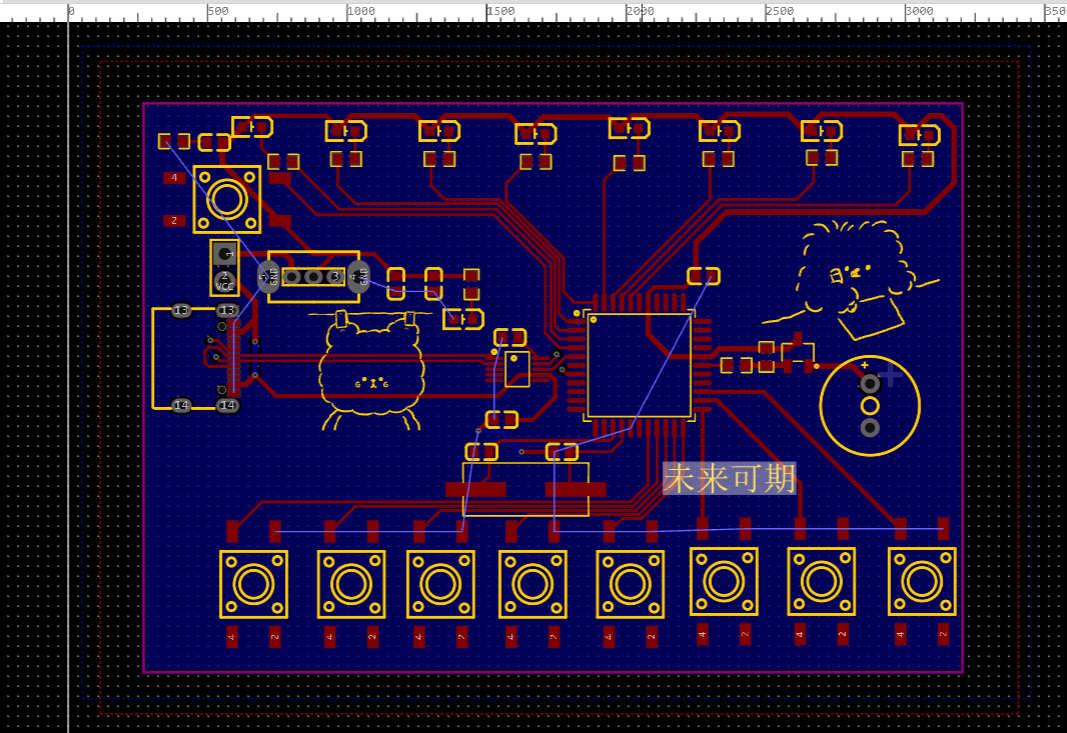
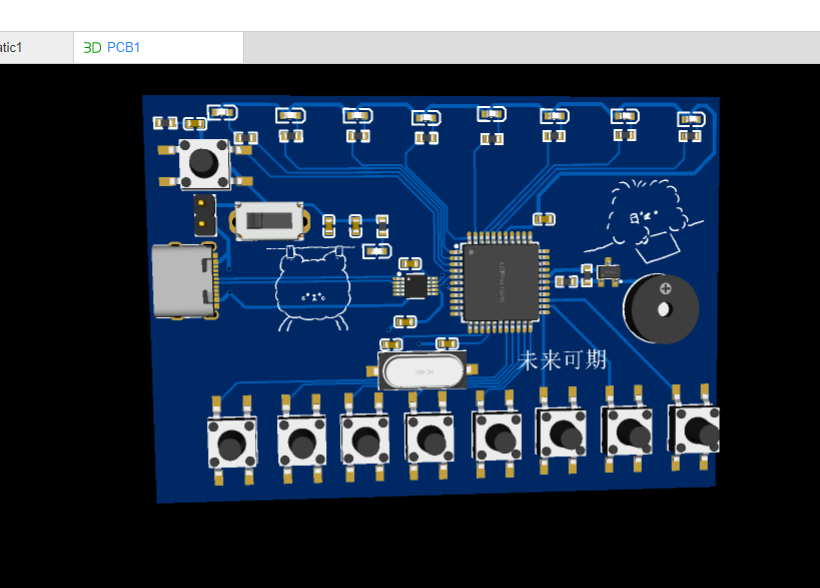
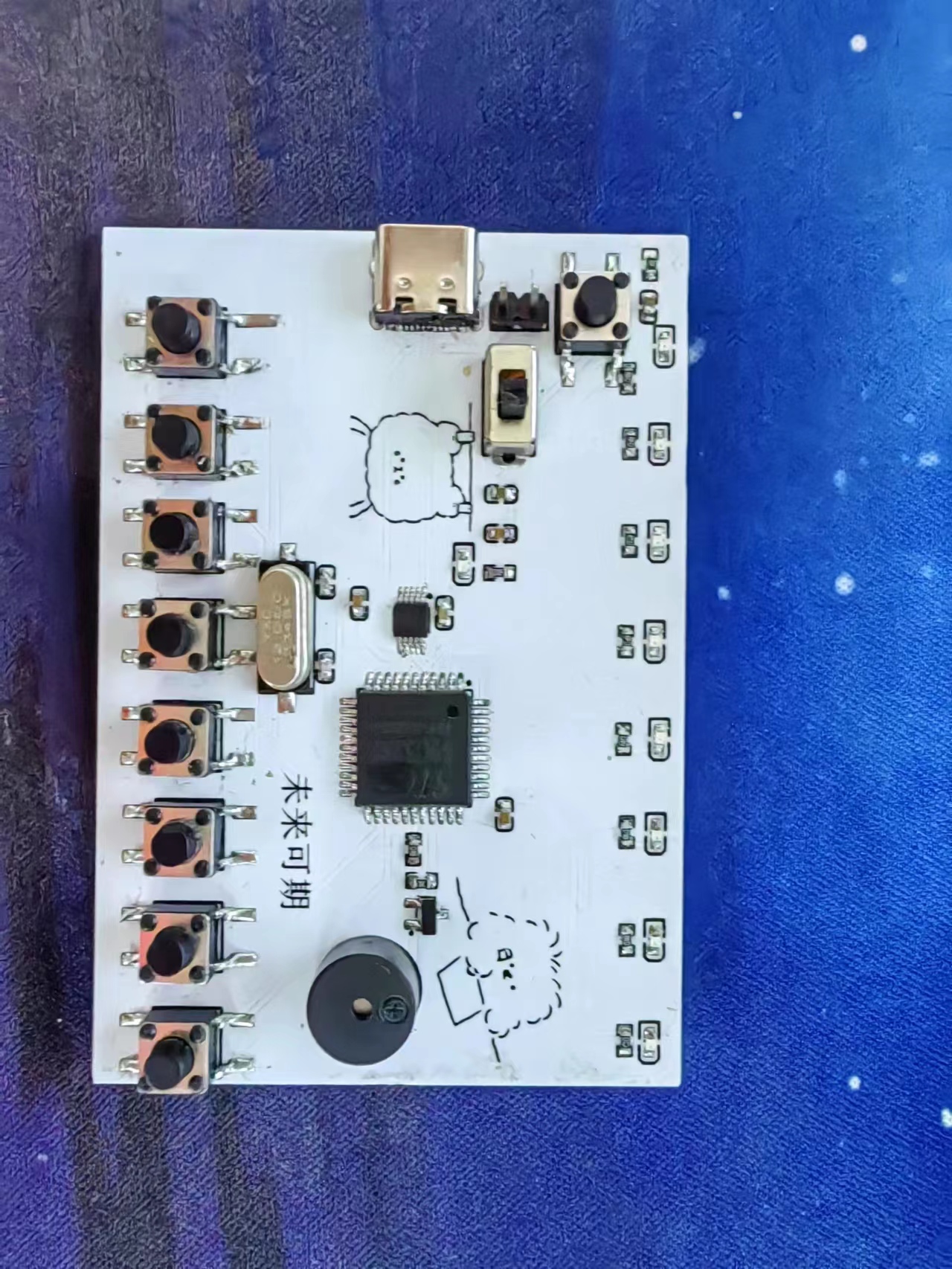
The hardware design
uses a USB Type-C port to connect to the power supply, transistors for amplification circuits, buttons for control, diodes for feedback, and pin headers for programming.
Schematic
PCB
3D View
Physical Demonstration
VI. Cost Estimation
The cost of an embedded electronic keyboard is influenced by several factors, including the hardware, software, production scale, and other related factors. Here are some factors that may affect the cost of an embedded electronic keyboard:
1. Hardware Costs: The hardware cost of an embedded electronic keyboard includes the cost of components such as microcontrollers, sensors, keyboards, displays, and audio output devices. Different specifications and performance levels of components will result in different prices.
2. Software Costs: The software costs required to develop an embedded electronic keyboard include programming, debugging, and testing costs. If complex functions or interfaces are required, software costs may increase accordingly.
3. Production Scale: Small-scale production or customized production is generally more expensive.
4. Design and Development Costs: Customized design or development of special functions will increase design and development costs.
Overall, the cost of an embedded electronic keyboard will vary depending on specific needs and specifications. For mass-produced consumer products, costs may be relatively low, while for small-batch production or high-end customized products, costs may be higher.








 京公网安备 11010802033920号


 GMR7580C-31P3CM