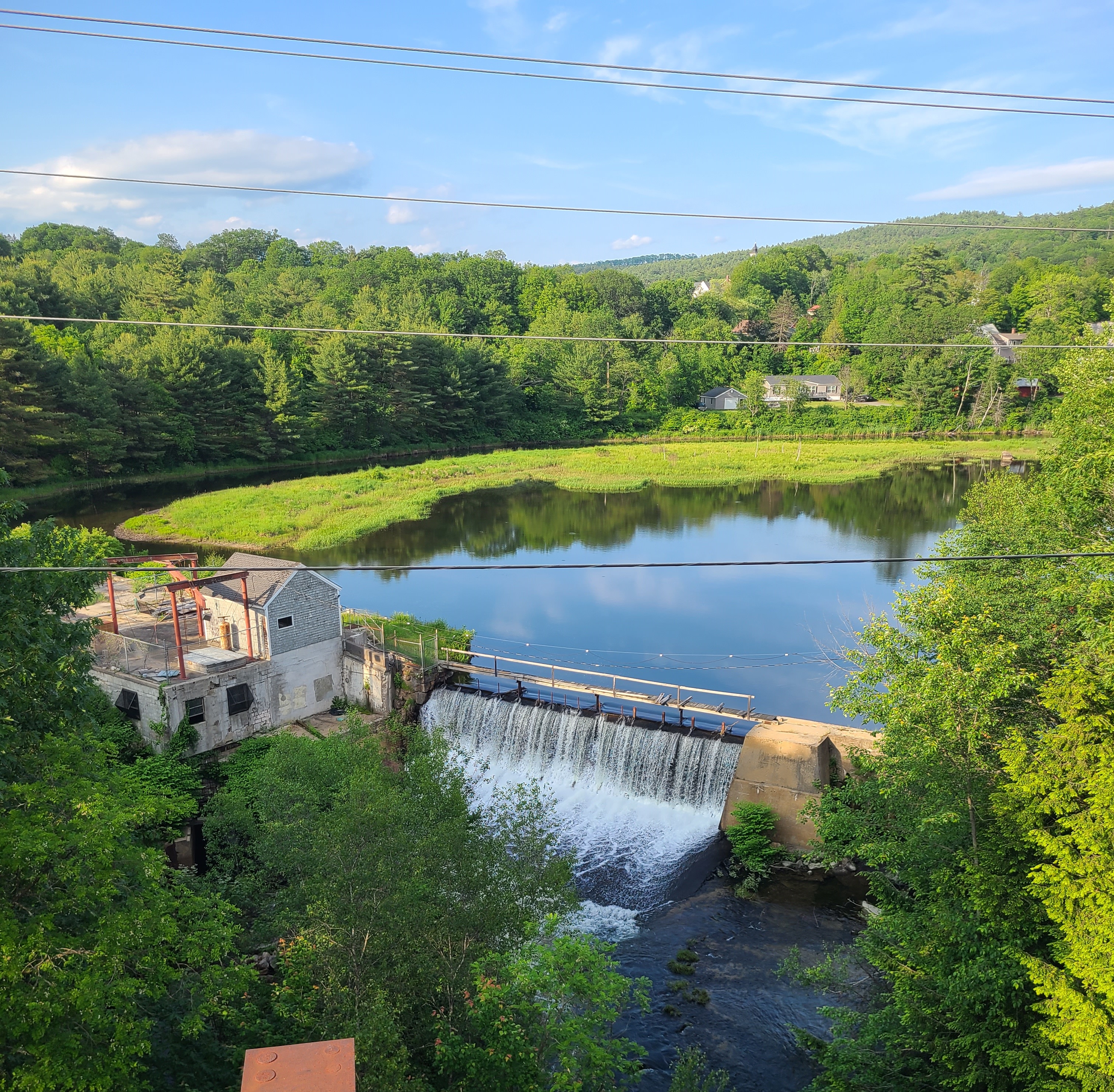
A group of enthusiasts purchased a faulty 80-kilowatt old dam and planned to repair it. The team had a clear division of labor: one person handled the business paperwork, one managed the mechanical parts, and the other specialized in the electronic systems. "Time flew by, and in July 2024, my longtime friend Aaron Slisky discovered a hydroelectric power station for sale on Facebook Marketplace—an 80-kilowatt station in Ashland, New Hampshire. Aaron's father, Alan, also had a long-standing passion for hydroelectric power, so the three of us pooled our savings to form a limited liability company and acquired the station. Although this project was purely out of interest, I had a feeling it could be profitable. Considering the increasing popularity of electric vehicles, the promotion of heat pumps, increasingly hot summers, the training needs of AI models, and the gradual shutdown of nuclear power plants, I believe electricity prices could very well double in the next decade. Of course, whether these predictions will come true remains to be seen." The dam's history dates back to the 1860s, originally providing mechanical power for a paper mill. It initially utilized... Originally a hydraulic mechanical structure, it was later converted into a hydroelectric power station. A major overhaul was undertaken in the 1980s, and the turbines currently in use were installed during that period. This turbine unit was manufactured by the now-defunct Canadian company Hydrolec. When we first took over, we heard it had experienced an explosion and was equipped with a variable pitch blade system—surprisingly, it used pressurized hydraulic oil to drive truck airbags to control the blade angle. These descriptions sounded terrible. However, after inspection, we found the unit was in relatively good condition: after rust removal and the installation of thrust bearings, all components fit perfectly. Ultimately, we successfully repaired this old turbine and reinstalled it at the power station. Aaron's blog details this, while this article will focus on the electronic control system part that I was responsible for, which was my main work in the project. Specifications: - The controller core uses the Nucleo-H753 development board, equipped with an STM32H753ZI microcontroller. This model was chosen because it is currently the largest single-core version of the development board available. This field control board is richly equipped with: - 12 lighting switch outputs - 16 front panel button inputs - Dual 24V power inputs - Multiple non-isolated analog inputs - Atmospheric pressure and temperature sensors - Analog multiplexer - Dual SSD1309 OLED screens - and an ESP32 module for network connectivity. - It also features a fiber optic transceiver interface for communication with the valve controller - Three isolated Hall current sensors for measuring generator phase current via current transformers, four contactor outputs (contactors are high-current relays), and a line voltage ADC module. The valve controller features: a 48V input supporting power supply or battery power, motor phase outputs, motor excitation drive outputs, 8kV withstand voltage isolated relays, limit switch inputs, a fiber optic transceiver for communication with the field control board, and various functional interfaces.







 京公网安备 11010802033920号


 67112-444LF



