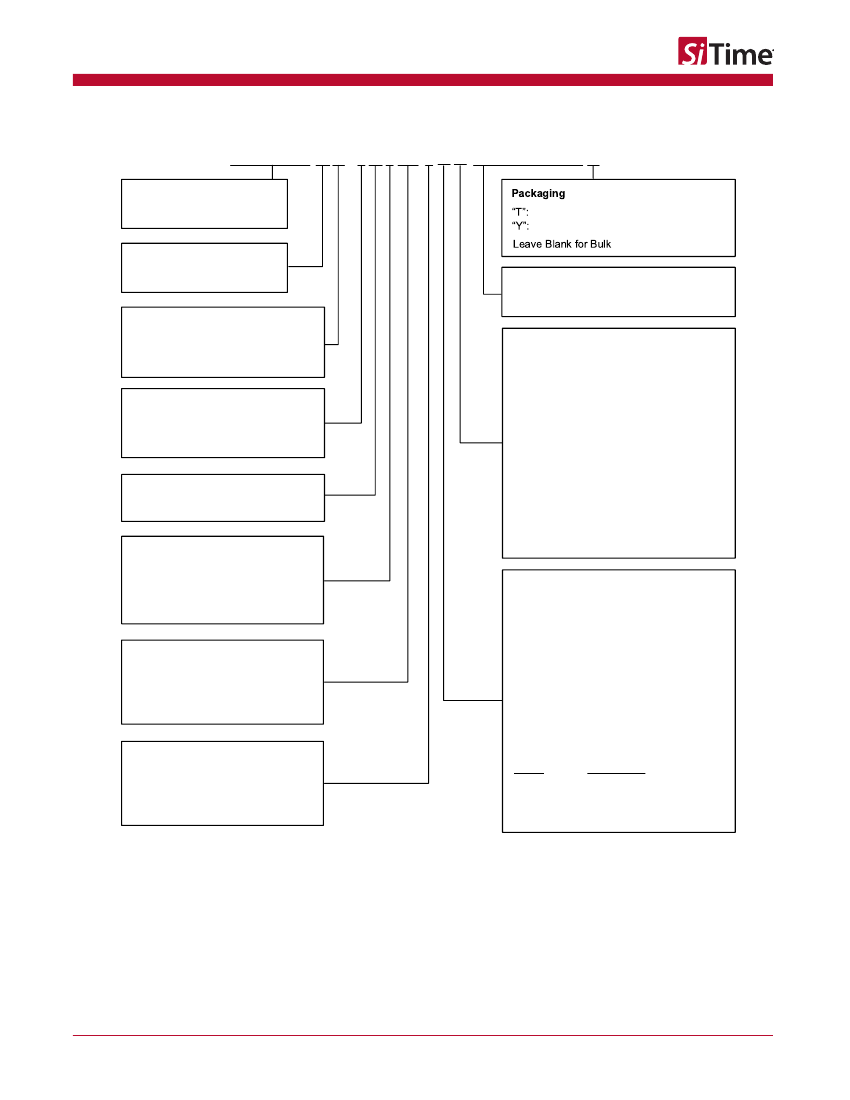
Ordering Information .................................................................................................................................................................... 2
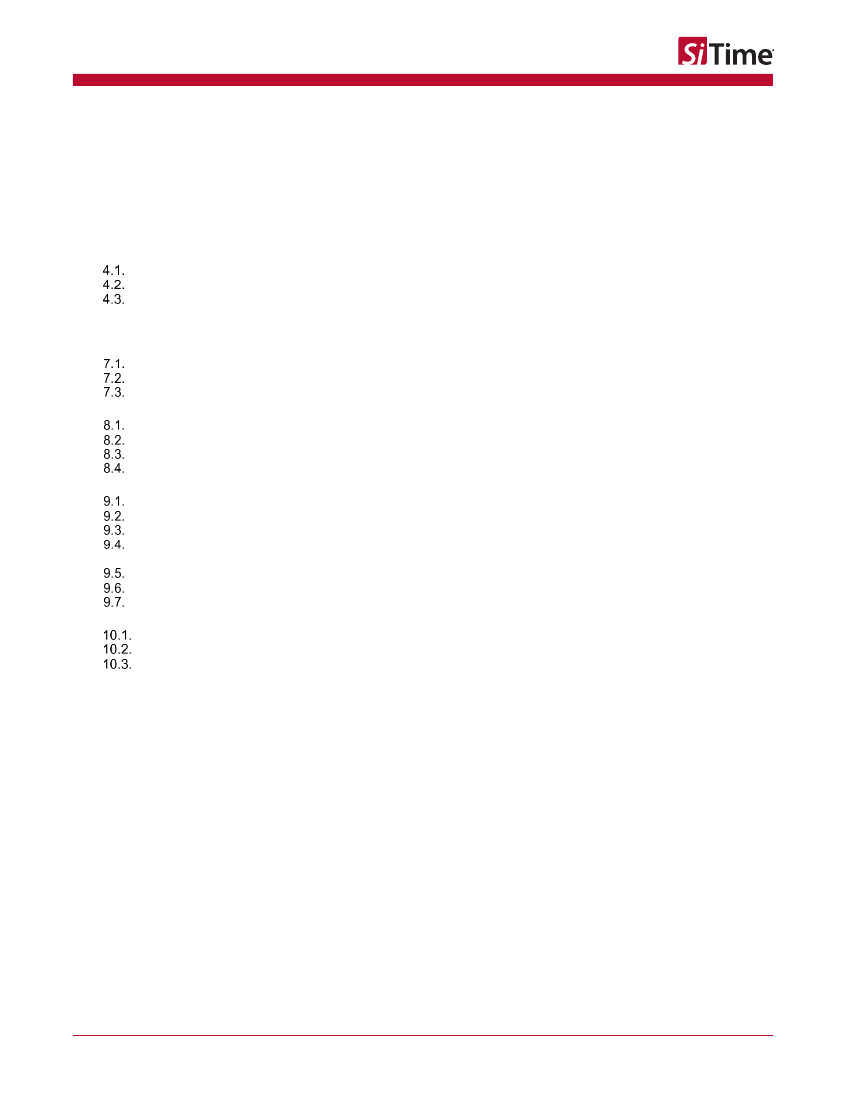
User Programming Interface ..................................................................................................................................... 18
Start-up output frequency and signaling types ........................................................................................................... 18
Any-frequency function ............................................................................................................................................. 19
C/SPI Control Registers...................................................................................................................................................... 28
9 I
Register Address: 0x00. DCO Frequency Control Least Significant Word (LSW) .................................................... 28
Register Address: 0x01. OE Control, DCO Frequency Control Most Significant Word (MSW) ................................. 29
Register Address: 0x02. DCO PULL RANGE CONTROL ........................................................................................ 29
Register Address: 0x03. Frac-N PLL Feedback Divider Integer Value and Frac-N PLL Feedback Divider Fraction
Value MSW ............................................................................................................................................................... 30
Register Address: 0x05. Forward Divider, Driver Control ......................................................................................... 30
Register Address: 0x06. Driver Divider, Driver Control ............................................................................................. 31
2
C Operation ........................................................................................................................................................................ 32
10 I
I
2
C protocol ............................................................................................................................................................... 32
I
2
C Timing Specification ............................................................................................................................................ 35
I
2
C Device Address Modes ....................................................................................................................................... 36
Dimensions and Patterns ........................................................................................................................................................... 43
Additional Information ................................................................................................................................................................ 44
Revision History ......................................................................................................................................................................... 45
Rev 1.01
Page 3 of 45
www.sitime.com
SiT3521
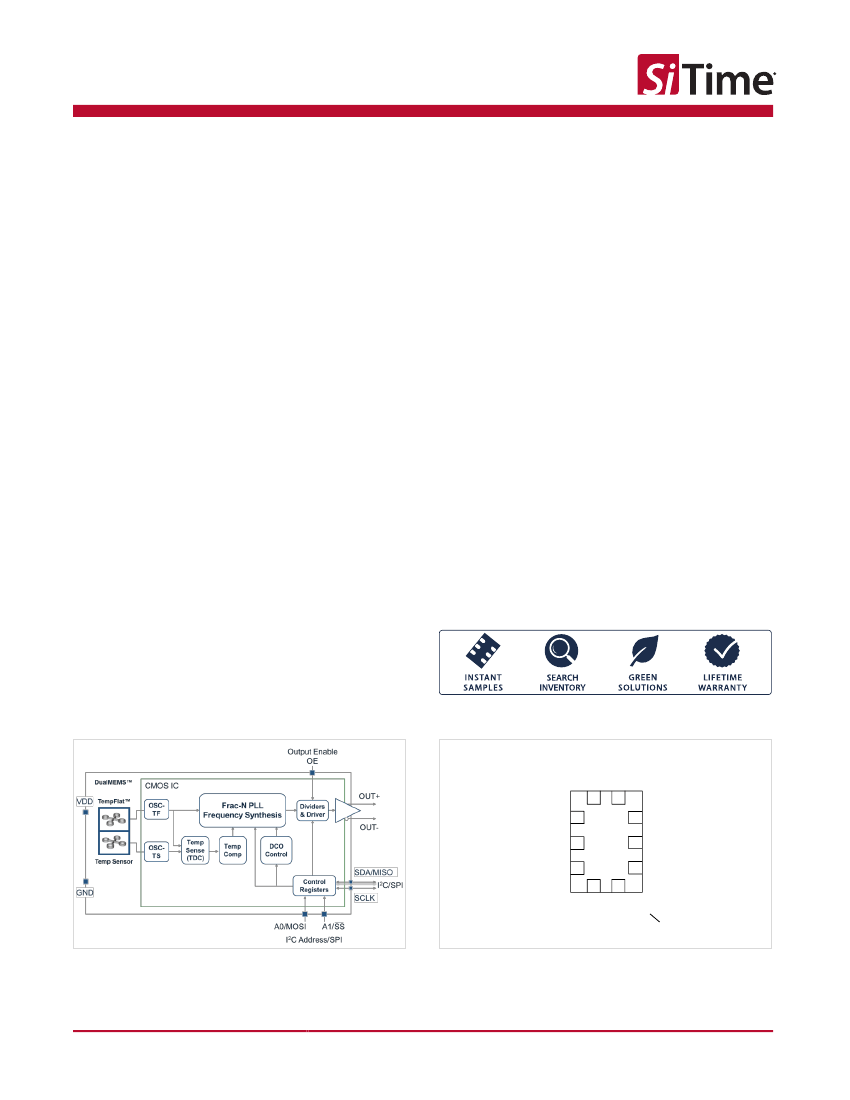
1 to 340 MHz Elite Platform I2C/SPI Programmable Oscillator
1 Electrical Characteristics
All Min and Max limits in the Electrical Characteristics tables are specified over temperature and rated operating voltage with
standard output terminations shown in the termination diagrams. Typical values are at 25°C and nominal supply voltage.
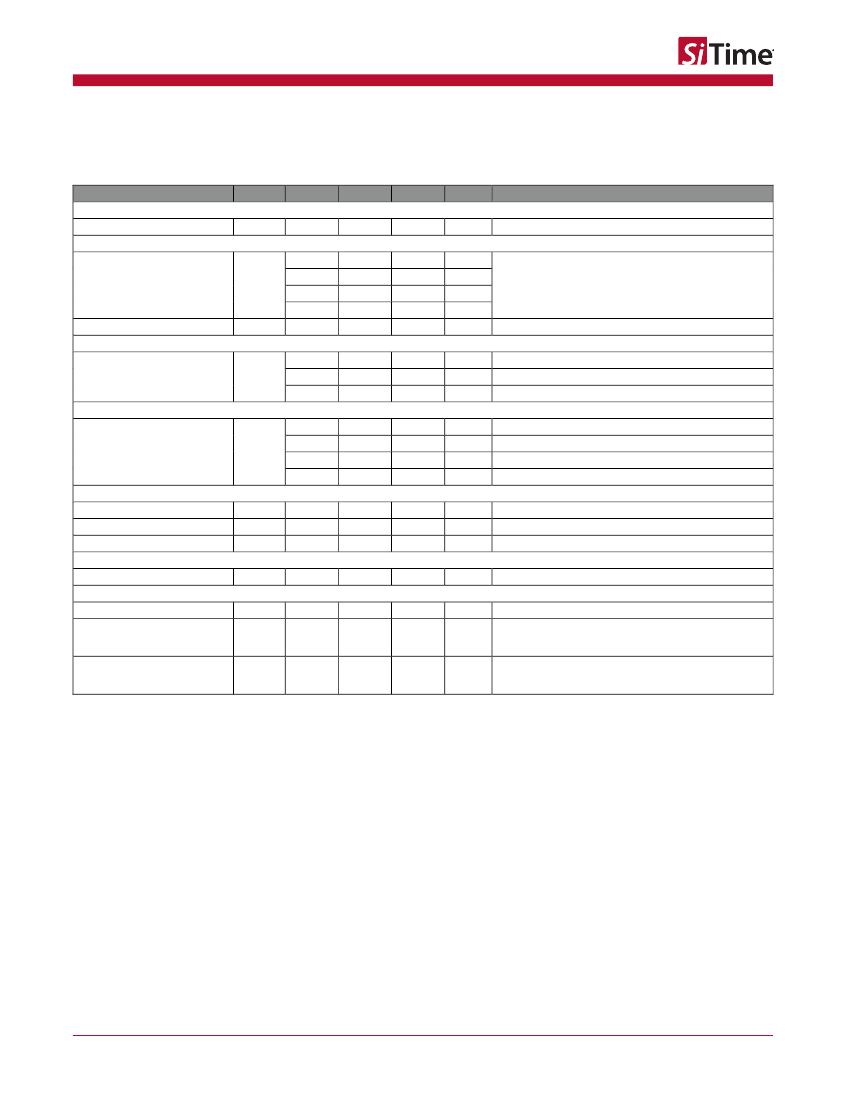
Table 1. Electrical Characteristics – Common to LVPECL, LVDS and HCSL
Parameter
Output Frequency Range
Symbol
f
Min.
1
Typ.
–
–
–
–
–
±1
–
–
–
Max.
340
Unit
MHz
Condition
Factory or user programmable, accurate to 6 decimal places
Frequency Range
Frequency Stability
Frequency Stability
F_stab
-10
-20
-25
-50
First Year Aging
F_1y
–
+10
+20
+25
+50
–
ppm
ppm
ppm
ppm
ppm
°C
°C
°C
1
st
-year aging at 25°C
Inclusive of initial tolerance, operating temperature, rated
power supply voltage and load variations.
Temperature Range
Operating Temperature Range
T_use
-20
-40
-40
+70
+85
+105
Supply Voltage
Supply Voltage
Vdd
2.97
2.7
2.52
2.25
3.3
3.0
2.8
2.5
–
–
100
–
–
–
3.63
3.3
3.08
2.75
–
30%
–
V
V
V
V
Extended Commercial
Industrial
Extended Industrial. Available only for I
2
C operation, not SPI.
Input Characteristics – OE Pin
Input Voltage High
Input Voltage Low
Input Pull-up Impedance
VIH
VIL
Z_in
70%
–
–
Vdd
Vdd
kΩ
OE pin
OE pin
OE pin, logic high or logic low
Output Characteristics
Duty Cycle
DC
45
–
–
55
%
Startup and Output Enable/Disable Timing
Start-up Time
Output Enable/Disable Time –
Hardware control via OE pin
Output Enable/Disable Time –
Software control via I
2
C/SPI
T_start
T_oe_hw
3.0
3.8
ms
µs
Measured from the time Vdd reaches its rated minimum value
Measured from the time OE pin reaches rated VIH and VIL to
the time clock pins reach 90% of swing and high-Z.
See
Figure 9
and
Figure 10
Measured from the time the last byte of command is
transmitted via I
2
C/SPI (reg1) to the time clock pins reach 90%
of swing and high-Z. See
Figure 30
and
Figure 31
T_oe_sw
–
–
6.5
µs
Rev 1.01
Page 4 of 45
www.sitime.com
SiT3521
1 to 340 MHz Elite Platform I2C/SPI Programmable Oscillator
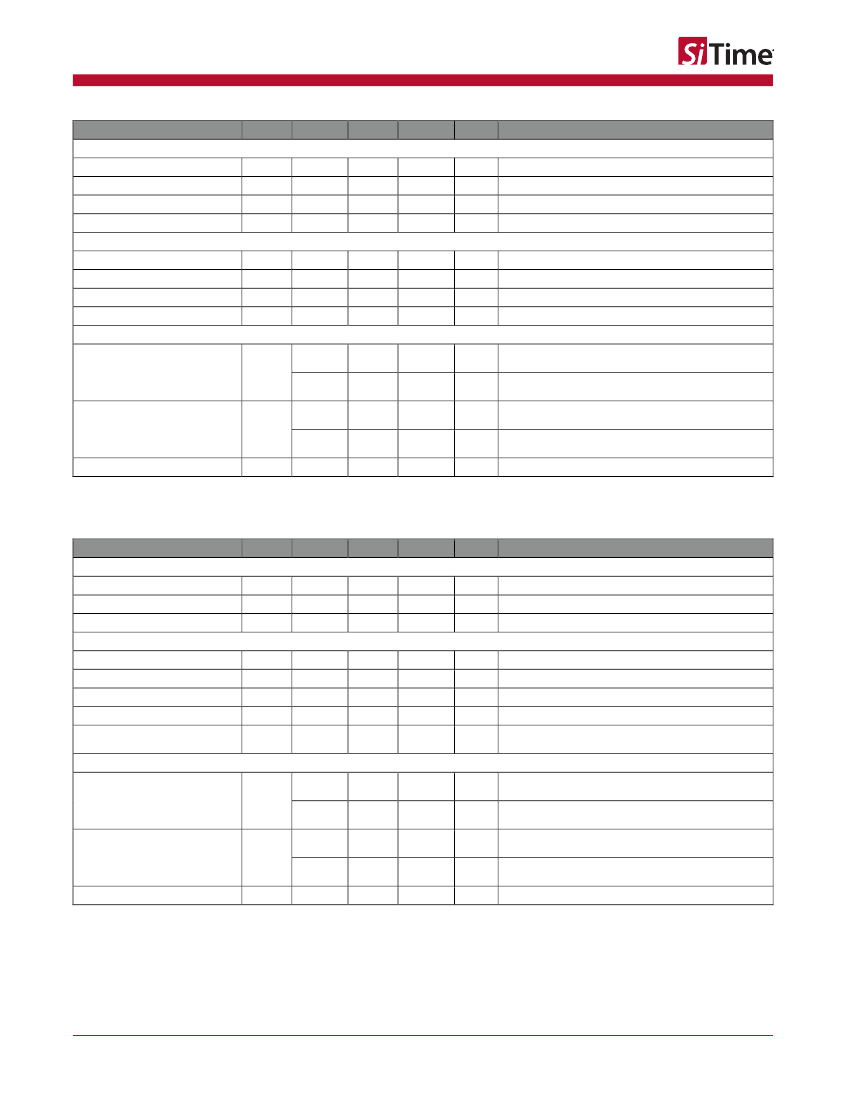
Table 2. Electrical Characteristics – LVPECL Specific
Parameter
Symbol
Min.
Typ.
Max.
Unit
Condition
Current Consumption
Current Consumption
OE Disable Supply Current
Output Disable Leakage Current
Maximum Output Current
Idd
I_OE
I_leak
I_driver
–
–
–
–
–
–
0.15
–
89
58
–
32
mA
mA
A
mA
Excluding Load Termination Current, Vdd = 3.3 V or 2.5 V
OE = Low
OE = Low
Maximum average current drawn from OUT+ or OUT-
Output Characteristics
Output High Voltage
Output Low Voltage
Output Differential Voltage Swing
Rise/Fall Time
VOH
VOL
V_Swing
Tr, Tf
Vdd - 1.1V
Vdd - 1.9V
1.2
–
–
–
1.6
225
Vdd - 0.7V
Vdd - 1.5V
2.0
290
Jitter
RMS Phase Jitter (random) –
DCO Mode Only
T_phj
–
–
RMS Phase Jitter (random) –
Any-frequency Mode Only
T_phj
–
–
RMS Period Jitter
[3]
Note:
3. Measured according to JESD65B.
T_jitt
–
0.225
0.1
0.225
0.11
1
0.340
0.14
0.340
0.15
1.6
ps
ps
ps
ps
ps
f = 156.25 MHz, Integration bandwidth = 12 kHz to 20 MHz,
all Vdd levels
f = 156.25, IEEE802.3-2005 10 GbE jitter mask integration
bandwidth = 1.875 MHz to 20 MHz, all Vdd levels
f = 156.25 MHz, Integration bandwidth = 12 kHz to 20 MHz,
all Vdd levels
f = 156.25, IEEE802.3-2005 10 GbE jitter mask integration
bandwidth = 1.875 MHz to 20 MHz, all Vdd levels
f = 100, 156.25 or 212.5 MHz, Vdd = 3.3 V or 2.5 V
V
V
V
ps
See
Figure 5
See
Figure 5
See
Figure 6
20% to 80%, see
Figure 6
Table 3. Electrical Characteristics – LVDS Specific
Parameter
Symbol
Min.
Typ.
Max.
Unit
Condition
Current Consumption
Current Consumption
OE Disable Supply Current
Output Disable Leakage Current
Idd
I_OE
I_leak
–
–
–
–
–
0.15
80
61
–
mA
mA
A
Excluding Load Termination Current, Vdd = 3.3 V or 2.5 V
OE = Low
OE = Low
Output Characteristics
Differential Output Voltage
Delta VOD
Offset Voltage
Delta VOS
Rise/Fall Time
VOD
ΔVOD
VOS
ΔVOS
Tr, Tf
250
–
1.125
–
–
–
–
–
–
400
455
50
1.375
50
470
Jitter
RMS Phase Jitter (random) –
DCO Mode Only
T_phj
–
–
RMS Phase Jitter (random) –
Any-frequency Mode Only
T_phj
–
–
RMS Period Jitter
[4]
Note:
4. Measured according to JESD65B.
T_jitt
–
0.21
0.1
0.21
0.1
1
0.275
0.12
0.367
0.12
1.6
ps
ps
ps
ps
ps
f = 156.25 MHz, Integration bandwidth = 12 kHz to 20 MHz,
all Vdd levels
f = 156.25, IEEE802.3-2005 10 GbE jitter mask integration
bandwidth = 1.875 MHz to 20 MHz, all Vdd levels
f = 156.25 MHz, Integration bandwidth = 12 kHz to 20 MHz,
all Vdd levels
f = 156.25, IEEE802.3-2005 10 GbE jitter mask integration
bandwidth = 1.875 MHz to 20 MHz, all Vdd levels
f = 100, 156.25 or 212.5 MHz, Vdd = 3.3 V or 2.5 V
mV
mV
V
mV
ps
f = 156.25MHz See
Figure 7
See
Figure 7
See
Figure 7
See
Figure 7
Measured with 2 pF capacitive loading to GND, 20% to 80%,
I have an OLED screen with SPI interface, 128*64 in size, and the control chip is SSD1306This screen is tested by me under the STM32 development board. The specific parameters of STM32 are as follows
...
After the home information machine, TD-SCDMA has launched fixed-line products. The launch of the world's first digital cordless phone solution based on TD-SCDMA marks that China Mobile's TD-SCDMA prod...
There is a virtual camera driver in WINDOWS DDK. If we use it, it will display a picture. I want to use another program to control the source of this virtual camera. That is to say, if I want to make ...
I hope to buy this development board in a group to study. If it can achieve the expected effect, it will give me greater confidence in the low power consumption of 430! [[i] This post was last edited ...
The cost of mobile phones is getting lower and lower. This year I also heard friends mention mobile phone monitoring. What do you think, besides this, what else can we do with the mobile phones in our...
Traditional broadcasting systems generally need to be operated manually at a fixed time, and can only realize one-way broadcasting with few functions. Traditional bell ringing equipment has a singl...[Details]
1. Introduction
RFID (radio frequency identification) is a non-contact automatic identification technology that emerged in the 1990s. It uses the characteristics of radio frequency signal prop...[Details]
1. Circuit composition
The whole circuit consists of two parts:
1. Power saving control circuit
As shown in the figure below. Including delay circuit and drive circuit.
(1) Delay ci...[Details]
1. Introduction
With the growth of parking demand, the scale of parking lots is becoming larger and larger. A lot of research has been done on intelligent parking lots in China, but most of th...[Details]
Remote keyless entry (RKE) systems have become popular with users, with more than 80% of new cars in North America and more than 70% in Europe equipped with RKE systems. In addition to the obvious ...[Details]
Converged processors meet scalability requirements
In current embedded system design, solutions based on MCU, DSP, FPGA and ASIC account for more than 90% of the market share. These solutions ...[Details]
In public places such as schools, government agencies, factories and mines, as well as public corridors in residential areas, the phenomenon of long-burning lights is very common, which causes a h...[Details]
Electronic systems are located at different points on the automotive power bus and therefore often need to operate under very stringent power requirements. These include load dump, cold crank, very lo...[Details]
1 Introduction
As an emerging microfabrication technology, micro-electromechanical system (MEMS) technology has begun to be applied in various fields. It can integrate functions such as inform...[Details]
1. Introduction
Testing the temperature of steel billets before rolling is an important measure to ensure the quality of steel. Traditional manual testing is difficult to ensure product qu...[Details]
Flooded Batteries
This battery developed in Germany can be used to power flashlights, strobe lights and toys as long as it is filled with water. This battery can be stored for 50 years and can...[Details]
Introduction
Liquid crystal, as a display device, is widely used in low-power products such as instruments, meters, and electronic equipment with its unique advantages. In the past, the displ...[Details]
Since the late 1990s, with the demand for higher system efficiency and lower power consumption, the technological update of telecommunications and data communication equipment has promoted the deve...[Details]
1 Introduction
With the rapid economic development, my country's electricity demand has been growing at a rate of more than 20% per year. According to the current economic development trend an...[Details]
Rated capacity refers to the maximum output power of the UPS (the product of voltage V and current A).
Usually, the UPS power supplies sold on the market are marked with "W" (watt) for smaller...[Details]

 Domestic Chip Exchange
 京公网安备 11010802033920号
 EEWORLD