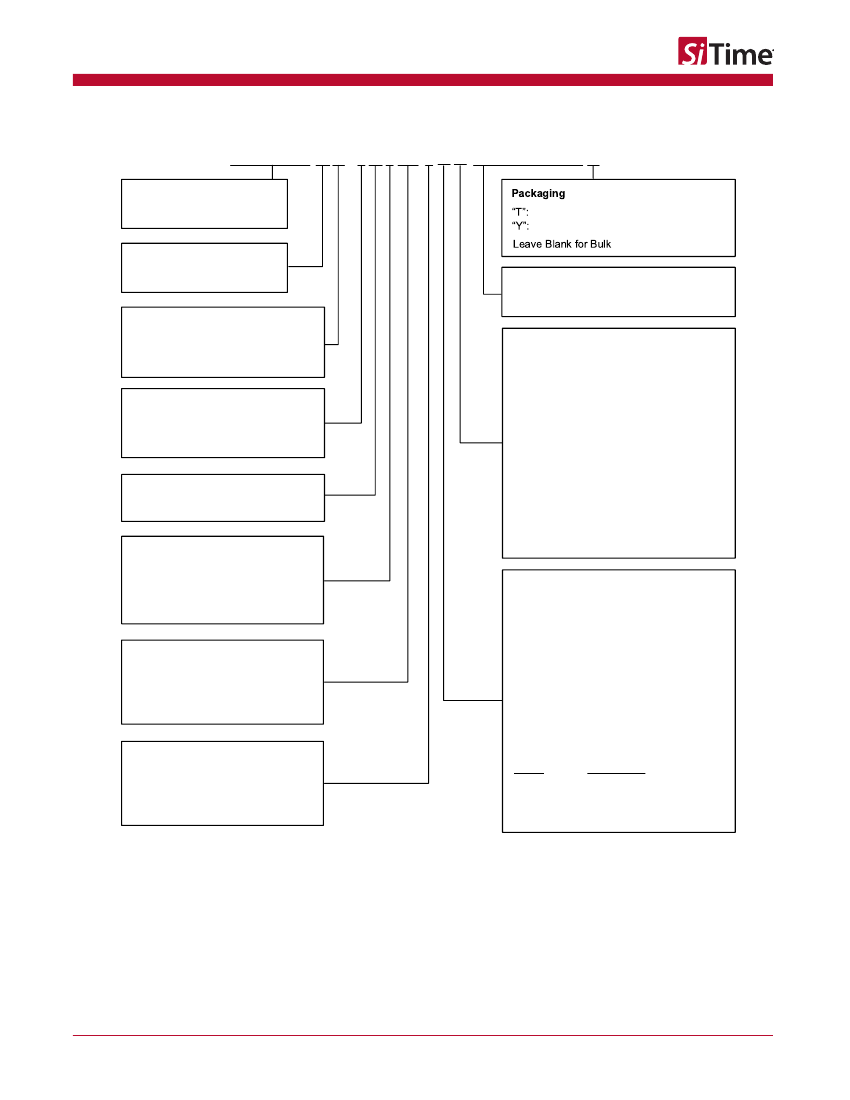
Ordering Information .................................................................................................................................................................... 2
User Programming Interface ..................................................................................................................................... 18
Start-up output frequency and signaling types ........................................................................................................... 18
Any-frequency function ............................................................................................................................................. 19
C/SPI Control Registers...................................................................................................................................................... 28
9 I
Register Address: 0x00. DCO Frequency Control Least Significant Word (LSW) .................................................... 28
Register Address: 0x01. OE Control, DCO Frequency Control Most Significant Word (MSW) ................................. 29
Register Address: 0x02. DCO PULL RANGE CONTROL ........................................................................................ 29
Register Address: 0x03. Frac-N PLL Feedback Divider Integer Value and Frac-N PLL Feedback Divider Fraction
Value MSW ............................................................................................................................................................... 30
Register Address: 0x05. Forward Divider, Driver Control ......................................................................................... 30
Register Address: 0x06. Driver Divider, Driver Control ............................................................................................. 31
2
C Operation ........................................................................................................................................................................ 32
10 I
I
2
C protocol ............................................................................................................................................................... 32
I
2
C Timing Specification ............................................................................................................................................ 35
I
2
C Device Address Modes ....................................................................................................................................... 36
Dimensions and Patterns ........................................................................................................................................................... 43
Additional Information ................................................................................................................................................................ 44
Revision History ......................................................................................................................................................................... 45
Rev 1.01
Page 3 of 45
www.sitime.com
SiT3521
1 to 340 MHz Elite Platform I2C/SPI Programmable Oscillator
1 Electrical Characteristics
All Min and Max limits in the Electrical Characteristics tables are specified over temperature and rated operating voltage with
standard output terminations shown in the termination diagrams. Typical values are at 25°C and nominal supply voltage.
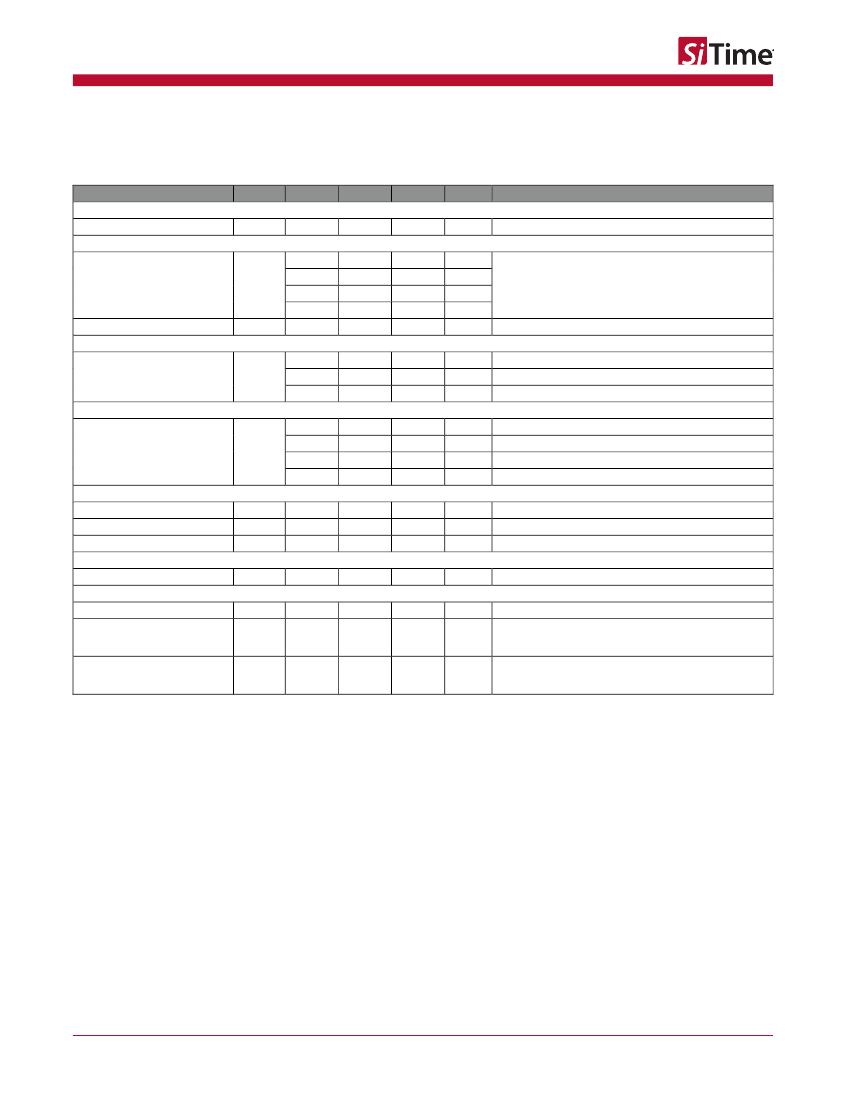
Table 1. Electrical Characteristics – Common to LVPECL, LVDS and HCSL
Parameter
Output Frequency Range
Symbol
f
Min.
1
Typ.
–
–
–
–
–
±1
–
–
–
Max.
340
Unit
MHz
Condition
Factory or user programmable, accurate to 6 decimal places
Frequency Range
Frequency Stability
Frequency Stability
F_stab
-10
-20
-25
-50
First Year Aging
F_1y
–
+10
+20
+25
+50
–
ppm
ppm
ppm
ppm
ppm
°C
°C
°C
1
st
-year aging at 25°C
Inclusive of initial tolerance, operating temperature, rated
power supply voltage and load variations.
Temperature Range
Operating Temperature Range
T_use
-20
-40
-40
+70
+85
+105
Supply Voltage
Supply Voltage
Vdd
2.97
2.7
2.52
2.25
3.3
3.0
2.8
2.5
–
–
100
–
–
–
3.63
3.3
3.08
2.75
–
30%
–
V
V
V
V
Extended Commercial
Industrial
Extended Industrial. Available only for I
2
C operation, not SPI.
Input Characteristics – OE Pin
Input Voltage High
Input Voltage Low
Input Pull-up Impedance
VIH
VIL
Z_in
70%
–
–
Vdd
Vdd
kΩ
OE pin
OE pin
OE pin, logic high or logic low
Output Characteristics
Duty Cycle
DC
45
–
–
55
%
Startup and Output Enable/Disable Timing
Start-up Time
Output Enable/Disable Time –
Hardware control via OE pin
Output Enable/Disable Time –
Software control via I
2
C/SPI
T_start
T_oe_hw
3.0
3.8
ms
µs
Measured from the time Vdd reaches its rated minimum value
Measured from the time OE pin reaches rated VIH and VIL to
the time clock pins reach 90% of swing and high-Z.
See
Figure 9
and
Figure 10
Measured from the time the last byte of command is
transmitted via I
2
C/SPI (reg1) to the time clock pins reach 90%
of swing and high-Z. See
Figure 30
and
Figure 31
T_oe_sw
–
–
6.5
µs
Rev 1.01
Page 4 of 45
www.sitime.com
SiT3521
1 to 340 MHz Elite Platform I2C/SPI Programmable Oscillator
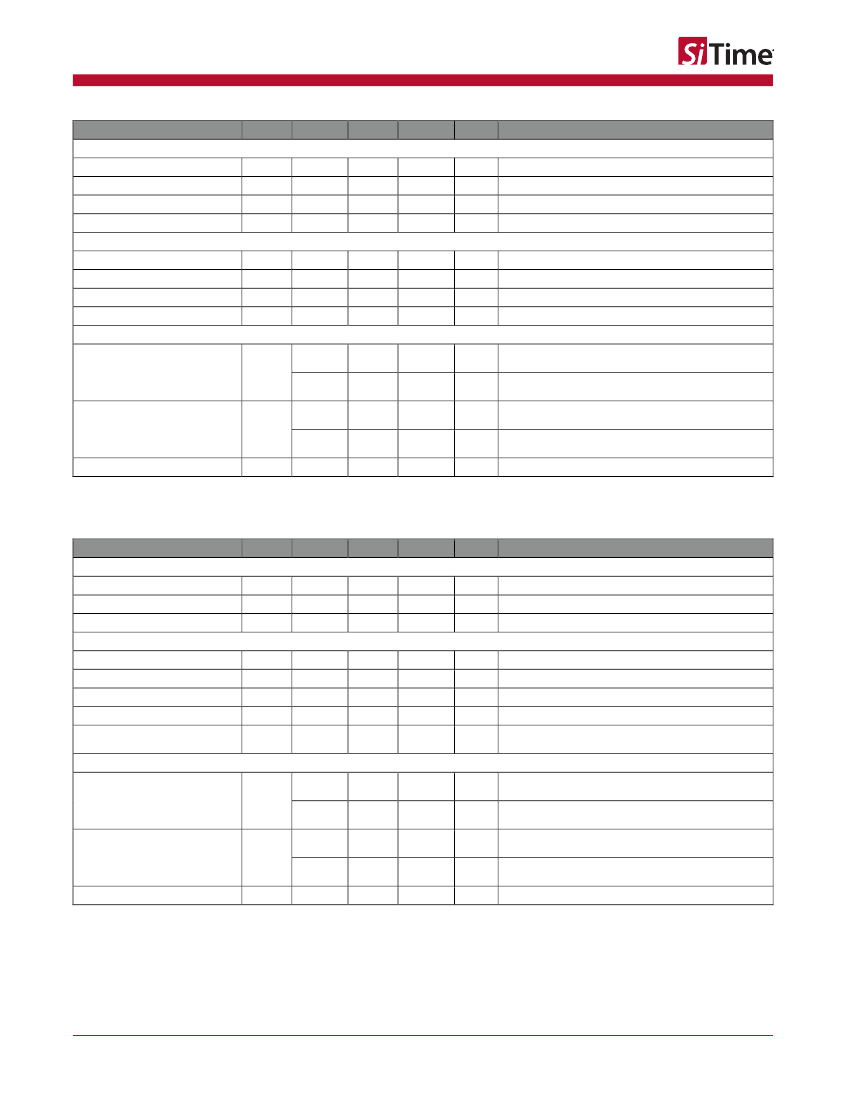
Table 2. Electrical Characteristics – LVPECL Specific
Parameter
Symbol
Min.
Typ.
Max.
Unit
Condition
Current Consumption
Current Consumption
OE Disable Supply Current
Output Disable Leakage Current
Maximum Output Current
Idd
I_OE
I_leak
I_driver
–
–
–
–
–
–
0.15
–
89
58
–
32
mA
mA
A
mA
Excluding Load Termination Current, Vdd = 3.3 V or 2.5 V
OE = Low
OE = Low
Maximum average current drawn from OUT+ or OUT-
Output Characteristics
Output High Voltage
Output Low Voltage
Output Differential Voltage Swing
Rise/Fall Time
VOH
VOL
V_Swing
Tr, Tf
Vdd - 1.1V
Vdd - 1.9V
1.2
–
–
–
1.6
225
Vdd - 0.7V
Vdd - 1.5V
2.0
290
Jitter
RMS Phase Jitter (random) –
DCO Mode Only
T_phj
–
–
RMS Phase Jitter (random) –
Any-frequency Mode Only
T_phj
–
–
RMS Period Jitter
[3]
Note:
3. Measured according to JESD65B.
T_jitt
–
0.225
0.1
0.225
0.11
1
0.340
0.14
0.340
0.15
1.6
ps
ps
ps
ps
ps
f = 156.25 MHz, Integration bandwidth = 12 kHz to 20 MHz,
all Vdd levels
f = 156.25, IEEE802.3-2005 10 GbE jitter mask integration
bandwidth = 1.875 MHz to 20 MHz, all Vdd levels
f = 156.25 MHz, Integration bandwidth = 12 kHz to 20 MHz,
all Vdd levels
f = 156.25, IEEE802.3-2005 10 GbE jitter mask integration
bandwidth = 1.875 MHz to 20 MHz, all Vdd levels
f = 100, 156.25 or 212.5 MHz, Vdd = 3.3 V or 2.5 V
V
V
V
ps
See
Figure 5
See
Figure 5
See
Figure 6
20% to 80%, see
Figure 6
Table 3. Electrical Characteristics – LVDS Specific
Parameter
Symbol
Min.
Typ.
Max.
Unit
Condition
Current Consumption
Current Consumption
OE Disable Supply Current
Output Disable Leakage Current
Idd
I_OE
I_leak
–
–
–
–
–
0.15
80
61
–
mA
mA
A
Excluding Load Termination Current, Vdd = 3.3 V or 2.5 V
OE = Low
OE = Low
Output Characteristics
Differential Output Voltage
Delta VOD
Offset Voltage
Delta VOS
Rise/Fall Time
VOD
ΔVOD
VOS
ΔVOS
Tr, Tf
250
–
1.125
–
–
–
–
–
–
400
455
50
1.375
50
470
Jitter
RMS Phase Jitter (random) –
DCO Mode Only
T_phj
–
–
RMS Phase Jitter (random) –
Any-frequency Mode Only
T_phj
–
–
RMS Period Jitter
[4]
Note:
4. Measured according to JESD65B.
T_jitt
–
0.21
0.1
0.21
0.1
1
0.275
0.12
0.367
0.12
1.6
ps
ps
ps
ps
ps
f = 156.25 MHz, Integration bandwidth = 12 kHz to 20 MHz,
all Vdd levels
f = 156.25, IEEE802.3-2005 10 GbE jitter mask integration
bandwidth = 1.875 MHz to 20 MHz, all Vdd levels
f = 156.25 MHz, Integration bandwidth = 12 kHz to 20 MHz,
all Vdd levels
f = 156.25, IEEE802.3-2005 10 GbE jitter mask integration
bandwidth = 1.875 MHz to 20 MHz, all Vdd levels
f = 100, 156.25 or 212.5 MHz, Vdd = 3.3 V or 2.5 V
mV
mV
V
mV
ps
f = 156.25MHz See
Figure 7
See
Figure 7
See
Figure 7
See
Figure 7
Measured with 2 pF capacitive loading to GND, 20% to 80%,
If you don't make a robot with many sensors or a simple experiment, you may not think it is important, but the anti-interference of the microcontroller is indeed very important....
[backcolor=rgb(239, 245, 249)]What are the functions of C31 and C20 in the positive and negative input stages of the op amp? What are the combinations of the resistors and capacitors in front? How to ...
HDC dc = ::GetDC(NULL); int nBitsPixel = ::GetDeviceCaps(dc, BITSPIXEL); ::ReleaseDC(NULL, dc); I have seen nBitsPixel == 16, or nBitsPixel == 32. Has anyone seen nBitsPixel == 24? I personally think ...
Dear teachers, I have a strain gauge resistor sensor to detect the displacement of piezoelectric ceramics. I control the piezoelectric ceramic output displacement on the host computer. The sensor dete...
Atmel picoPower Lab: Parrot Learning to Talk : https://training.eeworld.com.cn/course/27? Demonstrate a "parrot learning to talk" experiment to see how to use XMEGA and DMA controllers to save power a...
Recently, the U.S. Department of Commerce announced that it would prohibit companies in the country from selling any electronic technology or communication components to ZTE, a Chinese communicatio...[Details]
In the
AI
boom, the most talked about is
neural network
. However,
AI
is much more than that. Let's learn about the relevant content with the network communication editor.
...[Details]
Recently, the " ZTE
incident"
caused by the Sino-US trade war
has caused heated discussions in the electronics industry. It not only reflects that Chinese companies are lagging behind in the...[Details]
In Windows environment, the source code is encoded in UTF-8. If the source file created by STM32CubeMX contains Chinese comments, then using STM32CubeMX to regenerate the source code will cause the C...[Details]
1. The first project We are going to create the first project, which is mainly for project analysis, so that we can understand how CubeMX works and how to trace the code logic. Okay, no more nonsense...[Details]
Artificial intelligence
There is no inherent bias in AI. It does not "think" something is true or false for reasons that cannot be explained by logic. Unfortunately, human bias exists in mach...[Details]
1. FSMC Brief FSMC, the Flexible Static Storage Controller, is capable of interfacing with synchronous or asynchronous memories and 16-bit PC memory cards. The FSMC interface of STM32 s...[Details]
*This article is based on the author's report at the "Embedded System Association Theme Discussion (Total 22nd) - Current Situation and Development Prospects of Internet of Things Operating Systems...[Details]
In January, Android 7.0 Marshmallow surpassed Lollipop three years ago to become the second most used Android version in the world. According to
the latest data from
Google
, a snapshot of d...[Details]
As the weather gets colder, the way the north and south spend the winter has become a hot topic and people talk about it. Although the north is particularly cold, because there is heating, it can s...[Details]
WPG Holdings announced that its subsidiary Youshang has launched a wireless smoke alarm solution based on STM and Semtech . With the development of the national economy and the enhancement of...[Details]
//Observe the difference between feeding the dog and not feeding the dog, and use the LED indicator of the PB port for status indication. //Switch the LED indicator enable switch of the PB po...[Details]
The STM32 watchdog has two WWDG and IWDG. The biggest difference between the two is that IWDG has only one lower limit for feeding, while WWDG, as the name implies, must be fed within a range to ensu...[Details]
Ouster LiDAR OS-1 (left) and OS-2 (center) Velodyne invented the modern 3D LiDAR scanner in the mid-2000s, but in recent years conventional wisdom has held that Velodyne’s design — 64 lasers mounted...[Details]

 Robotics Development
 京公网安备 11010802033920号
 EEWORLD