The performance of a lithium battery toolkit determines the performance of lithium battery tools. High-end tools typically use batteries from the same batch, resulting in excellent initial internal resistance and capacity consistency. However, after hundreds of repeated use cycles, due to factors such as materials and temperature, the performance of individual cells can become the bottleneck for the entire tool battery pack.
We know that lithium batteries require a protection board for safe use. This board monitors the voltage of each cell, and if any cell's voltage is too high or too low, it shuts off the input and output of the entire battery pack. After repeated occurrences, the capacity of the poor-performing cell decreases with each charge/discharge cycle, ultimately determining the overall capacity of the battery pack – the so-called "weakest link" effect.
In fact, the performance of the battery pack can be restored simply by charging each cell independently. However, this requires disassembling the batteries, which is inconvenient.
Lithium battery equalization methods include bypass discharge during charging, inductive energy transfer, capacitor energy transfer, and transformer energy transfer.
Discharge-based equalization is only effective for batteries with slightly poor consistency. For DIY enthusiasts with batteries exhibiting consistency differences greater than 10%, discharge-based equalization generates significant heat to achieve good results.
Inductive energy transfer equalization, such as the ETA3000, can automatically control the on/off state of equalization, controlled by voltage difference. Without external control, in extreme cases, there may be accumulated voltage difference between the first and last batteries in the pack.
Transformer-based equalization is fast and more suitable for rapid equalization of large battery packs used in repair. However, achieving high equalization efficiency in a small size and low cost is not easy.
Capacitor-based equalization speed is determined by voltage difference. When the voltage difference is small, the speed is slower, but it has low self-power consumption, high efficiency, and a small size, making it suitable for long-term parallel use in tool battery packs.
The diagram below illustrates the battery equalization principle.
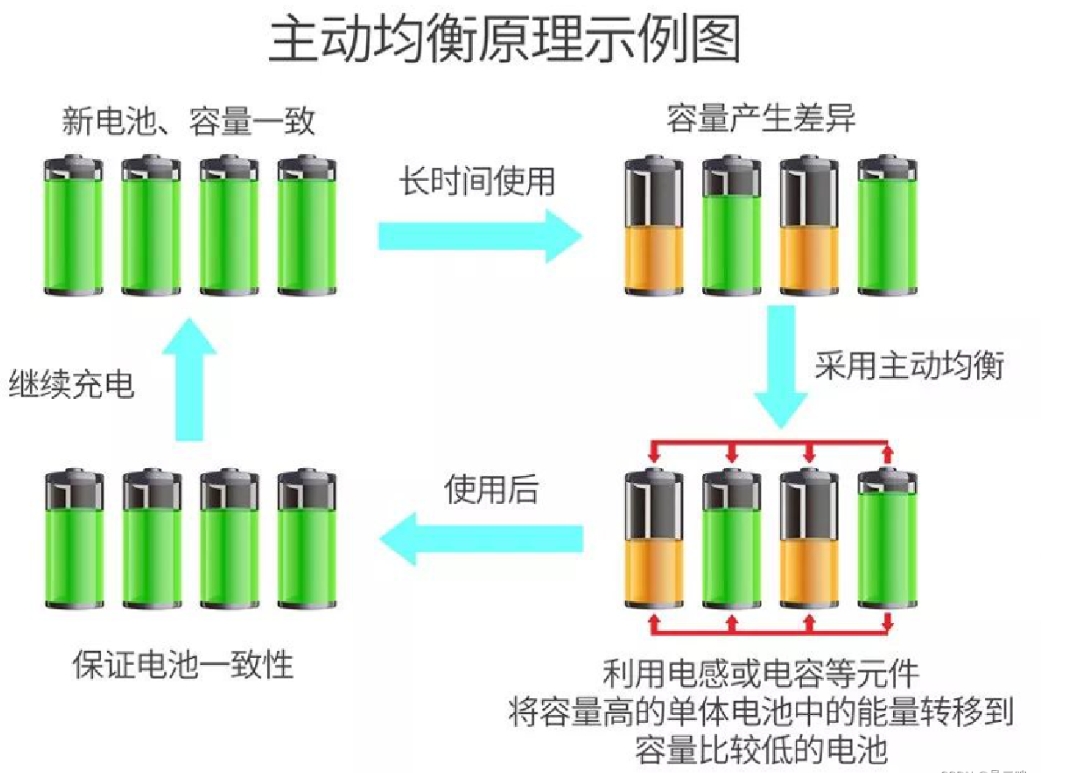
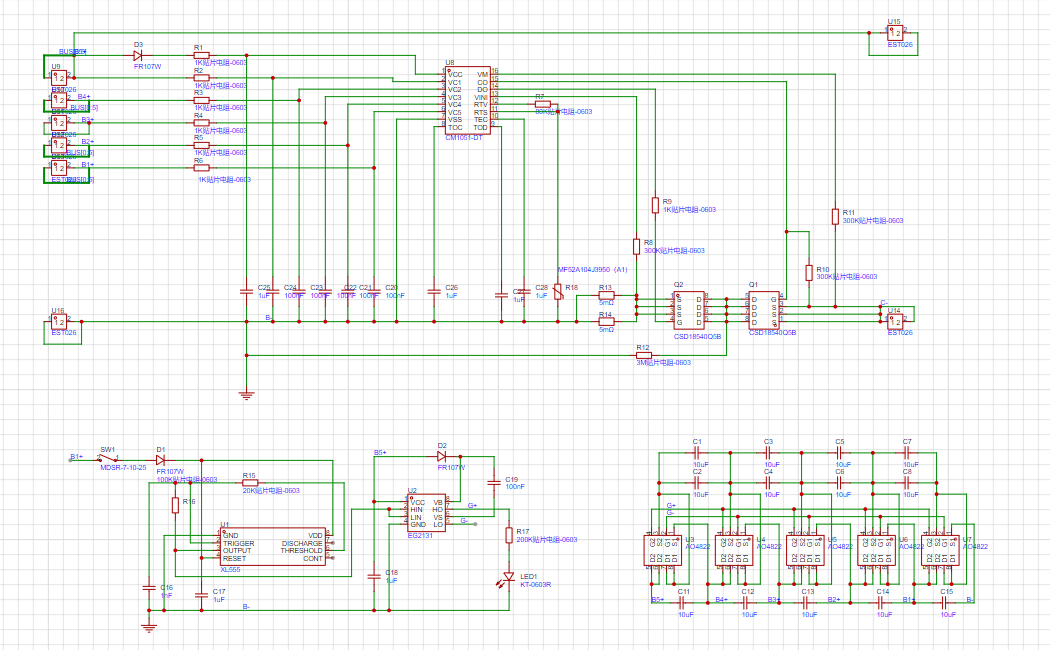
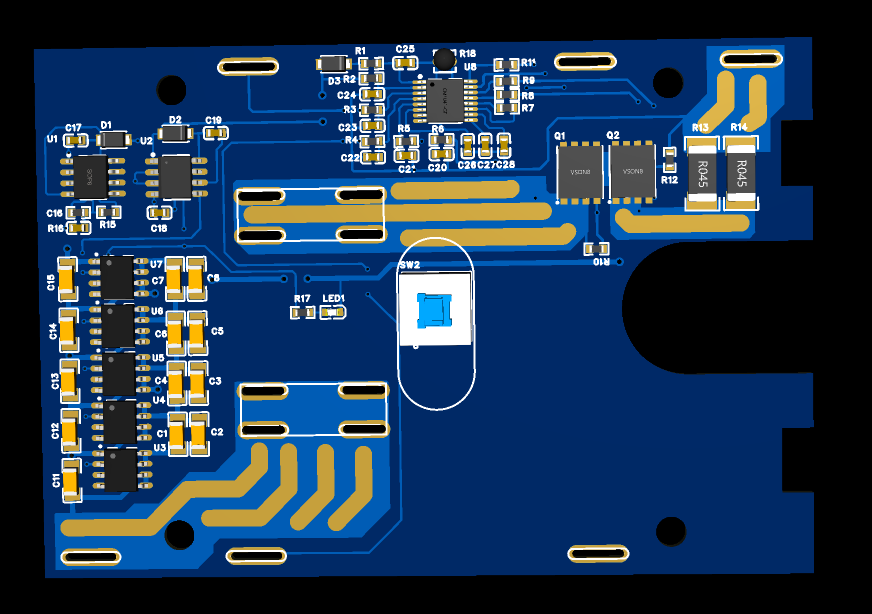
An open-source protection board with active equalization that directly replaces the original battery pack protection board is provided. It is based on capacitor energy transfer.
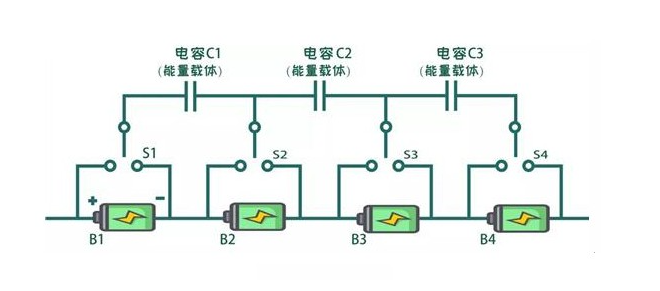
The main working principle is shown in the diagram: the drive circuit controls the switch to repeatedly switch on and off, allowing capacitors to be repeatedly connected in parallel to adjacent batteries, achieving energy transfer.
For cost control reasons, voltage detection for individual batteries is not performed here. The entire equalization section is constantly working. If the battery is stored and not used for a long time, it may be completely depleted. Unlike the Makita version, the Dayi battery casing does not have a groove. Therefore, I used the original DC port to install a self-locking switch. When not in use for a long time, pressing the switch will allow you to see the indicator light's status through the original slot. If the indicator light is off, the power is completely cut off. This avoids the problem of over-discharge during long-term storage. Soldering is completed using a hot air gun
with solder paste printed on a paper template
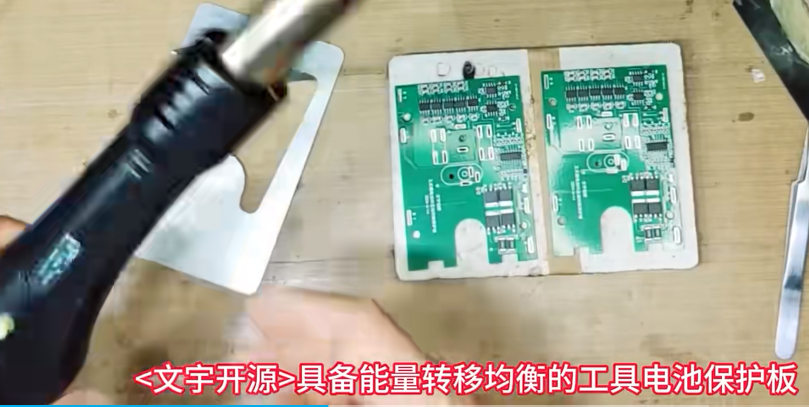
.
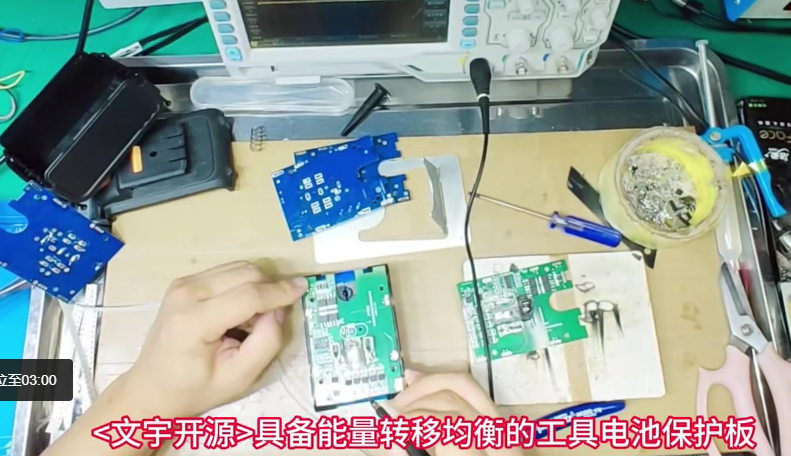
For the parts list, please refer to LCSC Engineering. This is my first time using LCSC EDA to complete a PCB. You can modify it according to your needs. For
PCB surface mount component repair and soldering, you can use the following hot air gun. It has precise PID temperature control, convenient 5-way button operation, and one-button operation for airflow and temperature, without the need for switching. Easy to operate and with precise temperature control, this device
uses a 0.91-inch OLED screen and features multi-point temperature calibration. It's a great tool for DIY or development projects. It doesn't have a bulky main unit or a dragging control box, saving workspace and making it compact and portable.
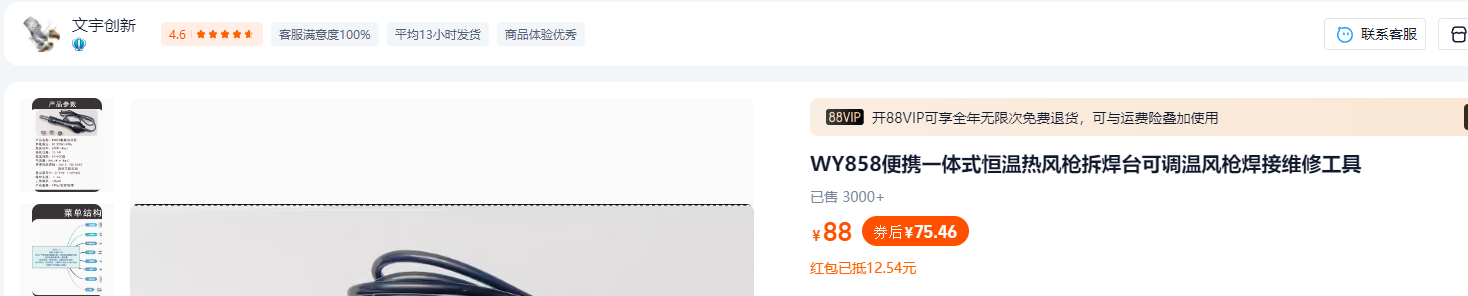
The currently released version is V3.0, with upgraded buttons and screen. The casing uses a specially designed mold, ensuring stability and ease of use. Those who need it should consider purchasing it.
For assembly and testing videos of this project, please see the corresponding video on Bilibili account: Wenyu Innovation:
https://www.bilibili.com/video/BV16m421376J/?spm_id_from=333.999.0.0&vd_source=018ead7681c1f5f9008e043b60cca754
. Design diagram:
Board1
schematic

preview. P1: Open the PCB
in the editor.








 京公网安备 11010802033920号


 BZX55C13