The previous PEX8796, while offering
powerful expansion capabilities and a relatively low price, was still considered too expensive for most NAS users, despite my open-source intention of providing design references. Many still wanted to get their hands on it for free, and the price tag of over 1000 RMB made it prohibitive for budget-conscious NAS users. Therefore, this budget-friendly PEX8748 was created, giving NAS enthusiasts a chance to be "ripped off"! It abandons all external 8654 connectors and adds four M.2 slots, allowing those with limited budgets to avoid being overcharged!
The project is licensed under
GPL 3.0 (vendors are free to mass-produce it; retaining the original logo and source is not mandatory! Copying from GitHub is prohibited. I think the PCB design is already well-established and intuitively presented on the LCSC Open Source Center. Copying from GitHub will only attract reporters! Previously, we searched for resources online and translated them ourselves! Now, our domestic DIY PCB industry clearly has an advantage and supply chain compared to foreign companies. If foreign companies are interested, why can't they translate it themselves? Why can't they accept and adopt LCSC's approach? Why should we copy and translate it for them on GitHub?).
Project-related functions:
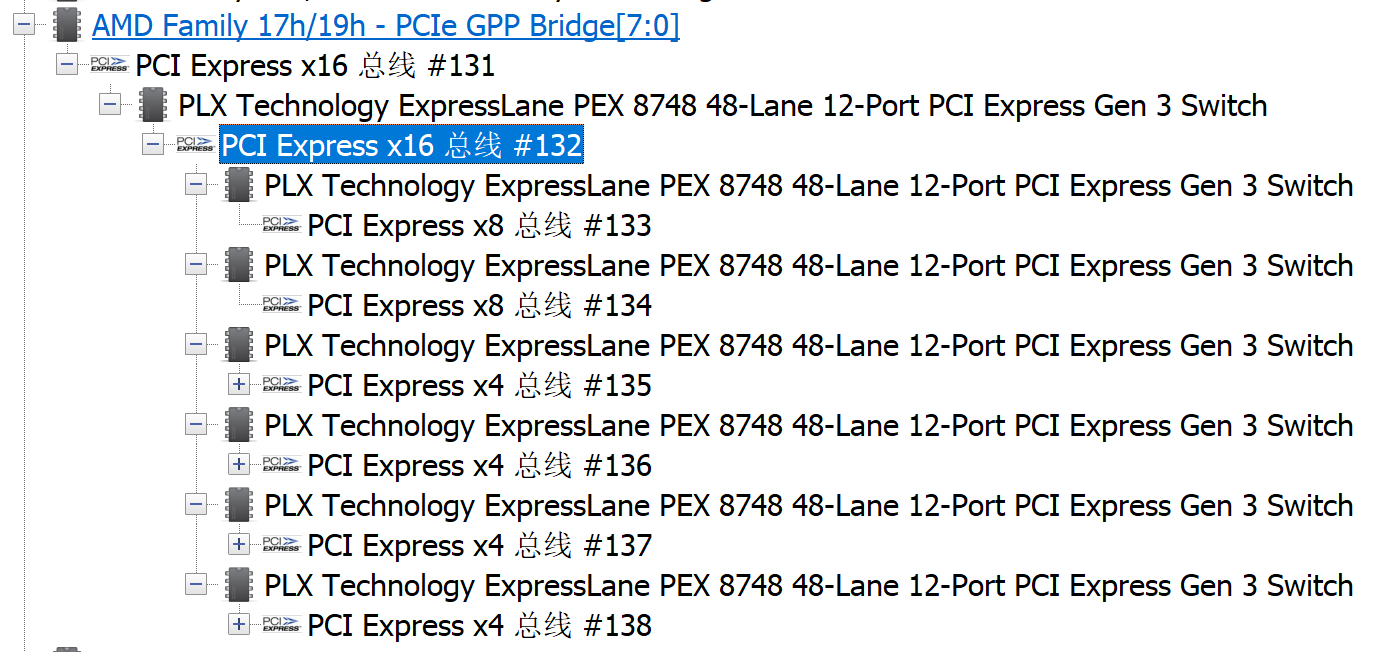
PCIe x16 3.0 as the upstream motherboard insert; four downstream M.2 22110 sizes (compatible with 2280), plus two SFF-8654 8I cards (which can be switched between X4, X8, and X16 via DIP switches). The cards use full-height standard dimensions, and the bezels are LSI standard half-height hole spacing full-height bezels!
Project attributes:
This project is being publicly disclosed for the first time and is my original work. This project has not won any awards in other competitions.
The project progress
has been verified as OK! The current price of a brand new PEX8748 is around 200 RMB. Including other components and the PCB, the mass production cost per card is over 400 RMB! The main purpose of open-sourcing this card is to provide design references. If you're doing prototyping and surface mounting alone, it's very expensive; you'll need to find a partner for mass production!
The entire design process for this card was recorded as a video. The Bilibili link is: [Using JLCPCB EDA to Hand-Design PLX8748 Online] - 1. Selection and Layout_Bilibili_bilibili. The
design
principles of PEX chips are generally similar; you can refer to the previous PEX8796 design. To make it easier for those with basic knowledge to understand, I've specifically added Chinese standard labels for the functions and roles in all locations on the schematic diagram! I've also redrawn the component symbols to provide a clear understanding of their functions for those with basic knowledge but limited understanding.
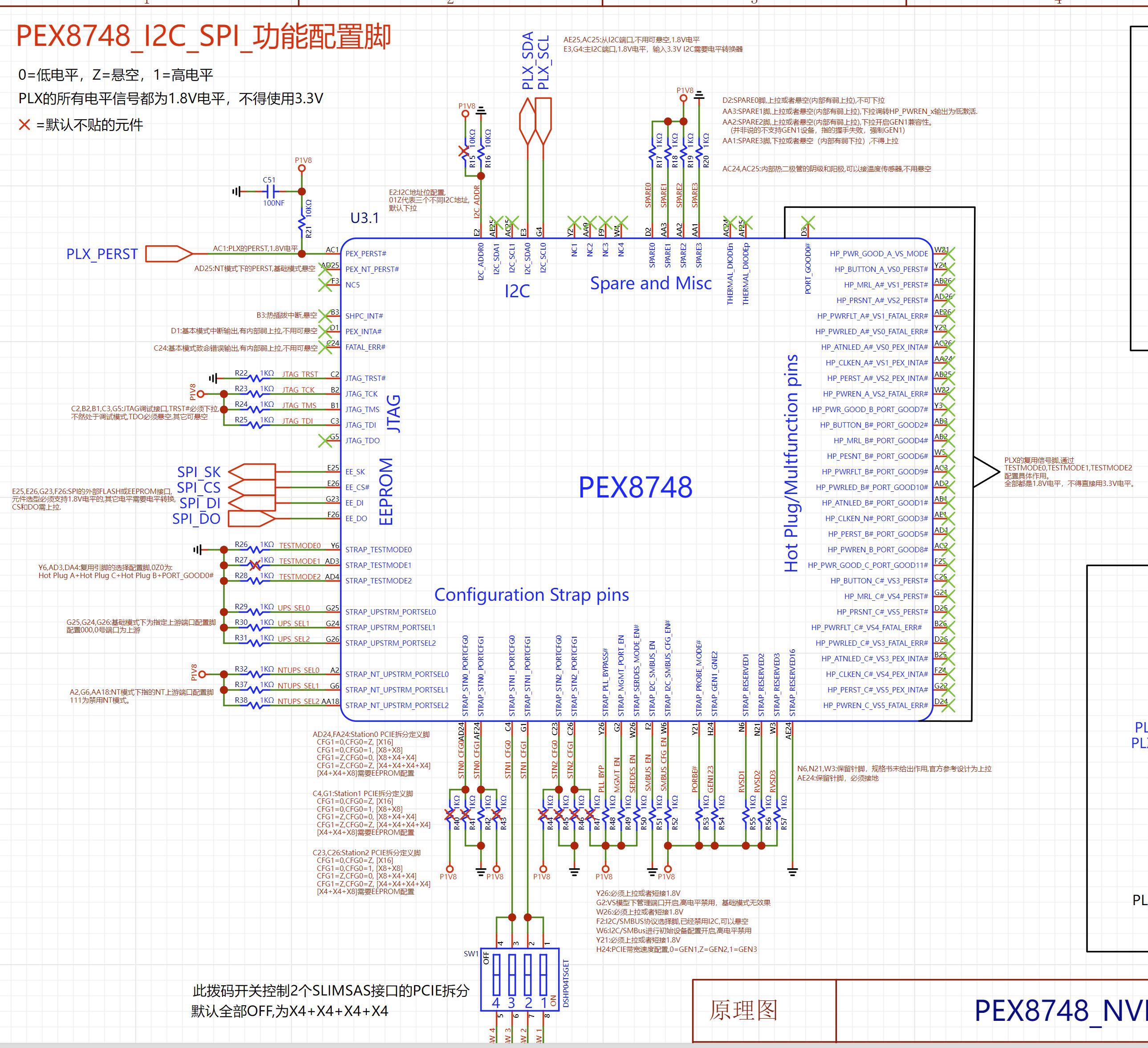
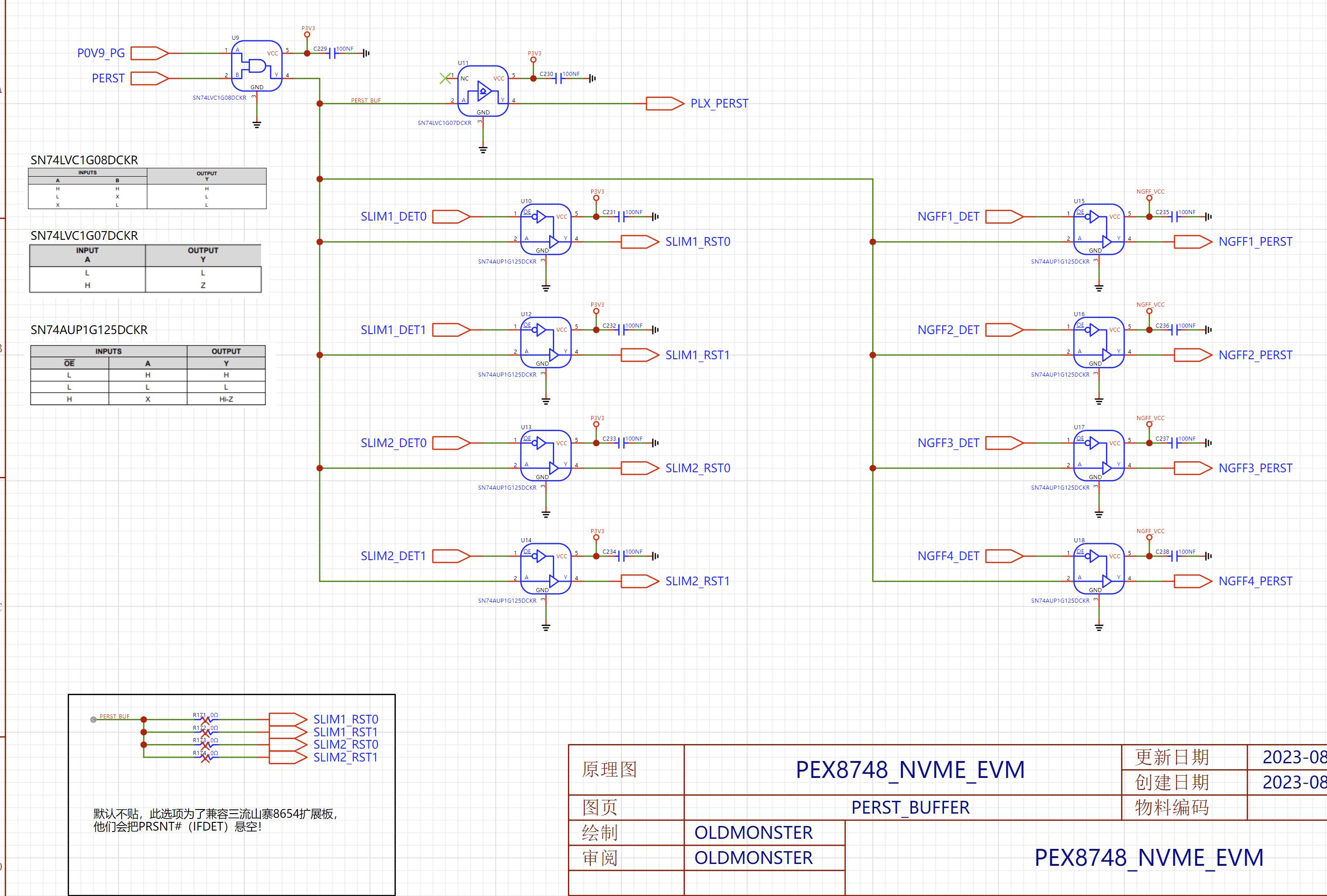
All related functions are annotated in Chinese, and all logic gates are symbolized.
This card has four M.2 slots with independent external power supplies, using the standard GPU 6-pin power connector (the one you use to plug into your graphics card). Without the 6-pin connector, the four M.2 slots will not function, but the 8654 and PLX chips themselves will work normally. (Because the standard power supply for each M.2 slot is 4.5A at most, the four power supplies plus the PLX exceed the PCIe power supply specifications, so an external connector is required!)
Software specifications:
This card does not require firmware. The I2C level converter chip and EEPROM can be omitted; they are configured using resistors and DIP switches by default.
Physical demonstration:
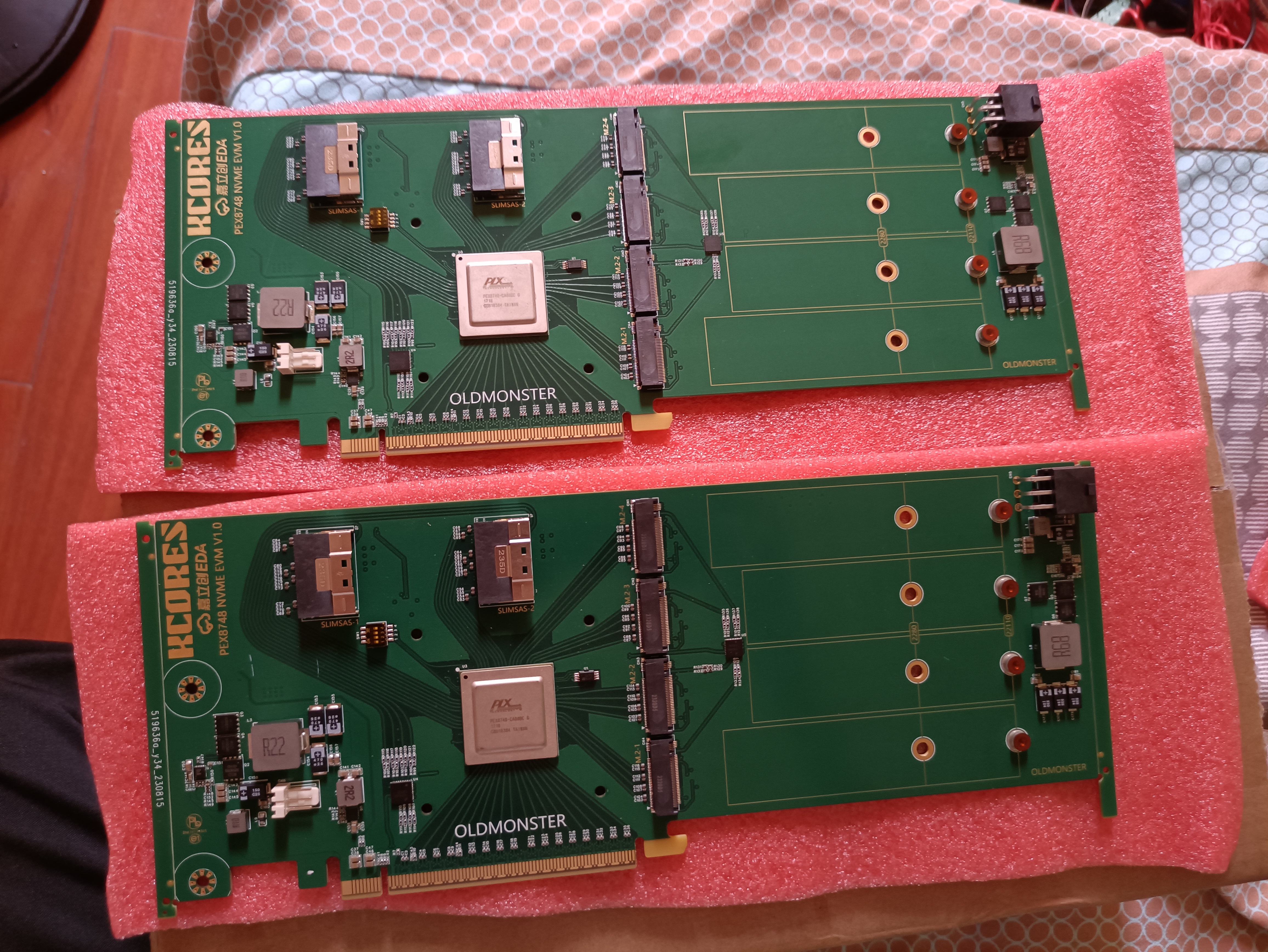
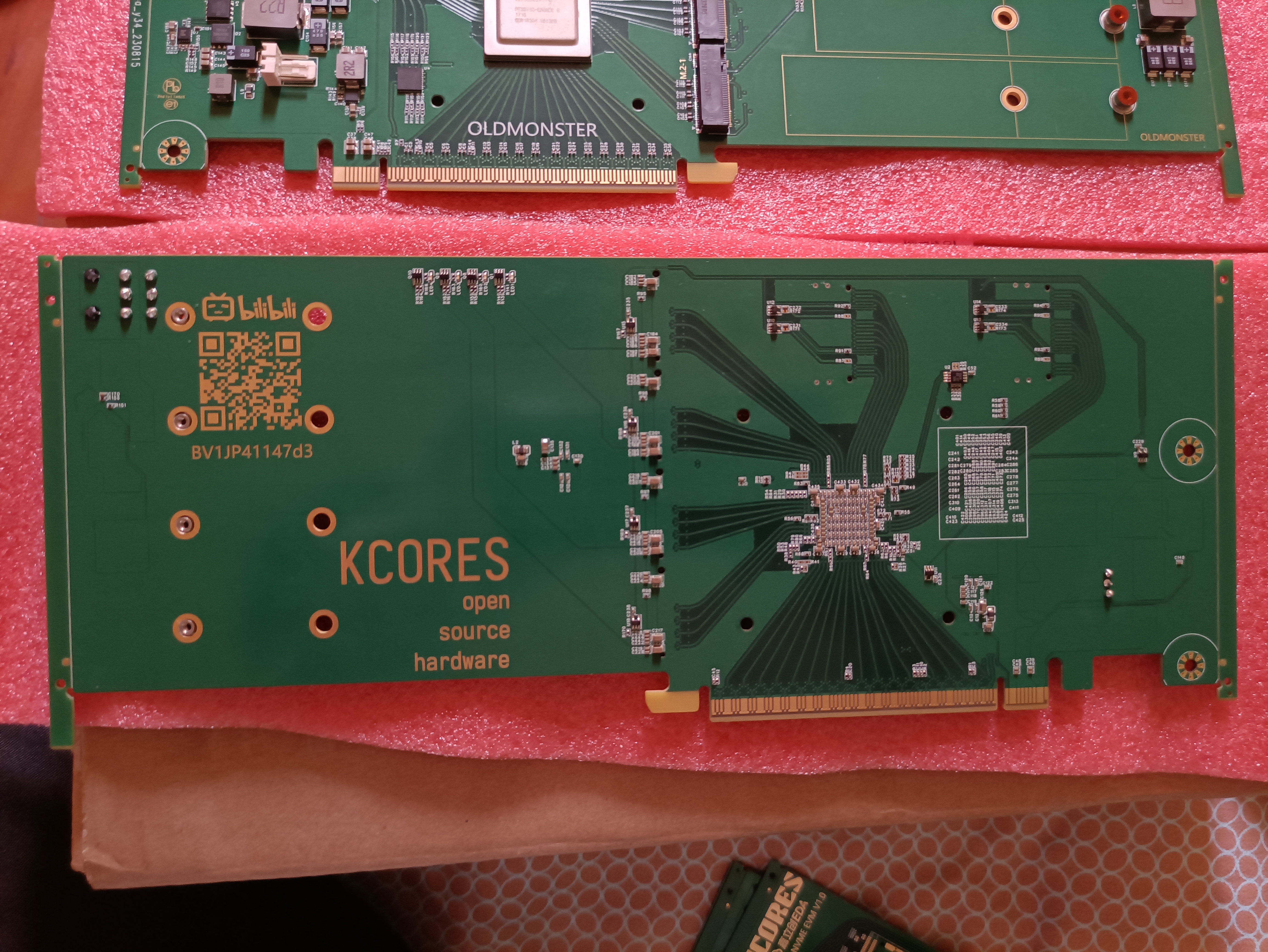
Design considerations:
This card has at least 6 layers, laminated with JLC3313.
For the other
PWM chips, I used TI's because I purchased them at a price significantly lower than the market price (I don't know if it's because they weren't selling well on LCSC's online store, hence the price reduction). If you are redesigning and considering cost, you can choose the commonly used RT8120 series (a cheap PWM chip used in most domestic motherboards for memory power supply). You can also use imported modules like the PW22A (make sure to provide sufficient bypass MLCCs and filter capacitors). The clock buffer can use the PI6C20800BIAEX (I don't know why this chip is so cheap on the LCSC website, maybe it's not selling well!). Don't use an all-in-one BUCK DC to power the 0.9V; those claiming 20A will overheat when actually running at 20A!
Heatsink connection:
Graphics card/industrial motherboard CPU cooler 3-pin/4-pin temperature-controlled/silent cooler - Taobao (taobao.com) (select 3-pin 12V).
PCIe bracket connection:
LSI server SAS RAID array card PCI-E standard 4U half-height/full-height heatsink 2U bracket - Taobao (taobao.com) (select full height).
Matching test daughter card:
SlimSASCEMx8_EVM - LCSC EDA open source hardware platform (oshwhub.com) (JLC3313 four-layer).








 京公网安备 11010802033920号


 1KIS132-176MG



