Project Description
Update 2024.8.6: The 4-layer board version has been removed. It turns out, you can't get it for free. Everyone should just pay for prototyping, or join the group to get on board; there's still a small amount of stock left.
Update 2024.5.9: At the request of our members, a 4-layer board version has been added to facilitate free prototyping.
Nixie Tube History:
A Nixie tube, also known as a "cathode glow discharge indicator tube" or "glow tube digital tube," is a member of the vacuum tube family. It originated in the 1950s, first created by Haydu Brothers Laboratories. In 1955, Haydu Brothers Laboratories was acquired by Burroughs Corporation, and this "cathode glow discharge indicator tube" was officially named Nixie, registering the Nixie trademark and making Nixie Tube the common name for this type of device. Between 1950 and 1990, Bora and other vacuum tube manufacturers worldwide began mass-producing Nixie Tubes of various shapes and sizes, which were widely used.
Currently, no manufacturer produces Nixie Tubes on a large scale. The youngest Nixie Tube I've seen is the IN-14 model produced in the Soviet Union in 1991, meaning that Nixie Tube production has been halted worldwide for nearly 30 years. If you're lucky, you can still find them on some old measuring equipment. Of course, the reason for the discontinuation of Nixie Tubes is that they were replaced by more advanced and cheaper technologies, such as VFD (Vacuum Fluorescent Display) and LED technology, which emerged in the 1970s. With the introduction of these new technologies and applications, the use of Nixie Tubes gradually decreased.
However, many electronics enthusiasts are attracted by the unique glow and elegant, retro lettering of Nixie Tubes, and are passionate about using them to make clocks or other electronic devices, giving these antiques a new lease on life.
The function of a Nixie Tube is actually quite simple: to display numbers and commonly used symbols. In its time, the Nixie Tube was the only electronic device capable of displaying numbers and symbols, which is why we see it in many electronic instruments and equipment from the 1950s to the 1990s. For example, early elevators used it to display floors, early calculators used it to display numbers, and early electronic experimental instruments included frequency counters, voltmeters, and ammeters. It also frequently appeared in movies, representing the era in which the stories were set.
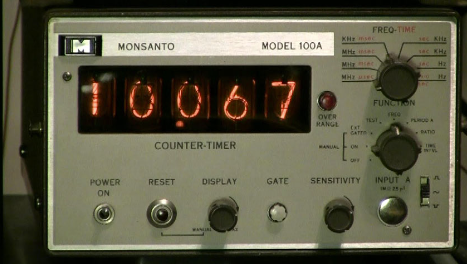
As
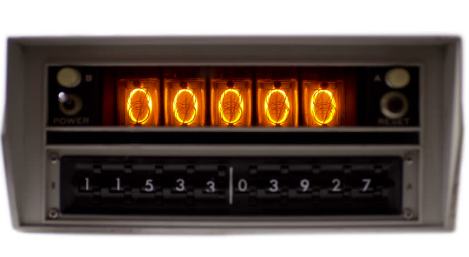
seen
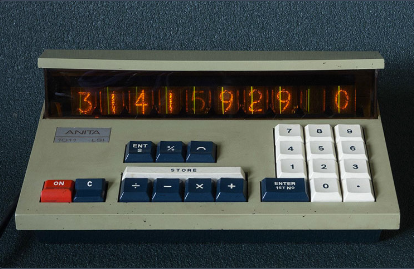
in
the photos above, wherever numbers needed to be displayed, the Nixie Tube was almost always present. Depending on the application, the size and shape of the Nixie Tube varied greatly. They were also found in equipment from research institutions and military units. Later, even 14-segment Nixie Tubes appeared for airport takeoff/arrival information displays and stock quotes.
As the mainstream display device at the time, the Nixie Tube was widely used in various fields, mainly divided into two categories based on display method: side view and top view/end view. Side-display glow tubes, as the name suggests, are tubes that are erected so that numbers are read and identified from the cylindrical surface (side) of the tube. Top-display glow tubes, on the other hand, are read and identified from the flat surface at the top of the tube.
The image below shows two typical side-display and top-display glow tubes.
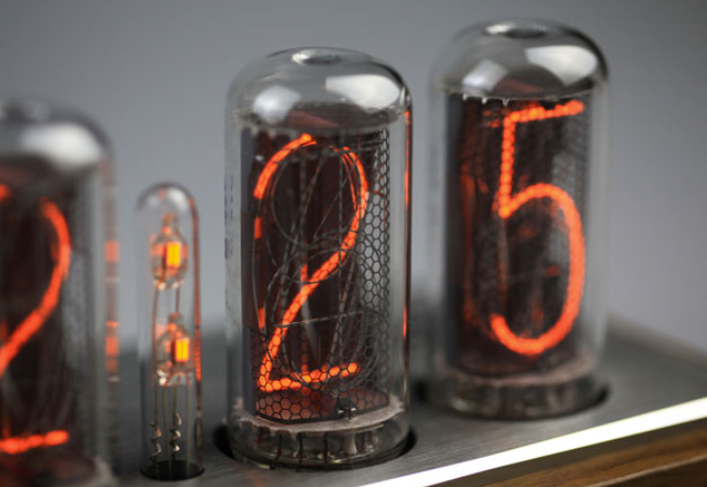
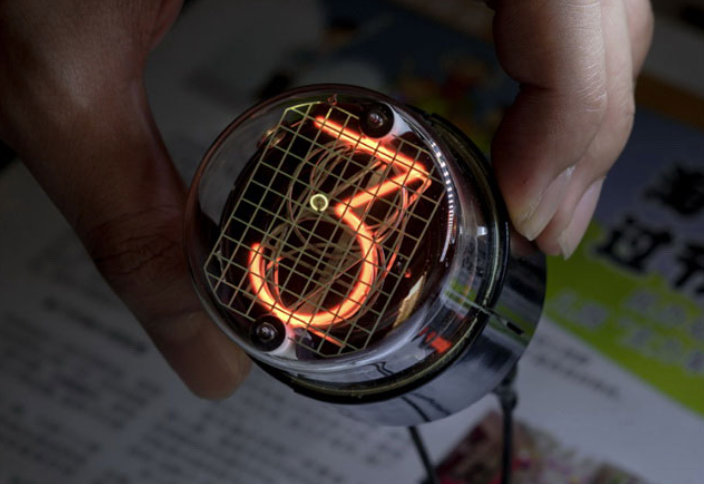
First, I want to tell you that the inside of a glow tube is not a vacuum, but is filled with neon (Ne) and argon (Ar) gas, and some models also contain mercury vapor (Hg). The most common glow tubes are used to display the 10 Arabic numerals from 0 to 9. Some glow tubes can display not only numbers but also decimal points, and some glow tubes are specifically used to display symbols, etc., but their structure and components are the same. Let's take a glow tube that displays Arabic numerals as an example to illustrate its internal structure and components: Most glow tubes have several cathodes, each of which is made into an independent, specific shape. If it is a glow tube that displays Arabic numerals 0-9, then it has 10 cathodes, and each cathode is a metal sheet with an independent number shape. Most glow tubes have only one anode, which surrounds all the cathodes inside the tube. Side-display glow tubes have the anode formed into a mesh on the front side, while top-display glow tubes have it formed into a mesh at the top. The mesh is to allow the light emitted by the cathode numbers to be seen through the mesh openings. In the image below, we disassembled a Soviet-made -14 type glow tube. You can clearly see 10 metal plates shaped like numbers, an anode mesh with openings at the front, and some purple ceramic rings. Furthermore, the glow tube has a very interesting characteristic: its number 5 is quite unique. Upon closer inspection, it is actually a reversed number 2. I believe this is not a mistake, but rather a cost-saving measure during manufacturing, where the number 2 was simply reversed to represent the number 5. Besides the main digital-shaped anode metal sheets and mesh anode metal sheets, the glow discharge tube also contains mica sheets to support the overall structure. Mica sheets are semi-transparent and withstand high temperatures, so their properties do not change during tube manufacturing. These anode and cathode metal sheets are basically fixed to the mica sheets at the ends and bottom. Additionally, there are some ring-shaped, metal-pad-like materials inside the tube, usually ceramic rings. Since ceramic is also a high-temperature resistant and insulating material, these ceramic rings are used to isolate and fix the cathode metal sheets inside the tube.
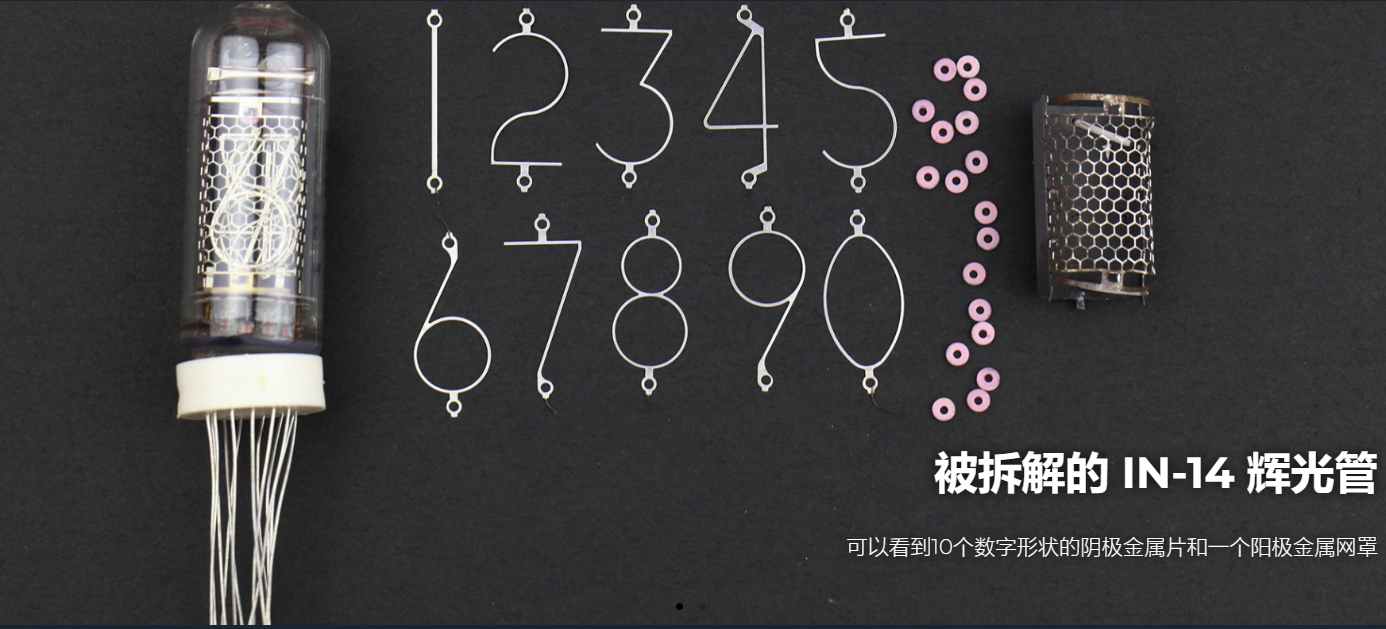
The above information is from the NIXIE/VFD Museum.
Project Attributes:
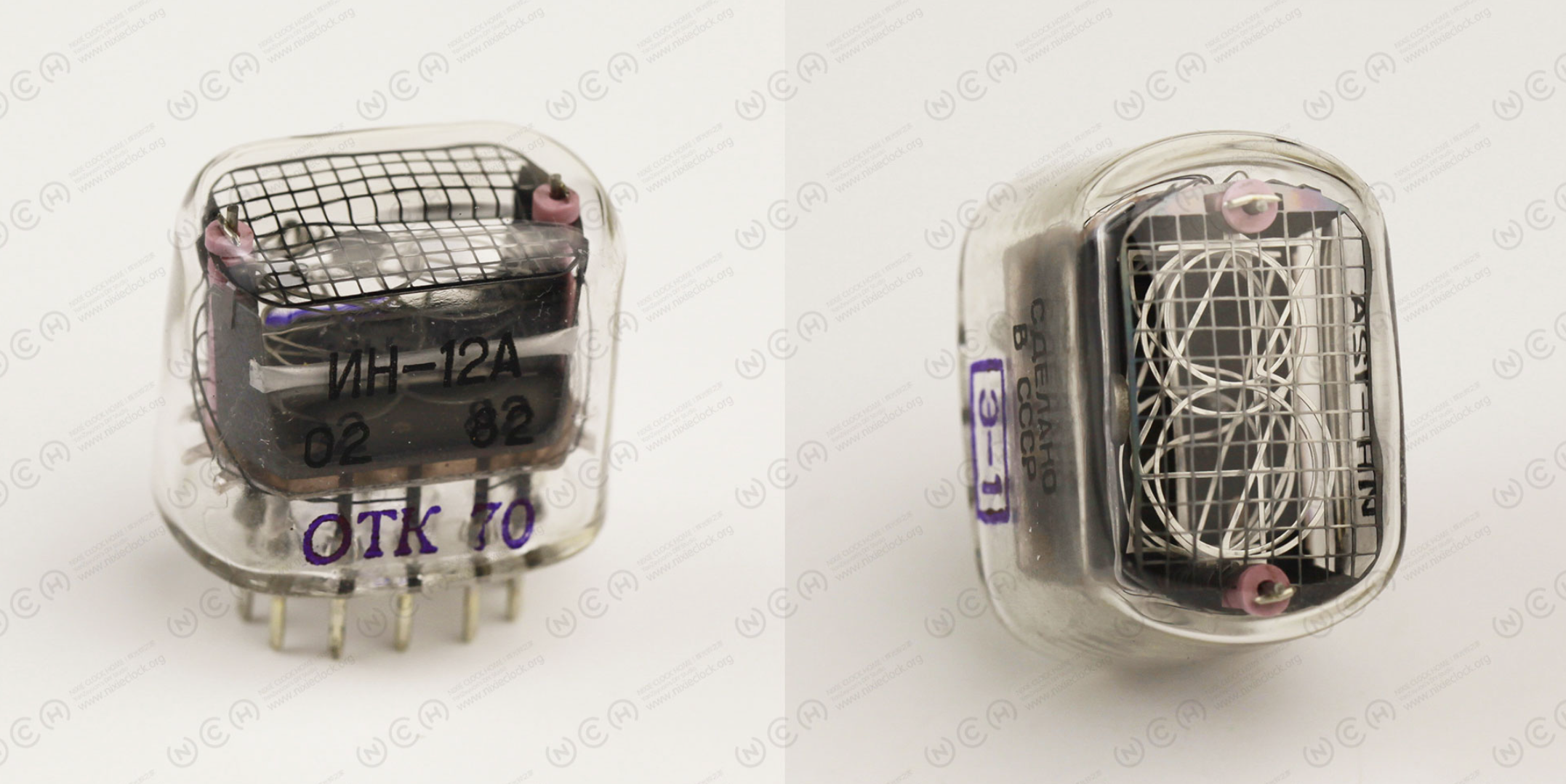
This project uses an IN-12A type glow discharge tube.
Design Principles
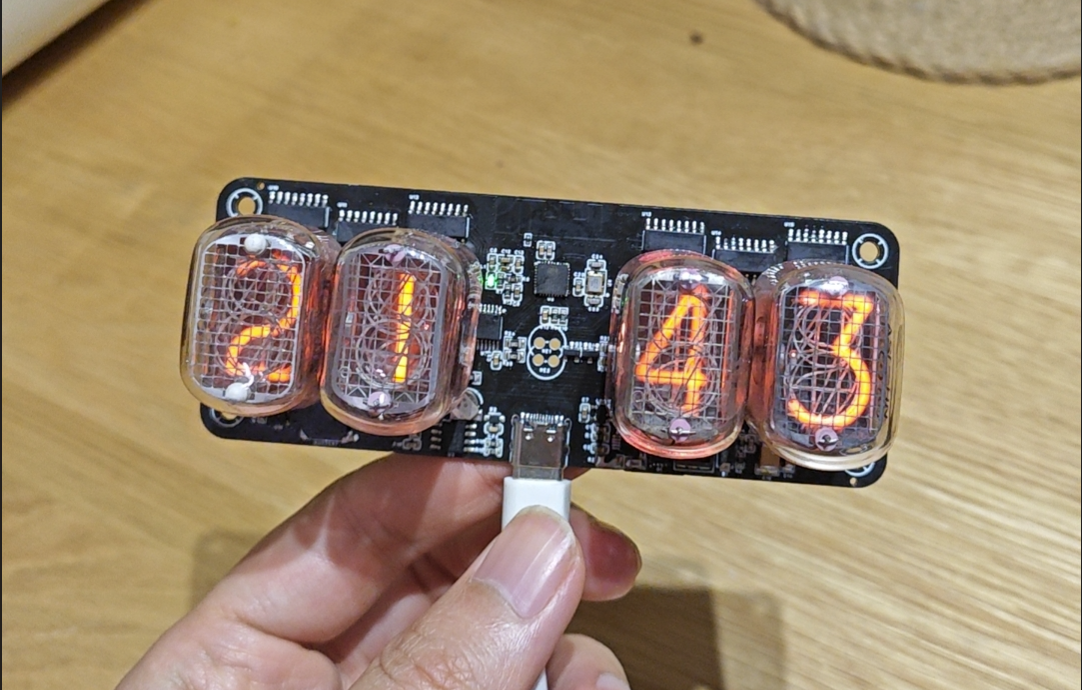
: The main controller uses an ESP32-C3FH4 bare chip, a PCB antenna, and the glow discharge tube driver uses a ULN2003A.
A brief introduction to the core glow discharge tube driver and boost circuit.
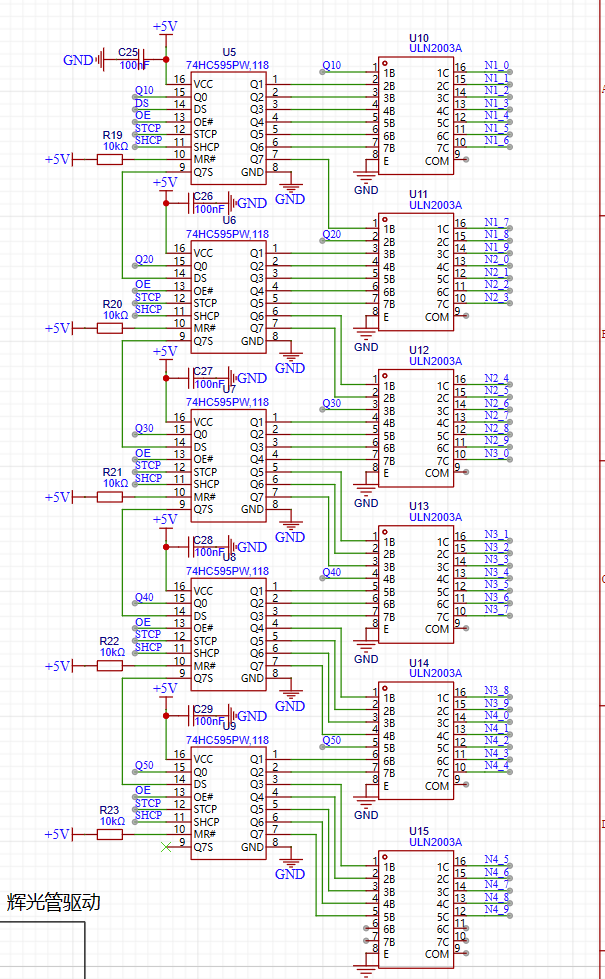
Glow tube driver circuit description:
Since each digital signal of the glow tube needs to be controlled individually, direct control using the MCU's I/O is insufficient. Therefore, a serial-to-parallel conversion approach is used, employing a combination of a 74HC595 and a ULN2003A to drive the glow tube. The 74HC595 converts the serial data into parallel data, and the ULN2003A controls the glow tube's on/off state.
The driving voltage for the glow tube is generally around 170V, but high-voltage transistors such as the A42 can be used as alternatives.
Glow tube boost circuit description:
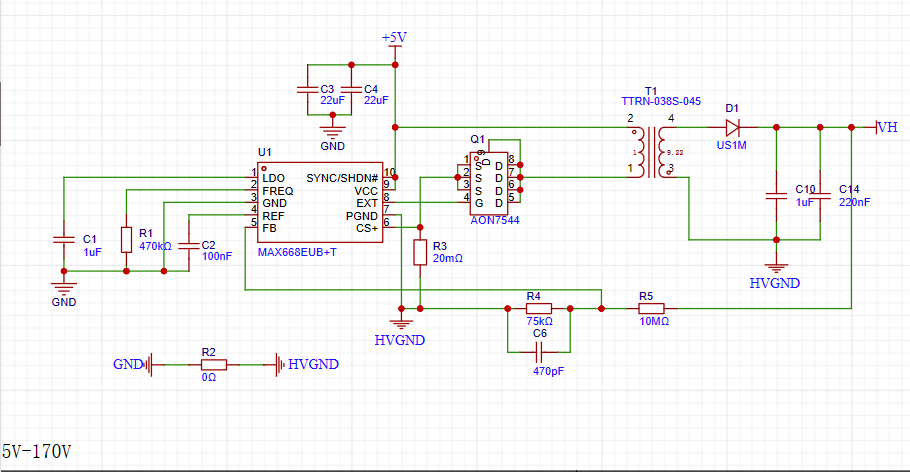
The boost circuit uses a relatively conventional flyback boost circuit, employing the MAX668 chip. Simply put, the MAX668 first boosts the 5V to 17V, and then a transformer boosts the 17V to 170V.
Clock RTC Chip Description:
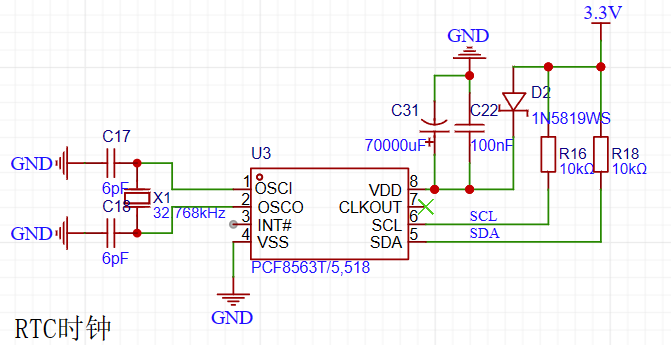
Since this is a desktop clock, an RTC is necessary. Considering replication and SMT costs, this project uses components from the JLCPCB basic library as much as possible. The RTC chip used here is the PCF8563T, and a 70000uF surface-mount supercapacitor is used as backup power for the RTC.
Software Description:
The project firmware is developed using ESP-IDF 5.1.2. It has been compiled into a bin file and is attached. Simply use flash_download_tool to burn it; the burning address is 0x0.
A brief introduction to some key features:
1. Utilizes smartConfig for network configuration (various smartConfig network configuration mini-programs in WeChat are available), enabling automatic NTP time synchronization after connecting to the network.
2. A neon tube anti-virus program that displays an animation every 30 seconds, lighting up each digit. (My neon tube has been in use for 3 years and is currently working perfectly without any signs of virus infection.)
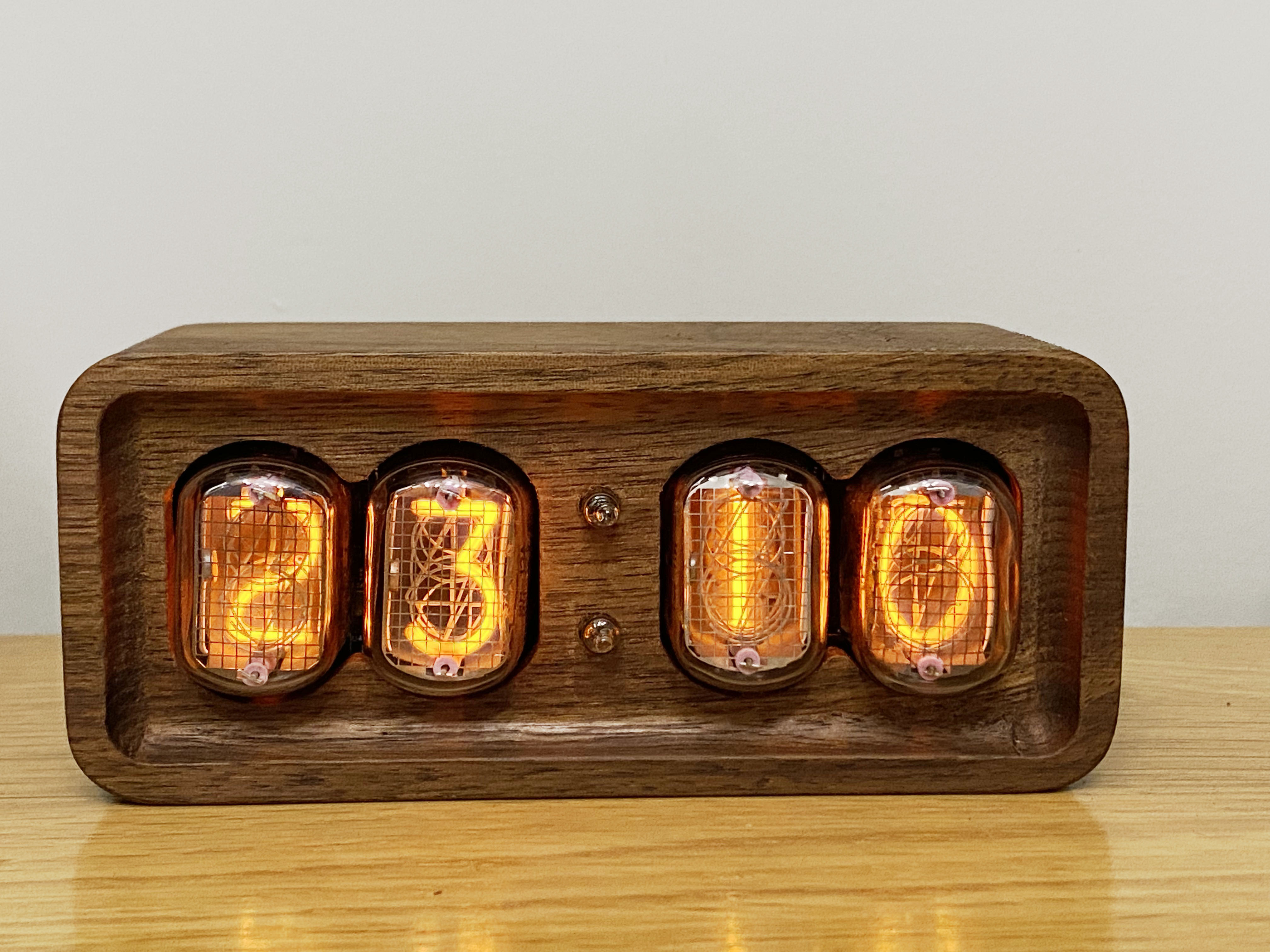
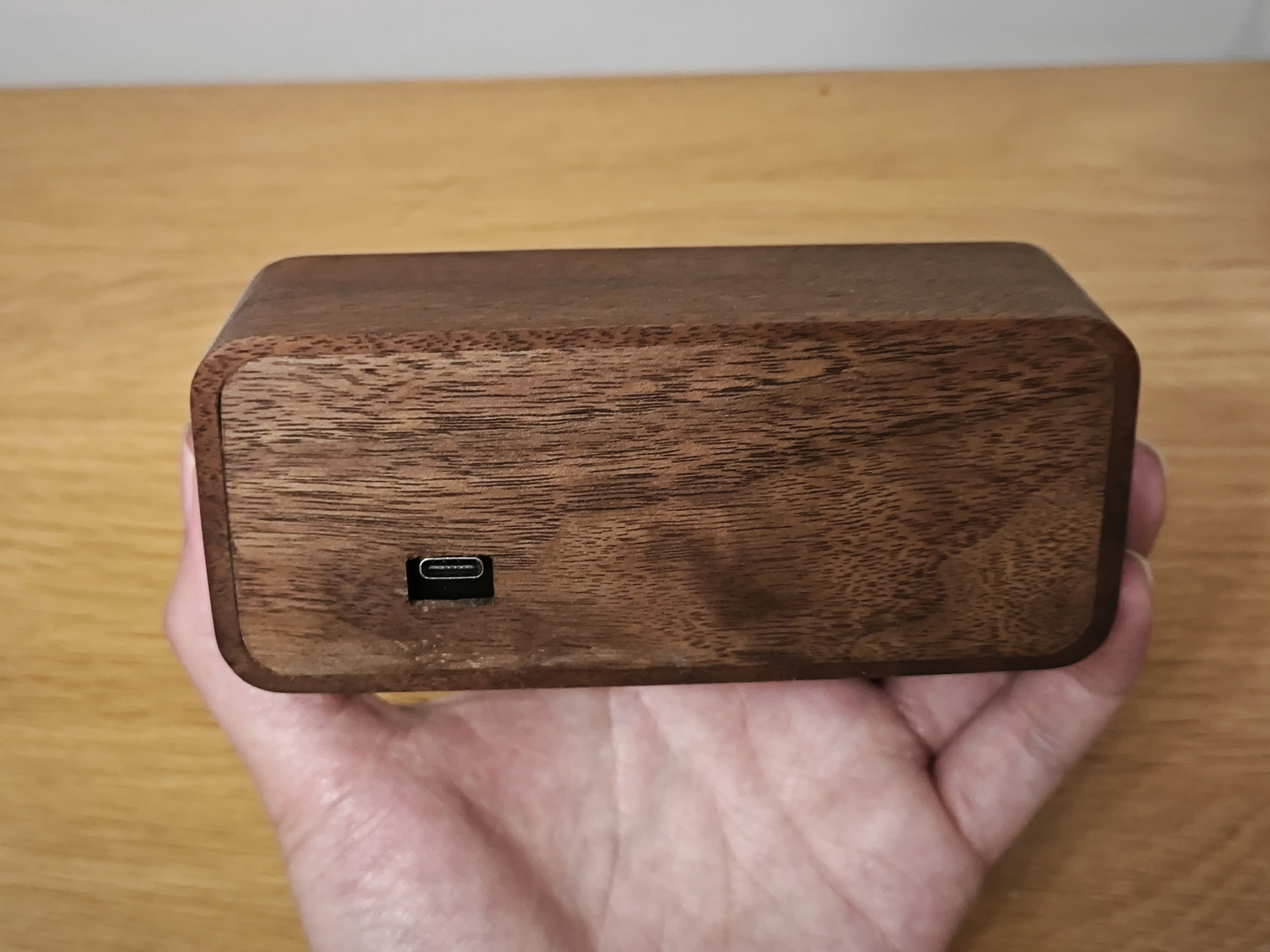
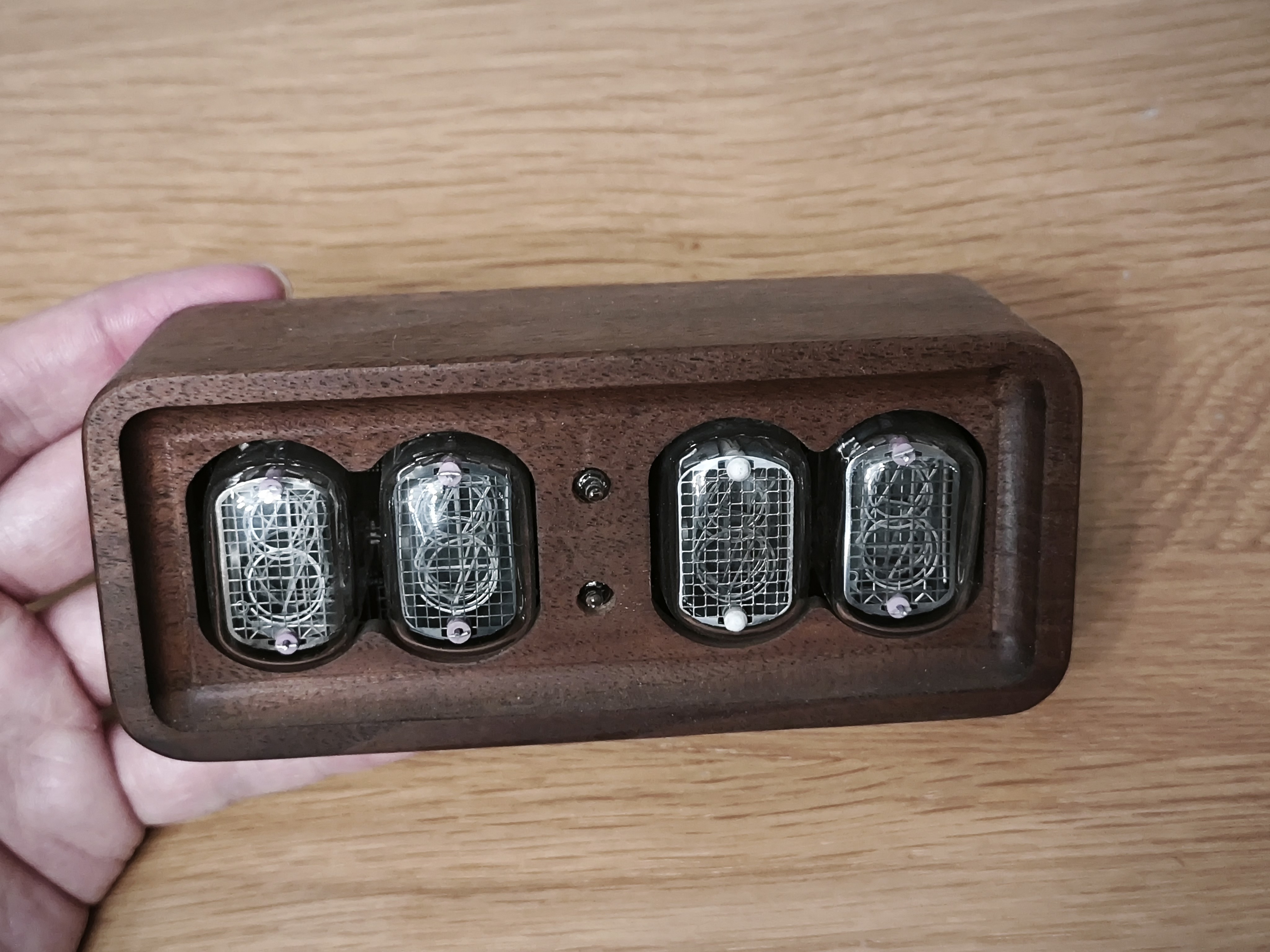
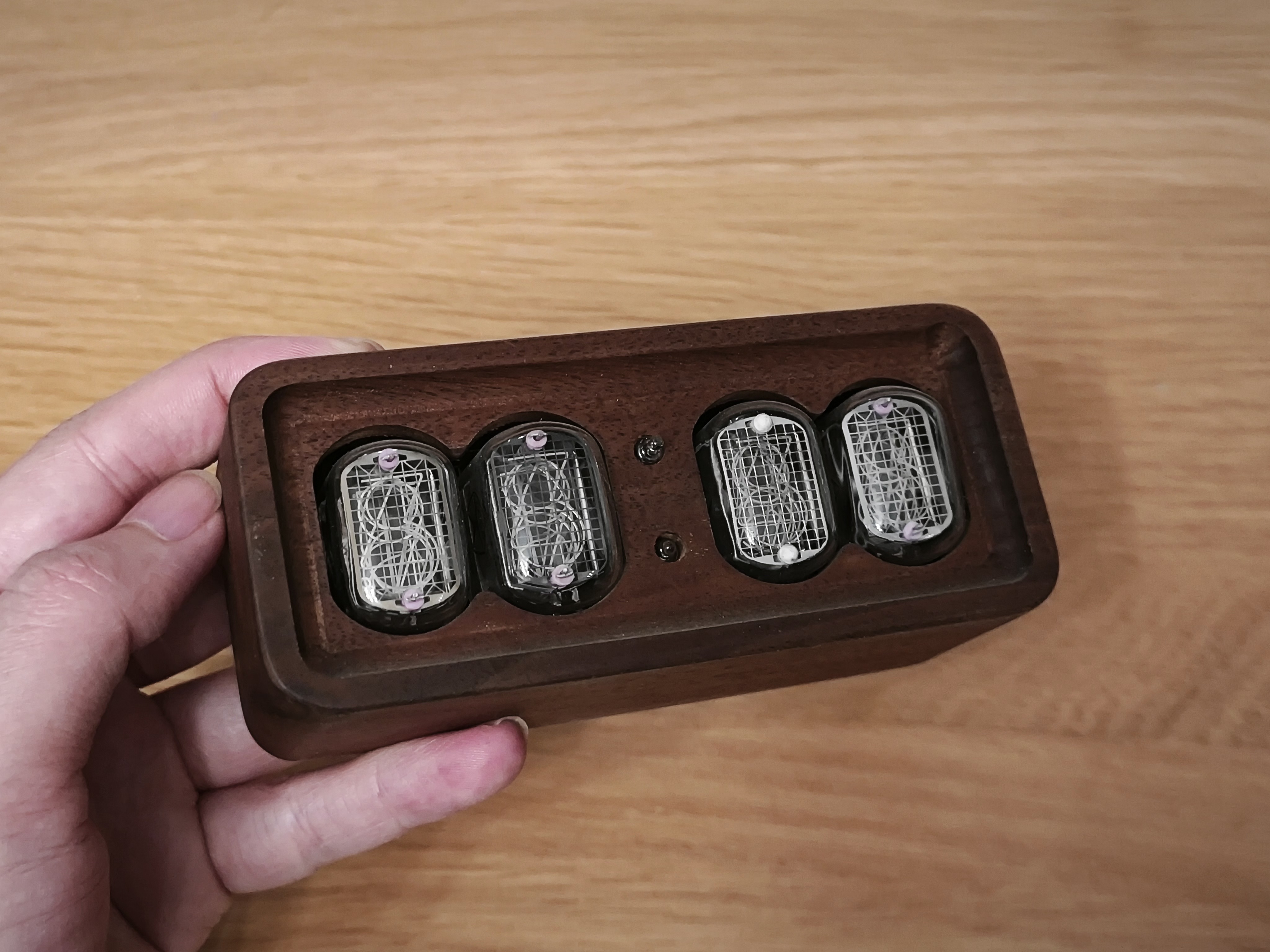
3. Human presence detector: Utilizes Hailingke's human presence radar. The glow display turns off when no one is detected, and automatically turns on when someone is present. Enough with the chit-chat, here are the pictures! It features a black walnut wood casing, and the actual texture is absolutely amazing! For those interested, join our group to discuss! QQ group: 708391774 And
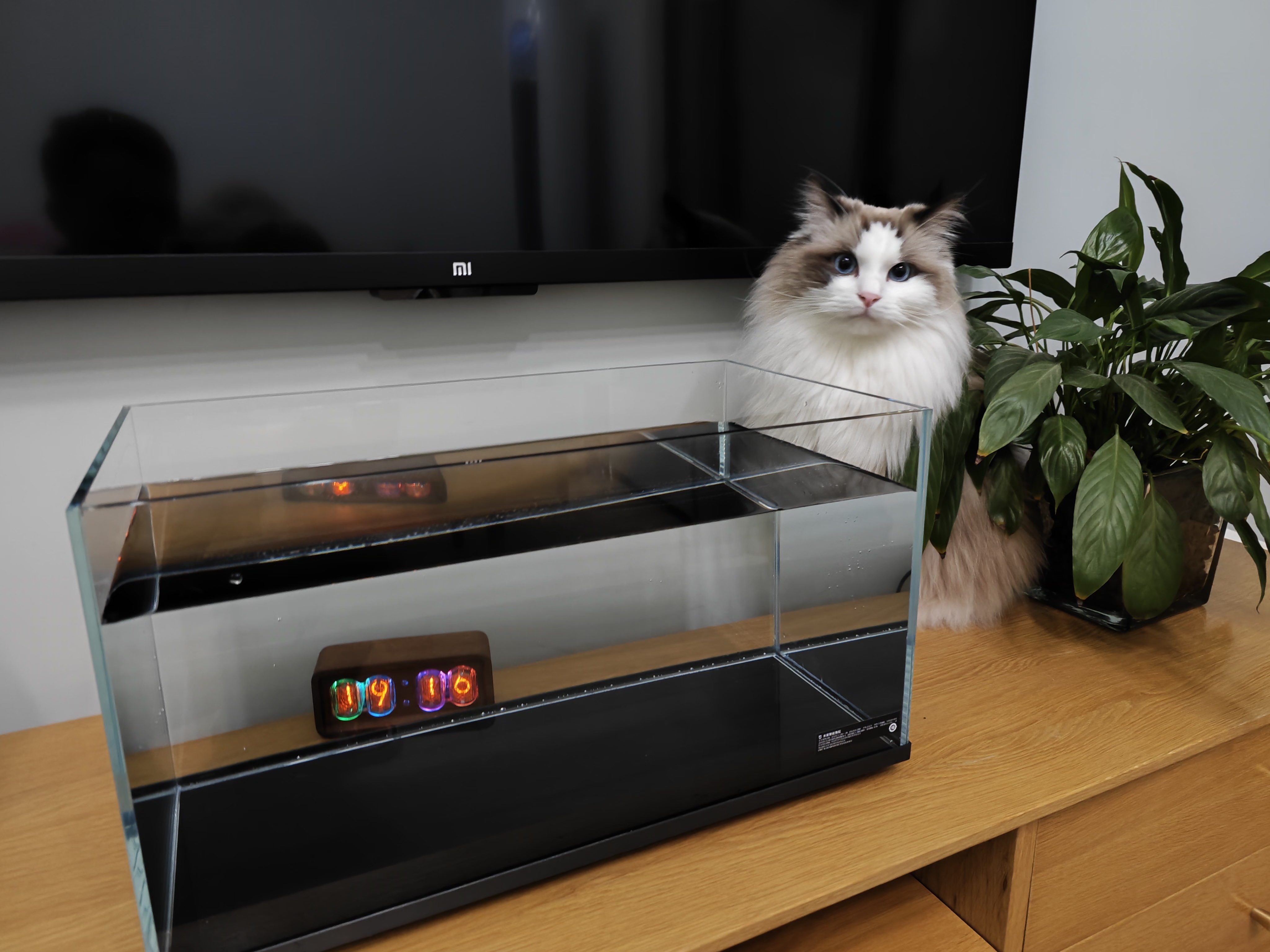
lastly ! A picture of my cat to mark the end! So, which do you think is more interesting, the glow clock or the fish tank?








 京公网安备 11010802033920号


 EVQ21407K



