Features:
Flexible Audio Input:
- Type-C interface, supports USB 2.0 high-speed audio input, supports sampling rates of 32kHz, 44.1kHz, 48kHz, 88.2kHz, 96kHz and 192kHz and bit widths of 16bit, 24bit, and 32bit
- Bluetooth mode, supports LDAC, AptX and other inputs, supporting a maximum sampling rate of 96kHz and a bit width of 24bit
Multi-Level Class D Amplifier:
- Low power requirements, no heat generation
- Efficiency >50% at 1W output power
High Output Power:
- Supports 2x37W dual-channel output (THD=10%), minimum load of 4Ω, meeting the needs of desktop speakers
- THD+N: 0.05%, 5W, 1kHz
Excellent Housing and Panel Interface Design:
- Housing size approximately 10.5cm × 10cm × 3cm
- Power supply DC-005 interface input, 12~18V
- 4mm crystal binding posts for quick cable plugging and unplugging
- USB Type-C The audio input interface abandons the bulky Type-B, offering a more modern look and allowing easy connection to phones and computers. The
SMA RF interface allows for the removal of the Bluetooth antenna.
User-friendly interaction features include:
a rotary encoder for volume adjustment, digital volume control for easy volume control, and
button control for Bluetooth playback and volume, enabling easy song switching without looking at the phone
. A display shows the sampling rate, current operating status, volume level, etc. (I'm too lazy to do more).
Description:
The MA2304DNS is a 2x37W audio amplifier with an integrated audio DSP and I2S/TDM audio interface. This audio amplifier utilizes MERUS™ multilevel switching amplifier technology, achieving unparalleled power efficiency at both low and high output power. Multilevel switching also reduces EMI and enables inductorless applications at a lower cost without compromising audio performance or efficiency. A high-order internal feedback loop ensures low THD for excellent audio performance. The integrated DSP provides configurable processing flow for correcting and tuning practical speaker applications such as equalization, limiting, etc. With the XMOS digital interface and QCC5125 Bluetooth module, high-definition USB and Bluetooth LDAC audio input can be achieved, thus meeting desktop HiFi needs.
System Architecture:
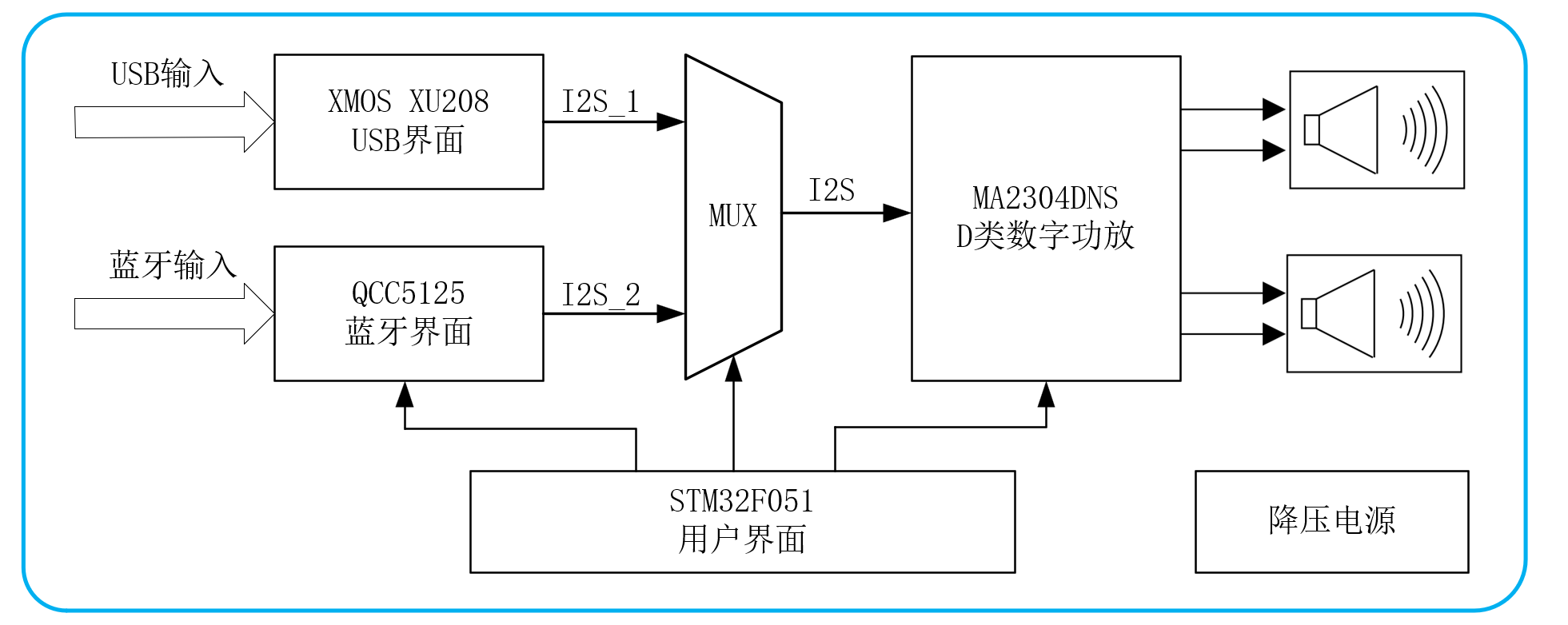
This power amplifier consists of five parts: 1. MA2304DNS digital audio power amplifier; 2. STM32F051 main control circuit; 3. QCC5125 Bluetooth audio circuit; 4. XMOS digital interface circuit; 5. Buck power supply circuit. The circuit uses JLCPCB four-layer board technology and measures 10cm × 10cm.
The XU208 and QCC5125 are responsible for receiving and converting USB and Bluetooth audio respectively. The two I2S signals are selected by SN74LVC244 and sent to the MA2304DNS power amplifier for audio decoding and amplification.
The output clock of the XU208 is re-aligned through a D flip-flop to eliminate clock jitter caused by the XMOS itself.
The QCC5125 module is connected to the antenna using an IPEX interface, improving signal quality.
To reduce power-on surge, a PMOS transistor was used for slow power-on processing at the power input (this feature has been abandoned).
The STM32F051 main controller is responsible for decoding the selected decoder and controlling the amplifier output volume via I2C. The rotary encoder also functions as a button; a long press switches the audio source.
An LCD/OLED display shows amplifier status information (I was too lazy to implement this).
Conclusion:
This mini USB Bluetooth digital amplifier is an improvement on its predecessor, enhancing interactivity and connectivity. It also features a casing and panel, enabling direct power amplification and output of digital audio signals, making it an essential HiFi product for home use.
Finished product showcase:
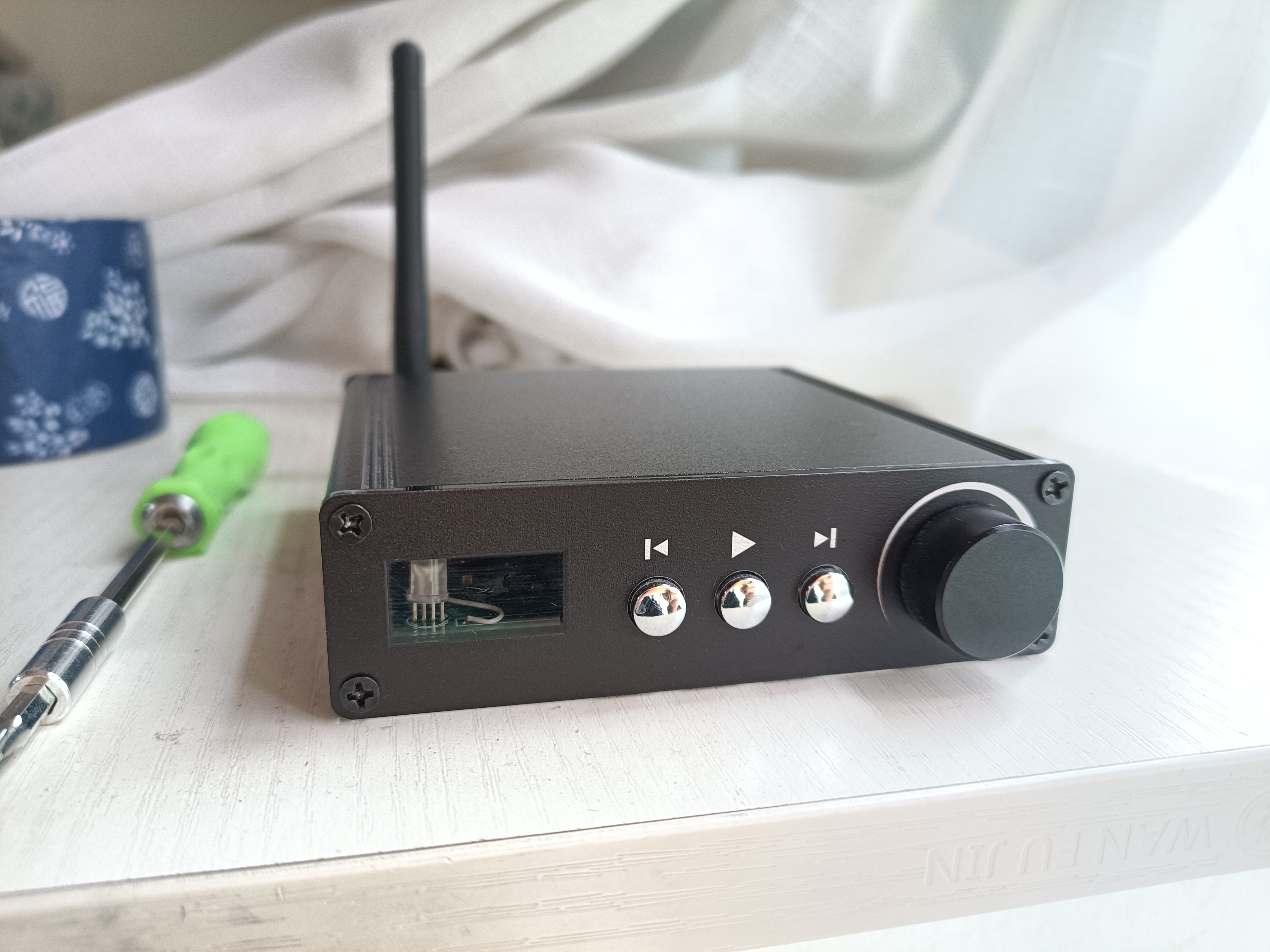
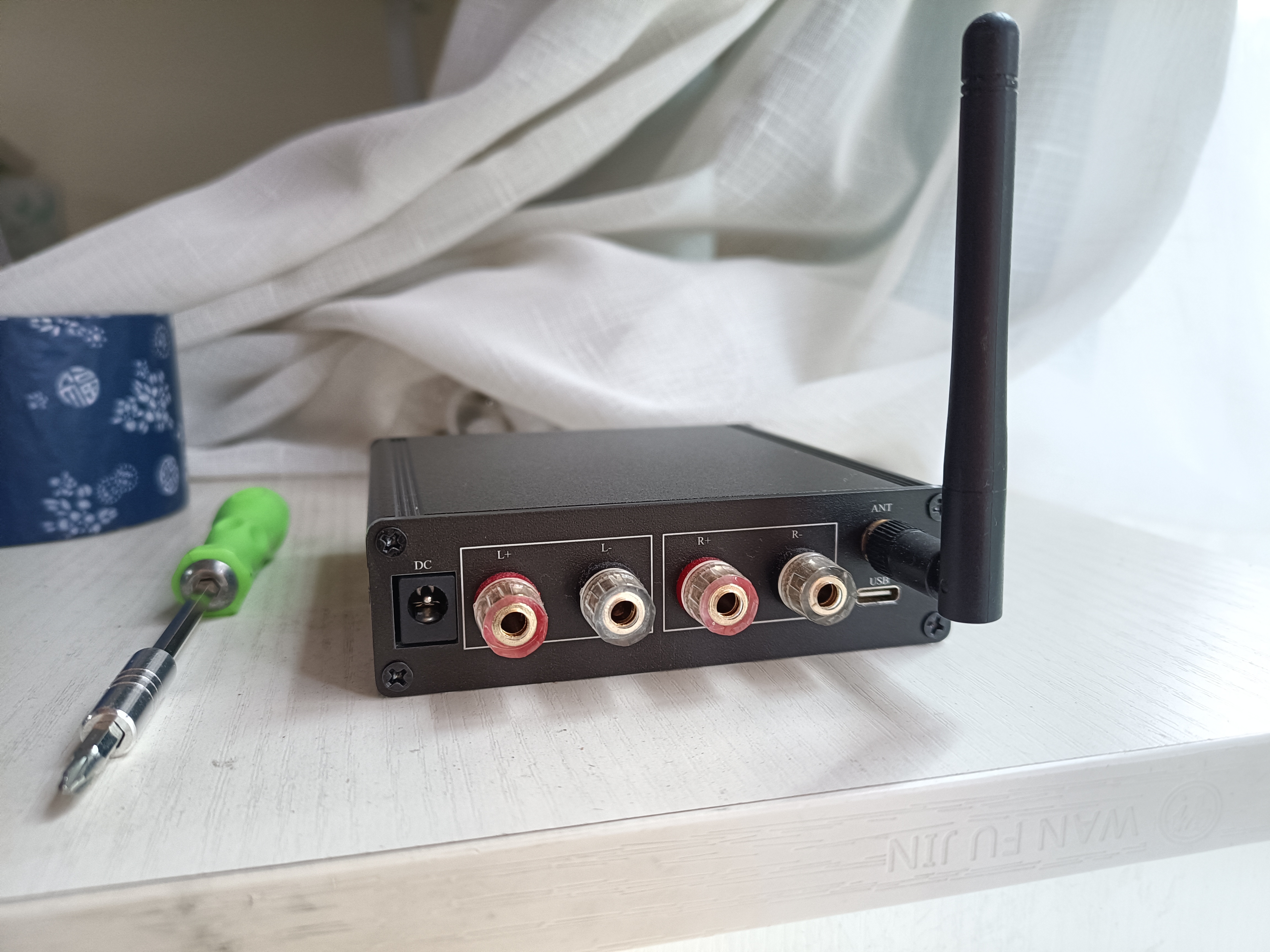
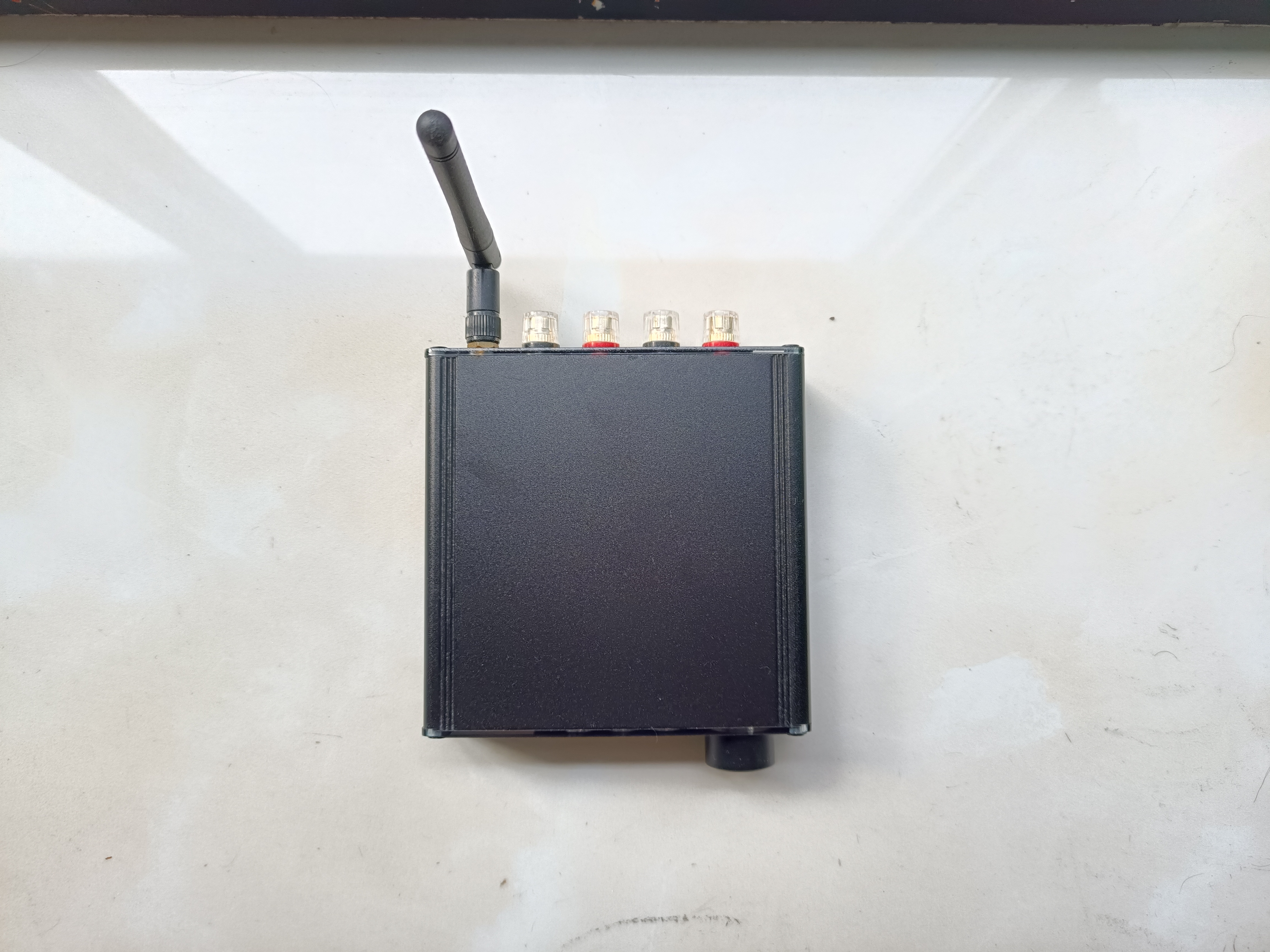
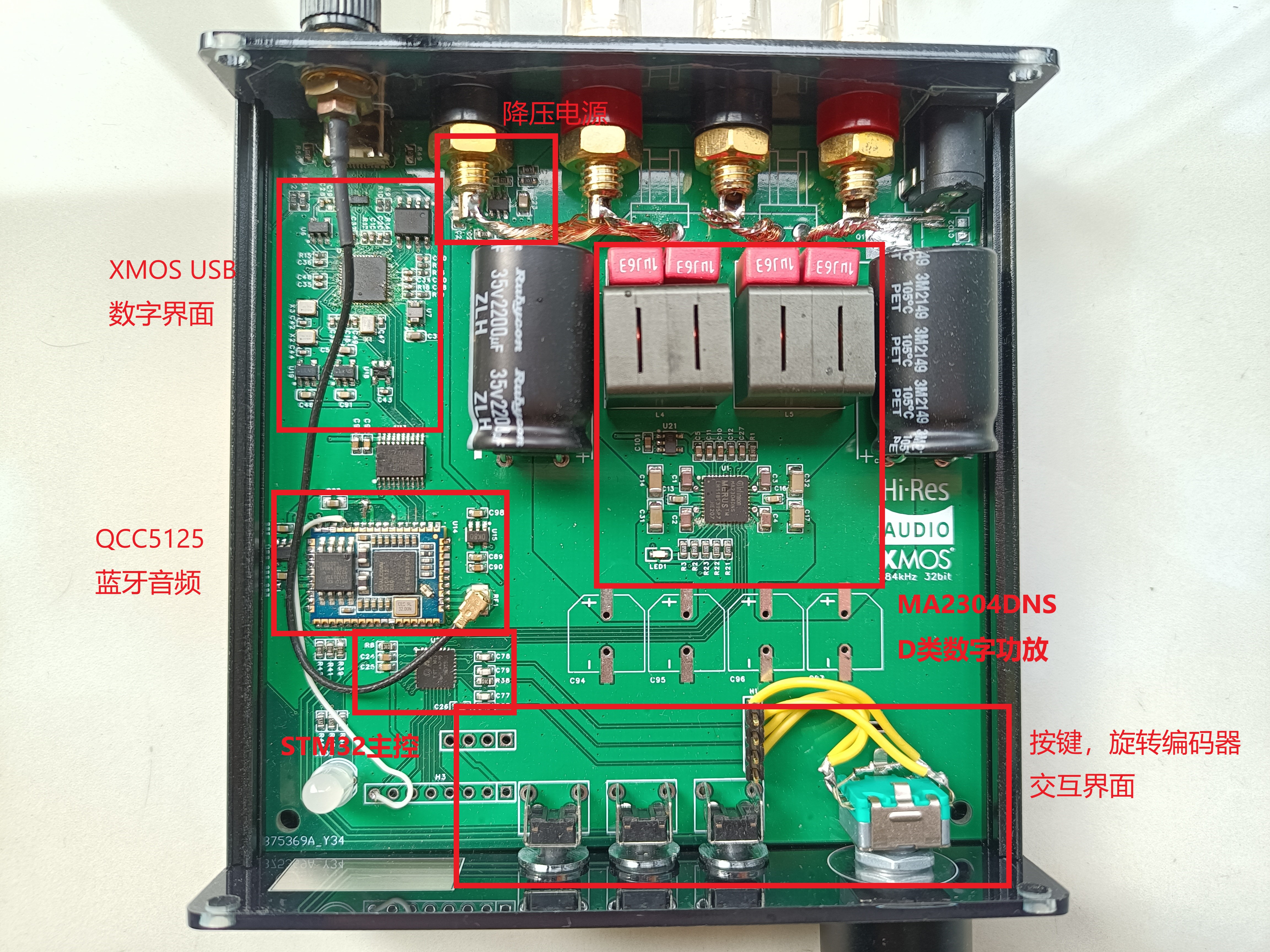
Internal photos, all details are included.








 京公网安备 11010802033920号


 306F-213-2101



