This document introduces
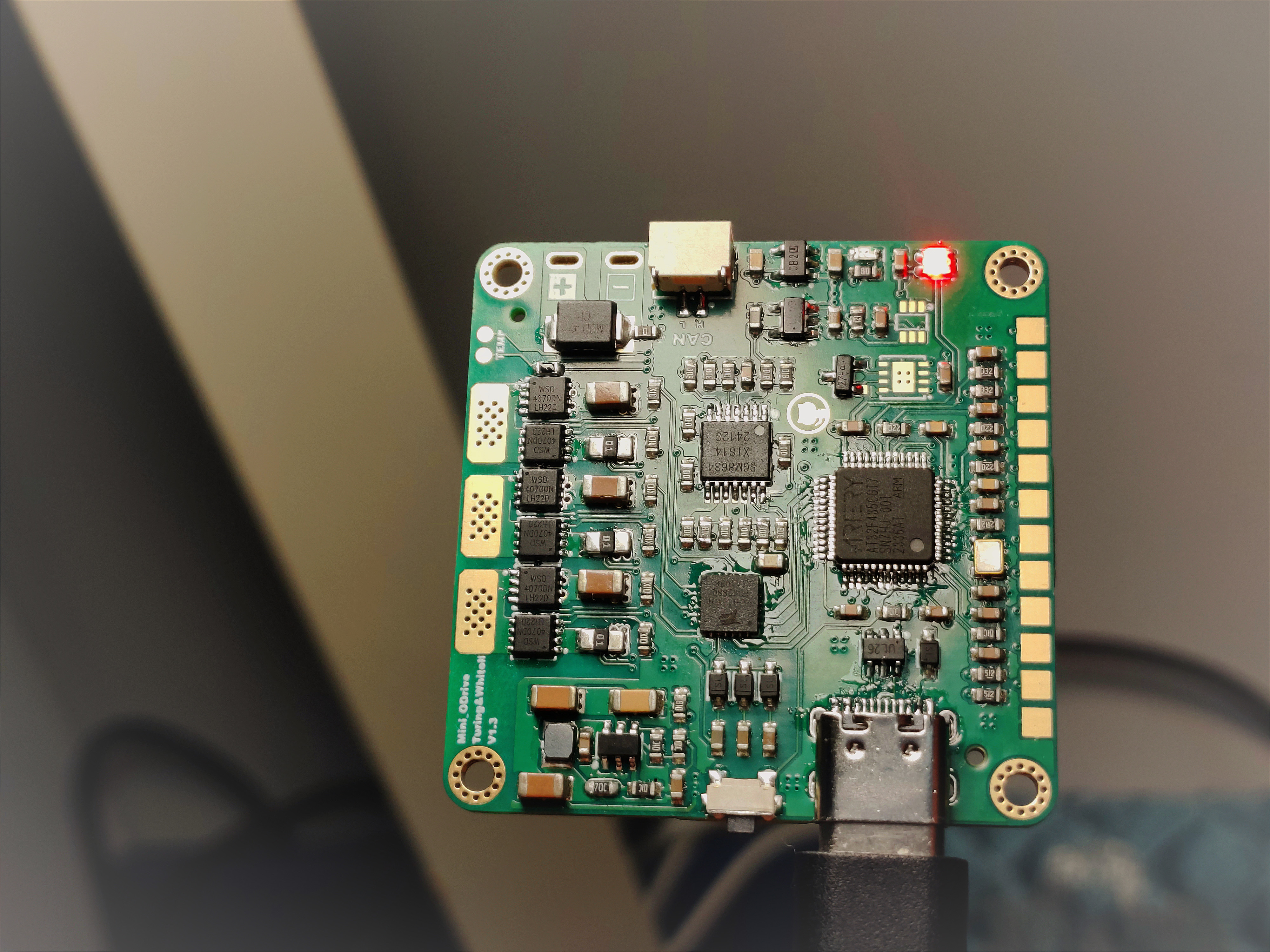
a streamlined and optimized version of ODrive, with an overall cost of around 50 (including the encoder). The main controller is an AT32F435, featuring a 24kHz current loop and an 8kHz speed/position loop. It supports both sensored and sensorless operation, with sensored support for MT6816, MT6825, MT6835, and AS5047P via SPI mode.
The code is primarily based on the latest version of ODrive, with secondary development and porting. It also includes ported VESC's observer and automatic open-loop components, MIT's encoder nonlinearity compensation (1024 points), and numerous optimizations and additions.
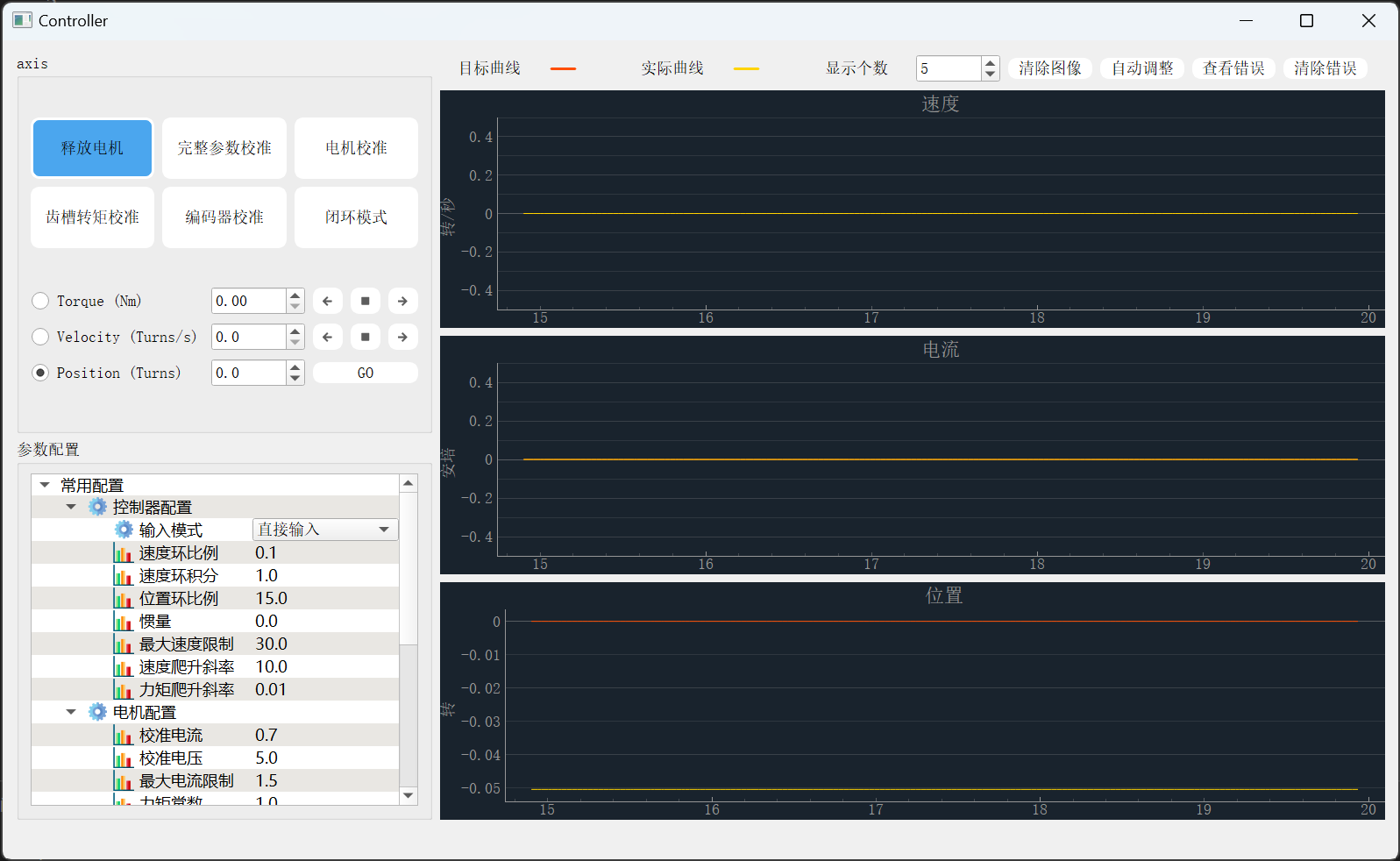
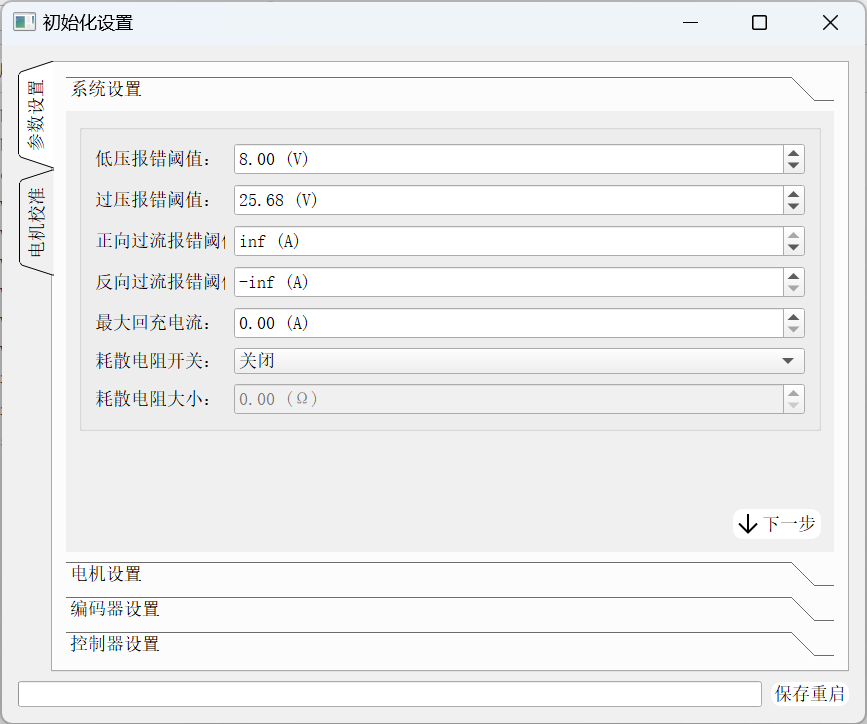
The host computer is mainly based on the ui_odrivetool project, with reference to some code from SimpleFOCStudio and VESC Tools.
Performance Parameters:
Voltage Input: 8-24V (2S-8S)
Temperature: -10-85℃
Peak Power: 240W
Control Rate: Speed/Position Loop 8kHz, Current Loop 24kHz
PWM Switching Rate: 24kHz
288MHz 32-bit AT32F435 Microprocessor
Peak Phase Current: 12A
Maximum Electrical Angular Velocity: 120000 ERPM
Size: 42*42mm - CAD Drawings/STEP Files
Communication: 1Mbps CAN or 115200bps UART
Reference Project Addresses:
https://github.com/odriverobotics/ODrive
https://github.com/vedderb/bldc
https://sourceforge.net/projects/phobia/
https://github.com/mjbots/moteus
https://github.com/bgkatz/motorcontrol
https://gitlab.com/p87942130/ui_odrivetool
https://github.com/JorgeMaker/SimpleFOCStudio
https://github.com/vedderb/vesc_tool
Related tutorials: https://www.bilibili.com/video/BV13XtseQEb3/
(This version is for group members; the open-source hardware is for reference. Firmware and host computer can be obtained by joining the group @ContradictionAggregator)
Notes:
This project only provides the packaged host computer file (.exe) and compiled firmware (.hex). The software part is not open source, please don't keep asking in private messages.
When soldering, note that the silkscreen of GS4157B-CR is very small, and a magnifying glass may be needed to assist soldering. Of course, it's okay not to solder it, but some functions will be lost.
The main controller uses a 288MHz AT32F435, and the power consumption and temperature are relatively high during operation, which is normal (estimated by hand to be about 40°C, no-load power consumption 0.8W).
The recommended MOSFET is WSD4070, and a 10-ohm gate resistor can be used. If other MOSFETs are used, the gate resistor may need to be replaced.
This project uses the RS724 op-amp, which is relatively expensive. You can choose a cheaper option like the RS624, a 4-channel op-amp that is pin-to-pin compatible.
The LP5907 requires a 3.3V power supply; make sure you buy the correct one.
For the dissipation circuitry, you can selectively solder it as needed; it's not mandatory.
I recommend buying the WS2812B RGB LED from Taobao. Different manufacturers produce these LEDs with significant differences, which may result in reversed red and green colors or random flashing.
The FD6288 on Taobao for 1.5 RMB is a used product; a brand new, original FD6288 costs 2.5 RMB or more.
That's all I can think of for now; I'll add more later.








 京公网安备 11010802033920号


 212U1012N324MN3



