HCea37p3

Electronic load test adapter board

 
Overview
Project Overview: This
project introduces adapters for common electronic load terminals, providing convenient testing options including XT60, DC5521, Type-C, and BNC interfaces for ripple testing.
This project has been verified and is in use.
Interface Functions
: XT60 Interface:
Connects test cables, such as XT60 to alligator clips, to the power supply under test.
BNC Interface:
Cannot handle high current. Includes a 10uF electrolytic capacitor and a 0.1uF MLCC capacitor for testing power supply ripple. Connects to an oscilloscope using a double-ended BNC cable.
Type-C Interface:
Used for testing Type-C chargers/adapters. Features a button for voltage adjustment. The interface protocol chip is the SW2505H from Zhirong Technology, with software checksum 7E25, supporting PD protocol voltages of 5-9-12-15-20-28V.
DC5521 Interface:
Used for testing adapters with a 5.5*2.1mm round connector. The interface is defined as positive inside and negative outside, with a maximum voltage of 30V. Due to the relatively low
voltage
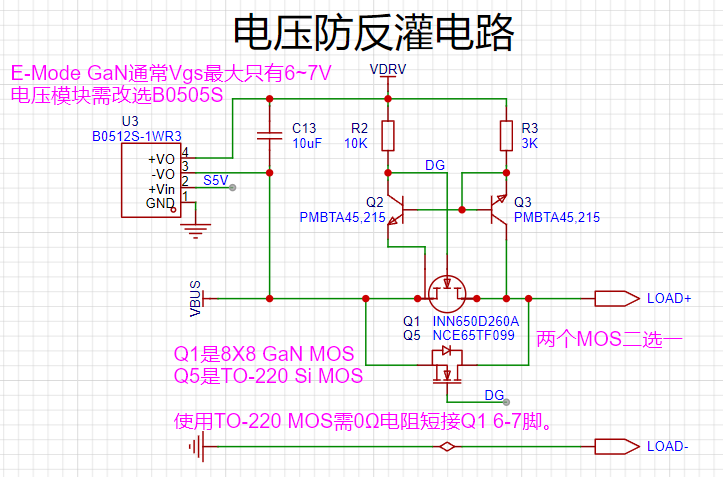
withstand capability of the Type-C interface, a reverse voltage protection circuit was designed to address safety concerns, making the board slightly more complex.
During normal testing, the voltage and current from the Type-C and DC5521 interfaces flow through the MOSFETs to the load terminals, allowing for normal load testing.
Conversely, voltage applied directly to the XT60 or electronic load terminals will not flow to the Type-C or DC5521 interfaces, preventing high-voltage damage to devices connected to these interfaces.
Important note:
In the reverse voltage protection circuit, only one of the two MOSFET solder pads should be used. A TO-220 packaged MOSFET is recommended. Pins 6 and 7 of the GaN MOSFET need to be shorted; otherwise, the TO-220 MOSFET will lack drive.
The GaN MOSFET solder pads are reserved for high-voltage testing scenarios (>100V), but this has not yet been verified. Because the Rds(on) of high-voltage MOSFETs is typically above 100mΩ, generating significant heat, this type of MOSFET is not currently used.
MOSFET selection requirements: The withstand voltage should be at least 20% higher than the test voltage. For example, if frequently testing 48V power supplies, a withstand voltage of 60V or higher should be selected, or a 120V or 150V MOSFET with a withstand voltage close to the maximum voltage of the electronic load should be chosen. Rds(on) ≤ 10mΩ is recommended; a higher value will result in greater heat generation.
Transistor requirements: Vceo > maximum operating voltage of the load, and Q2 and Q3 must be the same model.
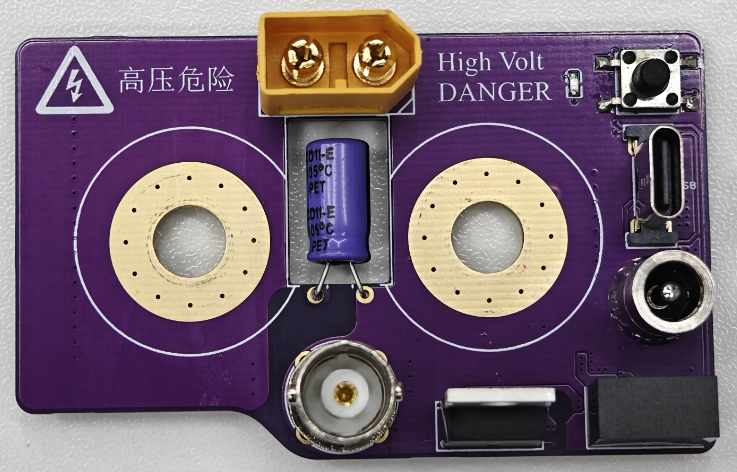
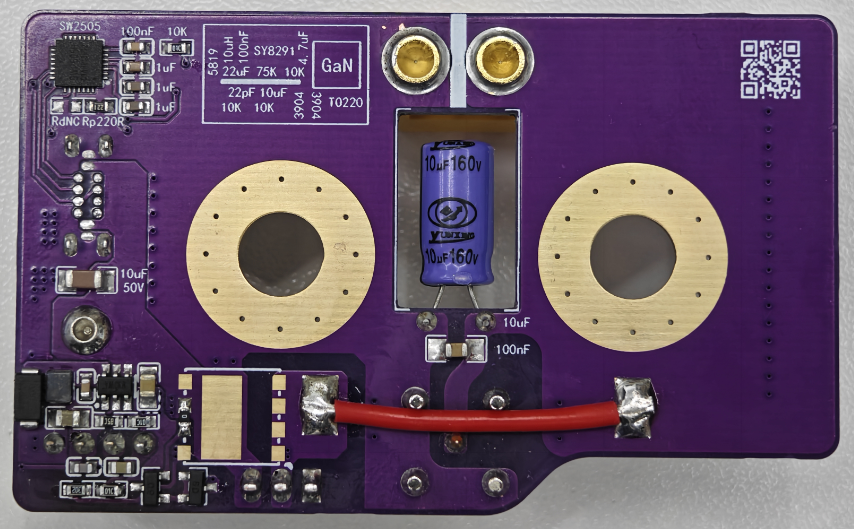
Physical product images
: Front
: Back:
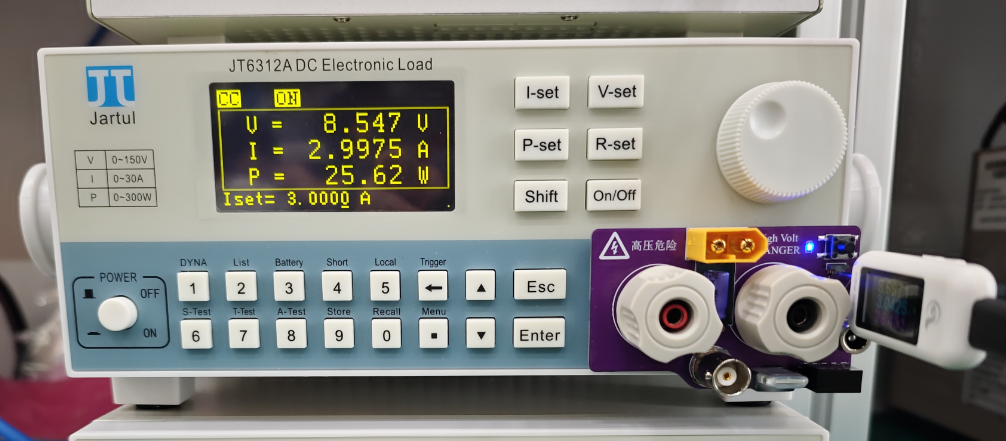
Installed and in use:
Type-C can be used normally by simply plugging in the voltage or DC port.
参考设计图片
×
 
 
Search Datasheet?

Supported by EEWorld Datasheet

Forum More
Update:2026-03-28 05:41:14

EEWorld
subscription
account

EEWorld
service
account

Automotive
development
community

Robot
development
community

About Us Customer Service Contact Information Datasheet Sitemap LatestNews



Room 1530, 15th Floor, Building B, No.18 Zhongguancun Street, Haidian District, Beijing, Postal Code: 100190 China Telephone: 008610 8235 0740

Copyright © 2005-2024 EEWORLD.com.cn, Inc. All rights reserved 京ICP证060456号 京ICP备10001474号-1 电信业务审批[2006]字第258号函 京公网安备 11010802033920号