I. Core Features
1. Processor and Performance
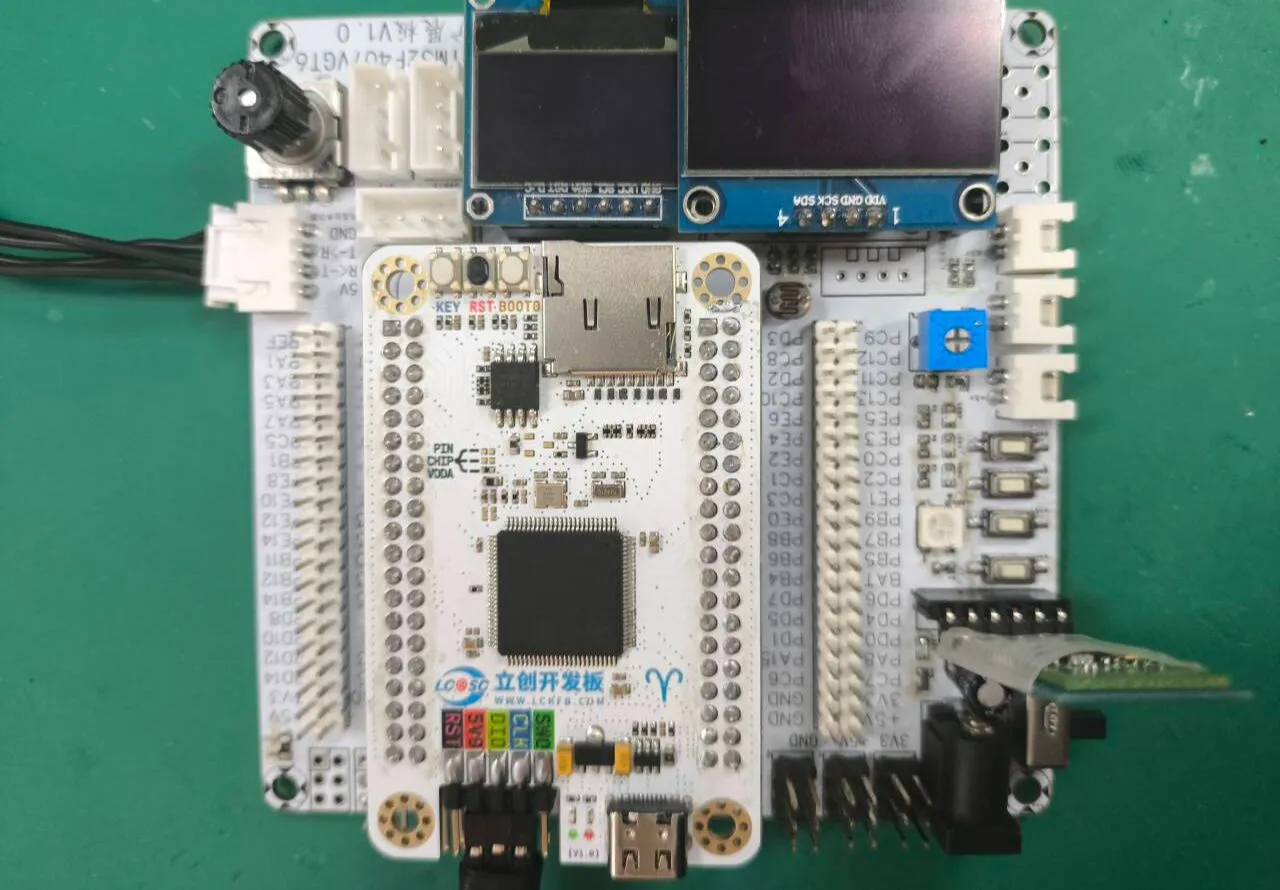
Processor: STM32F407VET6, based on the ARM Cortex-M4 core, with a main frequency of up to 168MHz and a performance of up to 210 DMIPS. It supports floating-point operations and DSP instructions, suitable for complex real-time control tasks.
Storage: Built-in 512 KB Flash and 192 + 4 KB SRAM, providing ample storage space for program and data storage.
2. Rich Peripheral Interfaces
Communication Interfaces: Includes 3 SPI interfaces, 3 USART interfaces, 2 UART interfaces, 2 I2S interfaces, 3 I2C interfaces, 1 FSMC interface, 1 SDIO interface, and 2 CAN interfaces, supporting multiple communication protocols for easy connection to various peripherals and sensors.
Other Peripherals: Equipped to meet the needs of different application scenarios.
II. Development Tools and Supported
Programming Environments Supports multiple development tools, such as Keil MDK, IAR Embedded Workbench, and ST's official STM32CubeIDE. These tools provide rich middleware libraries and sample code, helping users quickly get started and develop projects.
MicroPython Support: Some learning boards also support MicroPython programming, providing developers with the flexibility and ease of use of Python, lowering the learning threshold and improving development efficiency.
III. Application Scenarios
: IoT Device Development: Utilizing its rich communication interfaces and network support, the STM32F407VET6 multi-functional expansion learning board is suitable for developing various IoT devices, such as smart home devices and environmental monitoring systems.
Industrial Control: Its high-performance processor and multiple communication interfaces make it an ideal choice for industrial automation control, applicable to PLC control, motor drive control, and other scenarios.
Education and Research: As a teaching tool, it helps students and researchers quickly master embedded system development skills, promoting the development and application of embedded technology.
IV. Other Features
: Modular Design: Supports multiple expansion modules, such as the NRF24L01 wireless module, allowing users to easily expand functionality according to project needs.
Open Source: Based on open source protocols such as the MIT license, it encourages community contributions and secondary development, promoting technology sharing and progress.
Firmware Updates: Some boards support rapid firmware updates and deployment via DFU (Device Firmware Upgrade) mode, simplifying the development process.
The STM32F407VET6 multi-functional extended learning board is a powerful, flexible, and easy-to-use embedded system development learning tool suitable for various demanding application scenarios and project development needs.







 京公网安备 11010802033920号


 4311T-101-9202DBL