I. Project Introduction
This project is a Bluetooth speaker solution based on the Qualcomm QCC3034 Bluetooth module. It achieves clear music playback and USB audio functionality through Bluetooth connection.
II. Project Update History
V1.0
Initial Version
III. Function Implementation
This project establishes a connection with a mobile phone via the QCC3034 Bluetooth module for media music streaming. The received audio data is sent via I2S to the audio digital-to-analog converter and Class D amplifier on the backplane, thereby driving headphones and speakers to produce sound and achieve media audio playback.
The main functional modules of this project include four parts: Bluetooth section, analog output section, amplifier section, and power supply section. The following is a detailed description of each functional module.
#0x00 Bluetooth Section
The Bluetooth function is implemented by the QCC3034 Bluetooth audio module. In terms of audio transmission technology, in addition to supporting standard SBC and AAC, it also supports aptX and aptX HD high-definition audio transmission technologies, bringing users a more realistic music experience. The module only requires a few external resistors and capacitors, making it easy to use. This module also supports USB audio functionality, enabling audio streaming playback via USB connection.
#0x01 Analog Output Section
: This section is implemented by the ES8156, a low-power audio digital-to-analog converter that supports multiple Serial Audio Interfaces (SAI), features high signal-to-noise ratio, low distortion, and integrated headphone drivers, making it suitable for portable audio applications.
#0x02 Power Amplifier Section
: The power amplifier section consists of two MAX98357A chips, one for the left channel and one for the right. The MAX98357A is a PCM (Pulse Code Modulation) input Class-D power amplifier, providing Class-AB audio performance while maintaining Class-D efficiency in a small size and low cost. The device can drive a 4Ω load with 3W of power at 5V, features multi-level programmable gain, an output filter-free design, and supports 3-wire SAI, eliminating the need for an MCLK and effectively reducing electromagnetic interference from high-frequency clocks.
#0x03 Power Supply Section
: The power supply section includes charging management, digital-analog power supply, and power-on/off control. Charging management is implemented by the IP5306, a multi-functional power management SoC integrating a boost converter, lithium battery charging management, and battery level indication. This device supports 2.1A charging, 2.4A boost output, and power path management, and supports simultaneous charging and discharging. Digital-analog power supply is provided by an LDO, converting the 5V system power supply to 3.3V for the Bluetooth module and audio DAC. Power-on/off control is implemented by an EC190708, supporting a 3-second long press to power on/off. Power is switched on or off by controlling the external power PMOS transistor.
IV. Design Highlights
The design highlights of this project include the following four points: Bluetooth section design, analog section design, power amplifier section design, and power supply design .
#0x00 Bluetooth Section Design
The Bluetooth antenna on the baseboard adopts an external design, connected to an IPEX connector. Return vias are used on both sides of the trace from the IPEX connector to the module's RF pins to optimize EMI; the copper layer below the IPEX connector is hollowed out.
#0x01 Analog Section Design
The analog output supports mode switching; when headphones are connected to the onboard 3.5mm jack, the power amplifier output is automatically turned off. This function is achieved by a microswitch located at the end of the 3.5mm jack. When the headphone plug is fully inserted into the headphone socket, the tip of the headphone plug contacts the microswitch, closing it and controlling the power amplifier section to enter standby mode, thus turning off the power amplifier output.
#0x02 Power Amplifier Section Design
The gain control of the power amplifier section is set by resistor jumpers. Different gain options are achieved through the resistor value and mounting method. See the table below for details:
Pin Connection
I2S/Left Alignment Mode Gain (dB)
Connected to GND via 100k resistor
15
Directly connected to GND
12
Floating
9
Directly connected to VDD
6
Connected to VDD via 100k resistor
3
The default gain setting on the baseboard is 12dB. To increase or decrease the gain, please refer to the table above. Special Note: In the PCB, each power amplifier has two solder pads for the corresponding gain resistor. Choose one to mount. Please ensure that the resistor with the correct resistance value is installed on the corresponding solder pad. Do not install resistors on both solder pads simultaneously!
#0x03 Power Supply Design:
The baseboard adopts a 4-layer PCB design with a complete ground plane.
#0x04 Component Layout and Function Definition
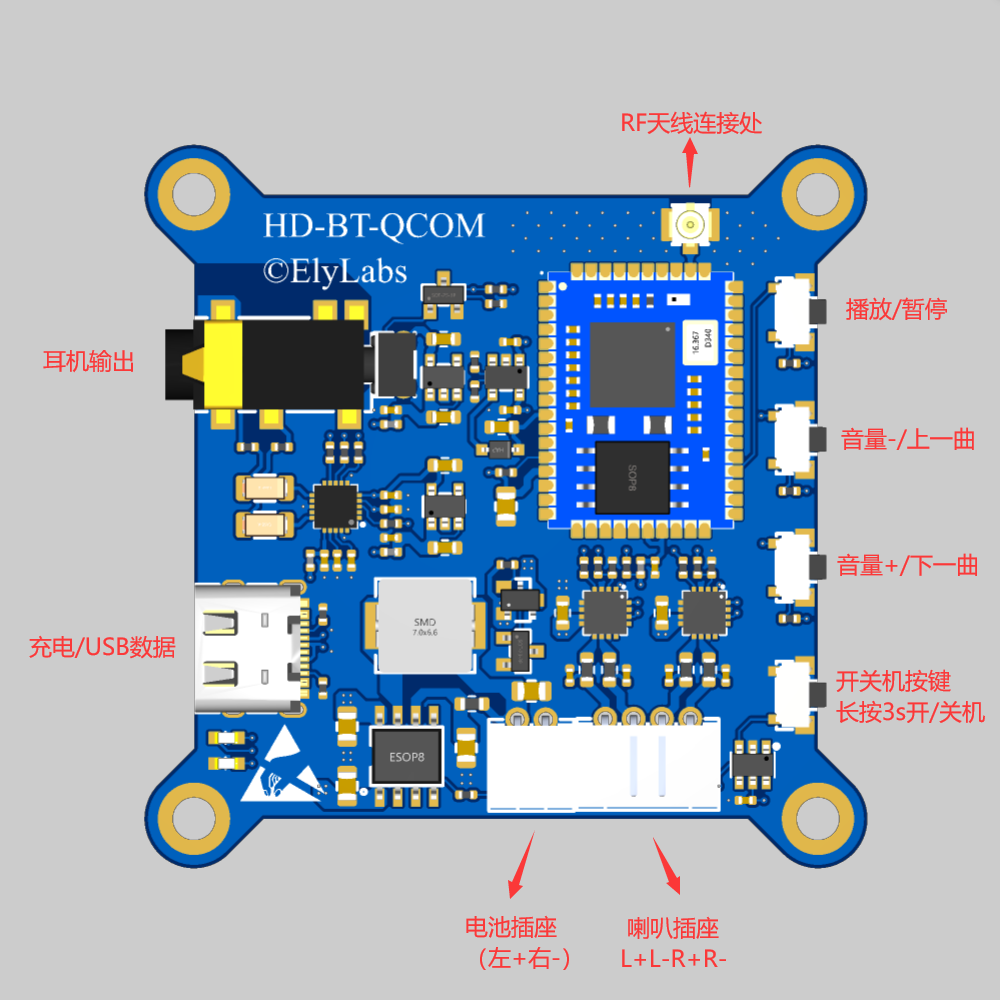
: V. Main Function Verification
#0x01 Connecting to a Mobile Phone via Bluetooth
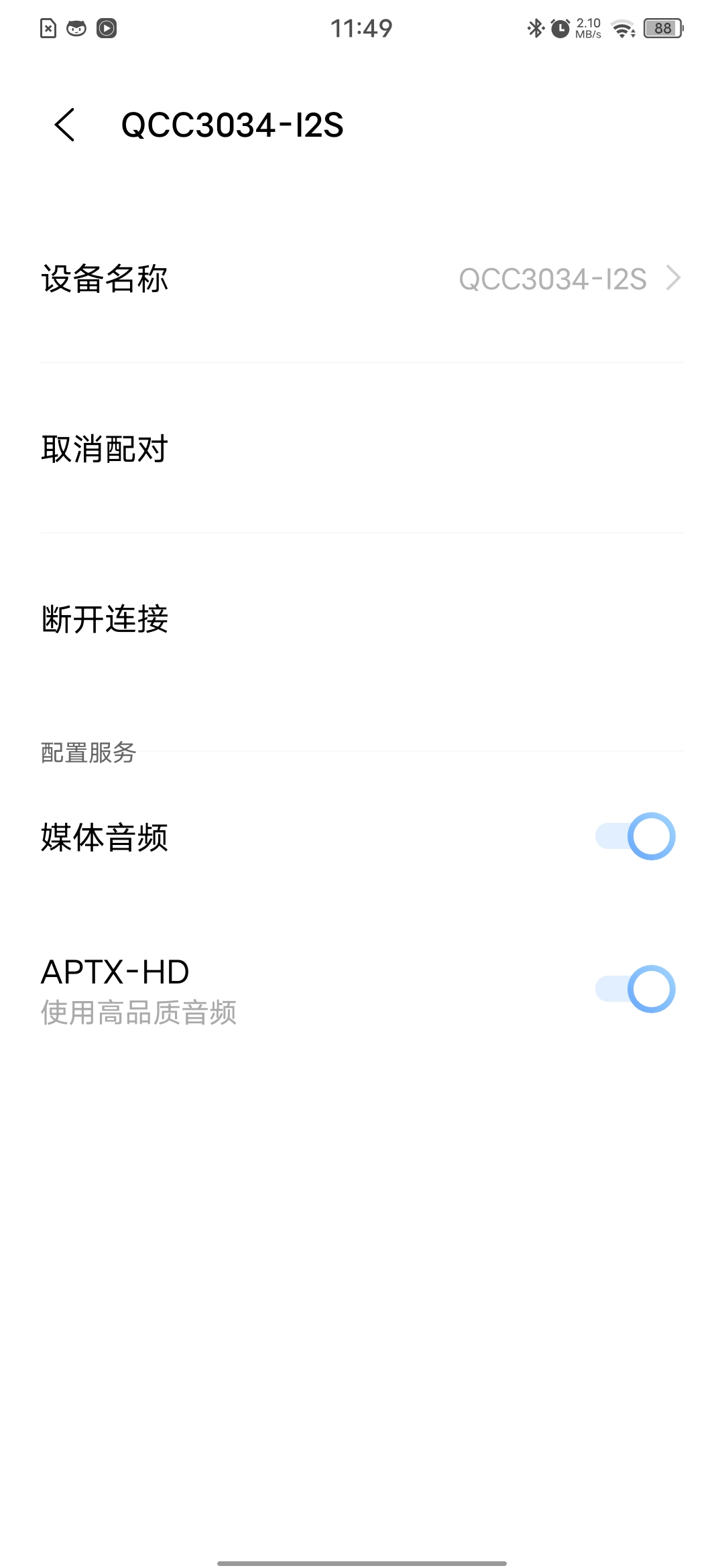
: Press and hold the power button on the board to power it on. It will automatically enter pairing mode. Open the Bluetooth settings on your mobile phone, and you will see the board's Bluetooth broadcast name, as shown in the figure below.
Since it has been paired before, the board will reconnect to the previously paired device upon power-on
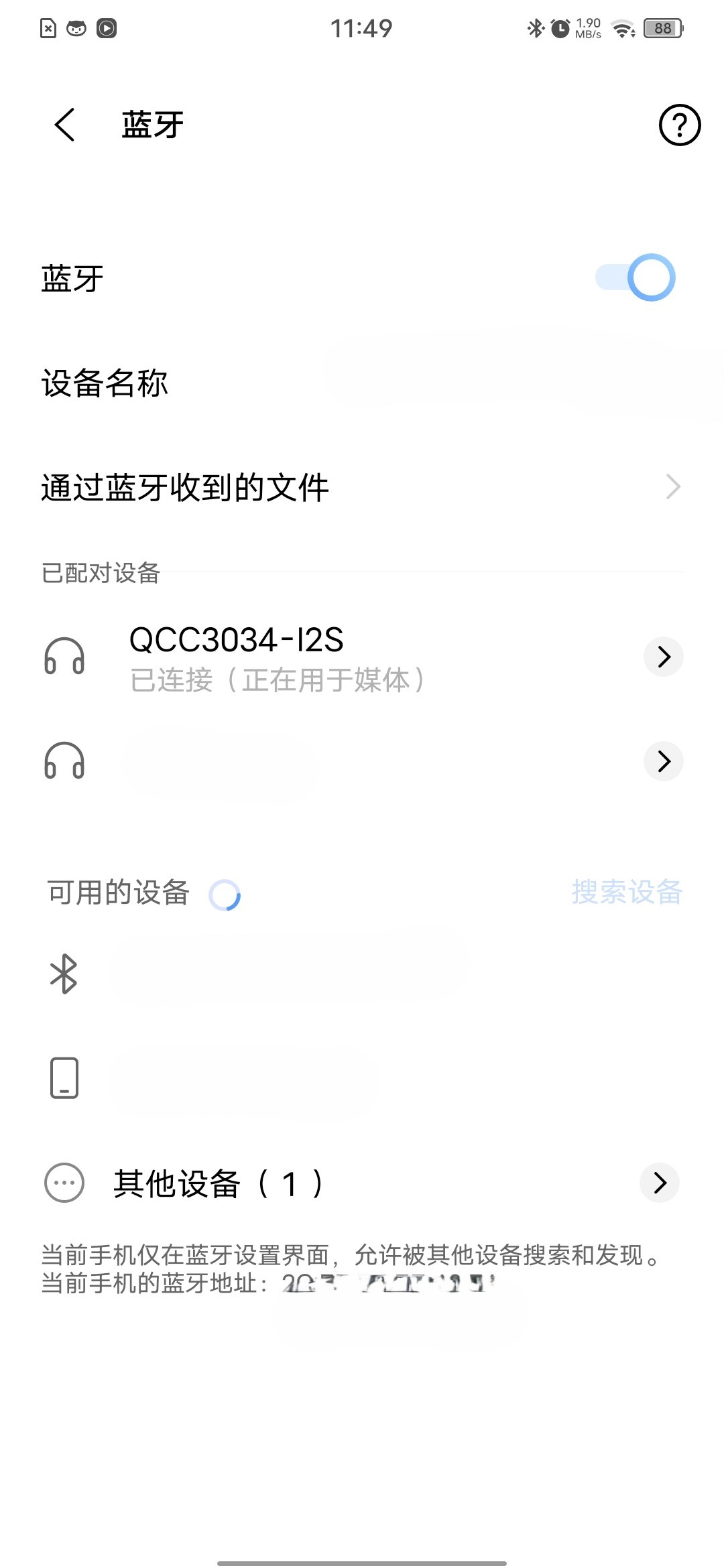
. Mobile phones using Qualcomm chips will automatically enable aptX-HD configuration to improve the audio experience.
#0x02 Connecting to a Computer via USB:
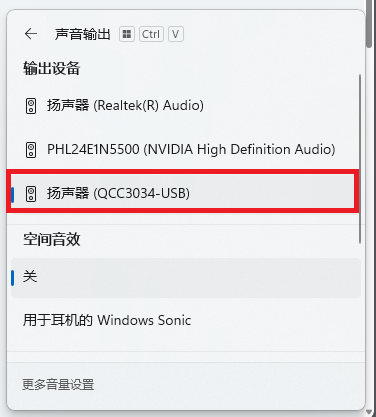
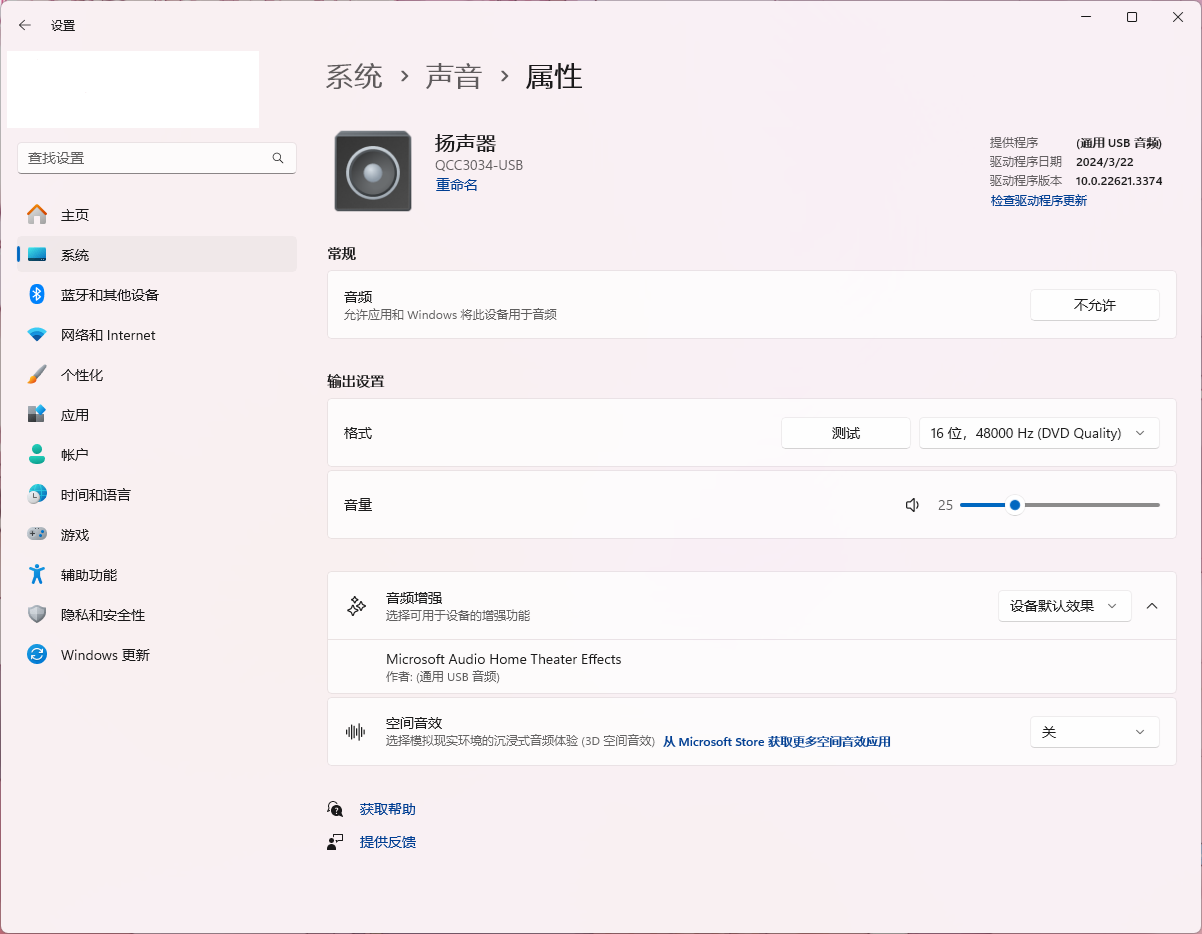
Connect the board to the computer using a USB data cable. The system will recognize it, and a new audio output device named "QCC3034-USB" will be added in the "Sound Output" option. Select this device, and the audio output by the system will be played through the board.
#0x03 Connecting Headphones
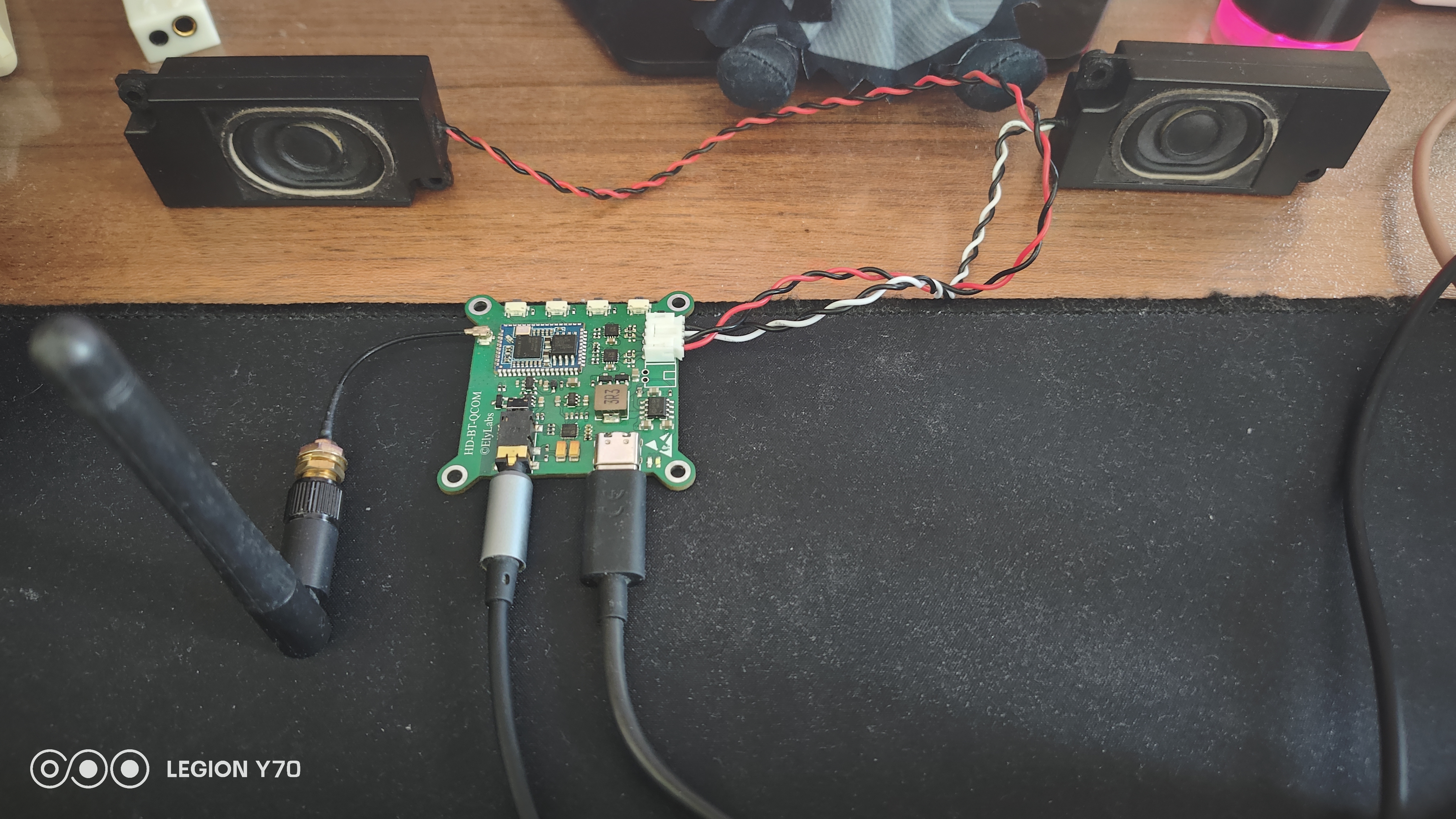
Connect wired headphones to the 3.5mm analog audio output jack on the board using an audio cable. Audio will play through the headphones, and the amplifier output will automatically turn off.
VI. Main Material Costs
QCC3034 Bluetooth Module (Taiwanese online retailer) 29
MAX98357 8-12 (two pieces)
ES8156 1.6
IP5306 0.6
EC190707 (Taiwanese online retailer) 0.9








 京公网安备 11010802033920号


 10SQ080_V01