1. Requirements Analysis
: Functional Requirements: Determine clock functionality, temperature and humidity measurement requirements, display method (e.g., LCD or OLED), etc.
Performance Requirements: Response speed, accuracy, power consumption, etc.
Interface Requirements: Identify required input/output interfaces, such as buttons, displays, sensors, etc.
2. Hardware Design:
Selecting a suitable STM32 chip:
Choose an STM32 series microcontroller based on functional requirements, such as STM32F103, STM32F407, etc. Consider processing power, storage space, and peripheral support.
Sensor Selection:
Select a suitable temperature and humidity sensor, such as DHT11, DHT22, or SHT31, etc. Consider sensor accuracy, response time, and interface type (digital or analog).
Display Module Selection:
Select a display screen, such as LCD1602, OLED, etc., based on display requirements and interface type (I2C, SPI, etc.).
Power Management:
Determine power requirements and select an appropriate power management scheme. Consider power stability and power consumption.
Circuit Design:
Use Electronic Design Automation (EDA) tools (e.g., KiCad, Eagle) to design the schematic and PCB layout.
Ensure the design includes necessary power decoupling, circuit protection, and interface connections.
Prototyping and Testing:
Create a circuit board prototype and perform hardware testing to ensure the circuit and sensor function correctly.
3. Software Design and
Development Environment Preparation:
Install and configure development toolchains such as STM32CubeIDE, Keil MDK, etc.
Driver Development:
Write or configure drivers for the temperature and humidity sensor and display module. The STM32 HAL or LL library can be used to simplify development.
Clock Function Implementation:
Implement the real-time clock (RTC) function, configure the STM32 RTC peripheral, and perform time reading and setting.
Data Processing and Display:
Read temperature and humidity data from the sensor and perform data processing (such as calibration and conversion).
Update the display content, including the current time, temperature and humidity information, etc.
User Interface and Interaction:
Implement interactive functions for the user interface, such as button control for time setting and switching display modes.
Debugging and Optimization:
Perform software debugging, check and fix potential problems. Optimize the code to improve performance and stability.
4. System Integration
Hardware and Software Integration:
Integrate the hardware prototype and software system, perform system testing, and ensure all functions are normal.
Functional verification:
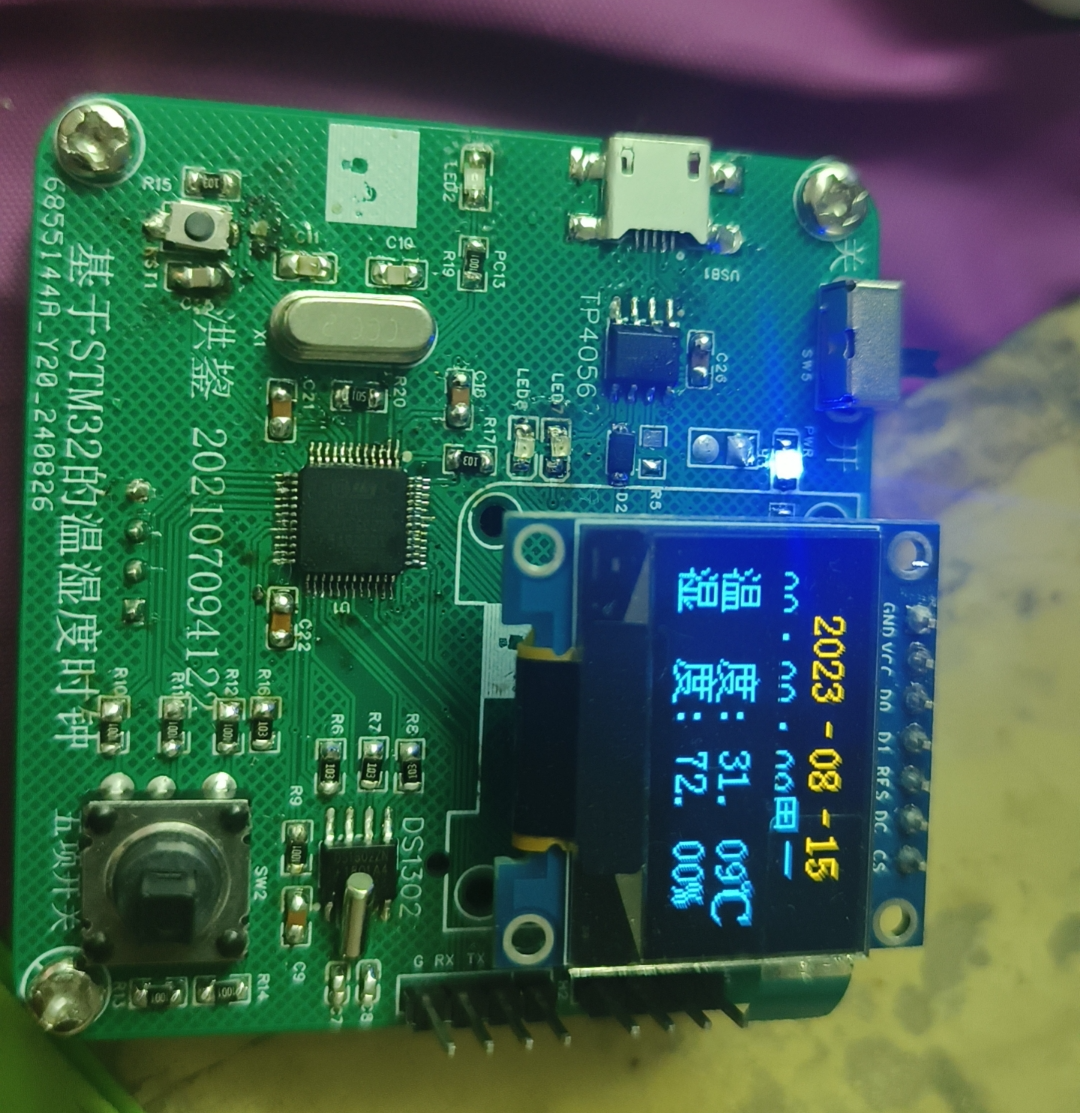
Verify the overall functionality of the system, including time display, temperature and humidity measurement, and display updates.







 京公网安备 11010802033920号


 V72C28M150BL2