3rNb2v

Small-sized USB to serial port

 
Overview
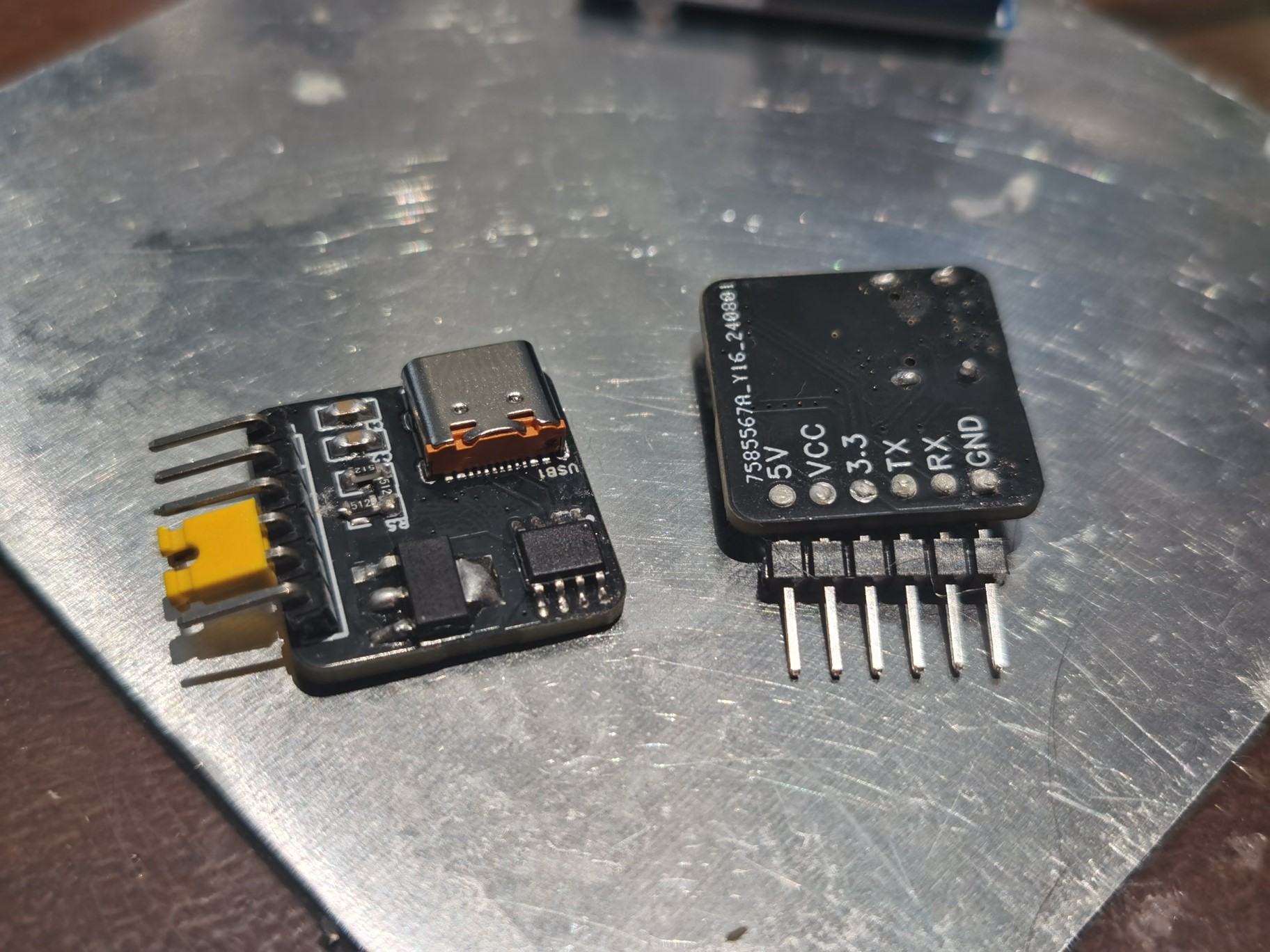
This product is a small USB-to-serial module for microcontroller programming and debugging. The main control chip is the CH340N from Nanjing Qinheng, a common chip in various microcontroller development boards with USB interfaces.
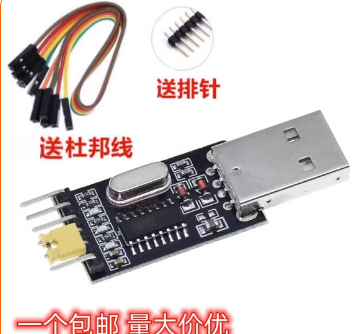
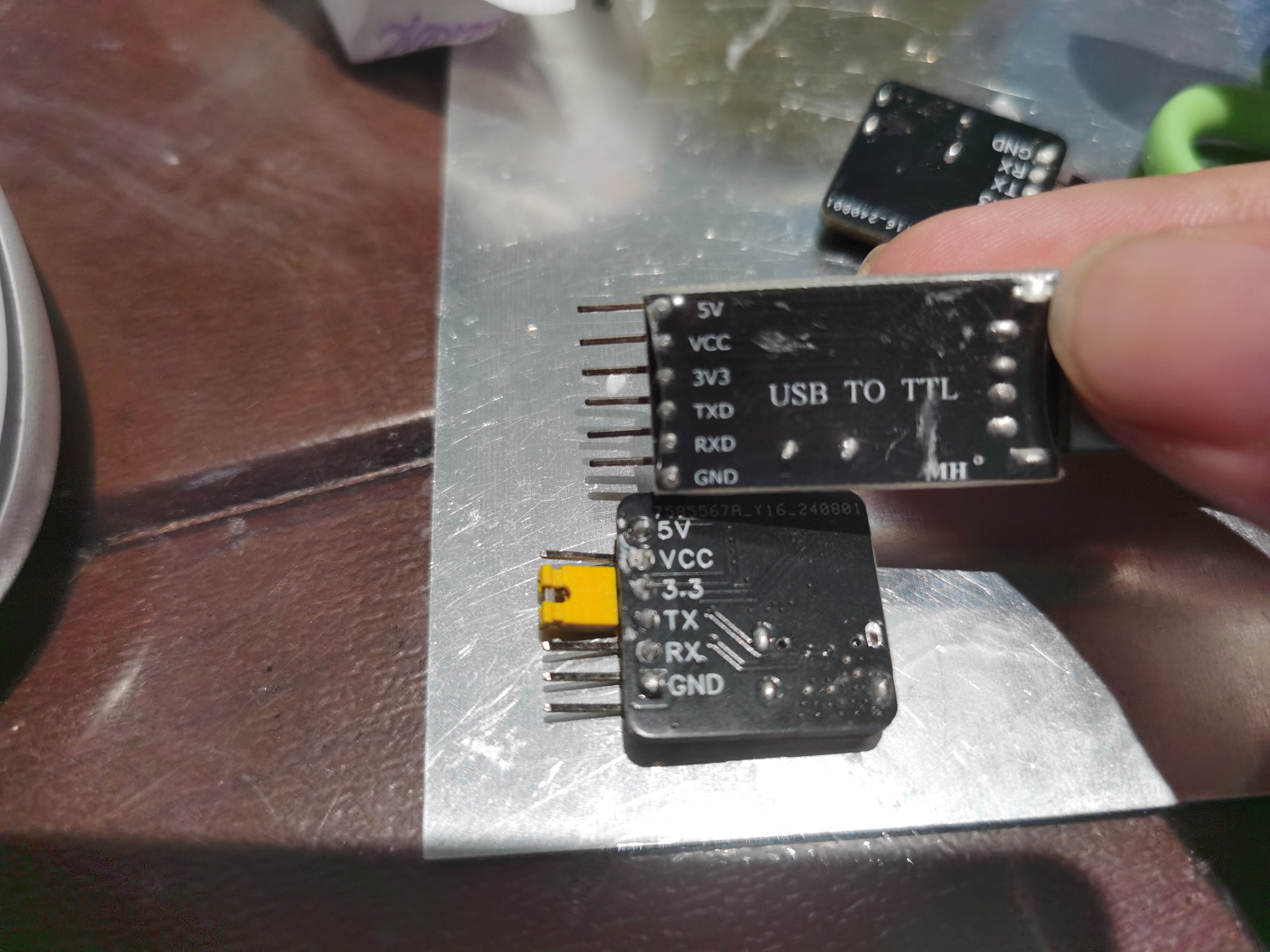
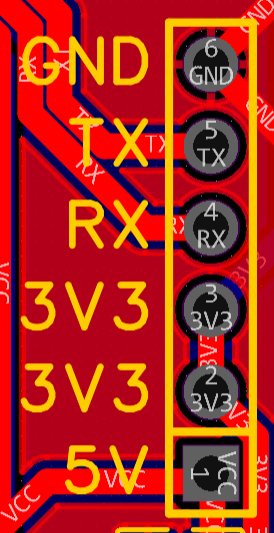
It uses a 16-pin USB-C surface-mount female connector as input, with CC1 and CC2 pulled down by 5.1k resistors for CC line compatibility. It includes an AMS1117 voltage regulator chip, capable of outputting a maximum current of 1A (for higher current requirements, please refer to a DC-DC converter; LDOs generate significant heat with high current). Sufficient USB power supply is required. You may have used a USB serial module like the one shown in the image below; this small module has the exact same pin definitions and can be directly interchanged. This module also requires a jumper cap to select the voltage level. Soldering the Type-C female connector is difficult; solder paste is recommended, along with a hot plate/hot air gun. I purchased low-temperature solder, which melts very quickly. If solder brittle occurs, add more solder flux, heat the soldering iron, or use desoldering wick to remove excess solder. If you really can't solder, you can replace it with a different USB interface. If you don't use a Type-C interface or don't need to use a CC cable connection, the two 5.1k resistors don't need to be soldered. Both resistors and capacitors are 0805. The material cost per unit (excluding PCB) is around 3 yuan, and the PCB can be obtained for free. The initial design was inspired by a sudden idea I had on a board with an ESP8266 module that had a pre-installed programming interface: the pin order of this header corresponds to the USB to serial module, allowing direct plugging in of the module for programming, eliminating the need for the integrated programming chip on the motherboard and avoiding the spiderweb-like DuPont wires and jumper wires when downloading programs. However, conventional USB to serial converters use a USB-A interface, requiring a USB extension cable or plugging the board into the computer at a very awkward angle. Moreover, I might not always carry a USB extension cable, but I will definitely carry a Type-C charging cable when I go out, so using a Type-C interface is definitely more convenient. Thus, I designed this module.


参考设计图片
×
 
 
Search Datasheet?

Supported by EEWorld Datasheet

Forum More
Update:2026-03-25 07:20:23
  • Is there any agent for ADS1274?
  • What is the function of NOT gate?
  • EEWORLD University Hall----Kalman Filter
  • Please teach me how to process and output decimals!
  • CPU fan speed
  • People who are about to enter embedded software development

EEWorld
subscription
account

EEWorld
service
account

Automotive
development
community

Robot
development
community

About Us Customer Service Contact Information Datasheet Sitemap LatestNews



Room 1530, 15th Floor, Building B, No.18 Zhongguancun Street, Haidian District, Beijing, Postal Code: 100190 China Telephone: 008610 8235 0740

Copyright © 2005-2024 EEWORLD.com.cn, Inc. All rights reserved 京ICP证060456号 京ICP备10001474号-1 电信业务审批[2006]字第258号函 京公网安备 11010802033920号




