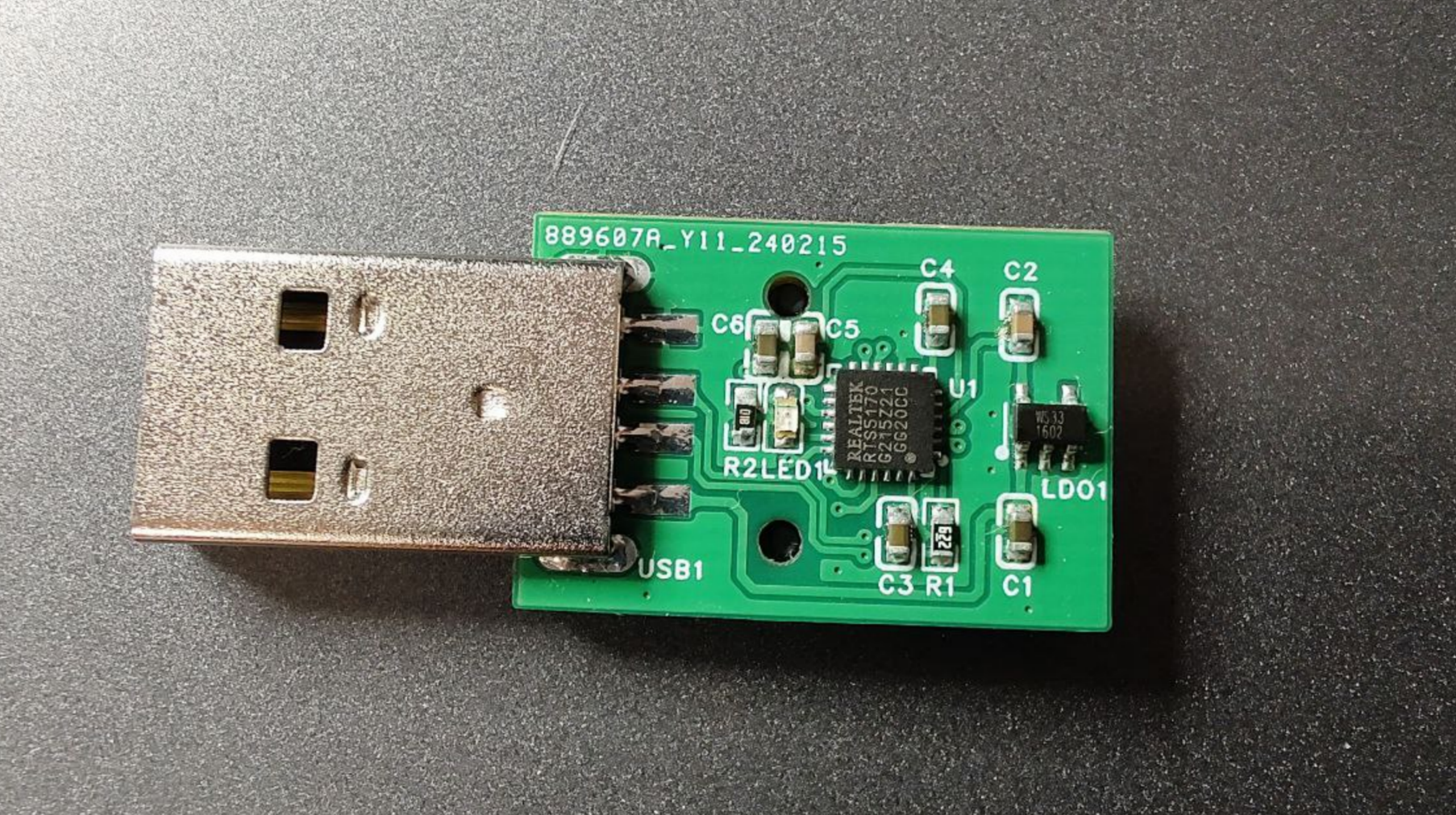
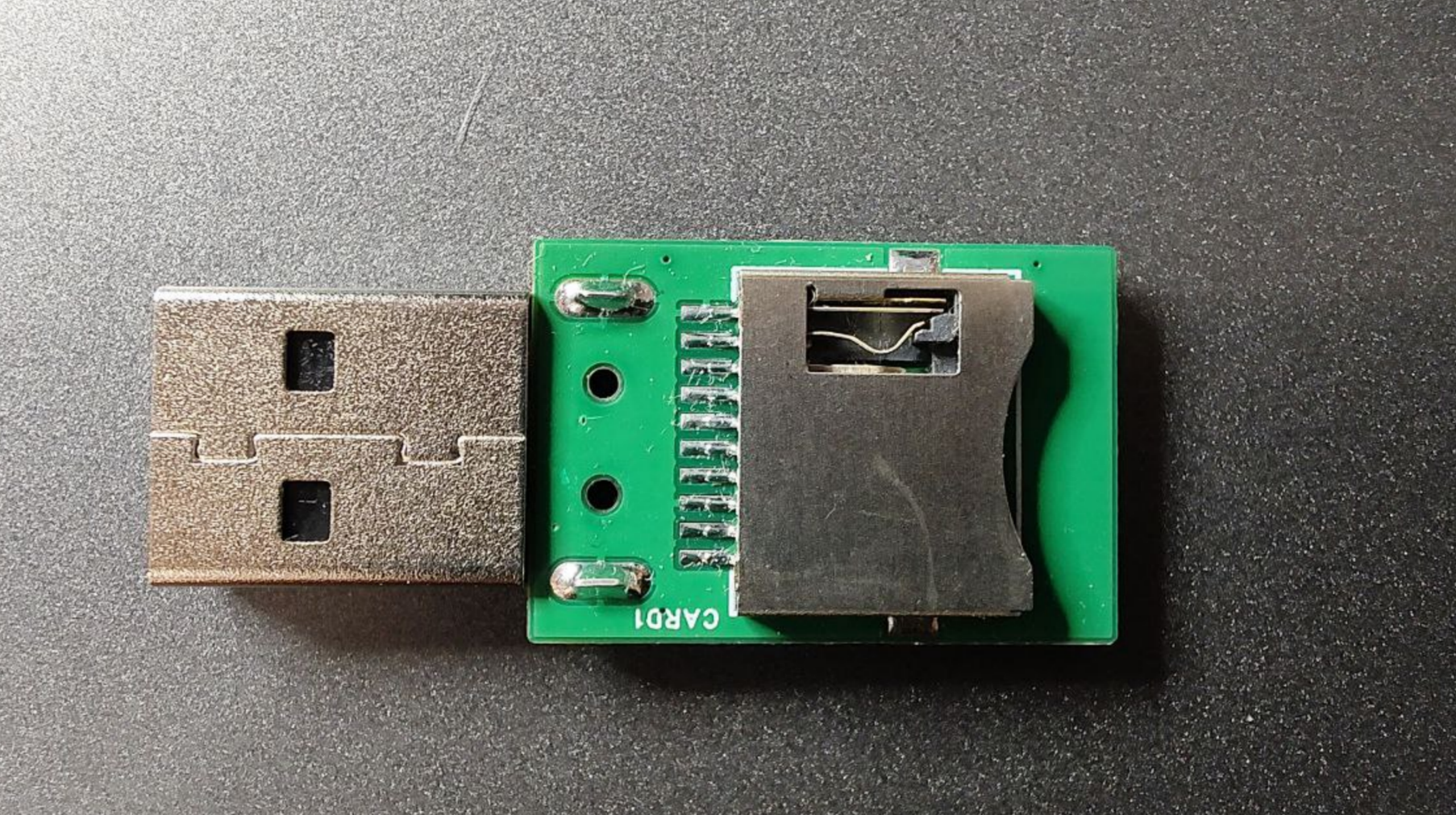
non-USB UMS devices via USB 2.0. It requires a driver on Windows, and under Linux, with the mainline rtsx driver, it can read and write to the eMMC boot partition.
The second-generation robot, based on the ESP32CAM, now includes a camera, but it's still dilapidated and riddled with holes.
At a classmate's invitation, I've updated the shabby little project, the "Training Camp" quadruped robot - JLCPCB EDA open-source hardware platform (oshwhub.com). Of course, it's still a shabby little project at this point.
Update status:
1. Added a gear-driven 160-degree moving camera. (Modeling small servos is incredibly tedious; who was still modifying models on New Year's Eve?)
A 2g servo is used to drive the gears.
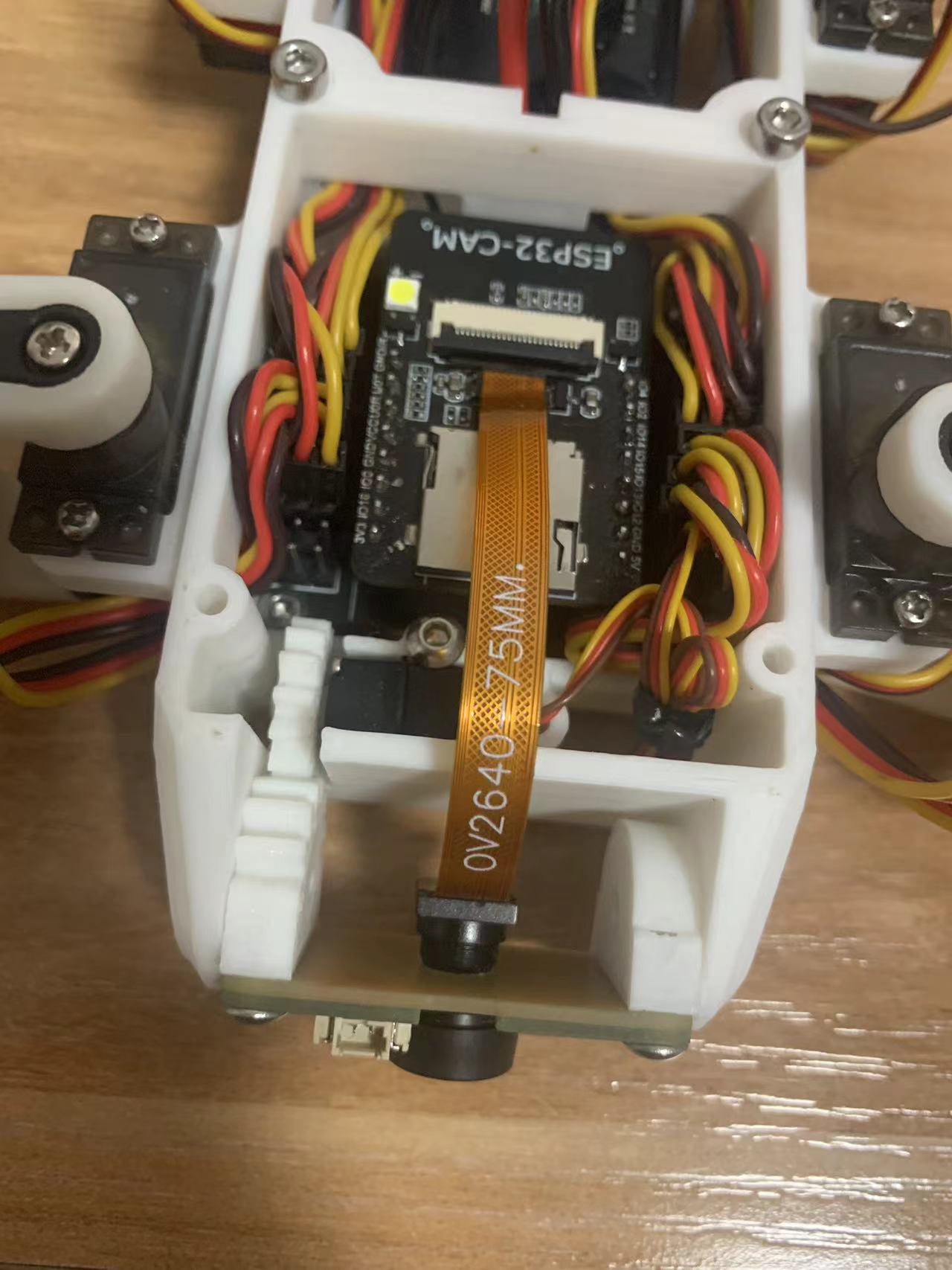
A 120-degree, 75cm long OV2640 camera is used. Originally designed to be mounted on the PCB, the length was insufficient, so it had to be clipped in like this, which works just right.
2. Modified the body, changing from a sandwich design to a frame with separate connecting parts, making it more modular.
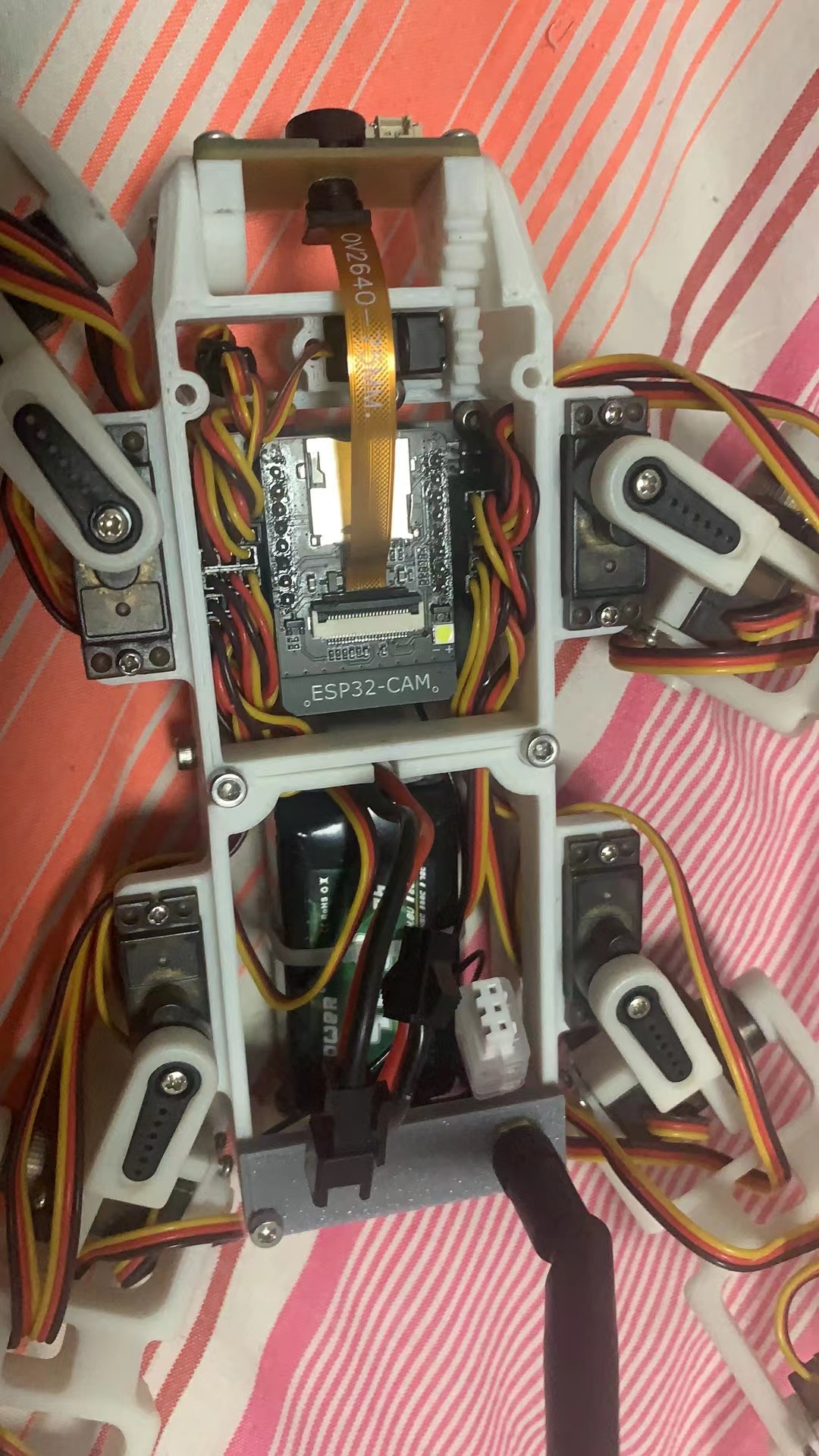
3. Added an antenna (because the servo wires interfered with the onboard antenna, this was unavoidable; thanks to the modular design).
4. The model has been modified, making disassembly and assembly easier. However, since the legs were disassembled for reuse,
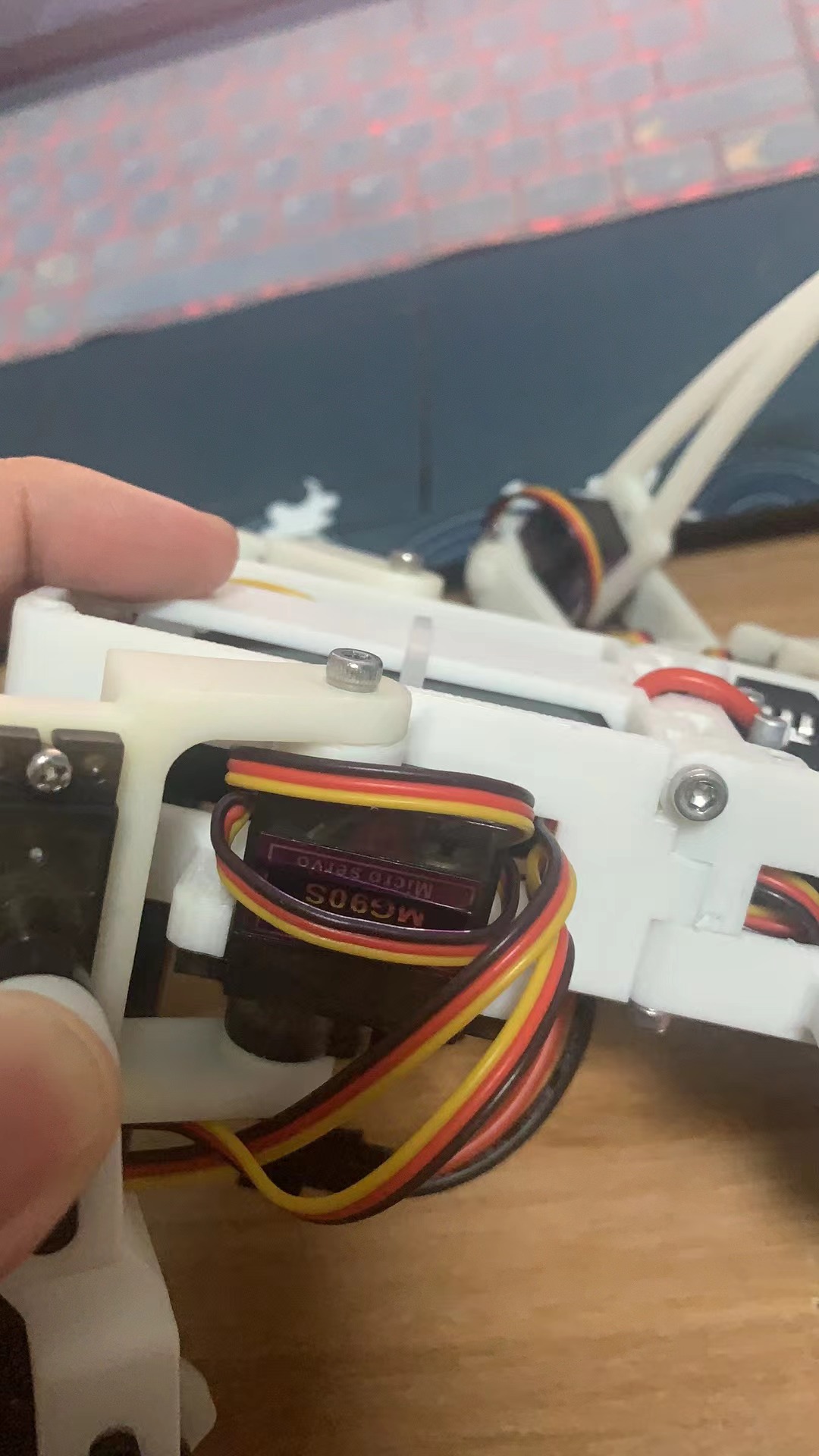
the servo connections haven't been modified and don't need to be forcibly inserted; simply remove the screws for normal reassembly. The model is now available; please see the attached file for details .
Unfinished parts
: 1. The webpage still uses a fixed gait for movement; the next step is to change it to remote control with adjustable speed. The current gait design needs modification; the current movement method is too clunky.
2. Plans include adding an Android host device to enhance camera parameter settings.
The MP4560 is a high-frequency buck switching regulator that integrates a high-voltage power MOSFET, with an input voltage range of 4.5V-50V and an output current of 2A.
Wide operating input voltage range: 4.5V to 55V; 250mΩ internal power MOSFET up to 2MHz; adjustable switching frequency 120μA; stable operation with ceramic capacitors for quiescent current; internal soft-start efficiency up to 95%; adjustable output voltage: 0.8V to 55V; available in 10-pin 3mm x 3mm QFN packages and SOIC8 packages with thermal pads.
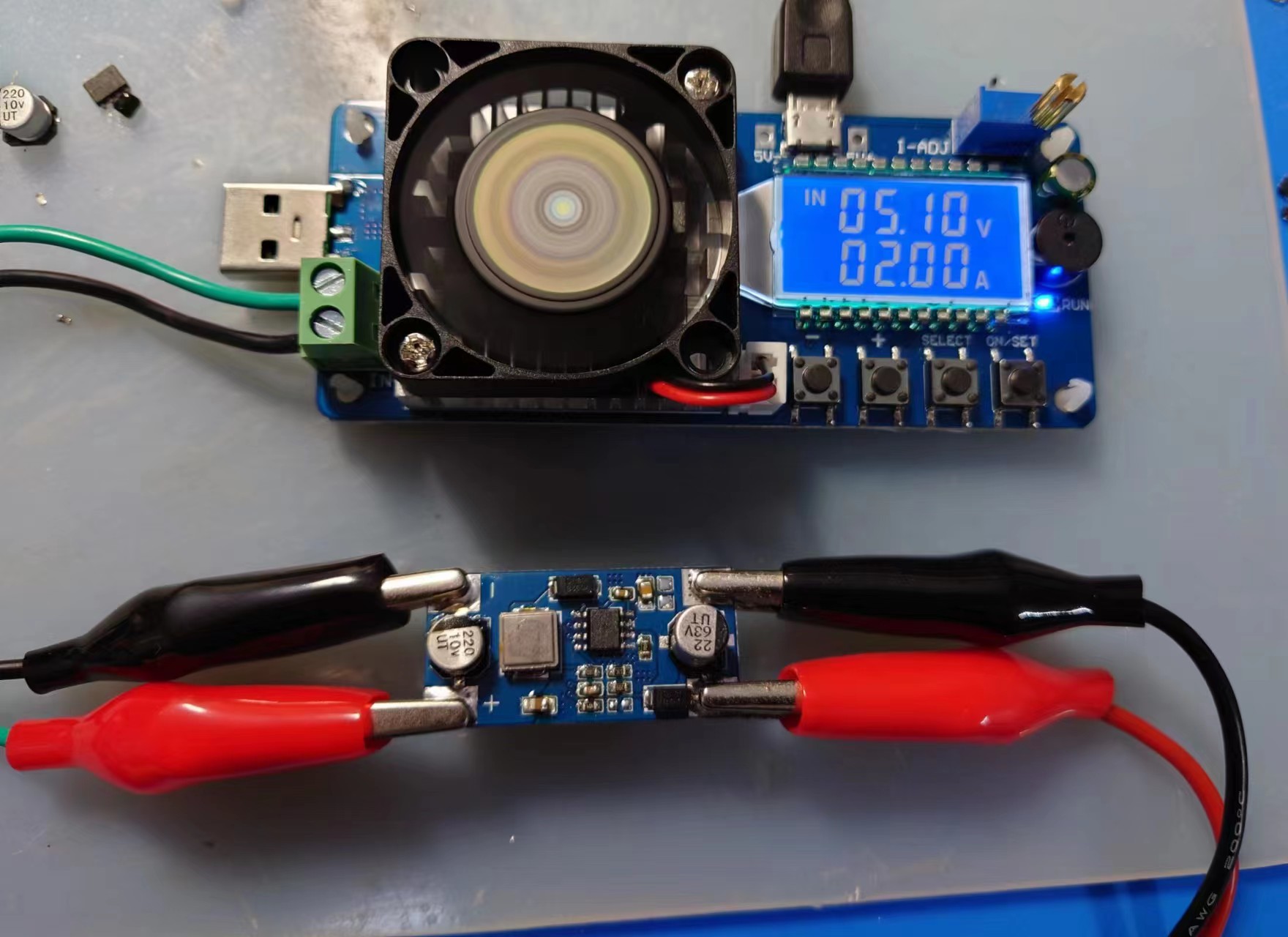
The first version, blue, was a verification board for a porting platform and operated stably under full load without additional cooling.
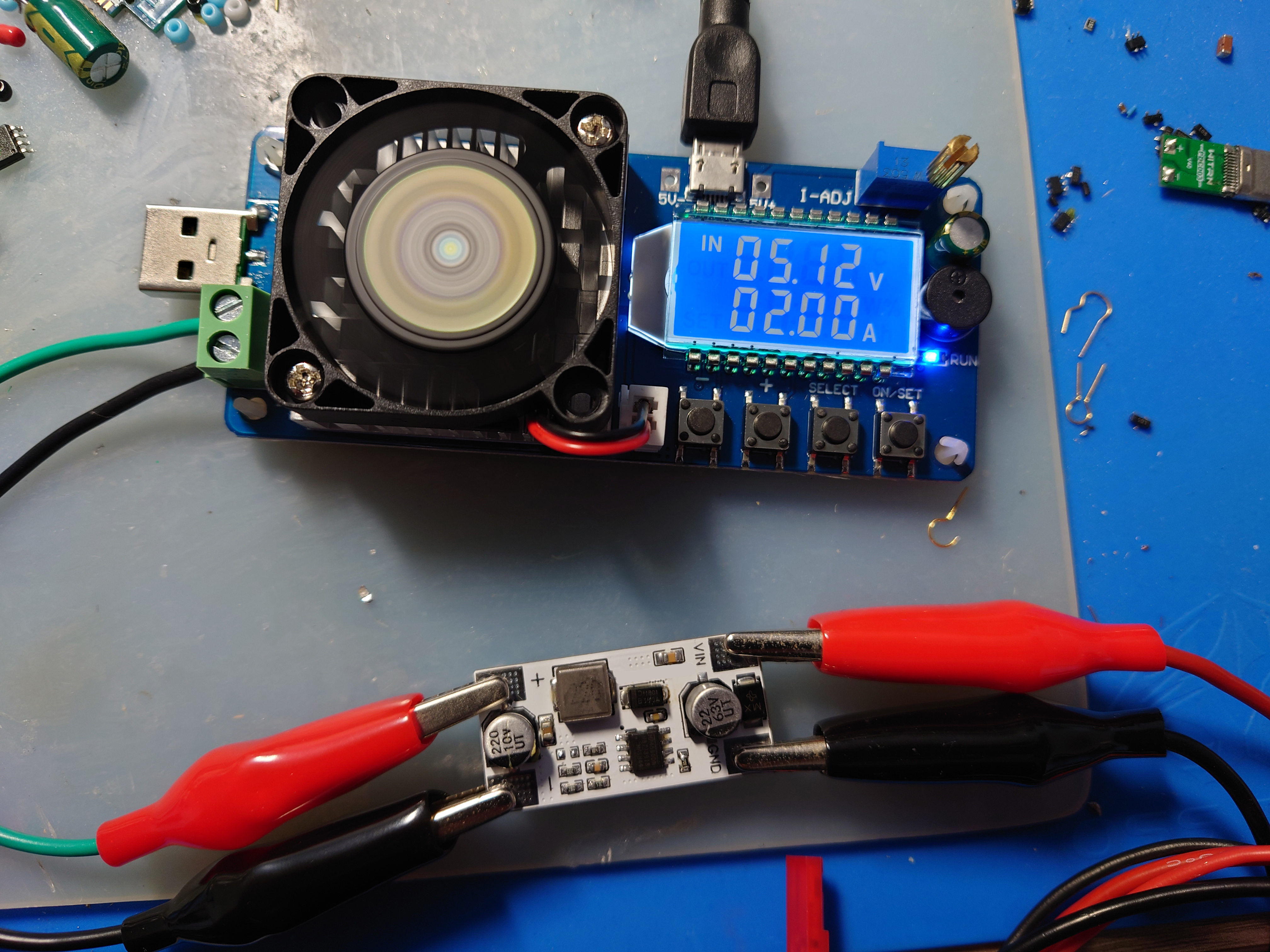
The second version, white, removed the input diode, adjusted component layout, and placed the TVS diode on the front.
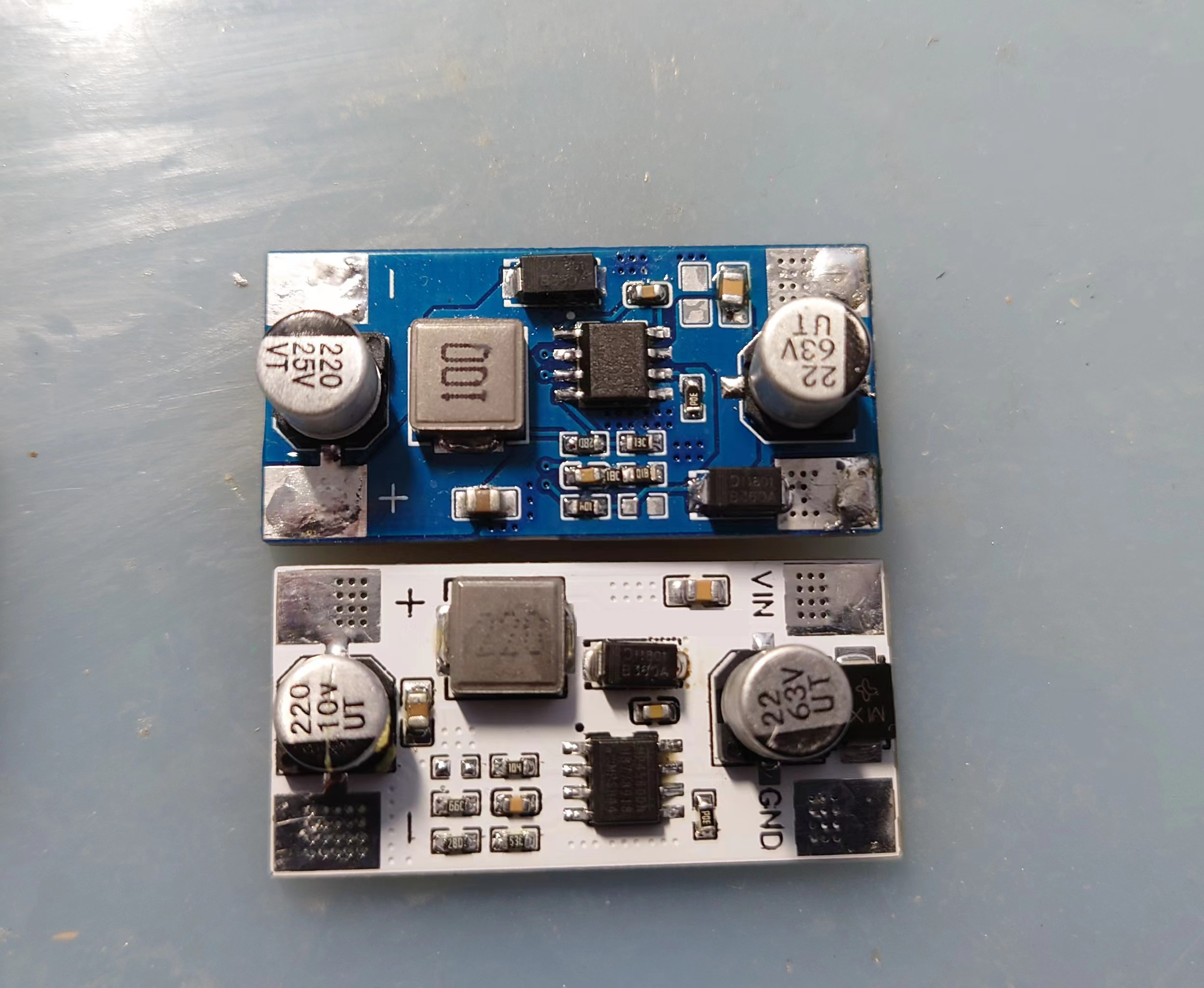
Both versions operated stably under 24V input and 2A load tests .
MP4560 Datasheet.PDF
PDF_MP4560DN step-down module.zip
Altium_MP4560DN step-down module.zip
PADS_MP4560DN step-down module.zip
BOM_MP4560DN Step-Down Module.xlsx
95963
USB audio interface based on PCM2912A
USB audio interface based on PCM2912A
Functionality:
A USB Type-C digital headphone jack that outputs a headphone signal via a 3.5mm headphone jack. The PCB board has a built-in MEMS microphone for recording.
Usage Scenarios:
Mobile phones, computers, and any Type-C
device. Principle:
The PCM2912A is a USB digital audio source interface that converts USB audio signals to analog signals. It supports both upstream and downstream signals.
PDF_USB Audio Interface Based on PCM2912A.zip
Altium_USB Audio Interface Based on PCM2912A.zip
PADS_USB Audio Interface Based on PCM2912A.zip
BOM_USB Audio Interface Based on PCM2912A.xlsx
95964
Fast charging protocol chip: IP2726-AC (unlimited power, unlimited input voltage)
This USB-A + USB-C dual-port USB protocol chip, combined with an external DC-DC converter, enables USB fast charging power supply applications up to 100V. It can also be used in battery packs with 24V/36V/48V/60V platforms, such as outdoor power supplies, to extend USB power supply capabilities.
Functional Description:
IP2726-AC. A dual-port USB protocol chip (USB-A + USB-C) paired with an external DC-DC converter, enabling USB fast charging power supply applications up to 100V. Suitable for battery packs on 24V/36V/48V/60V platforms, such as outdoor power supplies, extending USB power supply.
Input voltage
is determined by the external DC-DC converter. Output power of USB-A and USB-C
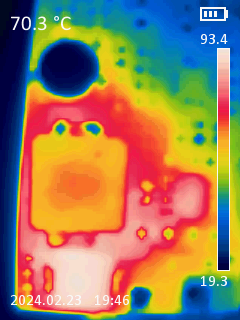
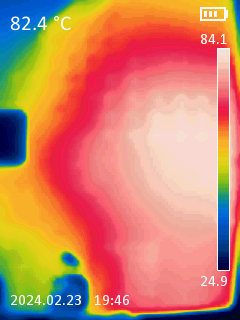
ports : fast charging protocol ≤100W. Maximum power is determined by the external DC-DC converter. Switching frequency is determined by the external DC-DC converter. Static power consumption is mainly determined by the external DC- DC converter . Chip over-temperature is determined by the external DC-DC converter. Input voltage, input current, output voltage, output current , power supply power, power supply efficiency. 39.76V 0.358A 5.25V 2.00A 14.23W 73.77 % 49.72V 0.292A 5.31V 2.00A 14.52W 73.15 % 59.67V 0.250A 5.37V 2.00A 14.92W 72.00 % 69.63V 0.217A 5.40V 2.00A 15.11W 71.48% 79.58V 0.192A 5.41V 2.00A 15.28W 70.81% 39.79V 0.354A 12.00V 1.00A 14.08W 85.19% 49.74V 0.289A 12.08V 1.00A 14.37W 84.04% 59.69V 0.246A 12.16V 1.00A 14.68W 82.81% 69.65V 0.215A 12.24V 1.00A 14.97W 81.74% 79.59V 0.192A 12.18V 1.00A 15.28W 79.71% 39.76V 0.532A 11.95V 1.50A 21.15W 84.74% 49.72V 0.434A 12.02V 1.50A 21.58W 83.56% 59.67V 0.368A 12.10V 1.50A 21.96W 82.66% 69.63V 0.321A 12.19V 1.50A 22.35W 81.81% 79.58V 0.285A 12.27V 1.50A 22.68W 81.15% Note: Power efficiency is determined by the external DC-DC converter and is unrelated to IP2726. Because this test was conducted with an economical asynchronous, high-voltage DC-DC converter, the efficiency and maximum power are not very high. If customers require higher power applications, they can request a change to a high-voltage synchronous DC-DC converter . PCB layout diagrams, 3D preview images, and physical PCB images can be downloaded from https://oshwhub.com/saber.lily. Other design files can be obtained from your supplier.
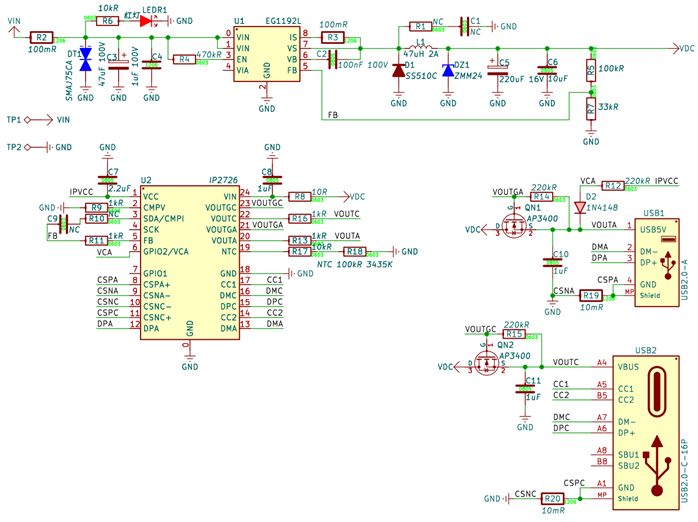
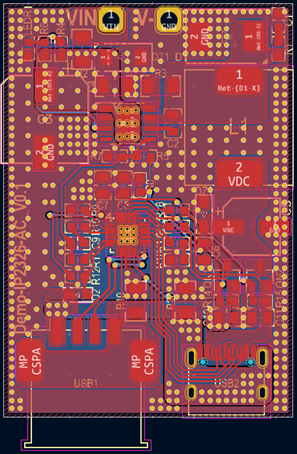
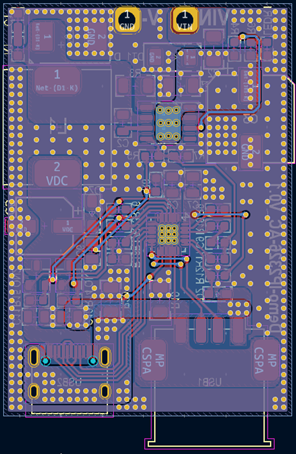
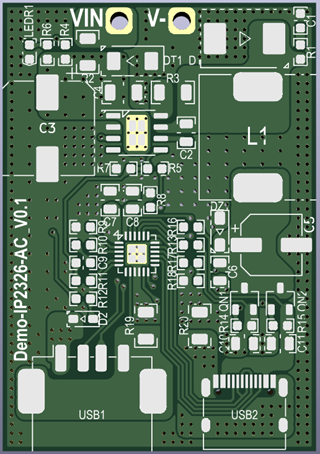
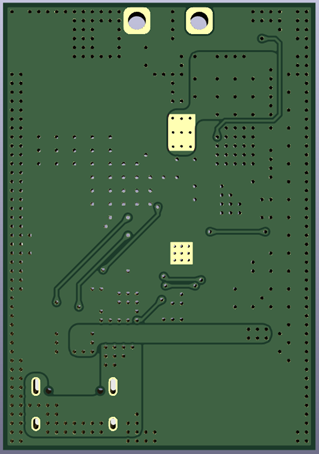
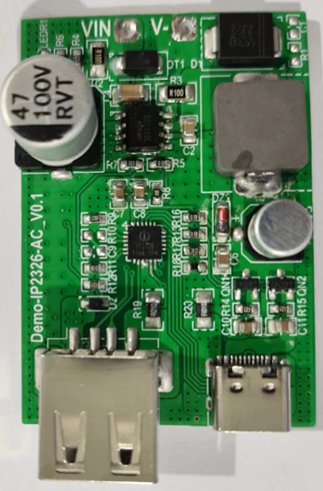
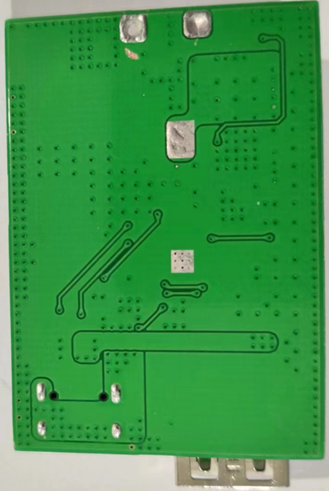
Demo-IP2726-AC_V0.1.pdf
Demo-IP2726-AC_V0.1_240223_bom.csv
Demo-IP2726-AC_V0.1_240223_gerber.zip
IP2726 Datasheet V3.2.pdf
PDF_Fast Charging Protocol Chip: IP2726-AC (Unlimited Power, Unlimited Input Voltage).zip
Altium Fast Charging Protocol Chip: IP2726-AC (Unlimited Power, Unlimited Input Voltage).zip
PADS Fast Charging Protocol Chip: IP2726-AC (Unlimited Power, Unlimited Input Voltage).zip
BOM_Fast Charging Protocol Chip: IP2726-AC (Unlimited Power, Unlimited Input Voltage).xlsx
95965
OPT3002 photoelectric sensor
Read the light intensity data collected by the OPT3002 chip
Main controller used: STM32F103C8T6;
External module: Self-made OPT3002 module; 0.96-inch OLED screen (for displaying the read data);
Code platform: Keil5;
Test results are shown in the video.
Currently, the read data is still the raw data in the result register and has not yet been converted into light intensity in lux.
The self-made OPT3002 module uses LCSC EDA
code (see attachment, written within the STM32 tutorial code framework of Jiangxie Technology).
Cost of the self-made OPT3002 module:
OPT3002 chip 1.5 RMB,
5 PCB boards, 20 RMB
resistors and capacitors (negligible),
total cost around 6 RMB.
Future updates:
1.
Convert read data to lux; 2.
Replace with a color screen ; 3. Add a UV LED with controllable brightness; 4. Replace the chip (expected to use STM32F407) and use Bluetooth to communicate with the mobile phone; 5. Output the acquired data as an image.
f21d2fee4f32327fd2121c661a1f1c24.mp4
BOM_Board1_PCB1_2024-02-21.xlsx
OPT3002_Detection.zip
PDF_OPT3002 photoelectric sensor.zip
Altium_OPT3002 photoelectric sensor.zip
PADS_OPT3002 photoelectric sensor.zip
BOM_OPT3002 photoelectric sensor.xlsx
95966
electronic








 京公网安备 11010802033920号


 LC3664AML-12



