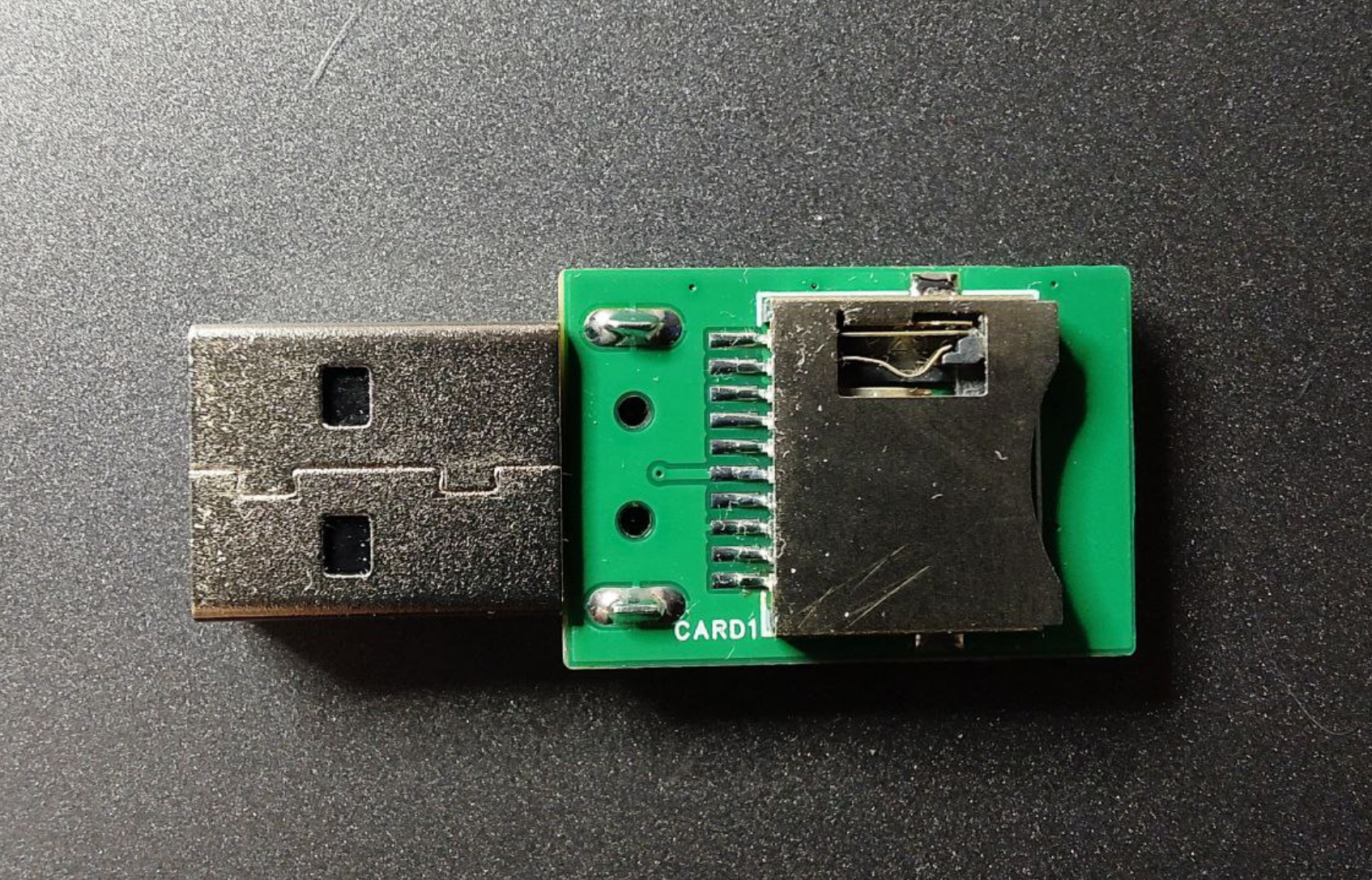
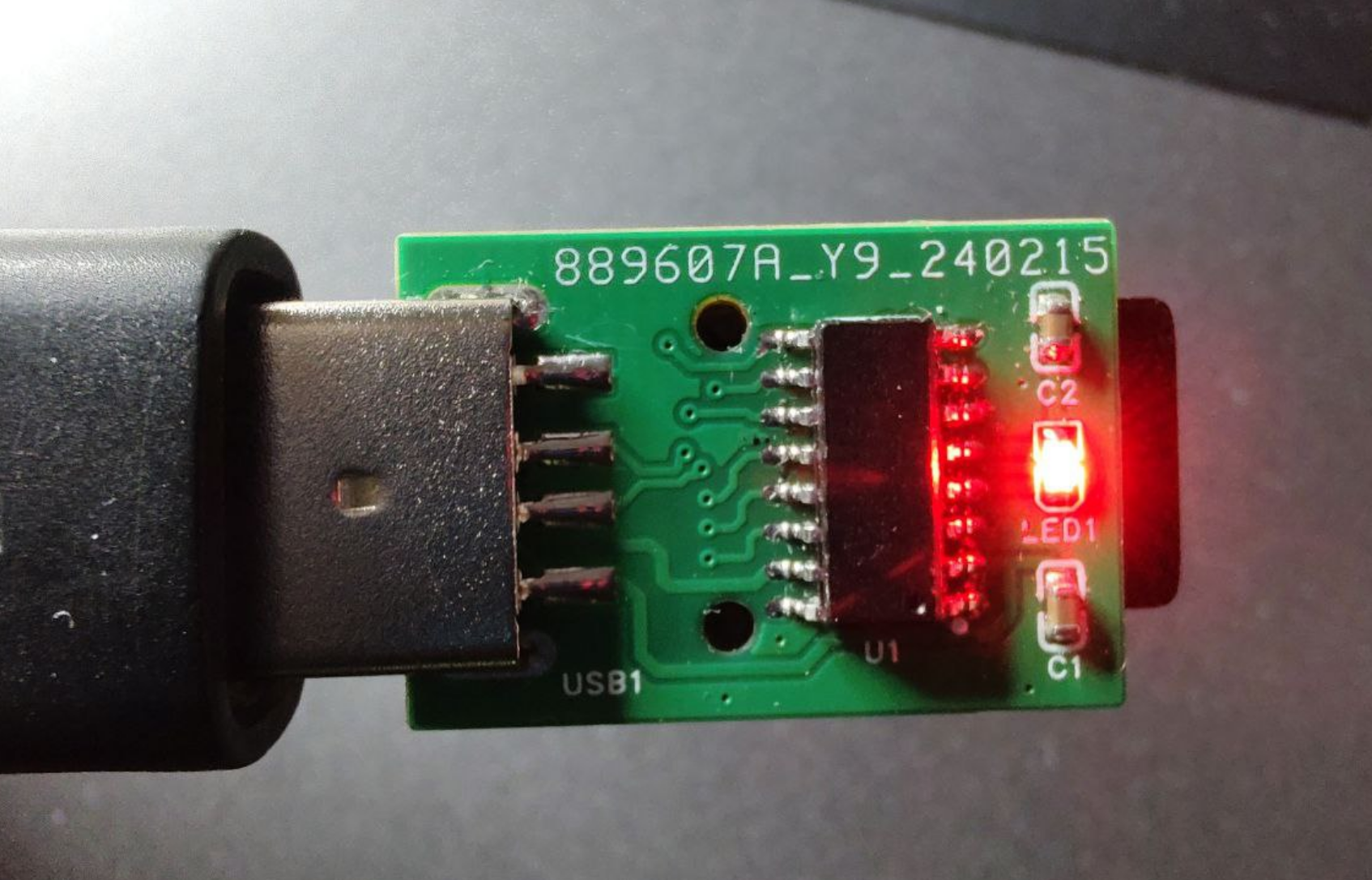
chip. It's a dual-head card reader salvaged from Zhixin, but the markings have been erased. (The HS8826 can be purchased on Taobao.)
The sprue break detectors for 3D printers bought online are poorly made and sometimes give false alarms due to poor contact, causing the machine to stop, especially during high-speed feeding. Therefore, I made my own sprue break detector.
Suitable for 1.75mm diameter wire, this design uses a microswitch with a roller and a low-pass filter built with resistors and capacitors to reduce false alarms. It performs well in actual use.
PS: Compared to a wire breakage detector bought online, which uses a 0-ohm resistor and a capacitor of about 100nF for filtering, this design uses a 47kΩ resistor and a 1uF capacitor for filtering, resulting in a significant improvement in performance. On my homemade automatic wire reel, the online-bought wire breakage detector frequently gave false alarms, causing the machine to stop, while the homemade one did not have this problem.
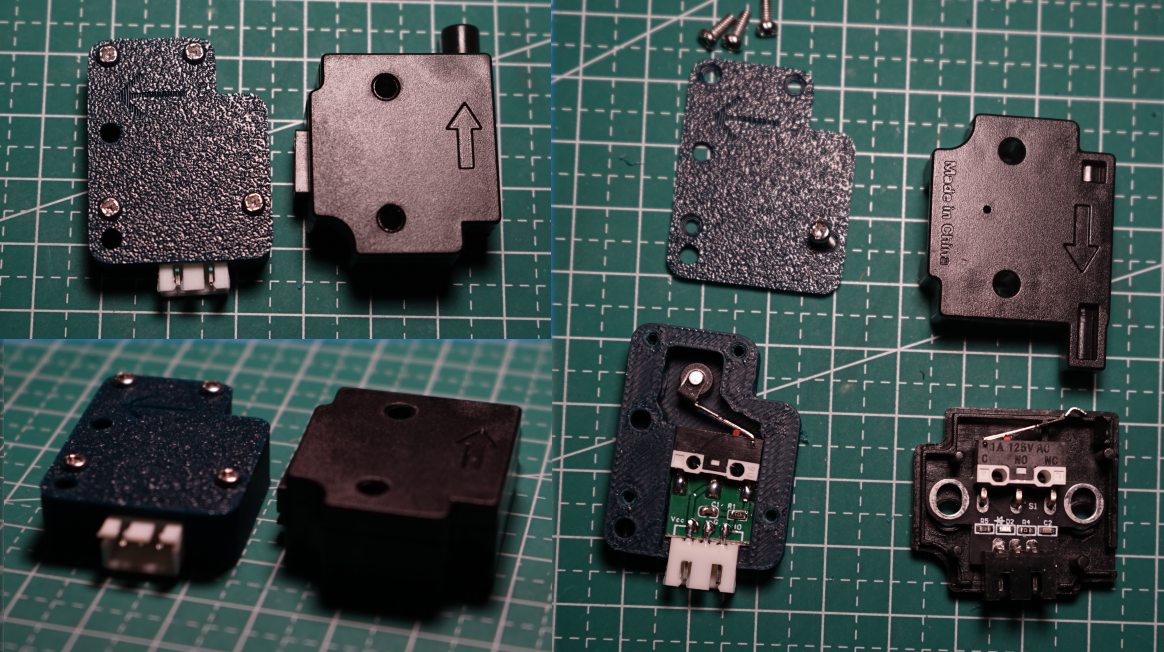
Material breakage detector.STL
Material breakage detector Cover.STL
PDF_Break Detector.zip
Altium_material breakage detector.zip
PADS_Breakpoint Detector.zip
BOM_Break Detector.xlsx
96036
8266 Six-Segment Ceramic Filament Clock
The six-segment digital tube clock has basic functions such as network time synchronization, time display, and temperature measurement.
Six-segment LED display clock
demonstration video
I. Current situation
Using a microcontroller to drive a digital tube for time display is a very basic project for every electronics enthusiast. Imaginative creators can always come up with all sorts of tricks to display time. I saw a project before that used ceramic filaments combined with tm1637 and driven by a microcontroller. I really like the warm feeling brought by ceramic filaments, and the projects of predecessors have also given me a lot of inspiration [1][2][3]. But I think that since we don't use the pre-packaged digital tube, why not put some effort into the digital tube? Inspired by Teacher 6o (doge), [4] I found that a six-segment LED display can also display all the numbers. Based on this, I did the following work.
II. Basic Functions:
The program is written in MicroPython and WebRePL mode is enabled, allowing for online program uploads;
it connects to Tencent Cloud ATP for network time synchronization;
the TM1637 library is modified, primarily for the digital display, temperature display, and time display, enabling correct display of time and temperature using a four-digit six-segment LED display;
a DS18B20 temperature detection module detects and displays the current temperature every 30 seconds;
the lights automatically turn off when the time reaches midnight to avoid disturbing sleep. III.
Innovations: The control circuit board and display circuit board are separated, allowing for separate debugging and display functions, and future expansion of the number of digits is possible;
Type-C power is used;
Sony's unique button logo and the formula for clock dilation are drawn on the display panel;
the circuit board size does not exceed 10cm × 10cm for easy access;
the circuit board has openings for assembly using M3 screws. Future work will focus on
improving the circuit design. Currently, the control circuit board uses pin headers to connect the 8266 development board; in the future, it can be integrated onto the circuit board for a thinner and lighter design; a third set of pin headers for the LED display will be added to increase expandability. Ideally, a flexible flat cable should be used; the current DuPont wire connections are somewhat inelegant.
The program design needs improvement. The current time display is not mature enough (it's inaccurate, possibly due to time dilation; P). More IoT functions need to be added. Both the camera and the naked eye can see noticeable flicker; we need to investigate the problem.
Since it's already connected to the network, consider creating a small program that allows for customizable light-off times and brightness adjustments.
There's a button planned in the circuit, but its function isn't implemented yet; future program modifications could allow it to turn the light on/off and adjust brightness.
The overall brightness is very high; although paper can be used to block it, the designed pattern becomes invisible. We'll consider software or hardware solutions later. This is my
first time open-sourcing a small gadget I made, and it's written like a thesis—I wonder if it's too long. This project still has much to improve; I won't post the program for now. I think the main highlight is the six-segment display; I hope everyone can find their own creative ways to use it!
WeChat_20240219150156.mp4
WeChat_20240219150148.mp4
PDF_8266 Six-Segment Ceramic Filament Clock.zip
Altium_8266 Six-Segment Ceramic Filament Clock.zip
PADS_8266 Six-Segment Ceramic Filament Clock.zip
BOM_8266 Six-Segment Ceramic Filament Clock.xlsx
96043
PowerV_Lite
A voltage regulator board that supports multiple fast charging protocols
Project Overview:
This project is a fast-charging voltage regulator board implemented using the STM32G431CBU6 as the main control unit and an external FUSB302 PD Phy interface. It supports protocols such as PD, QC, UFCS, and AFC. Users can write their own code to implement more proprietary protocols.
Known Bugs
: 1. Incorrect component U22 model: should be ME6239A33MG
. 2. The fuses used on the D+, D-, and CC pins should be 0.05A.
3. The Zener diode used on the CC pin has a large leakage current, which will pull down the CC pin level, causing some adapters to malfunction. Removing the fuse and Zener diode on the CC pin sampling point will solve the problem.
Operation Method :
This device supports both button and serial port command voltage regulation.
1. When using buttons to adjust voltage, long press to enter the corresponding protocol. After entering the protocol, the corresponding indicator light will illuminate. Single-click to adjust the corresponding voltage. Holding down the Shift key and then single-clicking other buttons will perform voltage fine-tuning.
Long press to
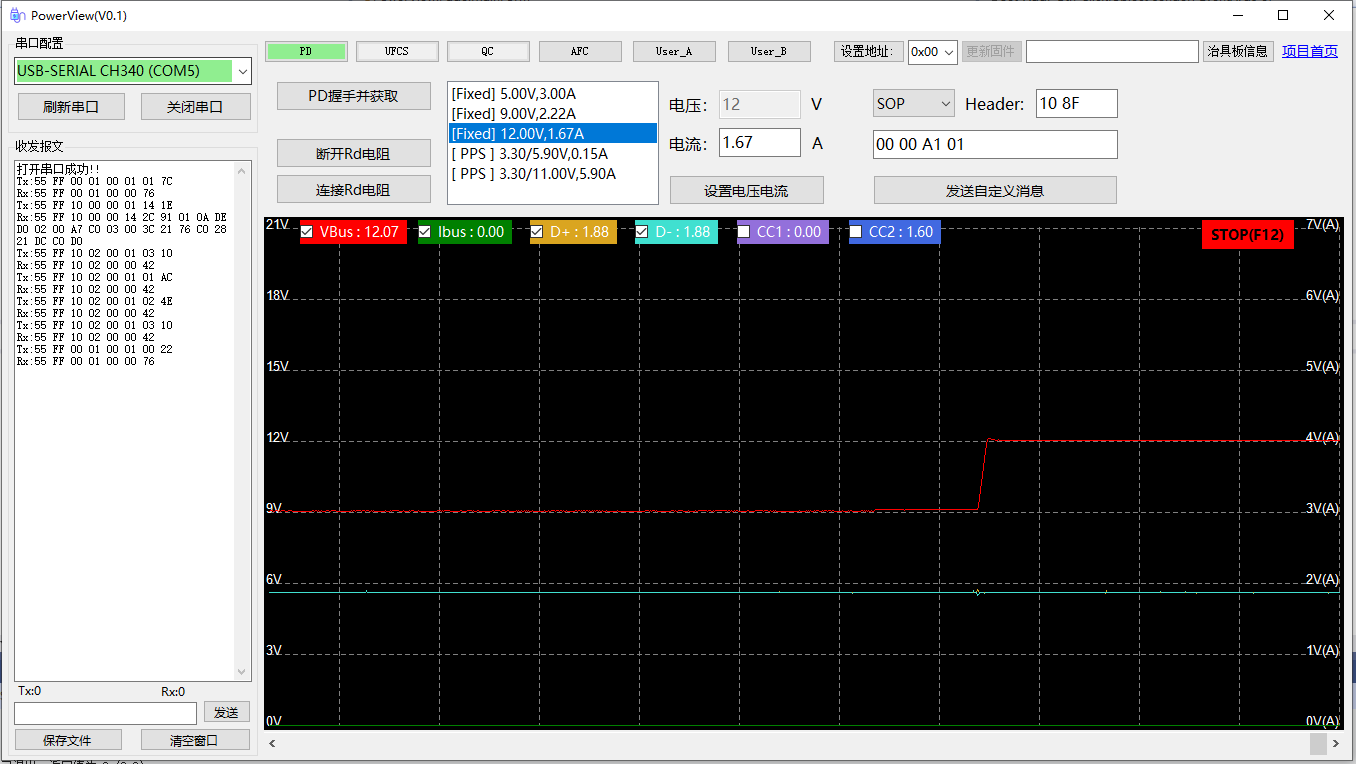
enter the corresponding protocol, single-click to adjust to the corresponding voltage, Shift + single-click for voltage fine-tuning . 2. When using serial port commands to adjust voltage , the command format must be followed. Specific command documentation is yet to be completed . Host computer: When using the device for serial port voltage adjustment, the provided host computer can be used. The source code and download address are: https://gitee.com/ospanic/PowerView. Select the corresponding serial port and open it. After opening, waveform upload will be enabled. If you can see the waveform, the communication is normal. Clicking the protocol above will enter the corresponding protocol operation page. Under the PD protocol, clicking "handshake" will disconnect the Rd resistor and then reconnect it, receive the Cap sent by the Source, respond with GoodCRC, and request 5V. Double-clicking the corresponding range will adjust the voltage. You can also send any custom PD message. Other protocol operations are similar. ... Indicator lights: The device has a row of voltage indicator lights to indicate the current VBUS voltage. Source code: https://gitee.com/ospanic/PowerV_G4
PDF_PowerV_Lite.zip
Altium_PowerV_Lite.zip
PADS_PowerV_Lite.zip
BOM_PowerV_Lite.xlsx
96045
Esp32C3 Learning Board
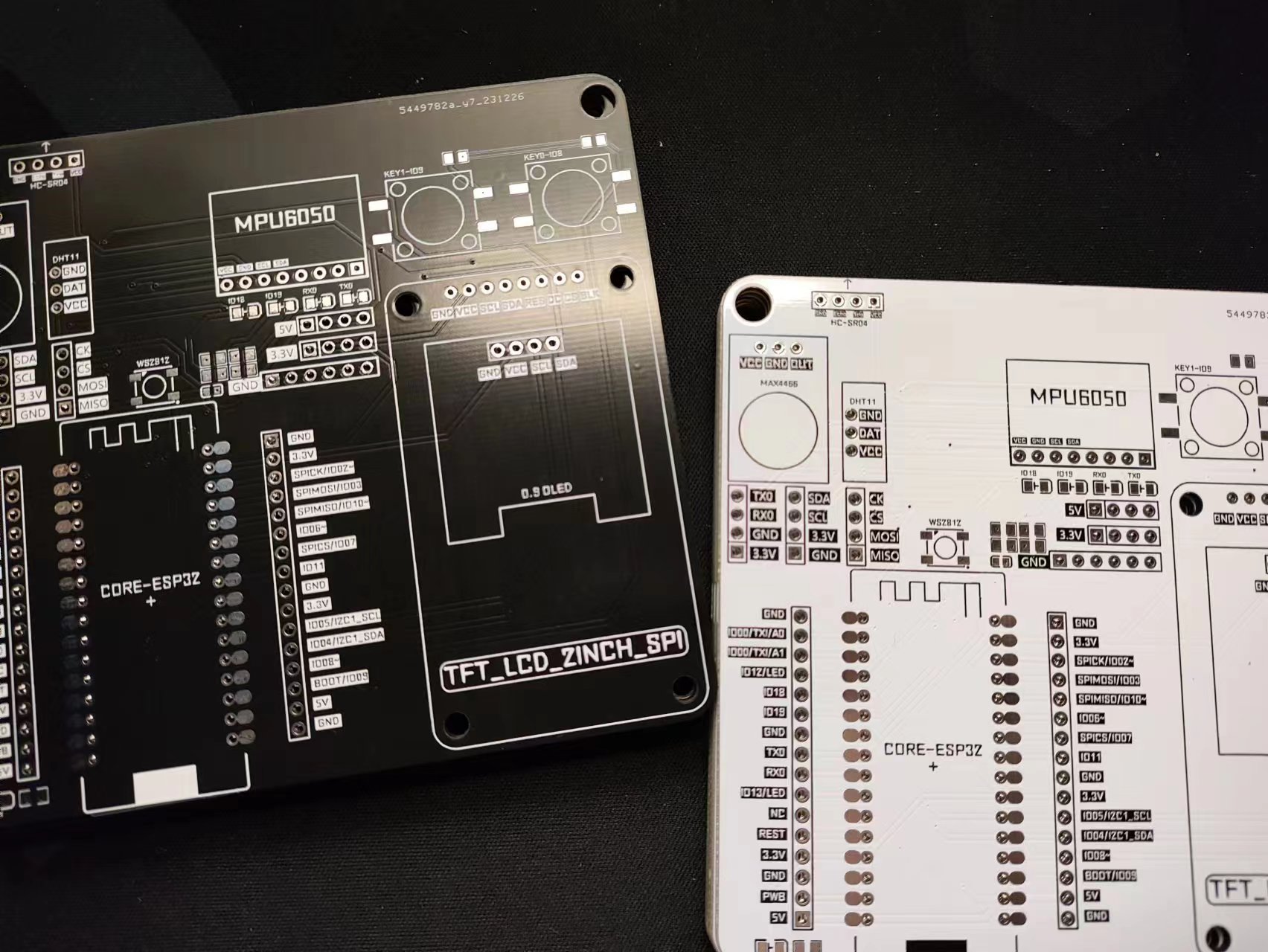
This learning board, based on the HeZoo Esp32C3, is designed for beginners to learn about Esp32 and how to use various modules.
This is a learning/expansion board based on the HeZoo Esp32C3.
Connectable modules include: a 0.96-inch OLED screen, a 1.8-inch TFT-LCD, a MAX4466 sound sensor, an HC-SR04 ultrasonic module, and an MPU6050 gyroscope.
menu.ino
PDF_C3 Learning Board.zip
Altium_C3 Learning Board.zip
PADS_C3 Learning Board.zip
BOM_C3 Learning Board.xlsx
96050
Four-layer board STM32F103C8T6
STM32F103C8T6
The four-layer board has been tested and is working properly.
cc997760ab4775ff0daf992a5aa9eb7e.mp4
PDF_Four-layer board Stm32f103c8t6.zip
Altium 4-layer board Stm32f103c8t6.zip
PADS_4-layer board Stm32f103c8t6.zip
BOM_Four-layer board Stm32f103c8t6.xlsx
96054
5V12A step-down module
Built using the Chipone XL4016... seems pretty good, cheap and easy to use.
There are several unused 12V server power supplies. There aren't many things that require 12V power, but many require 5V, so I made this
module. The heat generation after half an hour of 5A output
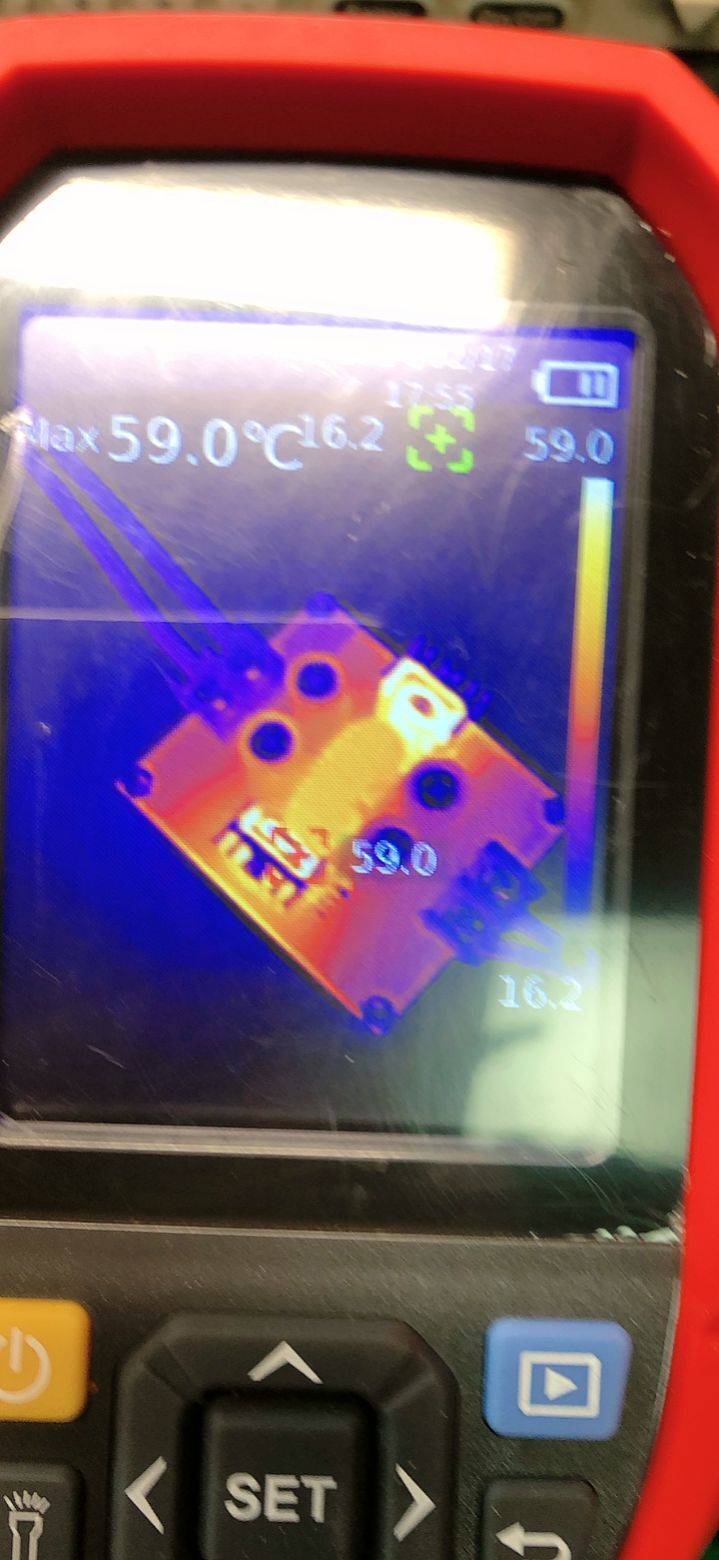
and the ripple at 5A output were observed
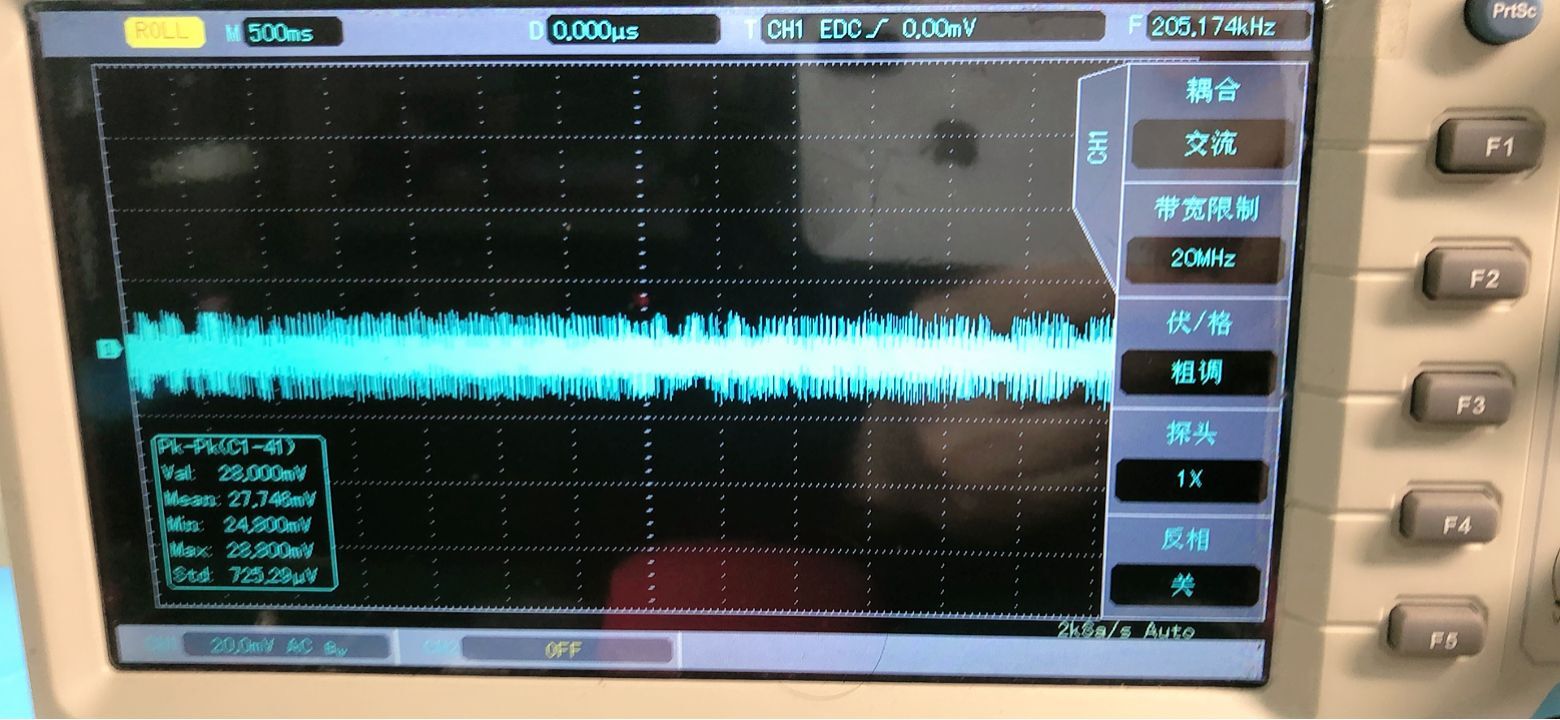
. At full power (12A) with a fan, it's manageable, but the ripple increases.
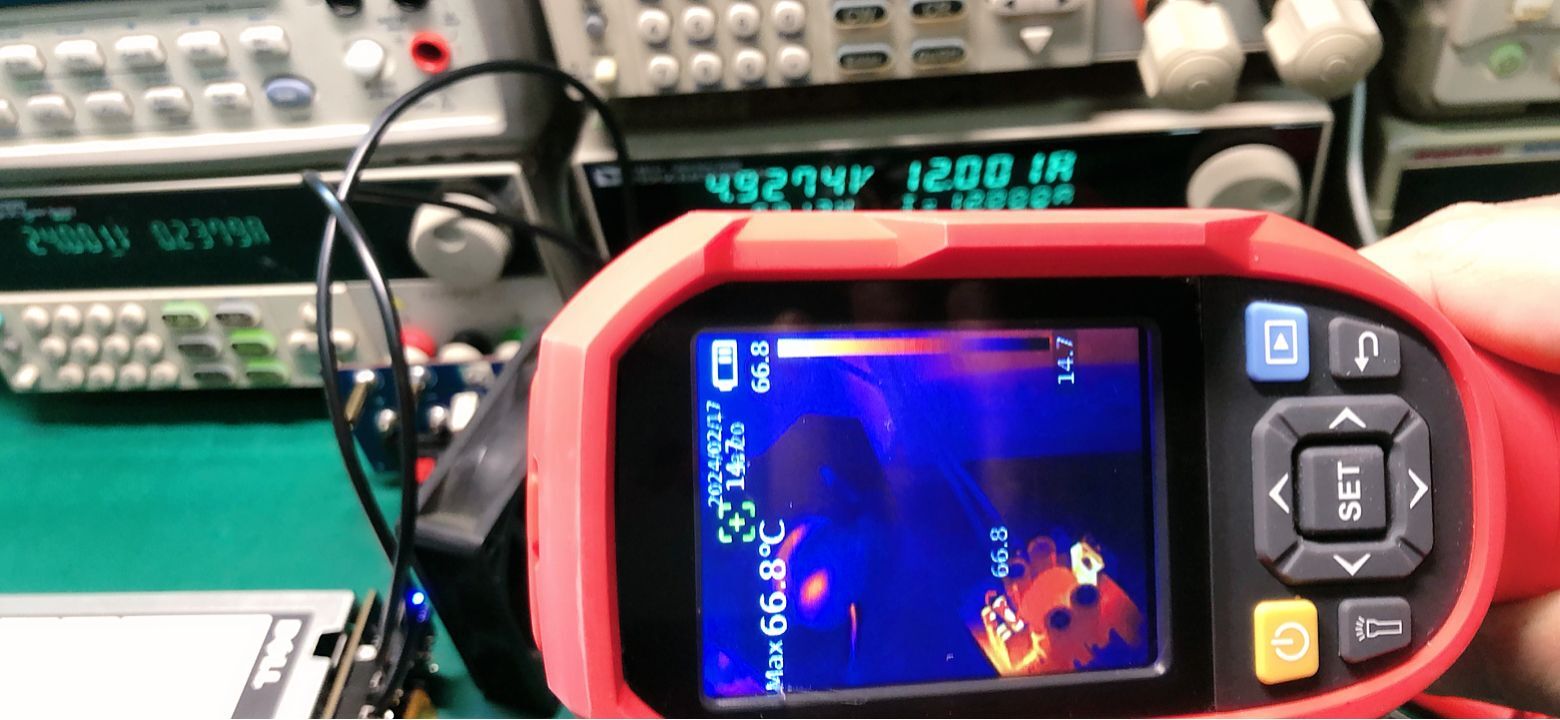
The ripple at 12A output
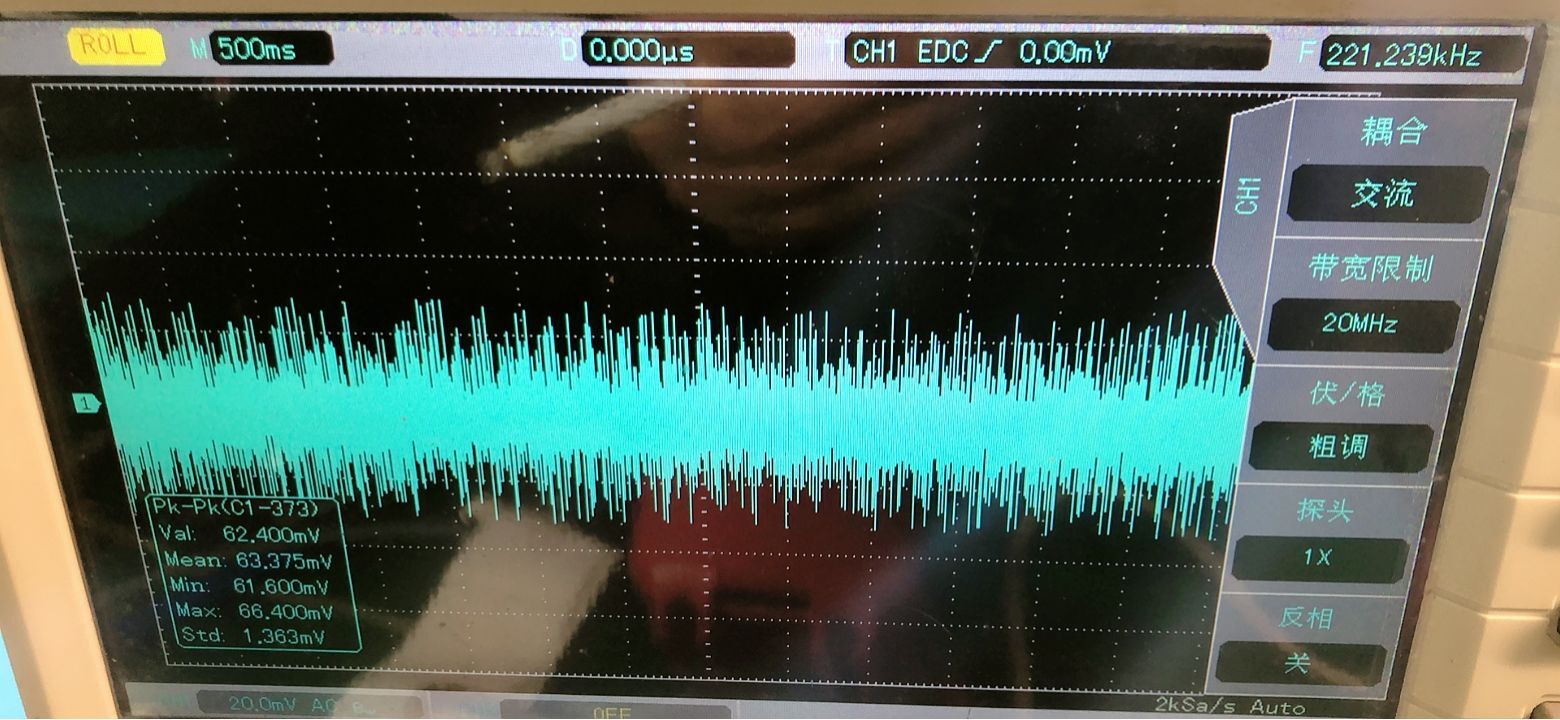
seems acceptable in the tests. The load test results on the host computer are also very stable.
However, it's worth noting that if this module fails, it will directly output the input voltage. USB devices are quite voltage-sensitive, so some protection circuitry should be added.
PDF_5V12A Step-Down Module.zip
Altium_5V12A step-down module.zip
PADS_5V12A step-down module.zip
BOM_5V12A Step-Down Module.xlsx
96056
Multifunctional bottled water heater
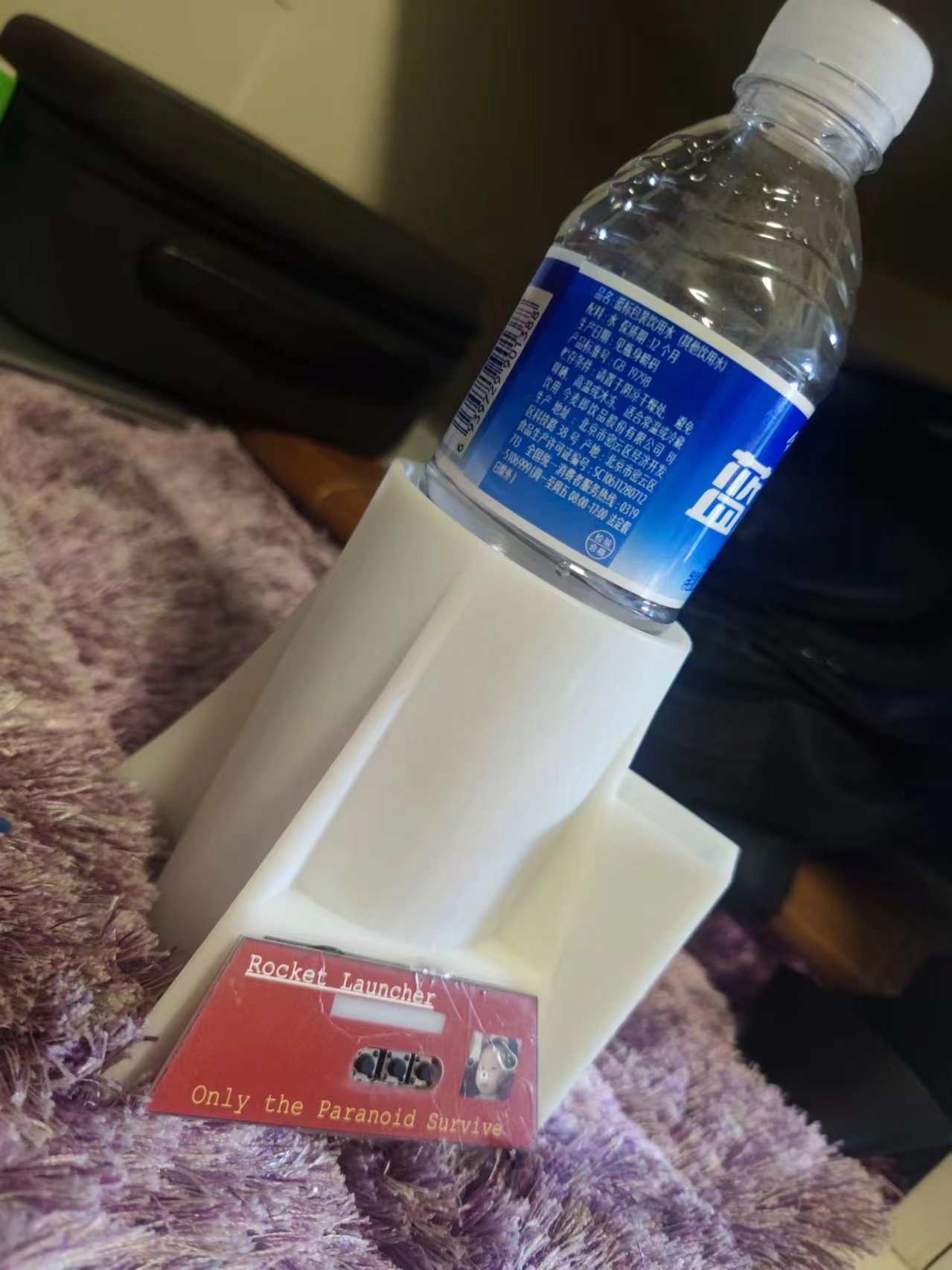
It can be used to heat bottled water, as a night light, as a heater, and as a pen holder; it's very practical.
Used for heating bottled water, this device can also be used as a nightlight, a heater, and a pen holder—very practical.
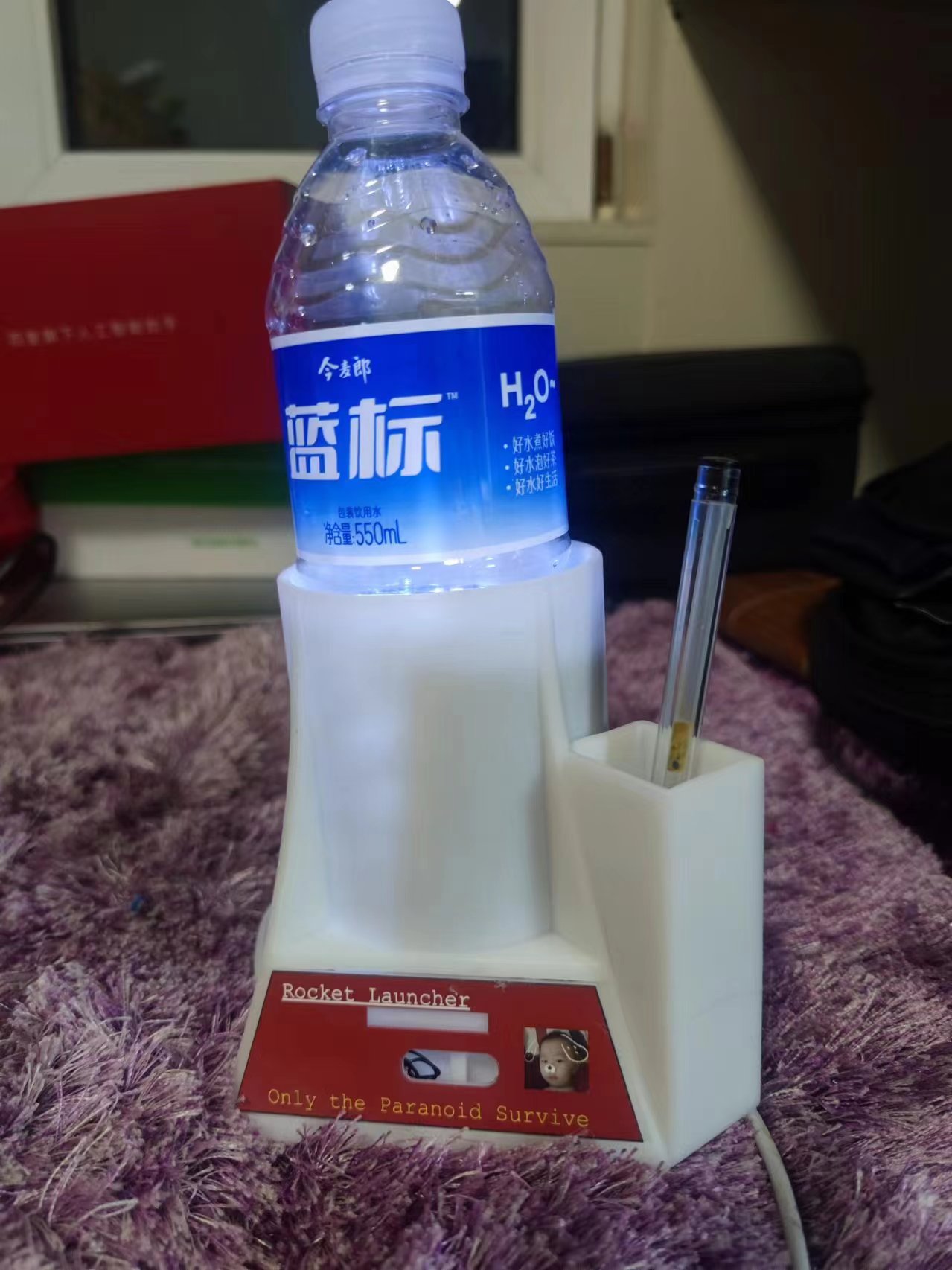
The design theme is rocket-themed, and it looks quite attractive from top to bottom. The bottom features four LEDs for illumination and colorful PCB silkscreen printing, making it quite aesthetically pleasing.
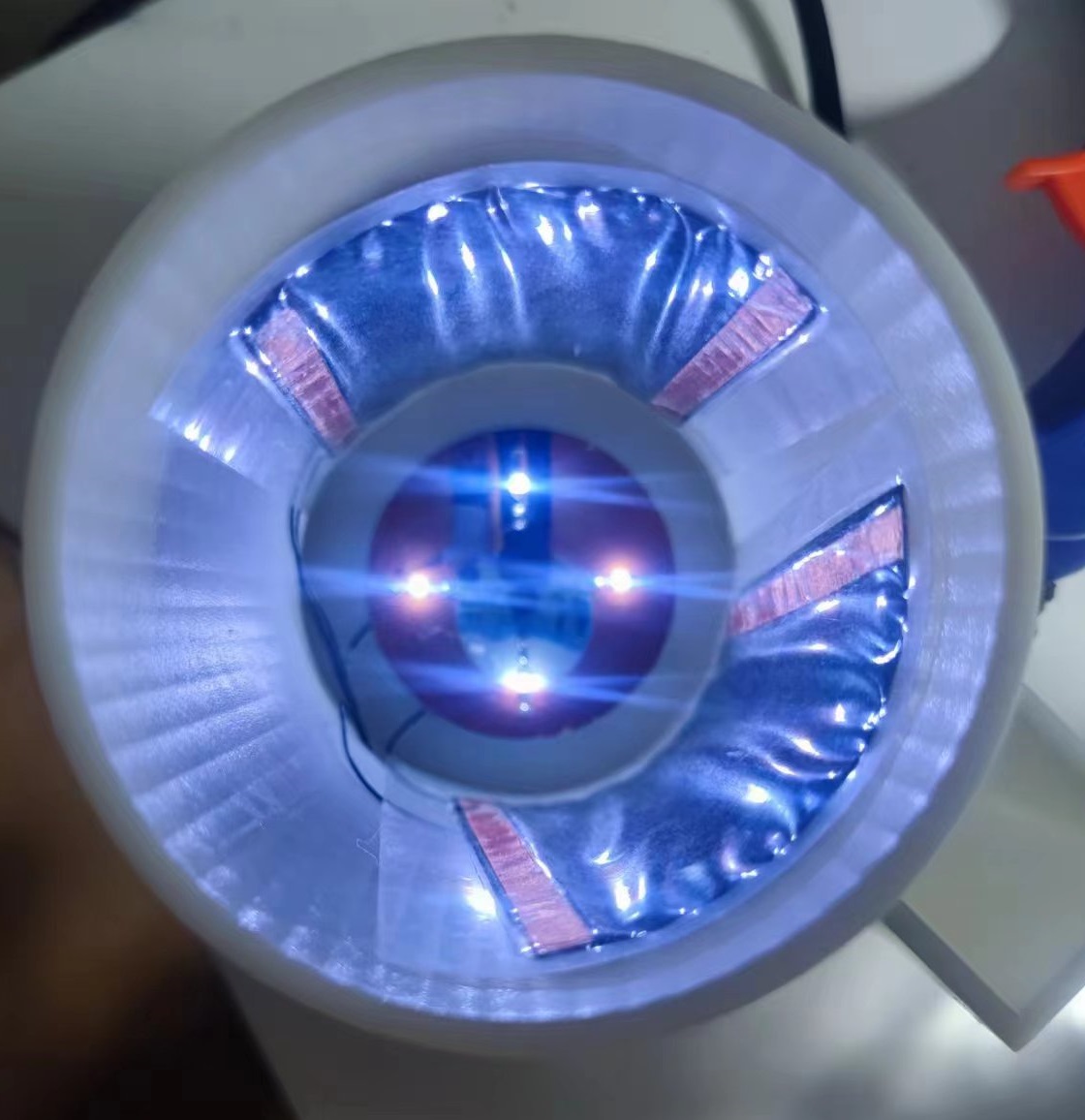
The entire shell is 3D printed, reinforced by four supports, maintaining a certain thickness and using substantial materials.
The heating element uses a carbon fiber heating module, which is very practical and available for around 3 RMB on Taobao. Because the heating is very slow, there's no need to worry about overheating.

See the attachment for the 3D design results.
The electronic circuitry consists of three main parts:
a power interface circuit (powered via a Type-C interface, supplying power to the logic and lighting circuits)
, a control logic circuit (using a C51 microcontroller to control the LEDs and heating plate), and a
lighting circuit (using colorful silkscreen printing and four LEDs for internal lighting).
All these parts need to be fixed inside the heating tank.
The control logic circuit has an opening on the panel for operation.

The heating container can hold standard-sized purified water and mineral water, heating it to around 40 degrees Celsius, which is perfect for drinking.
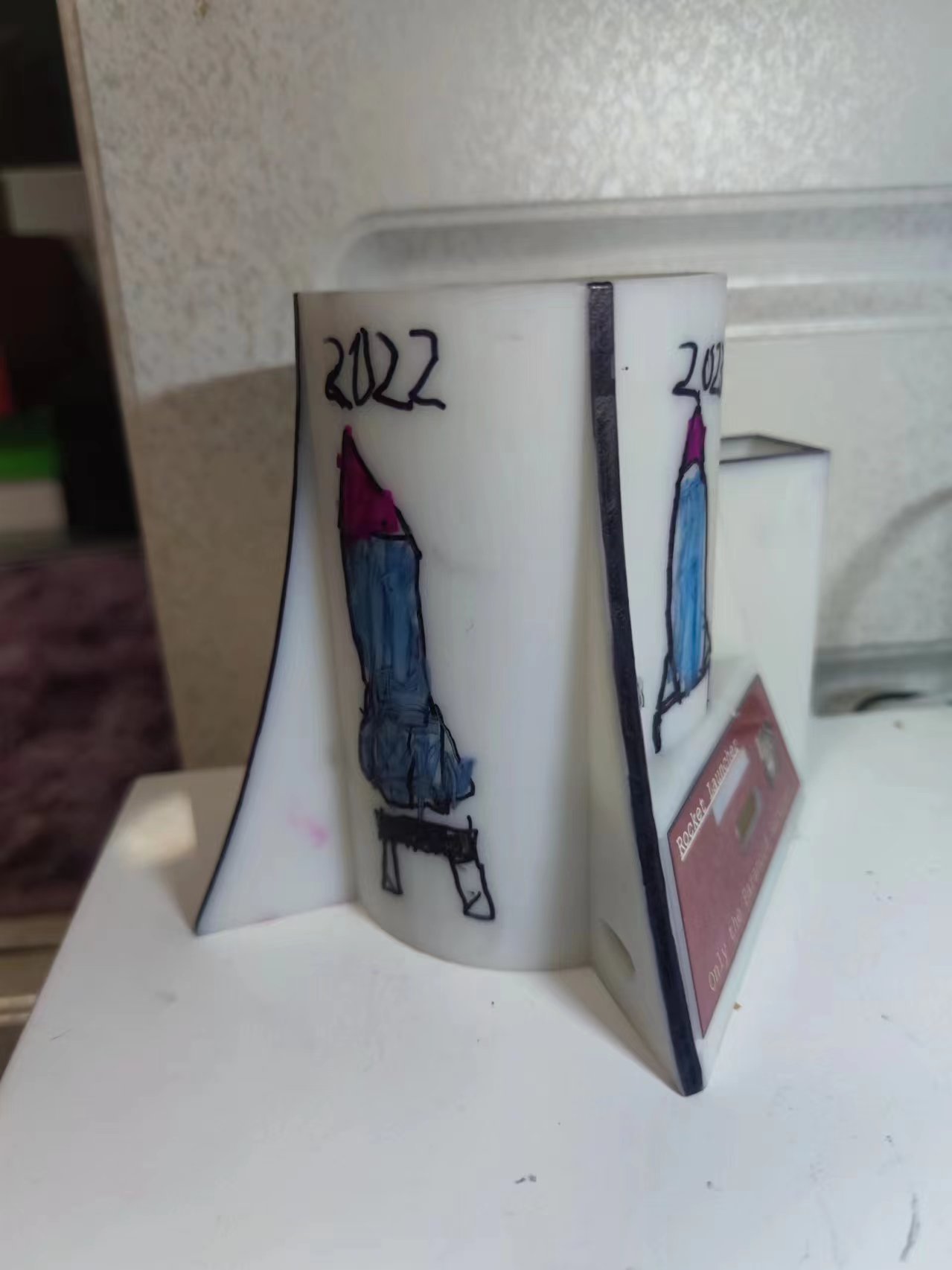
Finally, it's given to the children to draw on.
Heating Barrel.STL
PDF_Multifunctional Bottled Water Heater.zip
Altium Multi-functional Bottled Water Heater.zip
PADS_Multifunctional Bottled Water Heater.zip
BOM_Multifunctional Bottled Water Heater.xlsx
96058
electronic








 京公网安备 11010802033920号


 APT50GT60BRDQ1G



