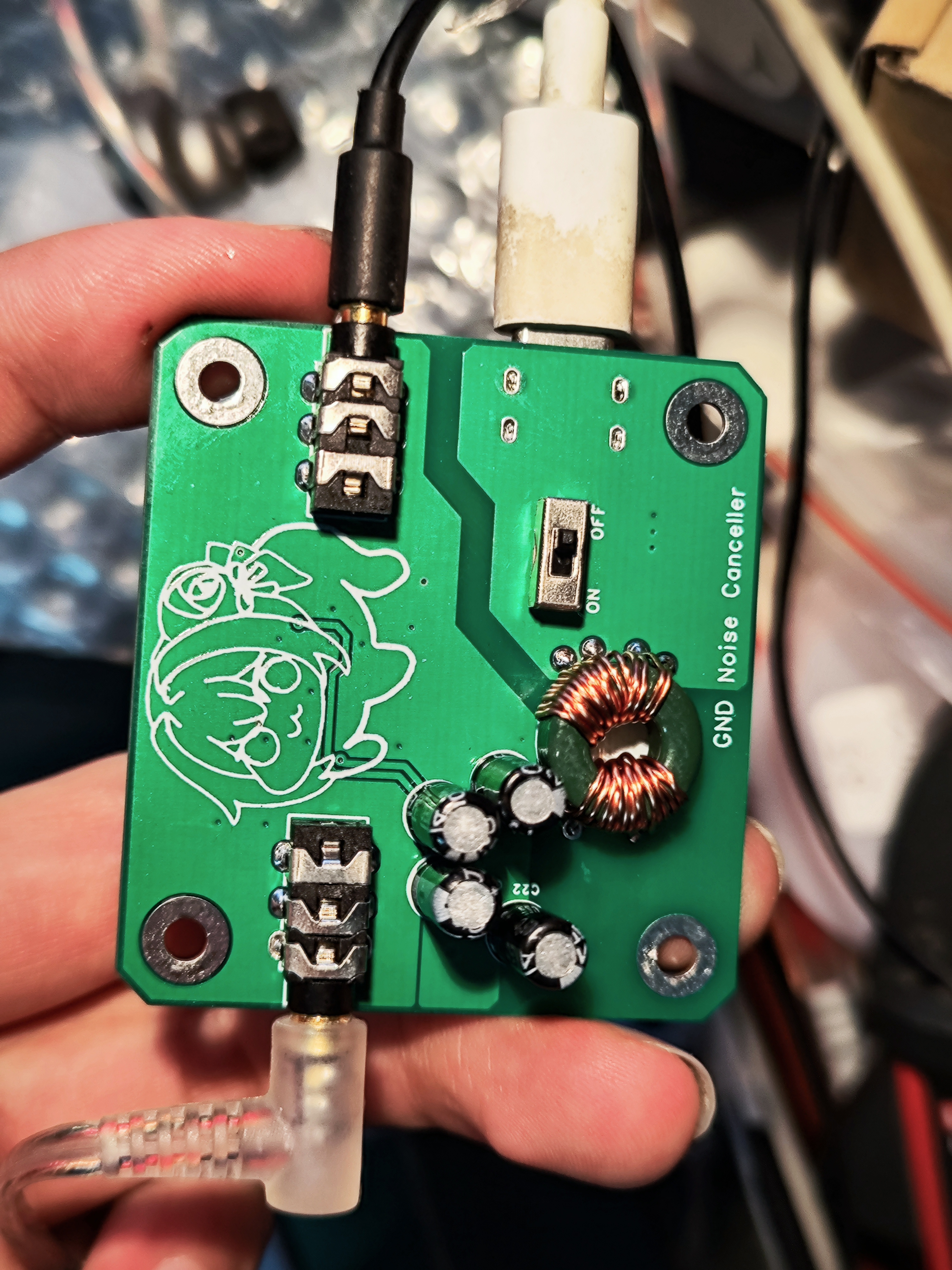
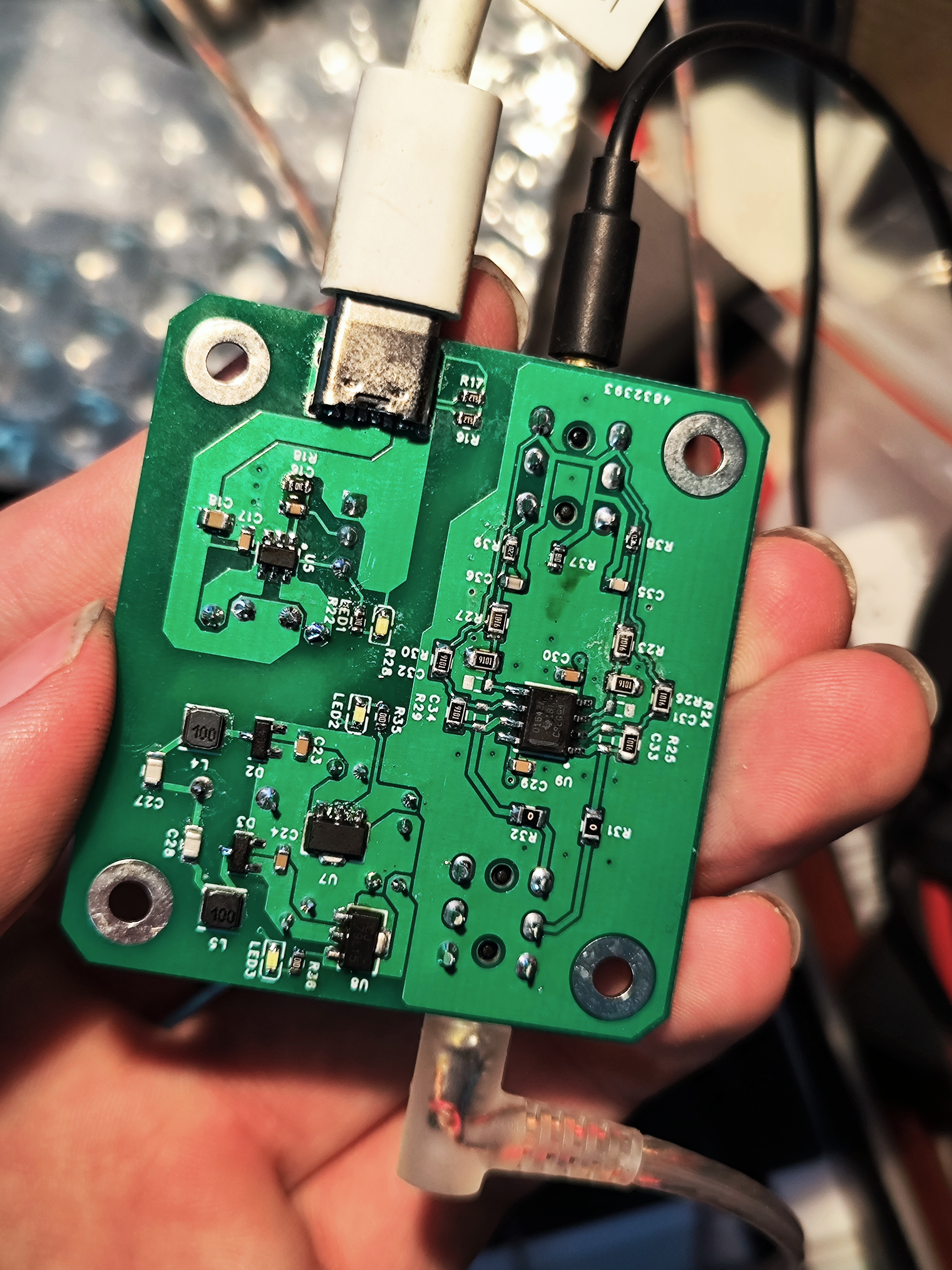
To eliminate common-ground noise in audio, differential operational amplifiers are used, with an expected suppression capability of over 40dB for ground loop noise. It
features a Type-C 5V power supply and an onboard isolated power supply. The isolated power supply uses a transformer with 12mm ferrite core windings, an 8+8T primary winding and a 15T secondary winding, producing ±17.5V after rectification, which is then regulated to ±15V by a 78/79L15 transformer.
This project uses 27mm warm-colored ceramic filaments, each arranged in a figure-eight pattern to display numbers and letters (some letters cannot be displayed). Five filaments are arranged side-by-side to display information such as time, temperature, and humidity.
This project is inspired by the colorful silkscreened snowflake lights from the Open Source Plaza (original link: https://oshwhub.com/lioasis/xue-hua-deng).
It uses 27mm warm-colored ceramic filaments, each forming an 8-digit number to display numbers and letters (some letters cannot be displayed). Five filaments are arranged side-by-side to display time, temperature, humidity, and other functions. The main controller uses the LCSC ESP32S3 colorful silkscreened version, which is not yet officially released as of January 30, 2024. Mr. Wu revealed that it is expected to be released after the new year. Without further ado, here are the pictures:
![time.jpg]
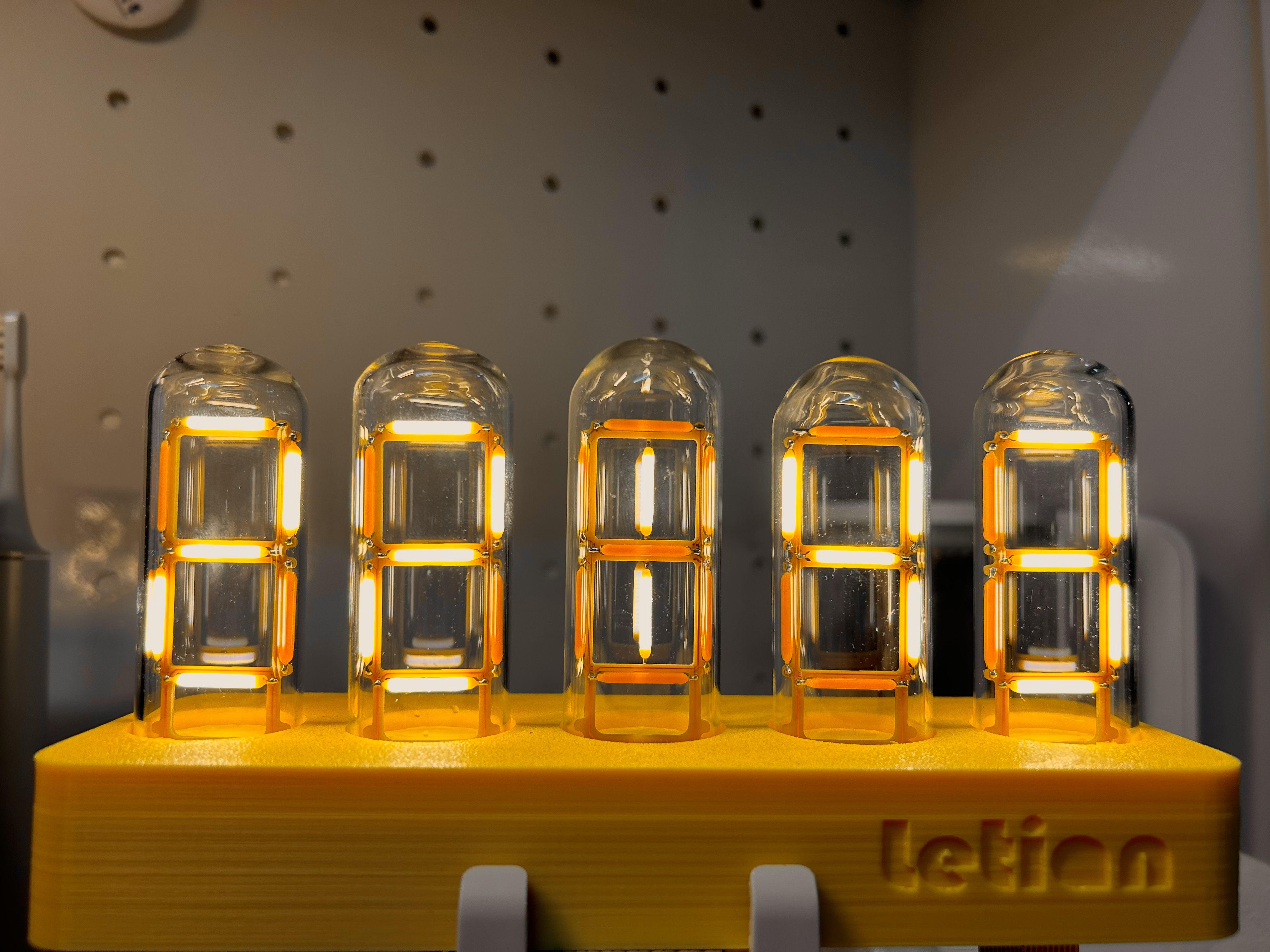
Due to time constraints, the original plan was to use wood to machine the CNC base, but 3D printing was ultimately used instead. All source files are publicly available. The 3D model was drawn using SW2023; please use the relevant version for editing, or edit the step, igs, or stl files.
The driver section uses a 74HC595 to cascade and control 37 ceramic filaments. Onboard components include an SHT30 temperature and humidity sensor, a photoresistor, a DS1302 clock chip, a TF card module, an IIS microphone, and an NS4168 power amplifier module. (The IIS microphone and NS4168 module can be programmed using ESP32S3 for offline voice functionality; however, the code is incomplete due to time constraints and will be supplemented later.)
The currently completed code was written and debugged using the VS Code editor on the Platform io platform within an Arduino environment. Currently implemented functions include: time display and online time acquisition, temperature and humidity reading and display, using the Homespan library as a HomeKit to connect to iPhones (please refer to the Homespan official documentation for details), and adjusting display brightness via button input. Unfinished functions include: setting the clock and countdown timer. (Offline voice recognition functionality under ESP32S3 is provided in the reference voice recognition code documentation, sourced from a Bilibili user: https://space.bilibili.com/59041601).
The open-source documentation includes code, all PCB layouts, and a 3D model.
BOM (Under Development): 6 x 30mm*75mm glass test tubes (1 spare)
4 x 1mm*10P*10cm FPC cable 3 x
Buttons
1.25 4P terminal + wire
PCB_mainboard *1 + moduleV2.0 *5
47mm ceramic filaments *40
PCB BOM can be directly exported (NS4168 + IIS microphone not available in LCSC Mall)
**Strongly recommend using SI2305 instead of s8550 for high-end ceramic filament control**
References:
(1) ESPIDF voice recognition https://www.bilibili.com/video/BV1wQ4y1z7EQ/?spm_id_from=333.999.0.0&vd_source=fa8c62cf1b1a4771b713149461b59df7
(2) C language menu
https://blog.csdn.net/weixin_45715477/article/details/118894581
(3. OneButton library usage)
https://blog.csdn.net/DOF526570/article/details/128943669
(4. Snowflake light)
https://oshwhub.com/lioasis/xue-hua-deng
For any questions, please contact QQ: 1696455532








 京公网安备 11010802033920号


 68695-444



