The more I draw, the more I realize how much I love these small, simple boards with very few I/Os that can be made very small. Although simple, it's quite enjoyable to draw, a relaxing experience.
This time, the USB-C interface is only for power supply because the 030 doesn't have USB. However, compared to the CH552E, it's far superior in performance, peripherals, number of I/Os, and ease of development (but honestly, I don't know how to write USB code for the CH552, so it's the same for me).
It's just been sent for prototyping and hasn't been tested yet. I'm just uploading the project for now. I'll upload pictures of the actual product after it's replicated.
I don't have much pocket money left, so I didn't use color silkscreen printing; I chose free prototyping and just added an open-source label. (
Please don't replicate immediately; wait for the test results! (To avoid problems))
Testing completed, soldering finished as shown in the picture.
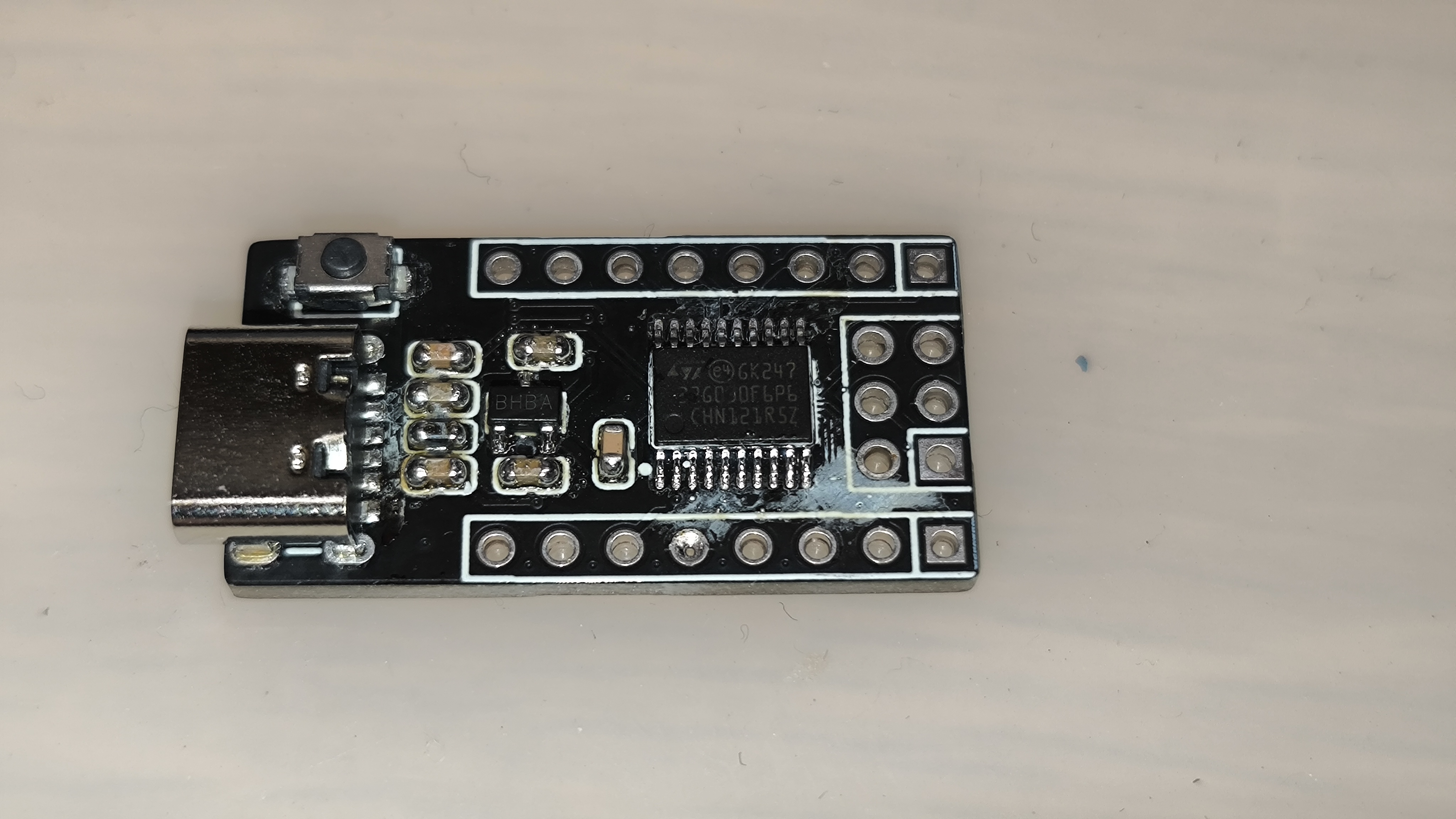
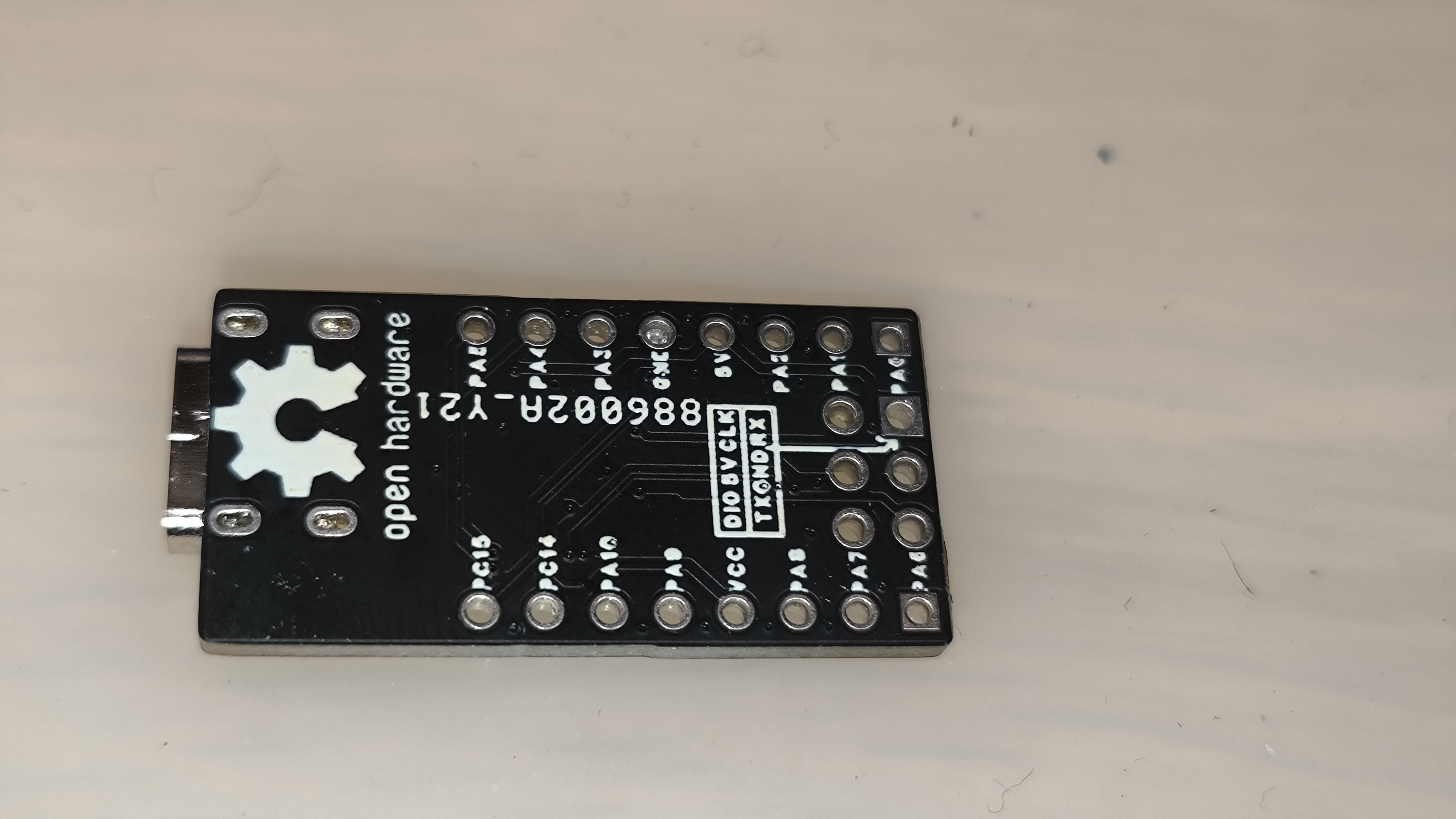
PDF_STM32G030F6P6 Literal Minimal System Board.zip
Altium_STM32G030F6P6 is a minimal system board. (literal translation of "STM32G030F6P6")
PADS_STM32G030F6P6 is a minimal system board. zip
BOM_STM32G030F6P6 (Literally meaning minimal system board).xlsx
97451
Smart curtain design based on the LCSC Liangshanpai development board
This is an intelligent curtain control system based on the Liangshan School microcontroller.
This is an intelligent curtain control system based on a microcontroller. It utilizes a raindrop sensor module, a light intensity sensor module, an infrared receiver module, and a stepper motor module. Mode switching is possible via voice commands. In automatic mode, it automatically detects light and rainwater to open and close the curtains. At any time, the curtains can be opened and closed via infrared remote control or voice command, and the automatic mode can be deactivated. The
raindrop detection section determines rain by detecting the conductivity of water droplets. It measures the presence of water droplets by measuring the change in conductivity between two electrodes.
The light detection section uses a photoresistor. A photoresistor is a resistor whose resistance decreases rapidly with increasing light intensity; it exhibits almost high resistance in the absence of light, hence its high resistance in darkness.
The infrared receiver outputs a low level when infrared light is detected and a high level when no infrared light is detected. Therefore, by checking whether the OUT terminal outputs a low level, we can determine whether infrared data has been received.
The voice recognition section utilizes the HLK-V20 intelligent voice recognition module, supporting offline recognition of 150 local commands. It allows for customization of wake-up words, command words, and response announcements, and features rich peripheral interfaces.
The chosen motor is a stepper motor, which converts electrical pulse signals into open-loop control of angular or linear displacement; it is also known as a pulse motor.
After nearly three weeks of learning in the training camp, I learned how to draw schematics and route PCBs using EDA tools, developed some soldering skills for 0603 packaged components, and finally, gained some coding and debugging abilities.
Curtains.mp4
5. Complete program.rar
Voice Firmware.rar
PDF_Smart Curtain Design Based on [LCSC Liangshanpai Development Board].zip
Altium-based smart curtain design using the LCSC Liangshanpai development board.zip
PADS Smart Curtain Design Based on LCSC Liangshanpai Development Board.zip
BOM_Smart Curtain Design Based on [LCSC Liangshanpai Development Board].xlsx
97454
electronic








 京公网安备 11010802033920号


 91R1A-T16-A



