I. Update Log
December 21, 2023: First release, named: Timer_Z
December 25, 2023: Added hardware version recognition, automatically matching versions with and without temperature (requires being written to the hardware locally at the factory); fixed the issue of no image appearing when exiting and returning to the electronic fish; improved automatic shutdown when not in use (not a clock or timer), improving battery life; improved the DIY countdown function;
April 22, 2024 (Major Upgrade): Version: TimerZ_V1.0.1:
1. Optimized touch operation logic: 1-second light touch -> return to main menu, 3-second long touch -> power off, 10-second long touch -> force restart, removed the requirement for screen to be facing up to exit, optimized operation logic.
2. Optimized timer function, improved countdown settings, added Chinese prompts for operation, optimized UI, fixed timer prompt sound and RGB, fixed setting range and display issues, fixed electronic fish display issues, etc.
3. Optimized temperature and humidity acquisition and filtering algorithms, reducing the impact of the temperature chamber on temperature measurement.
4. Fixed the issue of black screen upon RGB exit and lights not turning off upon exit.
5. Fixed the issue of occasional time synchronization failure due to network instability, and optimized network setup to improve battery life when the network is turned off.
6. Added first-time boot guide, added the option to set offline or online mode upon boot, and improved the Chinese prompt for network connection upon boot.
7. Added automatic battery calibration function and optimized automatic shutdown logic.
8. Added RGB lighting effects to the electronic fish and clock interfaces; tapping "01" allows switching between various lighting effects.
9. Significantly upgraded the network setup method, changing it to AP network setup, with Chinese prompts for network setup methods and steps.
10. Added computer monitor function and improved host computer; added factory reset, etc.;
II. Function Introduction
1. Timer Function
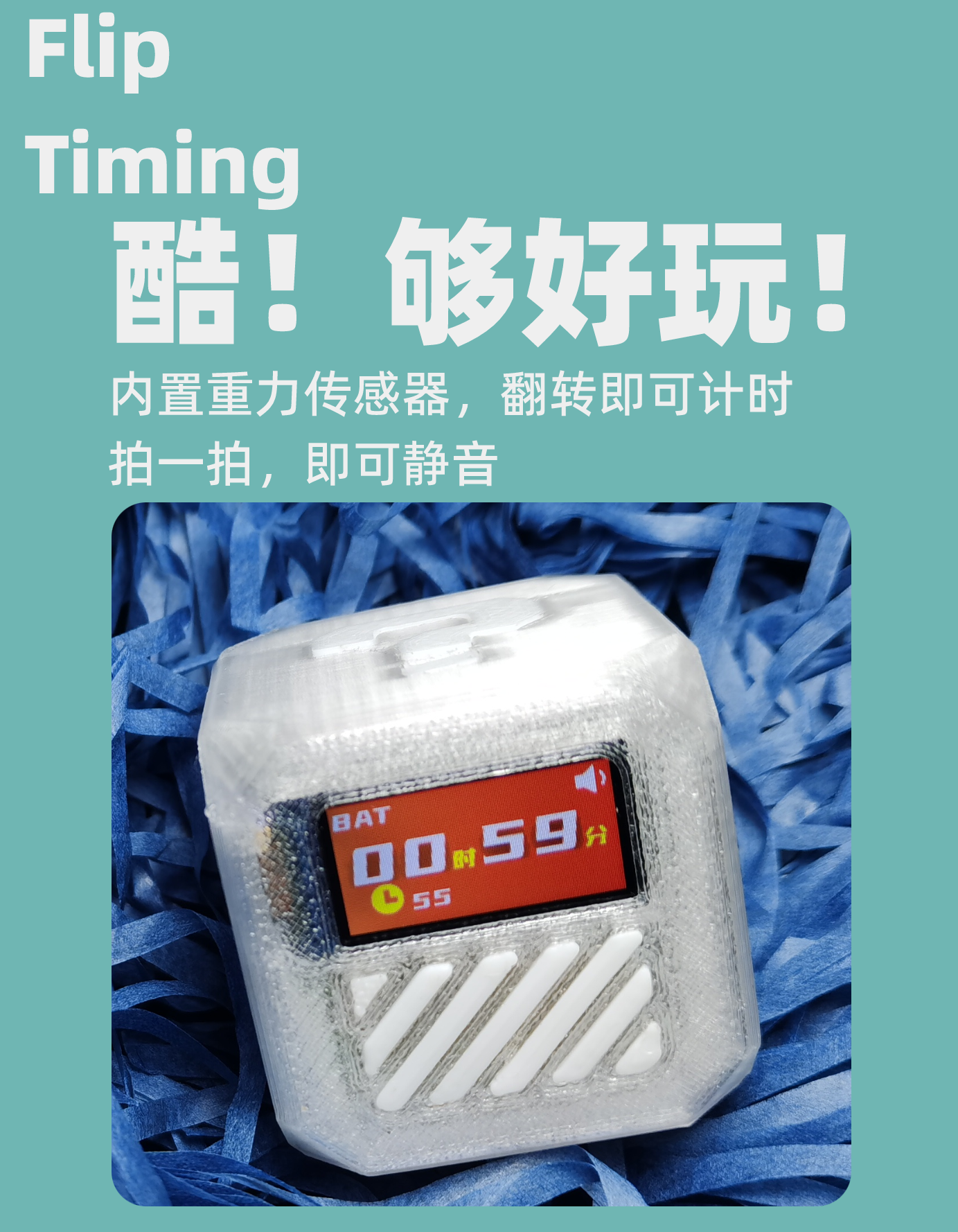
1) Rubik's Cube Timer: Through gravity sensing, 5/25/30/60 minute countdown functions are set for the four positions respectively. When the screen is facing up, the countdown pauses and resumes when the screen is facing down. When the position changes, the countdown restarts. When the countdown ends, RGB, vibration and buzzer are used to indicate that the countdown has ended. Tapping can switch between silent and vibration reminders.
2) Pomodoro Timer: Times according to the Pomodoro Technique. (Incomplete)
3) Countdown: The countdown length can be customized in units of minutes.
4) Upward Timer: Different countdown styles are displayed when the screen is placed in the four directions. The countdown stops when the screen is facing up.
2. IoT Clock, Fan Counter, Thermometer
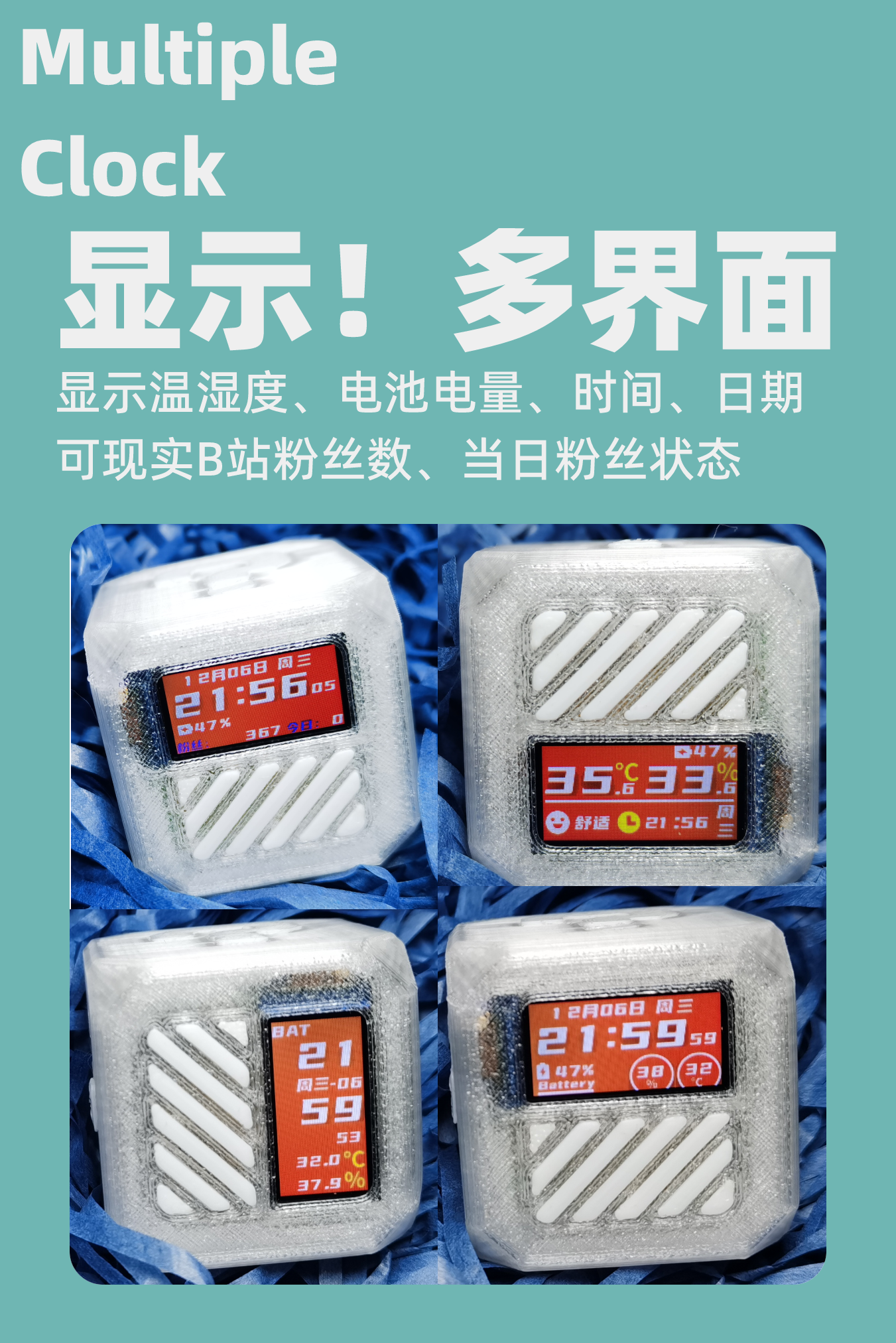
1) Bilibili Fans (Networked): Monitors the number of Bilibili fans in real time. It can display the current number of fans and the increase or decrease of fans in the day; when the number of fans increases, the buzzer sounds for one second; when the number of fans decreases, the buzzer sounds three times.
2) Regular Clock (Offline): After powering on and connecting to the network, it automatically disconnects after obtaining the network time. Offline mode increases battery life by half.
3) Temperature and Humidity Meter: External temperature and humidity sensor reduces the impact of the temperature chamber on the temperature.
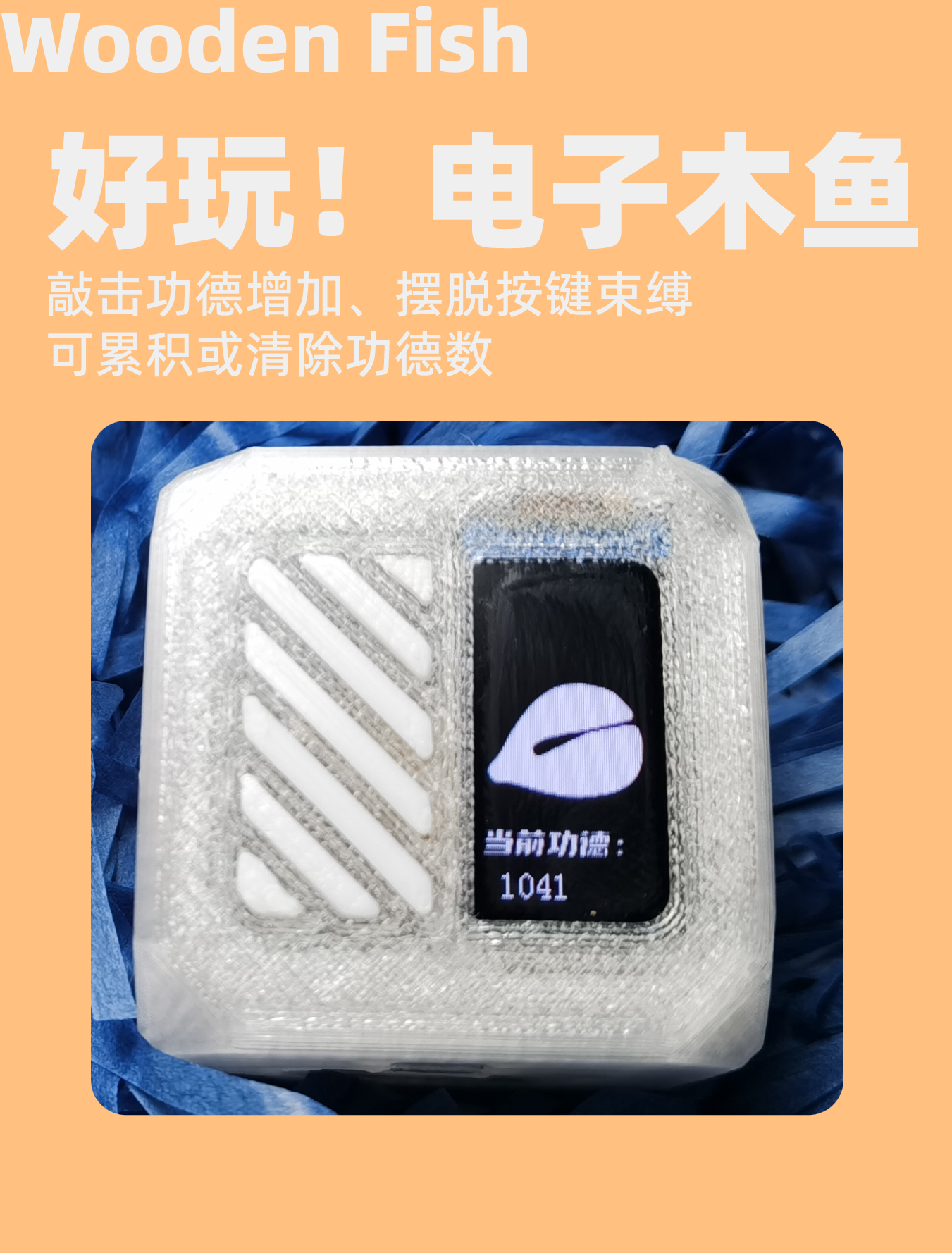
3. Electronic Wooden Fish
1) Zeroing: Can reset the current merit points to zero, saves the function after power failure, and can accumulate.
2) Accumulation: Can be tapped with an object or hand. Each tap increases merit by 1.
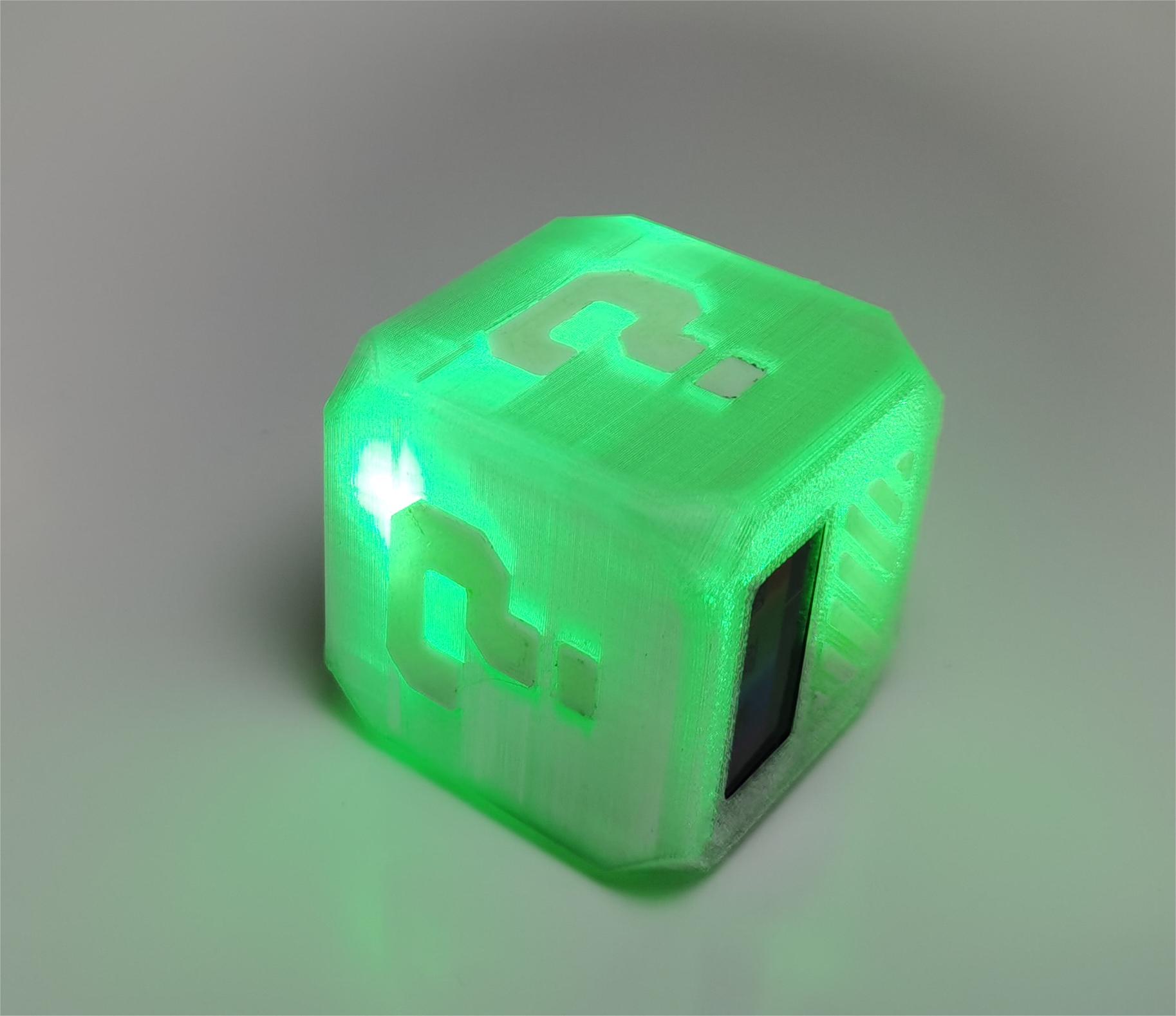
4. Full-Color Night Light
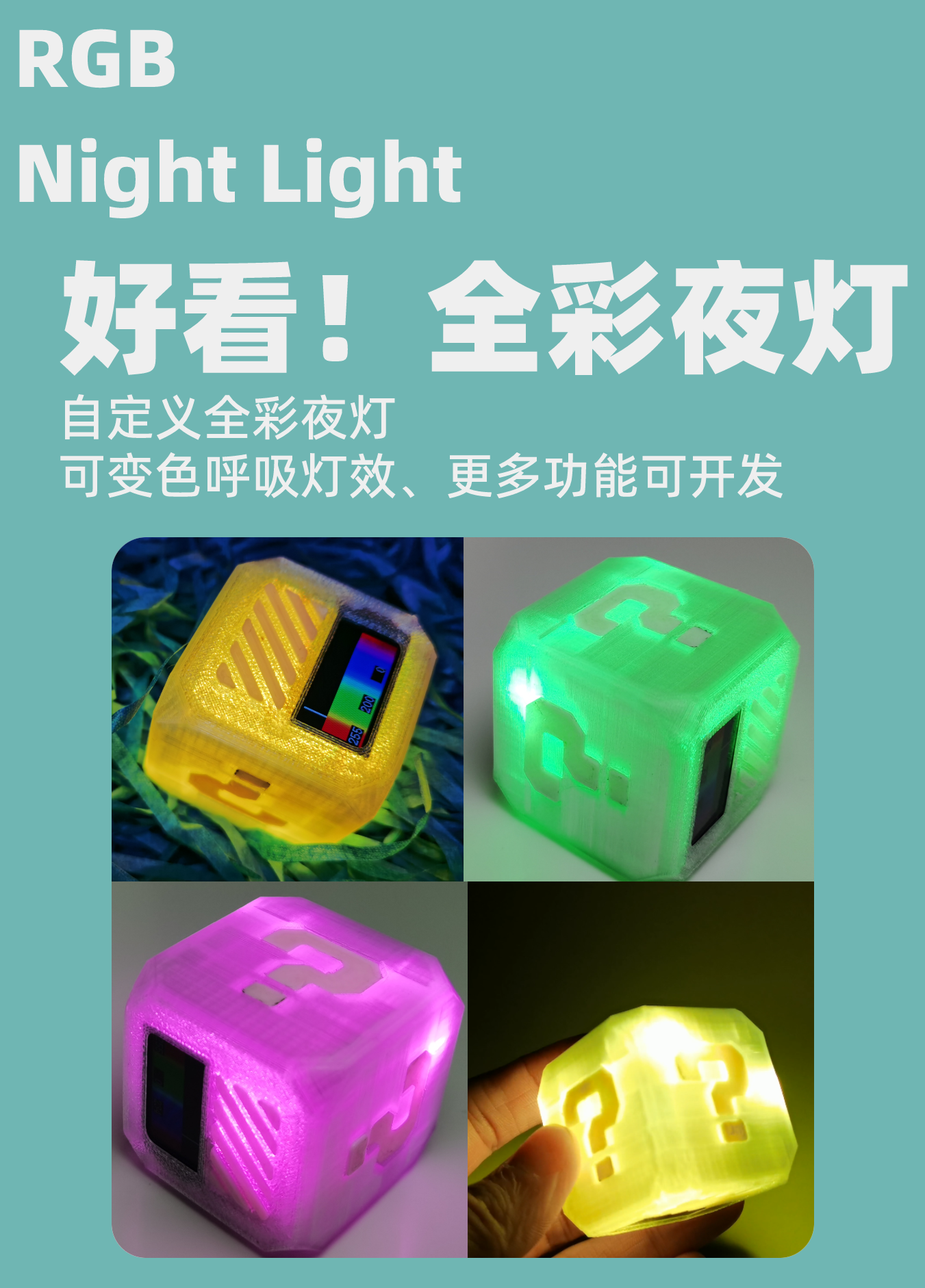
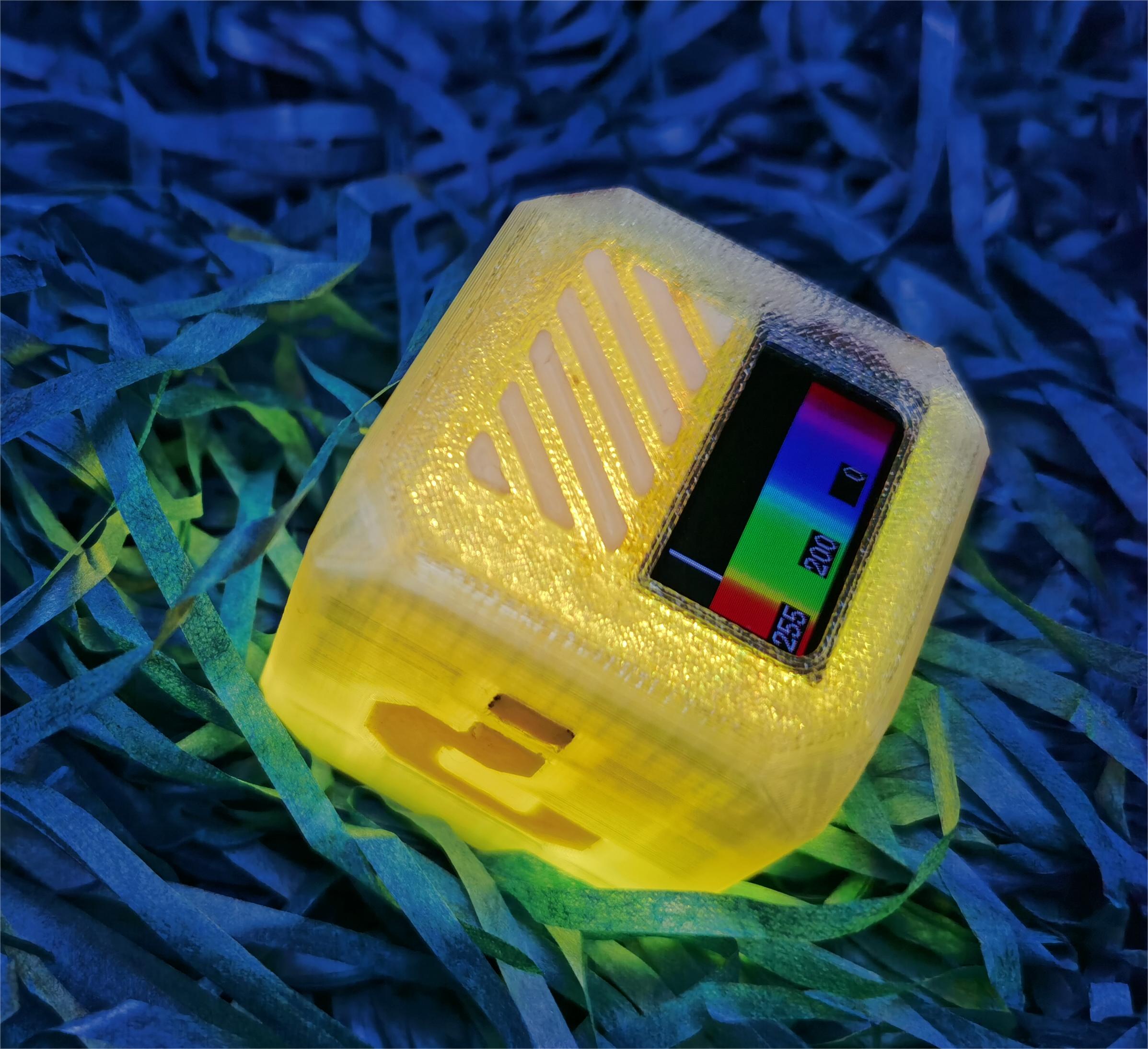
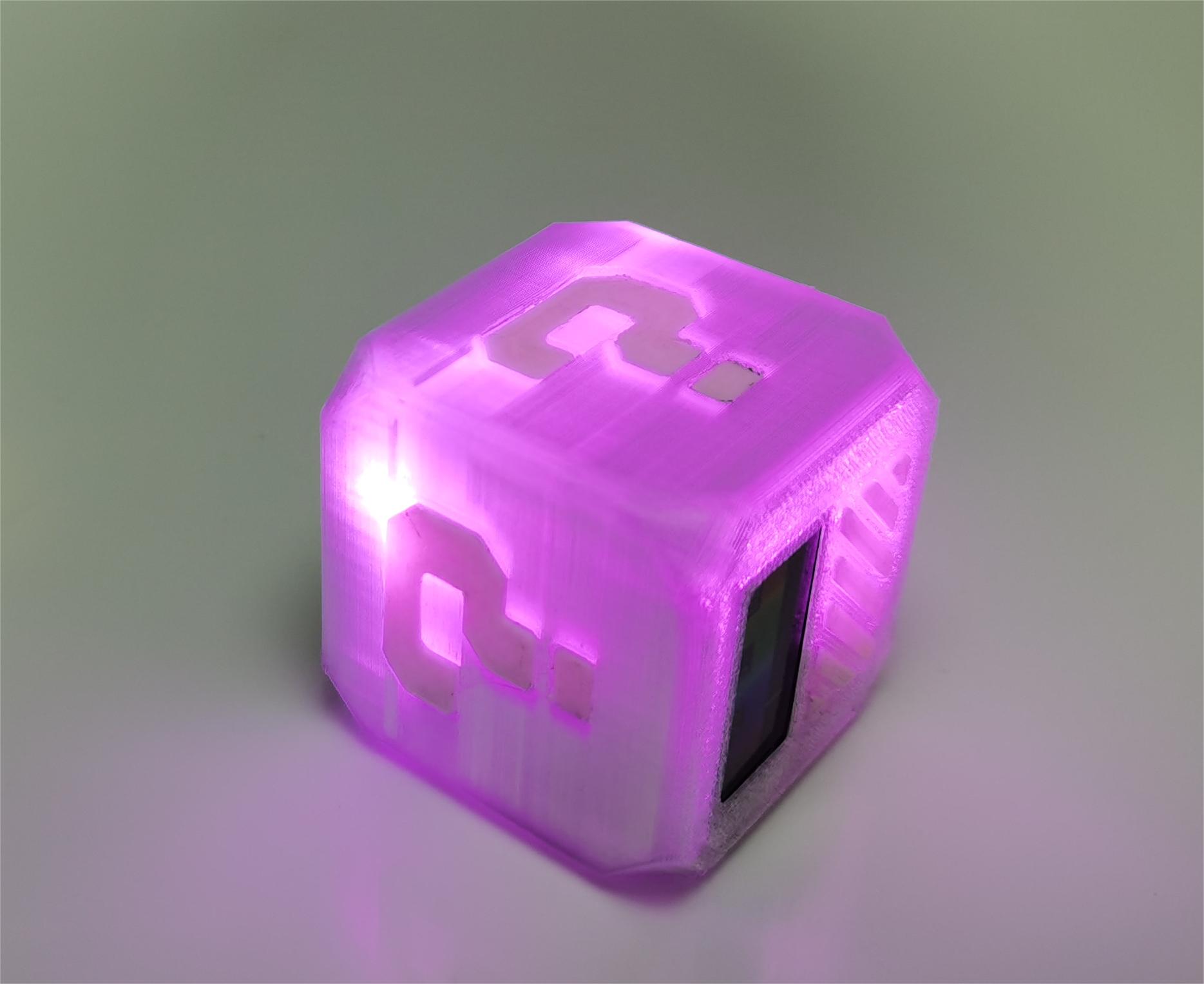
1) Simulated Scenes: Breathing light, flame, lightning, gradient color, etc. (Currently incomplete, gradually improved)
2) HSL Mode: Intuitively modify HSL value (not yet complete) and RGB control, built-in 3RGB.
5. Magnetic Back Cover
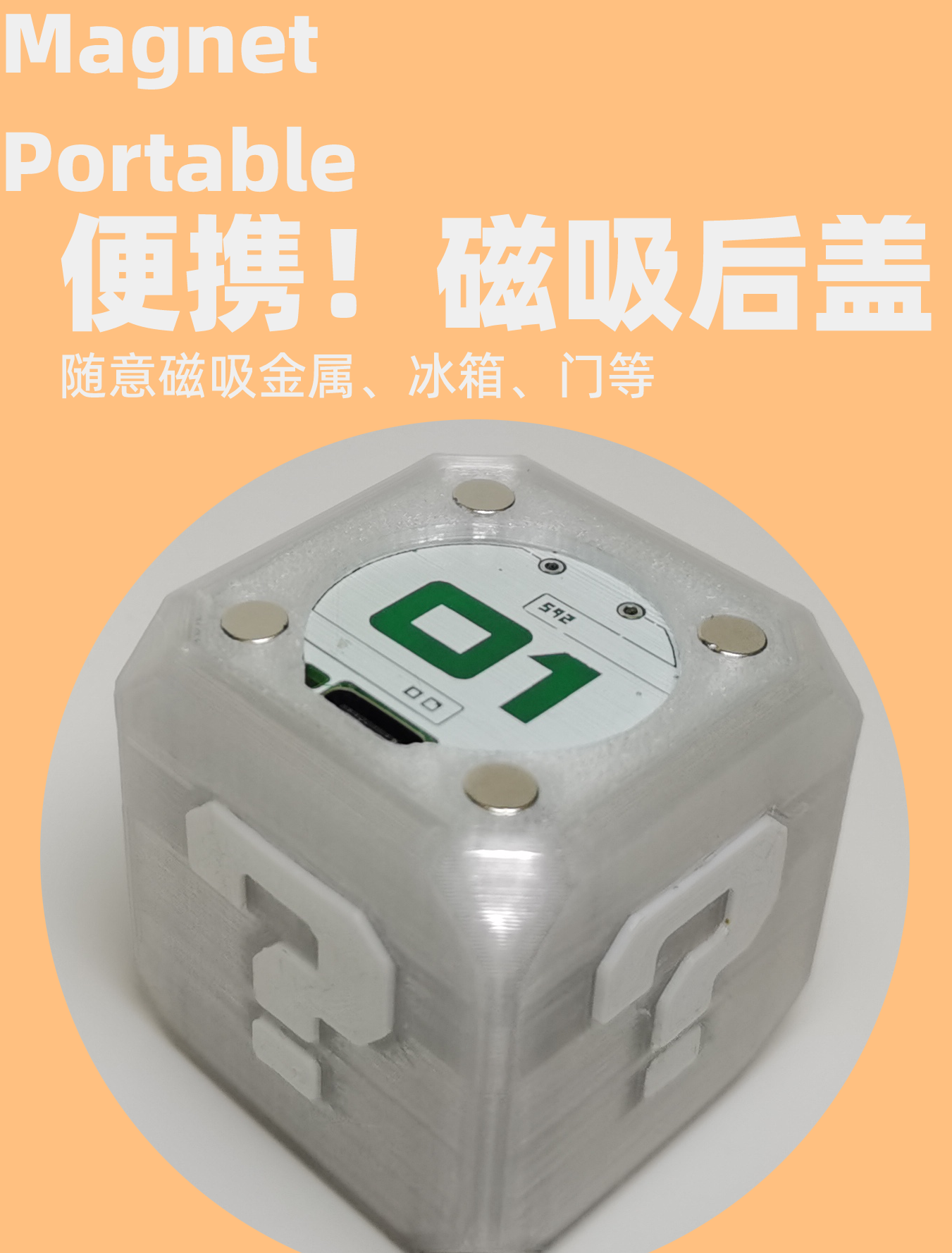
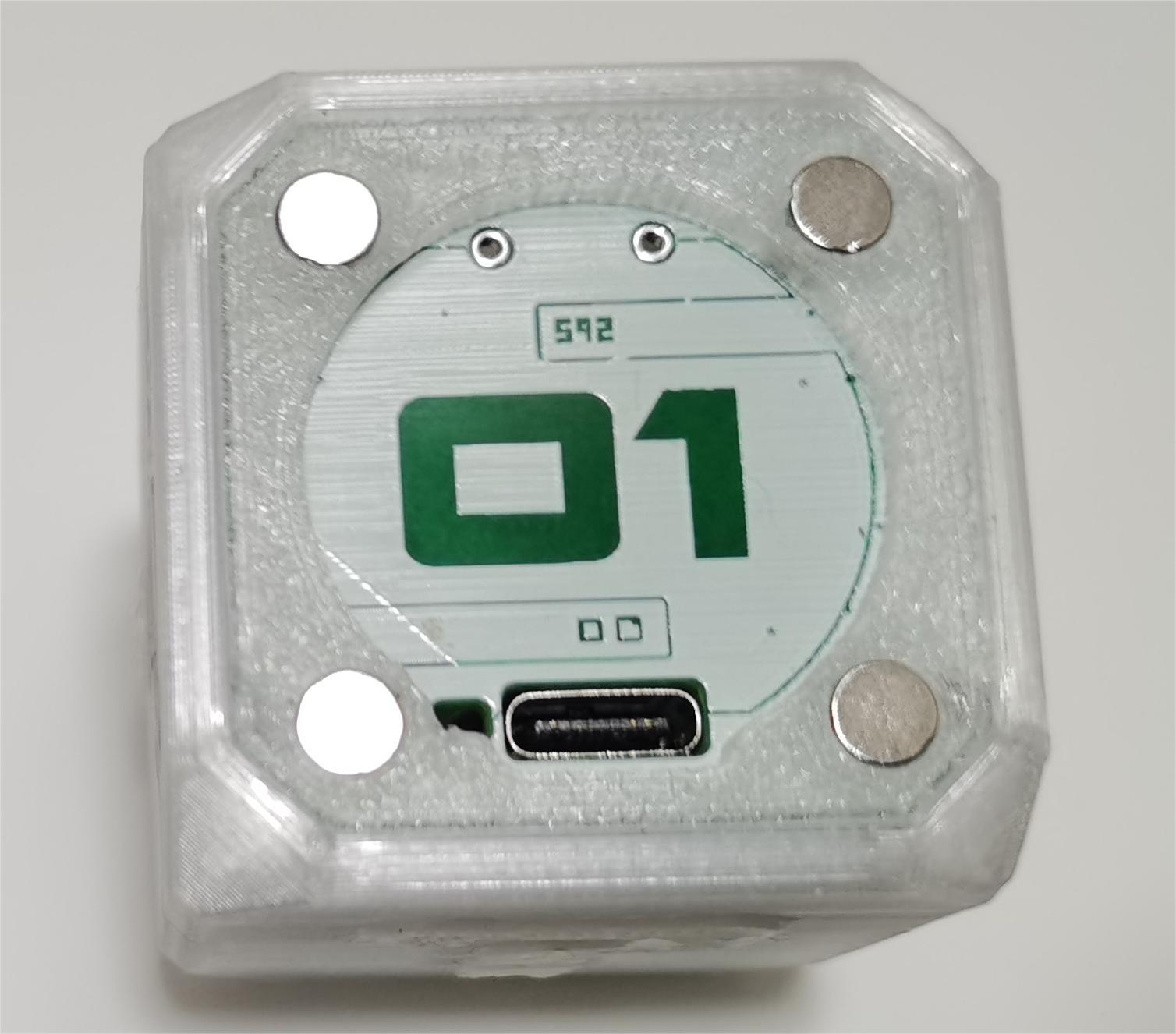
1) Free Attachment: 4 strong magnets embedded on the back can attach to metal such as refrigerators and doors.
6. Settings (Image not updated)
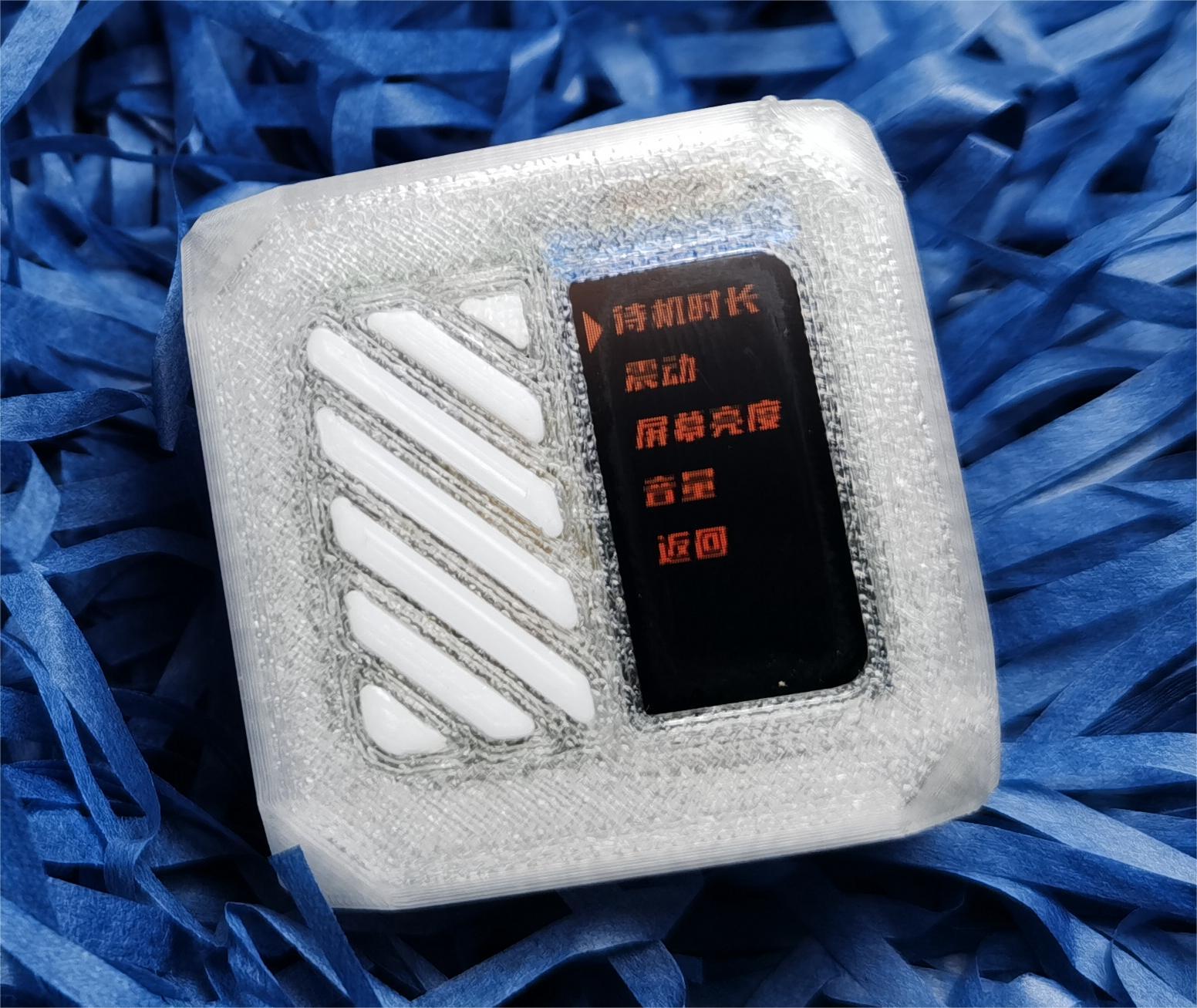
1) Standby Time: Set standby time. Automatically shuts down when stationary except for some functions.
2) Vibration: Vibration intensity can be set from 0-100%.
3) Screen Brightness: Adjustable brightness range from 0-100%.
4) Volume: Adjustable buzzer volume from 0-100%.
5) Network Pairing: Allows setting whether to enter network pairing upon startup. 6
) Factory Reset: Restores factory settings.
7. Other (Images not updated)
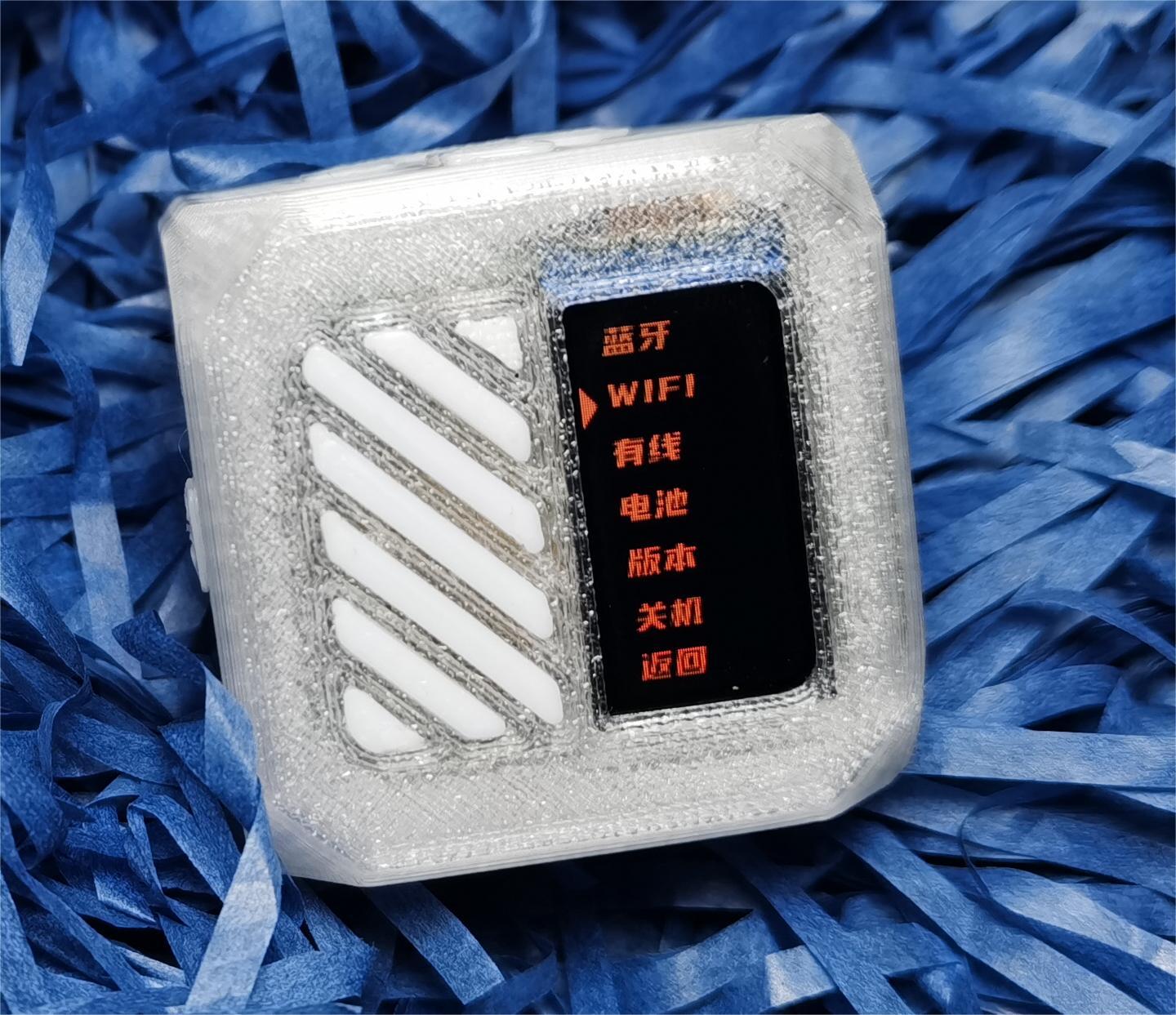
1) Computer Monitor: Real-time monitoring of computer CPU, hard drive, RAM, etc. (Requires a host computer)
2) Vibration Alarm: Sets trigger values; an alarm light is activated after the upper limit is reached. (To be improved)
3) Serial Port Transparent Transmission: Displays serial port printouts. (To be improved)
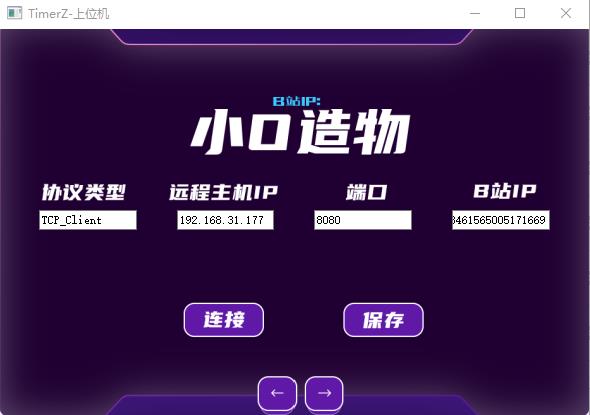
4) Wi-Fi: Real-time monitoring of temperature and humidity, fan count, battery voltage and power, and binding of personal Bilibili IP via a host computer.
5) Bluetooth: (Not improved)
6) Battery: View current battery level and voltage.
7) Version: View hardware and software versions.
8. The host computer
can bind a personal Bilibili IP and view system parameters. More functions are not yet complete.
III. Hardware and Schematic Diagram
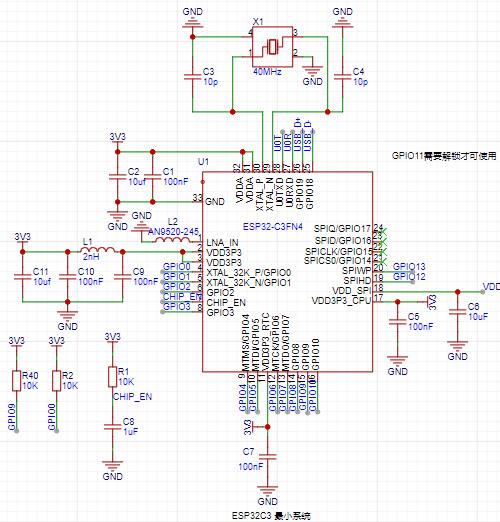
1. Main Control Circuit The main
control uses ESP32C3FN4, which integrates USB, Wi-Fi, and Bluetooth. The circuit is simple, requiring only a 40MHz crystal oscillator and simple resistors and capacitors to work. It eliminates the need for a CH340 serial port module and can realize USB download and serial communication, making it suitable as a beginner development board.
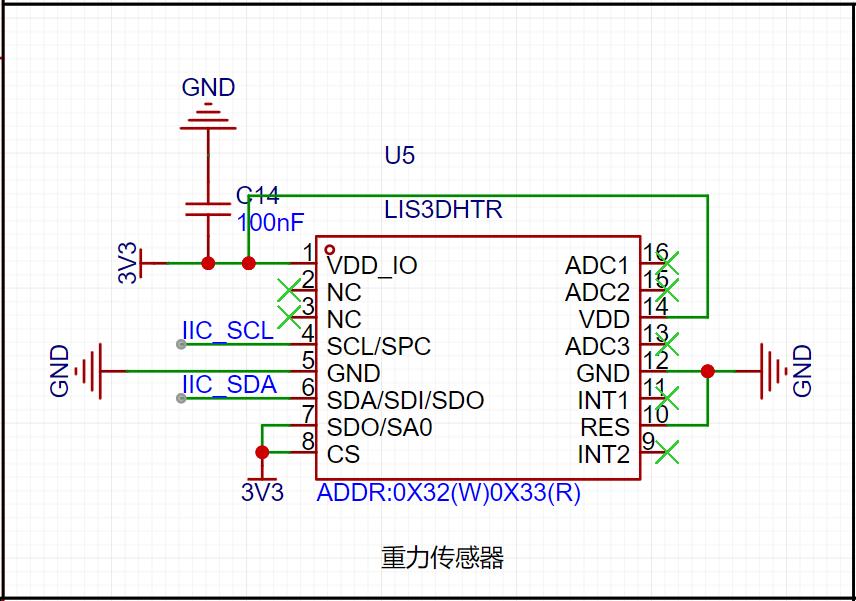
2. Gravity Sensor Circuit
Uses LIS3DH Solution The chip is inexpensive, costing only 2 yuan. The function is simple to implement and supports IIC communication.
3. RGB Night Light Circuit
Uses 3 WS2812 programmable RGB chips, which can achieve full color.
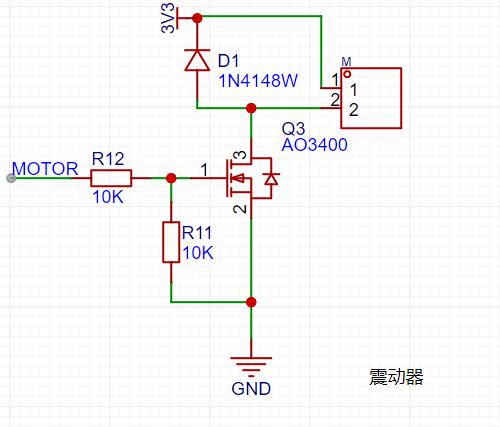
4. Vibration and Buzzer Circuit
Uses a passive buzzer (inexpensive). The wristband is similar to a vibration motor, indirectly driven by PWM-controlled MOSFETs.
5. Screen Driver
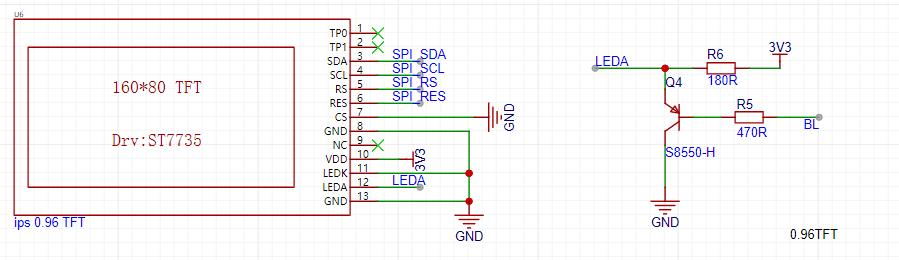
A 0.96-inch TFT color screen uses the popular ST7735 solution from Taobao, with software SPI driver instead of hardware SPI driver. The driving speed is slightly slower, and the hardware avoids large-area UI refreshes during UI design.
6. Touch Buttons and Power On/Off Circuit
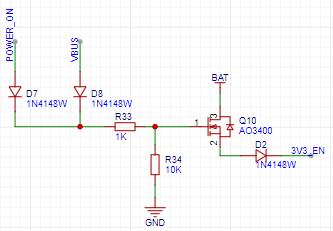
1) Power On Function: Considering product integrity, no buttons are added during the design phase. Power on and off are achieved via touch. Power On Methods: 1. Tap and release: Offline mode 2. Tap for 1 second: Network mode 3. Automatic power on when plugged in (can be deleted if not needed).
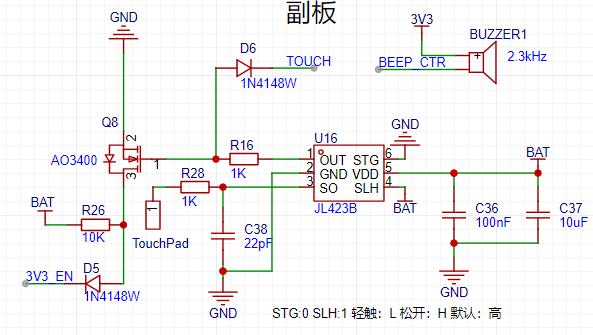
2) Touch Buttons: 1. Back: With the screen facing up, tap for 1 second to return to the previous menu. 2. Power Off: Long press for 3 seconds to power off.
7. Lithium Battery Charging Circuit
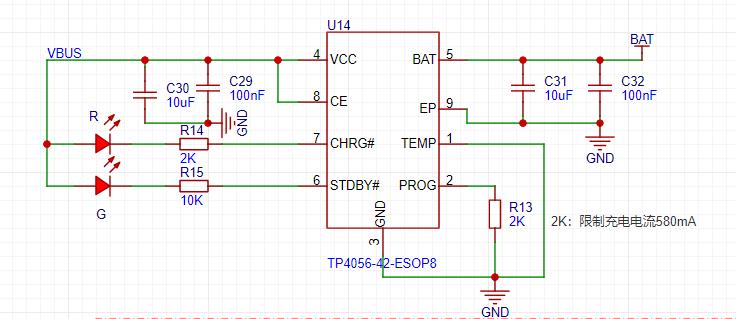
Generally, soft-pack lithium batteries have built-in overcurrent, overcharge, and over-dielectric protection circuit boards, so a discharge circuit is not needed in the design. Of course, the onboard circuit can monitor the battery voltage. When the voltage is less than 3.5V, it will indicate low battery and automatically power off. The charging circuit still uses the popular TP4056 solution with a maximum charging current of 1A. Considering long-term battery use, R13 is modified to 2kΩ with a maximum current of 580mA. For details, please refer to the datasheet.
IV. Shell and Installation
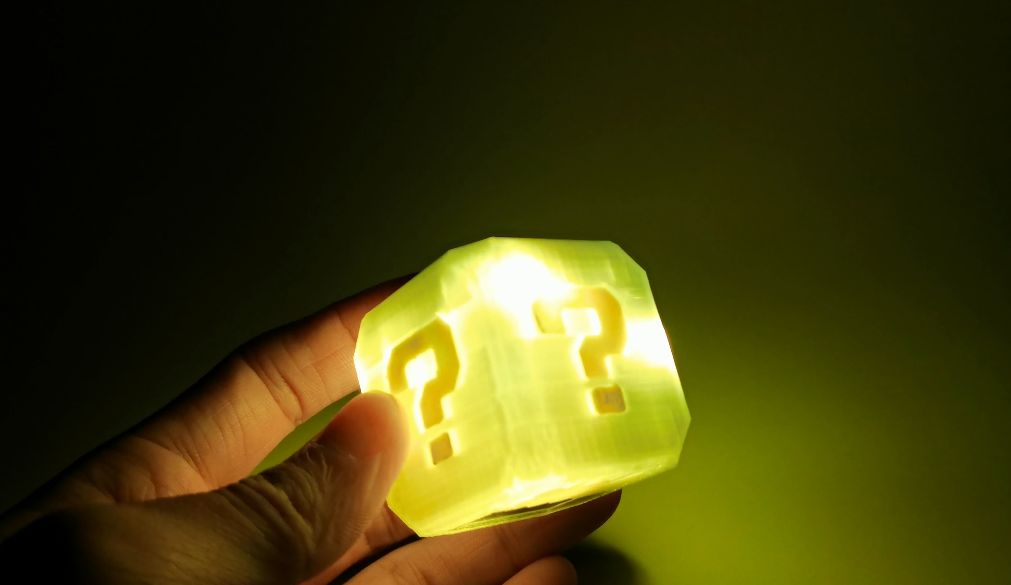
1. 3D Printing
I only have a self-assembled Big Fish CC FDM printer, which can only print in two colors separately and then glue them together.
2. Installation accessories
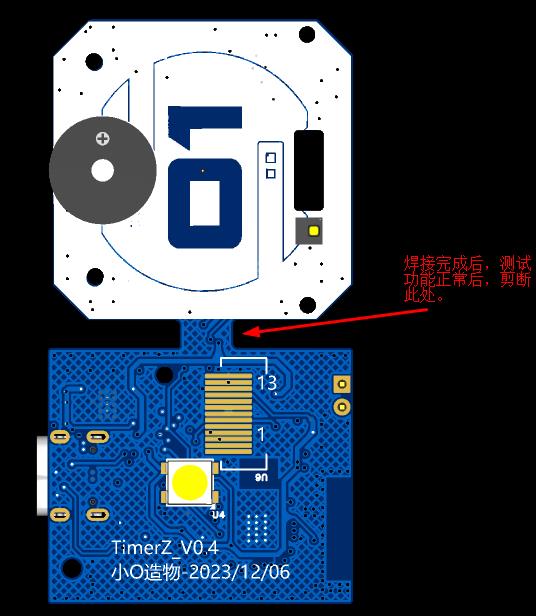
1) PCB: To save on JLCPCB printing, the main control board and touchpad are printed together. After receiving them, I cut them with pliers and connected them with an FPC cable.
2) Accessories: 4 x 10mm*1.5mm strong magnets, 4 x M1.6 screws.
V. Instructions for use and software burning
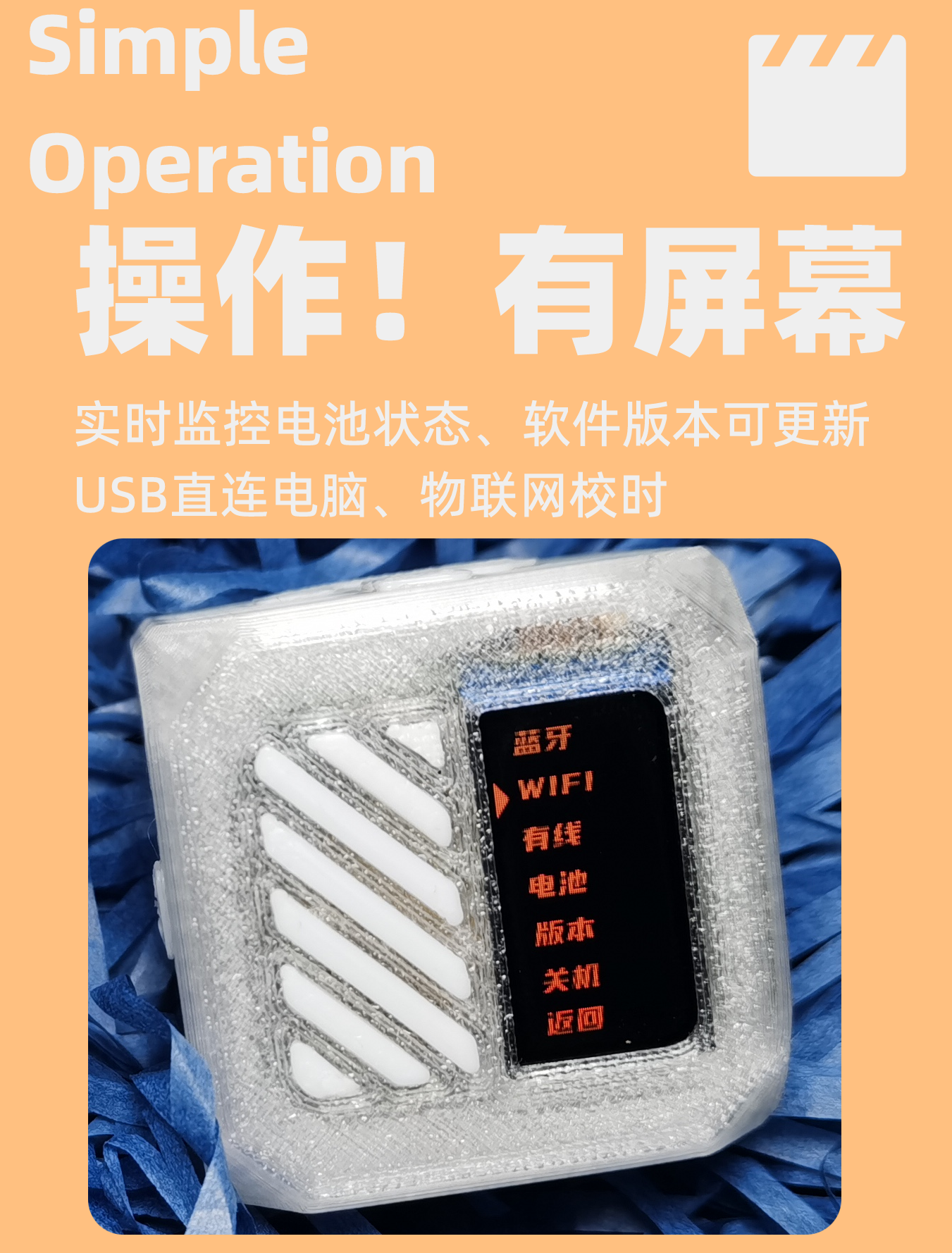
1. Interface operation
When operating the menu, keep the screen facing upwards.
1) Confirm: Tilt to the right.
2) Return: With the screen facing upwards, lightly touch "01" on the back for 1 second to return.
3) Up button: Tilt upwards.
4) Down button: Tilt downwards.
5) Power off: Long touch "01" for 3 seconds to power off.
2. Software burning
1) Software: flash_download_tool_3.9.2.exe
2) Steps: Set up as shown in the figure .
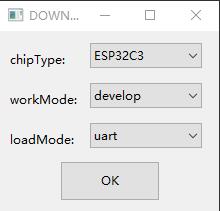
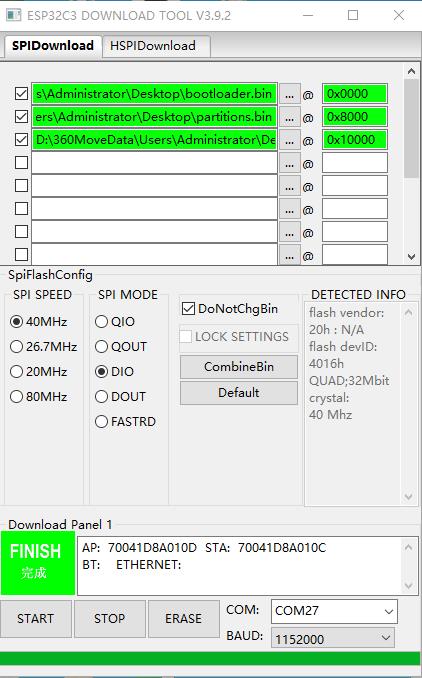
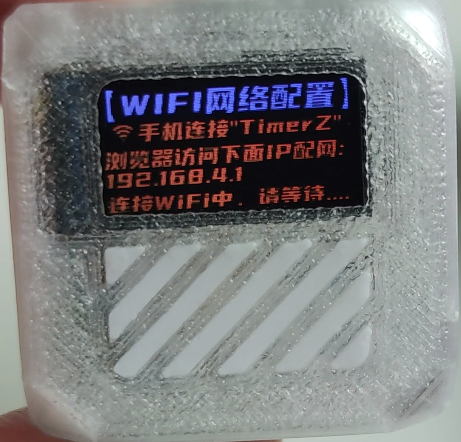
3. WIFI network configuration : Follow
the on-screen prompts step by step!
VI. Replica Notes
1. Commercial use is prohibited. This replica took over a month to create, which is quite an achievement. The source code is not yet open source; only the bin file is provided.
2. Both the main controller and Lis3dh use QFN packages. Beginners should proceed with caution, as poor soldering increases the risk of failure. The resistors and capacitors use 0402 packages.
VII. Function Demonstration
Click here to watch the Bilibili demo video.
Due to file size limitations on the open-source platform, please contact the Bilibili uploader via private message for the latest complete information!








 京公网安备 11010802033920号


 1N5239BRL