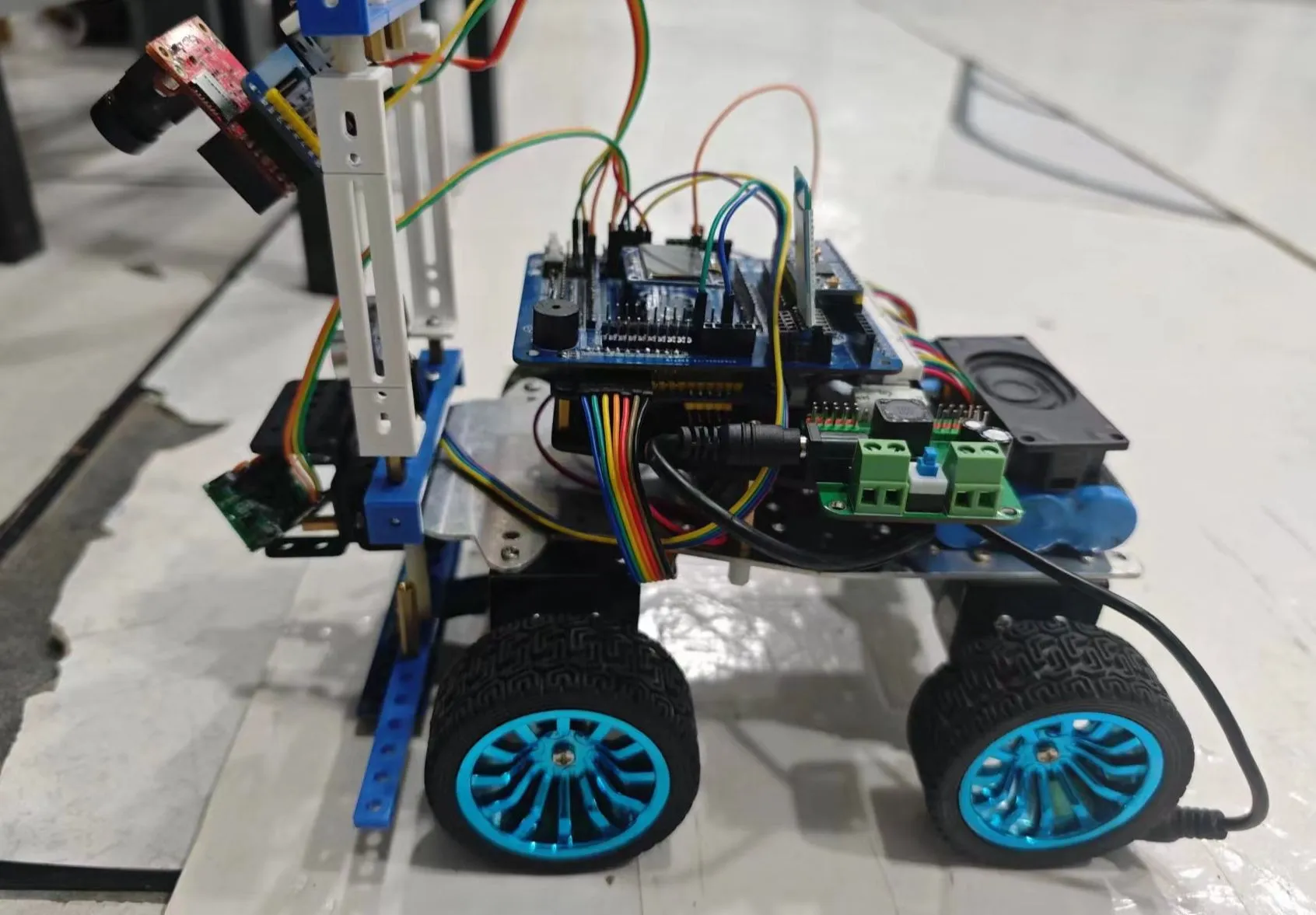
This project describes
a multi-functional intelligent car designed using the STM32F103ZET6 as the main control unit. It uses four TB6612 microcontrollers to drive four encoder motors and consists of five parts: a minimum system board, a function board, a button board, a step-down board, and an OpenMV adapter board. The project is licensed under CC-BY-NC 3.0. Please indicate the source when reprinting. Commercial use is prohibited.
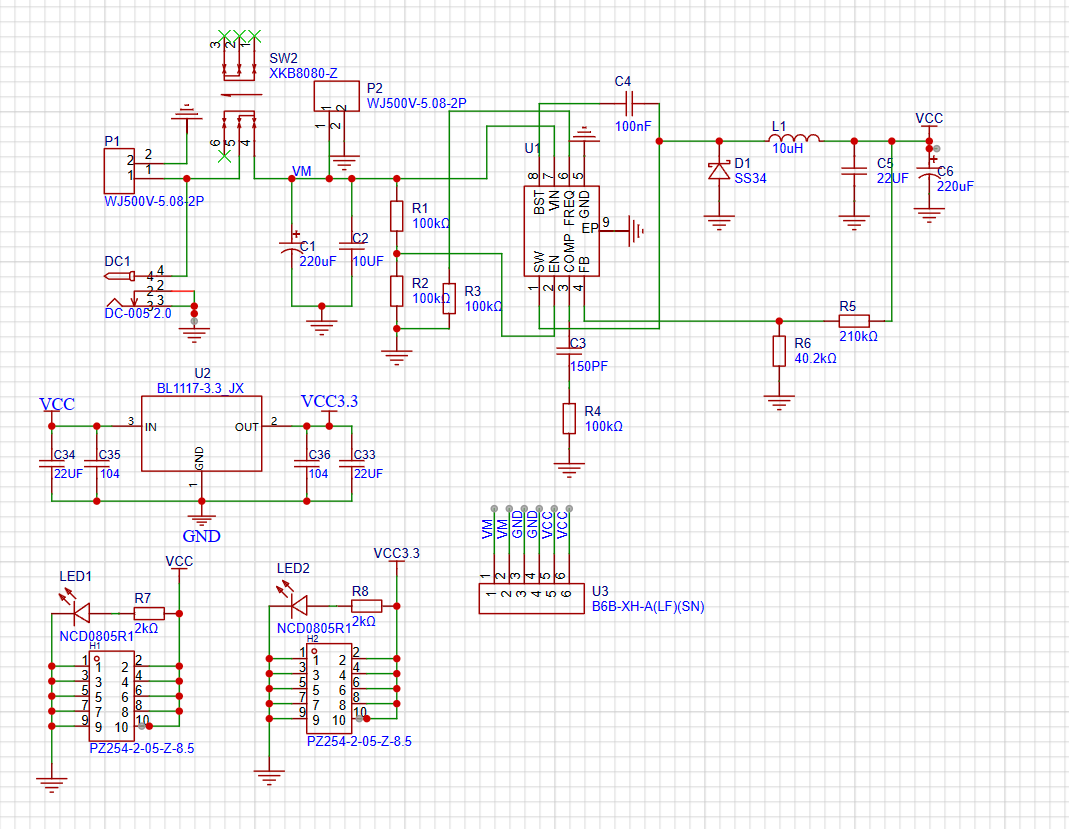
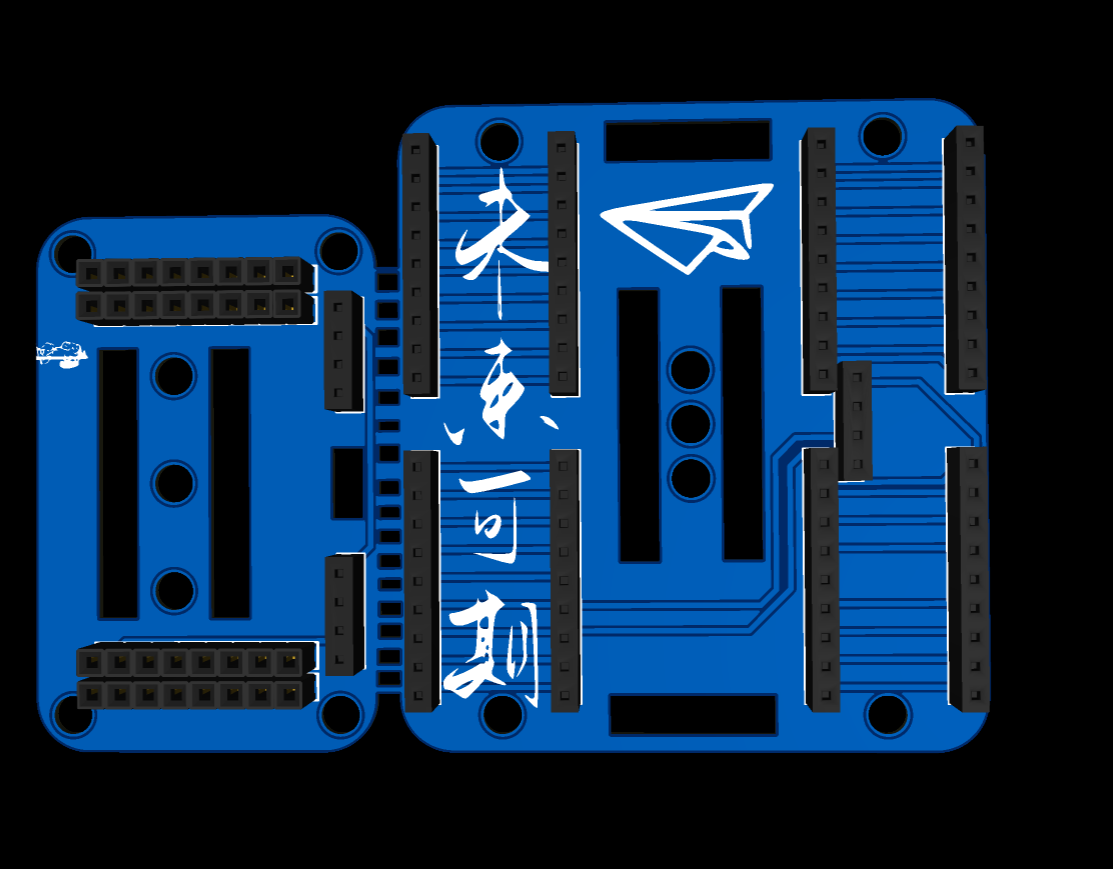
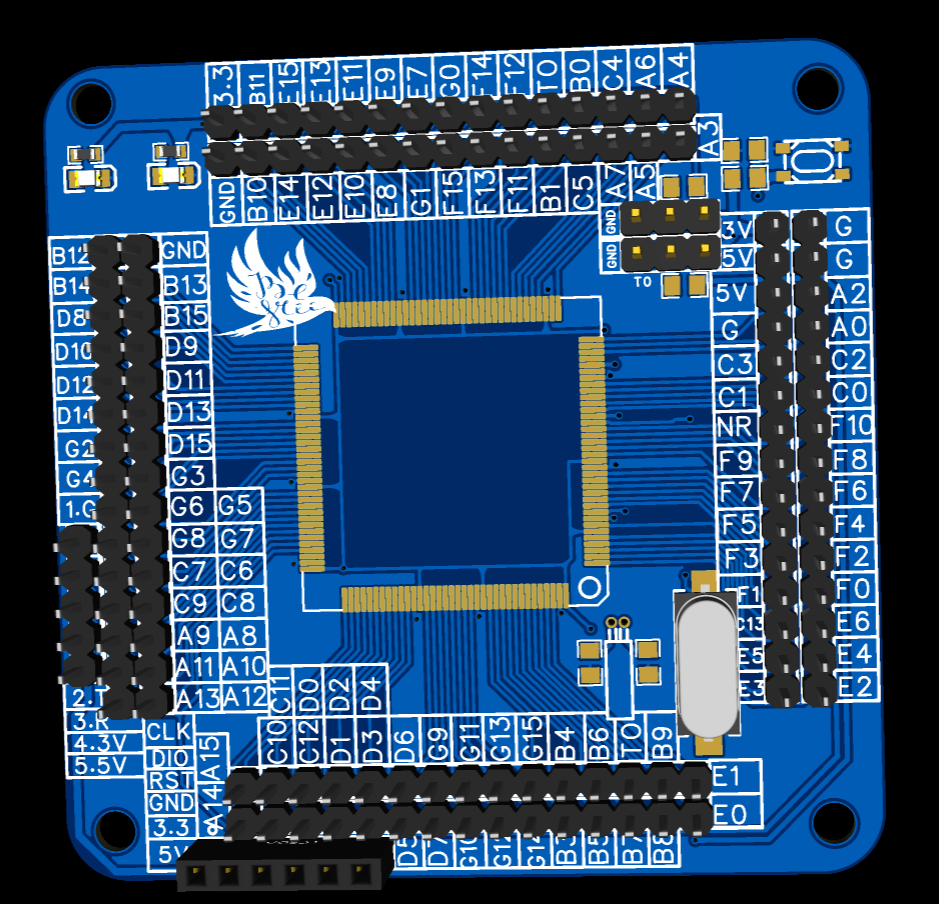
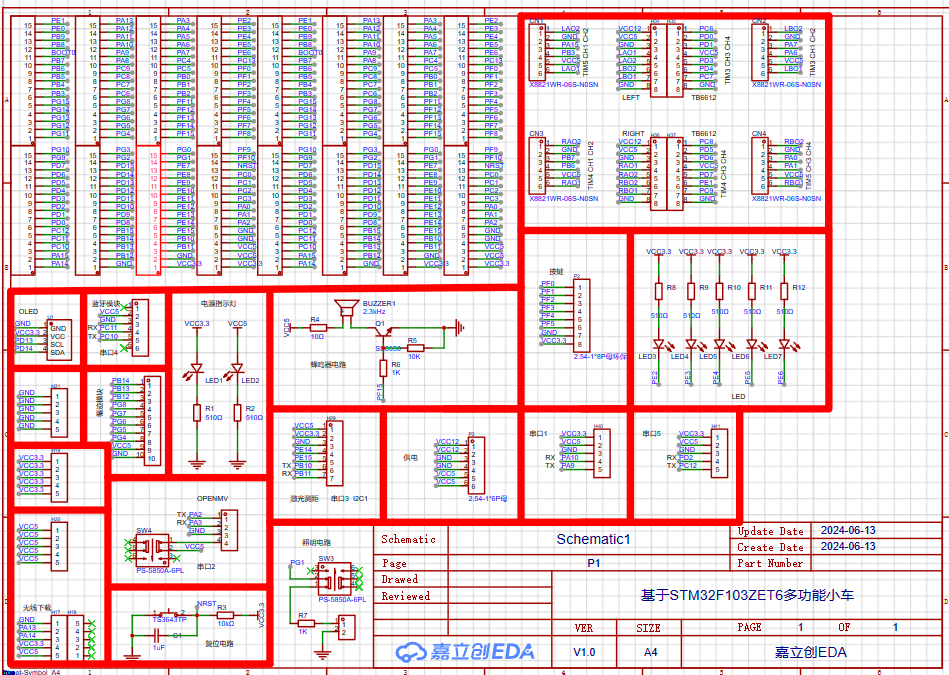
CC : Creative Commons License; BY: Attribution, you must give appropriate attribution, provide a link to this license, and indicate whether modifications were made (to the original work); NC: Non-Commercial, you may not use this work for commercial purposes. Project features include automatic line tracking, Bluetooth remote control, button control, unlimited download, PID control of four encoder motors, OpenMV QR code recognition, and access to all serial ports for easy use. This project is being publicly released for the first time and is the author's original work. The project has not won any awards in other competitions. Design Principles : 1. Power Supply Circuit Design: The power supply uses a 12V battery. An MP1584EN is used in the step-down circuit to reduce the 12V to 5V, and then an AMS1117-3.3 chip is used to reduce the 5V to 3.3V. The step-down board uses two power supply interfaces: a DC interface and a terminal block interface, facilitating the connection of various power sources. 12V, 5V, and 3.3V are all brought out for convenient use. 2. Vision Module Adapter and Fixing Board: The adapter board uses a panel layout. The left side is the OPENMV adapter board, and the right side is the K210 adapter board, facilitating device fixation. 3. STM32F103ZET6 Minimum System Board: The minimum system board uses the STM32F103ZET6 as the main controller. It has both 5V and 3.3V power interfaces, and provides an STLINK download port and one serial port for debugging. A BOOT interface is also provided, along with 5V and 3.3V power indicator lights. 4. The STM32F103ZET6 function cover features 8 tracking interfaces via connectors and two TB6612 motor driver module interfaces for easy installation. OLED pins, wireless download pins, and button pins are provided via headers. A self-locking switch controls the lighting circuit and the OpenMV power switch. A buzzer circuit is built using an SS8050 transistor, and all serial ports are provided for easy use. A row of LEDs is also provided for status display. The software implements automatic tracking and Bluetooth remote control, using a PID algorithm to optimize and stabilize the tracking. OpenMV is used to scan QR codes to identify object information. Demonstration videos and code files are attached.












