I wanted to make a different kind of QSL card with a clock on a PCBA
. I need to constantly check the time during communication, and considering my previous experience with ESP8266 NTP clocks, I designed this.
Regarding the color silkscreen
verification board, to save costs, the size is kept under 1010 pixels and color silkscreening is not used. The original design was approximately 11.575cm in size, and 5 pieces cost 35 yuan.
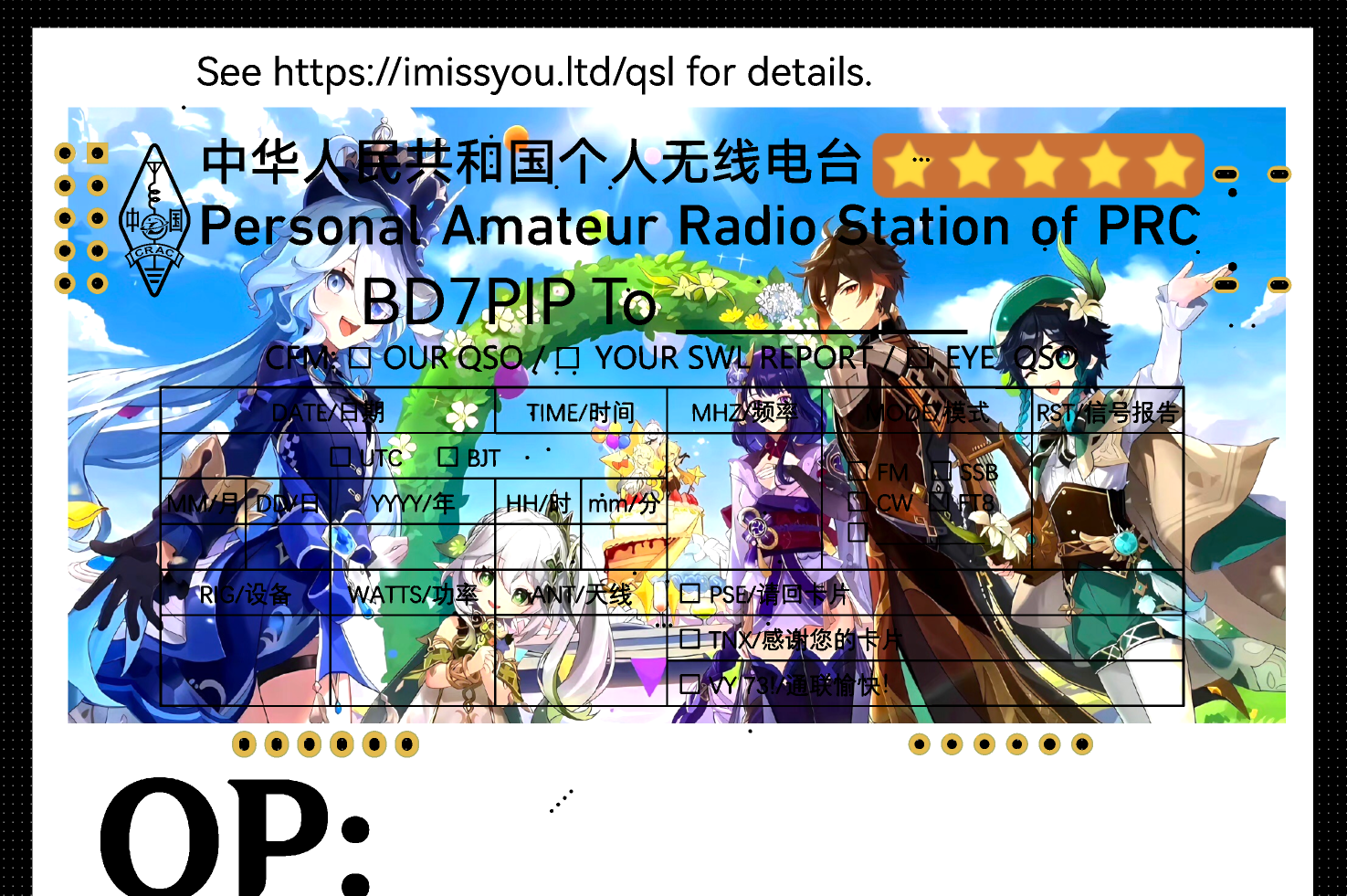
The hardware and software are now working, and we can order the color silkscreened version.
Why does your QSL card design have a gold 5★?
Because I have many card designs. Based on the content of the image, the ease of obtaining (or rather, photographing? For an artist, it's probably the effort spent creating the image?), and the cost (for example, PCBAs are much more expensive than postcards), they are divided into four-star, limited five-star, and permanent five-star.
Communicating with me can get you virtual items… well, I don't know how to name them, but they're basically the kind used for gacha pulls. One of these items can be used for one "card draw" (i.e., applying for a QSL card, or simply a card lottery).
A maximum of 20 draws will yield one five-star card (commonly known as a small pity). If the five-star card obtained this time is not the current featured card, the next five-star card obtained will definitely be the current featured card (commonly known as a large pity).
(For details, please see my webpage or QRZ.com)
The PCB design uses a standard QSL card for
the back
silkscreen. Single-sided layout, no protrusions in the card area. The signature area is between the pins of the digital display. (Wow, OP!)
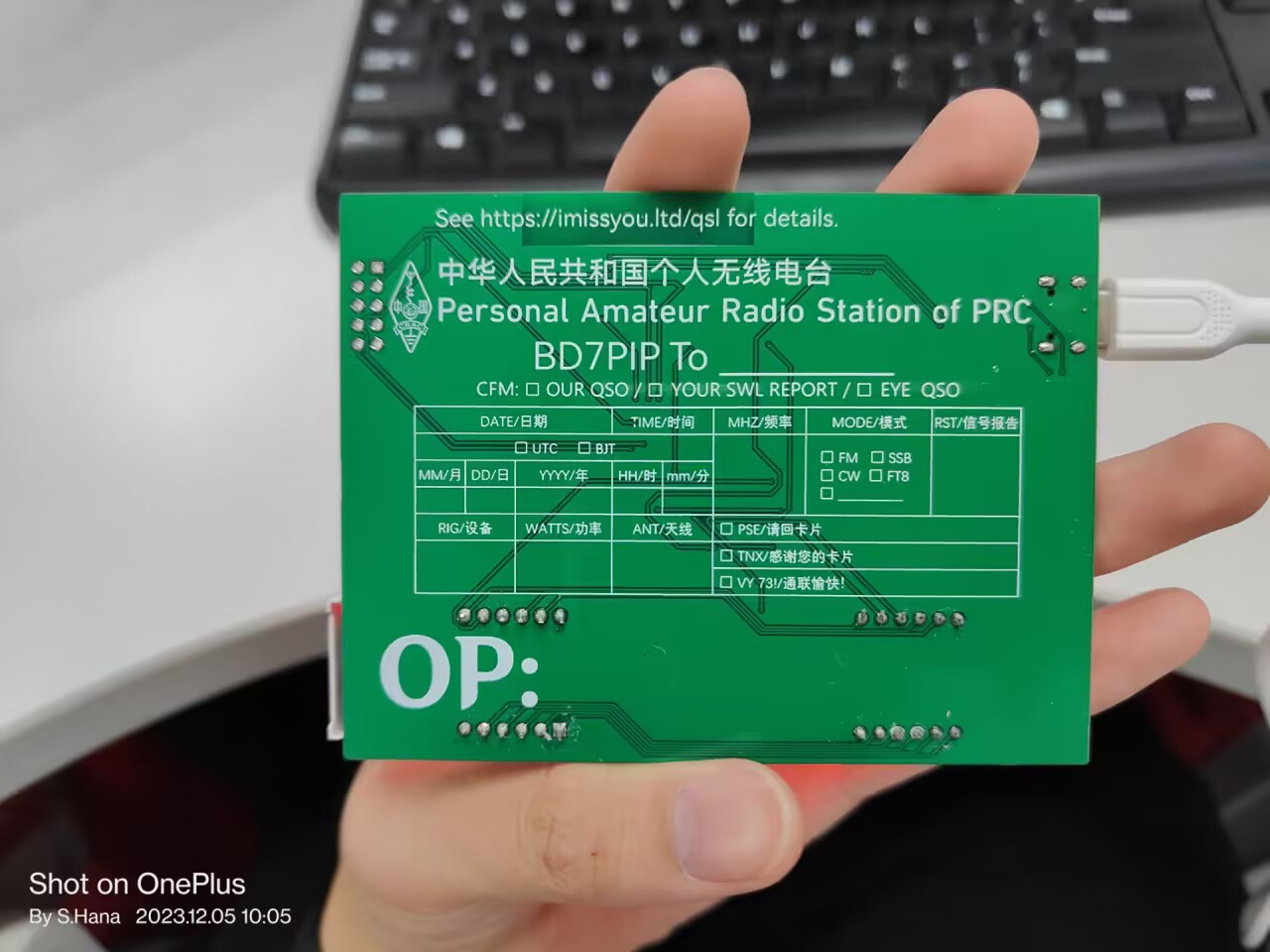
Standard silkscreen is white, and the card content is filled in with an oil-based pen. Green (or according to your own solder mask color) background, white template, black handwritten text.
White solder mask requires black silkscreen, resulting in white background with black text, regardless of whether the content is printed or handwritten.
Order Notes: Whether you choose color silkscreen or standard silkscreen, the content will display correctly. However, it is recommended to use light-colored solder mask, such as green and white.
The front features
two 0.56-inch digital tubes. One is a standard one, used to display the date (currently MMDD), and the other is the one with a colon indicating the clock, used to display the time.
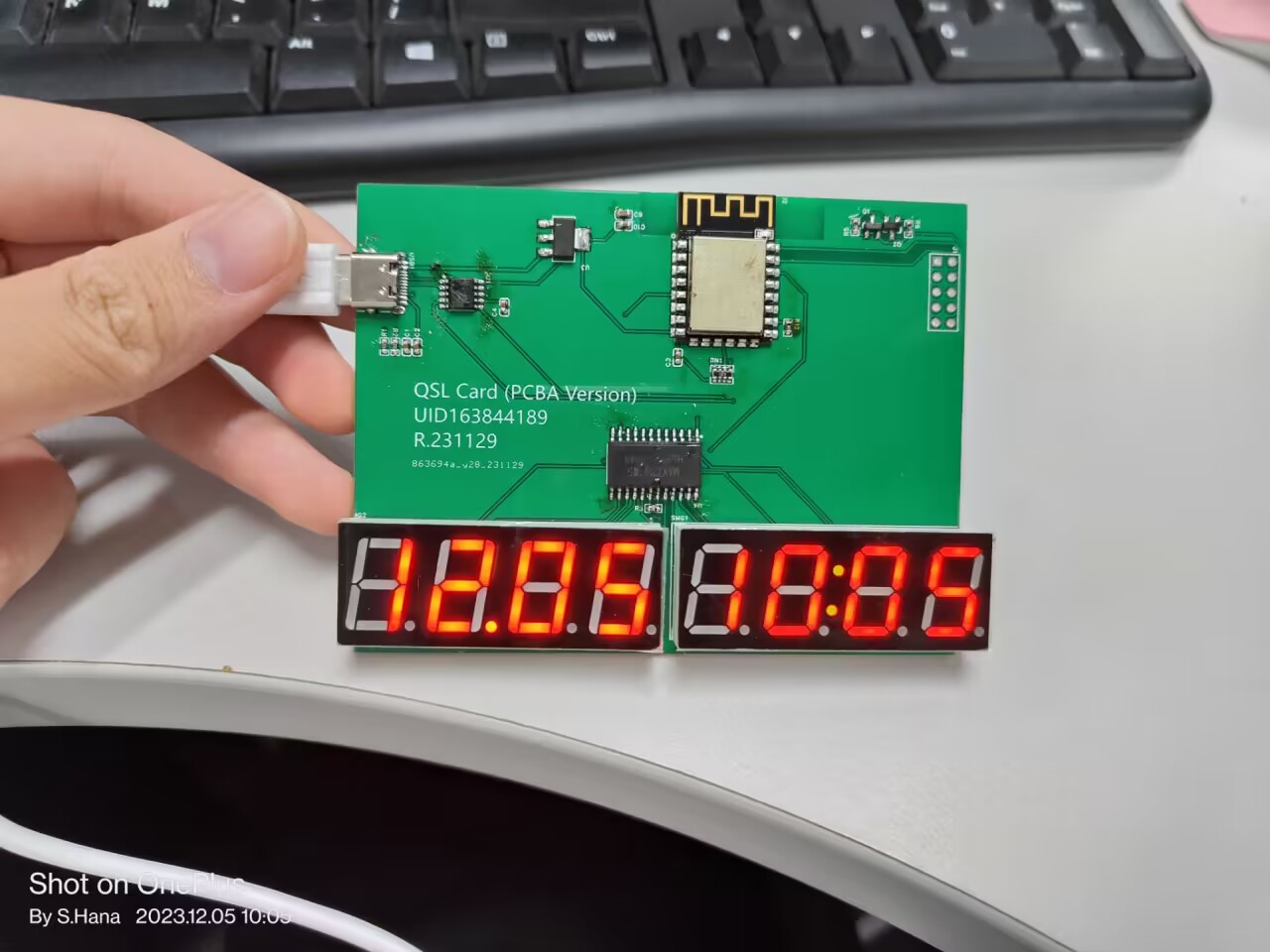
For some reason, photos of the digital tubes taken with a mobile phone look terrible, even though they appear normal to the naked eye.
An NFC tag can be attached to the right digital tube; scanning it will directly launch Genshin Impact. If the card is shipped overseas, the tag content will be changed to launch the international version of Genshin Impact. The entire project
, excluding the PCBA,
includes the PCBA, code, and a contact webpage.
The support page for this card
(not finished yet, will be updated later)
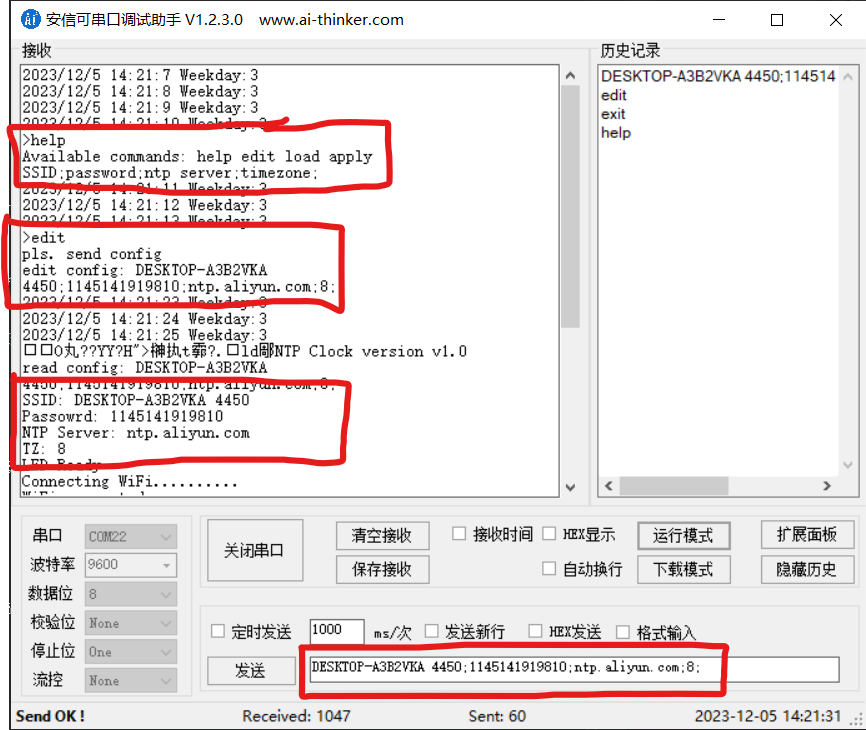
is coded on GitHub, but generally, you don't need to compile the code yourself; you can just tune parameters via serial port, which is convenient for users who don't know how to code or don't have the necessary environment.
Currently, parameter tuning is possible via serial port; the tuning method will be put on the webpage later. Essentially, entering the `help` command in the serial port will display all available commands and the configuration file format; it's somewhat similar to a shell scripting interface, in my opinion. (When I first wrote this part of the parameter tuning code, I wanted to use a shell-like approach.)
More...?
I posted it in the group, and the members immediately started brainstorming. Some suggested solar panels, some suggested e-ink screens, but I think that having an onboard lithium battery would be the simplest (and most practical) solution. So, maybe in my next life, I'll add a lithium battery charging and discharging circuit to this thing.








 京公网安备 11010802033920号


 3333LX103J6



