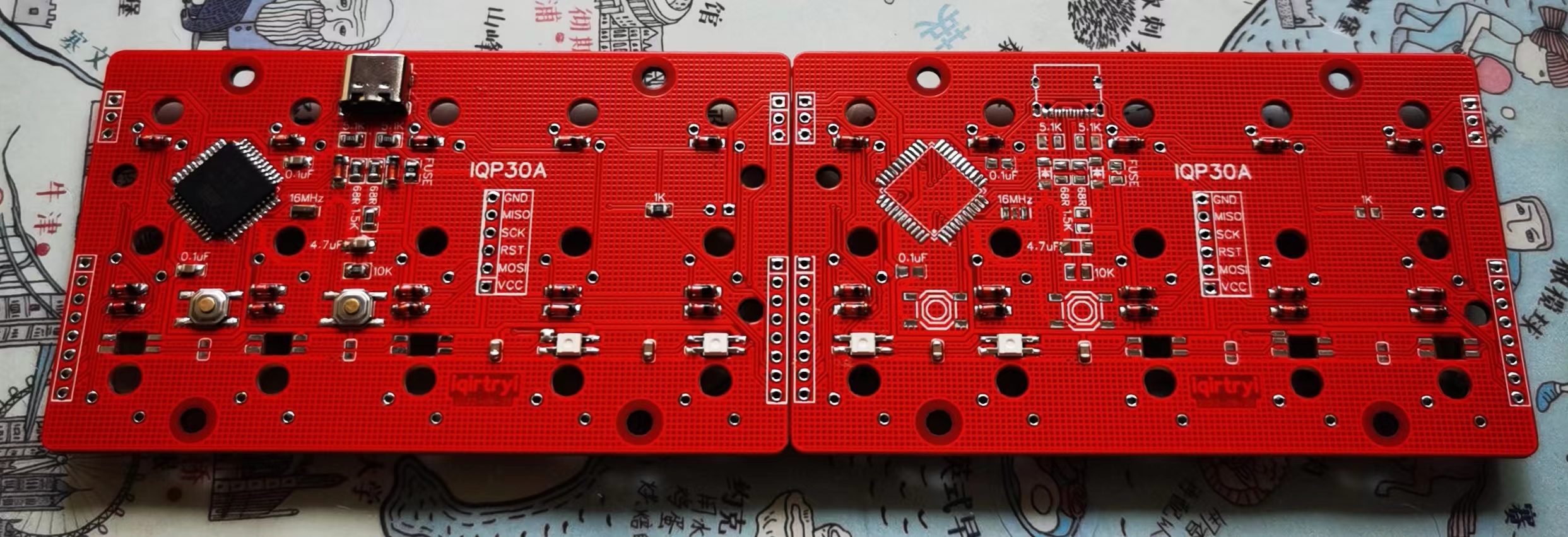
 Utilizing the ATmega32a onboard main controller, supporting QMK, it is inexpensive and simple.
 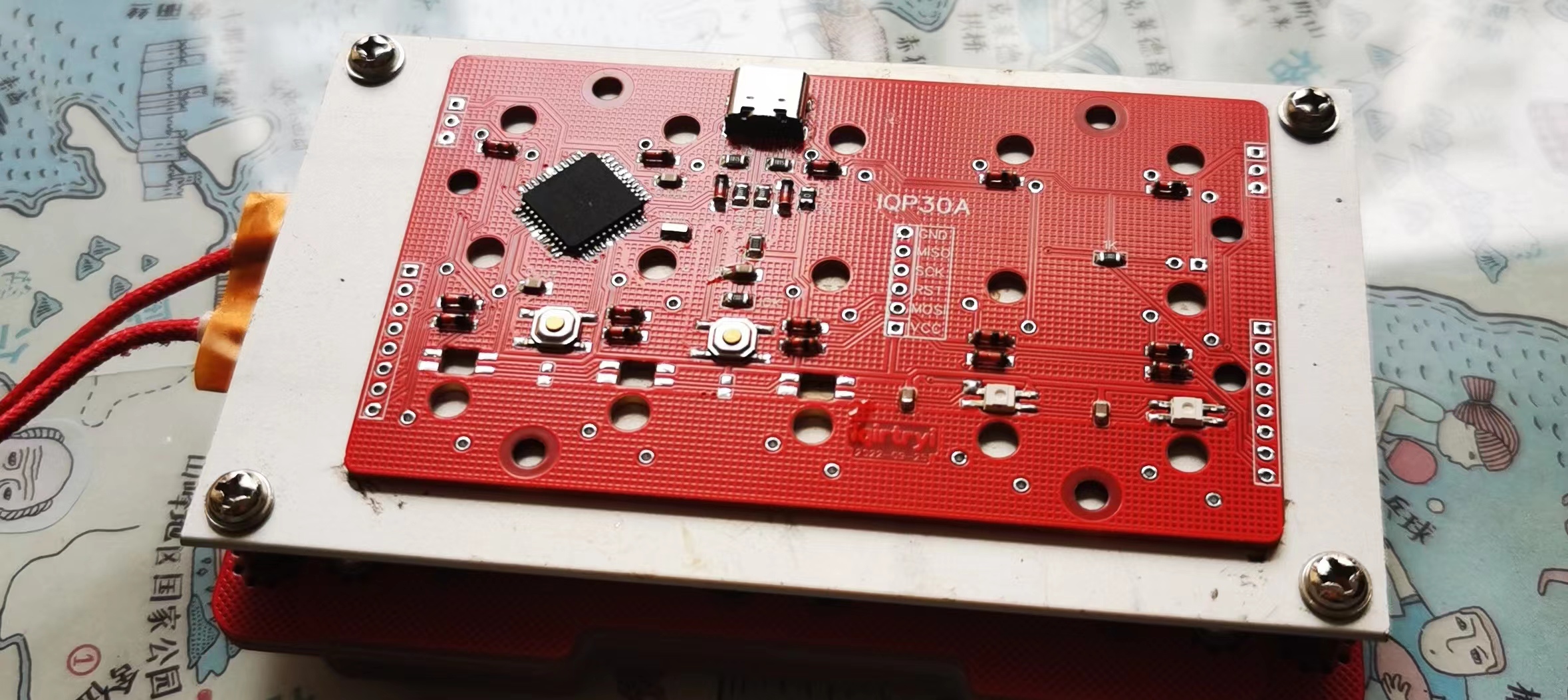 Using my soldering tool, I soldered all the surface-mount components at once. For detailed instructions, see: https://oshwhub.com/iqirtryi/heater-holder.
 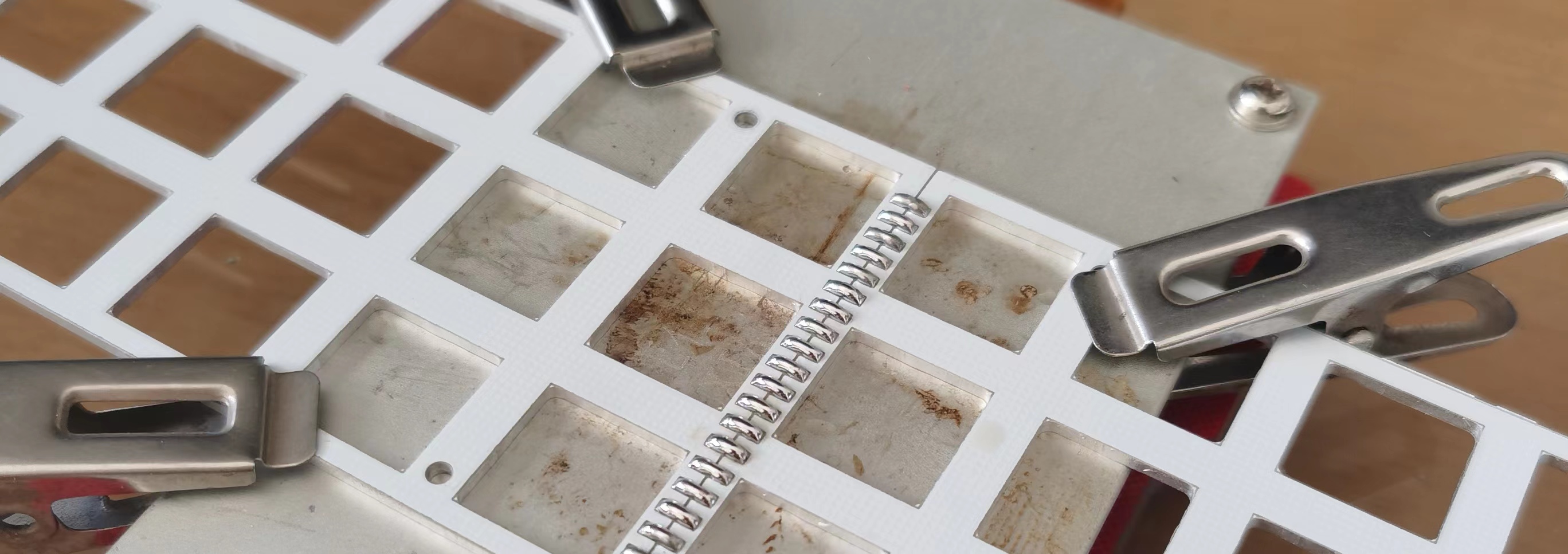 Then, I used my soldering tool again to connect the positioning plate and base plate made of aluminum substrate: align – clamp – apply a small piece of solder to each joint – heat – melt and wet – done.
 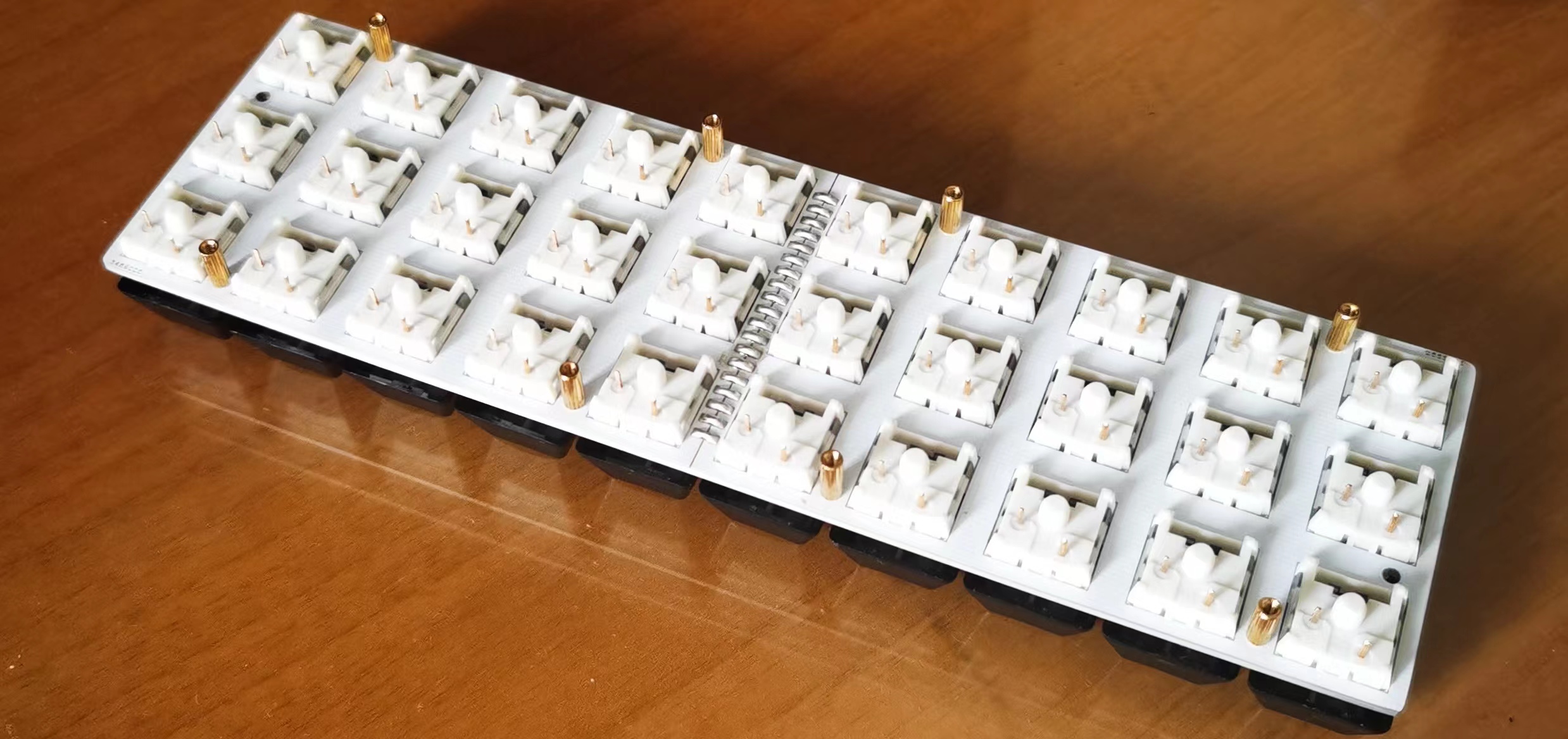 I then clipped the key switches onto the positioning plate and secured the copper pillars with screws.
 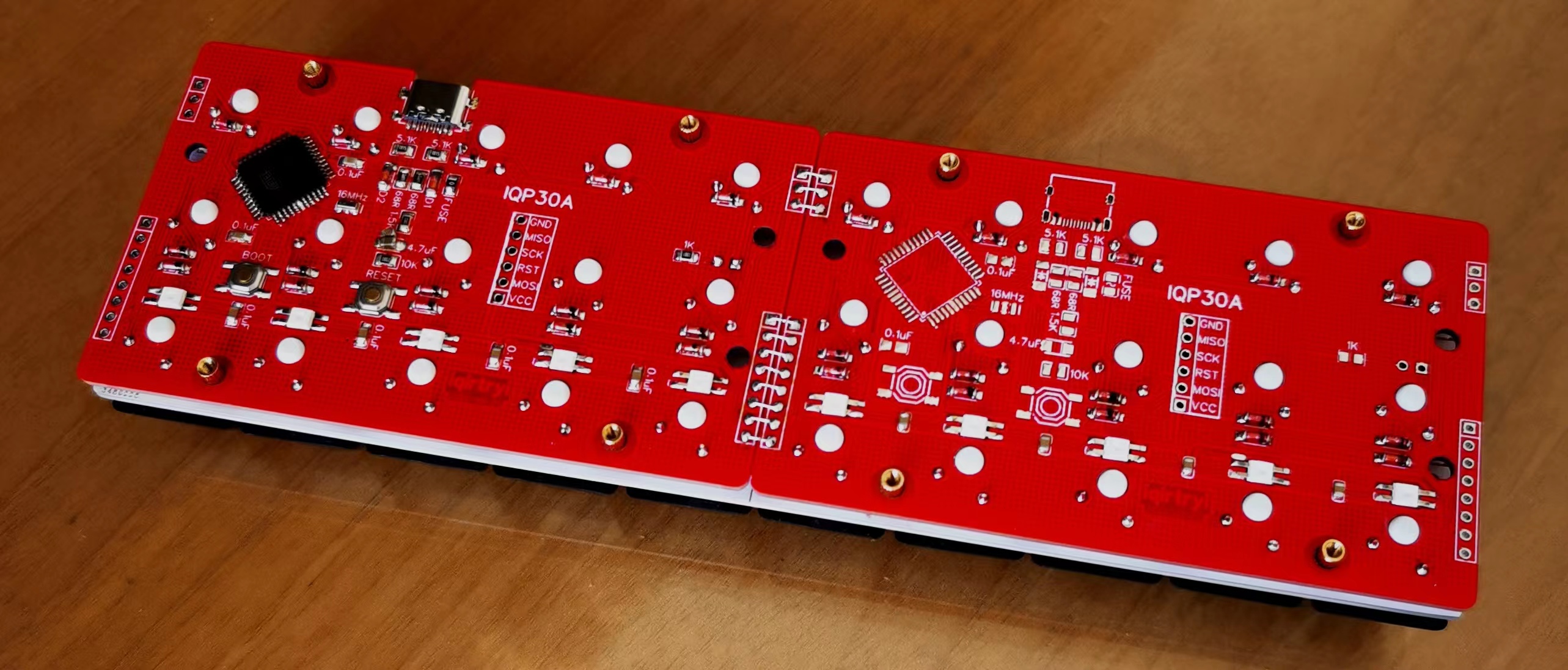 I placed the soldered circuit board in place and used an N-shaped wire (component leads, copper wires, etc.) to solder the corresponding pads at the joint between the two boards.
 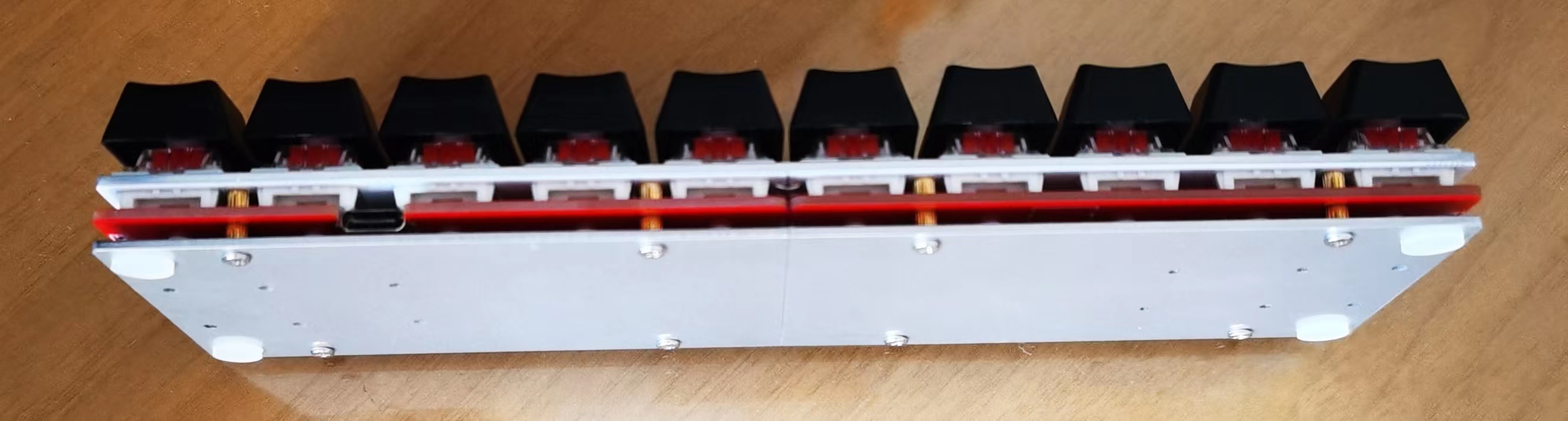 The frame is omitted; a three-layer board is directly fixed with copper pillars, which seems to have a certain structural aesthetic (again, thanks to QIONG).
 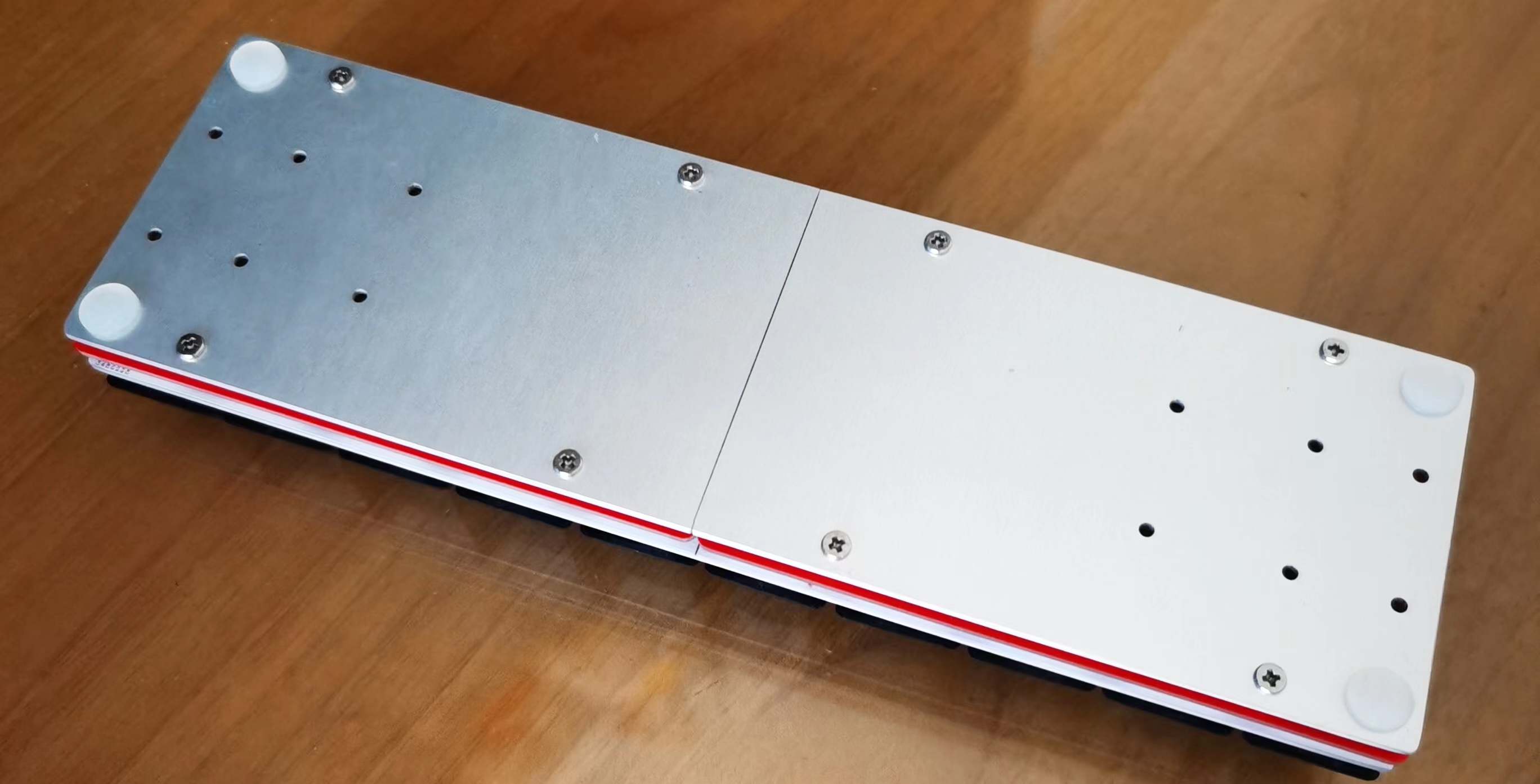 The base plate is made of aluminum substrate with holes for easy programming; 1mm thick anti-slip pads are added.
 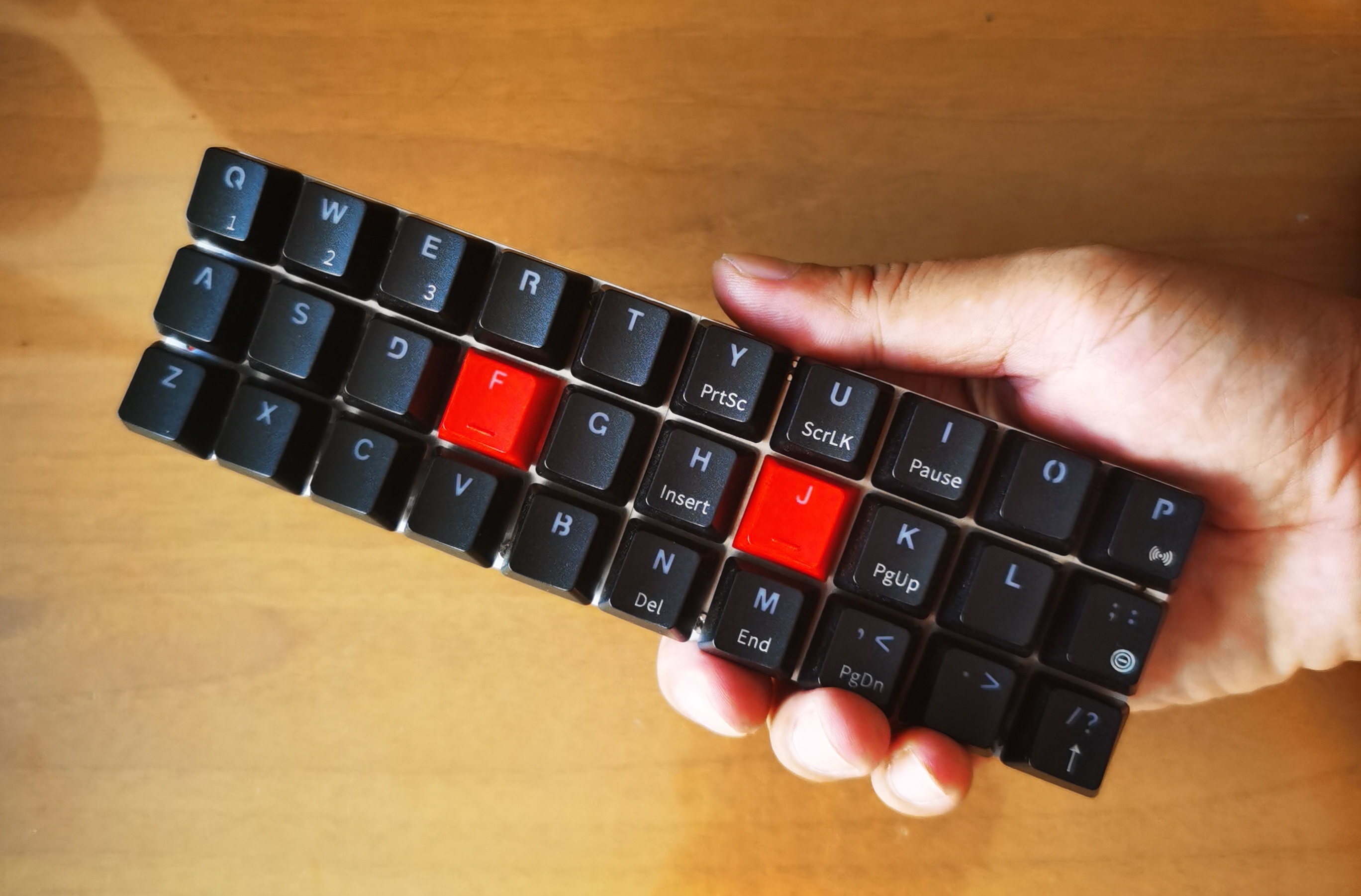 Add the 9.9 RMB keycaps (shipping included), and it's finished! The entire keyboard is inexpensive to make, but its compact and exquisite appearance is still very eye-catching, making it worth taking on business trips with my iPad Air 4.
 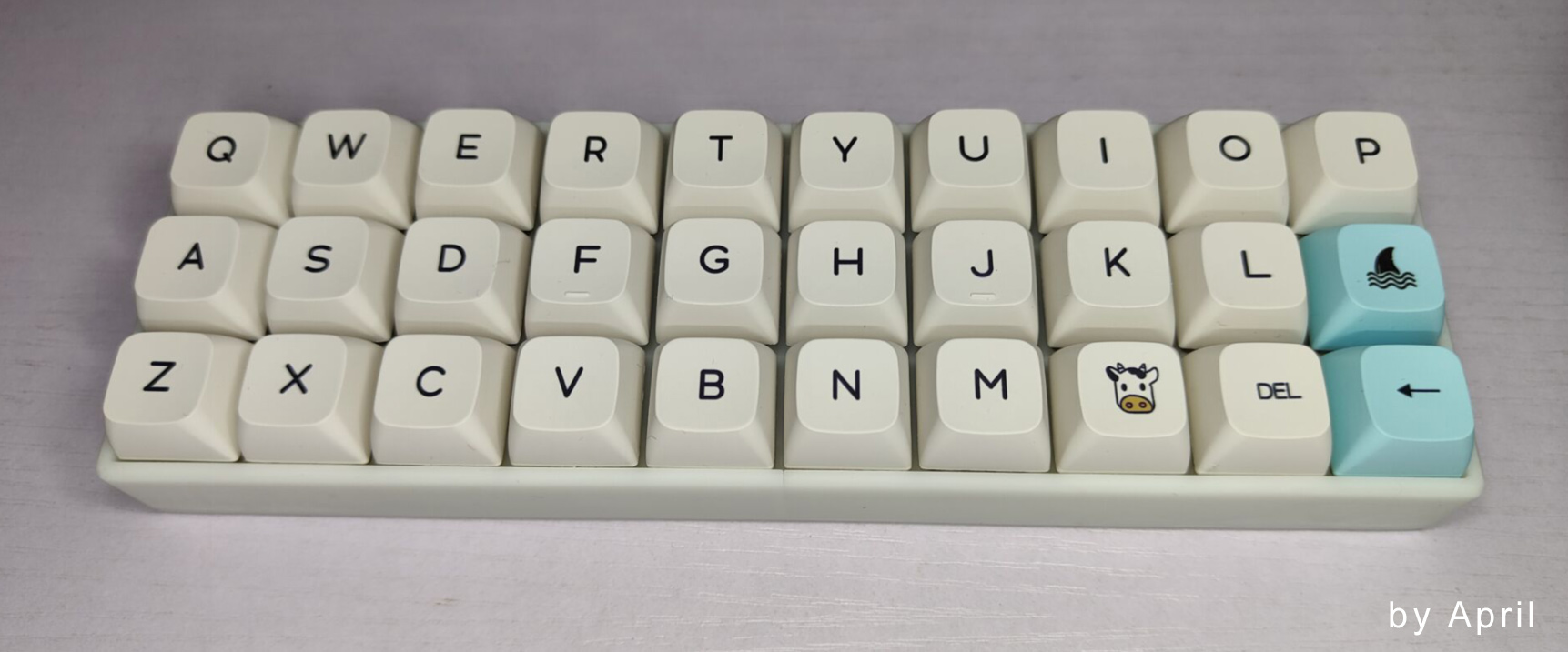 This is another method, where the positioning plate and shell are 3D printed by April, for reference.
 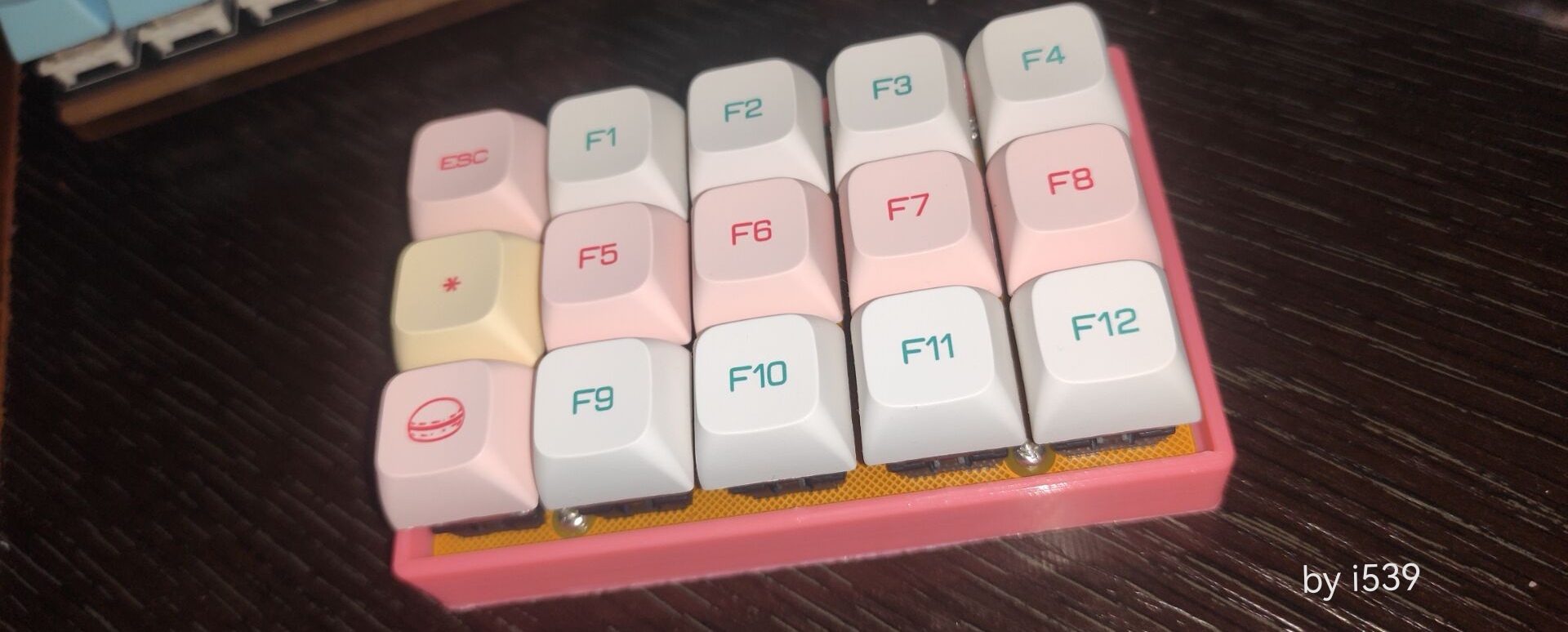 A cute 15-key keyboard can also be made from a single PCB.

All reference designs on this site are sourced from major semiconductor manufacturers or collected online for learning and research. The copyright belongs to the semiconductor manufacturer or the original author. If you believe that the reference design of this site infringes upon your relevant rights and interests, please send us a rights notice. As a neutral platform service provider, we will take measures to delete the relevant content in accordance with relevant laws after receiving the relevant notice from the rights holder. Please send relevant notifications to email: bbs_service@eeworld.com.cn.
It is your responsibility to test the circuit yourself and determine its suitability for you. EEWorld will not be liable for direct, indirect, special, incidental, consequential or punitive damages arising from any cause or anything connected to any reference design used.
Supported by EEWorld Datasheet
EEWorld
subscription
account

EEWorld
service
account

Automotive
development
community

Robot
development
community

About Us Customer Service Contact Information Datasheet Sitemap LatestNews



Room 1530, 15th Floor, Building B,
No.18 Zhongguancun Street,
Haidian District,
Beijing, Postal Code: 100190
China
Telephone: 008610 8235 0740
 京公网安备 11010802033920号


 TSM1012



